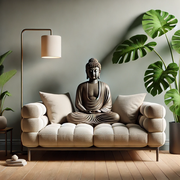
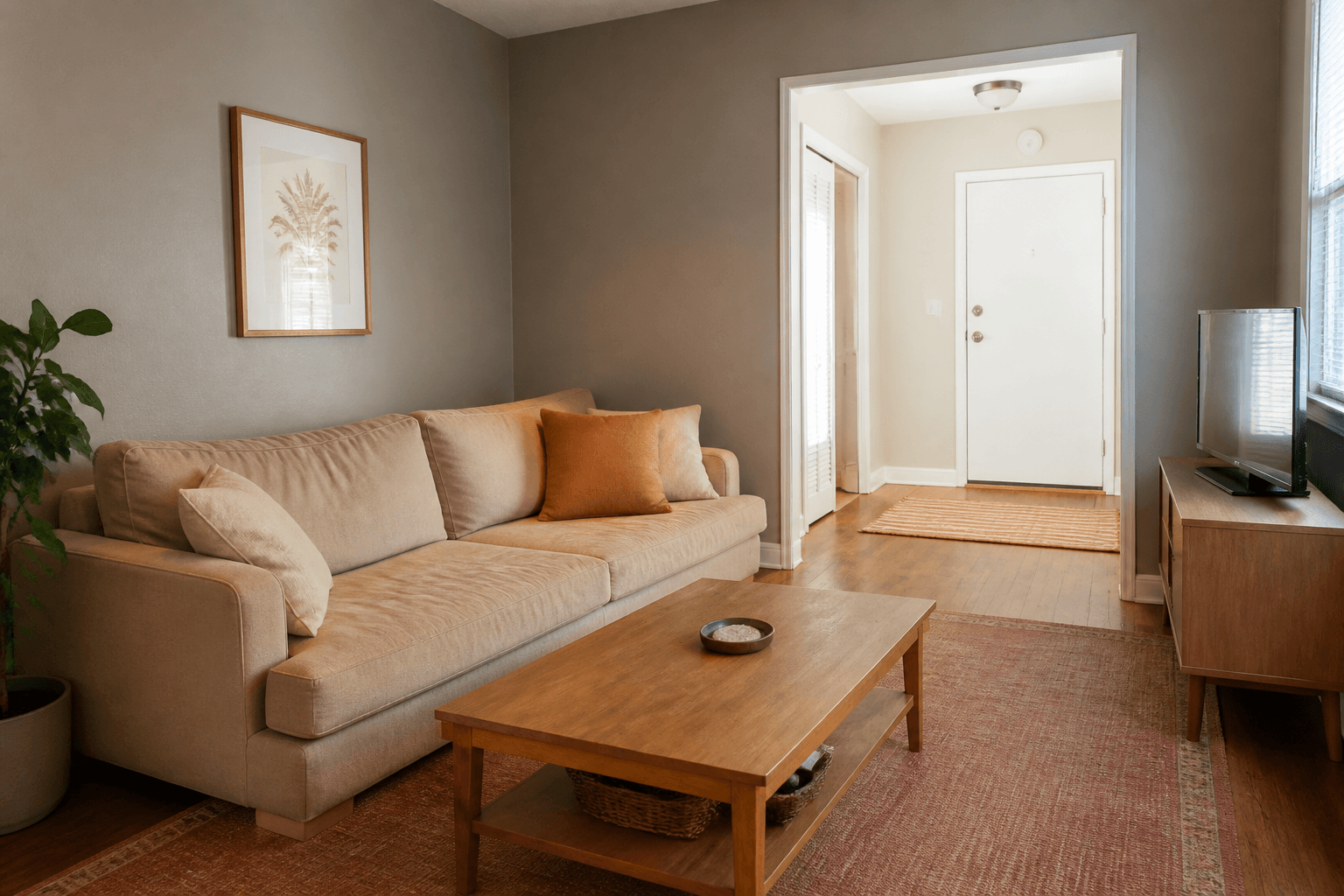
Feng Shui sofa placement is the practice of putting the main seat where people can see the door, keep a solid back, and still talk without shouting across a long empty middle. It is furniture work first. Decide whether to float the sofa or keep it on the wall only after those jobs are true.
When we photograph living rooms for analysis, the sofa is the tell. People buy a plant and a throw. The couch still has its back to the entry, or it is glued to the TV wall like a waiting room. Guests perch on the edge. The household watches a screen and never faces each other. This guide is the sit-test we run before anyone shops for a new sectional.
What is Feng Shui sofa placement?
You are giving the sofa two jobs. First, the people sitting there should see who enters without a full twist of the spine. That is command position, the same idea we use for a bed or a desk in the furniture arrangement guide. Second, the seats should face other seats close enough that a normal voice works. Older houses were built so you could talk and still know the door. A rental living room still has those two needs even if the landlord picked the cable outlet.
A full living room layout covers color, the coffee table, and the whole family circle. Sofa placement is narrower. Keep the same rug if it already fits. You are deciding which wall (or which float) holds the main seat, what sits behind it, and whether people look at each other or at a blank rectangle.
The TV is a different argument. Put the screen on a side wall so it does not steal the handshake. We already wrote that as Feng Shui TV placement. Do not rebuild the whole room twice. Fix the sofa first if the seat cannot see the door. Then park the screen where the seated person can watch without putting their back to the entry.
Command position is for the seat
Stand in the doorway. Sit on the sofa. If you cannot see the door without turning around, the seat is on defense. People call that bad energy. In ordinary language, you cannot greet a guest or a kid coming in from school until they are already next to you.
A solid wall or a high sofa back behind you is the other half. A window at your spine feels drafty and exposed. A walkway behind you feels like people will bump your head. You do not need a load-bearing wall in a studio. You need something that reads as a back: the sofa's own tall back, a console, a bookcase, or a few inches off a real wall.
I would rather float a sofa two feet into the room with a console behind it than pin it under a window that dumps afternoon glare on everyone's neck. Support is the feeling of a back. It is not a superstition about drywall.
Should a sofa float or sit on the wall?
Float means the sofa is not touching the wall. There is a path or a slim table behind it. Wall-backed means the frame kisses the plaster, or sits close enough that nobody walks there.
Neither is a moral win. Listing photos love furniture pulled into the middle because it looks expensive. In a narrow rental, floating everything turns the room into a traffic island. In a long open-plan box, gluing the sofa to the far wall makes conversation a shout.
Use the wall when the room is a tight rectangle and floating would leave a useless strip you will fill with dust. Use it when the only solid back is that plaster, the door is still in view, or you need the floor clear for a crib, a wheelchair, or a dog bed.
Float when the sofa would otherwise turn its back on the door, when a walkway currently clips people's knees, or when the room is wide enough that a conversation circle fits and a console can stand in for a wall.
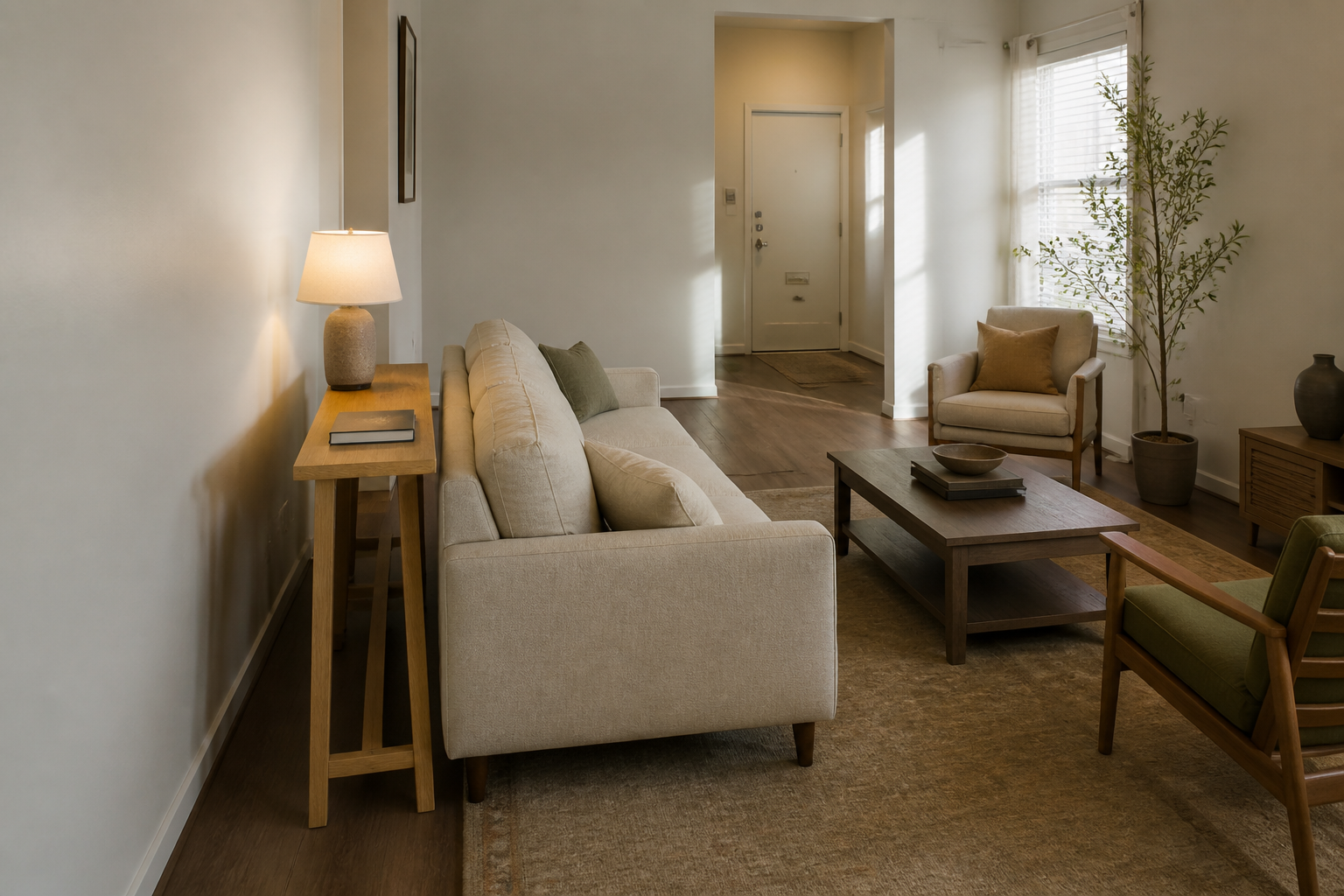
A console table behind a floating sofa is the renter version of a wall. It catches keys, a lamp, and the feeling that nobody is sneaking up. Felt sliders get you there in twenty minutes. You can reverse it at move-out.
If you float, leave a real path. A gap you can only sidle through is clutter with extra steps. If the path is honest, the old language about chi is just people being able to walk.
When the wall is a hallway in disguise
Some apartments put the sofa on the only long wall, which is also the route from the front door to the kitchen. Then every arrival walks behind the sitters' heads. That layout is why people say the room never settles.
You can pull the sofa forward and accept a float. You can turn the seating ninety degrees if the room is square enough. You can keep the sofa on the wall and add a smaller seat that faces the door so the household is not all facing the wrong way. If a grocery bag cannot pass behind the sitters, the sofa is in the corridor. Float it or rotate it.
Where should the sofa face?
Face other people, and keep the door in view. The television comes after those two.
Conversation is a short distance. If you have to raise your voice to reach the other chair, the layout failed. Pull chairs in. Use a round or oval coffee table if the corners keep bruising shins. A huge sectional that only looks inward at a giant screen is a theater. Fine for movie night. Weak for the room where you actually live.
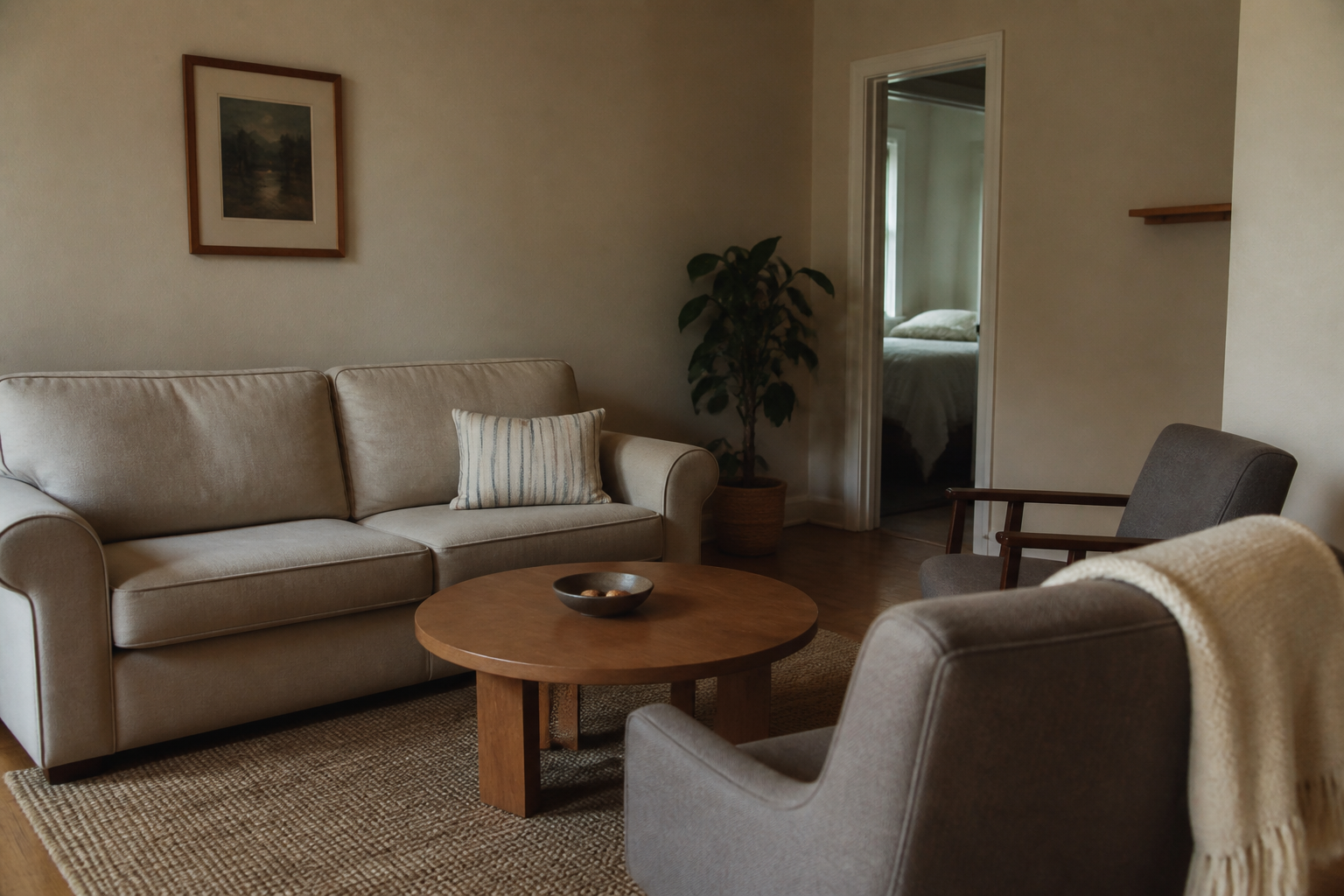
The sofa does not need to stare at the front door like a security camera. A diagonal view is enough. Directly in the door's path is the opposite problem: every arrival walks into your knees. Command is seeing the entrance, not blocking it. For the mouth of the home itself, the entryway guide is the landing pad. The sofa's job starts once you are in the room. Slide the coffee table until you can set a mug down without standing and still cross the room without a hop.
Two sofas, L-shapes, and the TV argument
Two sofas facing each other work if both can still glance at the door. An L-shape is the usual rental compromise: one leg sees the entry, one leg sees the screen. Put the longer run where the household sits most, with the door in peripheral view.
If the only way to watch TV is to sit with your back to the door, the screen is on the wrong wall. Move the lighter object. That is the TV article again, not a reason to keep a defensive sofa.
A loveseat plus two chairs often beats one giant U that nobody can cross. In a small apartment, fewer seats that work are better than a sectional that eats the walkway. If a chaise blocks the path or the door view, flip the sectional if the pieces allow it, or sit on the part that sees the entry.
What if the sofa has its back to the door?
This is the photo we see most. The cable jack is on the wall opposite the entry, so the sofa faces the jack and leaves the door at everyone's back. Guests announce themselves to the back of a head.
Fixes that do not need a contractor:
- Float and rotate. Even a small angle can bring the door into side view.
- Swap the TV wall. Use a low stand on a perpendicular wall.
- Put the sofa on the wall beside the door, not opposite it, so sitters look across the room and still see arrivals.
- If the sofa cannot move, put a mirror on a side wall so you catch motion at the door. Do not aim a giant pane at the sofa seat like a second person. Read the mirror placement notes first.
A high-back sofa helps a little. It does not replace a view of the door. If you host, do the sit-test with the person who sits there every night, not with a catalog photo.
Windows behind the sofa are a softer version of the same issue. You lose the solid back, you gain glare, and in winter you feel the glass. Pull the sofa a foot forward. Add a console. Close a heavier drape at night. You are not blocking chi. You are giving your back a temperature and a stop.
Radiators and HVAC vents behind a sofa are a rental specialty. Do not block airflow with a sealed console. Leave the gap the lease and the heat need, and use a taller sofa back so the seat still feels held. If a balcony slider is both your view and your back, angle the sofa so the glass sits to the side. You still get the light. You stop sitting in a storefront.
Can renters fix sofa placement without a new couch?
Yes. The expensive mistake is buying a bigger sofa to solve a wall problem. Measure the walkways with painter's tape on the floor before you drag anything. Renters can change a room with sliders, a console, and a lamp.
Skip drilling. Skip a built-in. A bookcase as a room divider gives a back to a floating sofa in a studio. A folding screen works if you hate the view of the kitchen.
If the bagua helps you pick which part of the room is family versus work, use the bagua map on the whole floor or the living room, then still do the sit-test. The map does not override a sofa that cannot see the door.
Pets and kids change the path. If the only float creates a runway for a toddler into the coffee table corner, keep the sofa on the wall and soften the table corners. Safety is the real cure. Do not invent a lucky layout that fails the household.
A sofa that is simply too big for the room will lose every placement test. If the frame already pinches the door swing, no angle will save it. Use a smaller two-seat plus chairs. That is still Feng Shui. It is also how you walk to the fridge.
Color and the sofa itself
You do not need a red couch for fame. Earth tones and a washable cover match a rental. If the sofa is already a loud color you cannot replace, calm the wall behind it. Placement still beats upholstery. A throw you actually use beats a ritual cloth on a sofa nobody sits on.
A simple weekend checklist
Do this in order. Stop when sitting feels ordinary.
- Sit in the usual spot. Confirm you can see the door without a full twist.
- Notice what is behind you: wall, window, walkway, or void.
- Mark a float with tape if the back is wrong or the path is blocked.
- Pull other seats in until a normal voice works.
- Only then place the TV on a side wall if the screen still fights the door.
- Photograph the room in FengShui Hero and compare the flagged seating with what you changed.
If you share the space, repeat the sit-test with the other adult. The correct wall on a blog is useless if nobody sits that way.
What this is not
A sofa will not make you rich or calm by magic. It will not ruin you if it stays wrong for a week while you wait for sliders. People get stuck on compass labels and skip the door they can see with their own eyes.
Skip religious objects you do not already use. Skip buying a hollow conversation widget. A solid back, a view of the entry, and seats that face each other are the whole method.
The next time you move, you will remember that the cable jack dictated the sofa and the room felt like a waiting lounge. That note is worth more than a slogan.
If you only do one thing, turn the main seat until the door is in view and give it a back. Float or wall is the detail after that.