
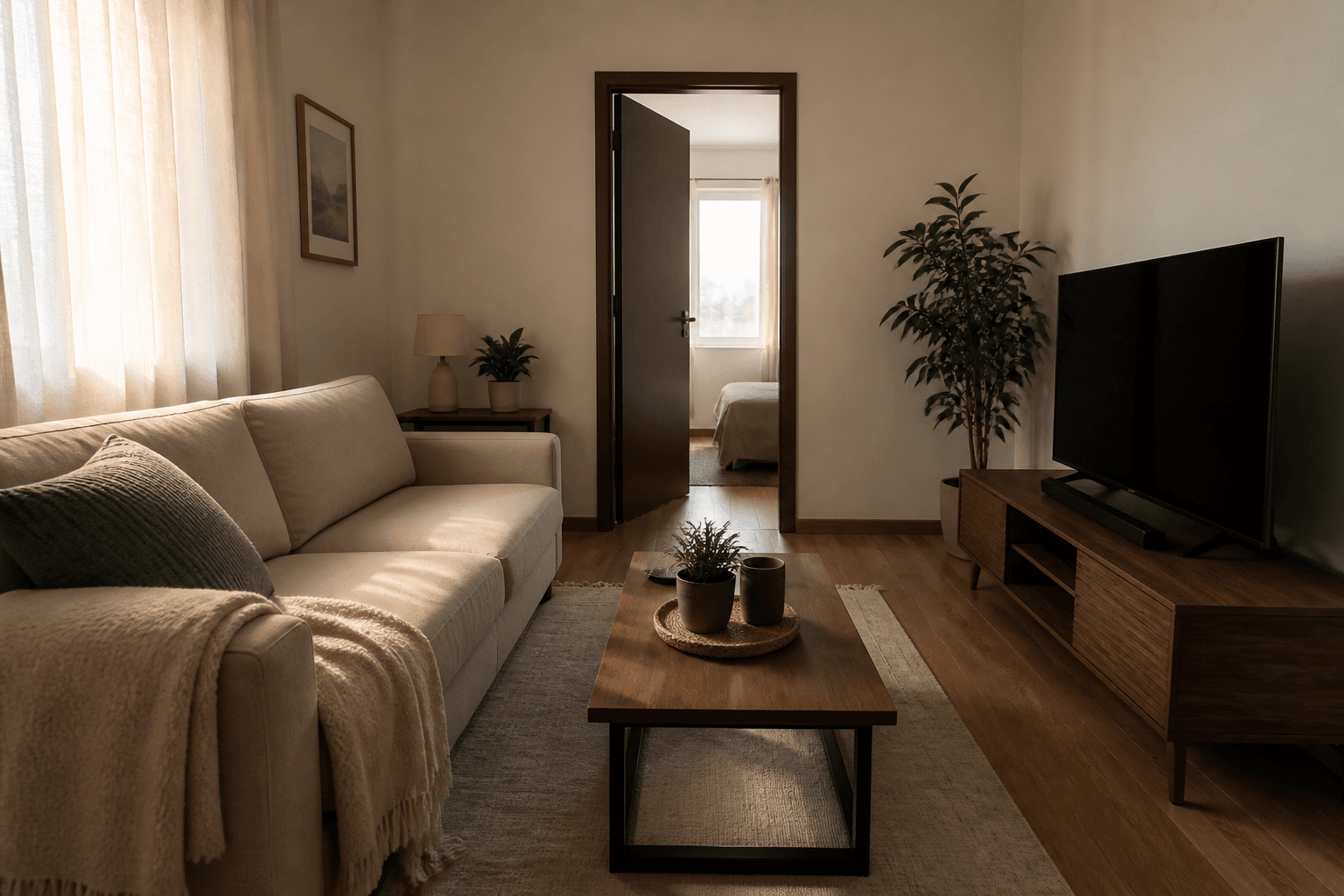
Feng Shui TV placement is the practice of putting a television where seated people can see the door, keep their necks level, and stop the dark screen from running the whole room. It is furniture work first. The set is a bright, noisy object. Treat it like one.
When we photograph living rooms for analysis, the TV is usually the loudest rectangle on the wall. People tell us they "already did Feng Shui" because they bought a plant. The sofa still stares at a fireplace mount, and the front door opens onto a black mirror. This guide is the fix we walk through before anyone shops for a new console.
What is Feng Shui TV placement?
You are arranging two jobs that fight each other. The sofa needs command of the door, meaning the person sitting there can see who enters without twisting. The TV needs a wall that does not steal that view and does not bounce daylight into anyone's eyes.
Classical teachers did not write product manuals for OLED panels. They did write about what sits on the main wall, what greets you at the mouth of the room, and what stays visually "on" when you want to rest. A switched-off television still behaves like a window that shows the wrong thing: glare, a hallway, your own face.
So the rule is plain. Give the conversation and the door the main axis. Give the screen a side role. If those two collide, move the lighter object. In most rentals that is the TV stand, not the load-bearing wall.
This is a narrower problem than a full living room layout. You can keep the same sofa and rug. You are only deciding which wall holds the screen, how high it sits, and what happens when the set is off.
Where should the TV go in a living room?
Stand in the doorway and notice what you see first. If the answer is the logo glow or a huge black pane, the room is introducing itself as a theater. That is fine for a basement media room. It is tiring for the place you eat on the sofa and talk.
The better default is a side wall. You walk in, you see people, you see a path to the kitchen. The TV is there when you turn toward it on purpose. Guests do not have to perform around a screen that is already starring.
Command position for the sofa, not the screen
Command position is about the seat, not the gadget. The main sofa wants a solid wall or a high-back behind it and a clear line to the entrance. Once that is true, look for a wall the seated person can watch without putting their back to the door.
A common failure is lining the sofa and the TV on the same axis as the front door, like a bowling lane. Everyone who comes in walks through the picture. Everyone who sits feels slightly on display. Slide the console ninety degrees if the room allows it. If the room is a tight rectangle, float the sofa a foot off the TV wall so there is a back path, and keep the door in peripheral view.
I would rather have a slightly off-center screen than a sofa that cannot see the entry. You can angle a TV a few degrees. You cannot relax if every knock makes you crane around.
Do not let the TV greet the front door
A set that faces the entrance turns arrival into an audience. It also makes the off state worse: the glass reflects whoever is coming in. In small apartments that reflection reads as a second person in the room.
Use a bookcase, a folding screen, or the back of an open shelf as a soft buffer if you cannot change walls. You are not hiding the TV in shame. You are stopping it from being the handshake.
If your living room shares a wall with the entry, put the console on the wall that is not the first sightline. A plant at the corner of the stand does more than a slogan about "energy." It breaks the rectangle.
How high should a TV sit?
Height is the part people get wrong after they buy a beautiful mantel. Fireplace mounts look expensive in photos and feel like a stadium seat by episode two.
Sit in your usual spot. Have someone hold a piece of tape at your eye line on the opposite wall, or use a paper stickie. The middle of the screen wants to live near that line. A little below is kinder than a little above. Looking up for two hours is a neck problem. Feng Shui language for that is simple: the body cannot settle if the head is in a tilt.
A low wood console is the renter-friendly version. You can reverse it in an afternoon. You do not need a stud finder for a stand. If the only existing mount is over the fireplace, use it for parties and park a stand-mounted set for weeknights, or raise the seating with a firmer cushion so the angle flattens. Neither option is elegant. Both beat a sore neck.
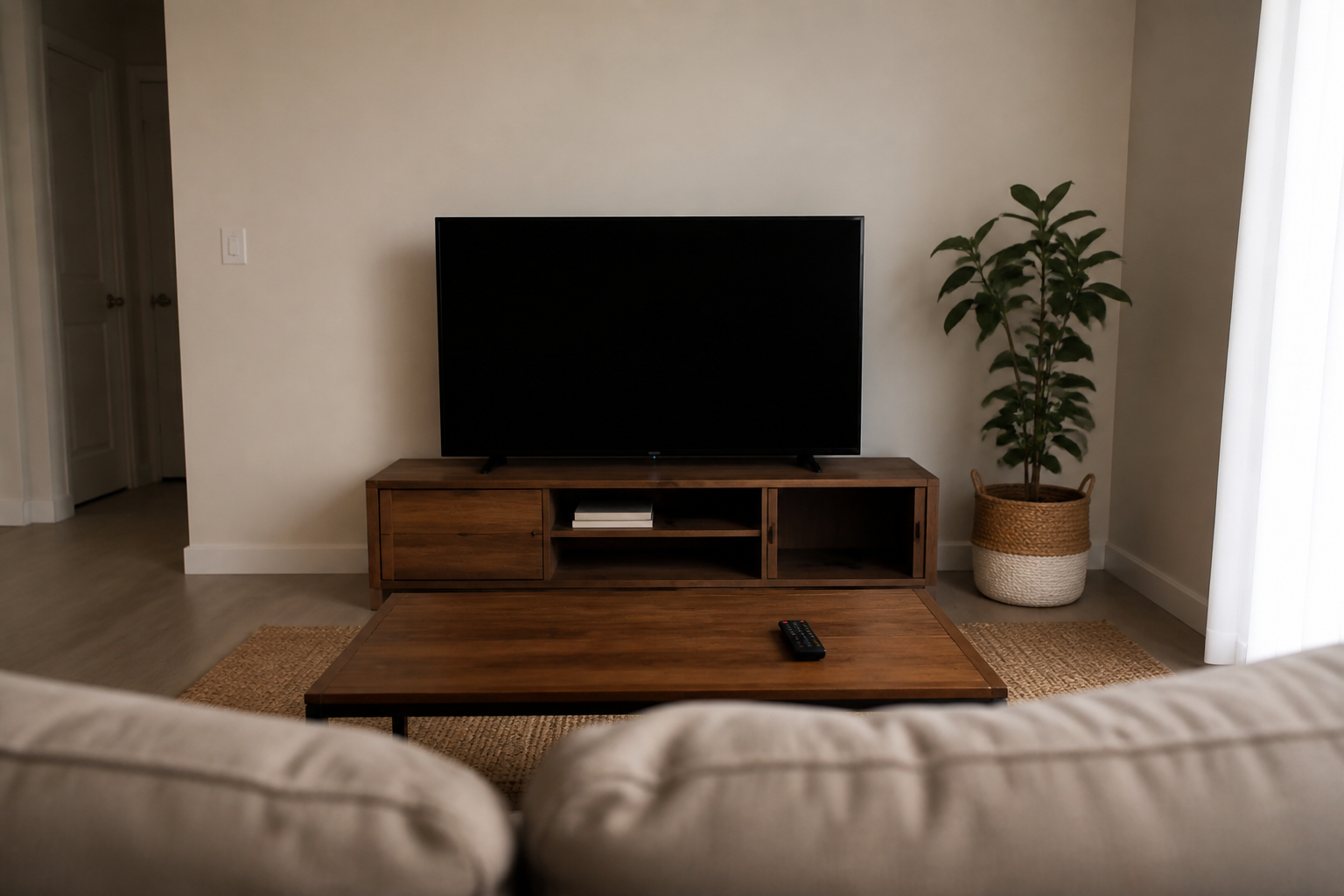
Cable mess counts. A tangle under the stand is visual static. Clip the cords to the back of the console. A wireless soundbar still needs one tidy power lead. You do not get extra luck from hiding wires. You get a wall that looks finished, which is what "calm chi" is doing in ordinary language.
Fireplace walls and other leftover mounts
If the landlord's mount is already there, measure before you fight it. Some fireplaces sit lower than Instagram suggests. Some sit so high the only honest fix is to stop using that wall as the daily TV wall.
Do not center the sofa on a chimney if that forces your back to the door. The fire is a feature when it is on. The rest of the year it is a brick column. Treat the TV as a guest on that wall, not the reason the sofa exists.
What about glare and black-screen reflections?
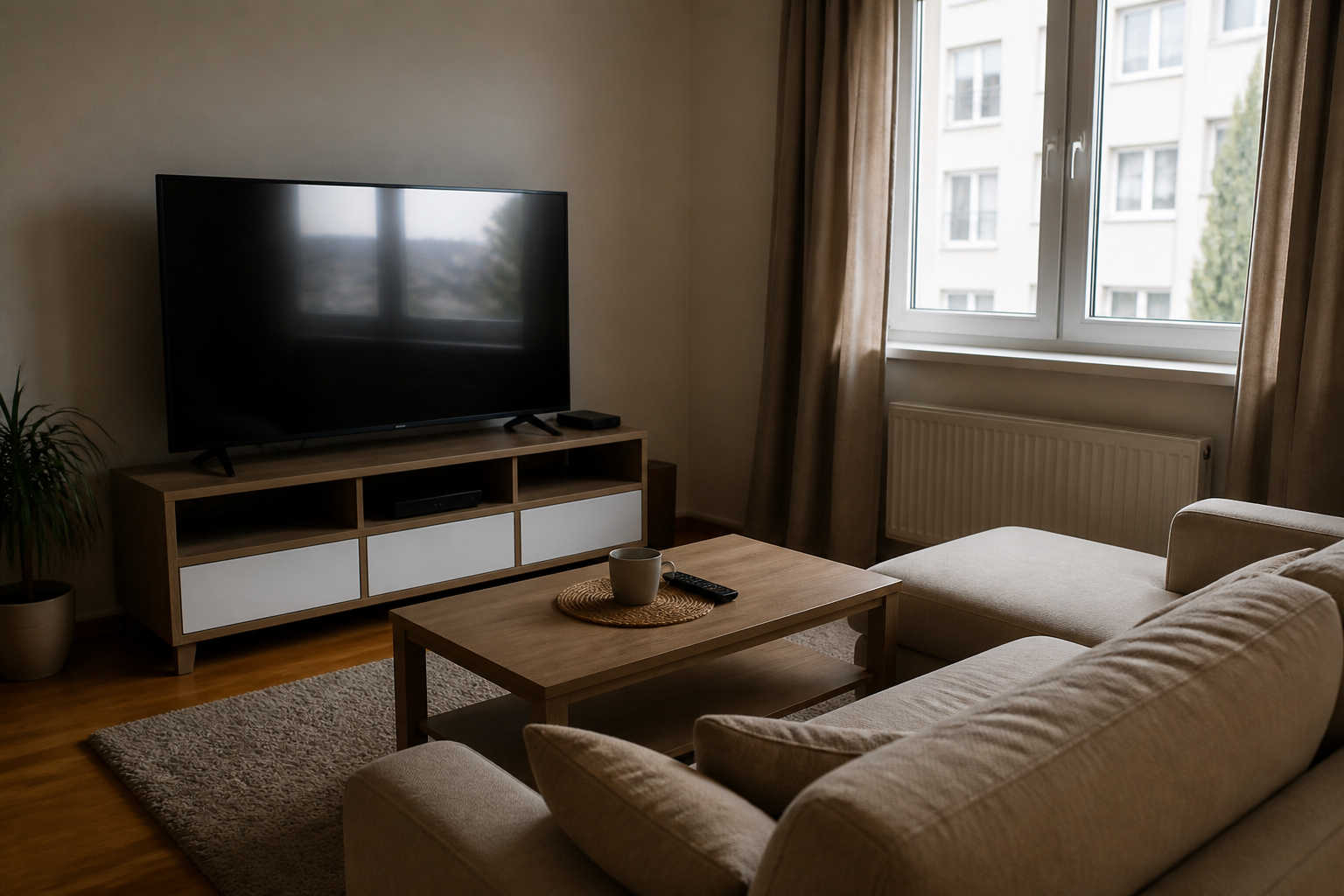
Glare is why people think their "energy feels off" at 4 p.m. The screen is a black lake. It picks up the window, a lamp, and anyone walking to the kitchen. You are never only watching the show. You are watching the room twice.
Stand where you sit, at the worst time of day. If you can read a book title in the glass, the placement or the lighting is wrong. Move the console first. If the only wall is opposite a window, use a sheer plus a heavier drape so you can kill the reflection without turning the room into a cave. A bias light behind the set (a cheap LED strip) can soften the contrast at night. That is lighting work, not a charm.
Mirrors next to a TV double the problem. If you already read our mirror placement notes, the short version is: do not let a mirror and a blank screen stare at each other across the sofa. One reflective surface is enough.
When the set is off, you have three honest options. Close a cabinet. Drop a cloth you actually like. Or accept the black rectangle and break it with a plant or a framed print on the same wall so the eye has somewhere else to land. Covering is optional. Leaving a 65-inch void as the room's face is the thing to question.
Can renters place a TV without drilling?
Most of this article assumes you can slide furniture. That is the point. Command, height, and glare are stand-and-angle problems.
Use felt sliders under the console. Measure the walkway before you commit (you want enough space to pass without hip-checking the coffee table). Command-strip cable clips come off paint if you warm them. A tension rod and a curtain can hide a wall of wires in a studio.
Skip masonry anchors. Skip "just one more hole above the fireplace." If a previous tenant left a high mount, you can still rest the TV on a low stand and ignore the bracket until move-out. Your deposit cares about holes. Your neck cares about tonight.
Small rooms need a smaller screen more than they need a clever mount. A huge panel on a short wall makes every other object look like clutter. If the bagua conversation helps you pick a wall, use the bagua map for the room, then still apply height and glare. The map does not override physics.
A simple weekend checklist
Do this in order. Stop when the room feels usable. You do not need every item.
- Sit on the sofa and confirm you can see the door without a full twist.
- Note what you see from the doorway. If it is only the TV, try a side wall.
- Mark seated eye height on the TV wall and move the set to match.
- Watch one episode at the brightest hour. Fix glare with placement or curtains before you buy gadgets.
- Tame the cables. One plant at the corner of the console is enough green.
- Photograph the room in FengShui Hero and compare the flagged wall with what you just changed.
If you share the space, do the sit-test with the person who watches most. The "correct" wall on a blog is useless if the household never sits that way.
What this is not
A television will not make you wealthy or well. It will not ruin you if it stays on the "wrong" gua for a month while you wait for a new stand. People get stuck on compass labels and skip the neck angle they can measure with a stickie.
Skip religious objects you do not already use. Skip buying a hollow "TV cure" widget. Wood under the set, fabric when it is off, and a seat that can see the door are the whole method.
Write down what you changed. The next time you move, you will remember that the fireplace mount looked smart in the listing and felt foolish by Thursday. That note is worth more than a slogan.
If you only do one thing, lower the screen and turn it off the door axis. Everything else in this article is a variation of those two moves.