
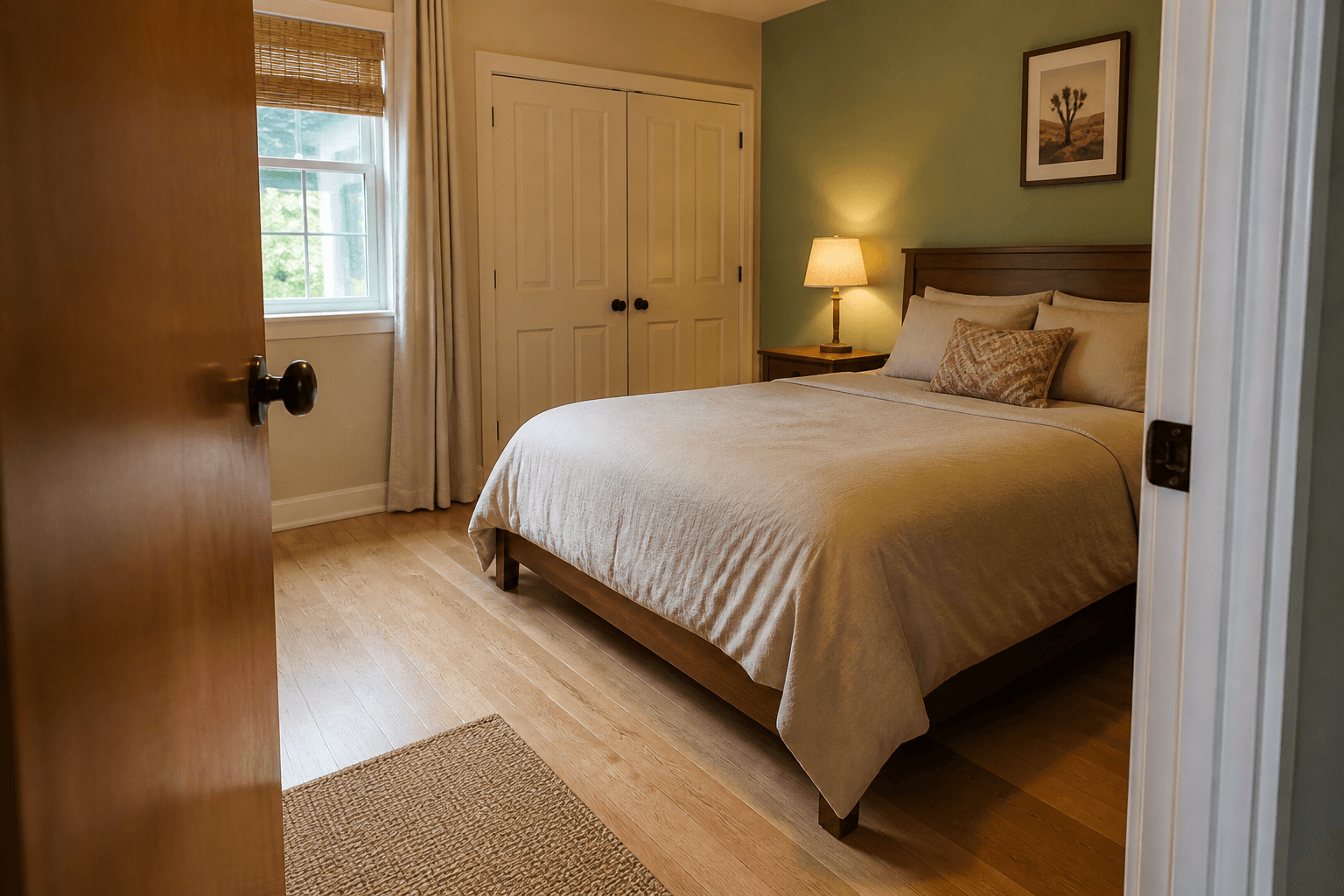
Feng Shui Airbnb listing is the layout work that keeps a short-let's first meter walkable, puts the bed in command of the door guests actually use, and makes listing photos match the stay. You are arranging a rental bedroom and entry, not installing a gua for occupancy.
When we photograph short-lets, the pretty street door in the listing is often locked. Guests come through a corridor, a side gate, or a lockbox wall. The first meter is a bin, a pile of host shoes, and a code printout taped to the glass. People ask which gua the sofa sits in. We ask whether a person with a suitcase can open the latch without turning sideways. This guide is that walk, then the bed, then the photos.
What is a Feng Shui Airbnb listing?
It is a bedroom and an entry doing hospitality on a timer. The geometry is the same Form School test as a bedroom command position: path, door, bed, whether a person can see who enters. A listing just has strangers using that path every few days. They will judge the door they actually open, not the facade you photographed from the sidewalk.
It is also an entryway problem. Form School calls the main door the mouth of chi. In a short-let, that mouth is the latch on the guest path: unit door, building corridor door, or courtyard gate. If the lockbox lives on the handle, the mouth is already blocked before anyone unpacks.
A guest room is the closest cousin. Empty drawer, bed that can see the door, desk that can disappear. A listing is that test plus photos that sell the stay. If the photo and the latch disagree, the layout failed even if a bagua overlay looks tidy on a floor plan.
What belongs in the first meter?
Whatever a guest hits before they can stand up straight: lockbox, shoes, trash, and the door's full travel.
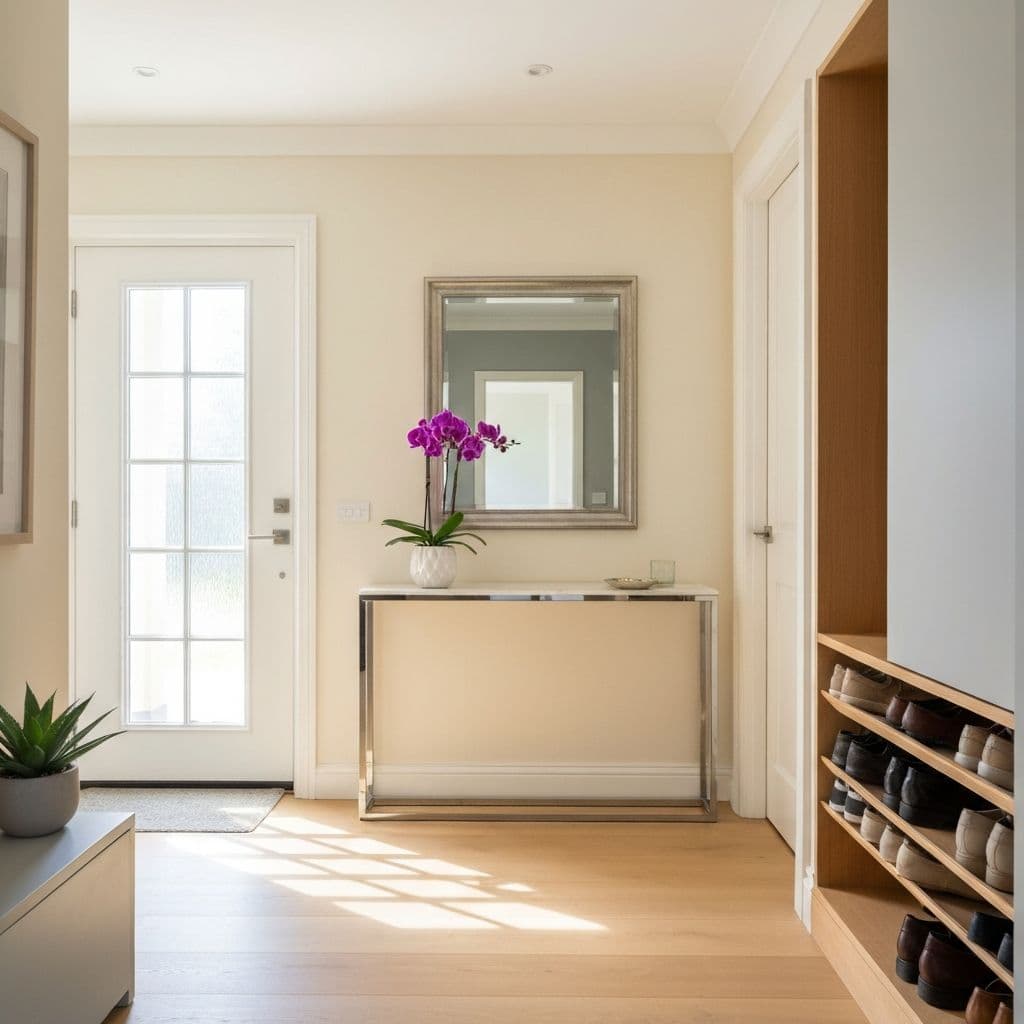
Open the unit door to 90 degrees with a suitcase beside you. If the door hits a cabinet, a drying rack, or a hanging box, that object is in the mouth. Move it to a side wall or take it out. The entryway reset is the same sequence: swing, floor, light.
Lockbox, keys, and the latch
Mount the lockbox on a side wall or a post the lease allows, not on the handle. A box on the handle is a padlock you fight while holding a phone. Test it with the door open. Spare keys do not live on the first chair. A printed code card can sit in a shallow tray on a console that does not kill the swing. If the building wants the box in a lobby, treat that lobby wall as the first meter of the stay and keep your unit landing clear anyway.
Host leftovers count. A basket of bulbs, a drill, and last week's parcels on the landing is the same problem as guest shoes. Put host tools in a closed cupboard the listing does not call a coat closet.
Shoes and trash
Guests will take shoes off. Give them a tray or a closed rack that is not in the arc of the door. One pair per person on a tray is enough. A mountain of host trainers tells them the unit is still your overflow, not a stay.
Trash is smell and path. Empty the bin at turnover. Do not park a tied bag by the door for a morning pickup that happens after check-in. If the kitchen is the first room, the bin still should not greet the latch. Slide it beside the counter, lid on.
Light the landing. A dead bulb in a windowless corridor is a dark mouth. Warm light you can reverse beats a blue flood. Guests should find the switch without a scavenger hunt.
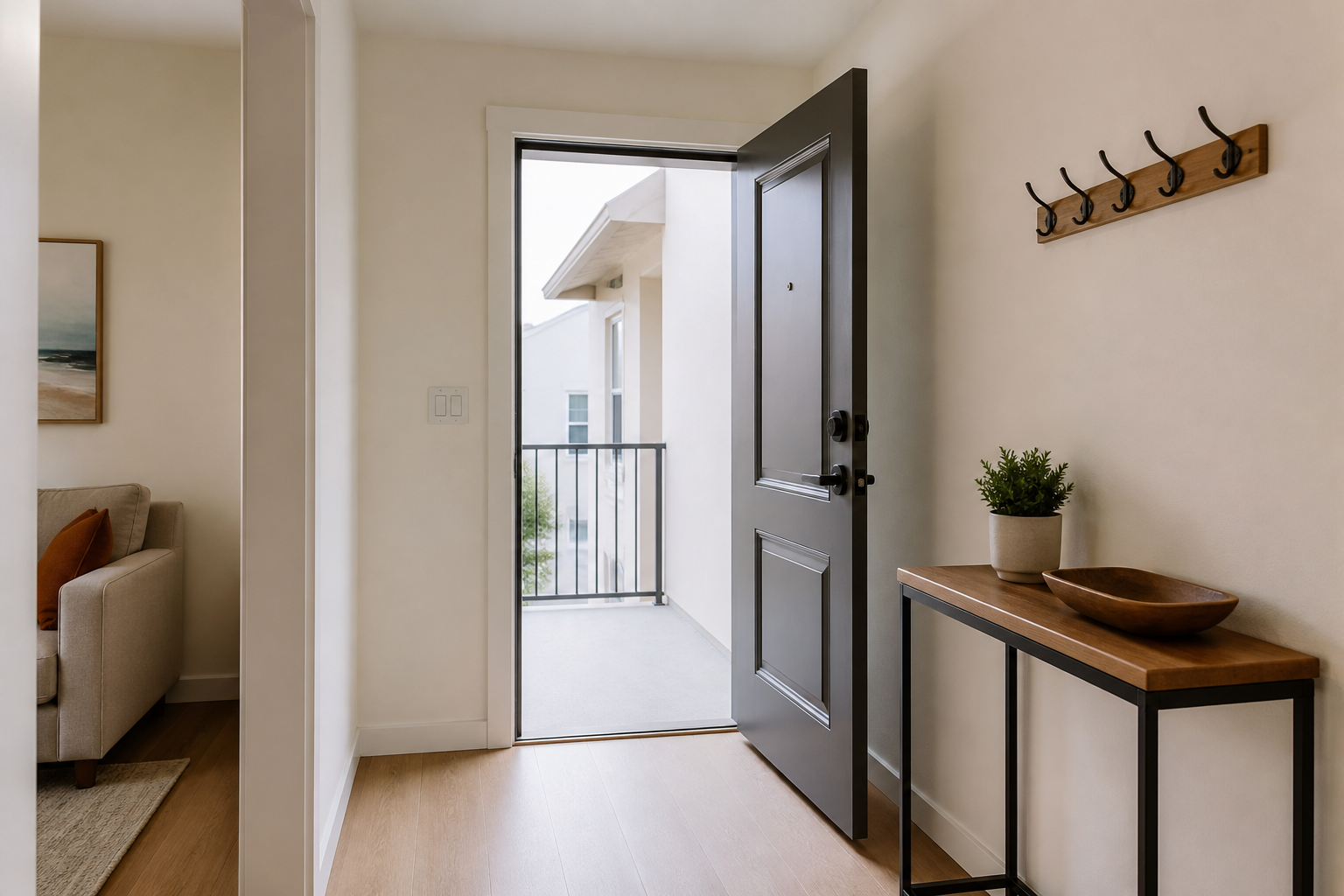
That side-wall box leaves the latch free. The mat is empty. You can open the door with a bag in each hand, which is the whole first-meter test.
Where should the bed sit in a listing?
Stand in the door the guest will open, not the pretty door in the listing hero. Look at the mattress.
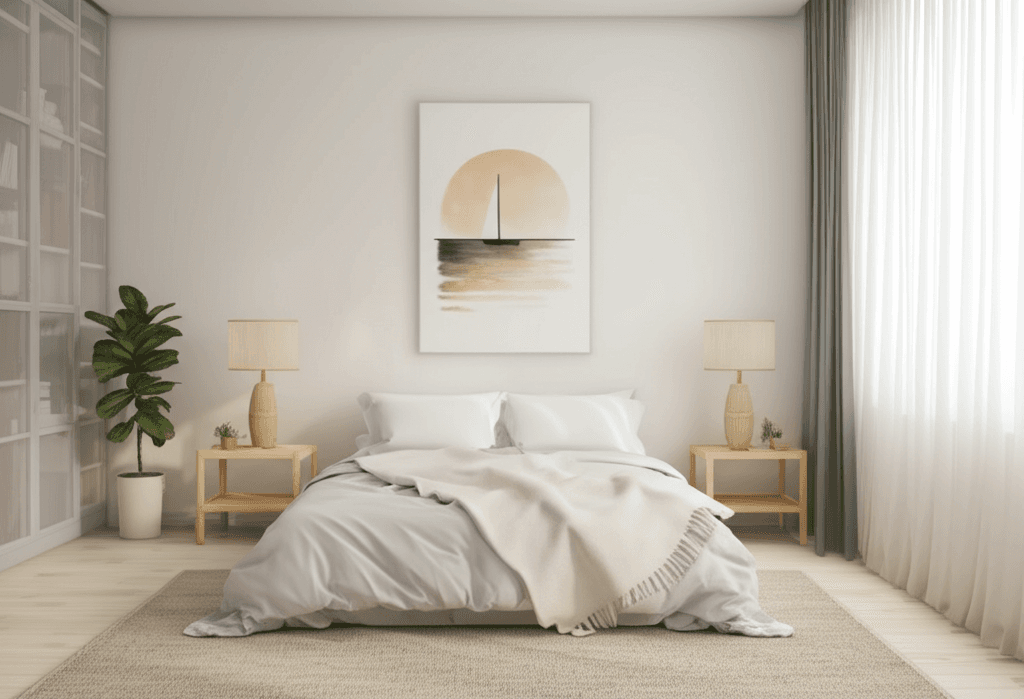
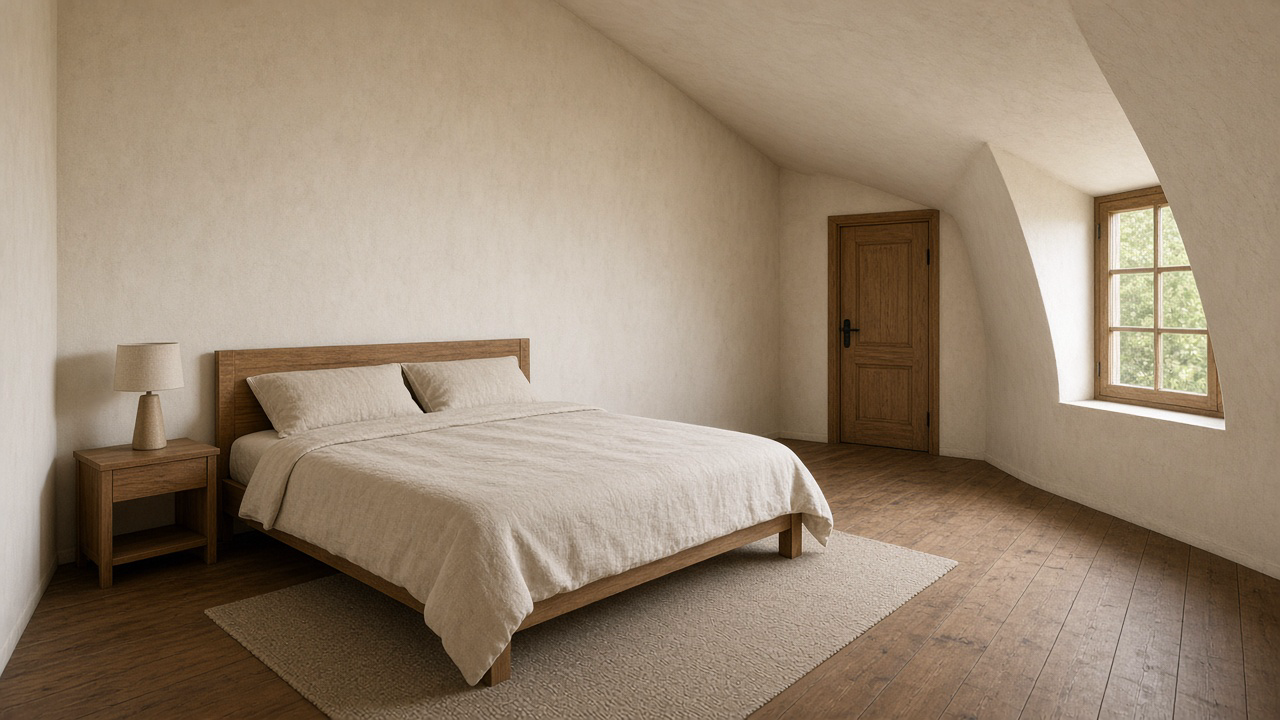
If the bed sits in a straight shot from the threshold, most Form School notes call that a weak alignment. Guests lie in the traffic line of a room they do not know. Shift the bed along the wall so the pillow can see the opening without being the first object the door hits. A solid headboard on a wall is the mountain. A window behind the head is a weaker back. Heavy curtains and a real headboard are the rental fix.
If sitting up puts the guest's back to the door, they lose the view. A dresser opposite the opening is not a substitute for seeing it. In a studio, the unit door is the bedroom door. Run the same test from that latch. Do not hide the bed behind a screen so the sofa photographs better if the guest then sleeps in a corridor.
Two-bedroom listings get two tests. Each bed versus its own door. A second room used as host storage with a bed jammed in the door line is still a bedroom in the listing. Either set it as a real sleep room or take it off the photo set.
If the bed cannot move
Keep the headboard. Add a bench or a closed trunk at the foot so the door is not a direct hit on the feet. Stop using the door as a clothes hook. Leave a shoulder-width path from latch to mattress.
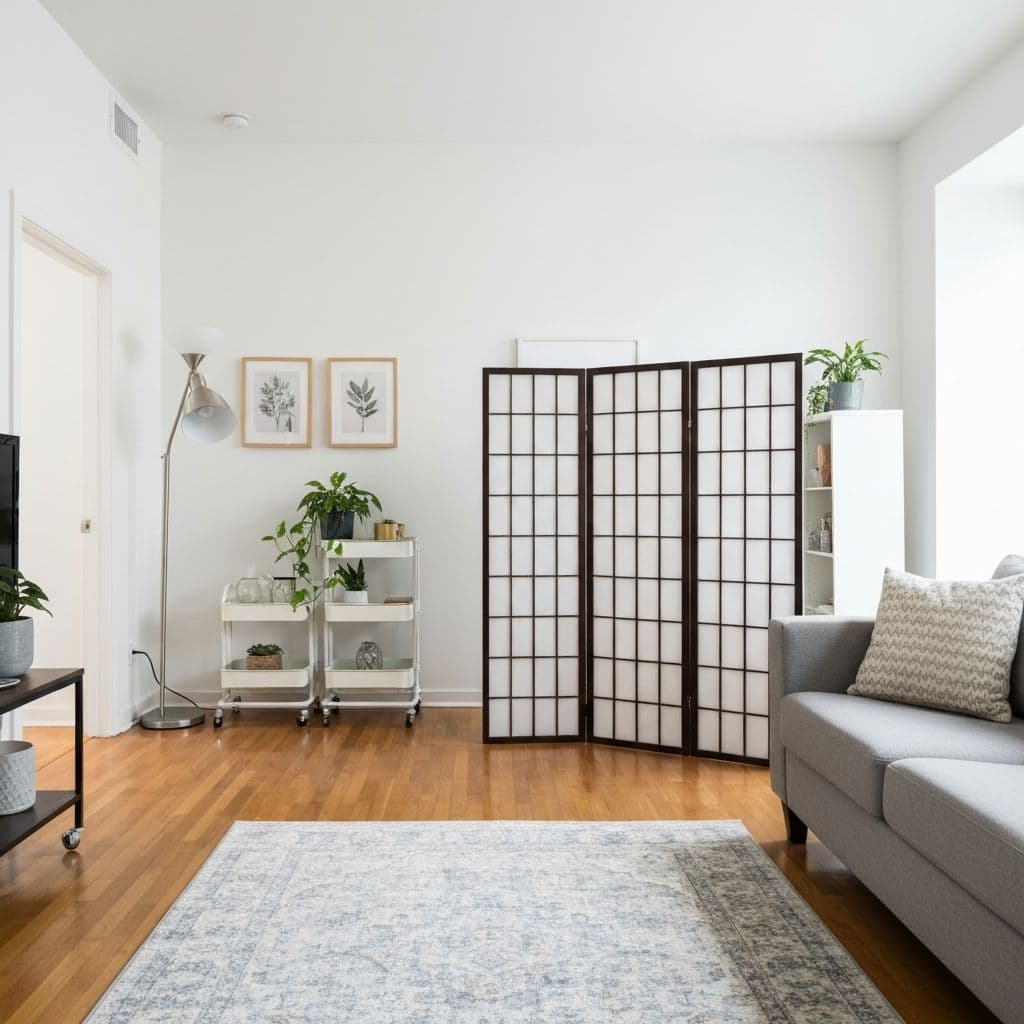
A sofa bed in the living room is a guest room without walls. Give it a screen or a planted shelf so the sleeper is not in the TV's command seat. Make that bed at turnover the way you will leave it, not only for the photographer.
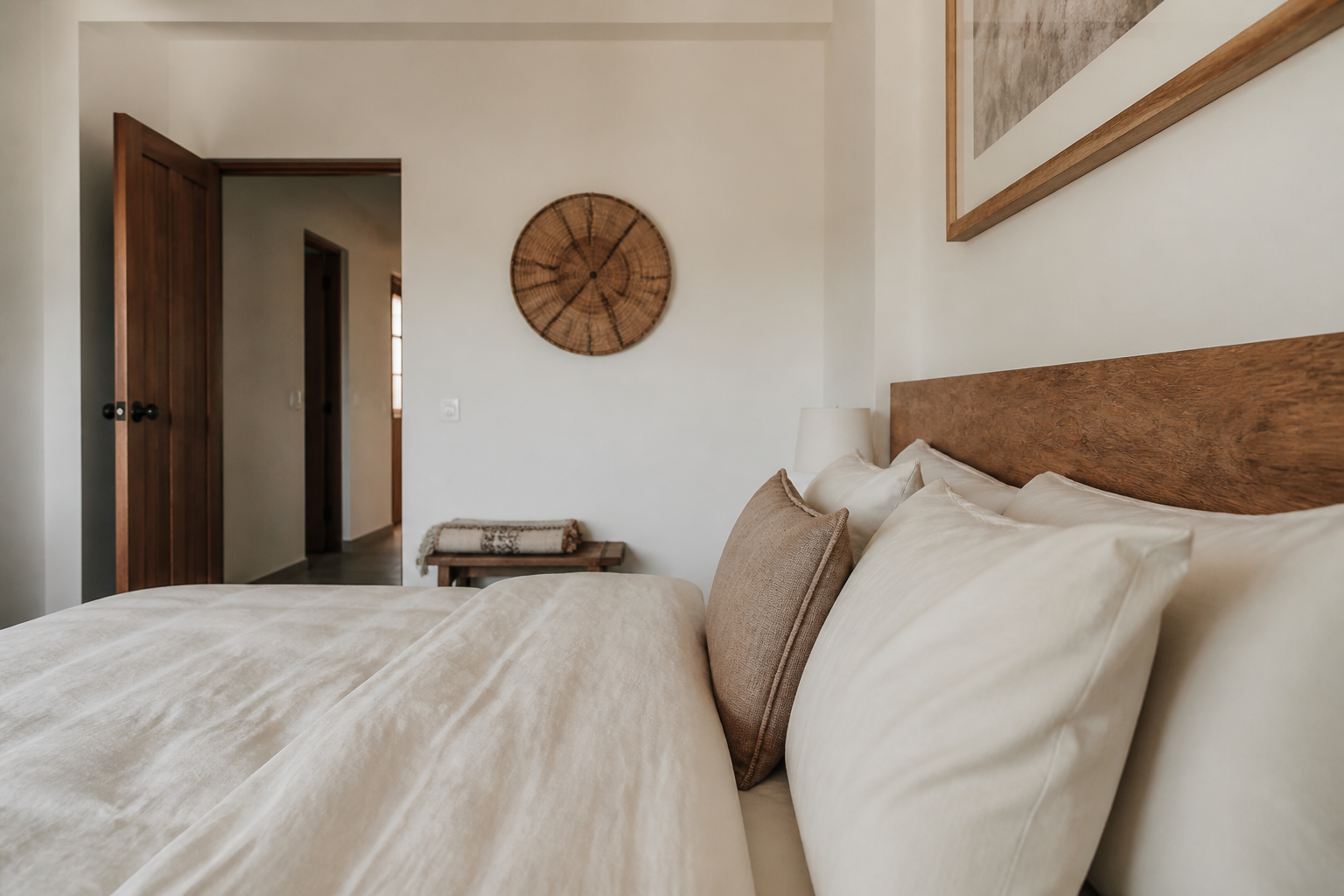
From the pillow you can see the opening without lying in it. The closet is closed. That is the scan frame and the stay frame.
Should closet mirrors face the guest bed?
No if the guest would see themselves in bed. A wardrobe that reflects the mattress keeps the room visually on at night. Close the sliders. Curtain them if they will not stay shut. The longer wardrobe notes live in the closet guide.
Host overflow in "their" closet is the usual miss. One empty rod and one empty drawer is the line between a listing and a storage unit with a duvet. Gift bags, off-season coats, and a vacuum on the floor tell the guest the stay is a gap in your life.
Photograph mirrored sliders closed. Leave them closed. A dressing mirror on a side wall that does not show the bed from the pillow is enough for getting dressed. Under the bed, empty is cleanest. Closed low bins of spare sheets are tolerable. Host paperwork, shoes, and gym gear under a guest mattress will be found when a sock falls.
Should the bathroom door stay closed?
At night, yes, if the bathroom opens into the bedroom. An open toilet in the sightline from the pillow is a wet room staring at the sleep wall. Close the door. Put the lid down. That is housekeeping with a traditional name, not a wealth spell. Do not treat a closed door as income protection.
In listing photos, an open bathroom door is a styling trick to show tile. If the guest then sleeps with that view, the photo lied about the night. Shoot the bathroom as its own frame. Keep the bedroom photo with the bathroom door shut.
Laundry does not live on the bathroom floor or over the guest towel rail. A drying rack in the shower during a stay is ordinary. A permanent pile of host clothes is not. Take it out before check-in. Empty the bathroom bin. Replace a sour mat. You do not need incense to "clear energy." You need a window or a fan and a clean drain.
What if the listing has a living room?
The main seat should glance at the entrance guests use. A sofa that only faces a dark TV with its back to the latch turns the stay into a theater. Slide the sofa or angle it so a person sitting down can see who comes in. Height, glare, and float versus wall are the sofa placement and TV placement jobs. Use those pages. Does the living room greet a guest or a screen?
A coffee table in the only walk from door to kitchen is the first-meter problem with a different name. Leave a path the width of a person with a grocery bag.
How do you photograph from the door guests use?
Stand at the latch they will touch. Take the frame before you pick a wide corner that makes the room look like a loft. The listing hero should be that door's view, or it should be honest that the pretty shot is a different wall.
Then sit on the bed and photograph toward the door. That pair is what you scan in FengShui Hero: one from the latch, one from the pillow. The app flags a blocked opening and a bed that cannot see who enters. It will show the same geometry this article names.
Match the stay. If you hide the lockbox pile, the host shoes, and the laundry for the photographer, put them back where they will be on a Tuesday. Better: leave them out of the first meter so the photo and the Tuesday agree. A command bed in the photo and a door-line bed at check-in is the mismatch that matters.
Shoot the entry with the door open at 90 degrees so the swing is visible. Shoot the bathroom as its own photo. Do not crop out the bin if the bin always lives there. Move the bin. If you use a night shot, use the lamps the guest will find, not a photographer's flood.
Building rules beat styling. If fire code wants a clear path to the window, that path is also the Feng Shui path. Do not stack a decorative screen in an escape line and call it a wealth corner.
A turnover checklist
Do this in order. Stop when you could sleep there tonight without moving a pile.
- Open the guest door fully. Remove whatever was in the swing: lockbox on the handle, shoes, bags, a drying rack.
- Empty bins. Take tied trash off the landing. Replace a sour mat.
- Put one tray or closed rack for shoes where it is not in the arc of the door.
- Stand in that door. Shift the bed if the pillow cannot see the opening and the room allows it.
- Close closet sliders. Empty one rod and one drawer. Pull host gear out from under the bed.
- Close the bathroom door from the pillow's view. Lid down. Guest towel on a clear rail.
- If there is a living room, sit on the sofa and check a glance at the latch. Move the coffee table if it blocks the kitchen walk.
- Photograph from the latch and from the pillow in FengShui Hero. Compare those frames with the listing photos. If they disagree, change the room or change the listing, not the gua.
If you share the unit between stays, box your life. A listing cannot be both a daily mudroom and a guest arrival at the same hour unless the entry is wide.
Renters already know the lease rule: if you cannot restore it, do not install it. A host who rents the flat from someone else is still a renter. Sliders under the bed, removable hooks, a lockbox post the building allows. Skip drilling the door. Skip painting a "lucky" wall you will have to white out.
What this is not
A listing will not fill the calendar because the bed faces a certain compass point for a weekend. It will not raise income if you add a money plant that then dies between turnovers. It will not ruin you if a guest leaves shoes on the mat for two nights.
Skip mystic grids on the floor plan. Skip guaranteed occupancy from a particular gua. Earth-tone linen is here because it hides wear and photographs honestly in rental light, not because beige is a secret.
Write down which door guests actually use. The next time you look at your own listing, you will remember that the hero was a street facade and the stay was a lockbox in a dim corridor. That note is worth more than a slogan about hospitality energy.
If you only do one thing, clear the first meter and put the bed where the pillow can see the latch. Everything else in this article is a variation of those two moves.