
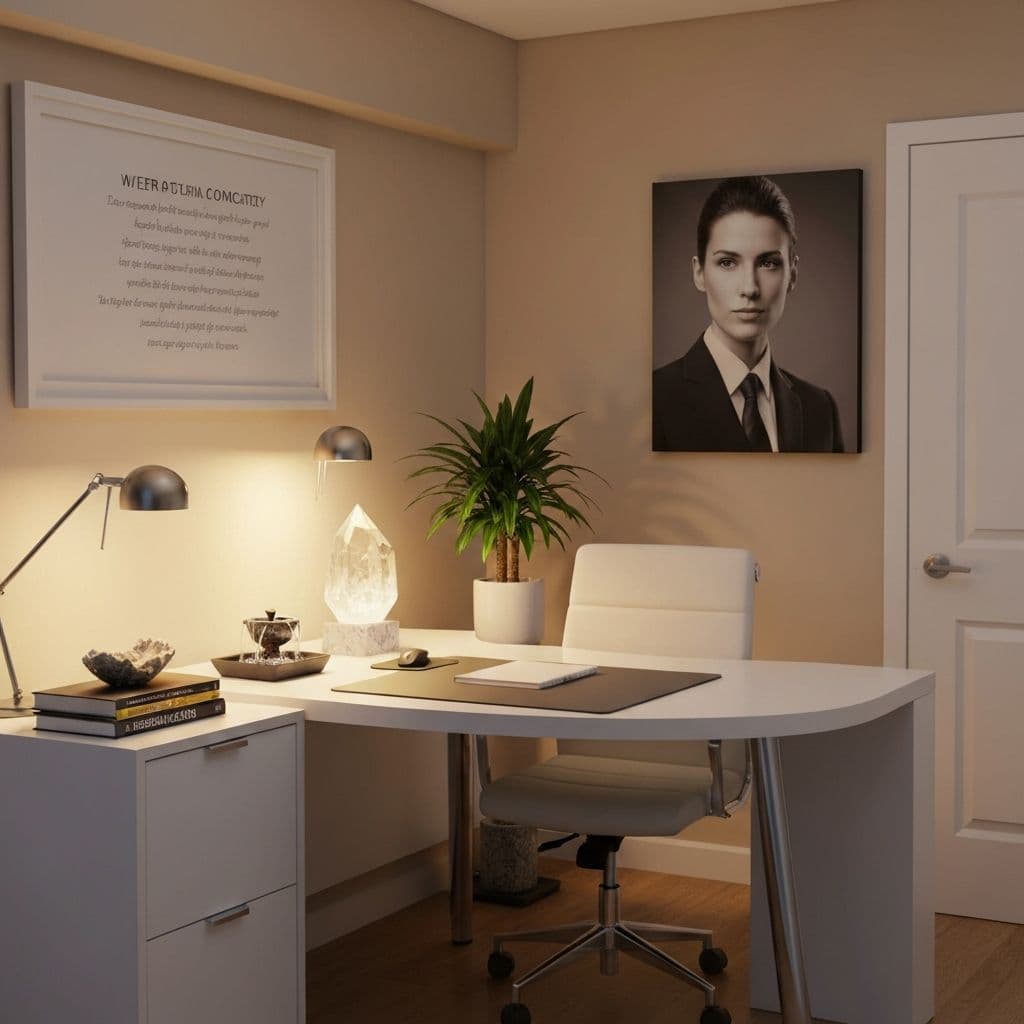
Feng Shui desk position is where the chair sits relative to the door: you can see who enters, you are not in the center line, and something solid is behind you. Compass facing is a second system. A north desk will not get you promoted.
When we photograph work corners, the laptop faces a closet and the door is a surprise. People ask for a blotter bagua. The chair still has its back to the room. This guide is the sit-test for one desk. The whole floor is office layout. A dining-table job is remote workers.
What is command position at a desk?
Stand at the threshold. Sit in the chair.
- You can see the door without twisting your whole spine.
- You are not the first object on a straight line from the jamb.
- A wall, a bookcase, or a high back is behind you. A window as the only back is the weak version.
- The aisle does not clip the back of your head every time someone walks to the kettle.
That is Form School furniture logic. It is the same picture as a bed or a stove: the body is not in a corridor of traffic.
Five layouts, ranked by the door
1. Diagonal to the door, wall behind. The usual best. You see the entry. You are not in its lane.
2. Side wall, facing into the room. Good when the diagonal does not fit. Keep the door in a glance.
3. Facing the door square-on. You see people. You also sit in the draft and the interruption line. Pull back if you cannot angle.
4. Facing a wall. Common in offices. You lose the door and you stare at a deadline. Hang one wide, calm image for depth, or pull the desk out a foot if the aisle allows. A mirror on the wall is a workaround, not a raise.
5. Back to the door. The usual worst. You startle. A small, stable mirror that shows the opening is the corporate fix when the bench cannot turn.
Window in front: glare and a back-to-door risk. Window behind: light on the screen from the wrong side and a missing mountain. Window to the side is the compromise.
Compass and blotter bagua
Eight Mansions and similar systems assign a facing from a birth-year number. A site that says everyone must face north is flattening that. If you enjoy a compass, use it after the door is visible.
A mini-bagua on the desktop (lamp far left, photos far right, clear center) is BTB-style overlay. Fine if the surface stays usable. Do not lose the keyboard to a crystal grid. Career gua on the room is a different article: career area.
Monitors and standing desks
Two screens can wall you off from the door. Angle them so a person in the jamb still appears in your periphery. A soundbar in front of the keyboard is a new sharp edge; push it aside.
A standing desk still needs the same sightline. Raising the surface does not fix a back-to-the-door stance. The anti-fatigue mat should not become a trip in the aisle.
When the desk cannot move
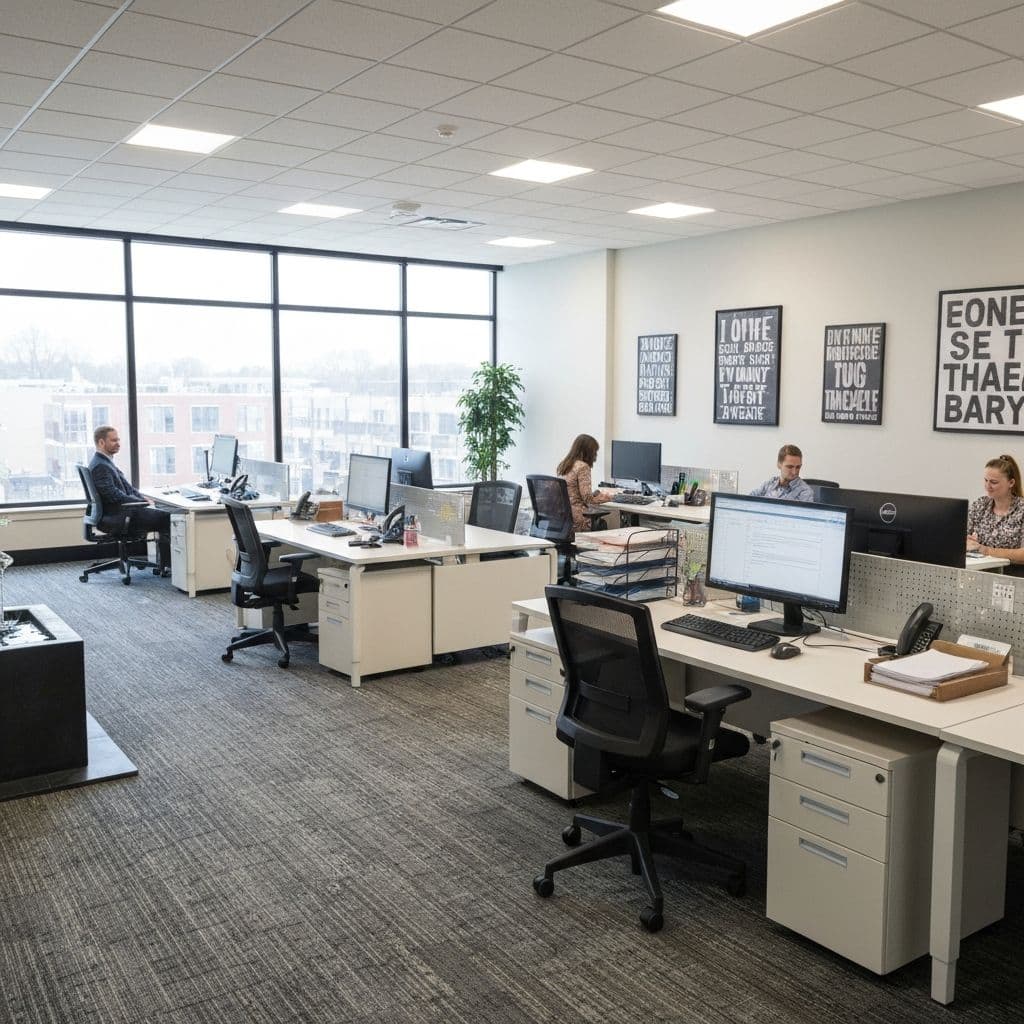
Corporate benches and rental slabs lock the footprint.
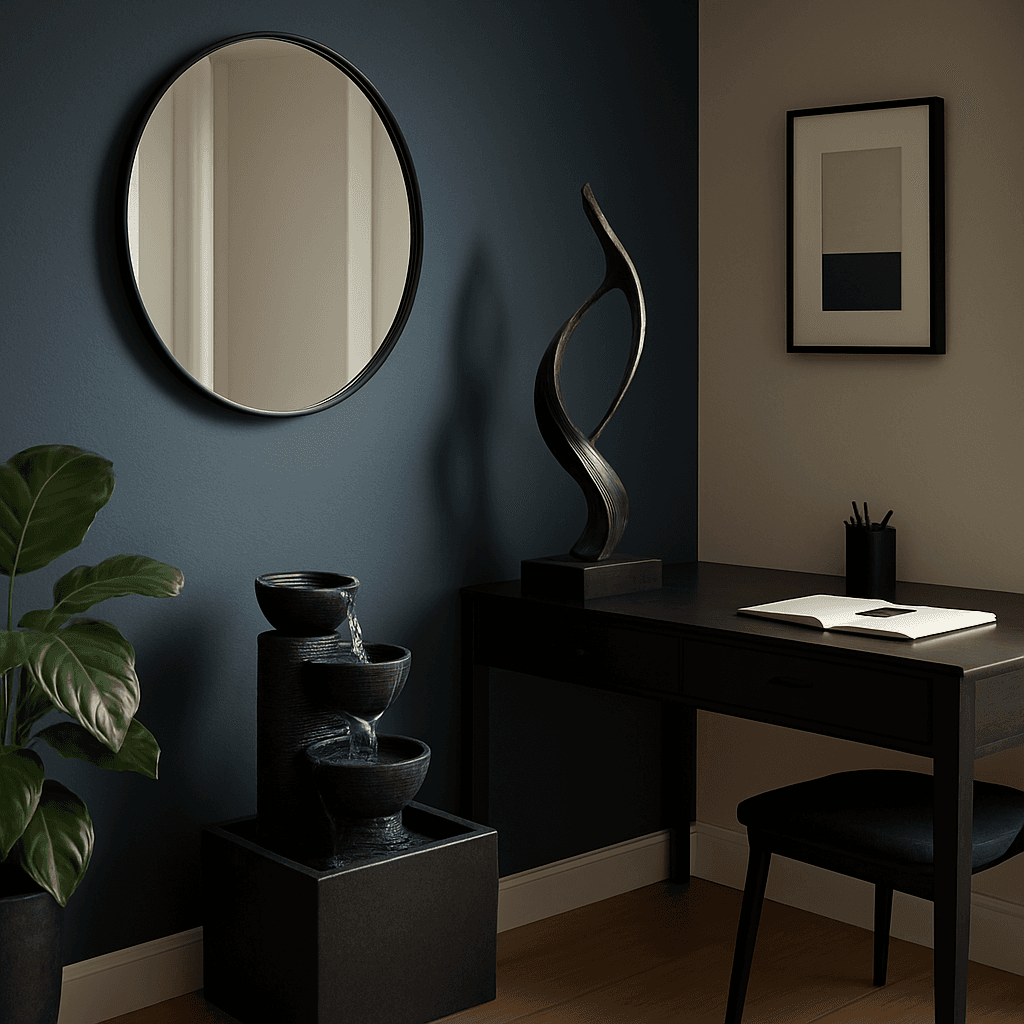
- Mirror that shows the door, weighted so it does not fall on the keys
- Higher chair back
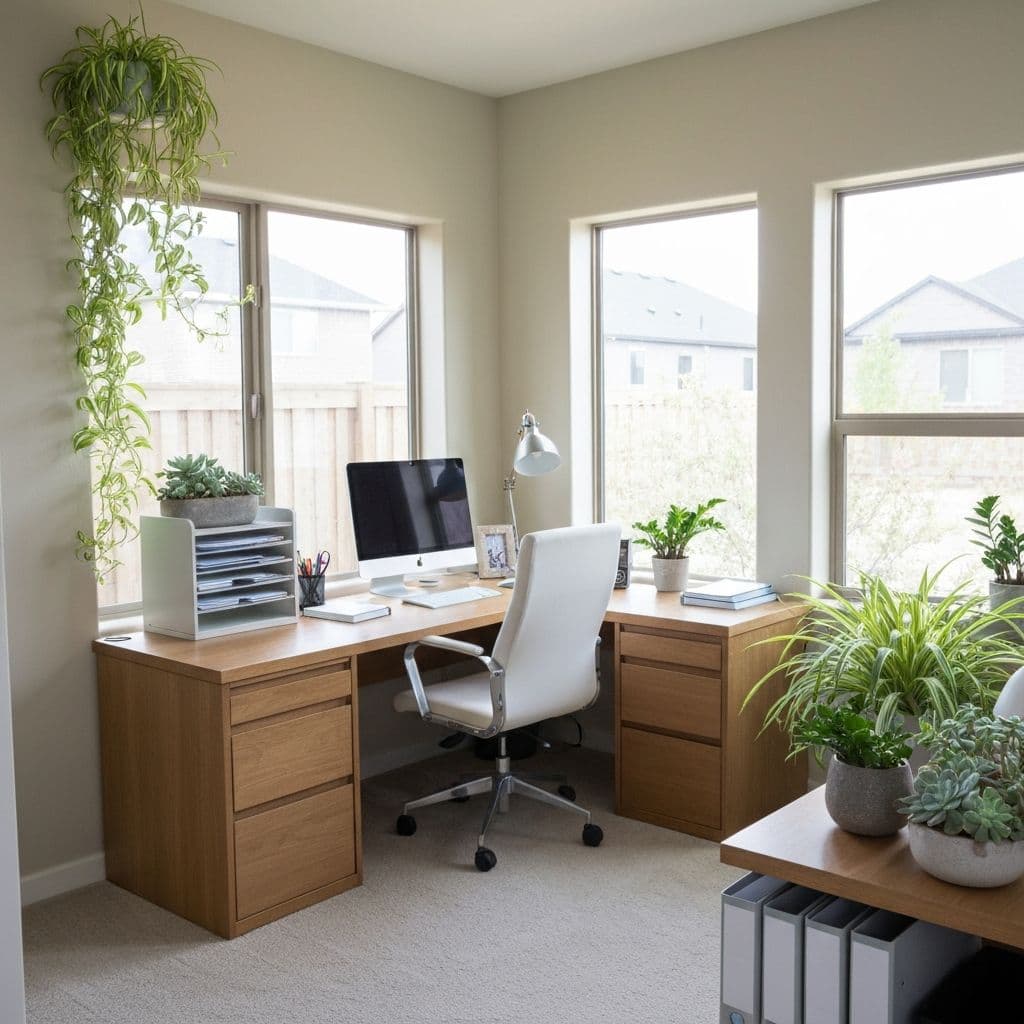
- Plant between you and a sharp corner or a monitor edge aimed at your ribs
- Lamp if the bay is a cave
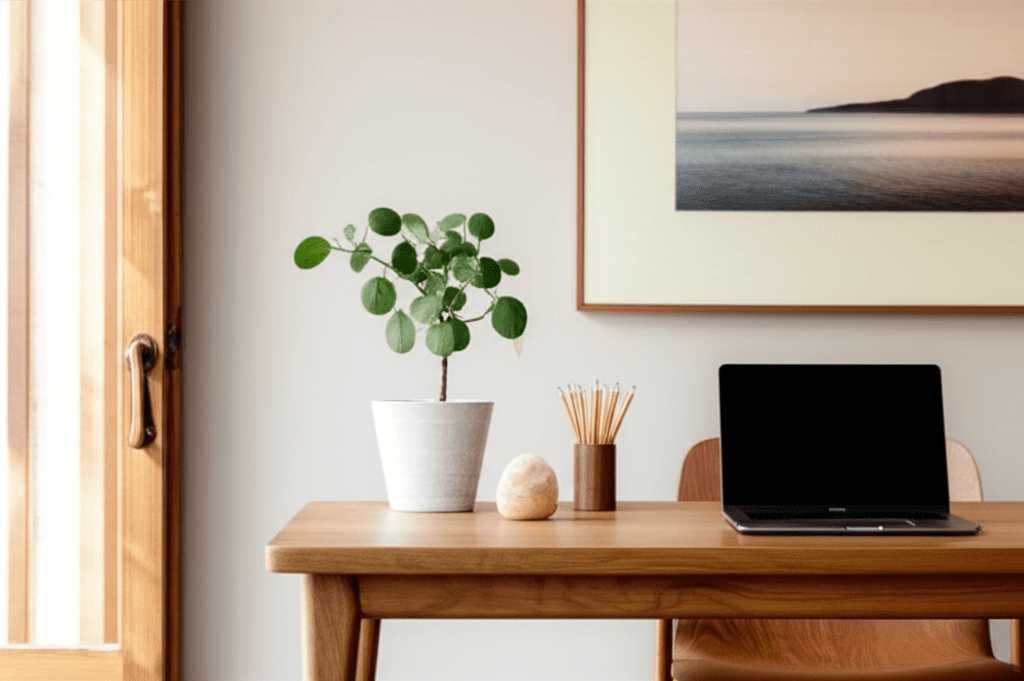
- Artwork with depth if you face plaster
Ask facilities once if a 90-degree flip is allowed. Then stop. A second URL about "desk facing east" is only worth writing when the user task is compass, not this page.
Students: Feng Shui for students. Dedicated room: home office.
A sequence you can finish before lunch
- Photograph from the door and from the chair.
- Angle the desk or swap seats until the door is in view.
- Clear the center of the surface.
- Add the mirror or the chair back only if the footprint is frozen.
- Work a half day before you buy a blotter object.
What to skip
Do not promise a title from a facing. Do not paste an App Store URL in the body. Do not put an aquarium on the desk; that is a tank article and a spill. Do not sit in a hallway to "face career north."
If every layout is bad, write the constraint. The useful next page is office layout or a different room, not another command-position lecture.
How to judge a change
You stop flinching when someone enters. The screen has light you can control. The center of the desk is still for work.
Scan the two photos in FengShui Hero. Flags should match sightline and clutter on the same chair.
Sources and limits
Notes follow Form School command-position practice and common workplace limits. They are not career coaching. Empirical research on Feng Shui as a whole is limited and mixed.
Related: office layout, remote workers, home office, career area.