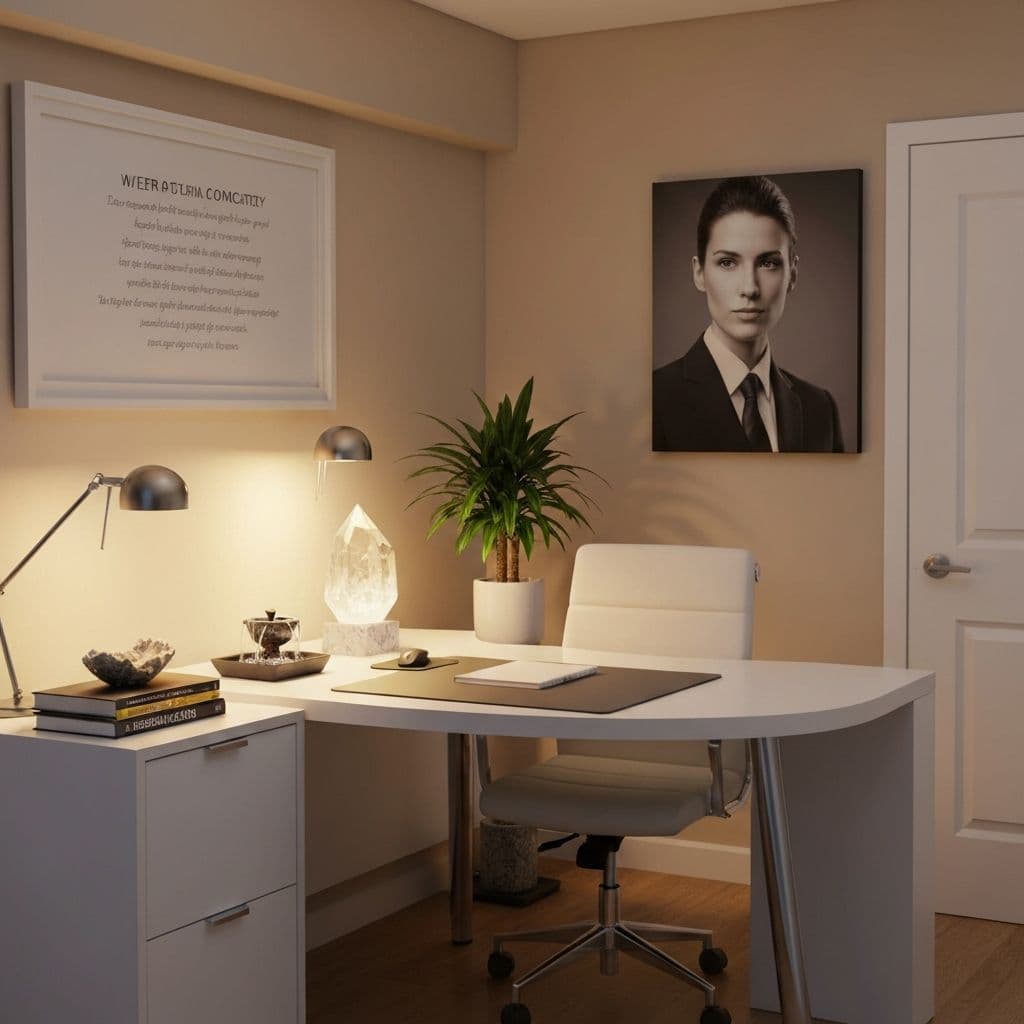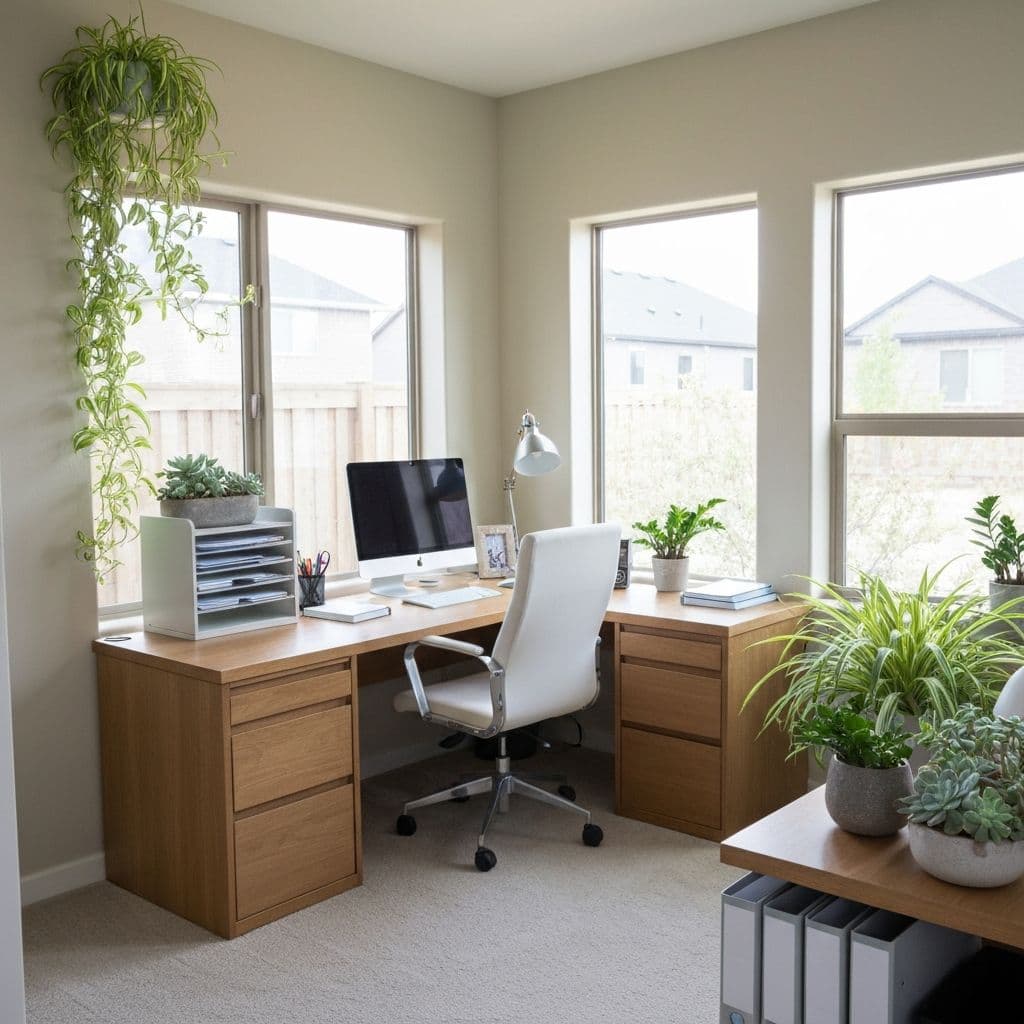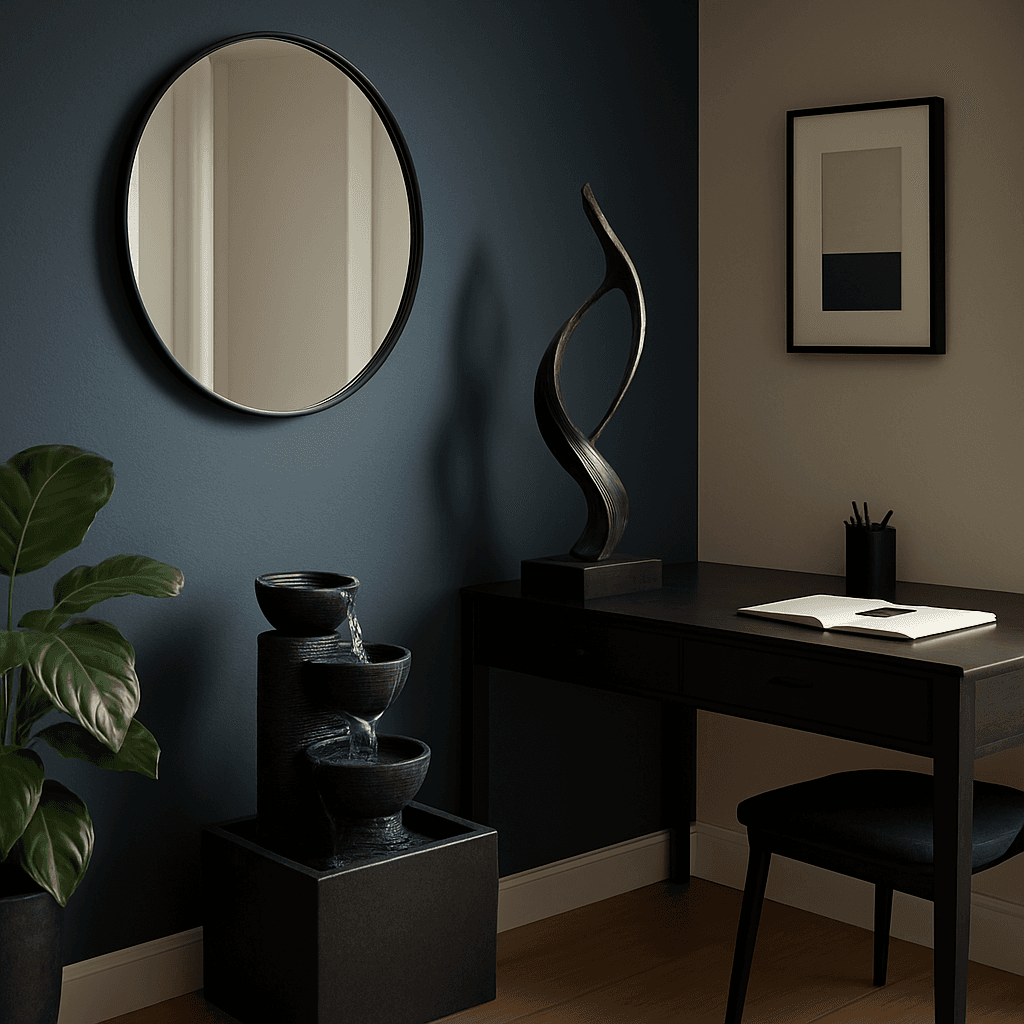

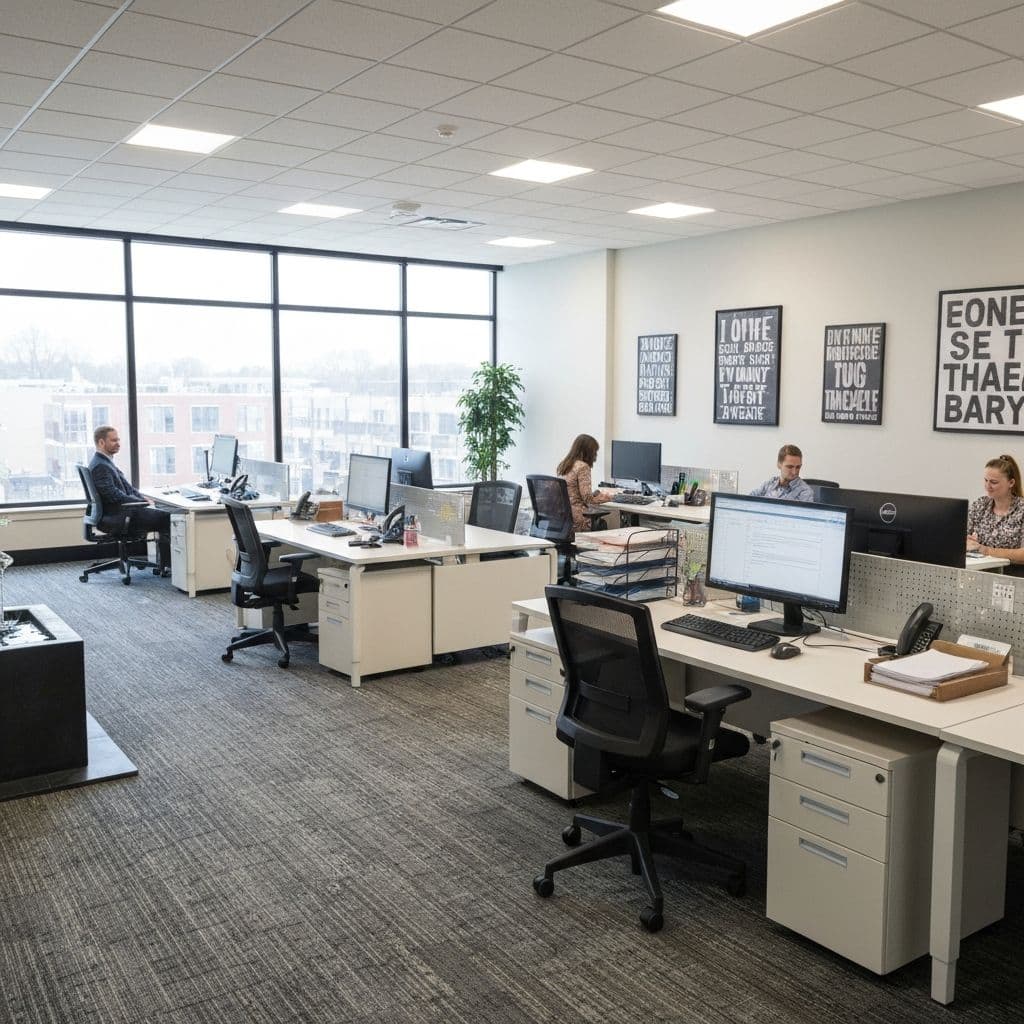
Feng Shui office layout is the plan of the room: who sees the door, who sits in a corridor of traffic, and where focused work can happen without the kitchen path cutting the back of a chair. It is not a promotion spell. Desk toys and a mini-bagua on the blotter come after the furniture is honest.
When we photograph offices for analysis, the tell is rarely a missing crystal. Someone is backed to the entry. Someone else sits in the photocopy queue. A "quiet" desk faces the snack table. This guide is the room test we run before anyone shops for a wealth bowl.
For one chair and one door, use the desk position guide. For a laptop on a dining table, use Feng Shui for remote workers.
What is Feng Shui office layout?
Layout answers three questions you can check standing in the doorway.
- Can the people who own the work see who enters, without sitting in the door's center line?
- Is there a solid back (wall, high chair, bookcase) or only glass and aisle?
- Are meeting, print, and snack paths running through the heads-down seats?
Form School language calls the preferred seat a commanding position. Compass and Eight Mansions schools may add a facing direction. BTB-style bagua overlays a career gua on the floor plan. Those are different jobs. Name the school before you rotate every desk to north.
Command position for a whole room, not one desk
Stand at the threshold. Look at the seats, not the decor.
- The person who takes the most decisions should see the door at a glance. A wall behind that chair is stronger than a window behind it.
- Nobody should sit in a straight shot from the door to a far wall. That seat eats interruptions.
- Side light from a window is useful. A window as your only back is a glare and a draft problem as much as a chi problem.
- A desk jammed against a wall so you face plaster is a common corporate leftover. You lose the door and you stare at a deadline. Pull the desk out a foot if the aisle allows, or hang a wide, calm image so the eye has depth. That is a workaround, not a raise.
If HR owns the grid, you still own the chair height, the monitor angle, and what sits in the aisle. Do not fight a facilities drawing with a sledgehammer.
Open plan, benches, and hot desks
Open plans fail the mountain test. There is no wall. People walk behind you with coffee.
Practical fixes that stay reversible:
- Sit at the end of a bench if you can choose, so one side is a wall or a planter, not two aisles.
- Keep the main walkway off your spine. If the only free seat is on the path to the kitchen, treat that as a bad day seat, not your permanent "power" spot.
- Use a chair with a high back or a coat on the chair as a fake mountain. Ugly, honest, better than nothing.
- Headphones are a social signal, not a Feng Shui cure. They still help.
Hot-desking means you re-run the doorway test every morning. Pick the seat that can see the entry and is not in the printer queue. Leave the lucky plant at home. It will die in a locker.
Team seating without a hierarchy chart
Managers do not need a throne. They need to see the room they are responsible for. Putting the most junior person in the command seat and the lead in a corridor is how meetings get interrupted.
Facing desks (two people looking at each other) work when the gap is a talking distance and both still have a glance at the door. It fails when the gap is a monitor staring contest. An L of two desks often beats a face-off in a small room.
Meeting tables should not steal the only commanding wall. A glass fishbowl in the center of the floor is a modern office habit. If that is the only closed room, keep the table off the door line and give the presenter the wall seat.
Home office as a room, not a corner of the bed
A spare room with a door is a different layout from a laptop at the foot of the bed. Close the door when you can. Zone the work half with a rug and a lamp so the bed is not in the camera.
Do not put the desk in the bed's command position and then sleep in the leftover. The bedroom hub owns sleep. This page owns the work zone. If they share one room, the desk should lose the fight for the door view at night: face the screen down, cover it, or fold the leaf.
Shared living rooms need a visual off switch. A cart you roll into a closet beats a permanent "office" that stares at the sofa. More on that in the remote-work guide.
Compass, bagua, and what to ignore
Form School. Door, back, traffic. No compass required.
Compass / Eight Mansions. Some writers want the desk to face a personal favorable direction. Other practitioners ignore kua numbers. If two sites disagree, they are probably mixing systems.
BTB bagua. Career is often the front-center gua from the door. That is an overlay for color and objects after the seats work. It is not a reason to sit in the doorway.
Wealth corner. Southeast water-and-wood talk belongs in the wealth hub, not as a second office URL. A plant in a bright corner is fine. A fountain on a laminate desk is a spill.
Do not stack a north fountain, a southeast plant, and a west metal clock on one 120 cm desk and call it complete. The career area guide is the gua article. This page stays with furniture.
A sequence you can finish before lunch
- Photograph the room from the door. Circle every seat that cannot see the entry.
- Move the worst seat first, or swap with someone who needs the door less.
- Clear the aisle behind chairs. Bags and charging bricks are the usual sha.
- Put printers and snack runs on a side path, not through the analyst row.
- Add height behind the most exposed chair (bookcase, plant, high back).
- Only then add a lamp or a plant on the desk. See desk position for the blotter, not for the room.
Renters: tape the footprint before you drag a pedestal. Corporate: ask facilities once, in writing, if you need to flip a bench. Do not oil a squeaky chair and call it a layout change.
What to skip
Do not promise wealth, a title, or a hiring freeze ending because the desk faces north. Do not hang a mirror that shows the door if it also shows a toilet or a clutter wall. Do not add an aquarium to fix a bench you hate. Water features are a wealth topic and a leak risk.
If the only layout left is bad, write the constraint down. The useful next page is then "I cannot move the desk," not another article that repeats command position.
How to judge a change
Work a full day in the new seat before you buy objects. If you still flinch when someone enters, you cannot see the door. A small, stable mirror or a webcam angle that includes the entry is a workaround.
Scan the same two photos in FengShui Hero: threshold and chair. The flags should match this page (sightline, clutter, glare), not a lucky-direction score.
Sources and limits
Placement notes follow widely taught Form School and modern workplace practice. They are not a career-coaching protocol. Empirical research on Feng Shui as a whole is limited and mixed. HR policy and lease rules win when they conflict with a blog.
Related in this hub: desk position, remote workers, home office, career area.