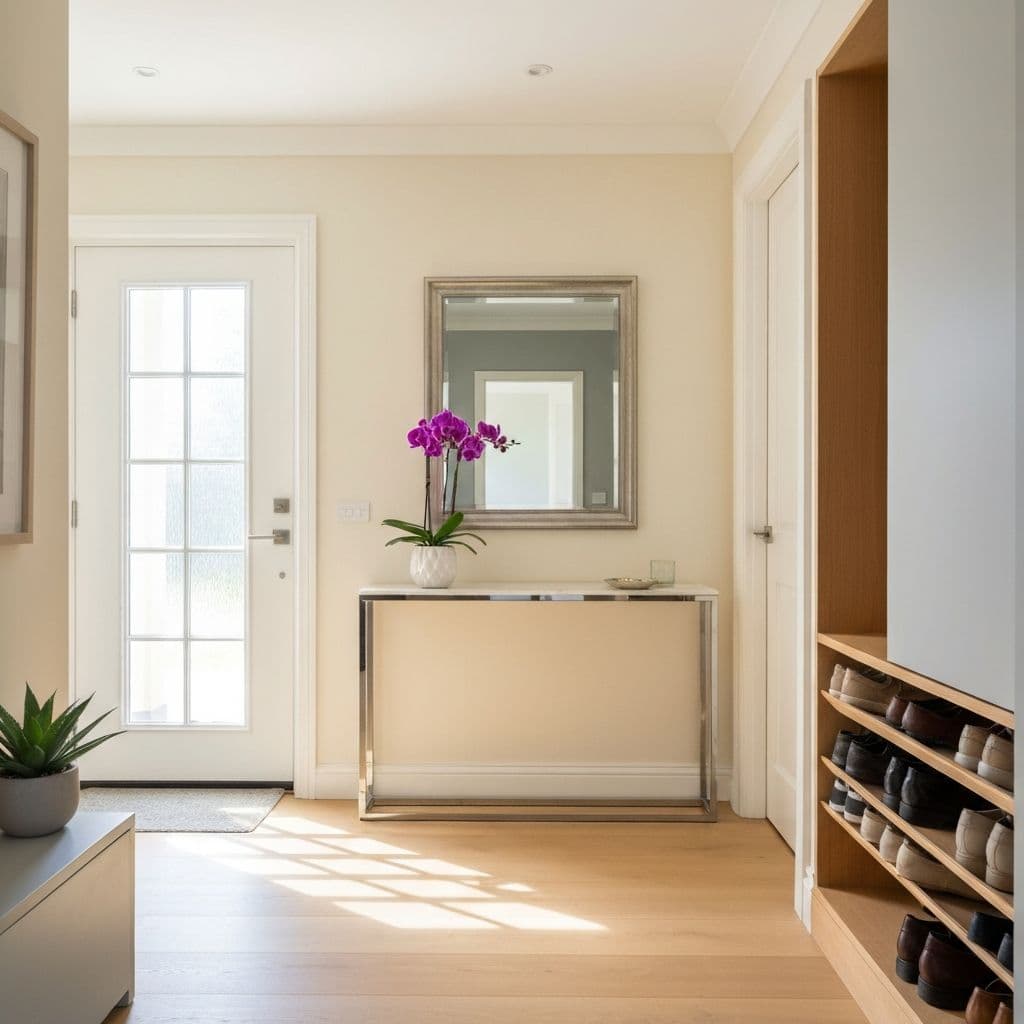

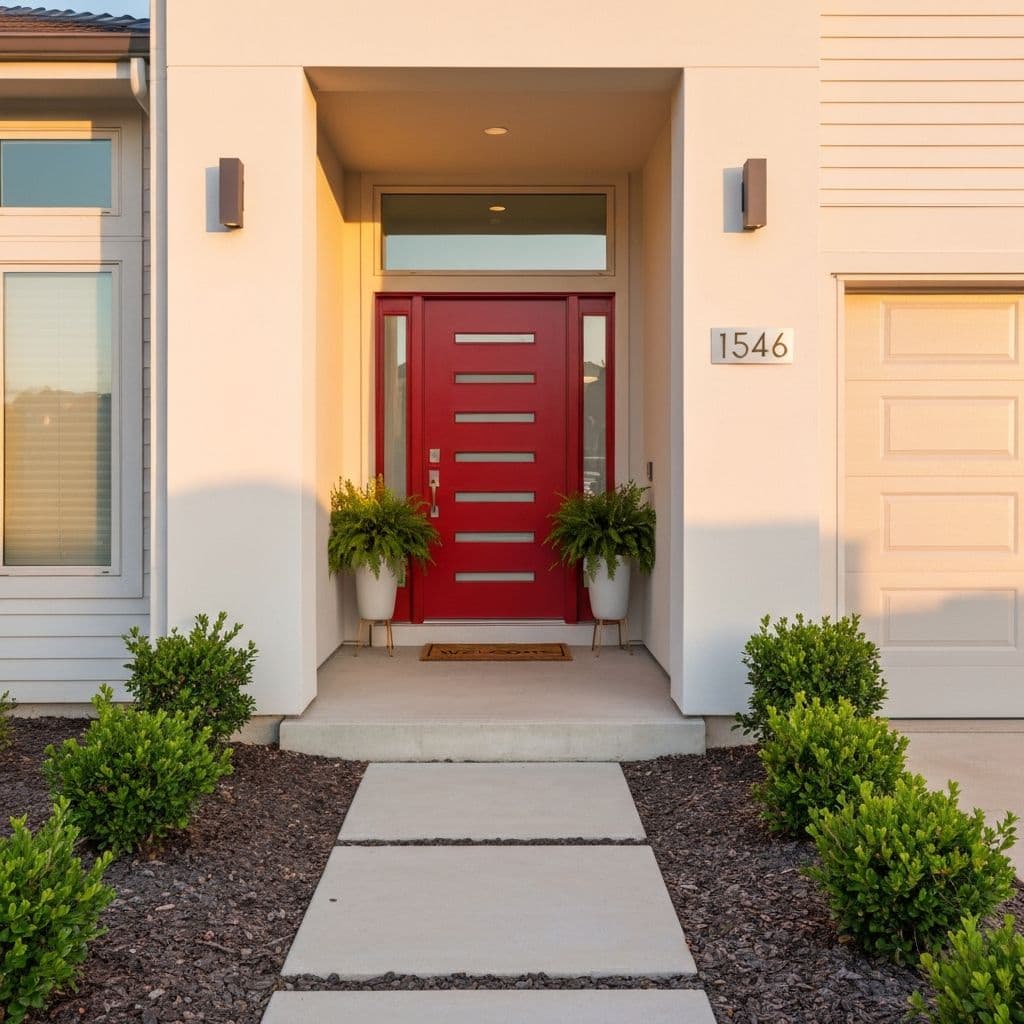
A Feng Shui front door is the opening your household walks through each day, the mouth of chi in Form School language. It is not always the painted door on the street elevation. If you want a change that holds, name the working door first, then clear its path, then decide whether a Compass School color even applies.
We check this on room photos the same way: which leaf moves, what the door hits, and what you see in the first meter. Color charts come after that, and they belong to Compass School, not to every writer who ever said "red door."
Which door is the Feng Shui front door?
Classical Form School talks about the mouth of the house: where people, air, and goods come in. That is a use test, not a facade test.
Walk through a normal Tuesday. Groceries, kids, a delivery, the dog. The leaf that opens for those trips is the door this guide means. In a lot of houses that is the garage into a mudroom. In a walk-up it is the apartment door on a shared hall. In a shop it is the customer door, not the alley stock door, unless staff live through the alley.
A formal front that stays bolted "for show" still matters for how the house looks from the street. It does not get the daily intake. If you paint that unused leaf red and leave the garage jammed with bins, you decorated the wrong hole.
Hotel lobbies and short-let lockboxes follow the same rule. Guests use one opening. That is the mouth. The entryway guide covers the first meter after the latch: shoes, a table, a glare. This page stays on the door itself.
How do you read the facing direction?
Compass School color lists need a facing. People take that reading from the sidewalk and get a different number than the door.
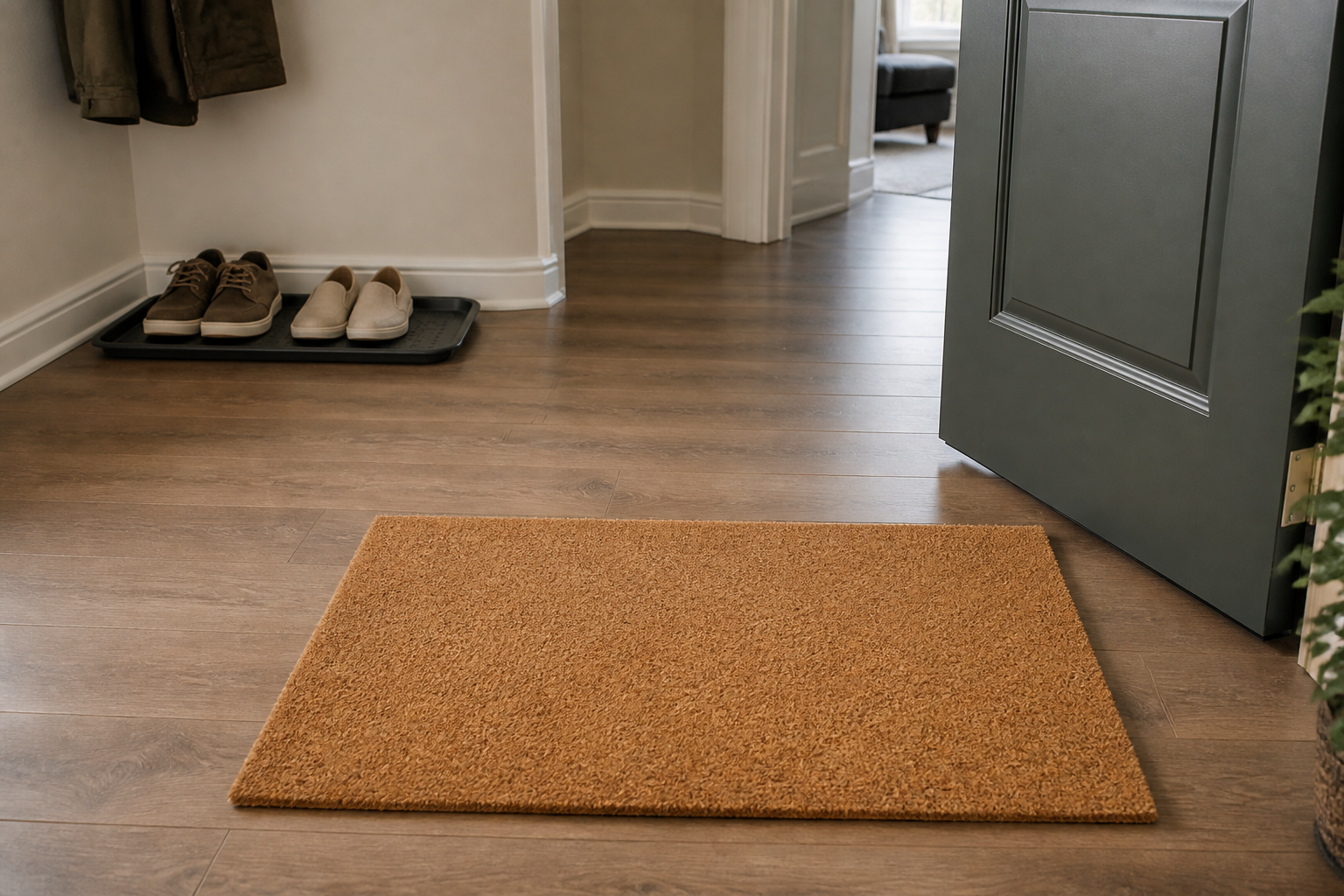
Stand just inside, close the leaf if you can, and look out as if you were leaving. The direction your nose points is the facing those charts mean. A phone compass is enough for north, east, south, west, and the four corners. You do not need a luo pan to decide whether a mat can stay.
If the reading sits between two named directions, pick the nearer cardinal or intercardinal and write it down. Do not rerun the compass until it "feels luckier."
Street-facing and door-facing can disagree on a corner lot or a recessed porch. Trust the view out the working door. The west-facing house notes are for the house sitting, which is a different question from this leaf.
What if you cannot paint the door?
Most leases and many HOA rules freeze the exterior color. That does not close the job.
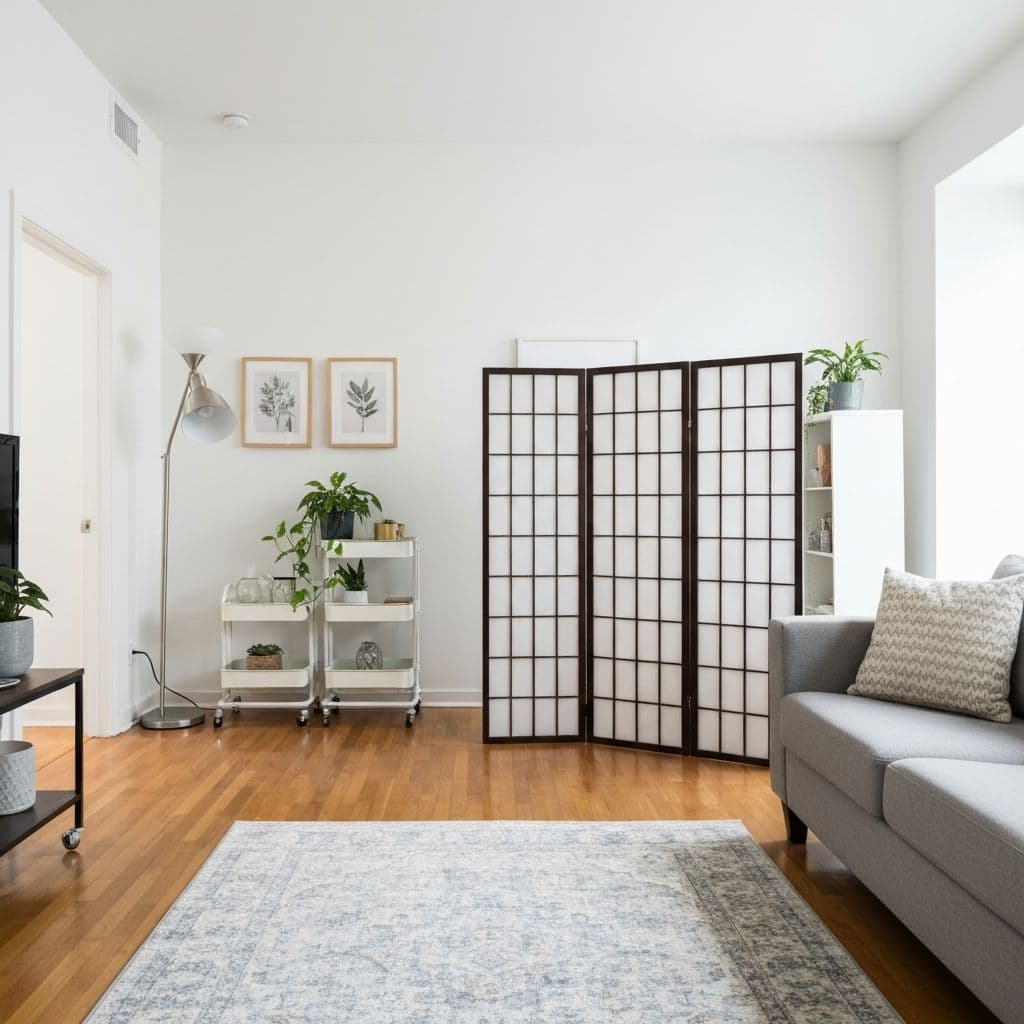
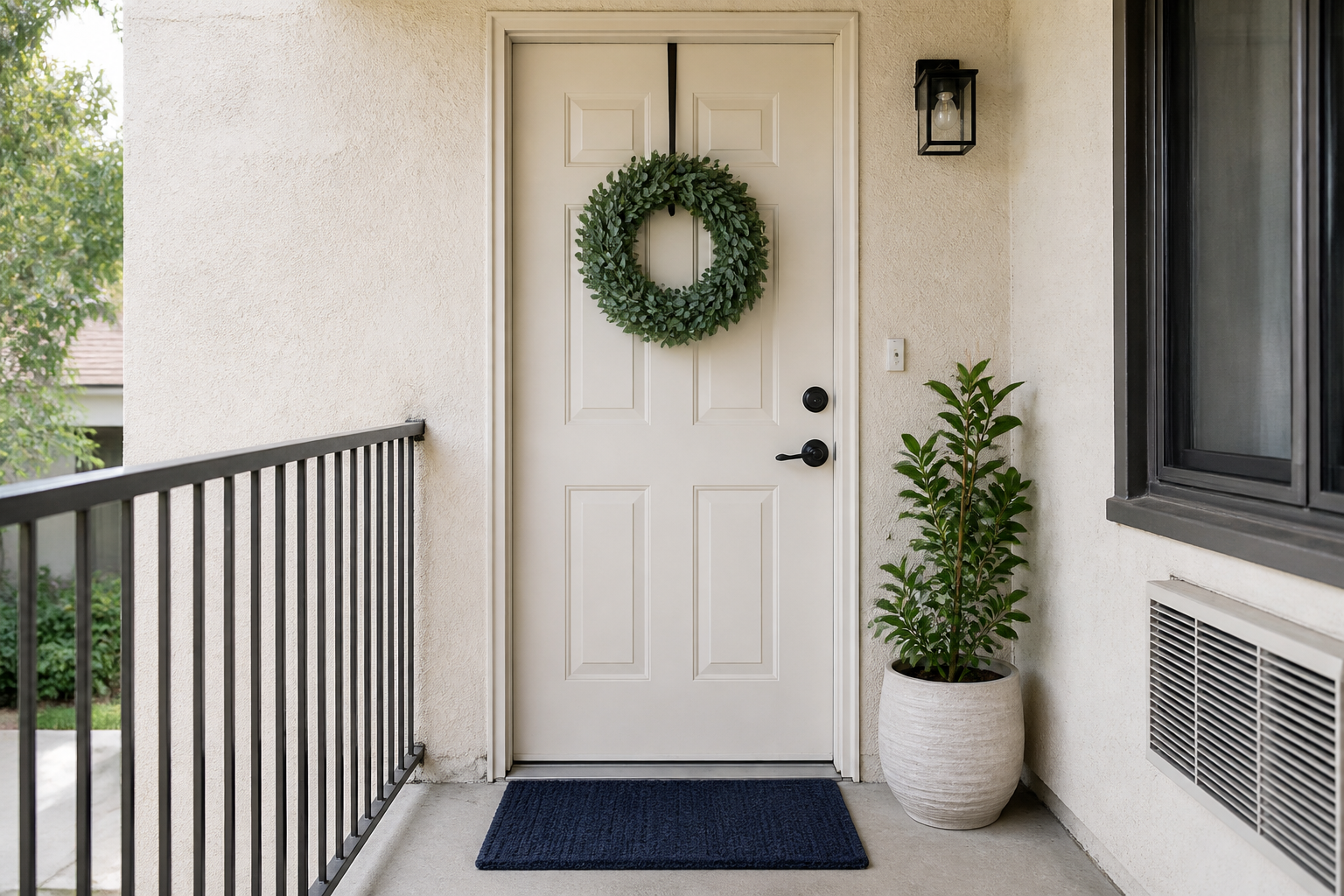
Form School still wants a leaf that opens to 90 degrees, a light that works, a number or name a guest can read, and a path you do not climb over. Those are renter moves. The renters guide keeps the rest of the unit in that same constraint.
What usually works without paint:
- A mat that is wide enough for both feet and not a trip fold
- A working porch or hallway bulb, even if the fixture is ugly
- Shoes on a rack that does not sit in the swing
- One live plant you can water, or none if the hall is dark
- A wreath or hook only if the building allows it
Skip a bagua mirror in a shared corridor. Neighbors read it as a stare, and you do not control the hall sightline.
What should you keep off the path?
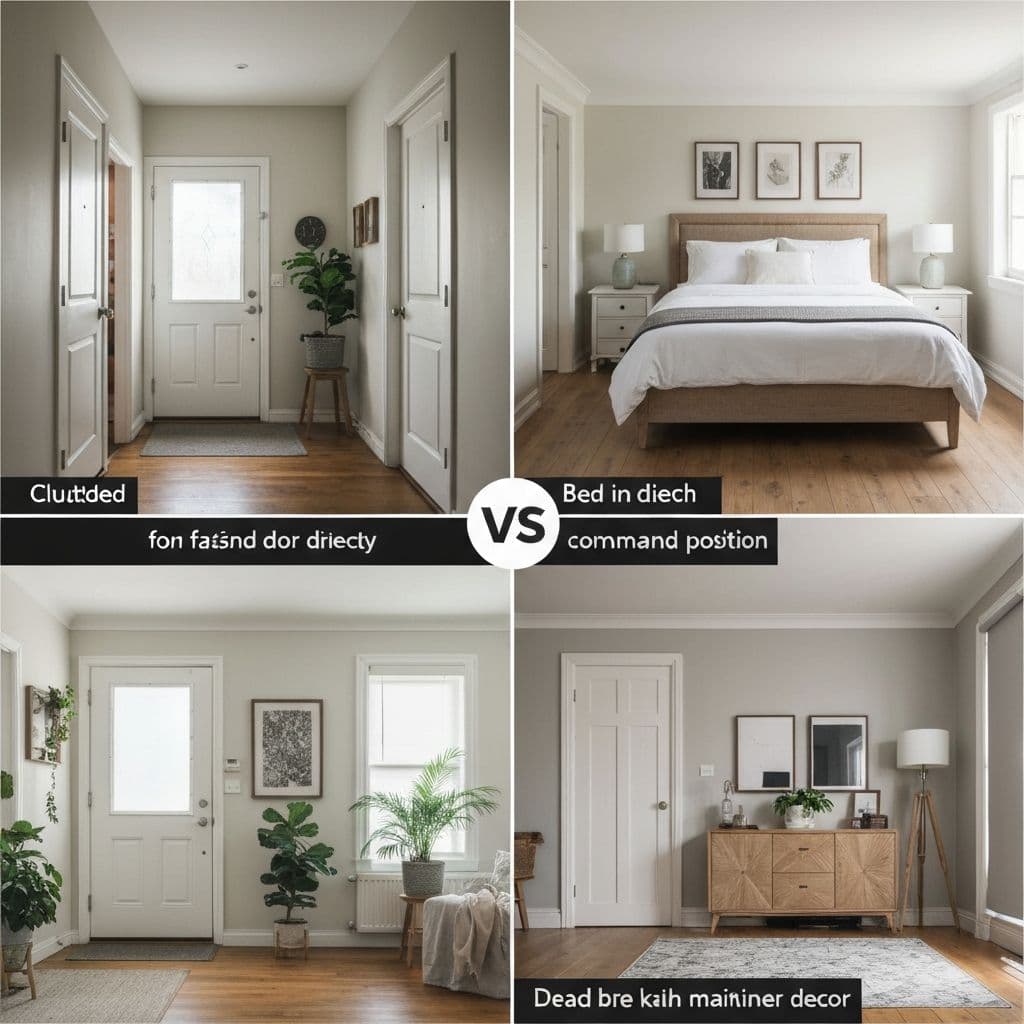
The boring list is the useful one. A door that scrapes a shoe pile, a dead plant, a trash bin in the first glance, mail stacked on the handle, and a mirror that faces the opening so you see yourself leaving. Those show up in photos. They are also in the mistakes checklist.
A mirror opposite the door is a taste fight, not a physics proof. Some writers say it pushes chi out. The practical read is simpler: the first thing you see is your own exit. If that bothers you, move the mirror to a side wall. If you need it to check a coat, angle it so it does not hit the leaf square.
Garbage bins belong out of the first view if you can roll them. If the only pad is next to the stoop, close the lids and keep the walk itself clear. Do not hide rot behind a lucky plant.
Spiky plants next to a narrow path make people twist sideways. Rounded leaves are easier in a tight stoop. Plant lists that promise income live on the wealth plants page. This page only asks whether the pot is alive and out of the swing.
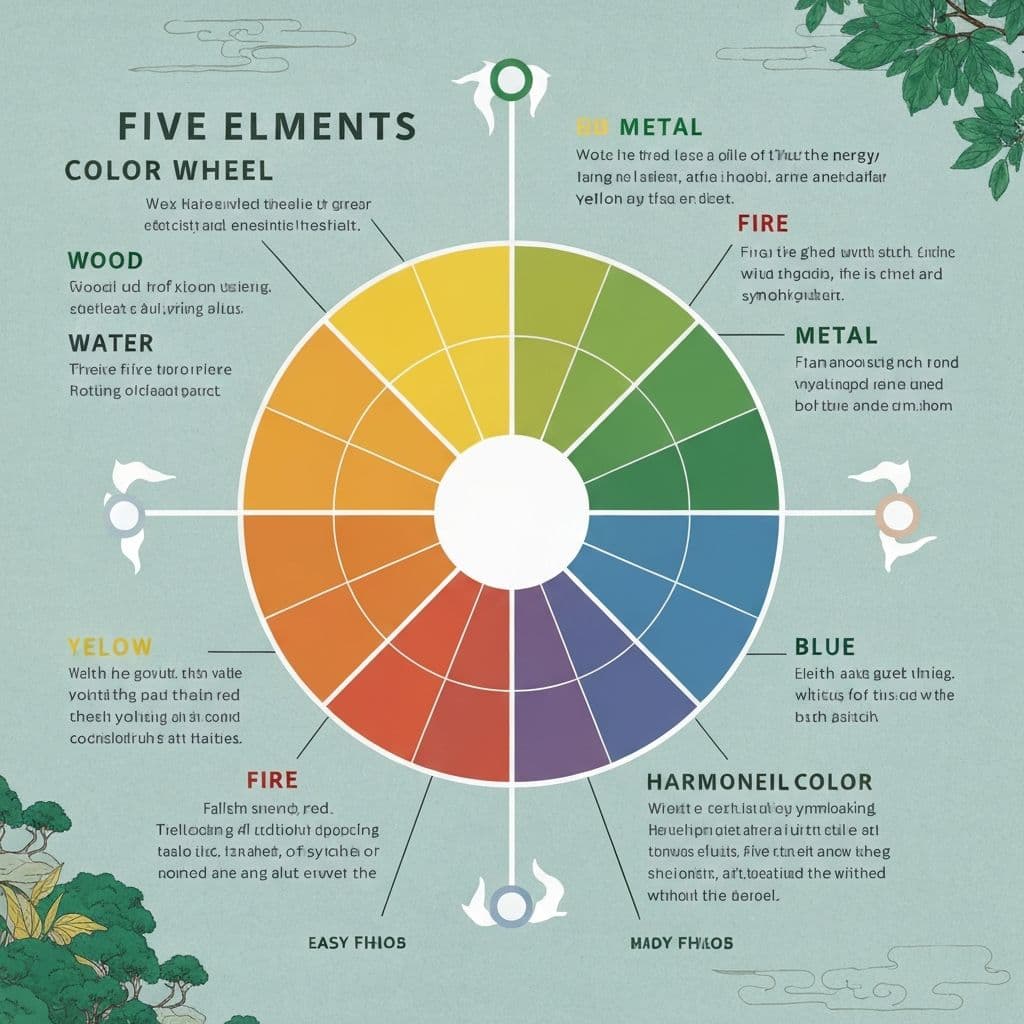
Compass School colors, labeled as a chart
Use this only after you know the working door and its facing. Color is an elemental pairing, not a raise. The five-element color notes explain wood, fire, earth, metal, and water without a shopping list.
| Facing (looking out) | Element | Colors people use | Skip if you cannot paint |
|---|---|---|---|
| North | Water | Blue, black | Keep the path; metal (white, gray) is a support color in some lists |
| South | Fire | Red, orange, purple | A warm mat or bulb does the "warm" job |
| East | Wood | Green, brown | One healthy plant beats a green you cannot apply |
| Southeast | Wood | Green, and some lists add purple | Same as east for a renter |
| West | Metal | White, gray, metal finishes | Earth tones (beige, ochre) as a support color |
| Northwest | Metal | White, gray, metal | Same as west |
| Northeast / southwest | Earth | Beige, yellow, terracotta | A natural-fiber mat is the cheap version |
Red is a fire color. Compass School likes it on south. It is not required on every house, and it is a poor fight with a landlord. If you already have a red door you like, you do not need to repaint it because a chart preferred blue.
Do not mix this chart with a yearly flying-star "lucky color" for 2026. That is a different school and a different page. This guide will not give you a star number.
Awkward doors you cannot rebuild
Door onto a stair. Energy-talk says chi rushes up or dumps down. The useful move is a pause: a plant or a picture at the landing, a runner that is actually attached, a light so you see the first tread. Do not hang a crystal in a fire-exit path.
Front aligned with a back door or a long hall. Chi-talk says the house becomes a wind tunnel. A rug, a table that does not block egress, or a plant that breaks the straight sightline slows the walk. Building code still wins. Do not install a permanent divider in a required exit.
Apartment hall. You own the leaf and the first meter inside. You share the corridor. Sweep your threshold. Do not colonize the hall with a shoe wall. If the building light is dead, report it. Your wreath is optional.
Shop or salon. The customer door is the mouth. A till that cannot see who enters is an office problem; use the desk guide for the chair. Keep the public swing clear of a sandwich board that wedges the leaf.
A weekly check that is not a ritual
Once a week is enough:
- Open the working door to a full 90 degrees. Move whatever stopped it.
- Wipe the handle. A stuck latch is a stuck mouth in the old metaphor and a jammed lock in this one.
- Shake the mat. Replace it when it is a trip.
- Water or remove the plant. Dead leaves next to the intake are just dead leaves.
- Confirm the number or the nameplate still reads from the approach you actually use.
Seasonally, oil the hinges and look at paint chips if you own the leaf. Yearly, decide whether a new color is worth a conversation with whoever owns the building. Most years the answer is no, and the path work still stands.
If you photograph the door for the app, shoot from outside looking at the leaf and again from inside looking out. The second frame is the facing shot. The first frame shows the path a guest walks.
A blocked door does not forecast a bad year. It forecasts that you fight the same pile every morning. Clear that. Then, if you can paint and you care about Compass School, pick from the chart. Stop there.