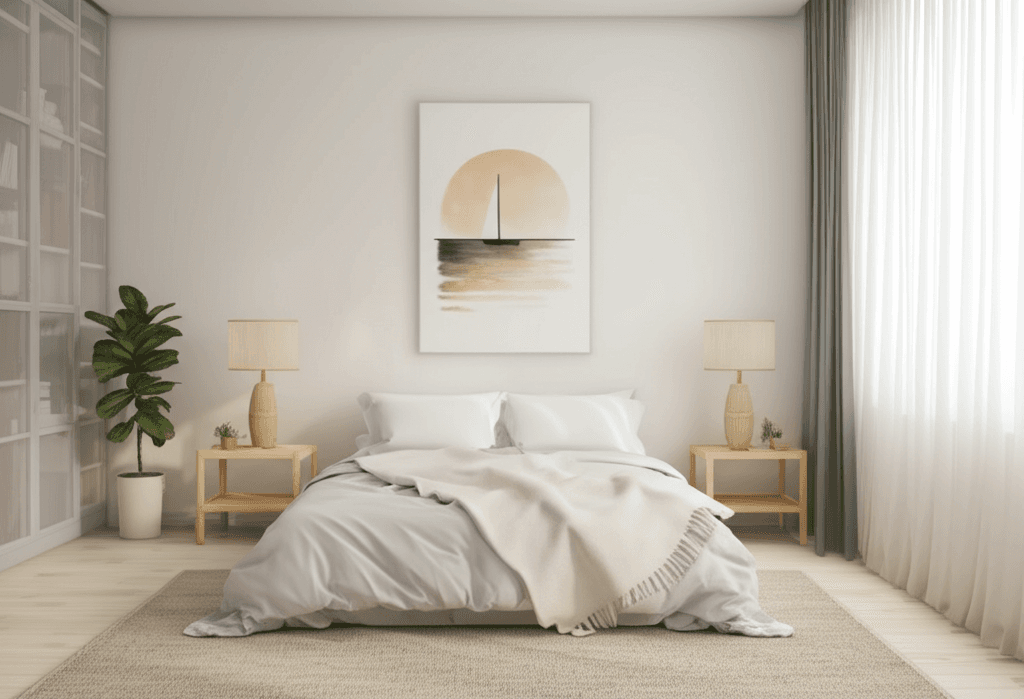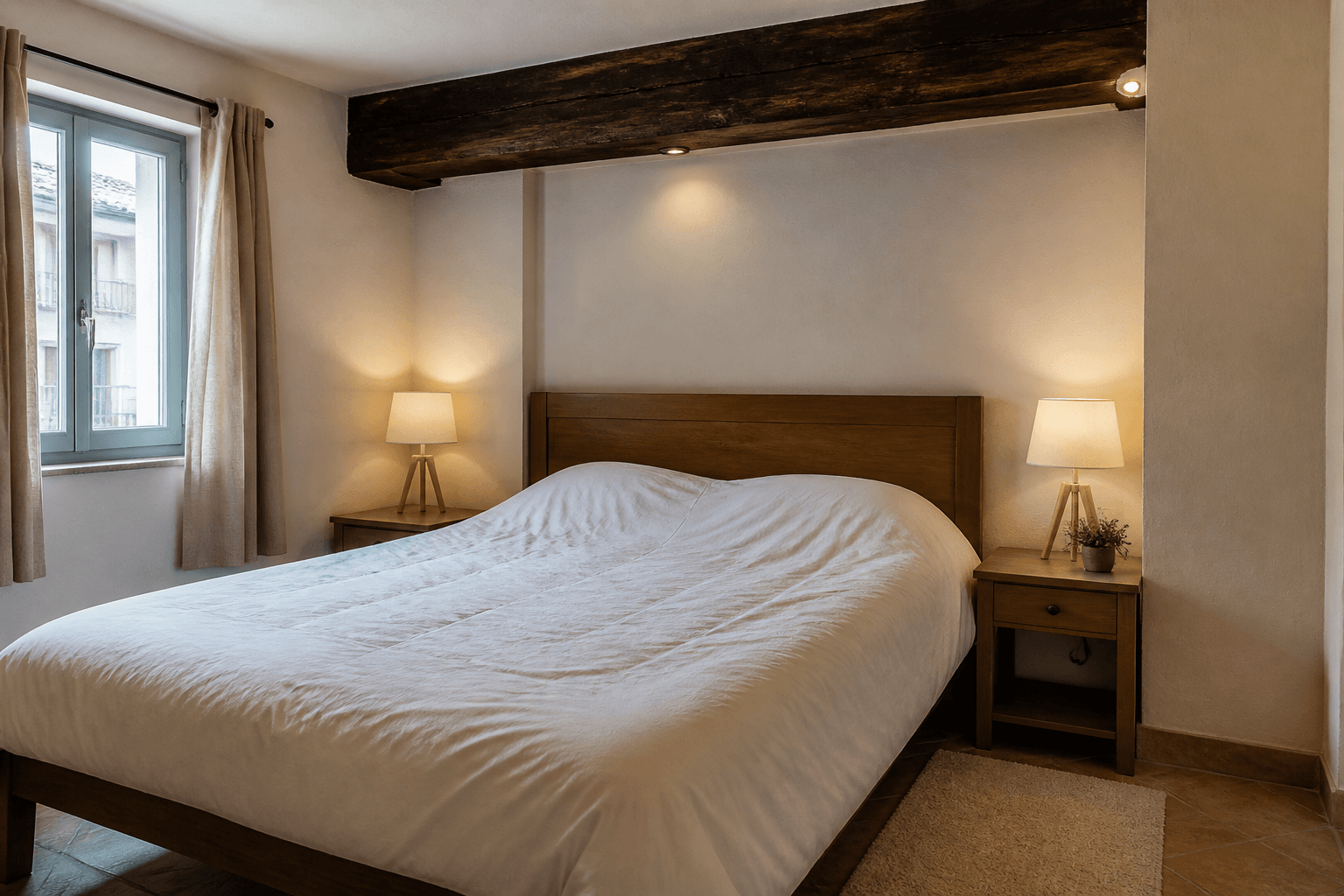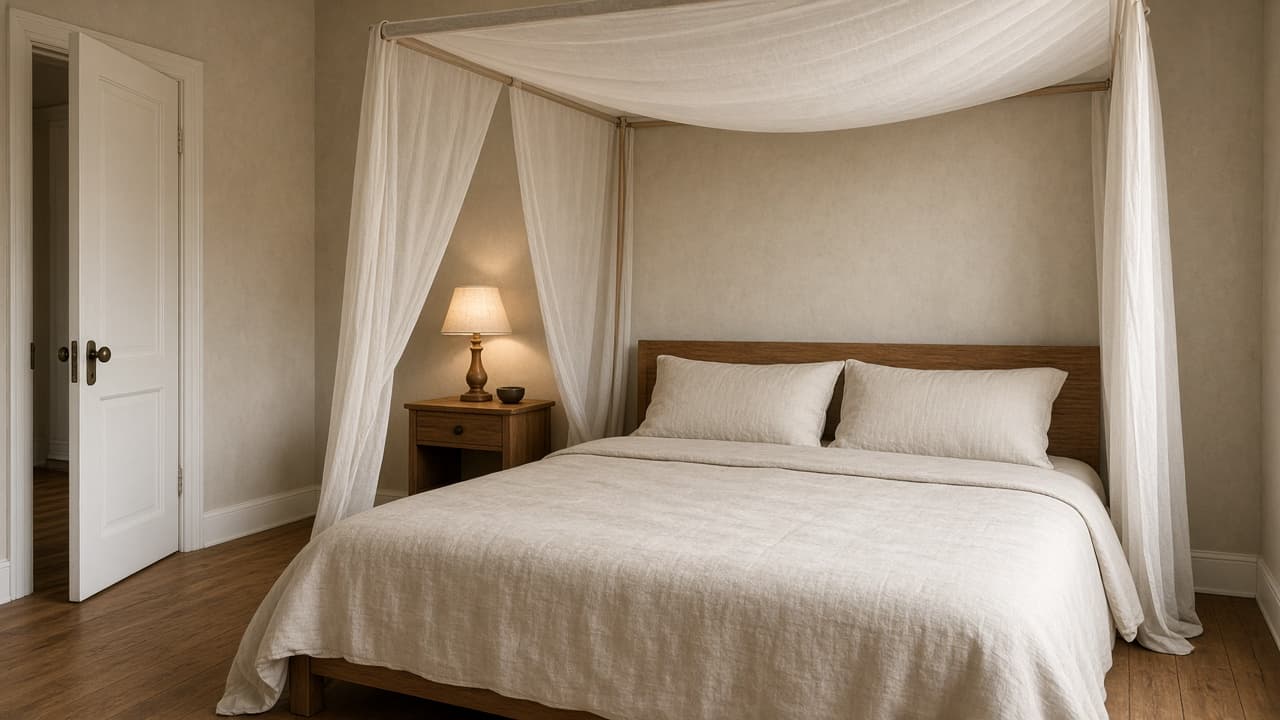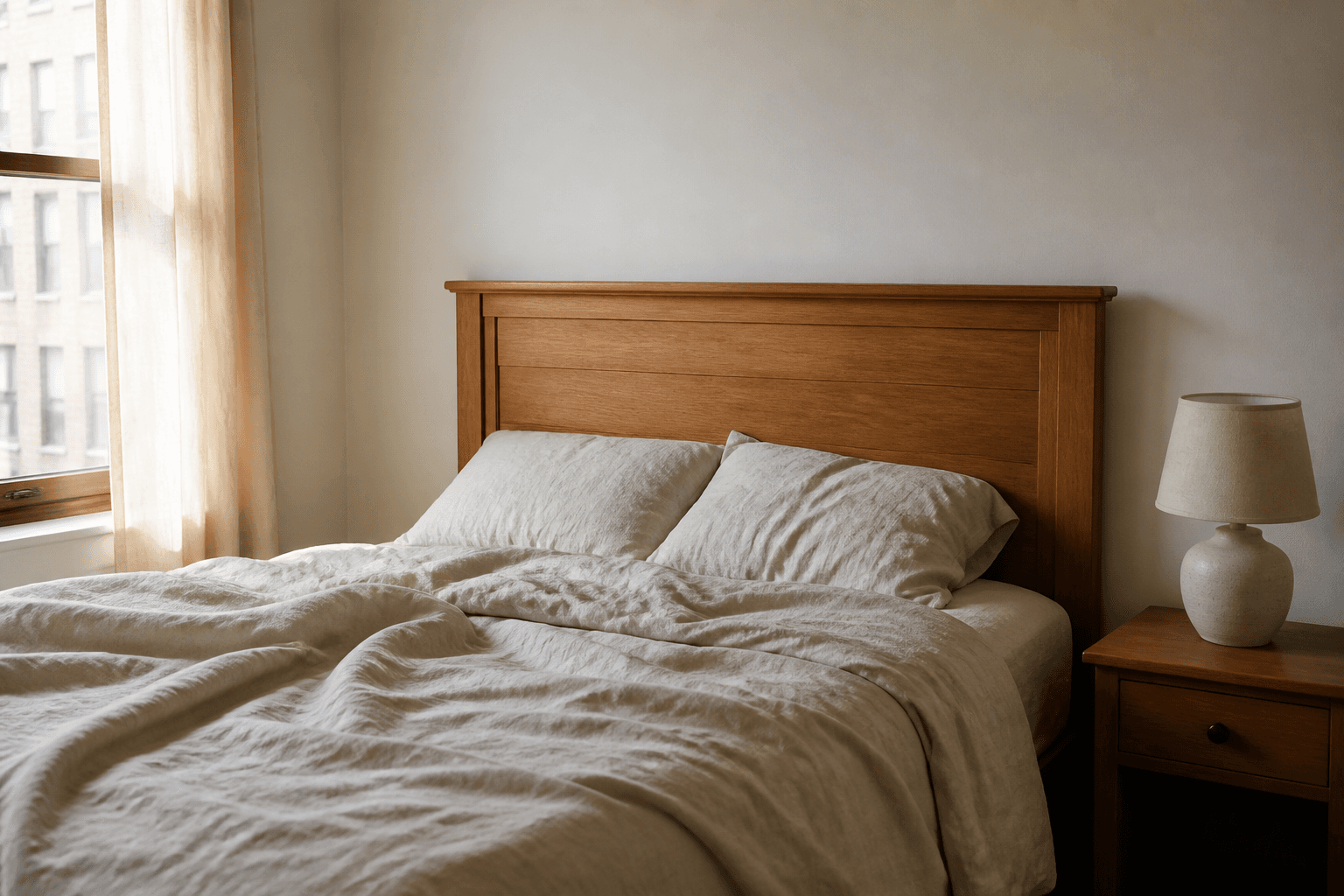

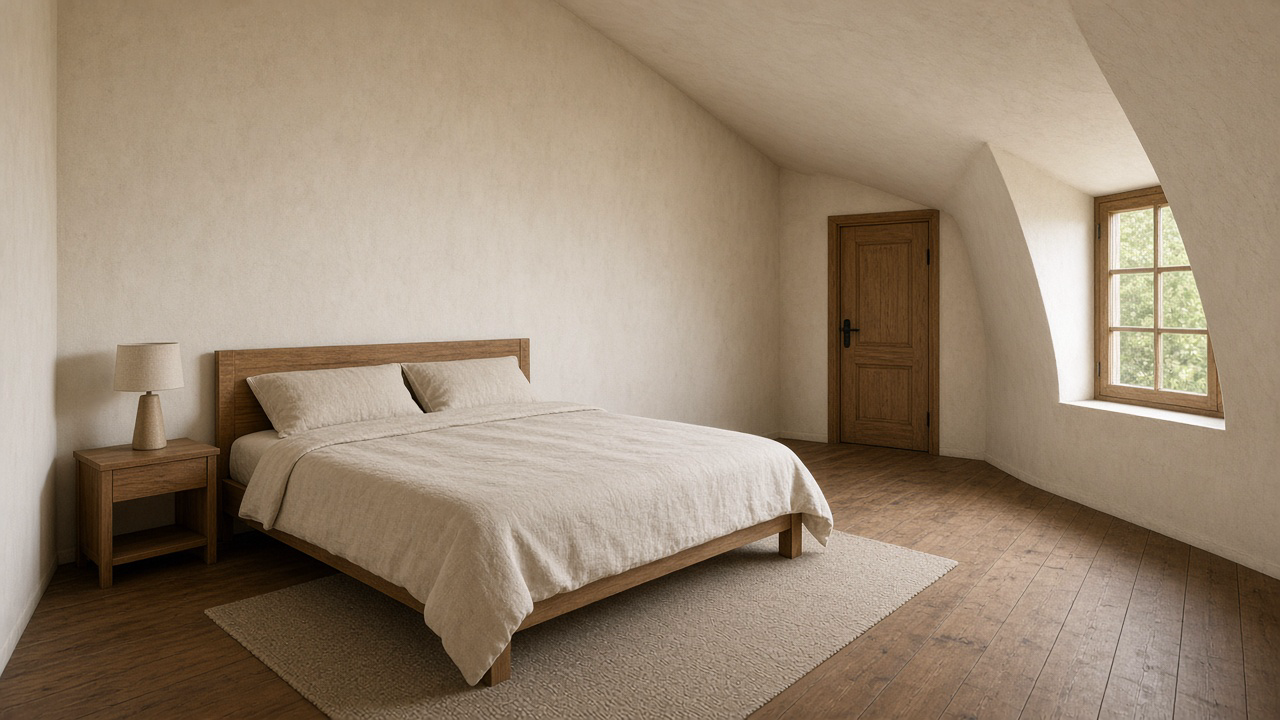
A feng shui sloped ceiling bedroom is a sleep room where the eave drops over the pillow. You sit up, tape the clearance, and shift the mattress so the head sits under the high wall and the slope sits beside you or over the feet. Skip a luck story. Renters do not raise the roof.
When we photograph attic conversions and loft listings, the stills still sell a "cozy eave nook." The sleeper sits up at 11 p.m. and the same plaster is in their hair. People ask which crystal lifts a slope, or whether a vaulted peak is unlucky. We lie on the pillow they actually use. We sit up the way they sit to drink water. We look for the latch. If the first plane is a low eave, the bed is unfinished. This page is that overhead plane. A hard stripe of timber is the ceiling beam over the bed article. Cloth you hang is the canopy article. A 3x3 on the standable attic floor is bagua for an attic. A kit that puts sleep over a desk is a loft bed. Tonight is eaves over the pillow.
How we check a sloped ceiling bedroom
Lie where you sleep. Look up. Sit up. Then walk in from the bedroom door you actually use, not the listing's styled leaf.
Do this in the light you use at night. Skip a noon photo as the only test. A pale slope can disappear in a bright phone shot and still sit on your forehead after dark.
- Lie on your usual pillow. If the plaster is close enough that you could name the grain, mark the eave as over the sleeper.
- Sit up the way you sit to drink water. If your head meets plaster, or you duck, mark it again. That is the sit-up fail, even if the listing called the corner snug.
- Tape from the mattress to the slope at the pillow, at mid-body, and at the foot. You are comparing three heights, not hunting a lucky number. Write which end is lowest.
- Walk in from the latch. Can you still see the door from the pillow after any shift you are considering. If the high wall puts you on glass or in the door's center line, stop and write that conflict. Do not "win" the eave and lose the wall.
- Check both pillows on a shared bed. One sleeper under the low side is still a fail for that person.
Write which check failed: look-up, sit-up, uneven height, or command. The next sections are only those failures.
A knee wall with a closed cabinet under the slope is volume you do not sleep in. A dormer in the high wall is glass, not a mountain. An A-frame gets the same test on both sides: pick the higher gable if it is solid plaster. A cathedral vault that stays high over the whole mattress is a different picture. Stay here when the low eave is the sleep problem. Add the overhead tape to the measure a room checks you already do for door, bed wall, and walk.
Is a sloped ceiling bad feng shui for sleep?
A sloped ceiling is a problem in Feng Shui when the low side sits over the sleeper. Form School wants an even overhead and a solid mountain behind the head. Popular posts then add headaches, "suppressed chi," and a personality diagnosis. Treat the poetry as poetry. The furniture job is a mattress that is not parked under the lowest eave.
Wikipedia's feng shui page still splits that shape work from Compass overlays. Compass can argue about a bedroom sector later. Tonight the job is height you can sit up into, and a wall at your back. You do not need a flying-star year to feel a slope on your face.
The common listing trick is to shove the bed into the low corner because it "looks tucked in." That is the wrong tuck. The cozy photo is a sit-up fail. The picture you want is the head under the tallest solid wall, with the slope running beside the bed or dropping over the feet, not over the face.
A high vault over the whole bed is quieter. You still look for a ridge or a boxed soffit. If a dark bar cuts the body, use the beam article. If the plane is even and high, the slope is not tonight's job.
This page will not diagnose pain or income. If your head hurts, that is a clinician. The eave is still an eave.
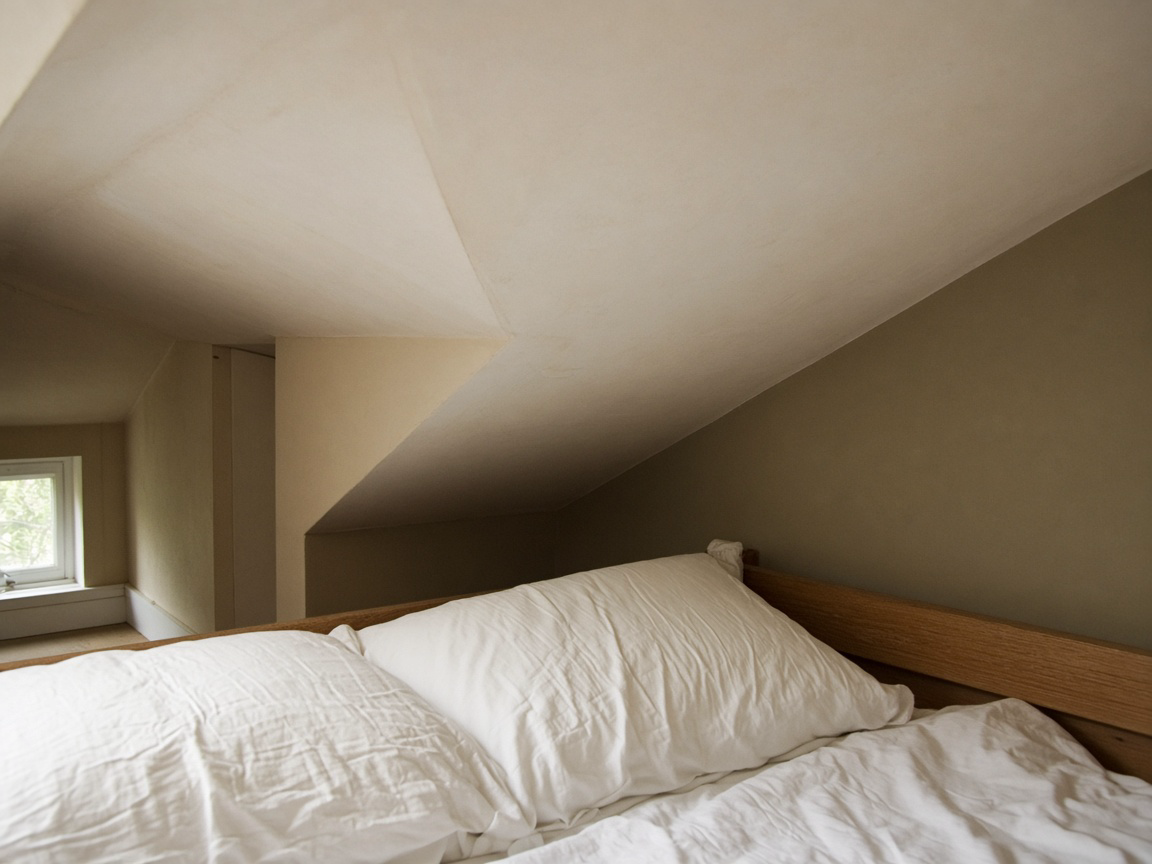
That look-up is the fail. The pillows are under the low plane. Sit-up will duck. Do not hang a charm on that plaster. Move the bed, or hang cloth only after a shift that keeps command.
Where should the bed go under a slope?
Head under the highest usable solid wall. Slope beside you or over the feet. Latch still in a glance. That is the whole placement sentence.
Get the pillows off the lowest eave first. Slide the frame toward the tall plaster. Keep a headboard or a wall you can sit up into. Keep a path you can walk in the dark. If that mix is impossible, skip to cloth. Do not put the head on a window to chase height. Glass as the sleep wall is the window behind the bed job, and a high eave does not cancel a draft at the neck.
If the only high wall puts your feet at the door, you have a coffin-line conflict. Command still wins. Angle a few inches, or pick the next-best wall that is solid and not the lowest eave. Then run the bed and door check: can you see who enters, are you in the swing line, is the back a wall. The bed facing door article is that center line on a regular frame. Use it after the shift, not instead of the sit-up.
On a couple's mattress, do not "solve" the eave by giving one person the low side forever. Shift so both heads share similar height, or put the low plane over the aisle. A split in overhead height is a furniture picture, not a relationship reading.
| Picture from the pillow | What failed | Tonight |
|---|---|---|
| Plaster close over the face | Look-up and sit-up | Slide toward the high solid wall |
| Head high, feet low, slope across the body | Uneven height | Rotate so the slope runs beside the bed |
| Head under the peak, glass at the back | Window as mountain | Stop. Use the window-behind-bed steps |
| Head under the peak, latch at the feet | Door line | Shift or angle, then the bed-door check |
| One pillow low, one pillow high | Shared-bed split | Move so both heads share height, or low side is the aisle |
| Bed cannot move, eave still there | Lease or size | Light canopy, sit-up path, closed storage under the knee wall |
A nightstand belongs where you can sit up without hitting plaster. If the only table space is under the knee wall, use a low table or skip it on that side. Closed cabinets under the eave are useful. Open piles under the eave are the same clutter the bedroom pillar already wants off the sleep wall.
Do not drill a landlord slope. Felt pads under the feet are enough for a trial shift. Photograph the floor before you add hooks. Everything should leave at move-out.
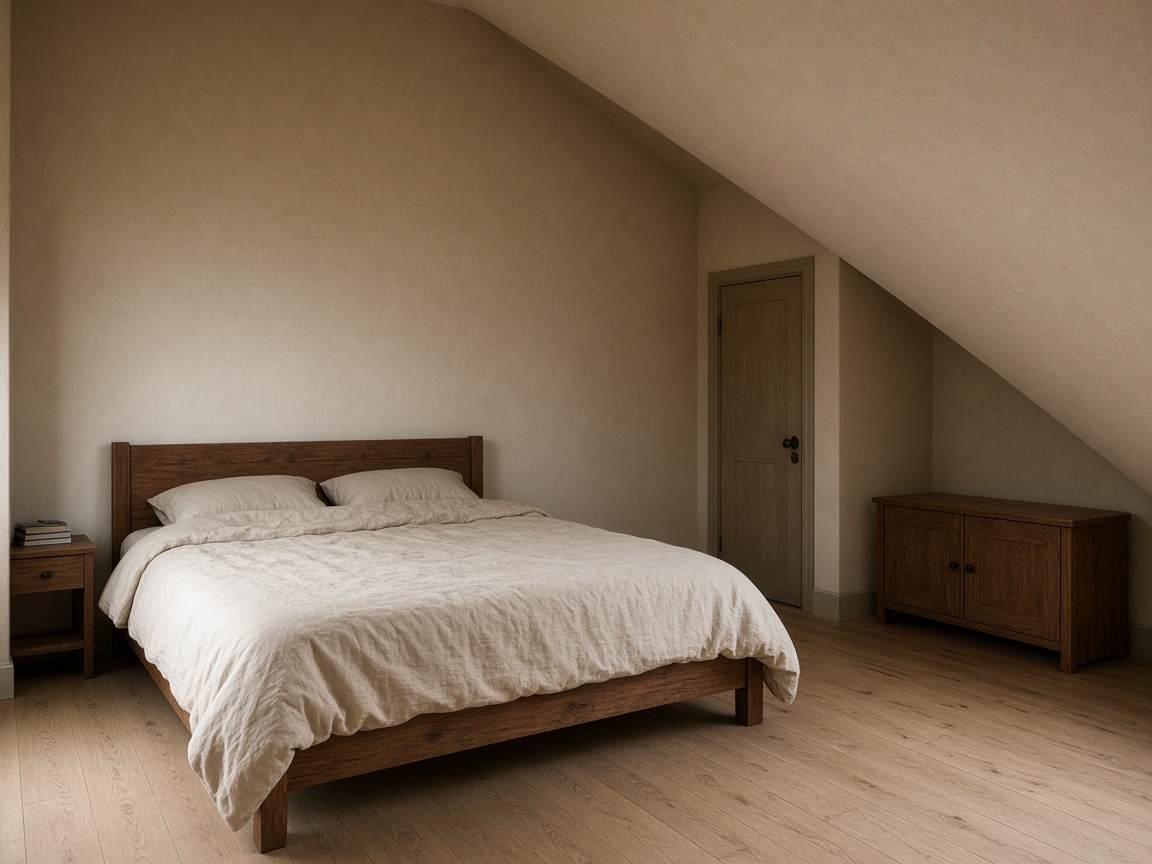
That is the shift. The head is on the tall wall. The slope drops toward a closed cabinet, not toward the pillows. The door is still in view. If your room cannot make this picture, go to cloth. Do not fake a high wall with a mirror collage.
Can a canopy hide a sloped ceiling?
Sometimes it hides the view. It never removes the rafter.
If you already tried a shift and the only sleep wall still has the eave, a light inner ceiling can change what you look up at. Keep the cloth pale and the sides open so you can still name the latch from the pillow. A boxed heavy drape is a cave. You sit up into a valance. You lose the door. That is the fail the canopy article already named.
Hang with a free-standing frame, a hoop on a removable hook, or a tension kit meant for fabric. Follow the hook pack. Skip masonry into popcorn plaster. The canopy bed page owns the hang and the open-side test. This URL only decides whether cloth is the second move, after the mattress has had a chance to leave the low corner.
Paint is optional and often not yours. Ask in writing before you paint a landlord plane. A floor lamp you already own, aimed at the high wall, is enough to try. Do not rewire. Do not buy a heavy four-poster to "correct" an eave you have not shifted yet.
How is this different from a beam or an attic map?
Swap the object and you write the wrong article.
A beam is a line. You look up and a ridge cuts the body. A slope is a plane. The whole eave drops. You can be off a beam and still be under a low plane. Do both tests if the room has joists and a rake.
A loft bed is furniture: mattress over a desk. Command is a view of the door from that platform, and the laptop closes. Then do this sit-up if the ceiling rakes over the platform.
An attic bagua is a map on the floor you can stand on, from the stair you use. Slope is air in that overlay. Do not tape luck cells into the insulation, and do not skip the pillow test because a printout labeled the eave "wealth." The map waits until the bed works. This URL is the architectural rake over a normal mattress.
What this is not
A slope will not raise rent or a salary. Moving the bed will not mint money. It will stop you sleeping with plaster in your sit-up.
This is not a medical article. We will not claim the eave causes headaches, poor character, or a stalled career. If you have pain, see a clinician. The layout job is still the plane you see from the pillow.
This is not a demolition brief. You will not raise a legal roof on a lease. You will not frame a false ceiling unless the landlord is already doing that work.
This is not a charm shop. Skip crystals on the rake and skip a bagua mirror aimed at the plaster. Beige you already own is beige.
This is not the later bedroom-skylight row. If a ridge cuts the duvet, use the beam page. If you hung cloth, use the canopy page. If you are mapping the attic, use the bagua page.
What to do tonight
Do this in order. Stop when the pillows sit under the high wall and you can sit up without ducking.
- Lie on the pillow. Look up. Sit up. Write whether the eave is over your face.
- Tape pillow, mid-body, and foot. Note which end is lowest.
- Slide the bed so the head is under the tallest solid wall. Keep a walk in the dark.
- If that wall is a window, stop. Use the window-behind-bed steps. Do not trade an eave for glass.
- Lie down again. Find the latch. If you cannot see who enters, or you are in the door line, angle or pick the next solid wall and run the bed and door check.
- On a shared mattress, make sure both heads share height, or the low side is the aisle.
- Put storage under the knee wall in a closed cabinet. Take the nightstand off any spot where sit-up hits plaster.
- If the bed cannot move, hang a light cloth you can reverse, sides open, then photograph from the pillow in FengShui Hero so the slope is in frame.
If you only do one thing tonight, get the pillows out from under the lowest eave.