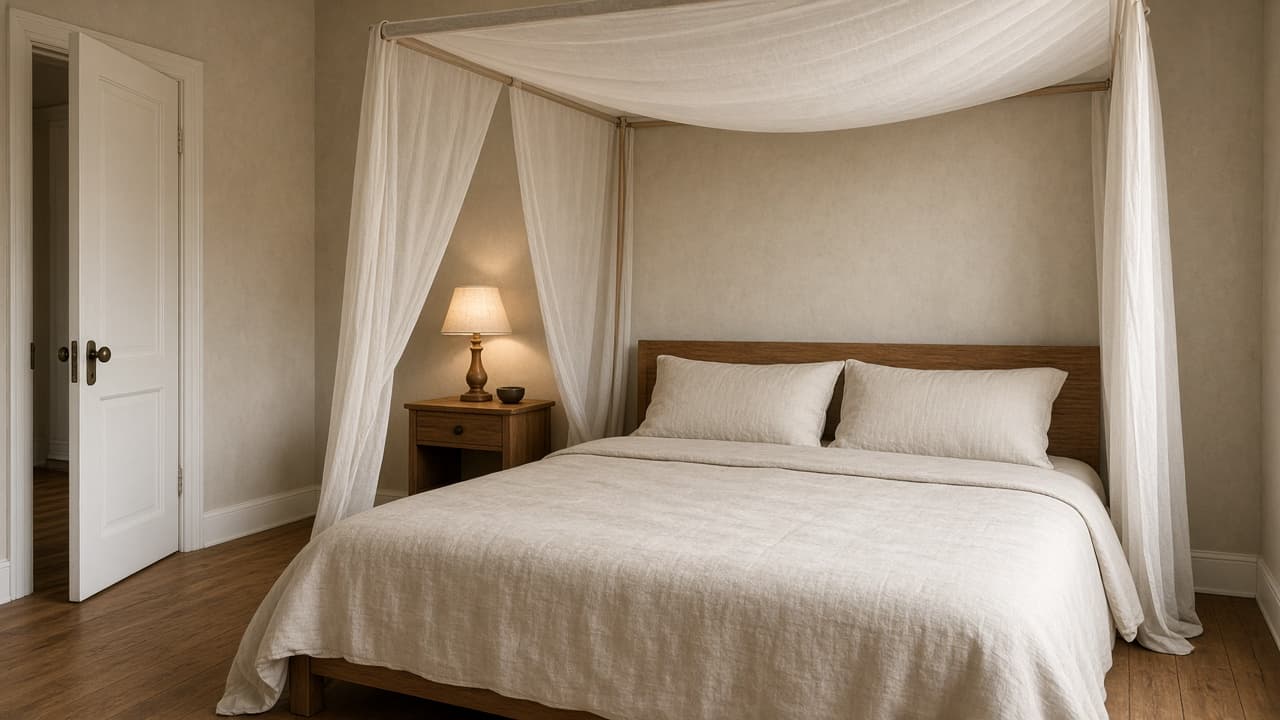
A feng shui canopy bed is a fabric inner ceiling over the mattress so you look up at cloth, not a joist. Keep the cloth light and the sides open so you can still see the bedroom door. A boxed heavy drape is a beam you bought. Renters hang it so it comes down at move-out.
When we photograph rentals, the listing still sells "romantic drapes." The sleeper lies down and the same cloth is a dark box. People ask which wood is lucky for posts. We lie on the pillow, sit up, and look for the latch. If the first plane is a hard ridge, the job is still the ceiling beam over the bed. If the first plane is cloth you hung, this page owns the object. A later calendar row covers posts as a frame. Tonight is the fabric ceiling.
How do you check a canopy from the pillow?
Lie where you sleep. Look up. Sit up the way you do to drink water. Then look at the bedroom door the same way the bed and door check already asks: can you name the latch without sitting in its swing.
Do this in the light you use at night. A noon listing shot makes voile disappear and makes a valance look like air.
- Lie on your usual pillow. Name what you see first: plaster, a joist, light cloth, or a dark boxed top.
- Sit up. If your head hits fabric, the hang is too low. If you still see a dark bar through a gap, the cloth is not doing the look-up job.
- Look for the latch. If drapes hide it, mark the sides as a cave. Command is a diagonal view, not feet in the door line. That line is the bed facing door article.
- Check the back. A canopy does not replace a solid headboard. If the pillows sit on glass, stop and use the window behind the bed page. Cloth overhead will not invent a mountain.
Write which check failed: look-up, sit-up, latch, or back. The next sections only fix those.
A hoop, a four-corner rail, a tension pole, and a clip-on hotel kit all count if there is cloth in the overhead plane. Posts with nothing on them are not this object. A mosquito net in a humid rental counts if you look up at mesh. A kids loft rail is the loft bed page. A sibling stack is bunk beds. Stay on the fabric.
Is a canopy bed good Feng Shui?
It is furniture, not a romance spell. Form School wants a solid back, a ceiling that does not chop the body, and a sleeper who can see who enters. Light cloth can be the inner ceiling when a joist will not move. The same cloth fails when it becomes a tent.
Shop pages sell "balanced energy frames" for 2026. Treat the product copy as copy. You still measure the pillow view. A slim metal kit that leaves the door in sight can pass. A carved palace set that fills a studio and hides the latch fails the walk, even if the wood is pretty.
Keep one school of talk. Popular blogs say a canopy "contains chi" around the body. That is poetry. The layout job is a plane you can see and reverse. You do not owe a yearly star for a hoop.
The bedroom hub still wants command first. A canopy on a coffin-line mattress is extra fabric on a bad line. Shift the frame if the room allows, then hang cloth. Do not hide a door-aimed foot with blackout panels and call it a cure.
Hosts: the listing photo should match the stay. If the hero shot shows open sheers and guests arrive to a boxed cave, they will sleep in the cave. Shoot from the door, then from the pillow, with the sides the way you actually leave them.
Does the fabric act like a ceiling beam?
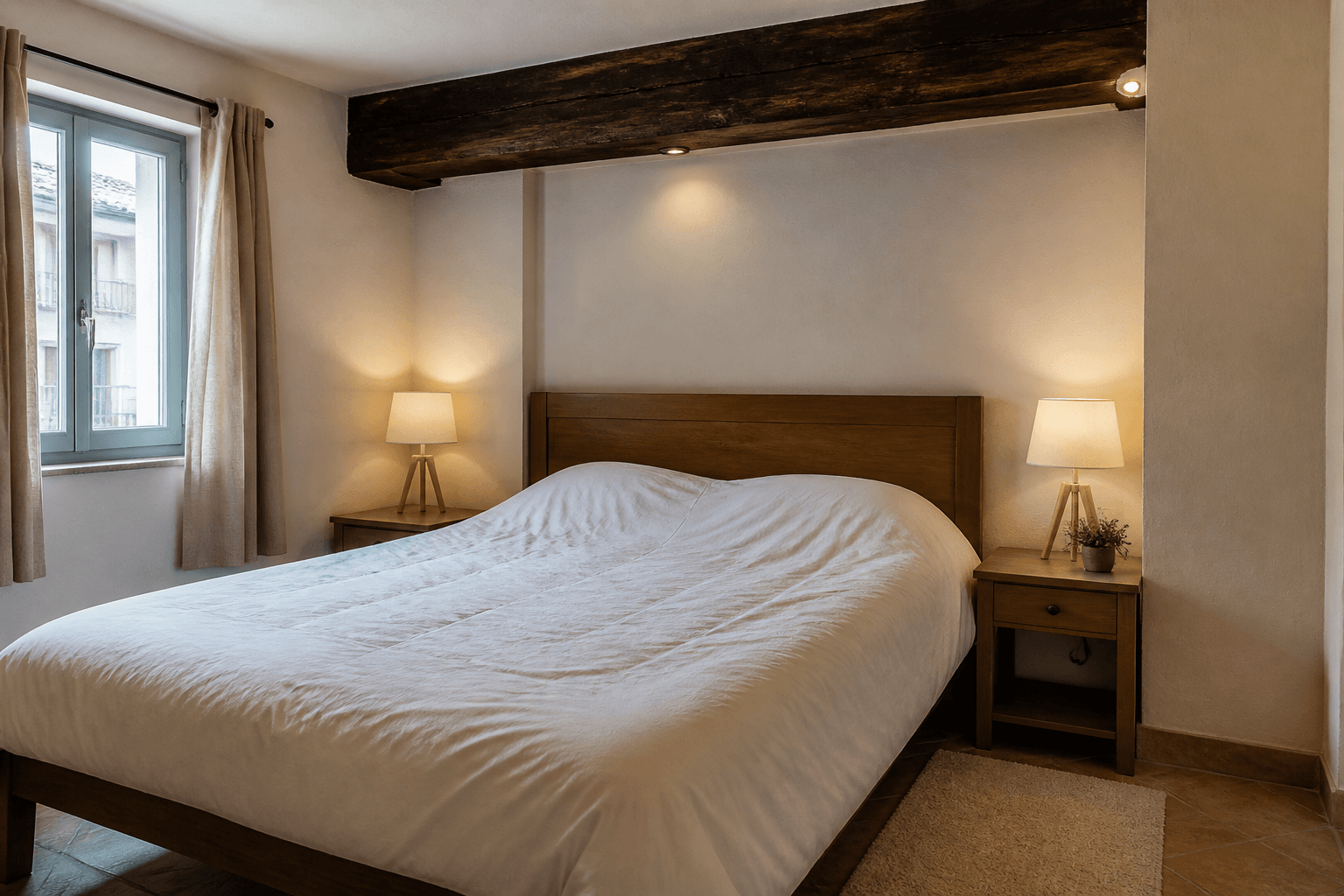
It does when the cloth is a hard visual bar, a low valance, or a dark box. Traditional notes call a joist beam pressing down. You do not need the poetry to notice weight. A cream voile under a dark timber is the usual renter soften. A chocolate tent with a padded pelmet is the same stripe, made of fabric.
Compare the objects. Do not stack them as one personality.
| Overhead | What you see from the pillow | Reversible | Pick it when |
|---|---|---|---|
| Real joist or soffit | A ridge of timber, plaster, or steel | Shift the bed, or hang light cloth | The beam over bed page owns this line |
| Light canopy | Cloth, still sit-up room, sides open | Yes if hooks and kit leave | You need an inner ceiling and you can still name the door |
| Heavy boxed drape | A dark cave, latch gone | Open or swap the cloth | Never as the only "cure" |
| Posts only | The real ceiling, plus vertical wood | Yes if the frame is yours | Later four-poster row. Not this fabric job |
Paint on a joist is contrast, and it is usually an owner letter. This page will not rehash that table. If the timber is still the first thing you see, hang cloth or move the mattress. Flutes and crystals on the ridge are folklore extras on the beam article. They are not a canopy.
A sliver of beam beside the frame is fine. A ridge across the face is not. If the cloth sags onto your forehead, raise the hang or use a tighter panel. You should not sleep inside a hammock of dusty sheet.
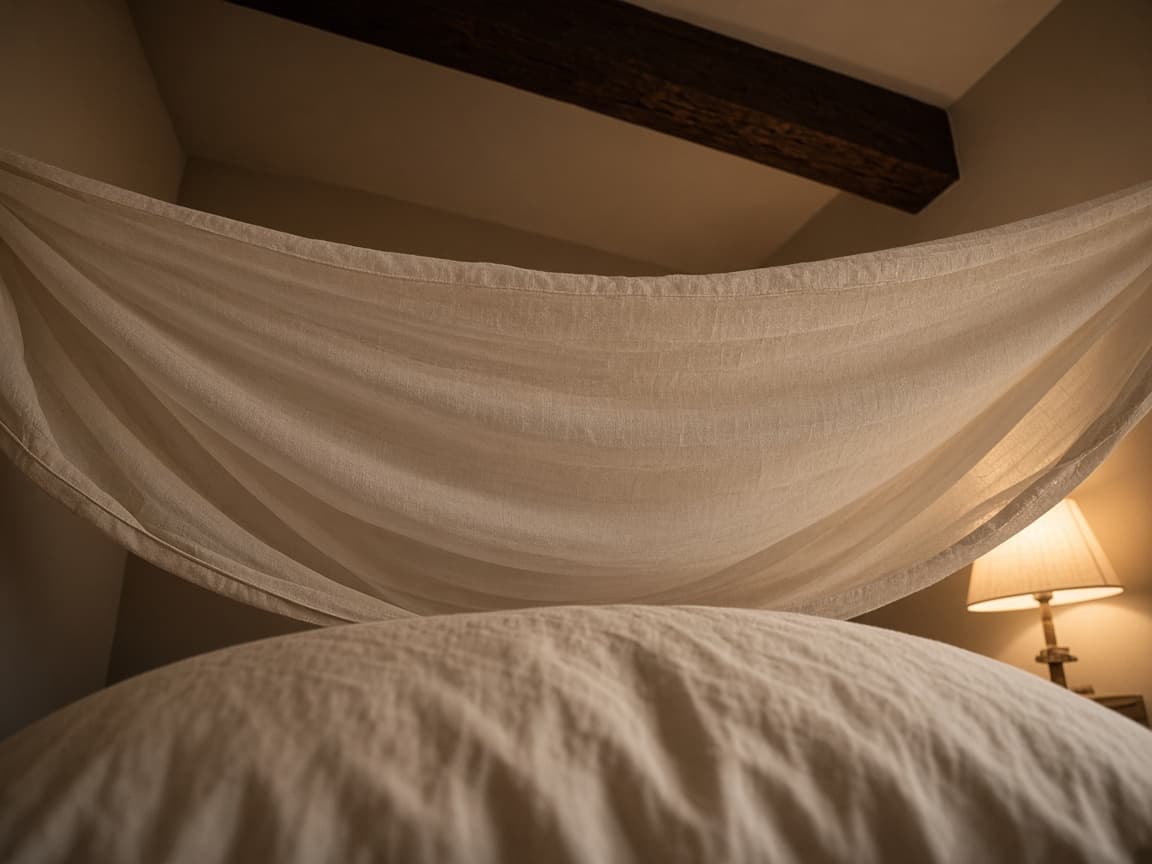
That look-up is the test this article wants. Cloth first. Timber second, or gone from the face. If your photo is only the joist, you do not have a canopy yet. If your photo is a black ceiling of drape, you built a soffit.
Keep fabric off lamps and heaters. Follow the product notes for the hoop or the frame. Do not drape a panel over a hot shade. Bedroom lighting still wants a lamp you can switch at the side, not a bulb cooking voile.
How should a renter hang a canopy?
Hang a light plane you can take down. Think cream cotton, voile, or a thin kit that clips to removable hooks. Skip masonry into popcorn. Skip drilling an I-beam. Skip a rod in crumbly plaster that will take a chunk of ceiling at move-out.
Ask in writing if you need a ceiling hook. A free-standing four-corner frame that sits on the floor is the lease-friendly version: felt the feet, keep a walk, leave no holes. A hoop on one rated hook is the other version if the landlord already allows picture hooks. A tension pole between walls can carry a light panel in a narrow room when the pole is sold for cloth, not for pull-ups.
Hang the cloth below the joist and above sit-up height. You look up into a softer plane. You do not wear it as a hat. If the beam runs across half the bed, cover the sleeper who still sees timber. If it splits a couple line, cover the whole width so both pillows see cloth. Share one plane. Two twin scarves with a gap down the middle is a split view, same complaint as two tiny headboards.
Follow the hook pack. Photograph the ceiling before you add anything. Put the inventory back. A cream cloth that matches the wall is quieter than a dark tent. Dust it. Gray voile over a pillow is just a dirty inner ceiling.
A canopy does not replace the back. Sit up into a closed board or a solid wall. Open metal posts at the head are still bars. Add the panel the headboard article already wants, then hang the overhead cloth.
If you cannot hang anything, you still have the beam page: slide the mattress so the ridge runs beside the frame. Cloth is the extra when that slide kills command or puts the pillows on glass.
Do not buy a palace set for a small studio. Tape the walk the way furniture scale already asks, before the cart. Shoulder width to the latch beats a shop photo of puddled velvet.
Can you still see the door through the drapes?
You should. Command is a view of the latch from the pillow, without your feet owning the opening. Side panels that stay closed all night hide the person who enters. That is a startle with nicer stitching.
Tie sheers back, or hang a top panel only. Blackout can live on the window, not as a four-wall tent around the mattress. If you want darkness, use the window treatment you already own. Do not invent a cave because a blog said enclosed sleep is safer.
Lie down with the sides the way you actually sleep. If you cannot name the door, open the cloth on the latch side. A small gap is enough. You do not need both flanks puddled on the floor.
The coffin line is still a straight path from latch to feet. A canopy will not break that line. Shift the frame, or add a footboard, on the bed-facing-door page. Then keep the fabric from rebuilding the wall in front of the door.
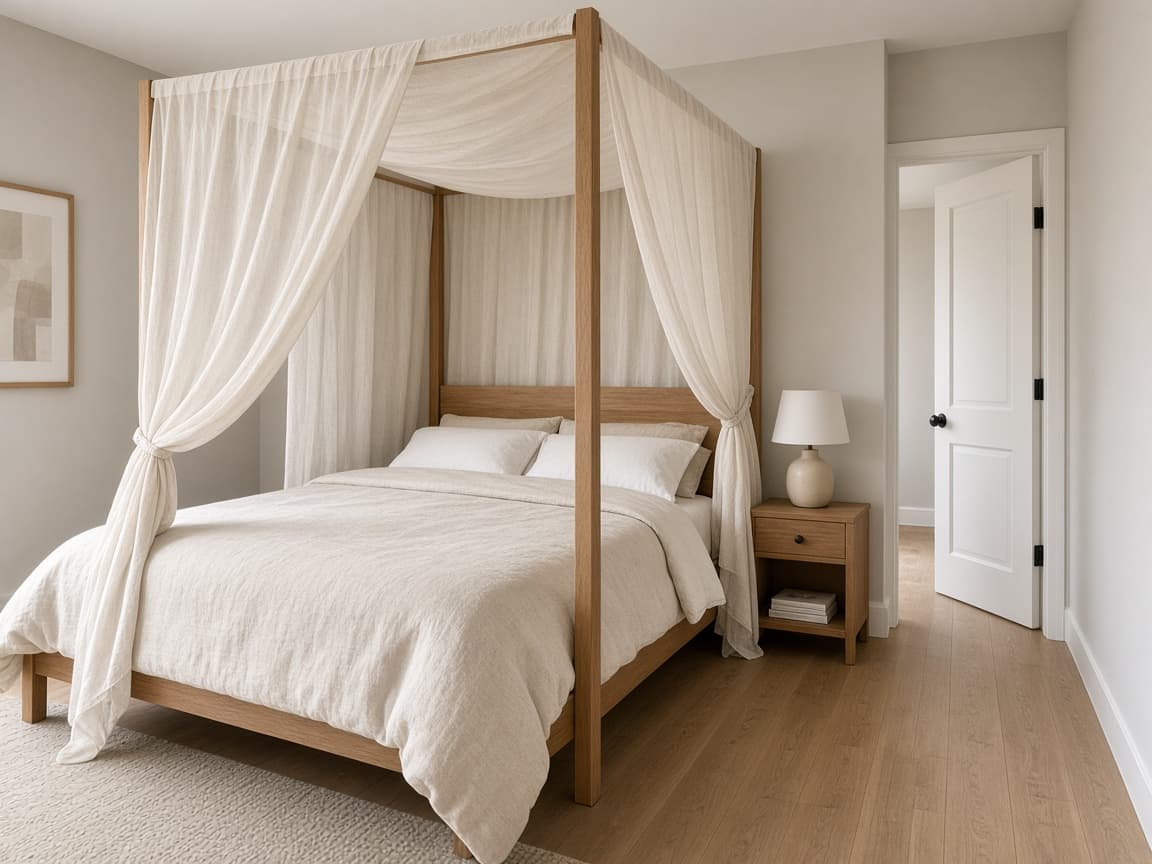
That open side is the pass. The inner ceiling is still there. The latch is still a latch. If your room looks like the boxed photo instead, you are sleeping in a cupboard.
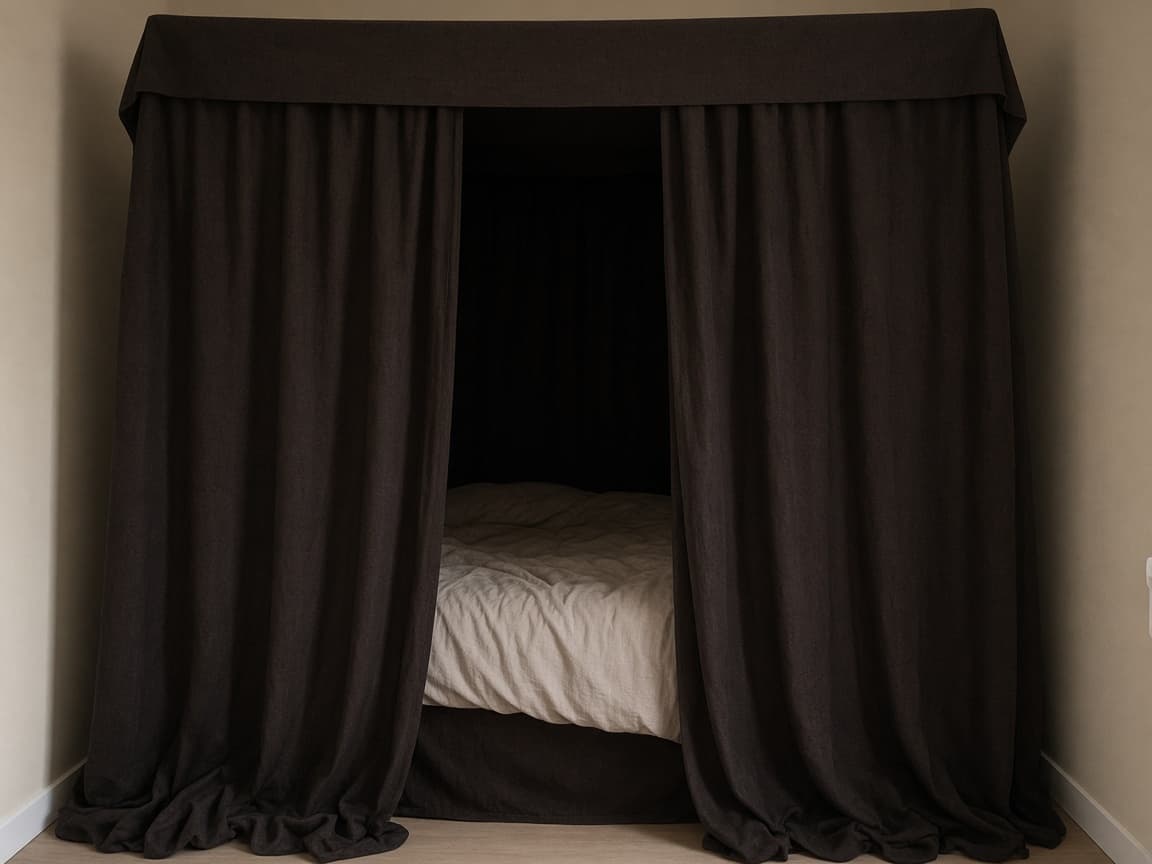
That cave is the usual miss. Open it. Swap the cloth. Do not add crystals on the pelmet.
Walk the path in the dark. Side panels that puddle are a trip. Tie them at knee height or higher. A legal exit stays usable. Do not pin fabric across the doorway.
If the only door you can see is an ensuite leaf, shut that wet-room door at night on the ensuite bathroom article, and keep the hall latch as the command view. Two doors in one panic is how people hang extra cloth and still feel watched.
What this is not
It is not a luck nest and not a medical tent. Layout will not treat insomnia. A joist will not empty a bank account. Skip organ maps that point a ridge at your chest. Skip a shop that promises a canopy will keep a partner.
It is not the ceiling beams over bed article with nouns swapped. That page is the hard line. This page is the cloth you add, or the cloth that went wrong.
It is not a four-poster buying guide. Posts as a frame wait for their own row. If your kit has posts and no fabric, you do not have a canopy yet. You have vertical wood.
It is not a loft bed over a desk, and not bunk beds. Height of a platform is a different object. A mosquito net in a kids room still uses the look-up test, then you get the child out of a cave of heavy drape.
It is not a flying-star year. It is not a gua for romance. Pair lamps and pair tables on the pair objects bedroom page if you share the bed. Matching wood on posts is optional.
Tonight: hang light cloth or open the cave
Do this in order. Stop when the look-up test is cloth and you can still name the door.
- Lie on your usual pillow. Name the overhead: plaster, joist, light cloth, or a boxed dark top.
- Sit up. If you hit fabric, raise it. Check the back is still a wall or a closed board.
- Look for the latch. Open or tie the latch-side cloth until you can name the door from the pillow. Use the bed and door check if you want the same three questions on paper.
- If a joist still cuts the face and the bed can move, slide it so the ridge runs beside the mattress. Keep a walk. Keep the head on plaster.
- If the bed cannot move, hang light cloth below the ridge on a free-standing frame or removable hooks. Follow the hook pack. Keep fabric off the lamp.
- Photograph from the pillow with the ceiling in frame, then toward the door. Compare the flagged line with the cloth you actually sleep under.
If you only do one thing, lie down and look up. If you see a joist, hang a light inner ceiling or move the mattress. If you see a dark box, open the sides so sleep has a door again.