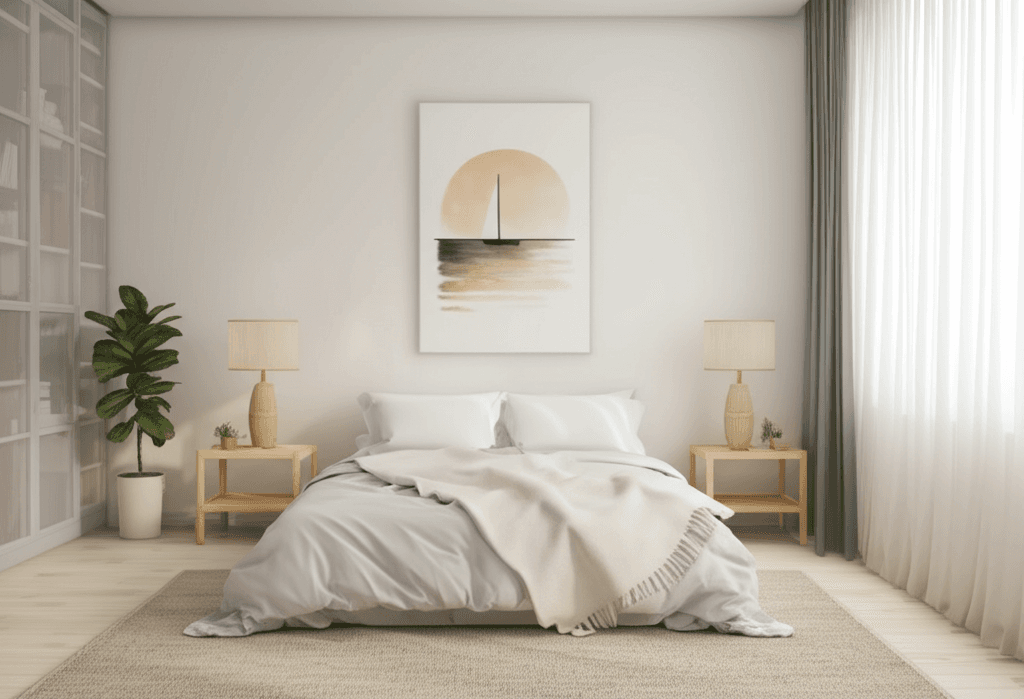

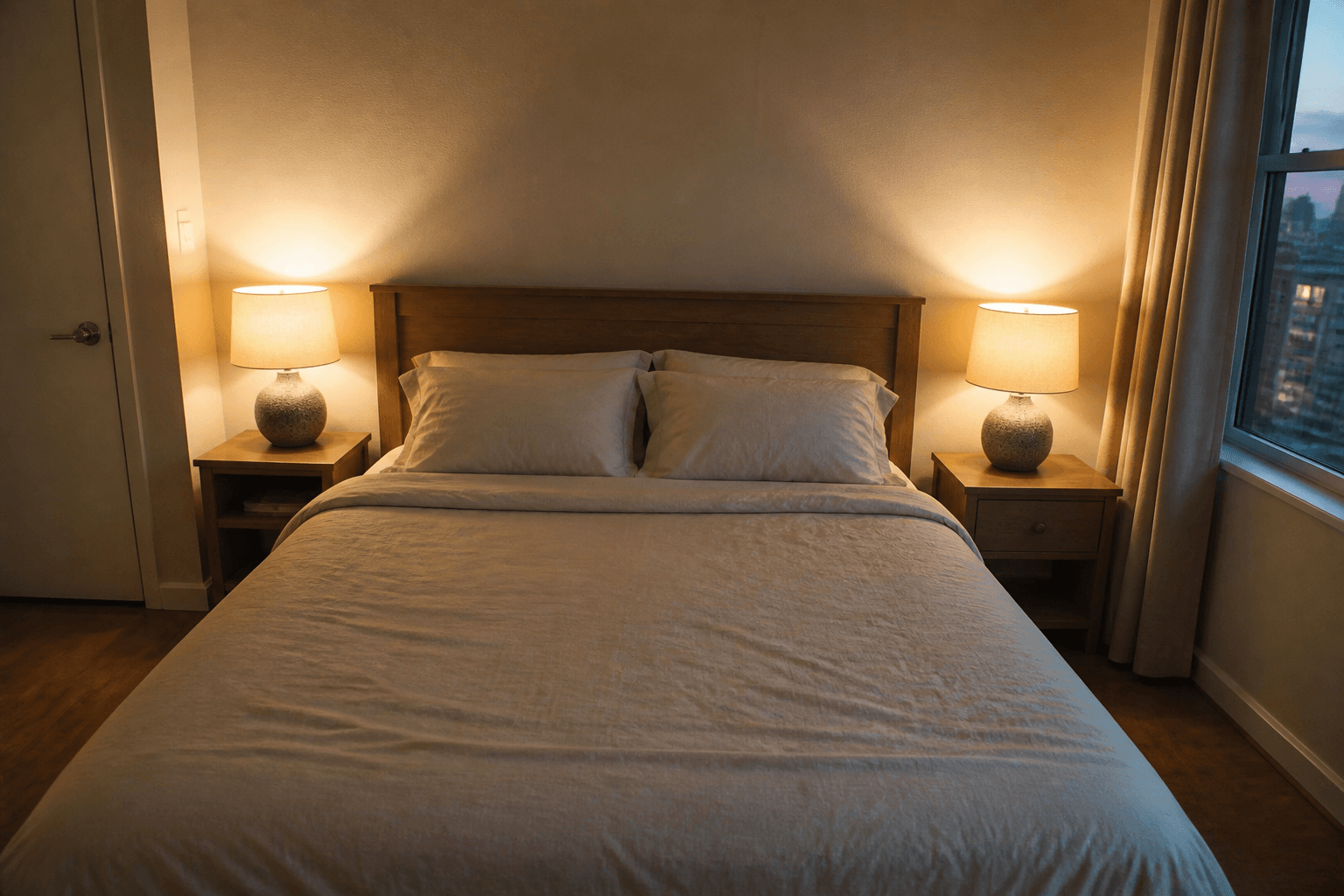
Feng Shui lighting in the bedroom is layered lamps at the sides of the bed, not a single overhead that glares on the pillow. You want a switch you can reach without sitting up into a shop-bright ceiling. Warm, dimmable light you can reverse beats a new fixture you cannot take with you.
When we photograph rentals at night, the listing still shows a styled lamp and the room we get is the overhead only. People lie down under a disk of glare and ask which crystal belongs on the nightstand. We ask them to switch the ceiling off and turn on one lamp they already own. If they can read a page without squinting or sitting in a cave, the layout is already talking. The living-room lighting guide is layers and kelvin in any month. This page is sleep: the pillow, the glare, and the renter kit. The sleep layout still wants a bed that can rest. Light is the remaining switch.
What is Feng Shui lighting in the bedroom?
You are matching the room to rest. Form School still wants a solid back and a view of the door. Light is how the room behaves after dusk. Popular posts then sell a "lucky" number of lamps or a salt rock as a protocol. A lamp is a lamp. A rock with a cord is still a lamp.
Overhead-only is the usual miss. The fixture is in the middle of the ceiling because that is where the box is. It lights the floor and the face of whoever is lying down. Side lamps light the book and leave the rest of the room quieter. That is the layer.
A window behind the bed is a different job. Cover that pane for sleep, then light the sides. The window behind the bed article is the glass mountain. Do not use a bright overhead to "fix" a pane you should drape.
Start from the pillow, not from a bagua cell. A perfect wealth-corner lamp in a room you never sit in is homework.
Should the overhead stay on for sleep?
No, not as the only source, and not as the last light you switch. Use the ceiling to find a dropped earring. Switch it off when you get in. If the only switch is at the door, put a lamp with a switch at the pillow so you are not walking back across the dark room.
Some leases have a harsh LED disk you cannot swap. A fabric shade that clips on is ugly in a useful way if the lease allows it. A dimmable smart bulb in the existing socket is the cleaner renter version. Ask before you change a landlord globe if the inventory named it.
A fan light combo is two jobs. The ceiling fan article is draft on a sleeper. If the fan is on, the light can still be off. Do not leave both on as personality.
The pillow glare test
Do this before you buy anything.
- Lie on your usual pillow with only the overhead on. If you squint or see the fixture in a dresser mirror, mark the ceiling as too much.
- Switch the overhead off. Turn on one lamp at the side. If you cannot see the door latch as a shape, mark the path as too dark and add a low nightlight in the hall, not a brighter ceiling.
- Look at the bedroom mirror if you have one. If the lamp bounces into your eyes, shift the glass or the lamp, not the mattress first.
Write which of those failed. The next sections are only those failures.
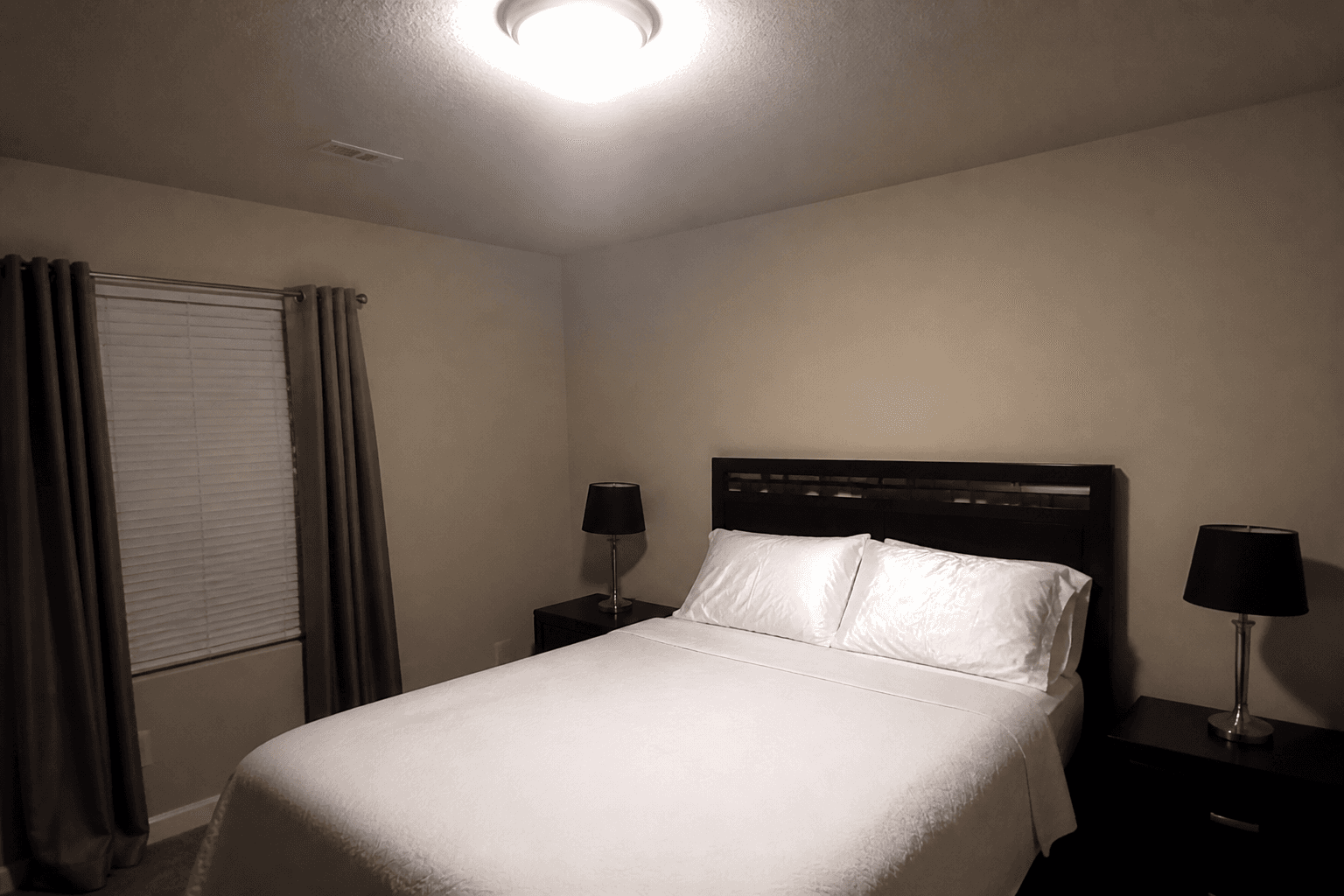
That disk on the pillows is the listing-photo trap after dark. The lamps are furniture. They are off. If your pillow view looks like this, do not buy a lucky shade. Switch the ceiling off and use the lamps.
How many lamps, and where do they go?
Two nightstand lamps are the default for a shared bed so each person can read without running the overhead. Matching height is courtesy, not a spell. If one side has no table, a floor lamp that clears the mattress edge is fine. Do not park a torchiere that throws light at the ceiling and back into your eyes.
Reach matters more than symmetry. Sit up. If you cannot hit the switch without leaving the mattress, the lamp is in the wrong place. A cord that trips the dark walk is worse than no lamp. Tape the cord along the baseboard if the lease allows, or pick a battery lamp you will actually charge.
A dark corner that becomes a dump by morning gets a small lamp or it gets emptied. A lamp on a pile of laundry still lights a pile of laundry.
The headboard is the back. Wall sconces that need drilling are an owner job. Renters use tables.
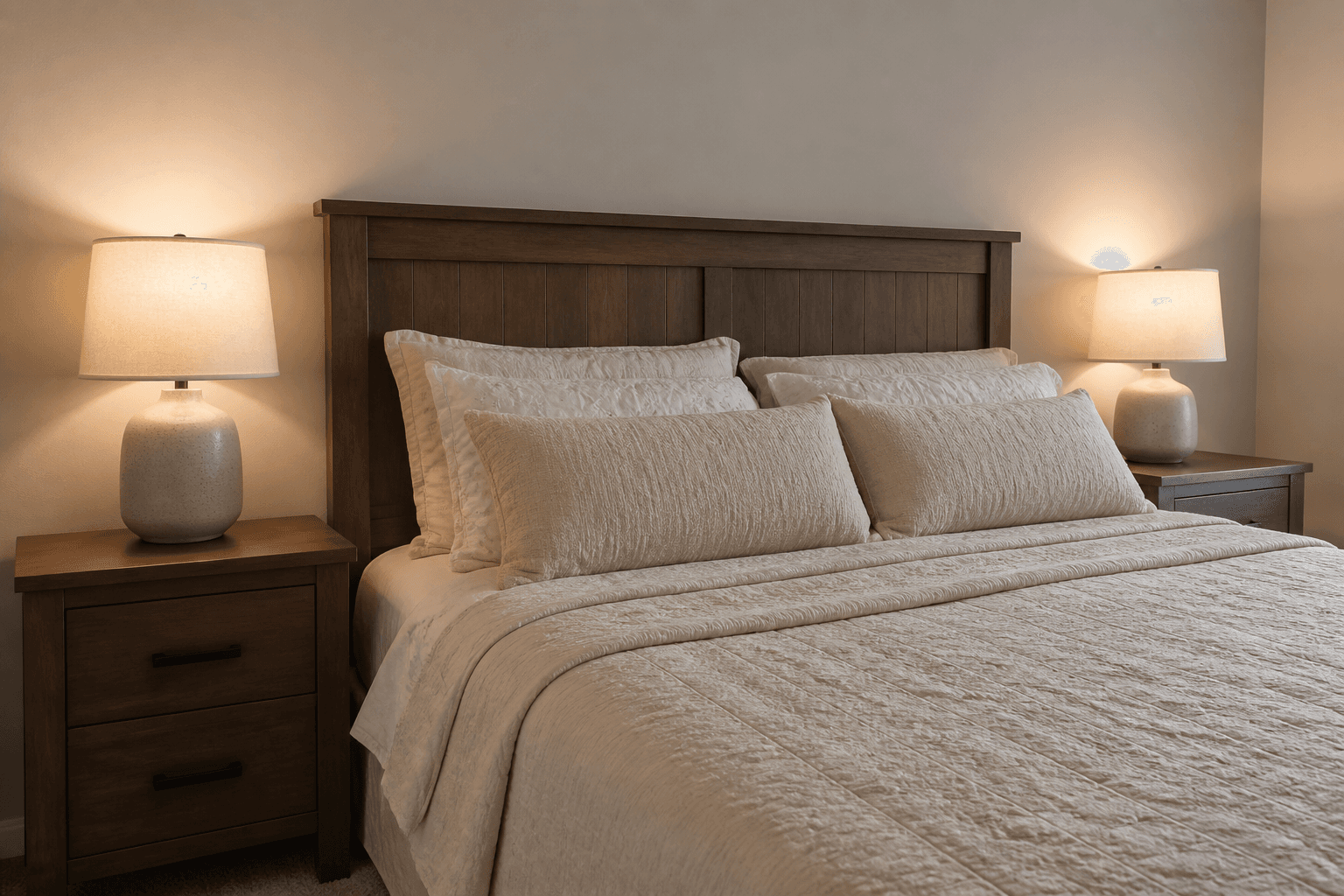
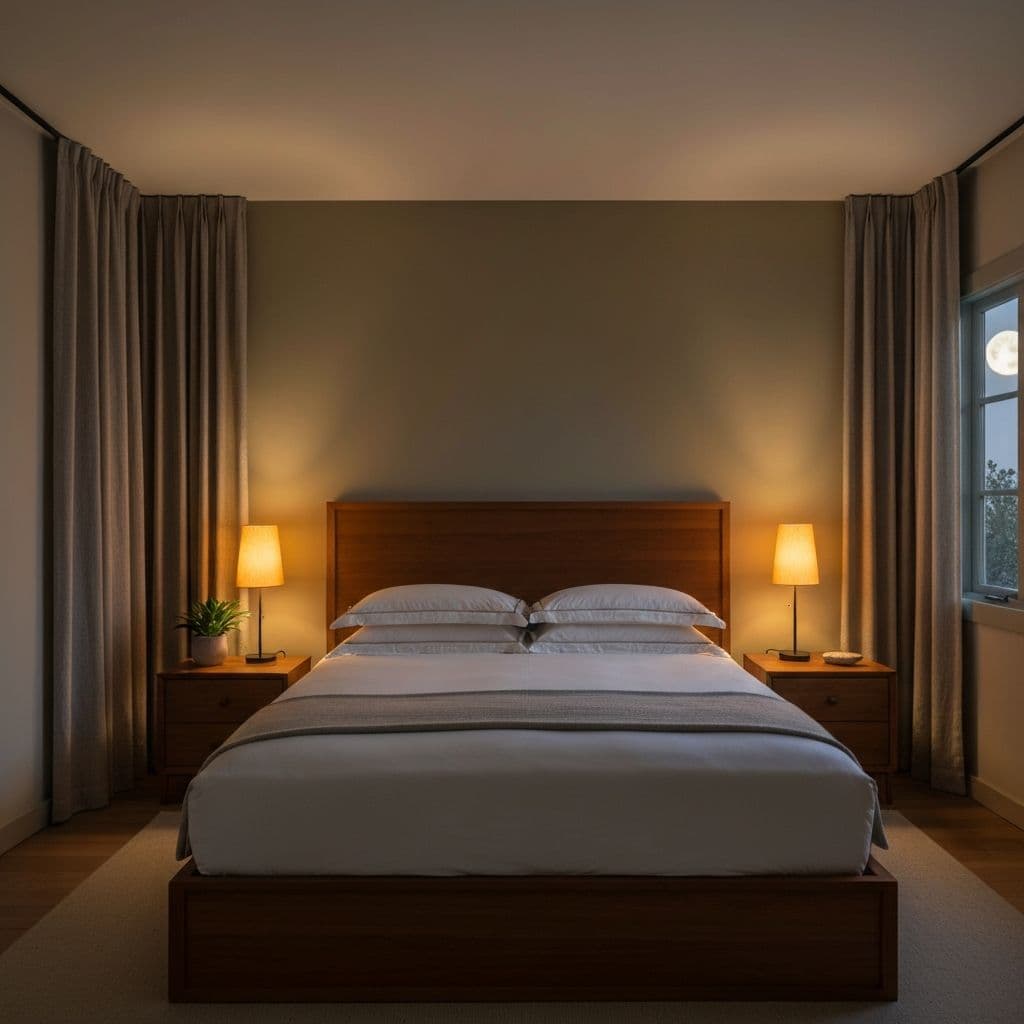
Those two pools of light are the evening room. The overhead is off. If you can read without the ceiling, you are done shopping for a chandelier.
What about glare on a mirror or a screen?
Glass opposite a lamp is a second sun. Close closet doors that are mirrors. Cover a panel you cannot move. Angle a dresser so the lamp is not in the reflection from the pillow. That is the mirror article plus a switch.
A TV at the foot of the bed is fire and glare. Turn it off for sleep. Do not leave a status LED as a nightlight if it bothers you. Tape it or face the stand away. A phone flashlight every night is a missing lamp.
Streetlight through a thin drape is still glare. A heavier cloth you close beats a brighter indoor fixture fighting the pane. Open the heavy cloth in the morning. A sealed cave all day is a different problem.
Warm versus cool, without a protocol
Warm white that looks like a lamp you would put on a table is the sleep default. Cool white on the pillow feels like a bathroom. If you work at a desk in the same room, use a task lamp you switch off when you close the laptop. Do not run desk-cool across the duvet at 11 p.m.
Flicker is a headache. Change the bulb. LED is allowed. It is not cleaner chi. It is a bulb. The living-room lighting page can talk kelvin ranges as product specs. This page only asks whether the pillow looks like rest.
Candles are fire and a lease problem. If you burn, use a watched dish away from fabric. A lamp is the renter default. The candles rules stay on that page.
Can renters do this without rewiring?
Yes. Lamps you own. A dimmable bulb in a fixture you already have. A plug-in dimmer if the lamp has no switch you like. A tension-rod drape for streetlight. Skip new ceiling boxes. Skip painting a "fire wall" for a lighting story.
Photograph the outlets and the existing globe before you change anything named on the inventory. Put the landlord bulb back at move-out if you swapped it.
A desk in the bedroom still wants its own task light, then a cover or a close at night. Work light left on is how the room stays an office. This page will not restack the whole bedroom-office problem. It only asks that sleep light is quieter than work light.
If you share the bed, repeat the pillow test with the other person. One reader and one sleeper is a real fight. Separate switches beat a compromise overhead.
How we check a bedroom after dark
We visit after dusk, not at noon. Noon still has a hopeful window. After dusk tells you whether the room is a cave with a bright lid. We lie on the usual pillow with the usual overhead. If we squint, the ceiling is doing too much. We switch it off and try one lamp. If the door disappears as a shape, the path is too dark and the hall gets a low light, not a brighter disk over the bed.
We look for a mirror that throws the lamp back at the face. We look for a cord in the walk. We look for a nightstand that is a charging pile with no room for a lamp base. Clear the pile or the lamp loses.
A plant on the nightstand next to a hot bulb is a dry plant. Move the pot to a side wall. Water and heat on the same tiny table is how you get a spill on the switch.
Southern hemisphere readers still use dusk, not a northern shop calendar. A June bedroom in Melbourne can need the same lamp test as a December bedroom in London.
What this is not
Bedroom lighting will not cure insomnia and it will not mint luck. A salt lamp will not treat a mood. A lucky year will not rewire the box.
Skip medical claims about circadian protocols you saw on a reel. If sleep is a health problem, that is a clinician's job. This page is a ceiling you switch off and lamps you can reach.
Skip a bagua overlay that puts a "fame light" on the south wall of a rental you cannot mark. Skip a fountain on the nightstand. Water next to a switch is a spill.
A simple evening checklist
Do this in order. Stop when you can read on the pillow without the overhead and without squinting.
- Lie down with only the ceiling on. Name the glare.
- Switch the ceiling off. Turn on one lamp you can reach. Add a second lamp if two people read.
- Close mirrored closet doors. Shift a dresser if the lamp bounces into your eyes.
- Pull a heavier drape if streetlight is the remaining glare.
- Tape or route cords off the dark walk.
- Photograph from the pillow in FengShui Hero and compare the flagged glare with the lamps you left on.
If you only do one thing tonight, switch the overhead off and use a lamp you already own. The chandelier can wait.