
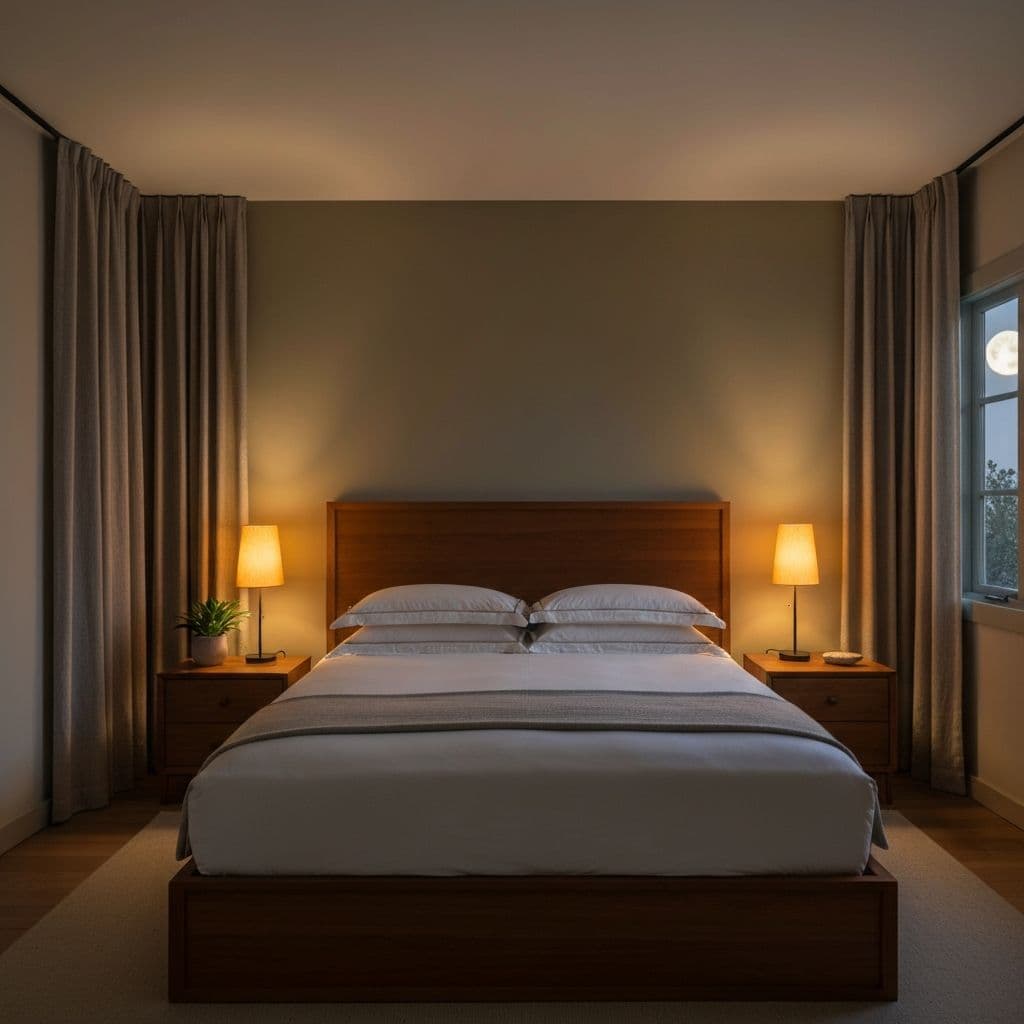
If you are tossing, turning, or waking up exhausted, your bedroom's energy could be the hidden culprit. Here is how ancient Feng Shui wisdom can transform your sleep forever.
Why Your Bedroom Energy Controls Your Sleep
Your bedroom is the single most important room for physical restoration. You spend one-third of your life there, which means its energy profoundly affects your health, mood, relationships, and performance. Traditional Feng Shui views sleep as the time when your body absorbs and heals from the surrounding chi. If that energy is disturbed: by electronics, clutter, poor placement, or aggressive colors: your nervous system never fully relaxes, even if your eyes are closed.
Modern sleep science agrees: environment is one of the top three factors determining sleep quality. Feng Shui simply approaches this truth from a 3,000-year-old energetic perspective. The principles below will transform your bedroom into a genuine sleep sanctuary.
Get Your Personal Sleep Feng Shui Analysis
Use the FengShui Hero app to scan your bedroom and get instant, AI-powered recommendations tailored to your space.
1. The Command Position: The Foundation of Sleep Feng Shui
The most critical rule is the command position. Your bed must be placed so you can see the door while lying down, but the bed is NOT directly in line with the door. This placement gives your subconscious mind a sense of safety: an ancient survival instinct that allows true relaxation.
Never place the bed directly facing the door. This is called the coffin position and is one of the most disturbing placements in all of Feng Shui. It puts you in direct energetic line with rushing chi, causing restless sleep, anxiety, and even health issues over time.
2. Solid Wall Behind the Headboard
A solid wall behind your headboard represents the Black Turtle: an ancient symbol of protection and support. Without this backing, your energy feels exposed and ungrounded. Never place the bed under a window, in front of a door, or in the middle of the room.
Equally important: your headboard itself should be solid and sturdy. Choose a wooden or upholstered headboard with a closed back. Avoid metal bars, open designs, or bookcase headboards, which create unstable energy.
3. Remove All Electronics
This is non-negotiable in Feng Shui for sleep. Electronics emit active yang energy that directly opposes the yin energy required for deep rest:
- Remove TVs from the bedroom or cover them at night with a cloth
- Keep phones in another room, or at minimum across the bedroom on airplane mode
- Remove computers, tablets, and work equipment entirely
- Exercise equipment belongs in a different room: it brings active energy
- Unplug unused chargers and devices
4. Use Grounding Earth-Tone Colors
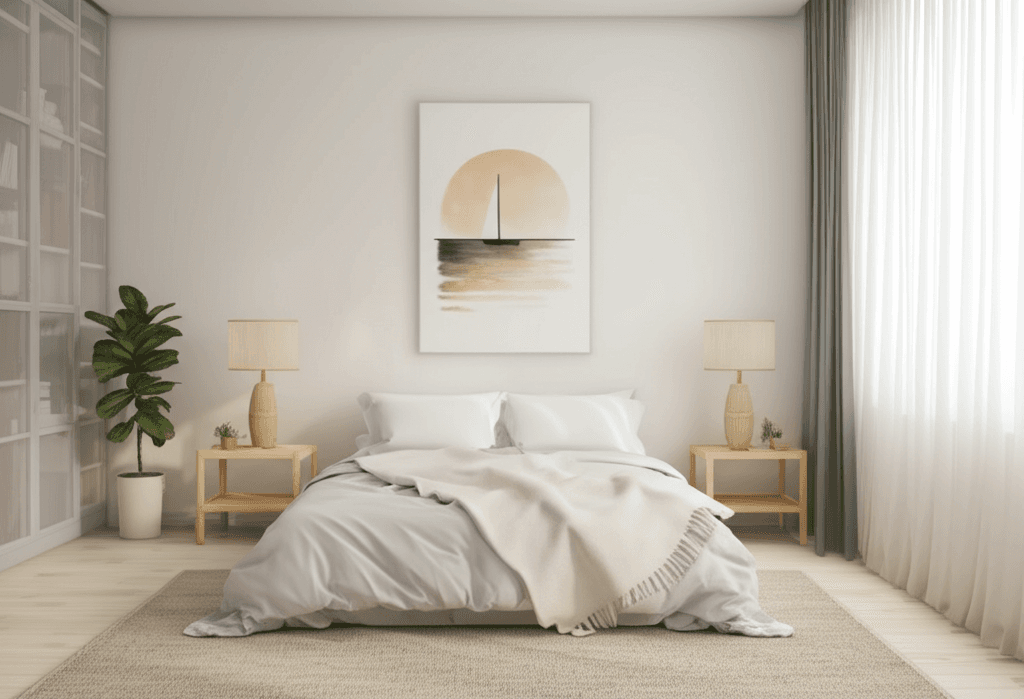
Skin-tone colors: beige, cream, soft peach, warm ivory, light coffee: are considered the ideal Feng Shui sleep colors because they represent the earth element, which grounds and settles energy. Light blues and soft sage greens also work beautifully.
Avoid stimulating colors: bright red, stark white, electric orange, or highly saturated jewel tones. These amplify yang energy and keep your nervous system activated. For bedding, choose natural fabrics like cotton, linen, or silk in muted tones.
5. Balance Your Nightstands
Two matching nightstands on either side of the bed create balanced yin-yang energy. This is especially important for couples: unbalanced nightstands can energetically represent unequal partnership. Single sleepers benefit from the symmetry too; it creates space for a future partner energetically.
Keep nightstands decluttered. A lamp, a book, a glass of water, and perhaps one small meaningful object is ideal. No piles of paperwork, no stacks of unread books, no clutter.
Scan Your Bedroom for Sleep-Disrupting Energy
FengShui Hero analyzes your bedroom layout and instantly flags issues that may be ruining your sleep.
6. No Mirrors Facing the Bed
Mirrors facing the bed are one of the worst Feng Shui mistakes for sleep. They reflect and bounce energy throughout the night, preventing chi from settling. Symptoms include vivid dreams, restless sleep, waking in the middle of the night, and even relationship issues for couples.
Solutions: reposition the mirror to a wall the bed does not face, cover it with a decorative cloth at night, or move it to another room. Closet doors with full-length mirrors that face the bed are a common culprit: keep the closet doors closed at night.
7. Clear Under the Bed Completely
Energy needs to flow freely around and under your bed during sleep. Stored items trap stagnant energy: especially anything emotional like old photos, letters, or items from past relationships. Shoes under the bed are particularly problematic because they carry the energy of where you have been.
If storage under the bed is absolutely necessary, store only soft items related to sleep: extra bedding, pillows, or seasonal blankets.
8. Avoid Sharp Corners Pointing at the Bed
Sharp corners from furniture, architectural features, or ceiling beams create "poison arrows" that aim cutting chi at your body while you sleep. This can cause restless nights and, over time, affect the area of the body the corner points toward.
Solutions: reposition furniture, round off corners with plants or fabric drapes, or rearrange the bed so no sharp edges point at you. Exposed ceiling beams directly over the bed are especially heavy energy: move the bed away from under them or soften with fabric.
9. Add a Sleep Sanctuary Layer
Enhance your bedroom with calming elements that support deep sleep:
- Himalayan salt lamp for warm, grounding amber light
- Essential oil diffuser with lavender or chamomile before bed
- Amethyst crystal on the nightstand for restful energy
- Soft natural-fiber curtains that block all light when closed
- A single small plant (like snake plant or pothos): no more, as plants add active energy
- Books instead of a phone for wind-down time
10. Control the Light Perfectly
Blackout curtains or shades are essential. Even small amounts of streetlight, moonlight, or electronic LED lights can disrupt melatonin production. Use bedside lamps with warm amber or red-tinted bulbs for evening reading: these do not suppress sleep hormones the way blue or white light does.
Cover any blinking LEDs (smoke alarms, chargers, alarm clocks) with tape or turn the device to face the wall. Your body reads even tiny light signals as sunrise.
11. Close All Doors at Night
This simple habit is surprisingly powerful. Close the bedroom door, the bathroom door, and all closet doors before sleep. Open doors allow energy to drain from your sleeping space and create subtle subconscious alertness. The closed door creates a protected, contained energy field for restoration.
12. Keep the Bedroom Exclusively for Sleep
The bedroom should represent only two activities: sleep and intimacy. When you eat in bed, work in bed, watch shows in bed, or scroll on your phone in bed, your brain stops associating the bed with sleep. Over time, this creates insomnia even when the physical setup is perfect.
Remove work materials, exercise equipment, laundry piles, and anything that belongs in another room. Let the bedroom be sacred. Your sleep will transform.