
Feng Shui bedroom colors are the hues on the walls and the large textiles you see from the pillow, chosen so the room reads as rest instead of a clinic or a nightclub. Paint is optional. The bed relative to the door is not. Color does not diagnose insomnia or heal an injury.
When we photograph bedrooms, people ask for a lucky palette while the mattress is still in the door line. A sample pot will not fix that. Use the bedroom guide for placement. This page is the color pass after the bed can stay.
Room-by-room element color (kitchen red, bathroom metal) lives in the colors meaning guide. Keep this URL for the sleep room only.
What is a Feng Shui bedroom color?
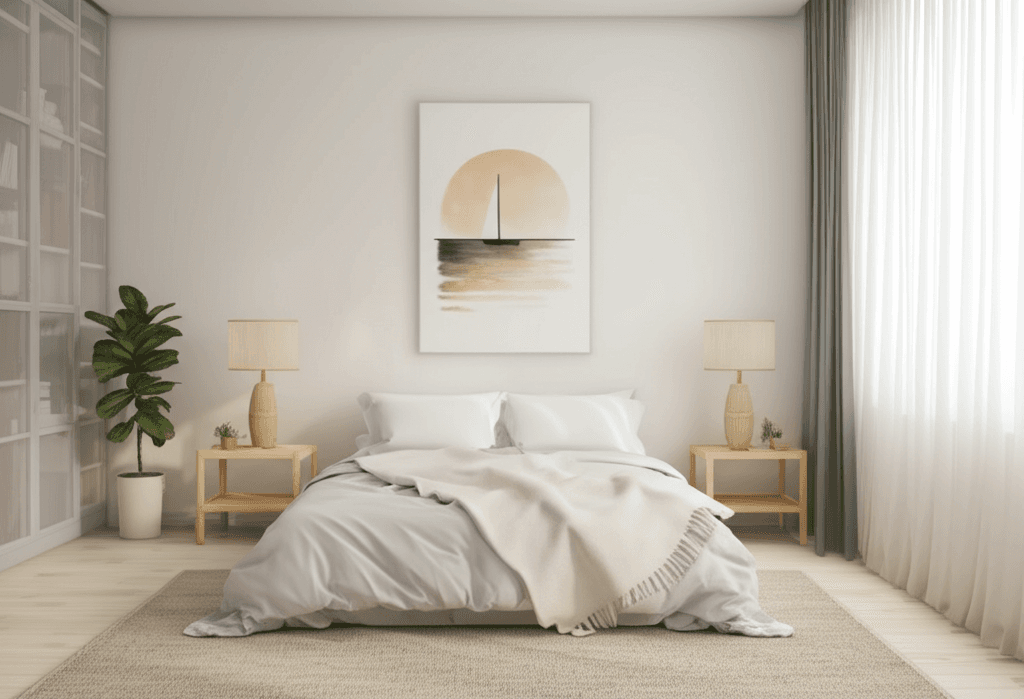
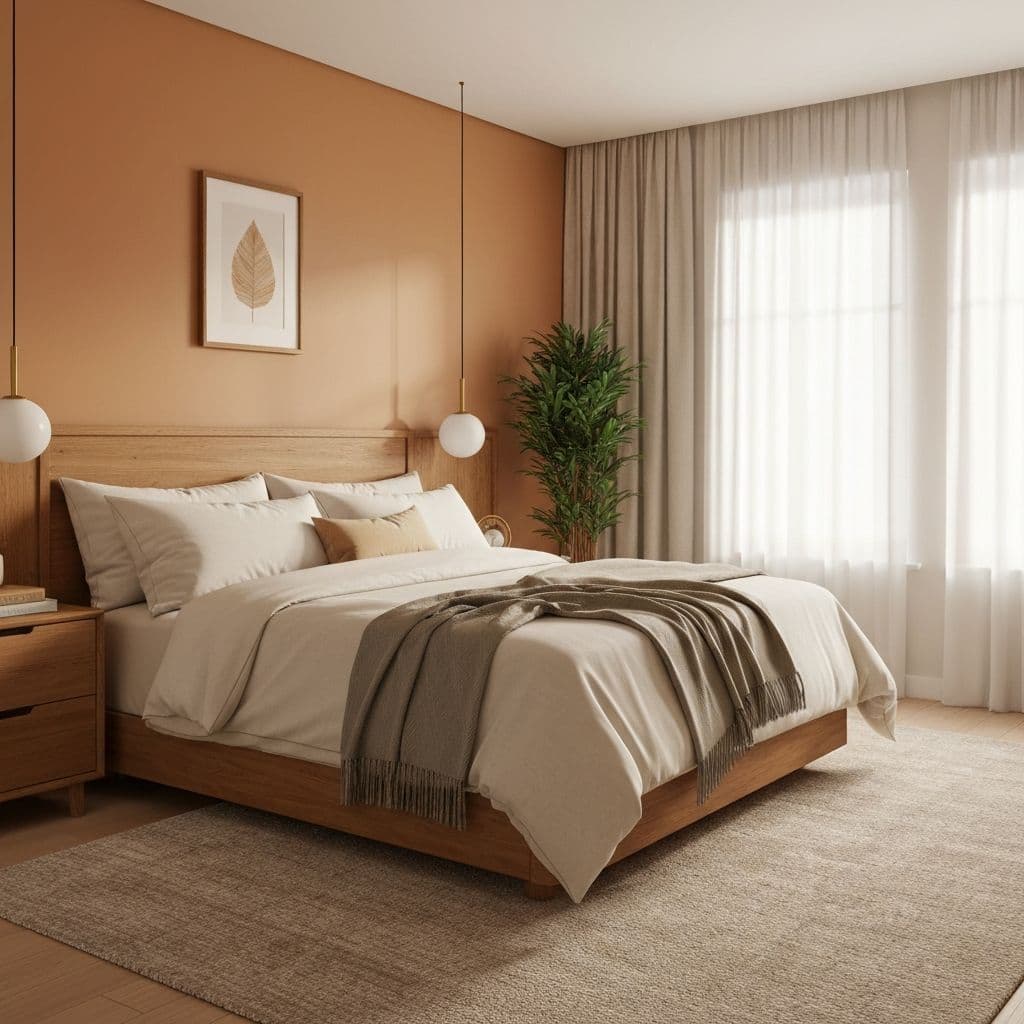
In modern Western practice, the usual rule is: walls in the range of human skin, from pale ivory to deep brown, so the room feels inhabited rather than sterile or theatrical. Accents can be rose, terracotta, sage, or a small amount of red. Bright white, large black fields, and saturated primaries are the common "avoid" list.
That list is taste plus tradition, not a lab result. Form School can place a bed in a white room and still call the layout good. Compass schools may want the wall color to support the room's facing direction. Say which system you are using before you strip four walls.
Paint after the bed, not instead of it
Stand at the pillow. What fills the field of view?
- The door wall and the side walls matter more than the ceiling, unless the ceiling is a dark cave.
- A feature wall behind the headboard is a backing cue. Keep it quieter than a mural of waves or a gallery of faces that watch you sleep.
- The wall you stare at from bed should not be a high-contrast office whiteboard.
If the bed is wrong, move the bed. Then pick color. Reversing that order is how rentals get a trendy green and the same bad sleep.
Skin-tone walls (the useful default)
Ivory, sand, peach, warm taupe, clay, and chocolate are the easy set. They pair with wood and linen. They do not demand a compass.
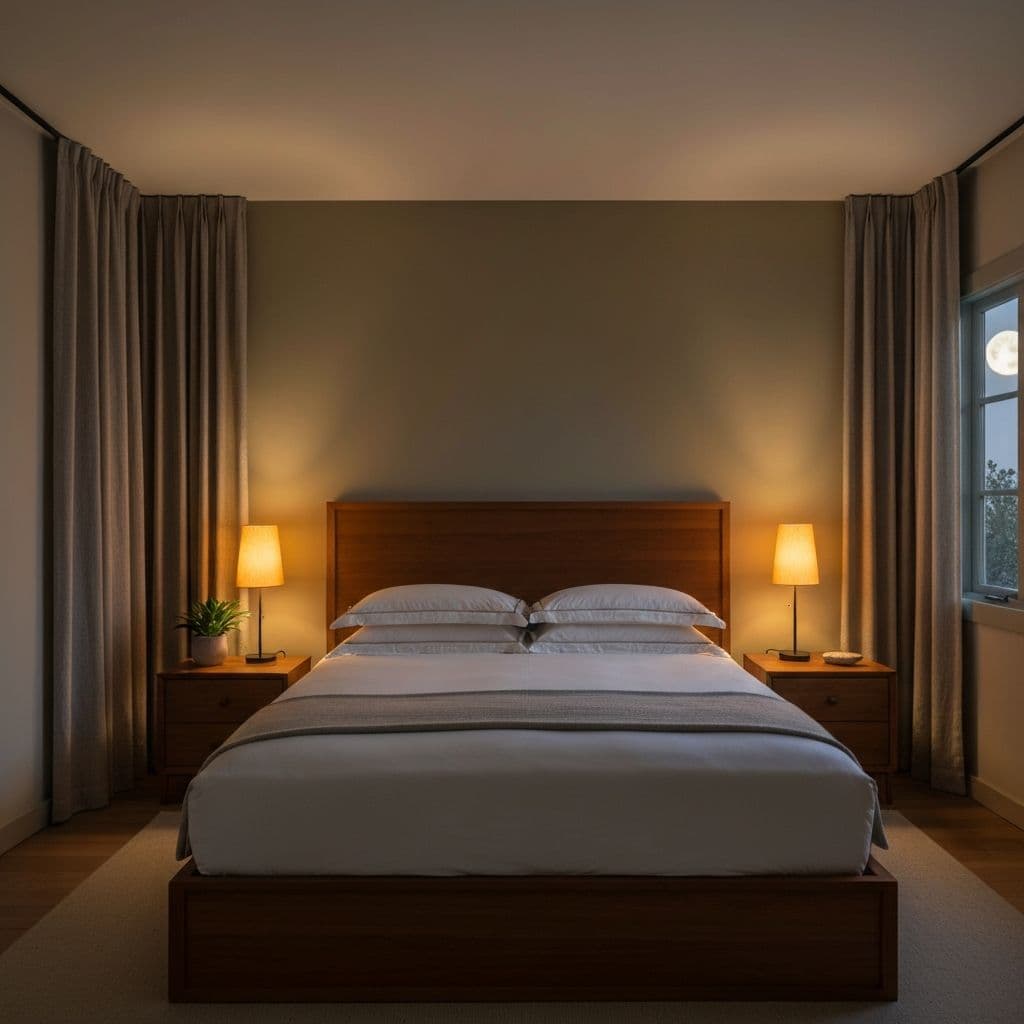
Warm cream beats blue-white "gallery" paint in a north-facing room that already feels cold. Deep chocolate on all four walls can swallow a small rental. Use it on one wall or on textiles if the room is under 10 square meters.
If you love white, stay in the cream family. If you love gray, warm it with wood and a lamp. Cool gray bedrooms are a frequent complaint in photos: the room looks expensive and nobody wants to stay in it.
Accents by job (not by guaranteed outcome)
You want the room quieter at night. Soft sage, muted lavender, dusty blue on curtains or a throw. Test fabric before paint. Sage is wood-adjacent in five-element talk. It is still just a green.
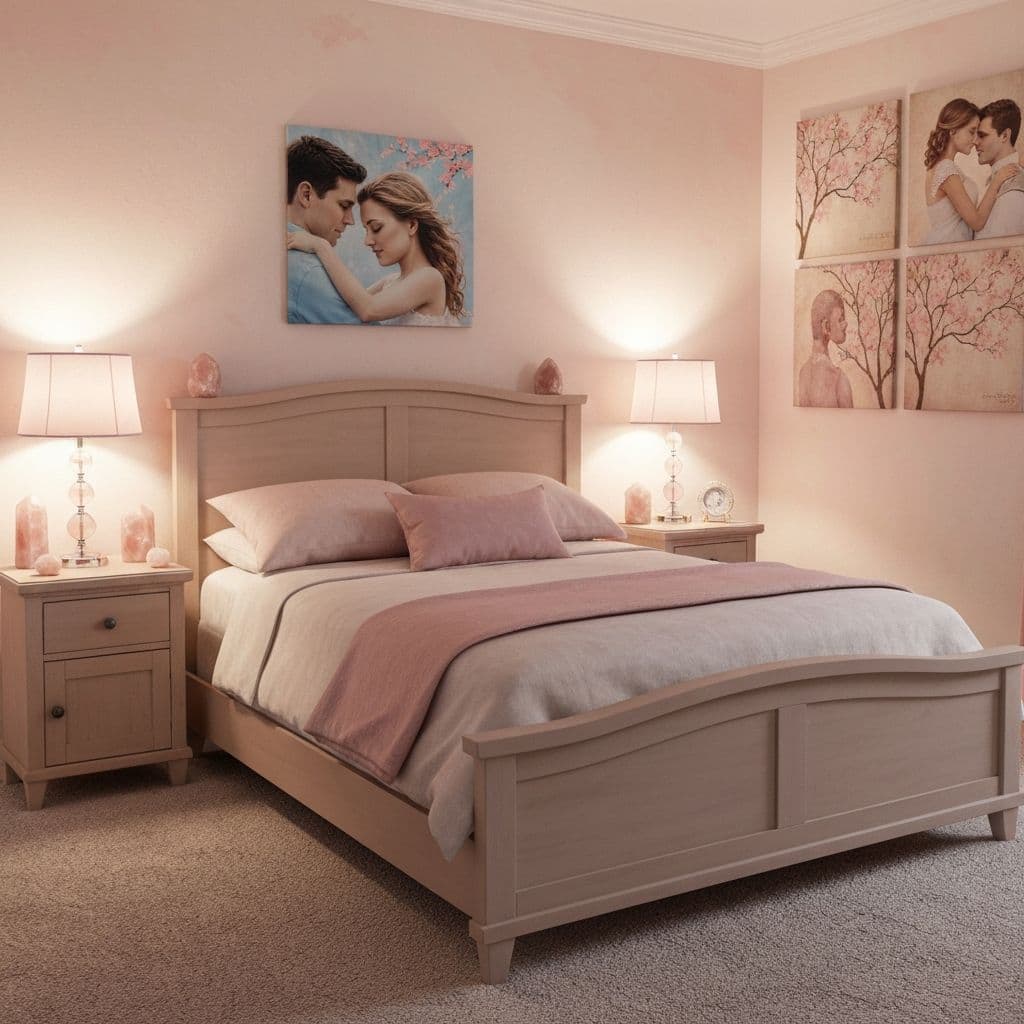
You want the room warmer for two people. Dusty rose, terracotta, a champagne metal lamp. Pairing nightstands is a layout cue in the couples guide. Color supports that. It does not create a relationship.
You are recovering and want less visual noise. Drop the gallery wall. Use one calm field and a dimmable lamp. "Healing green" is a magazine phrase. A clear floor and a door you can see will do more. Health claims stay out of scope. See sleep for night habits.
Red. Pillow, binding on a blanket, a small print. Not the ceiling. South-facing rooms in compass notes can take more Fire. A north-facing slab of red fights Water in that same system. If you are not using a compass, use red as a like, not a prescription.
Colors people ask to ban
These are preferences with Feng Shui labels, not curses.
- Bright white: yang, clinical, shows every cable.
- Large black: heavy, eats light in a small room. A blackout curtain is a different job (sleep) from a black accent wall.
- Hot red or orange fields: stimulating. Fine in a living room, loud at 1 a.m.
- Electric or icy blue: cold, screen-like.
- Cool gray: fashionable, often lifeless without wood.
You can keep a color you love if you mute it and light it. A "forbidden" list that makes you hate your own room is a bad trade.
Compass direction (optional layer)
Only use this if you already care about facing. Stand in the room, look at the main window or the door-as-facing your school uses, and read a compass away from the metal bed frame.
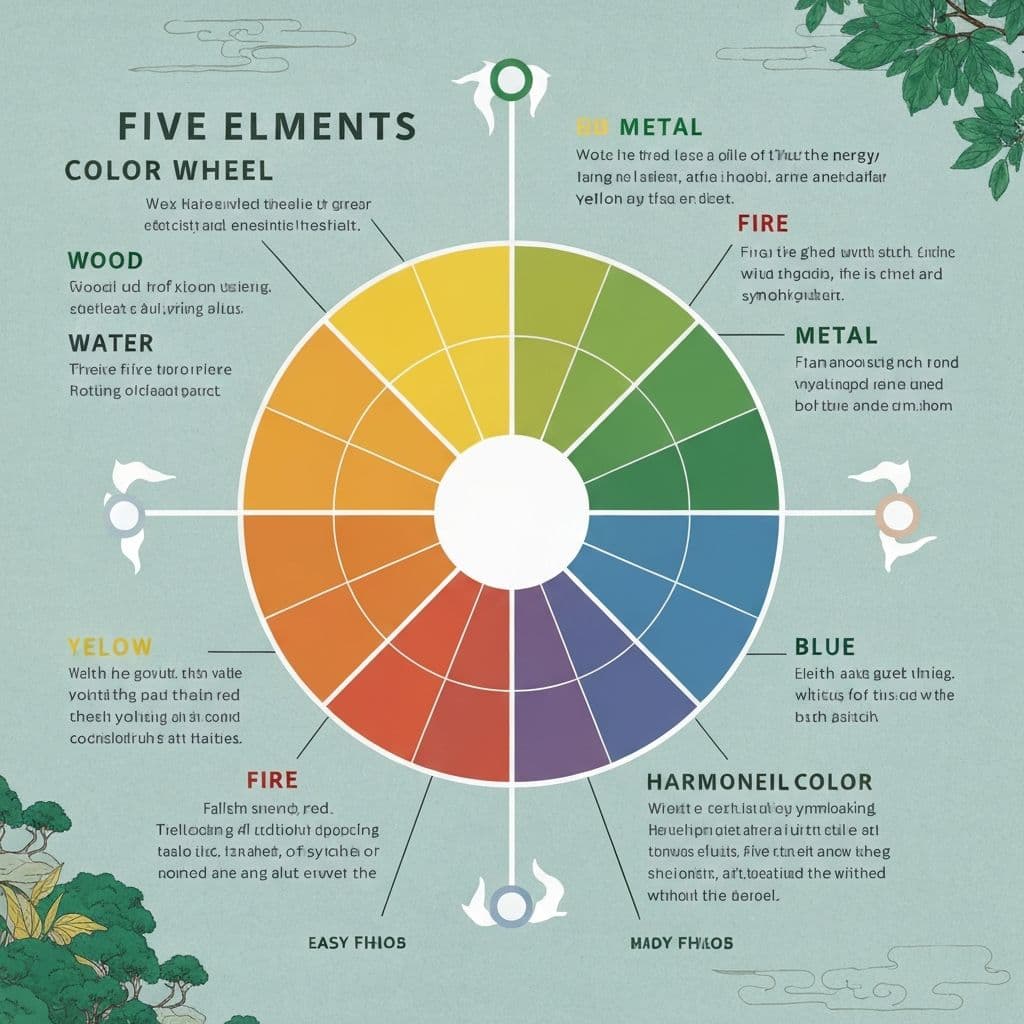
- South (Fire): earth tones to settle, or small red accents if you want more Fire.
- North (Water): warm paints and wood so the room does not go cold-blue.
- East (Wood): greens and light wood sit easily. You do not need a jungle.
- West (Metal): cream, gray-white, soft metallics. Warm them or the room goes silver-clinic.
- Northeast / southwest (Earth): terracotta, sand, low yellow. Avoid turning the room into a mustard box.
If two blogs disagree, one is probably using Form School (ignore this list) and one is using a compass school. Do not paint twice in one weekend.
Renters who cannot paint
The color the pillow sees is the duvet, the curtains, the rug, and the lamp. Those four surfaces beat a sample pot you are not allowed to use.
Command-strip a fabric panel on the wall you face. Use a warm bulb (the Kelvin number on the box, not a "healing light"). Swap the landlord's blue-white tubes if the fixture allows a bulb you can take when you leave.
Closet-door mirrors bounce whatever color is opposite them. If they reflect a bright hallway, that is a night activation problem as much as a hue problem. The closet guide covers the doors.
A sequence you can finish in an afternoon
- Confirm the bed can stay. If not, stop and open the bedroom guide.
- Photograph the room from the pillow in daylight and at night with the lamp you actually use.
- Name the largest surface you can change (paint, or duvet plus curtains).
- Pick one wall or textile family. Do not buy seven accent pillows in seven elements.
- Live with it three nights before you add a second color.
What to skip
Do not promise deeper sleep, better sex, or recovery from illness because the wall is taupe. Do not paste an App Store URL in the body. Do not hang a mirror that throws the bed back at you just to "double" a pretty color. Do not copy a living-room palette onto the sleep wall because the algorithm said "cohesive home."
Kids' rooms can take slightly clearer color. Guest rooms should stay calmer than your own if guests actually sleep there. Do not force couple-pink into a child's room.
How to judge a change
If the room still feels like a hallway at night, the bulb is too cool or the walls are too white. If you still cannot see the door, color is the wrong project.
Scan the pillow-view photo in FengShui Hero after layout is stable. Use this article for the textile and paint steps on the same walls.
Sources and limits
Color notes mix modern practitioner palettes with five-element and compass associations. They are not a clinical sleep protocol. Empirical research on Feng Shui as a whole is limited and mixed. Lease rules win.
Related in this hub: bedroom layout, sleep, couples. Element color across the home: colors by room.