
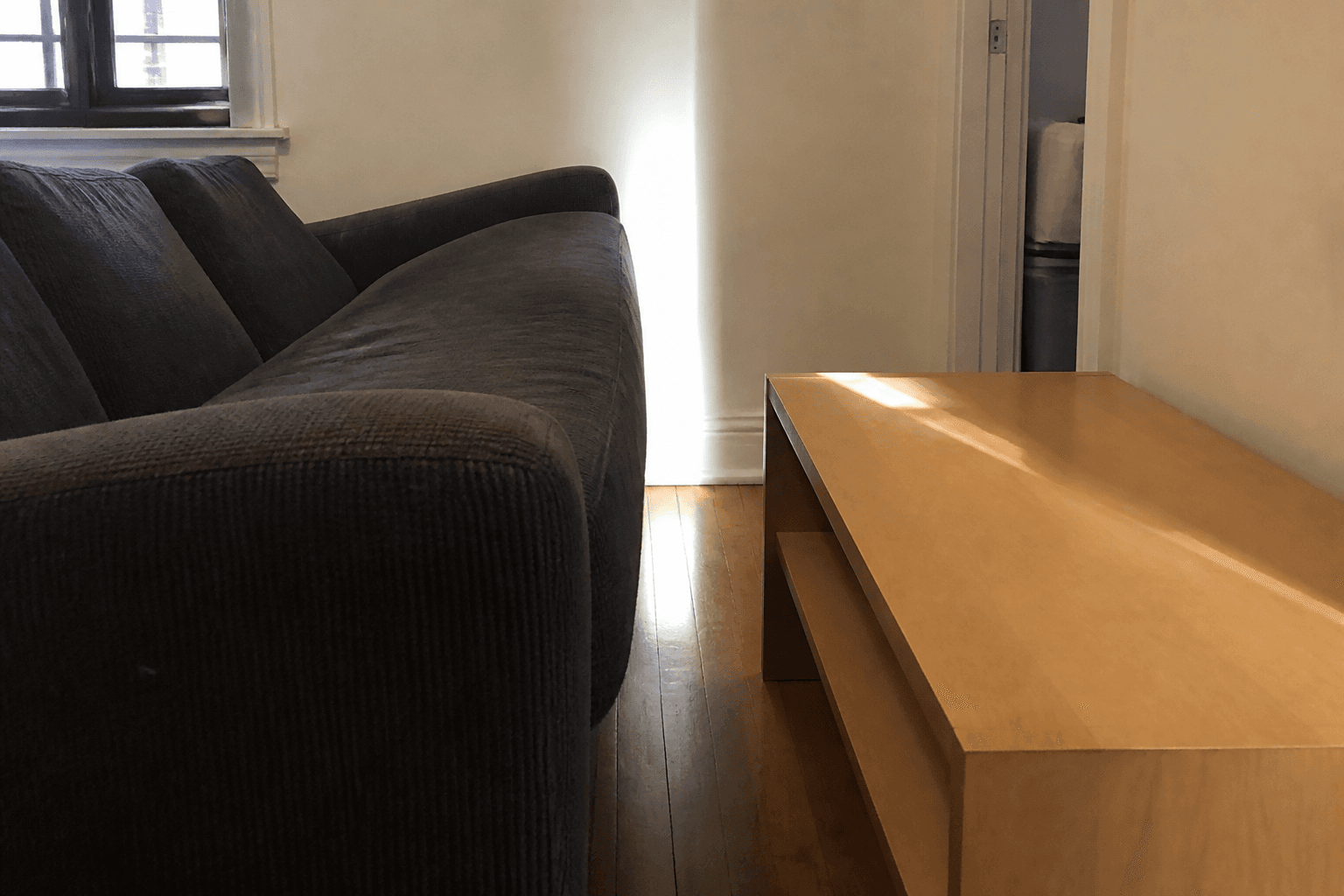
Feng Shui furniture scale is a tape line on the walk you already take, before the piece hits the cart. Shoulder-width from the door you use beats a listing photo. A lucky wood will not shrink a sofa.
When we photograph apartments after a delivery, the expensive miss is a new sofa that ate the aisle. People searched scale online and still clicked a photo taken in a barn of a showroom. We ask them to walk from the latch with a laundry basket. If they turn sideways, the piece already failed. The furniture hub is buy, skip, and refinish in one place, with a short scale reminder. This page is the tape-and-cart job in full. Used furniture is frame and smell. Arrange furniture is where a piece you already own should sit. Do not merge those jobs in one URL.
What is Feng Shui furniture scale?
Scale is the piece versus the walk, the ceiling, and the openings on the object itself. It is not a bagua cell. It is not a five-element wood species.
A sofa can be handsome and still fail if the arm sits in the only line from the door to the kitchen. A bed can be "king" on a tag and still leave no path to a closet. A dresser can fit on the wall and still fail when the drawers open into the mattress.
Classical Form School writing cares about shape and a path you can take. Popular shops sell "prosperity" oak. Treat the shop copy as copy. Your shins are the test.
How we check a real room
We walk from the door we actually use to the seat or the bed wall with a basket. We mark the pinch. We sit. We open every drawer on a floor model or on the drawing. We look at the empty wall in the same hour the client sits there, because showrooms run bright and wide.
If the client already bought the piece, we still tape. Then we talk return, a different room, or a layout shift. We do not add a plant to the pinch and call it done.
How do I check scale before I buy?
Do this in the room, not in the store aisle.
- Walk from the door you actually use to the seat or the bed wall. Keep a shoulder-width clear. Mark the pinch with painter tape on the floor.
- Read the listing's width, depth, and height. Include arms, recline, and the wall clearance the manual wants behind a sofa.
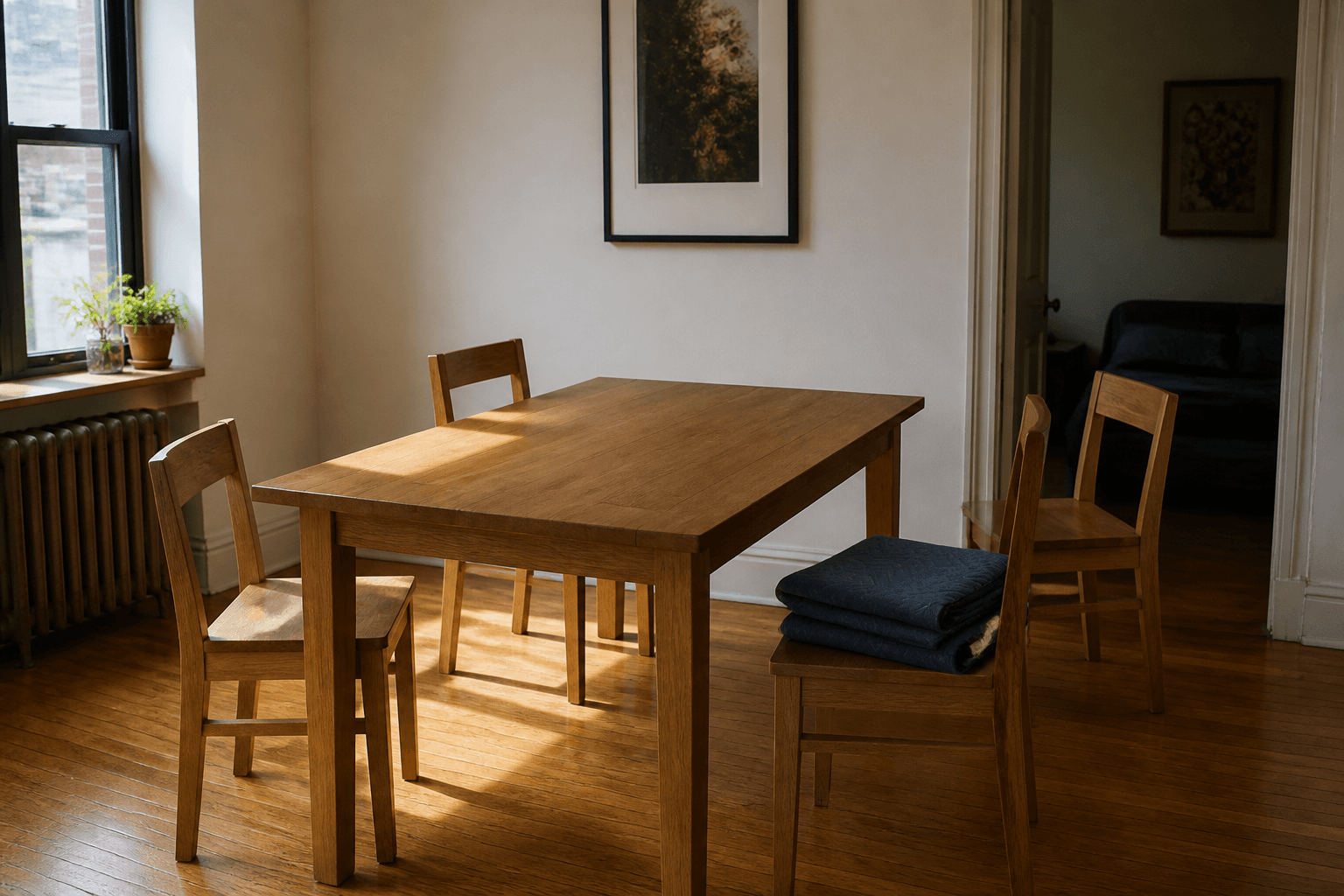
- Tape a rectangle of those numbers on the floor, or cut newspaper to that footprint and live with it for a day. Open the room door through the tape. Sit in a chair beside it.
- Open every door and drawer on the drawing. A dresser that only fits with the drawers shut will fail on Tuesday.
- Check height against the window sill and the light switch. A tall bookcase that blocks the only pane is a cave.
If you turn sideways in the taped aisle, do not buy. If the paper footprint covers the only walk, do not buy. If the door cannot finish its swing, do not buy.
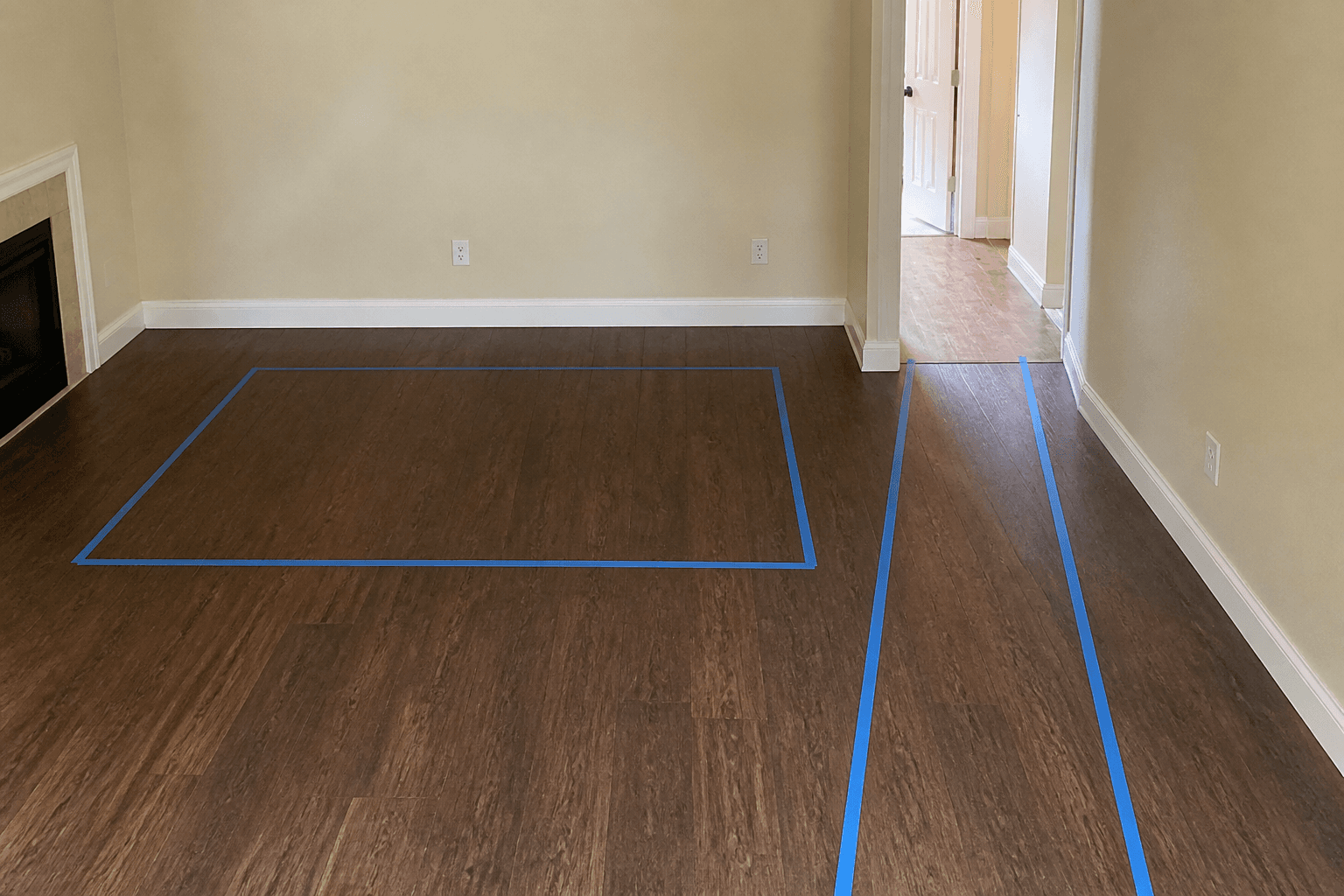
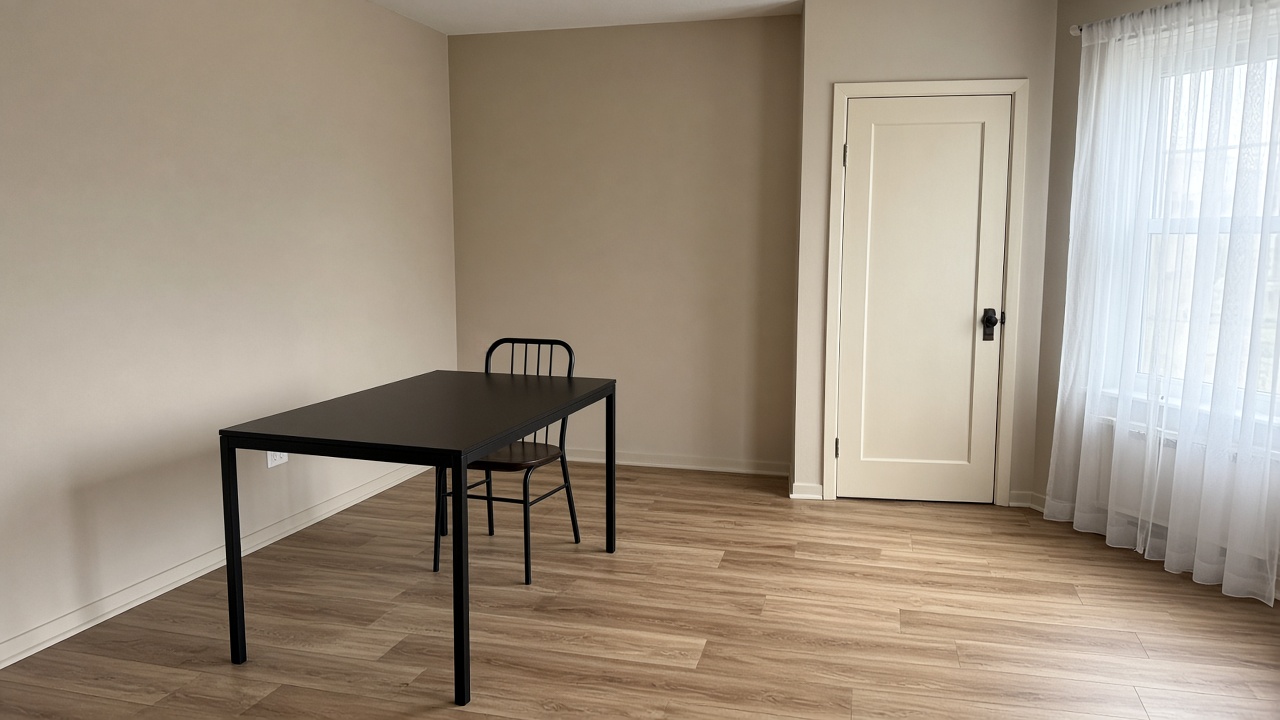
That rectangle is a sofa-sized guess. The parallel lines are the walk that must survive. If your floor cannot show both, the cart is early.
Showroom lighting lies
Stores run bright and wide. Your rental is smaller and yellower at 8 p.m. Photograph your empty wall in the same hour you sit there. Take that photo to the store. If the piece looks like a wall in your picture, it is too tall or too wide.
Online photos crop the arms. Read the numbers. "Seats three" in a warehouse loft is not seats three in a one-bed. Delivery day is a different calendar row. This page stops at the decision to buy.
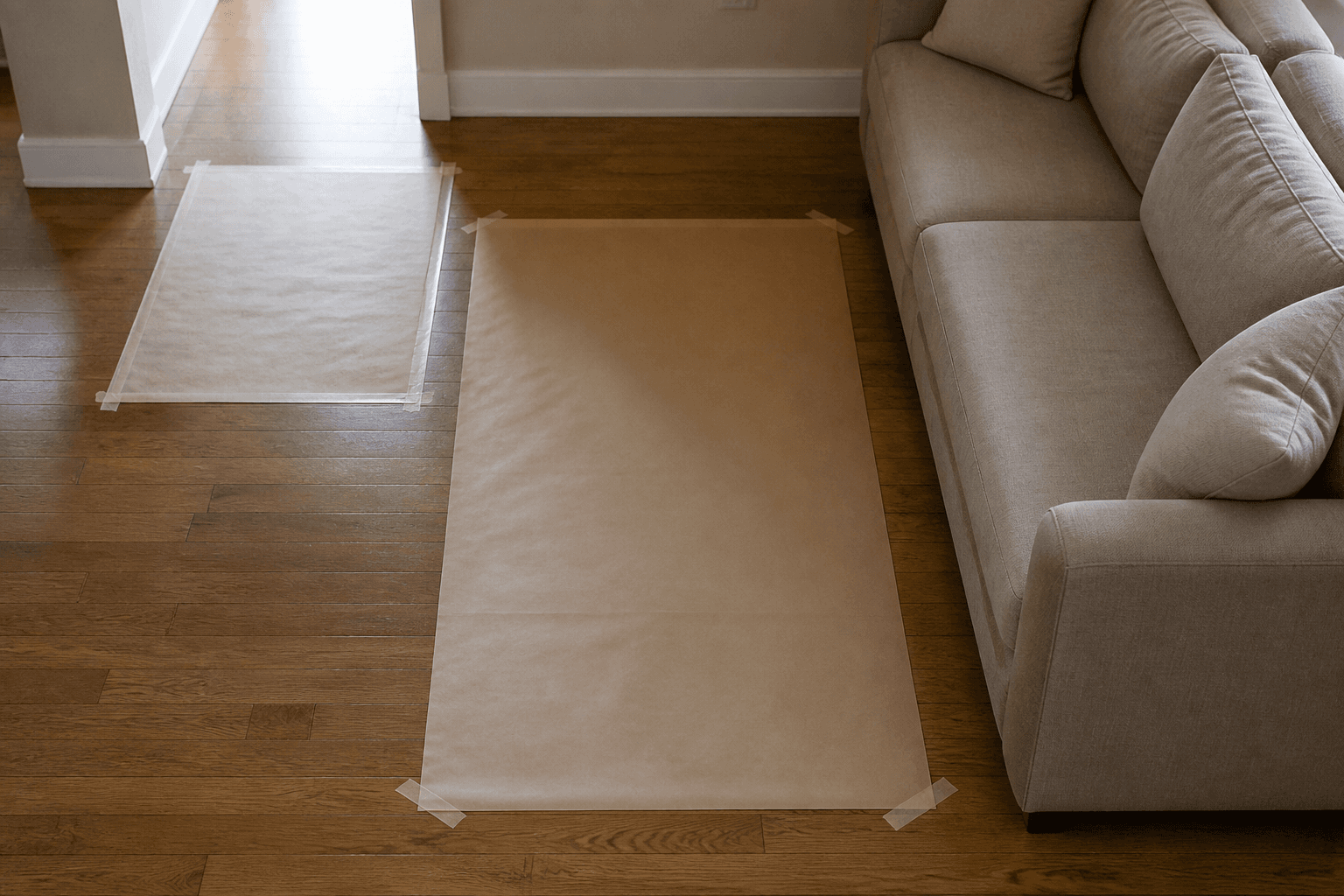
Paper is cheaper than a return. If the paper already owns the walk, the listing photo does not matter.
What if the piece already ate the aisle?
Return it if the policy allows. If it does not, stop treating a plant as a shrink ray.
Pull the piece off the latch line so the door can open. Float it only if a walk still exists behind and in front. Move it to a room that has the width. Sell it. The arrange-furniture guide is the placement job once the object is staying.
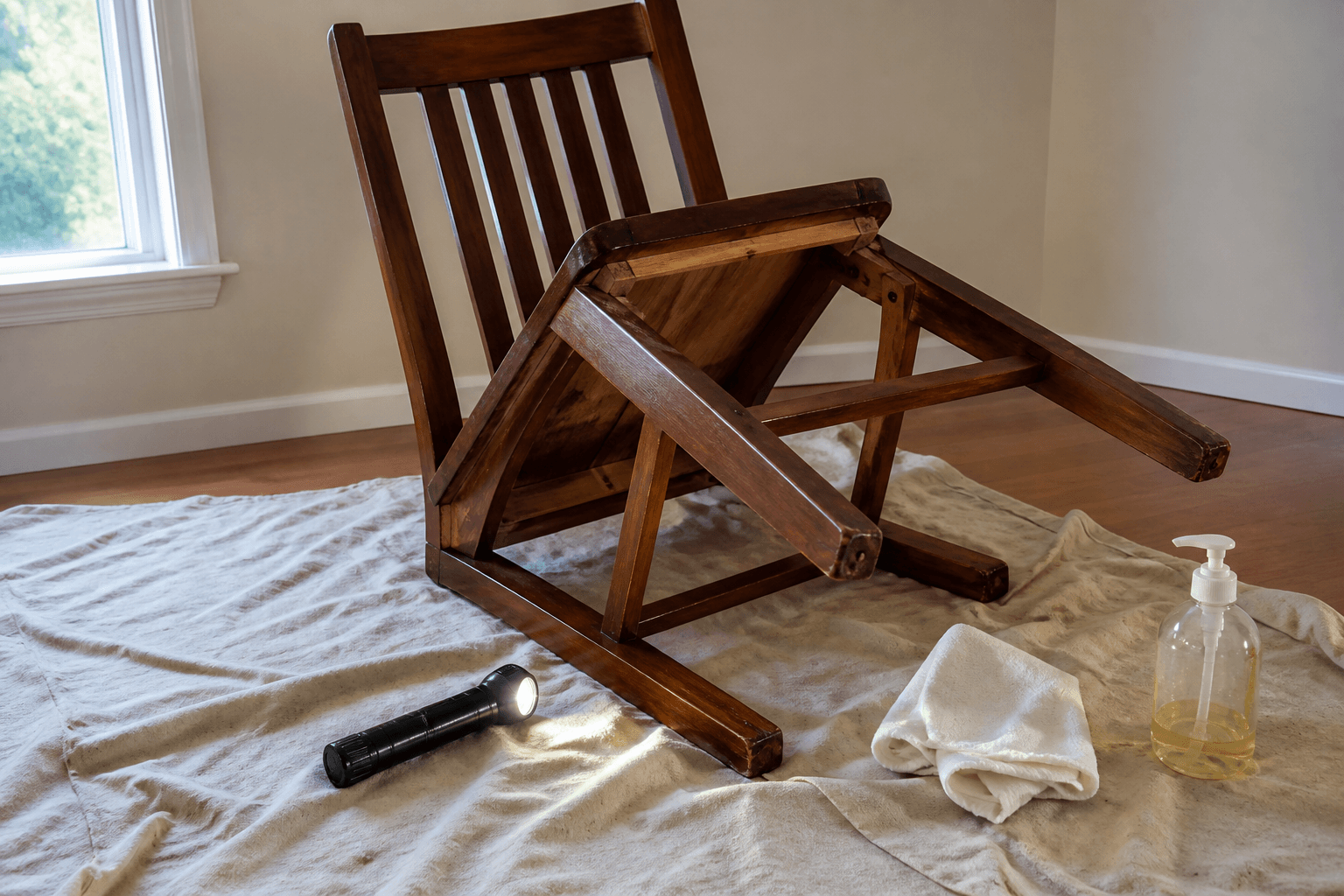
A refinish will not make a sectional smaller. Oil is oil. Joints are joints. The refinish page owns that workshop. Come back here if you are still shopping.
Used pieces get the same tape. A cheap sofa that fits is better Feng Shui in this sense than a "lucky" sofa that does not. Leftover luck is not in the joints. That sentence lives on the used-furniture page. The tape still applies.
Beds, tables, shelves, and the openings you forget
A bed is scale plus sleep. King tags assume a room that can take the frame plus two nightstands plus a walk. Tape the mattress number and the nightstand rectangles. If the closet door cannot finish its swing, the bed is too wide even if the head wall looks empty in a photo. Command still lives on the bedroom hub. Width lives here.
A dining table needs tuck-under for chairs and a walk behind a seated person. "Seats six" in a catalog is seats six if every chair can pull out. Tape the tabletop and the chair scrape. The dining-table-shape page owns round versus rectangle. This page owns whether the rectangle fits.
Bookshelves fail on height and on the walk when a door is open. A case that blocks a window turns the room into a cave. Measure the pane. Closed lower doors are a bookshelves-article job. The footprint is this job.
Desks need the chair roll and the door glance. A huge executive desk in a box room is a parking lot. Tape width and the chair circle. Standing converters add a mat that must not own the aisle. The standing-desk page owns height. The tape still comes first.
Delivery, elevators, and the door swing you already have
A piece can fit the room and fail the building. Measure the elevator, the stair turn, and the apartment door. A sofa that cannot make the landing is not a gua problem. It is a truck problem. Delivery day is a later calendar row. Tonight, if the tape already fails in the room, you never get to the elevator.
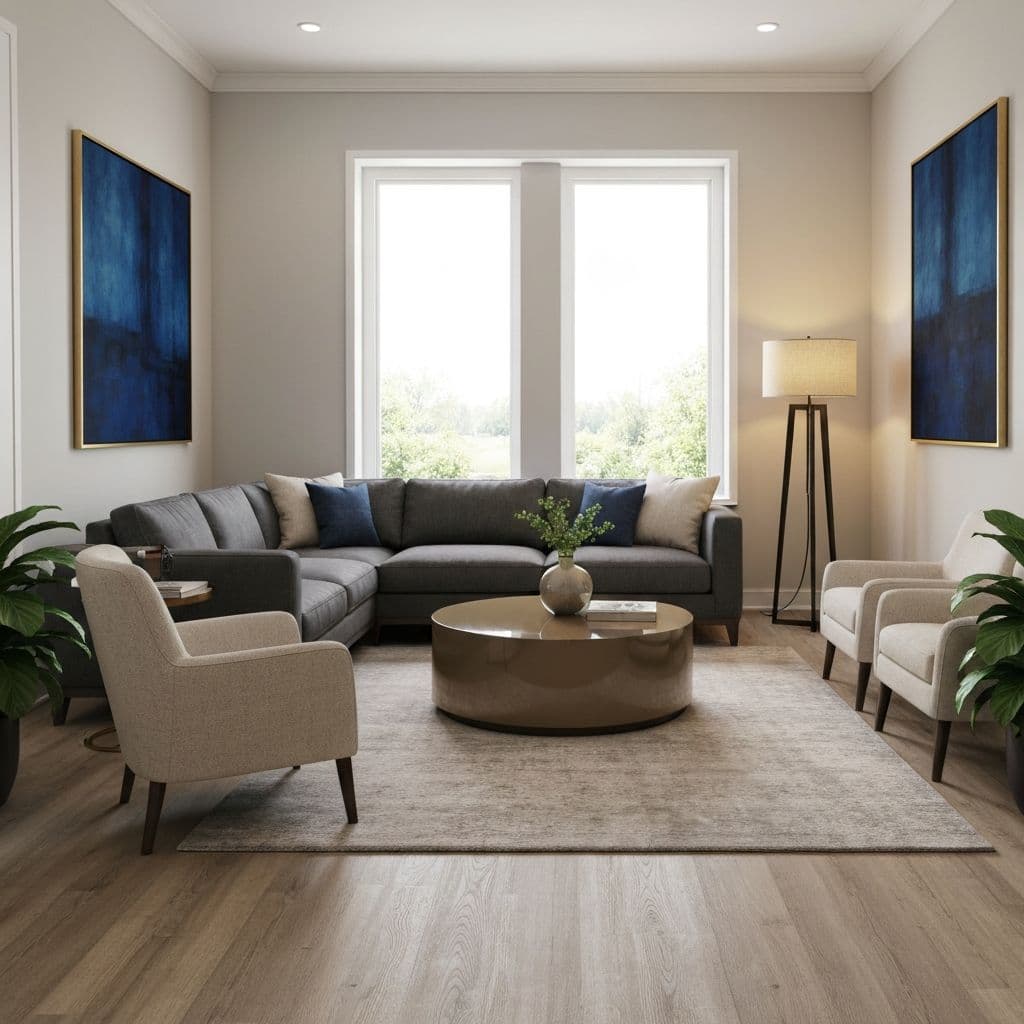
Recliners need wall clearance behind them. Sectionals need the chaise to stay off the latch line. Coffee tables need a shin path, which the coffee-table page owns. Still tape the coffee table if you are buying one. Two objects that each "kind of fit" can fail together.
Glass and metal do not get a scale pass because they look visually light. You still walk around them. Open bars catch hips. A glass coffee table still has a footprint. Materials are a later row. The tape does not care about the finish.
If two people must agree, tape together. One person "seeing it" in a showroom is how a too-big sofa arrives. Live with the paper for a day. Eat dinner next to it. Open the front door over it. If you hate the paper, you will hate the delivery.
Listings that say "apartment size" still need numbers. Measure the wall in your room, not the wall in the photo. A sofa that fit the last flat can fail this one. Take the tape with you when you move. The first-week rental page owns the bed and the door. This page owns the next cart, if you even open one.
If the pinch is a coffee table you already own plus a sofa you want, tape both. Removing the table can free the sofa. That is still scale: the set has to walk. Do not buy the sofa and hope the table "will find a place."
What this is not
This is not sofa placement. Command and a conversation square live on the living-room sofa article. This is not how to arrange a room of pieces you already own.
It is not a bagua tape job. Do not draw nine cells to decide if a cart is allowed. It is not a materials shop. Weight and glare of metal and glass are a later furniture-materials row.
It is not income. A correctly scaled chair will not raise rent. It will not block the door.
Tonight on the floor
Walk from the door with your shoulders square. Put tape where you pinch. If you have a listing open, tape that footprint too. Photograph from the door in FengShui Hero. If the scan flags a blocked path, close the cart. Buy nothing until the paper has lived on the floor for a day.