
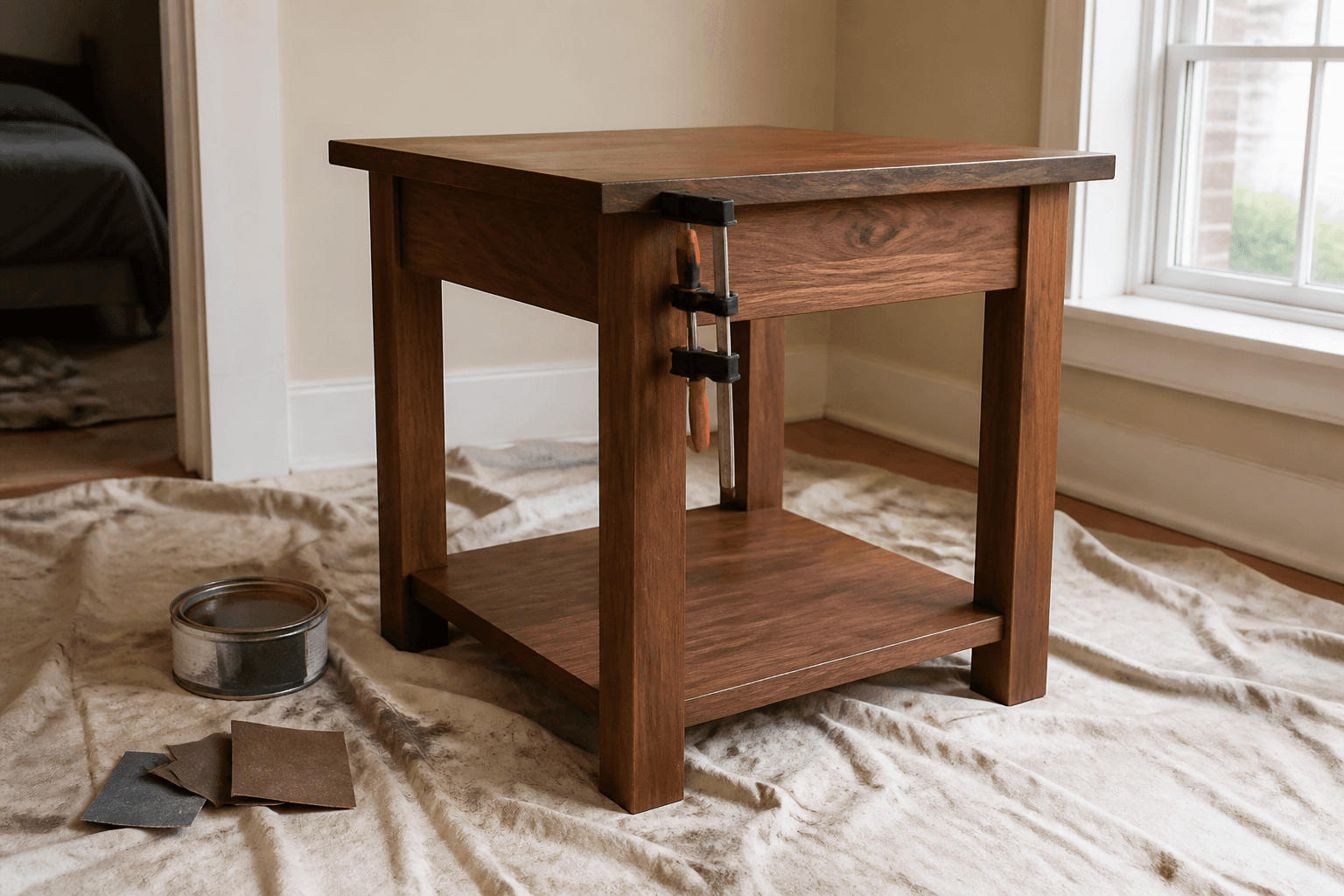
Feng Shui refinish furniture is sand and oil after the joints pass, not leftover luck in a new coat. You lift a corner. If the frame wracks, you stop. That fail is a used-furniture skip, not sandpaper. Work on a drop cloth by a window, soap, sand with the grain, then oil a reversible finish.
When we photograph rentals after a refinish weekend, the expensive miss is a chair with a prettier top that still twists in the hall. People ask which oil holds luck. We ask them to lift a corner. If the frame wracks, grit has nothing to fix. The furniture buying hub covers scale, a short refinish note, and when to skip a new piece. The used furniture inspection is the curb: frame, smell, and wash. The renter guide is the lease: no masonry, no built-ins you cannot unscrew. This page is the workshop after you already decided the piece is yours to keep.
What must be true before you sand?
Do the joint work on a hard floor, not on a piled blanket that hides a twist. A drop cloth is for oil later. It is a bad test pad. Tile or vinyl shows whether four legs share the load.
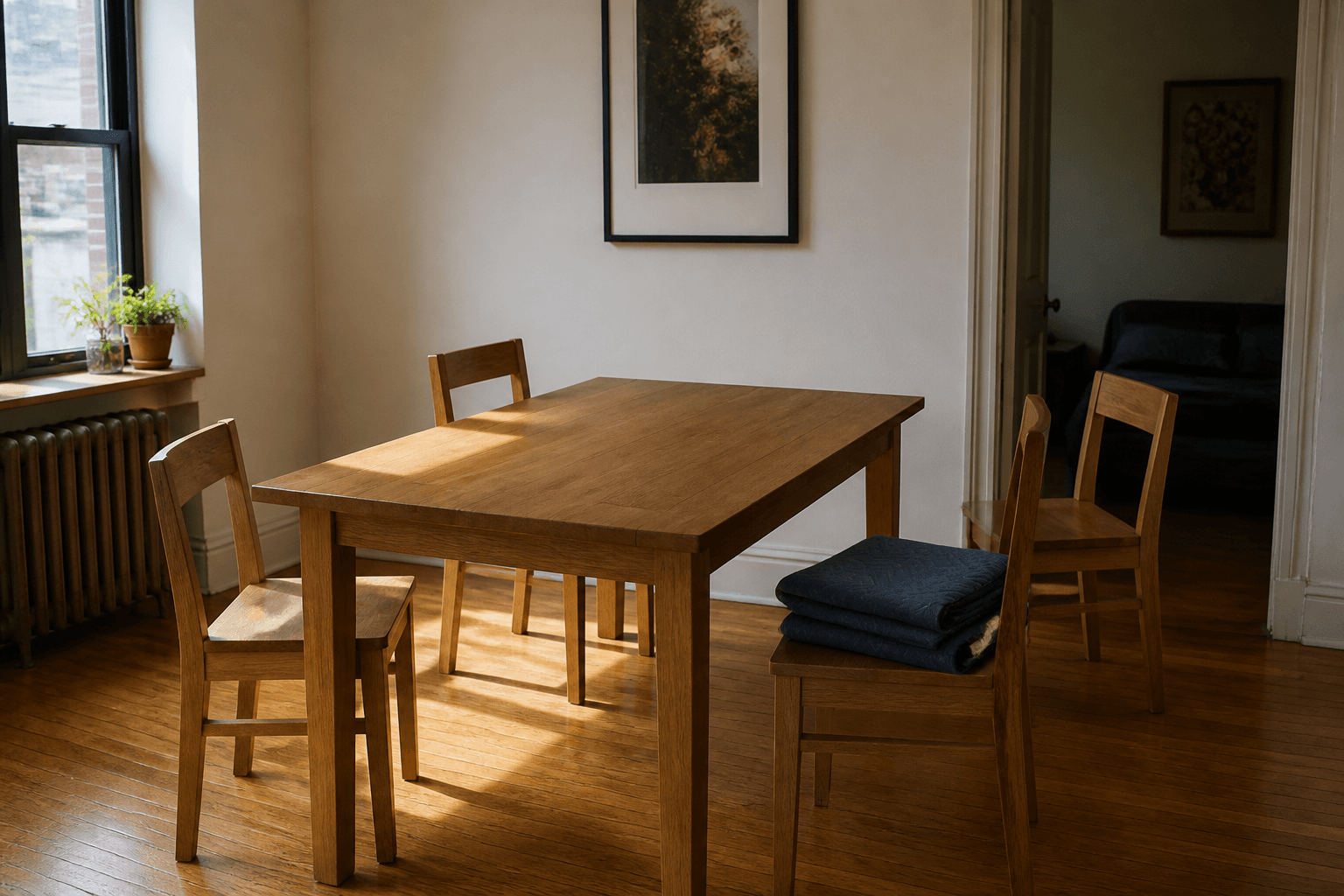
Lift one corner of the chair, table, or small dresser. Watch the opposite corner. If the frame wracks, stop. That is a used-furniture fail. Sandpaper will not square a tired tenon. Go back to the used furniture page and treat the piece as a skip, or as a glue job you name honestly before you buy grit.
A friendly creak can be wood. A sudden drop, a rail that walks in the socket, or a chair that sits on three legs is a joint problem. Tighten screws you can reach. Clamp a loose stretcher with wood glue and wait until the sit is square without your hand on the rail. Do not fill a gap with filler and sand it pretty. Filler is cosmetic. It does not replace a tenon.
If you already washed the piece and aired it, you do not repeat the curb smell test here. If you never did that inspection, do it before you open oil. Smoke in foam is not a sanding job.
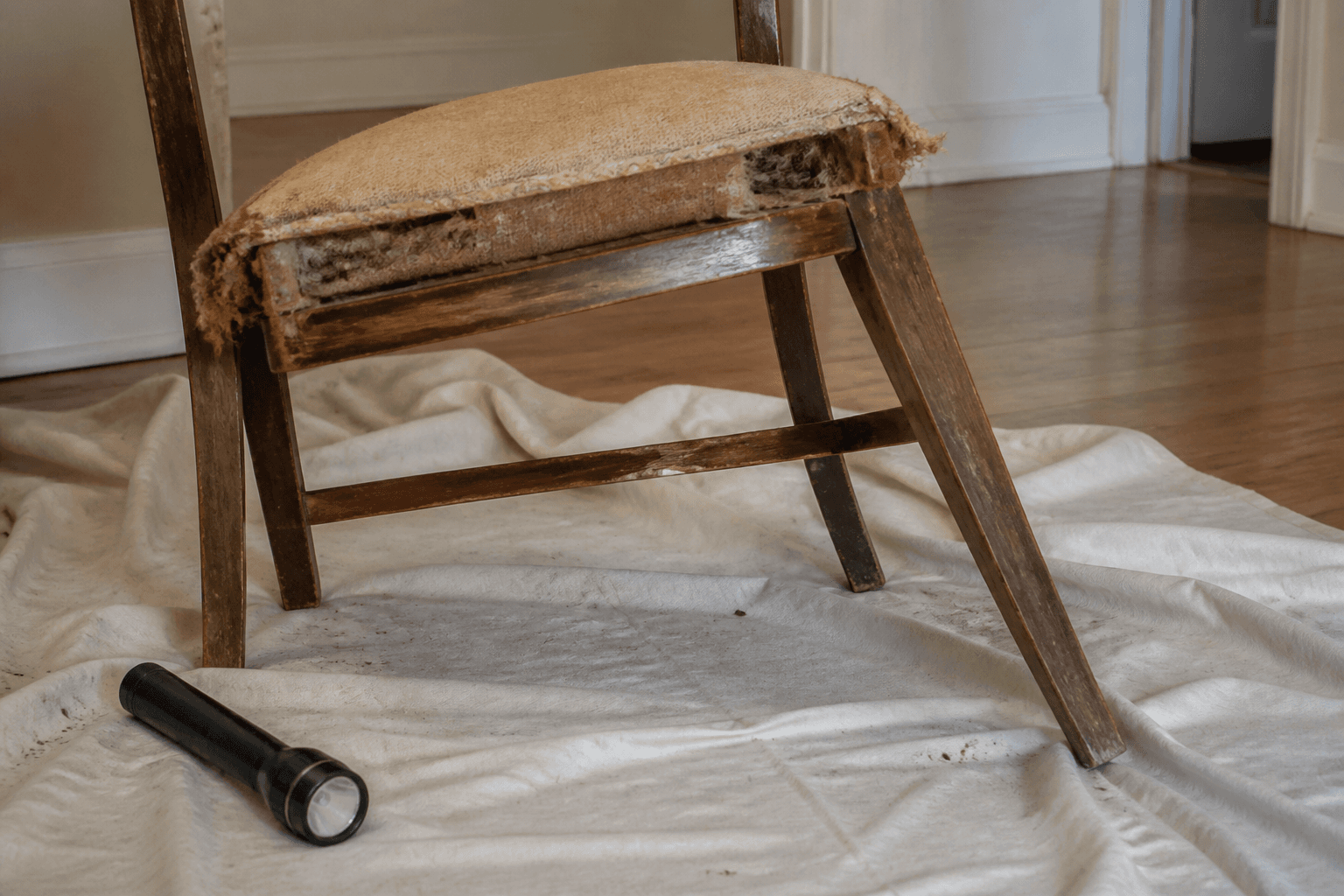
That lifted corner is the gate for the whole weekend. You are looking for twist, not for a story about who sat there. If this angle would embarrass the listing, do not reward the frame with a new coat.
Tighten, clamp, and wait
Work in daylight from a window so glue lines show. A dark corner hides an open miter.
Close the joint. Wipe squeeze-out while it is still wet. Leave the clamp on until the piece sits without your hand. Sanding the same afternoon just polishes a joint that is still moving.
Drawers: the case has to be square before you touch the top. A racked case will keep scraping after the oil dries. Tighten the case, then the runners, then decide whether the top is even worth sanding.
Take the knobs off. Label the screws in a cup. You do not want to grind hardware into the face and then invent a folklore reason the dent "adds character."
Veneer is a thin skin. If you can see plywood layers, you already went through it. Stop. Oil what is left or haul it. Particle board with bloated edges is not a candidate. Sanding it makes dust and a fuzzy edge. Solid wood with a scarred top is the usual yes, once the apron is honest.
A table is two problems stacked. The top can look wrecked while the apron is the real structure. Do not sand the top until the apron is tight. A shiny top on a wracked apron is how a hall table still walks when you set a lamp on it.
Landlord timber stays off the list
A rental bookcase screwed to the wall is not your furniture. Wipe it. Leave the factory film. The lease cares about timber you do not own, including window stools and parquet.
A new coat does not shrink a wardrobe. If the piece already blocks a door swing, sanding is procrastination. Measure and skip rules live on the furniture hub. This workshop assumes the size already passed.
How do you oil a piece in a rental without wrecking the floor?
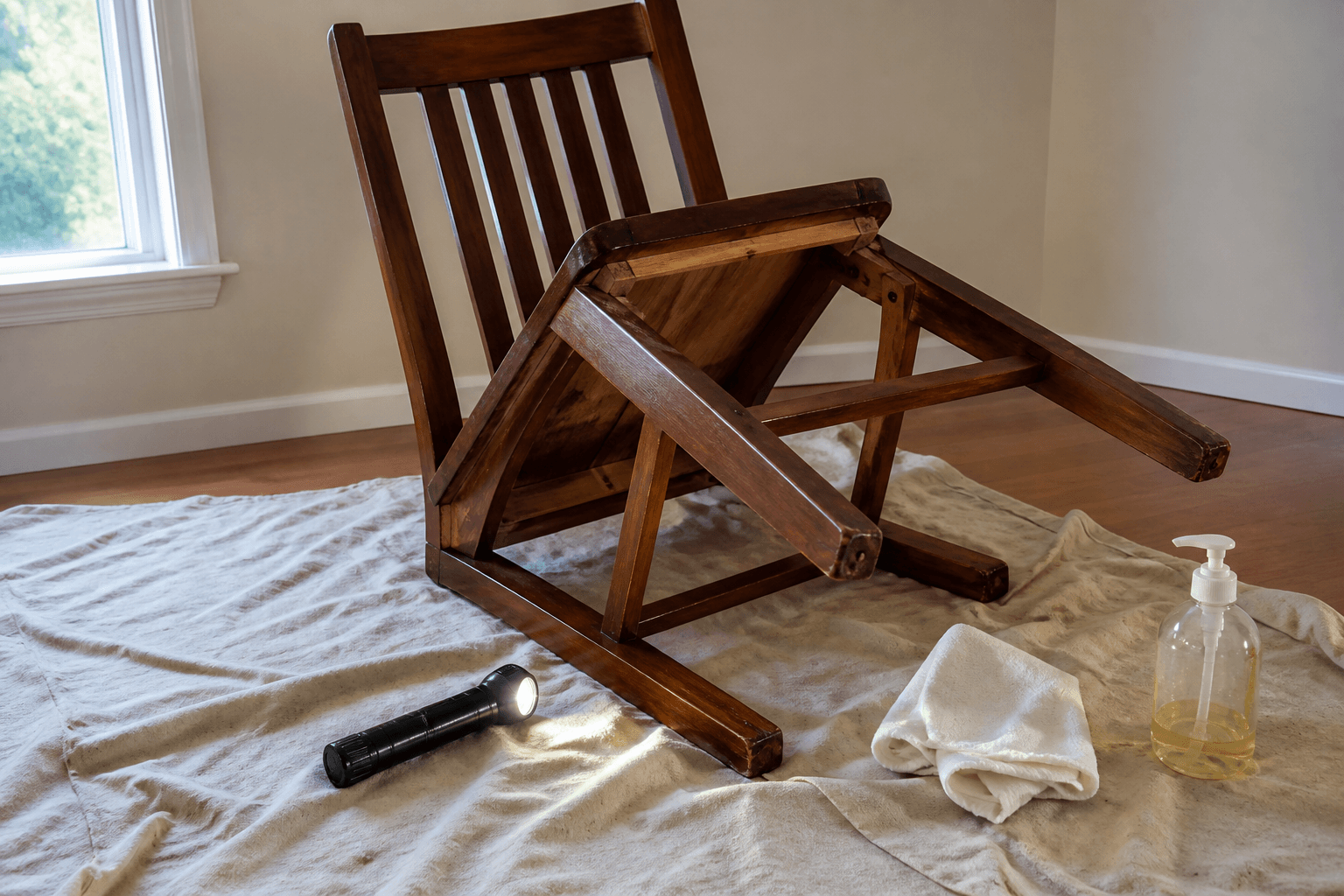
Park the piece on a drop cloth you would trust with a spill. Double the cloth under the legs. Cardboard under the cloth helps if the floor is the landlord's timber. Keep the project out of the only path to the front door. Open a window. If you cannot open a window, do not oil indoors. In a rental the rules stay the same: no stripping built-ins, ventilate, drop cloth, and a finish that can leave with the piece.
Keep stripper off landlord timber. Chemical stripper on parquet is how a deposit conversation starts. You are coating a piece you can carry out, not the floor and not the built-in.
Kitchen vinyl under a window is often a kinder work spot than the one oak room you are trying to protect. Carry the piece there, or pad the legs. Do not drag unfinished wood.
Soap, then sand with the grain
Do this in order. Stop if a step fails.
- Lift a corner on a hard floor. If the frame wracks, stop. That is a used-furniture fail, not a sandpaper job.
- Move the piece onto a drop cloth. Leave a walk around the cloth so you are not hopping oil to reach the latch.
- Open a window. Aim a fan out if you have one. You want air moving, not a sealed bedroom where you will sleep in fumes.
- Soap the wood and wipe the dirt. Let it dry fully. You sand cleaner wood, not grit mixed with kitchen film.
- Sand with the grain. Start coarse enough to cut the old film, then finer before oil. Cross-grain scratches show under oil more than you expect. Follow the boards on a tabletop.
- Vacuum the dust, wipe, then oil a finish you can reverse. Wipe off the extra so the hall does not stay tacky.
- Keep stripper off landlord timber. No built-ins. Felt pads go on after the finish dries.
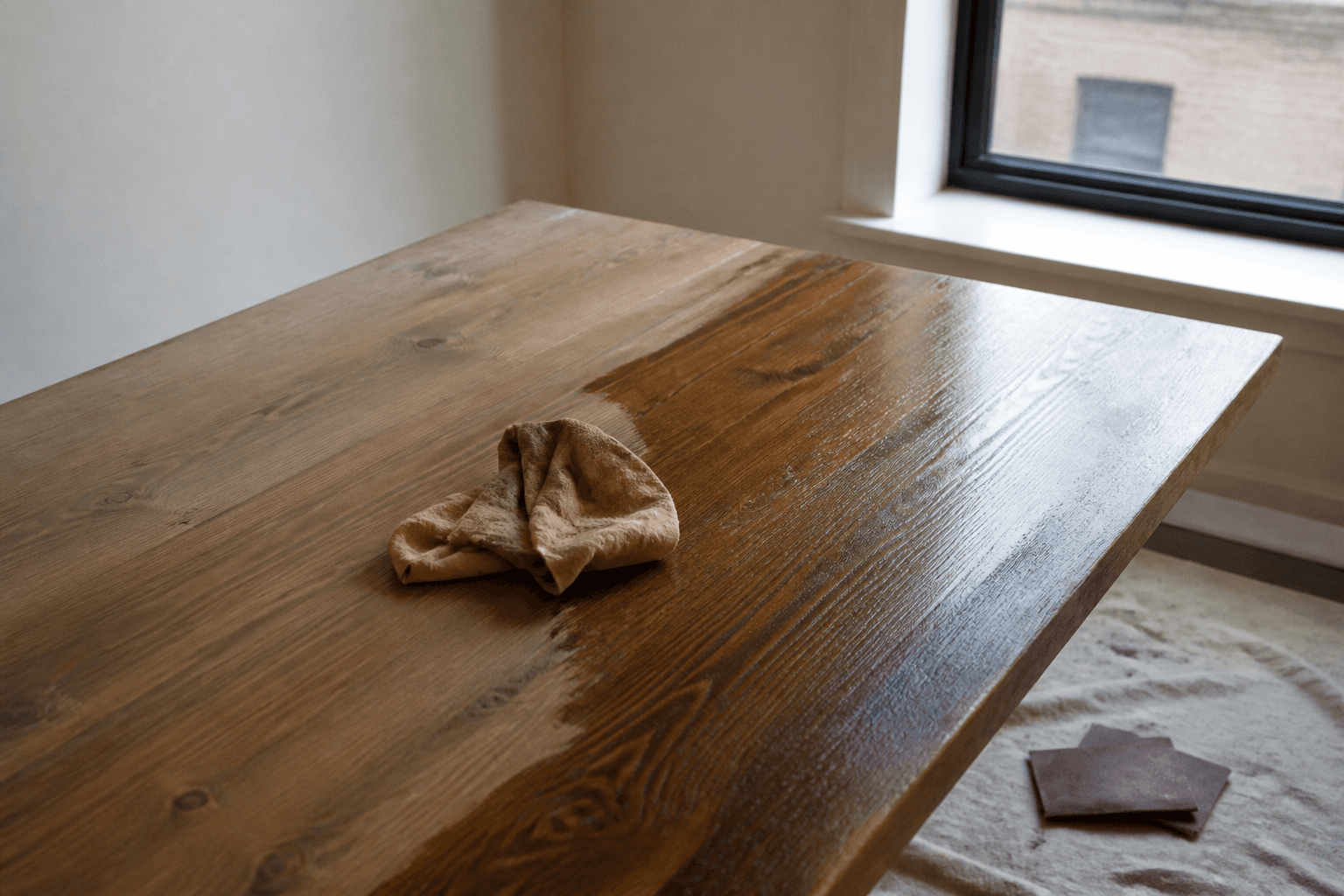
That cloth on the top is the rental method. Thin coats. Wipe the extra. The window is the booth you have. Direct hard sun on wet oil can skin the surface while the film underneath is still soft. Side daylight is enough.
What finish can leave with you
Oil and wax are the coats that can leave a lease with the piece. You can add a thin coat later with a cloth. You do not need a spray booth.
Paint is fine on a piece you own. Do not paint a built-in you do not own. Do not paint the landlord's window stool because the table looked lonely next to it.
Two-part coatings and hot lacquer belong in a shop with exhaust. A hallway is not that shop. If the can says respirator and spray, it is the wrong can for a studio.
Wipe-on oil that dries to a film you can repair is enough. You are making the top washable. You are not sealing luck in the pores. Grain direction is a sanding fact, not a career forecast.
Lay oily rags flat outside to dry. A balled rag in a closet is a fire problem. That is shop hygiene, not folklore.
When the finish is dry to the touch and no longer tacky, add felt. Move the piece without scarring plaster or the floor. Store leftover oil outside the bedroom. A can that smells in a sleep room is a ventilation miss you chose.
Between coats, wait until a clean cloth comes back without a smear. Recoating a tacky film builds a soft mess that fingerprints.
If the "piece" is a wardrobe the last tenant painted onto alcove shelves, you are in lease territory. The renter guide wins. Wipe, do not strip. Put a second sheet down if you drip. One mark on timber is a deposit conversation.
When should you haul the piece instead of refinishing?
You haul instead of refinishing when the frame still wracks after a clamp. Particle that powders under grit is the same skip. Sandpaper does not save a tired joint. A prettier top on a blocked walk is still the wrong object. Point scale back to the furniture hub.
Glue that fails twice is a message. You are not required to rescue every chair. The haul is cheaper than a third bottle and a hall you cannot use. Laminate that peels is plastic. You cannot oil it and call it wood.
A sofa with a broken spring is bulk waste, not a refinish candidate. Upholstery you cannot wash was already a used-furniture skip. Do not invent a sand-and-oil path through foam.
Skip used mattresses. Do not sand them, oil them, or "refresh" them with a cover story. Hygiene skip lives on the used furniture page. This workshop does not turn a mattress into a project. A used wood frame can still get oil if the joints pass. The sleep surface stays new.
If you cannot open a window and you have nowhere else to work, stop. A closed bedroom full of oil fumes is a bad night, not a craft flex. If the only reason you started sanding is that the dresser already ate the walk, pretty grain on a blocked closet is still a blocked closet. Go to the furniture hub for scale.
A scarred solid top on a tight apron is the opposite case. That is why this page exists. You soap, sand with the grain, oil, and keep the piece. The scar can stay as a scar. You are chasing a top you can wipe after dinner, not a showroom film.
What this is not
This page is not the furniture pillar overview. Buy, scale, and the short refinish note stay on the furniture hub.
This page is not the used curb inspection. Wobble, odor, fabric you can wash, and the mattress skip stay on the used furniture guide. If the piece is still in the parking lot, start there.
This page is not a scale or tape-the-walk article. Aisles and newspaper footprints live on the hub. Sandpaper does not change a pinch. Sofa placement, desk command, bed geometry, and TV height are other URLs.
A new coat is not luck in the varnish. Joints hold glue, screws, and wear. Oil is oil. A new coat will not raise income and it will not transfer fortune from a previous owner. Skip a claim that a darker stain raises fortune. Stain is color.
Skip medical claims about dust or old finishes as a diagnosis. If a finish makes you feel wrong, stop and get air. See a clinician if you have a health question. This article will not diagnose.
A simple refinish checklist
Do this in order. Stop when the piece fails.
- Lift a corner on a hard floor. If it wracks, do not buy sandpaper tonight.
- Confirm the size already passed on the furniture hub. If the walk loses, haul or sell. Do not sand.
- Tighten and clamp. Wait until the sit is square. Take hardware off.
- Drop cloth. Window air. Keep the only path to the door clear.
- Soap, dry, sand with the grain. Stop if you hit particle or chew through veneer.
- Oil or wax you can reverse. Wipe extra. Keep stripper off landlord timber. No built-ins.
- Felt pads when dry. Photograph the room from the door in FengShui Hero only after the joints pass.
If the piece already in the hall twists, do not buy sandpaper tonight. The joint is the job, or the haul is the job. Tomorrow's oil can wait. Photograph the room from the door in FengShui Hero only after joints pass.