
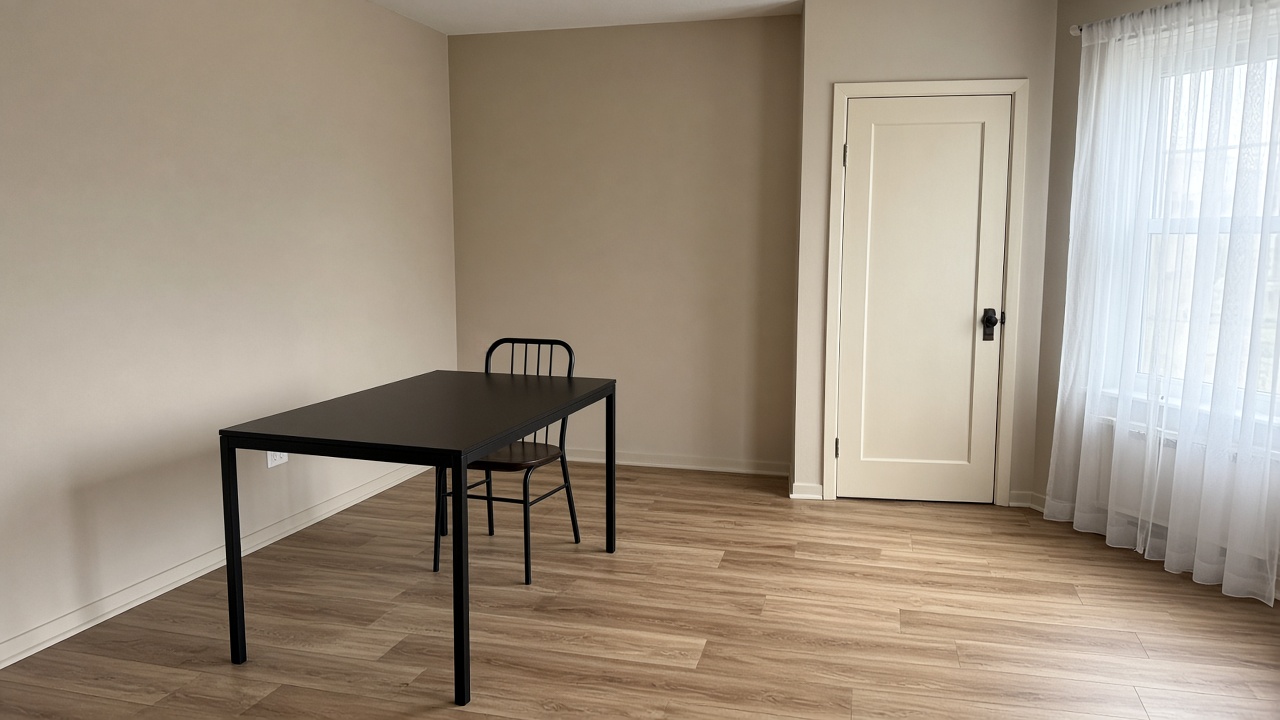
Feng Shui metal furniture is a steel or aluminum piece with felt on the feet, a frame that stays quiet when you sit, and bars that do not catch a hip on the walk. It is not a lucky chrome career charm for the west wall. Sit, knock, pad. Then decide.
When we photograph rooms after a metal cart, the miss is often a chrome stool a blog called career steel: the bars snag a tote, the feet scrape landlord plank, and the aisle to the latch is gone. People ask which finish to buy for the west wall. We ask them to sit, then knock the apron, then walk past with a basket. If they rattle, scrape, or clip a hip, the metal already failed. The furniture hub is buy, skip, and refinish in one place. Furniture materials is weight, glare, and a back across wood, metal, and glass. Wood furniture is grain you can wipe. This page is the metal cart: felt, a quiet knock, and bars that miss you.
How do you check feng shui metal furniture in a store?
Sit the floor model the way you sit at 8 p.m. Feel the back with your ribs. Knock the apron and the joints. Scoot an inch and listen. Look at the feet. Then imagine the piece in the photo you took from the door you actually use.
Form School cares whether a body can sit and walk. Wikipedia's feng shui page still splits that shape work from Compass overlays. Form goes first here. A west sticker will not quiet a ring.
Shop copy maps chrome to career and white steel to "helpful people." Treat that as catalog language. Your ears, your shins, and the walk you already taped are the test. We do not recommend a lucky alloy.
If the client already bought a ringing stool, we still talk felt and a haul. Furniture scale stays the tape. Pretty chrome does not shrink a hulk. Photograph the empty wall in the hour you sit there. Showroom light is wider than a rental at night. Renters take a free-standing piece. No screws into landlord plaster to "ground the metal."
Do this on the floor model, not on the listing crop.
- Sit. Feel for a panel behind your ribs. A skinny rail is not a back.
- Knock the apron. A quiet thud can pass. A bell that keeps going is a skip.
- Scoot. Listen for a scrape. Bare feet fail on plank you do not own.
- Walk past with a bag in your head. Open bars that snag fail in a pinch aisle.
- Ignore the hang-tag that names a lucky direction. Read whether the feet already have pads.
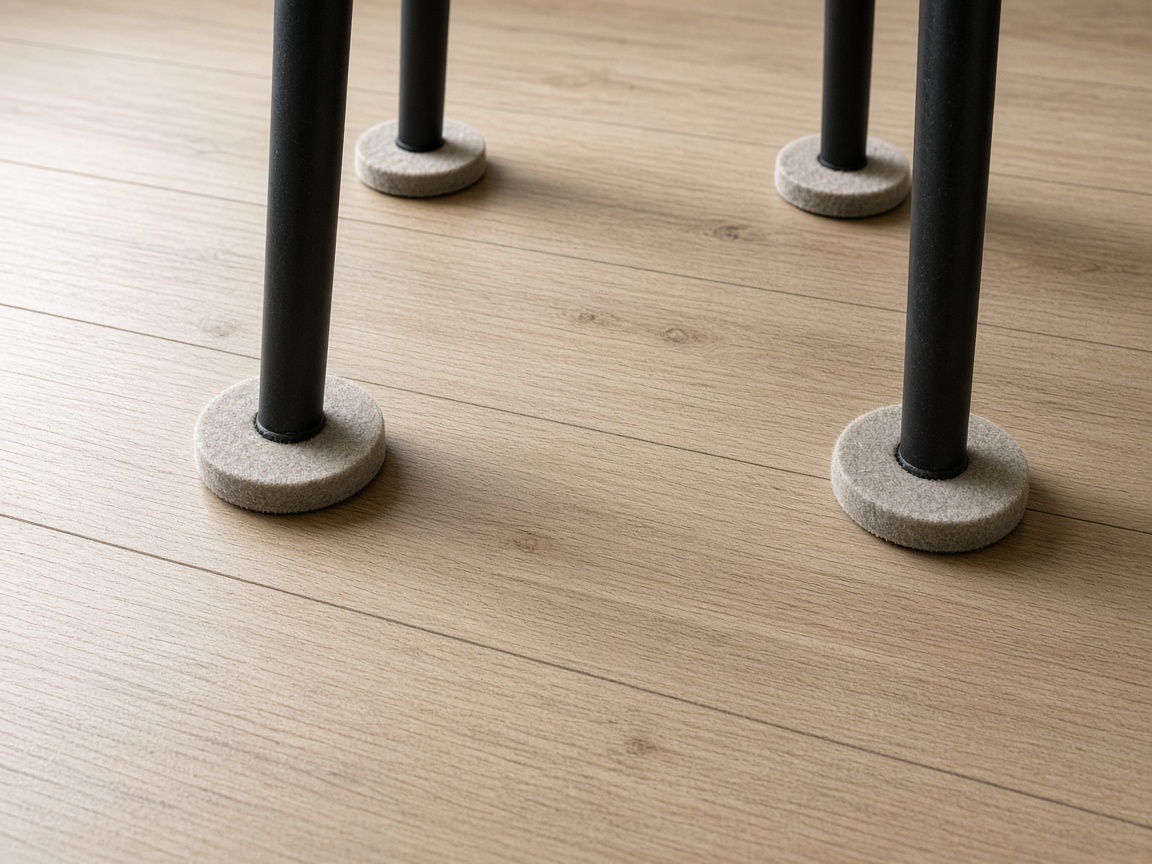
Those pads are the daily cost on a lease floor. Cover the whole foot. Replace a pad that went shiny or slid off-center. Felt is not a wealth cure. It is how steel sits on plank you will give back.
Does a rattle fail the piece?
A rattle fails when you sit and the frame still rings, or when a weld shows a gap you can see. Felt quiets a scrape on the floor. It does not quiet a loose joint. Knock the apron. Sit the way you sit at 8 p.m. If the chair talks after you stop moving, leave it.
Hollow tube furniture rings more than a closed box. That is physics in a quiet rental, not sha chi. A powder-coat dining chair can pass if the welds are tight and the knock dies. A chrome frame with a rattle in the showroom will rattle when someone stands up at 11 p.m.
Press every screw you can see. If one backs out under a thumb, it will back out on the truck. Used furniture is joints and smell after you already own the piece. Tonight, at the cart, a wrack is a no.
Rock the seat. If the legs walk, a felt pad will not brace a bent tube. If a ring bothers your sleep, that is noise in a small flat. Move the chair off the sleep wall or skip it. Do not buy a "calming" wood species to cancel steel. Wood furniture has its own wipe test.
Knock versus scrape
| Sound | What it usually is | Pass or fail |
|---|---|---|
| Scrape on scoot | Bare metal on plank | Pad. Then retest. |
| Bell after you sit still | Loose joint or hollow ring | Fail unless you can tighten a real screw and it stays quiet |
| One thud, then silence | Tight weld, closed box | Can pass if the back and walk also pass |
| Rattle only on a drawer | Hardware | Tighten or swap plain pulls. Charm knobs stay on the skip list |
Furniture to skip is built-ins, one-piece hulks, and frog hardware. A frog pull on a steel dresser is still a skip. Quiet steel with plain knobs can stay. Outdoor mesh indoors is rust and a scratch. Patio furniture owns that object.
Are open bars bad Feng Shui?
Open bars are a hip catch and a tote catch. They are not a curse. A spindle back is see-through. You can use it in a wide room. In a pinch aisle it reads as a rack.
Command still wants something behind you when you sit. That geometry stays on the room guides after the object can enter. Tonight the question is whether the piece has a back at all, and whether the bars steal the walk.
If you slouch off a skinny rail, it is not a back. If you see the wall through the chair, write "open." Open can pass when the walk is kind. It fails when every trip to the latch clips a hip.
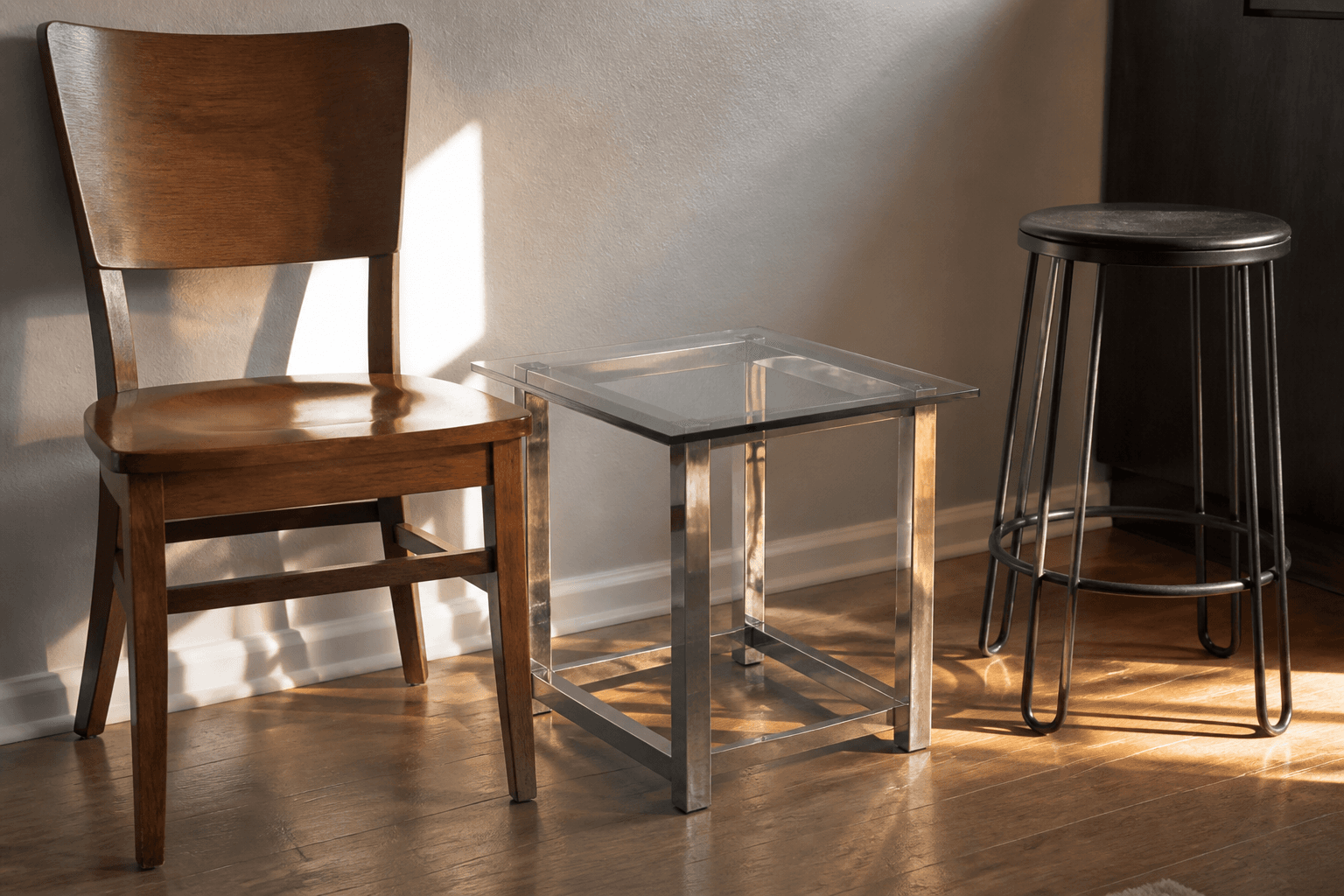
Bar stools are the usual miss. The seat is small, the bars are a comb, and the kitchen aisle is already a shoulder path. Walk a grocery bag from the latch to the fridge. If the stool stops you, tuck it or skip it. Breakfast-bar stool count is a kitchen article. The bars on this stool are this job.
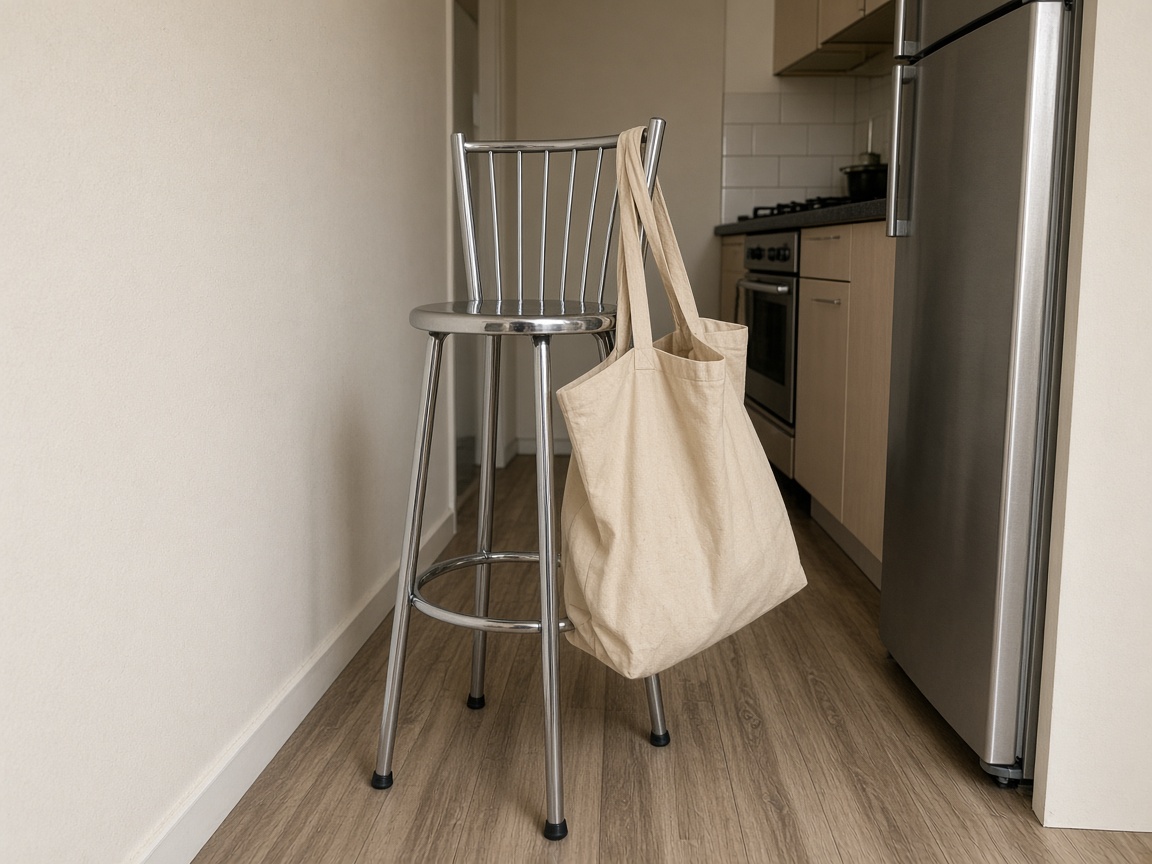
That tote is the daily snag. Spindles hold straps. A closed panel would not. Keep the stool if the aisle is wide and you never walk a bag there. Skip it if the fridge door and the stool already share a hip.
Beds want a real headboard. A steel frame with no plane is a support skip. A window behind that frame is the window behind bed page. Headboard is the plane you add if you keep the frame. This URL will not rotate a mattress. Open metal grids on a bookcase show every stack. If you cannot keep them empty, pick a case with a back panel.
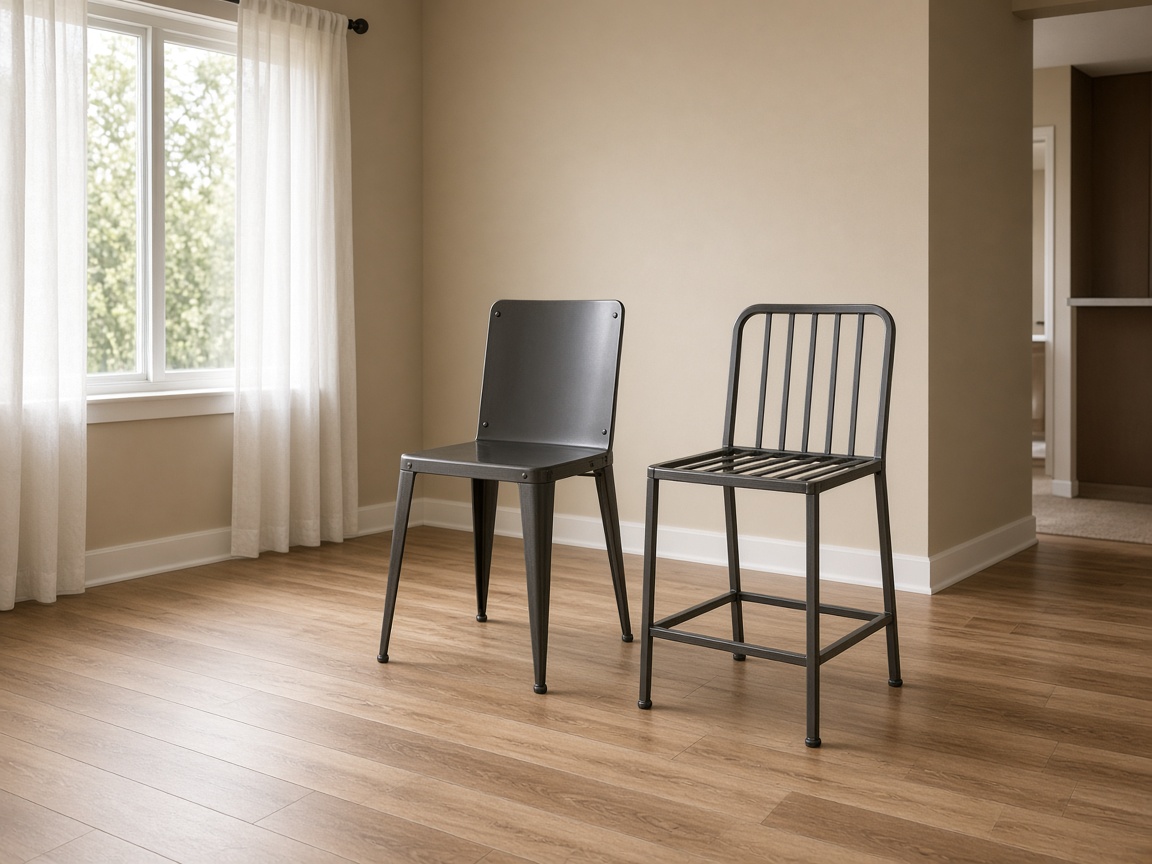
The left chair is the mountain people mean in steel. The right stool is metal and still see-through. Keep the open one if the aisle is wide. Skip it if a basket already fights the latch. Sharp corners are a shin test, not a poison-arrow curse. Round edges do not excuse a missing back.
Should metal furniture go in the west?
Not as a cart rule. West and northwest as metal on a map live on the metal element page: white, round, steel as an overlay after furniture already works. A chrome pile on the west wall will not hire a mentor or finish a project.
Form goes first. Sit. Walk. Pad. Then, if you still want a heading, label Compass as optional. Do not rotate a table to point west. Do not buy four steel pieces because a chart said metal feeds water.
White paint is color, not a chair. A round table is shape. Actual steel is material. You do not need all three in one corner. Flying-star shopping lists stay off this URL. We do not write lucky years. This page still asks whether the box rattles and whether you can reverse it in a lease. A room that is all chrome can feel like a clinic. Soften with a lamp you already own. That is comfort, not a personality repair.
Can renters keep chrome and steel?
Yes when the piece is free-standing, the feet are padded, the knock is quiet, and the walk still works. No when you would drill the floor, leave rust on landlord plank, or park a patio mesh chair in the latch line.
Chrome shows every fingerprint. Powder coat hides more. Neither finish is luck. Wipe a corner in the store. If the showroom spots hide the smudge, it will smudge at home. High-gloss steel is glare with a metal story. Take the piece to a window.
Rust is a skip indoors. Orange dust on a cream rug is a deposit fight. Outdoor steel belongs outside or not at all. Rental furniture is felt, fold, and what a lease can reverse after you kept a piece. This page is the metal tests before you keep it.
Do not screw a steel rail into plaster to "ground" the room. Free-standing frames reverse. Photograph the empty walls at move-in.
Renter-reversible metal moves
| Situation | Pass | Fail | Reverse |
|---|---|---|---|
| Dining chair | Closed panel or wide aisle, quiet knock, felt on feet | Ring after you sit, bare feet, bars in a pinch aisle | Stick felt. Take the chair at move-out |
| Bar stool | Off the cook path, bag still walks | Tote snag, hip catch, wobble | Tuck or haul. Do not bolt it to the island |
| Steel bed frame | Real headboard plane, quiet joints | No plane, rattle on sit-up, window as the only back | Add a take-away headboard. Do not drill the joist |
| Metal dresser | Back panel, drawers that run, plain pulls | Open grid, charm hardware, rust | Swap pads. Leave landlord millwork alone |
| Patio mesh indoors | Never the default | Rust, snag, scratch | Keep it outside. Garden page owns that object |
A chrome set that wracks is a no. A plain powder-coat chair that sits still is a yes. Leftover fortune from a previous owner is folklore. Wash what you can wipe.
Felt size: the pad should cover the whole foot, not a dime on a square tube. Stick on clean, dry metal. Check again after the first week. Shiny felt is already a scratch waiting. Furniture delivery day is too late to learn the chair rings in the hall. Knock in the store. Lift a corner. If you cannot, the landing will hate you.
What this is not
This is not sofa placement, desk command, bed geometry, or TV height. Those stay on room hubs. This is not how to arrange furniture you already own.
It is not income. Quiet steel will not raise rent. Skip medical claims about metal frames and sleep, and skip "career chrome." If health is a problem, that is a clinician's job.
It is not the metal element cycle, and it is not a facing-house heading. Wood as grain already has a URL. Glass as glare already lives on materials.
Dining table shape (round versus rectangle) is the kitchen article. The feet you pad are this job. Photograph the door. Then sit the steel.
Tonight: sit, knock, pad
Do this in order. Stop when you have sat the piece, heard the knock die, and covered the feet.
- Confirm scale with tape at home first. Chrome does not fix a too-big footprint.
- Sit the floor model the way you sit at 8 p.m. Feel the back. Walk past with a basket in your head.
- Knock the apron and the joints. A rattle fails in a quiet rental.
- Look at the feet. Stick felt that covers the whole foot. Retest the scoot.
- Ignore the west-wall hang-tag. Read whether you can reverse the piece in a lease.
- Photograph your room from the door in FengShui Hero, then compare the empty wall with the piece's visual weight.
If you only do one thing tonight, sit in the chair, knock, and stick felt. A quiet frame and bars that miss your hip beat a lucky alloy name. Tomorrow, decide whether you still need steel, or whether the ring was the whole story.