
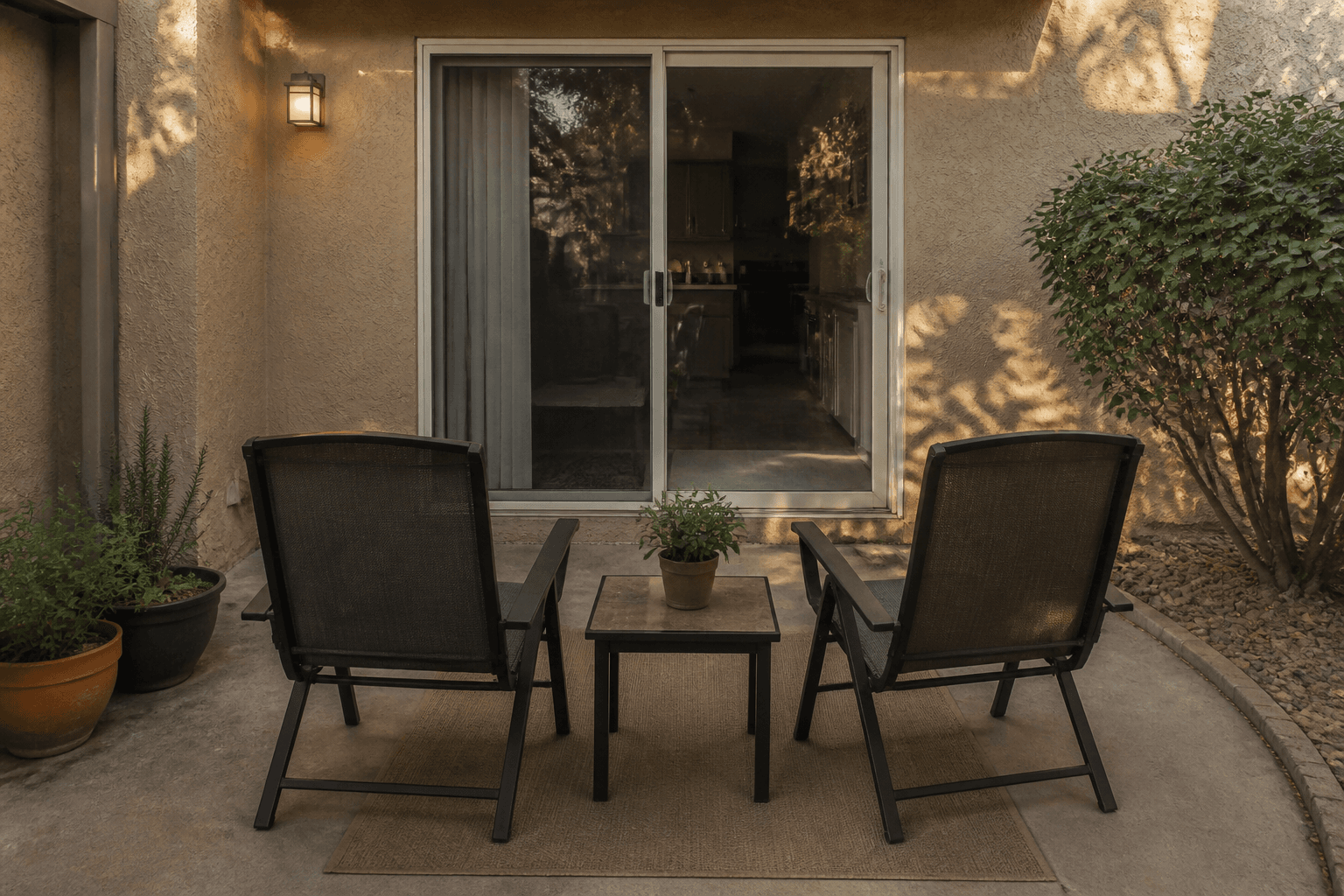
Feng Shui patio furniture is outdoor seating with a solid back, a view of the house door, and a walk that still reaches the latch. You are arranging chairs on a patio, not copying a living room sofa onto pavers. Folding seats you can reverse are the kit.
When we photograph back gardens, the listing still shows two styled chairs and the patio we get is a dining set parked in the slider. People ask which teak is lucky. We ask them to sit down and tell us who is coming out of the house. If they have to twist, the layout is already talking. The gate and path page is the street walk to the front latch. The balcony page is an apartment rail. Outdoor lighting is the night route. This page is the seats on the patio you already have.
Should patio chairs face the house door?
Sit in the chair you use. Look toward the glass or the hinged door that opens onto the patio. If you have to twist to see who is coming out of the house, the seat is on defense.
Form School cares whether a person can sit with a view of the mouth of the room. Out here the mouth is the house door on the patio, usually a slider. Popular posts then demand a living room conversation circle on the pavers. A patio is often a strip six feet deep. Two chairs angled toward the glass, with a small table between them, is enough. You are not floating a sectional.
A seat that only stares at the fence line with its back to the house can feel fine for five minutes of sun. It feels exposed when someone slides the door behind you with groceries. A glance is manners. It is also how you stand up before a tray hits your head.
Angle is enough. You do not need the chairs square to the glass like a waiting room. One chair at the far end of the patio, turned a quarter toward the apartment, matches the balcony sit test on a wider floor.
If the only comfortable back is the house wall, and the chairs then face the yard, keep the slider in side view. Park the seats beside the door, not in its travel. You should still see a person step out without a full spine twist. If you cannot, the wall is a back and the door is a surprise. Move one chair.
Benches with no back fail the sit test even when they face the house. You will slouch, then drag a chair over anyway. A folding chair with a back beats a designer bench you cannot lean on.
Do not copy sofa command onto the lawn. Indoor sofa placement is a living room job: see the front door of the dwelling, talk across a rug. Patio furniture sees the house door that opens onto this slab, which is a different latch than the one guests use at the street.
Where should the backs of patio seats go?
Against something that reads as a back: a fence, a garden wall, a hedge you already water, the far edge of the patio if that edge is a low wall. Sitting with a path behind your neck is the outdoor version of a sofa in a hallway. People walk there. You flinch.
When we stand at the slider and look out, the tell is two chairs floating in the middle of the pavers, backs to the open lawn, table in the door. Nobody looks settled. The first fix is to slide the chairs until their backs kiss the fence. The second is to turn the seats toward the glass.
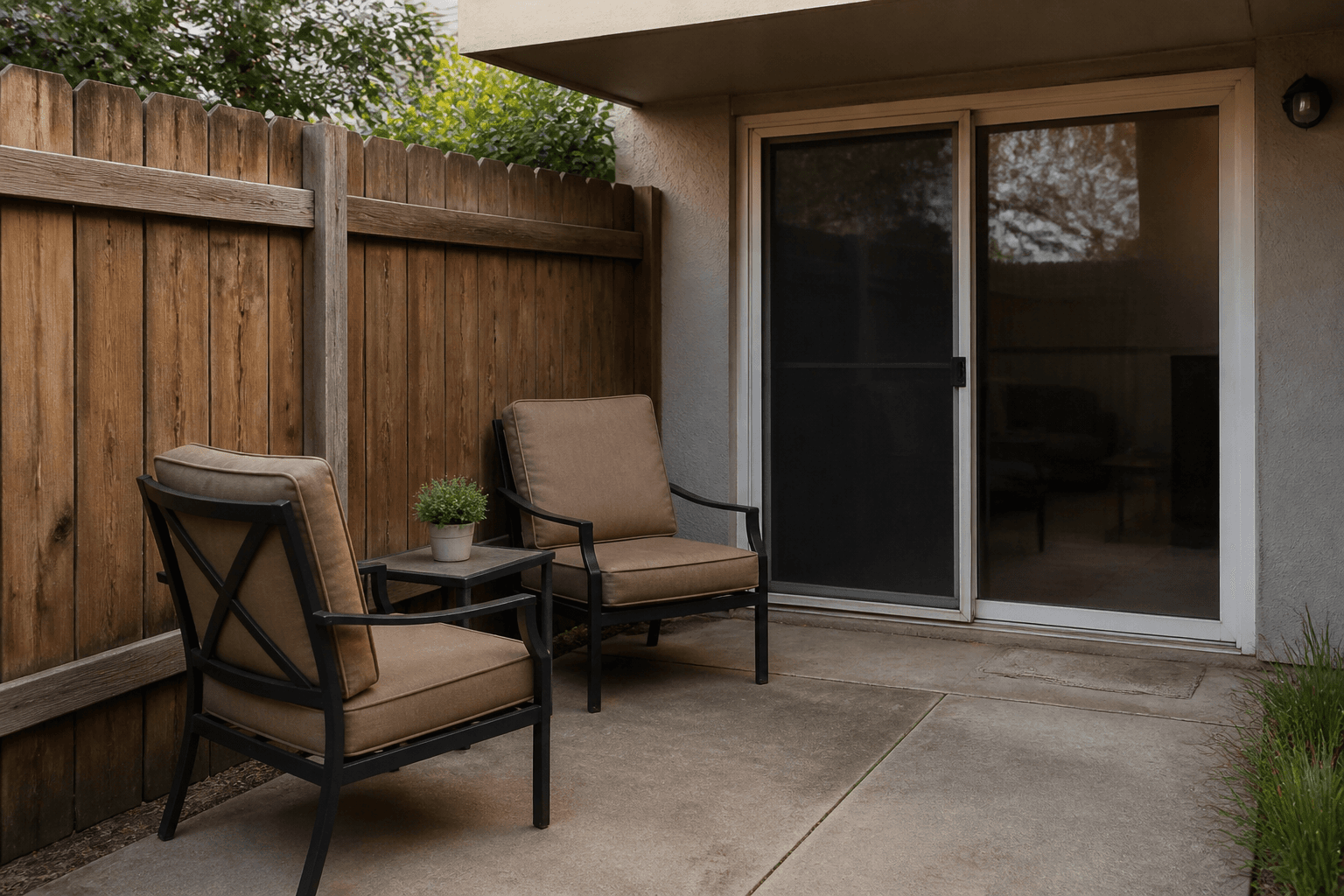
Those two chairs are doing the job. The fence is the back. The seats see the house. The walk still exists. If your patio looks like this after you move things, stop shopping for a lucky cushion print.
An open lawn with no fence is common on new builds. You cannot invent a wall. Put the chairs at the outer edge of the hard surface, facing the house, so the patio itself is behind you and the grass is not a corridor at your spine. A folding screen on weighted feet is the renter version of a hedge. Check wind. A sail that becomes a kite is a hazard.
A neighbor's window that stares at your seat is a privacy problem. A screen or a taller pot beside the chair (not in the walk) is the honest response. Do not hang a bagua on the fence to scold the neighbor. Most leases and most streets will not love it.
Shared courtyards still need a back you control. Your chairs should not sit in the shared walk with their backs to everyone who takes out recycling. Park them on your plot, facing your door.
An umbrella is shade. Use a weighted base. Do not drill a landlord slab or park the pole in the walk. A grill and a heater get the same path test: if you squeeze past them to reach the handle, they are in the mouth. Smoke in a neighbor's slider is a complaint, not a five element project.
Why does the path to the latch still matter?
The patio is still the way in and out of the house. Groceries, trash, a bike, a child with wet feet. If the table lives in the slider's travel, the house door is a fight every time.
Open the door fully. Name what is in the arc. A chair leg, a planter, a folded umbrella on the sill. That pile is the miss. Chi language calls a blocked mouth stale. You can call it a hip check every evening.
Keep a shoulder-width walk from the yard (or the side gate) to the handle. The pretty dining set in the middle of the patio photographs well and fails on Tuesday with a bag of oranges.
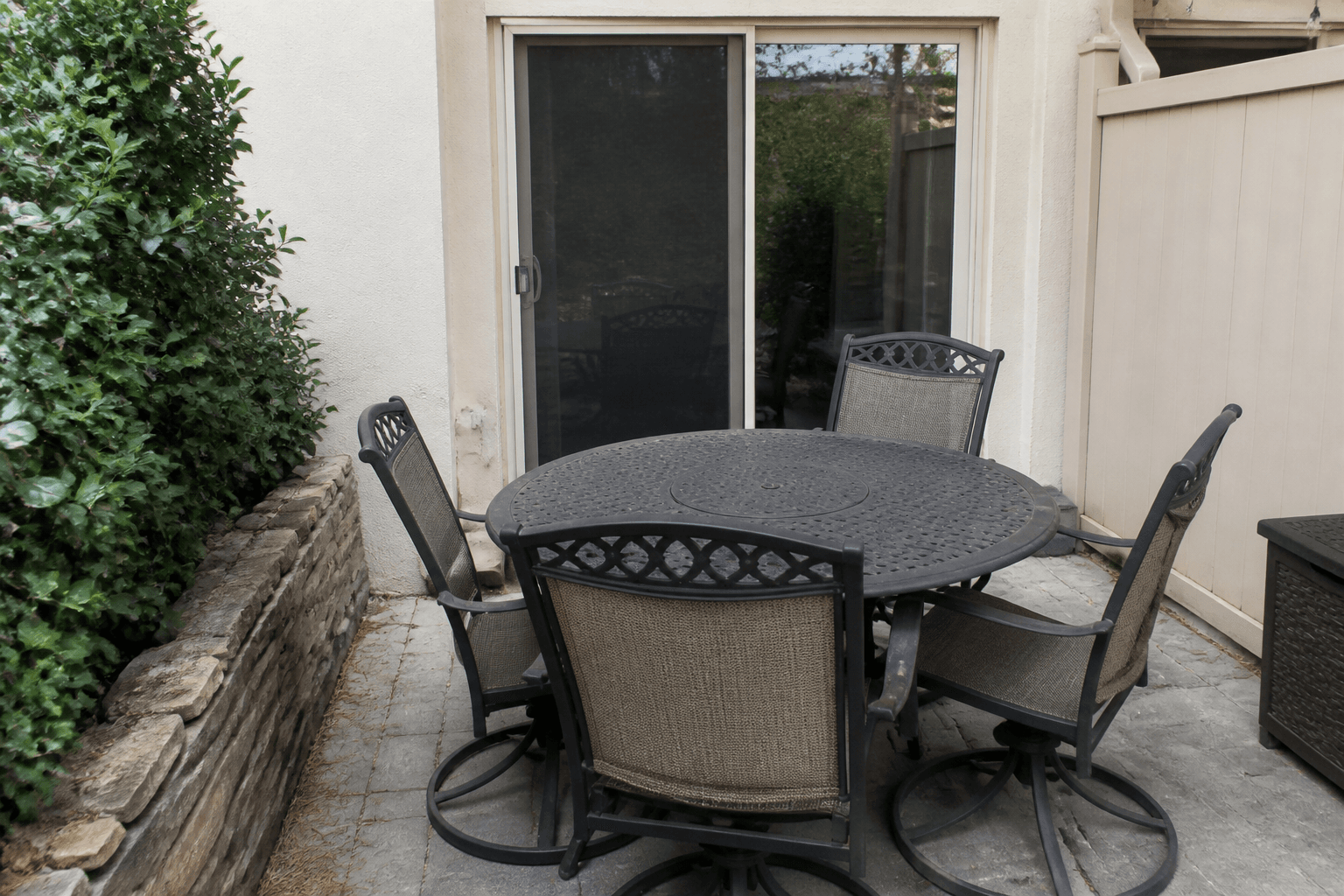
That table is doing dinner in the doorway. The chairs can be fine. The latch is not. Slide the table along the fence until the glass can open the way it was designed to. Then sit down and check the view again.
A mat outside the slider should sit fully on the patio, not bunched under the panel. Inside, the same rule as any entry: the first indoor meter is not storage. This page does not rewrite the front door guide. It only asks that the outdoor latch still works.
If you enter through a hinged patio door instead of glass, the swing still needs its arc. A bench in the swing is the same class of problem as bins in a gate.
Night is a lighting job. If you cannot see the handle after dusk, add a warm bulb or a stake on the walk. Do not buy a new table to fix a dark latch. Read the outdoor lighting article for glare and gaps. Here, daylight first: the furniture must leave a path.
Pots belong along the fence, not in the door. Dead plants leave. A solid hedge of terracotta against the glass turns the opening into a cave.
Can renters set a patio without pouring a slab?
Yes. The kit is folding chairs, a light table, a washable outdoor mat, cushions you bring in when it rains, and an umbrella with a base you can empty. Skip pouring concrete. Skip building a deck. Skip staining the landlord's pavers a "lucky" color.
If the lease forbids furniture in a shared court, the lease wins. Do not annex the grass with a dining set and call it a wealth corner.
Ask in writing before you screw anything into brick, fence, or deck boards. Command hooks on a fence you do not own are still holes.
Plastic stackable chairs are honest. They have a back, they lift, they live in a closet in winter. Heavy teak is fine if you own it and you can move it off the latch. It is a poor rental choice if two people cannot shift it when the slider needs a repair.
Cushions that stay out in weather become a smell problem. Bring them in. A wet foam seat is not a folklore object. It is mildew you will sit in.
A privacy screen on feet beats drilling. Weight it. Take it down in a storm.
HOA rules beat a blog. A black metal set the association requires is allowed. Your job is still the back, the view of the door, and the path.
If you have no patio and only a balcony, stop here and use the balcony article. This page assumes ground, a house door, and room to put a chair with a back. A rail on the twelfth floor is a different outdoor room.
How is patio furniture different from a balcony or a gate walk?
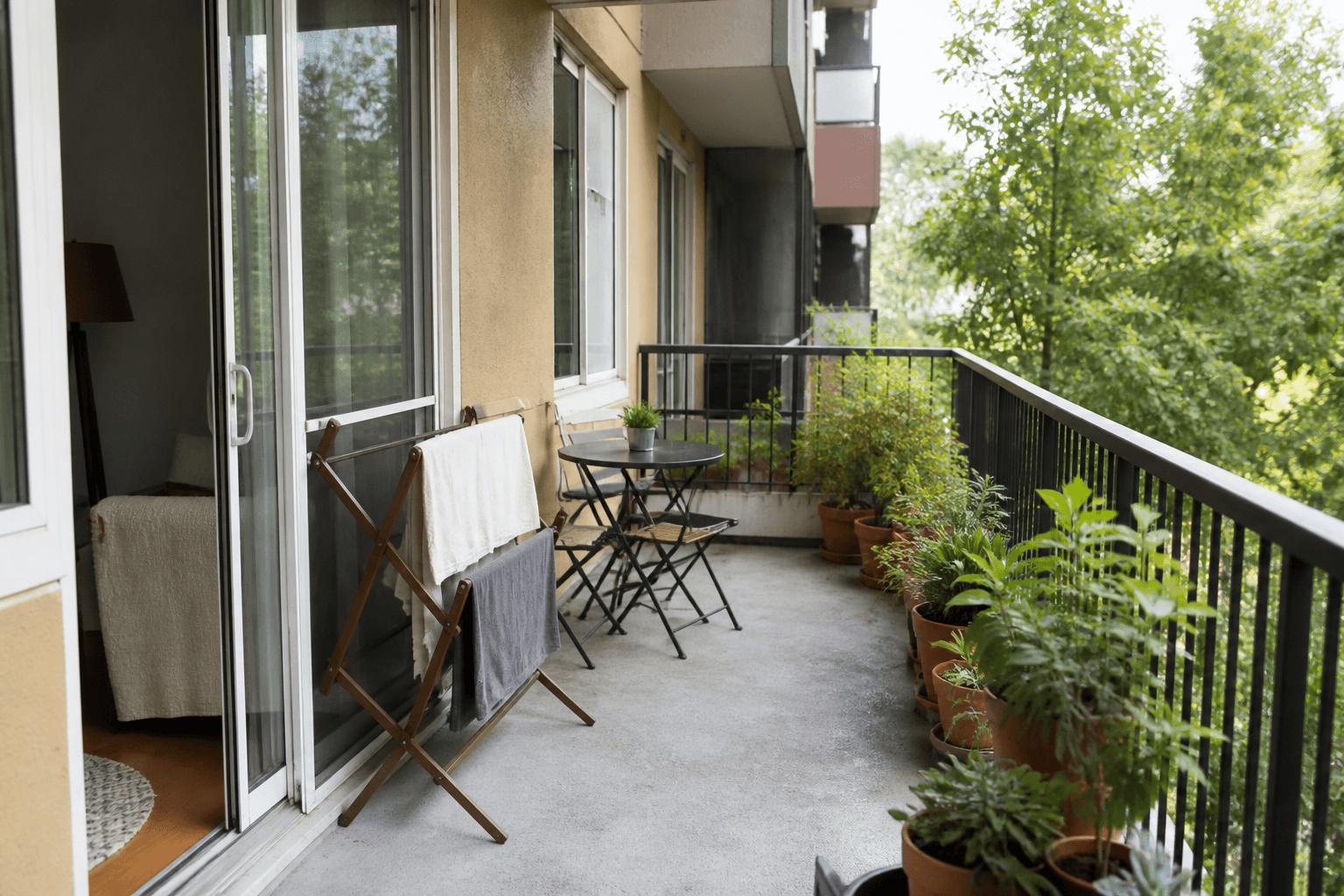
A balcony is an apartment slab: slider to rail, plants on the sides, laundry that must not live in the glass. Downstairs drip, wind, and fire code storage rules dominate. Chairs are small. You rarely have a fence.
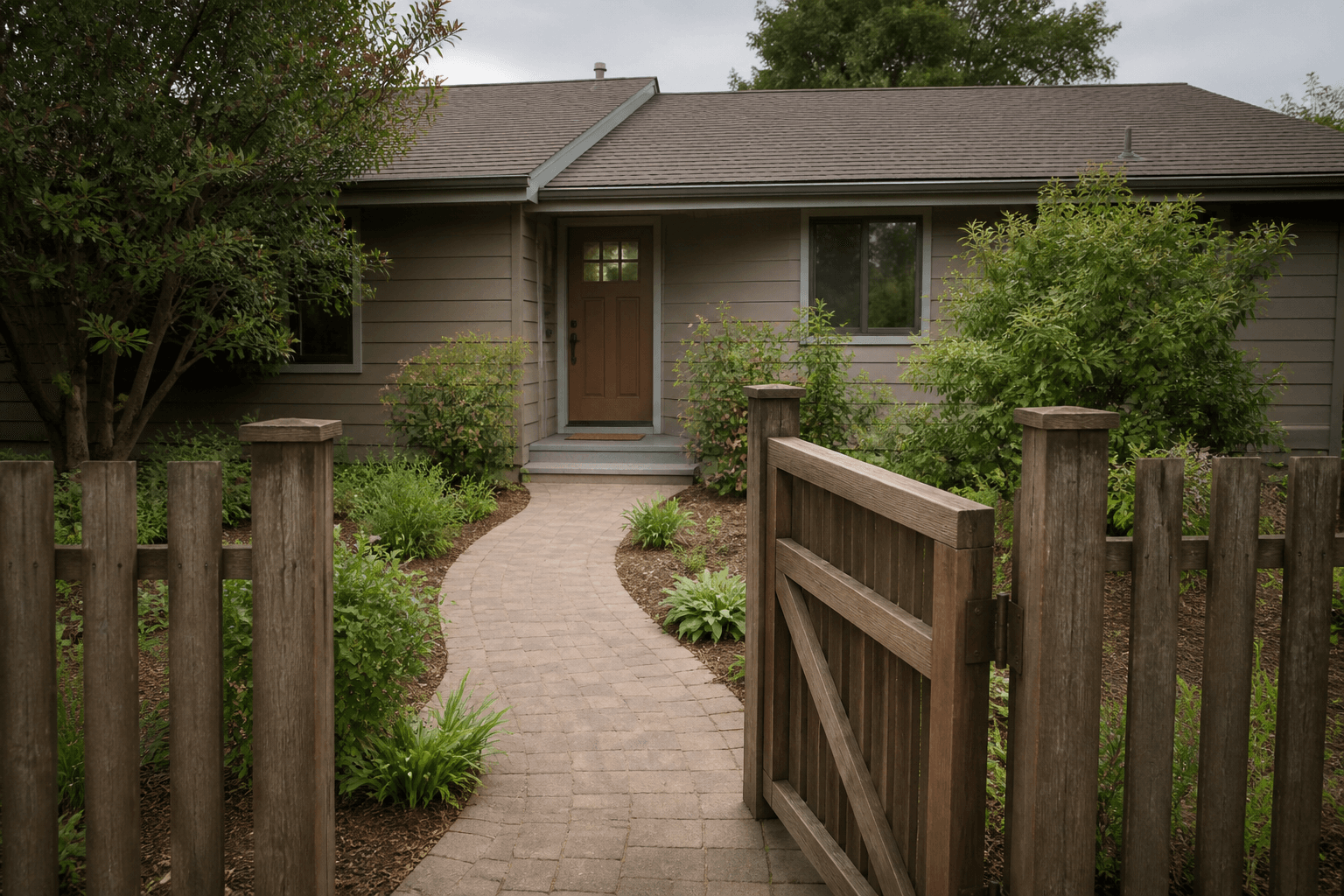
A gate and path is the first outdoor step from the street latch to the front door. You clear the bin pile and the gate swing. You are arriving, not sitting.
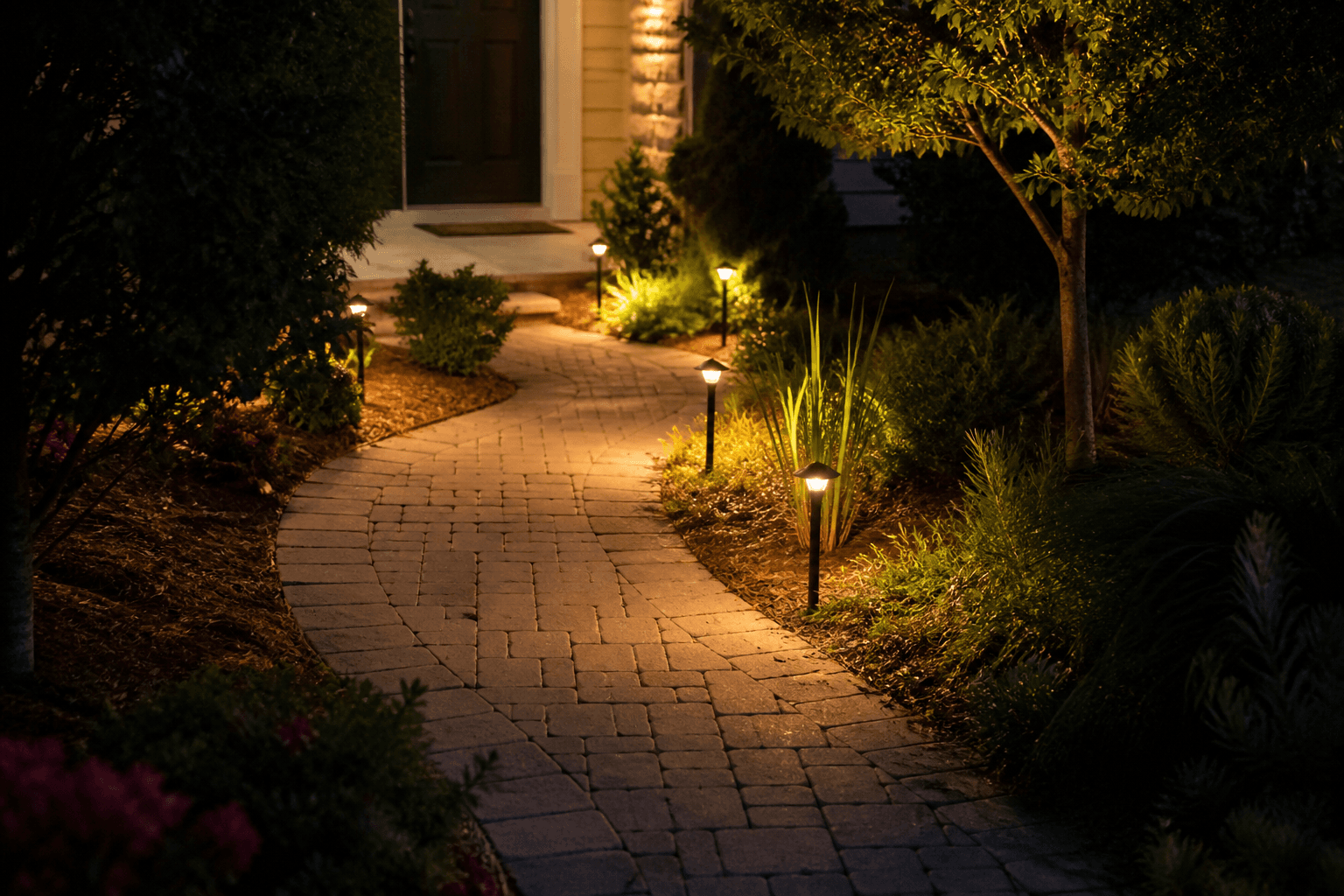
Outdoor lighting is the same walk after dark. A chair does not fix a black hole at the handle.
Patio furniture is the sit, once you are already home, on the hard surface off the house door. Keep a back, see the house latch, and leave a walk.
Patio seats: clear the house slider or patio door. Sit facing that door with a back to a fence or wall. Balcony: clear the slider to the rail. Apartment slab, laundry, a small chair. Gate and path: clear the street latch to the front door. Approach. Sitting is optional. Outdoor lighting: clear the night walk to the latch. Light the pavers, not the chairs.
Use the line that matches the photo in your hand. Do not run four articles on one strip of concrete.
How we check a patio
We photograph from the sliding door looking out. We open the glass fully and walk from the yard to the latch with a bag. Then we sit and look at the house door, and notice whether a fence or a void is at our back.
We do this in daylight. Night is the lighting article. A side patio you sit on beats a styled front terrace nobody uses. If two households share the slab, agree where the table lives.
What this is not
Patio chairs will not mint luck and a teak brand will not raise income. A cushion color is not a career. Facing west for the sunset is weather, not a gua map you owe the landlord.
This page is not sofa placement, the balcony rail, the street gate, or a lighting catalog.
Skip medical claims about "fresh chi" as a treatment. If sitting outside helps you, that is ordinary air and a chair. This page will not diagnose anything.
Skip a fountain on the patio if you will not clean it. Water at the latch is a slip.
Skip mystic grids on the pavers. Skip guaranteed wealth from a round table. Round is easier on shins. That is the shin test, not a spell.
A simple evening checklist
Do this in order. Stop when you can open the slider, walk to a chair with a back, and still see the glass.
- Open the house door onto the patio fully. Name what is in the travel.
- Slide the table and any chair off the latch path. Keep a shoulder-width walk.
- Put seat backs to a fence, wall, hedge, or the far edge of the patio.
- Turn the seats until you can see the door without a full twist.
- Bring wet cushions in. Move pots out of the door pocket.
- Photograph from the sliding door in FengShui Hero and compare the flagged pile with the walk you cleared.
If you only do one thing tonight, take that photo from the sliding door and move whatever blocks the latch. Turn one chair so you can see the glass. The new umbrella can wait.