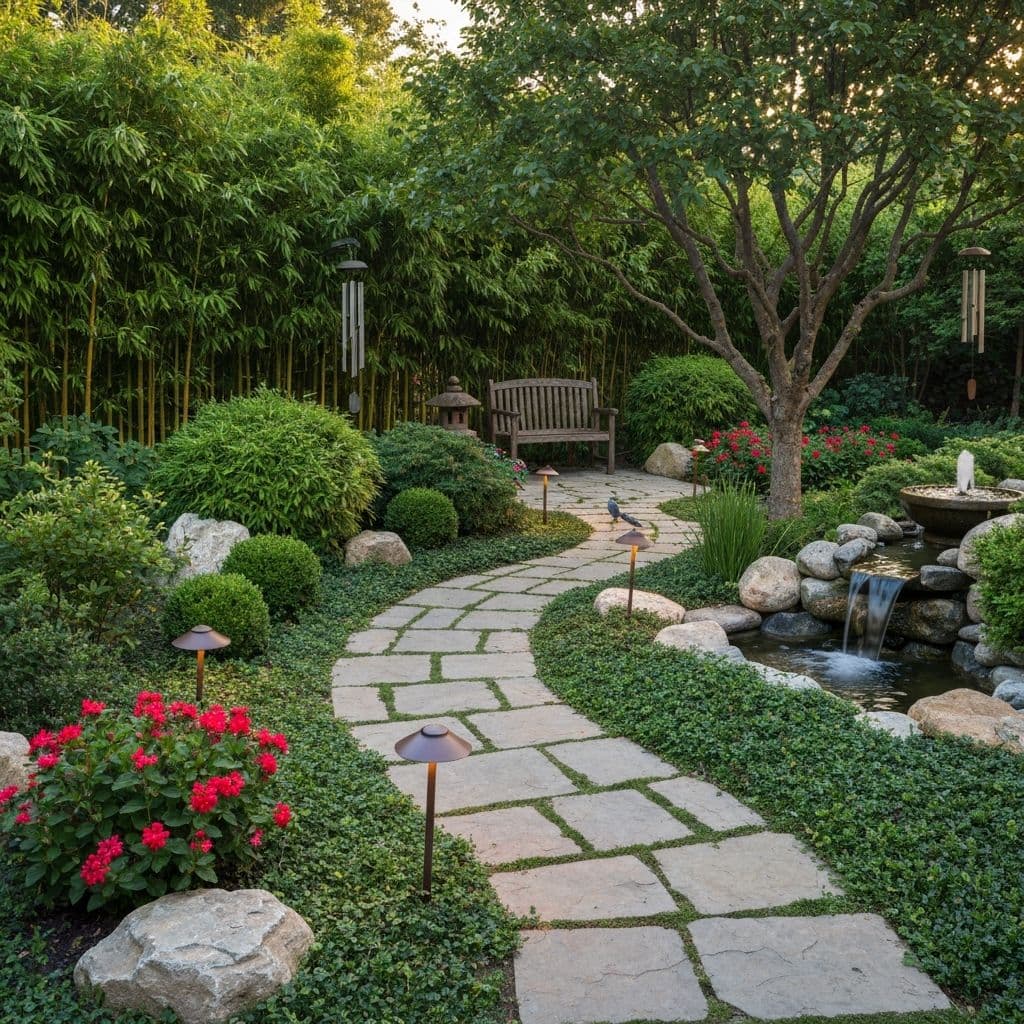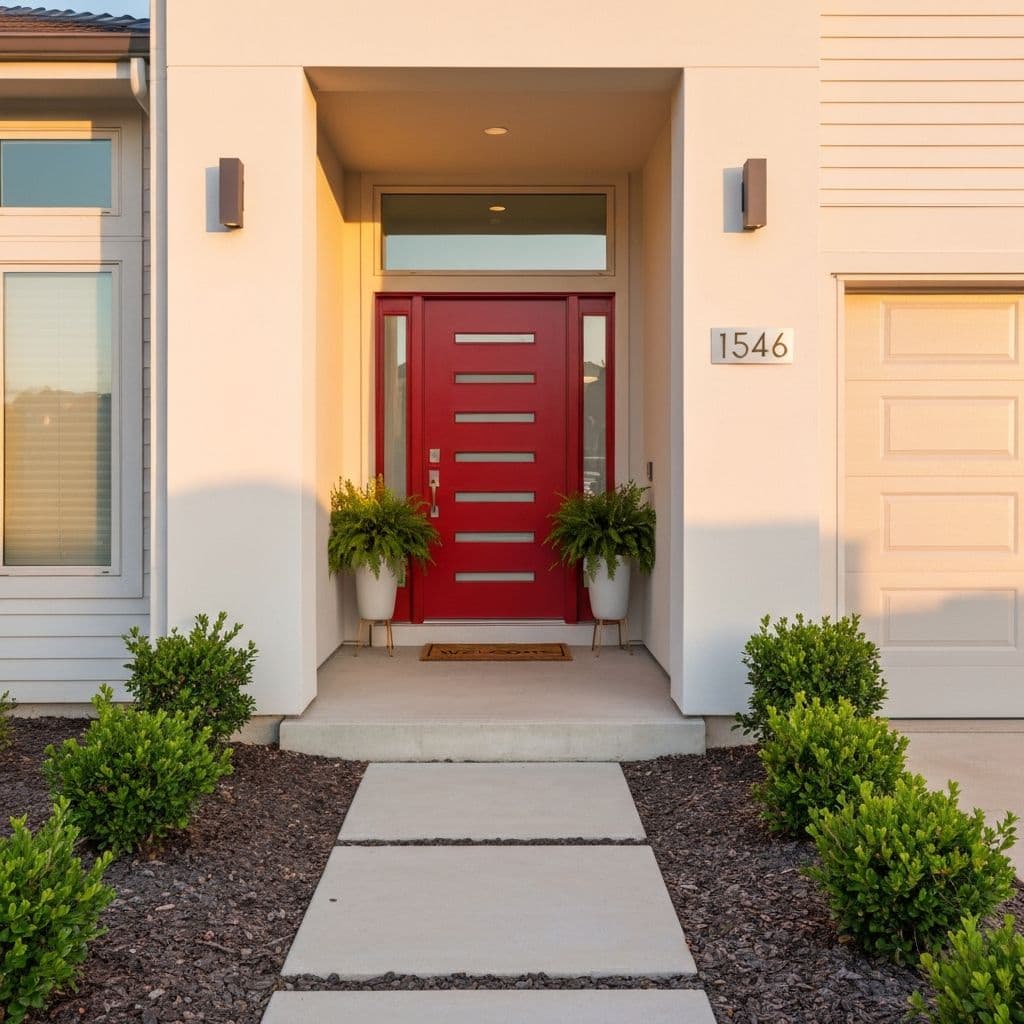

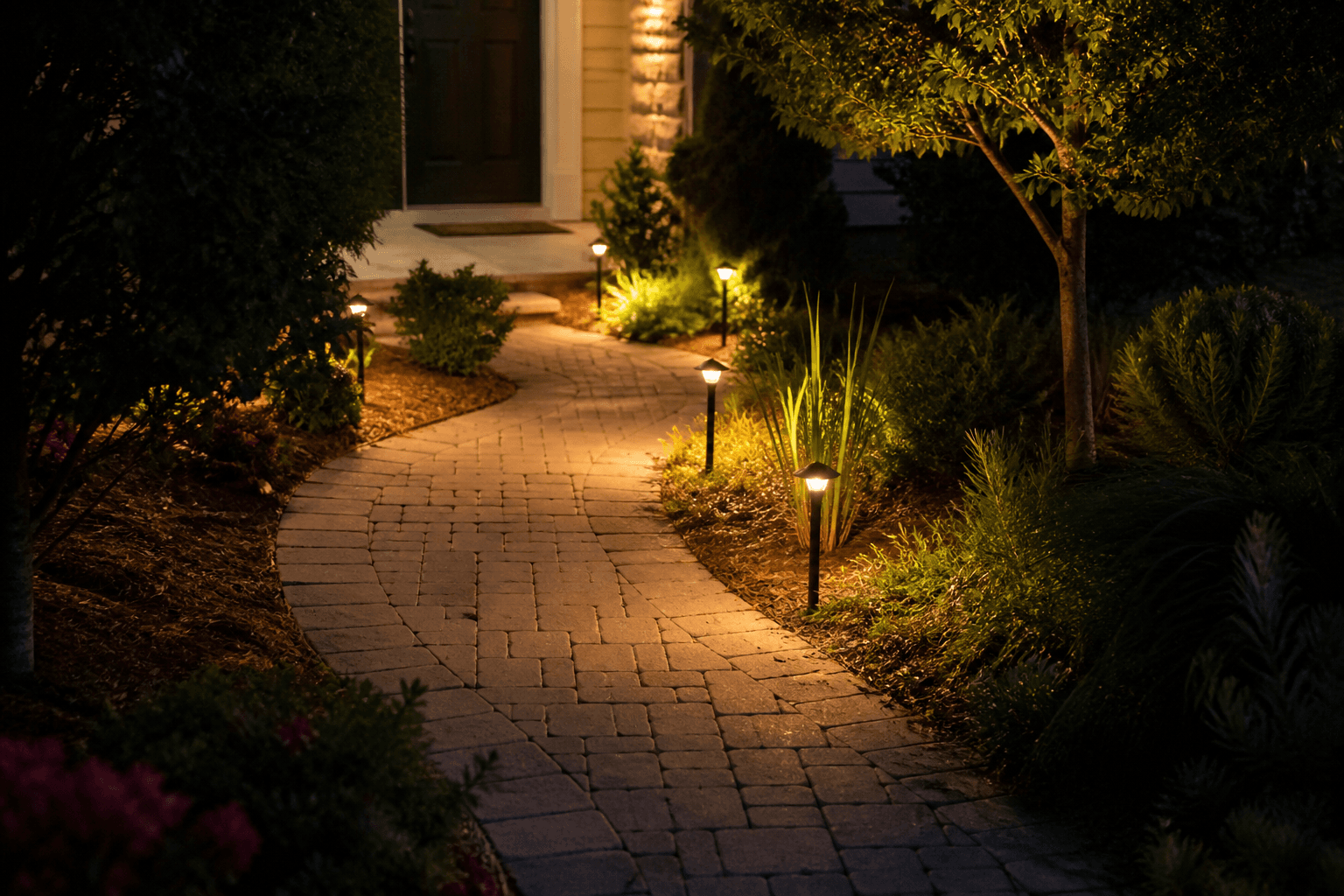
Feng Shui outdoor lighting is a warm, even path you can walk to the door after dark. Stake lights along the route beat a dark gap. They also beat a flood that blinds you at the latch. You light the walk, not the sky.
When we photograph front gardens at night, the house is a white wall and the path is a hole. People ask which pagoda fixture activates chi. We ask them to walk from the gate without a phone torch. If they stumble, the layout is already talking. This guide is that walk. The garden page is plants and path shape in daylight. The indoor lighting page is layers inside. The front door page is the latch. Here the job is night on the outdoor meter.
What is Feng Shui outdoor lighting for?
You are making the route to the door readable. Form School cares whether a stranger (and you) can find the mouth of the house. Popular posts say light pulls prosperity along the path. Treat the prosperity talk as optional poetry. A lit paver is a foot that lands.
This is not a holiday string article. Strings on a tree are extra. The path still needs pools of light on the ground. Strings in your eyes are glare.
Start from the door you actually use. A pretty facade path that nobody walks is a stage set. The side gate you unlock with groceries is the real mouth.
Why do dark gaps and floods both fail?
Walk the route at the hour you come home. Notice where you slow down.
A dark gap hides a lip in the pavers, a hose, a child's scooter. Chi language calls this stuttering energy. You can call it a trip.
A flood on the wall makes pupils slam shut. You cannot see the step in front of the mat. Neighbors get a searchlight in a bedroom. Security can still use a sensor flood aimed down or at a blank wall. Do not make that flood the only light, and do not leave it on all night as a personality.
Warm downward stakes along the edge keep your eyes adapted. You see the door because a porch lamp is on, not because the garden is a stadium.
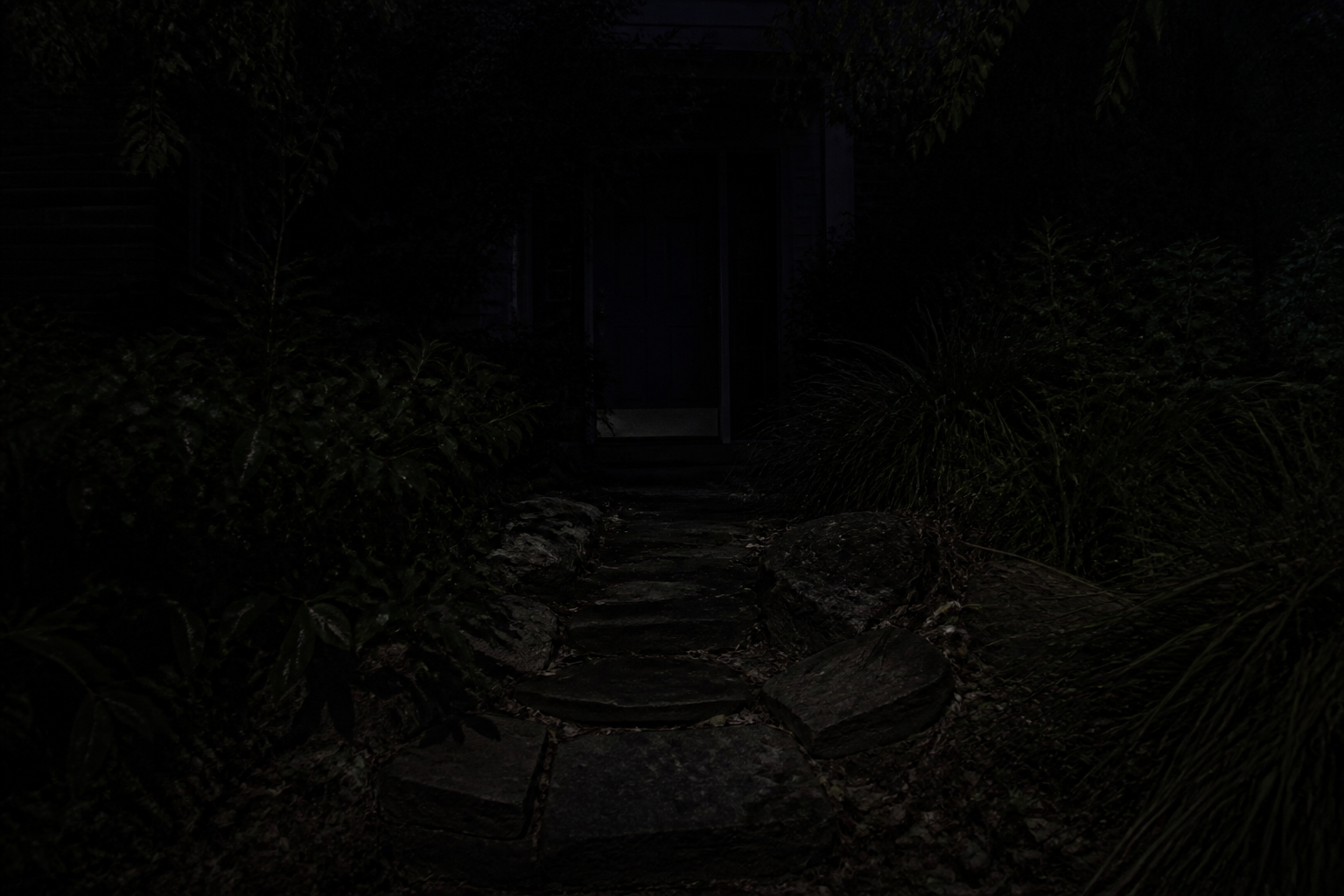
That dark walk is the usual rental garden. The door exists. The feet have to guess. If your commute ends like this, add low lights before you buy a lucky lantern shape.
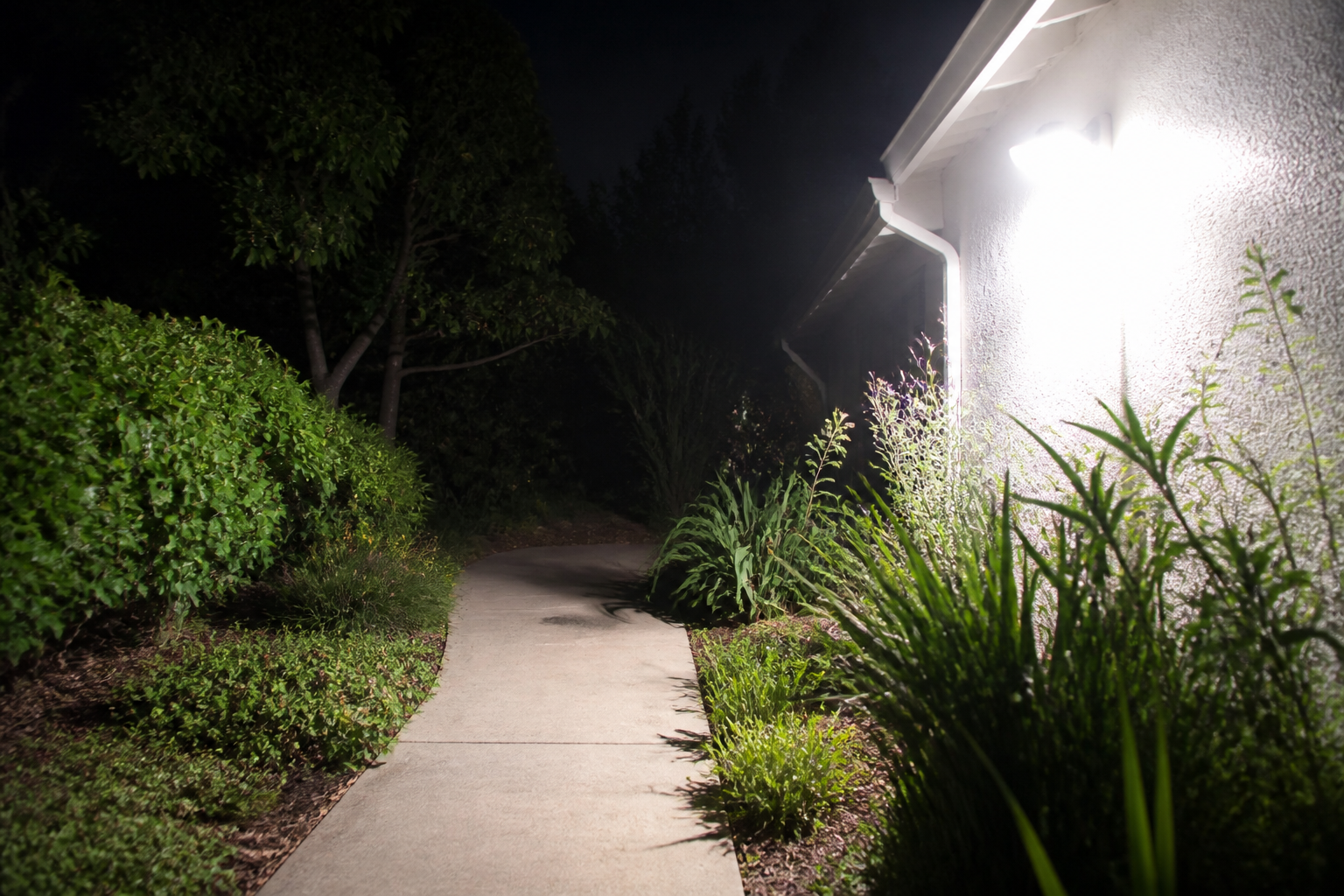
That flood is the other miss. You see the siding. You do not see the pavers. Aim down or switch to stakes. Keep a sensor flood for real security if you need it, not as mood lighting.
How should a renter light a path?
Solar stakes you can pull in spring. Plug-in low-voltage kits if an outdoor outlet already exists and the lease allows it. Battery lanterns on hooks you already have, as a test.
Space them so the pools almost touch. Exact centimeters are a landscape spec, not a bagua rule. If you see a black hole between two lamps, you are short a stake.
Aim the head down. A fixture that stares at the sky is wasted money and a complaint. Shielded heads are kinder to moths and to the bedroom upstairs.
Do not run cable under a lawn unless you own the soil and you will follow the electrical code. A renter who slices a buried line is a deposit story.
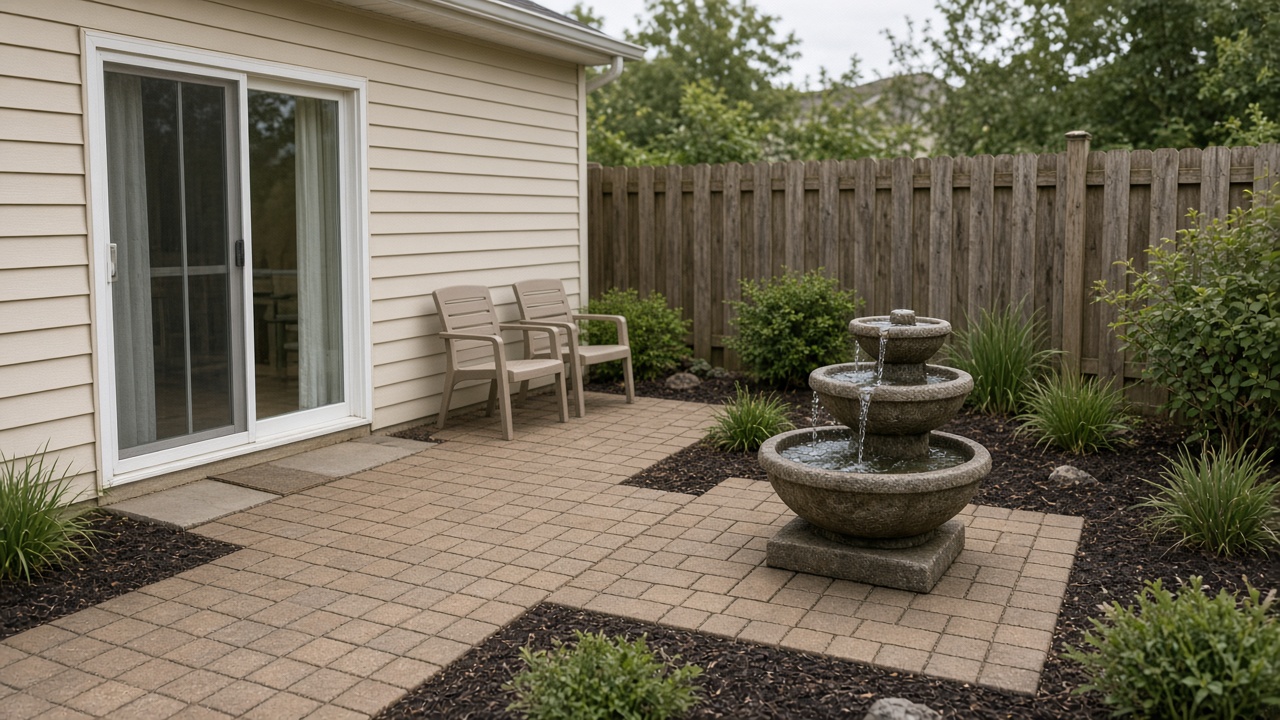
If you have no garden, a balcony is the balcony job. One warm bulb at the slider is enough. Do not aim a flood at the courtyard.
The door at the end
The last meter should not dump into black. A porch light on a timer or a dusk sensor is the usual fix. If the landlord bulb is dead, that is the first email, before a bagua mirror.
Keep pots off the center of the walk. Light will not help a plant in the shoulders.
How we check a path after dark
We start at the gate or the car, not at the pretty facade. We walk without a phone torch. We note every place the foot slows, every lip in the pavers, every hose. Then we stand at the mat and look back. If the return walk is a hole, the lights are aimed at the house, not at the route.
Stairs need a tread you can see. A single flood at the top that blacks out the steps is worse than a dim path. Low lights at the side of each run, or a shielded strip the lease already has, beat a decorative lantern that sits in your eyes.
A side door you actually use is the path that matters. Lighting the unused front walk for the neighbors while you arrive through a black alley is theatre. Put one warm light on the real route. The garden guide can keep the unused walk as plants.
Solar stakes fail under a dense tree and in high-latitude winter. If they die at 7 p.m. in December, you need a plug-in or a porch bulb, not more plastic. Test them for a week before you call the path finished.
Neighbors, wildlife, and renters
Aim down. A fixture that stares into a bedroom across the fence is a complaint. Shielded heads and warm color are enough courtesy. You do not need a dark-sky lecture to avoid being a jerk.
A rental balcony is not a garden path. One warm bulb at the slider, a clear walk to the rail, laundry off the glass. That is the balcony article plus a bulb. Do not clip a flood on a rail aimed at the courtyard.
Timers and dusk sensors keep you from leaving a stadium on all night. Motion on a side alley is safety. Motion as the only light on the front path is a jump scare when you fumble keys. A low constant path plus a brighter sensor at the latch is the mix that usually works.
If you share a front path in a building, the landlord owns the lamps. Email the dead bulb. Do not run an extension cord across a common walk. Do not annex the bed with a personal shrine of lanterns.
Ice and leaves are still trip hazards in the light. Lighting does not replace sweeping. A winter front path is a broom and a bulb. Seasonal ice talk can stay practical: you have to see the step to salt it.
A house number light is the house-numbers article if you cannot find the latch from the street. Path lights do not replace a readable numeral. Do both if the street is dark.
If the path curves, put more light on the outside of the bend, where feet drift. A straight shotgun walk to the door is Form School's "fast chi" complaint in popular books. At night, a straight walk still needs even pools. You do not owe the garden a snake of pavers because a blog said meander. You owe it a foot that lands.
Renters who can only put lights on a balcony rail should still aim down. A string that strobes at the neighbor is a complaint. Warm, still, downward.
If you light a back garden sitting area, keep those seats with a wall or hedge at the back, same as indoor command. Path lights to that seat are a second route. Do not leave a bright patio and a black walk to the house. You still have to get home.
What this is not
Path lights will not pull wealth to the latch. A pagoda fixture is a shape. It is not a temple.
Skip medical claims about seasonal mood from garden LEDs. If night light is a health topic, that is a clinician's job. This page is a walk you can take.
Skip lighting every dark shrub. The route and the door are the job. A motion light on a side alley is safety. It is not a missing corner cure. That object lives in the bagua article.
A simple evening checklist
Do this in order. Stop when you can walk the real route without a phone torch.
- Walk from the gate or car to the door you unlock, after dark.
- Mark dark gaps and any flood that blinds you at the mat.
- Add or move warm downward lights on the edges until the pools meet.
- Fix the porch bulb. Clear the last meter.
- Aim security floods down or onto a blank wall, on a sensor.
- Photograph toward the door if it is safe, then apply the same walk in FengShui Hero for the indoor first meter.
If you only do one thing tonight, replace the dead porch bulb and put one solar stake on the worst gap. The rest of the garden can stay dark.