

Feng Shui rental furniture is the inventory a lease can reverse: scale you tape, felt pads, pieces that fold, and a skip of built-ins the landlord owns. You take it with you. It is not sofa placement and not leftover luck in the joints.
When we photograph move-ins, the expensive miss is a one-piece sectional that will not turn the stair, plus a shelf someone nailed into plaster the listing photo called "custom." People ask how to keep leftover luck from a prior tenant's sofa. We ask what leaves when the deposit is on the line. The furniture hub is buy, skip, and refinish. Furniture scale is the tape-and-cart job before you pay. Used furniture is frame, smell, and a wash. The renter guide is the lease: no masonry, no built-ins you cannot unscrew. This page is the reversible inventory: felt, tension, fold, take it, skip the hulks and the nailed-in shelves.
What furniture can a lease reverse?
Keep pieces you can lift, unscrew, fold, or roll without wrecking plaster, wood, or stone the building owns. A sofa with felt, a folding table, a free-standing bookcase, and a bed frame you assembled with a hex key all leave. Nailed shelves, plumbed islands, and painted built-ins stay with the landlord.
If you are not sure who owns it, read the move-in inventory. If there is no list, photograph every wall and every attached shelf the day you get the keys. A later argument about holes is worse than an empty corner now.
Command, sofa float, desk versus the latch, and bed geometry stay on the room guides. This URL will not tell you where to aim a sofa at a door. It will tell you whether that sofa is even a rental object: can it leave, can it sit on felt, can a person still walk.
How we check rental furniture
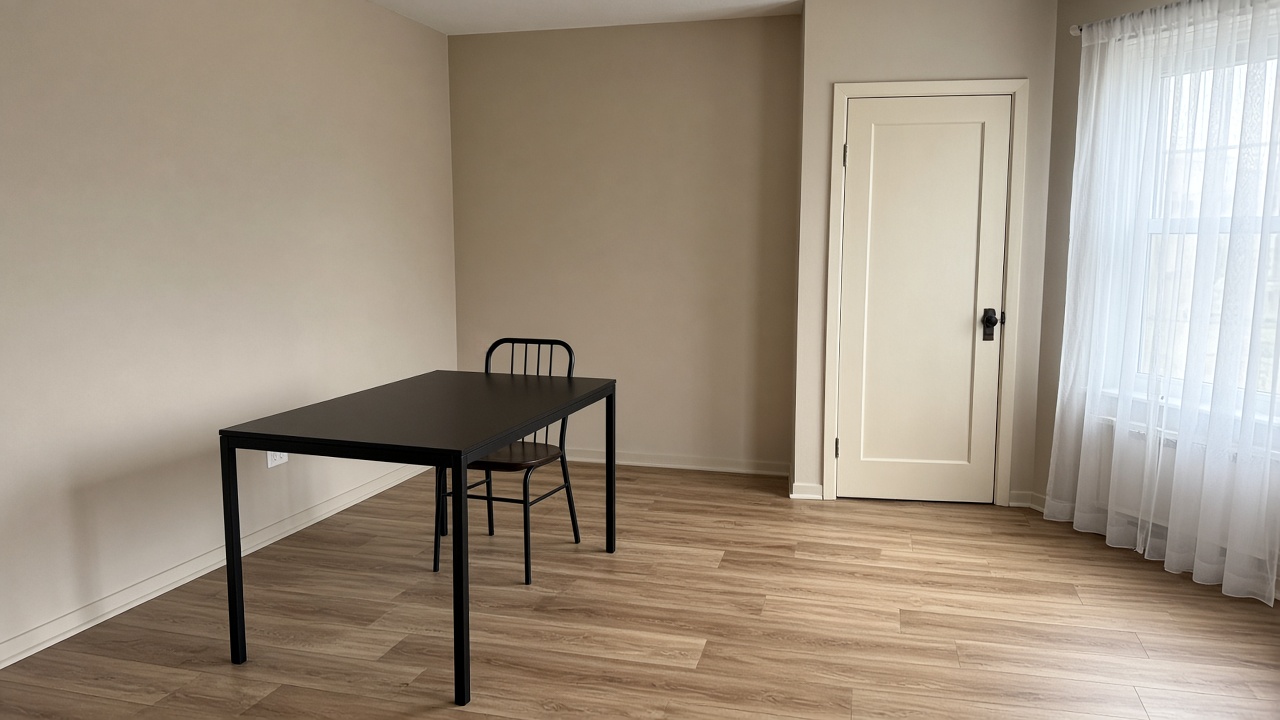
We walk from the latch with a laundry basket. We look for nailed shelves and painted built-ins. We lift a sofa corner and look for felt. We fold a table if it claims to fold. We tape a walk to the door we actually use. We do not buy a story about leftover fortune in a prior tenant's foam.
If the listing included a dresser, we treat it as theirs unless the lease says otherwise. Do not haul "free" landlord furniture to the curb as a cleanse. That is theft of their inventory, or at best a fight. Bring your own piece, or live with theirs until you move.
Should you skip a landlord built-in?
Skip it as a workshop. You can use a built-in the way it already works: hang clothes, set a kettle if it is a counter. You cannot "Feng Shui" it with a new stain, a lucky color, or extra screws. Those marks are deductions.
A nailed-in shelf is the usual renter trap. It looks like storage. It is a hole pattern. Use a free-standing bookcase that still leaves a shoulder. If the walk is already tight, skip more storage. The scale page is the tape when you are shopping. Tonight, do not add nails.
Tension rods belong in a reveal you can pad, not as a clothes line screwed into tile. A tension shoe rack that stands is fine. A pole that rusts over a tub is the bathroom-plants rust note, applied to furniture: if it stains, you pay.
Do not glue a runner. Do not stick a "damage-free" strip that peels paint. Felt and furniture sliders are the honest floor tools. Command-strip galleries are a paint lottery. This page would rather you own a floor lamp than drill a ceiling rose.
Kitchen: the fridge, stove, and dishwasher in a rented appliance package are not your furniture hub objects. Do not refinish a landlord fridge. Do not treat a microwave shelf as a bagua cure. Bring a folding cart you can take if you need extra landing space.
Closets: if they installed a system, leave it. Add hangers and fabric boxes you empty at move-out. A second wardrobe that blocks the bedroom door fails scale and fails this page. Measure the swing.
How do you pad and fold pieces you will take?
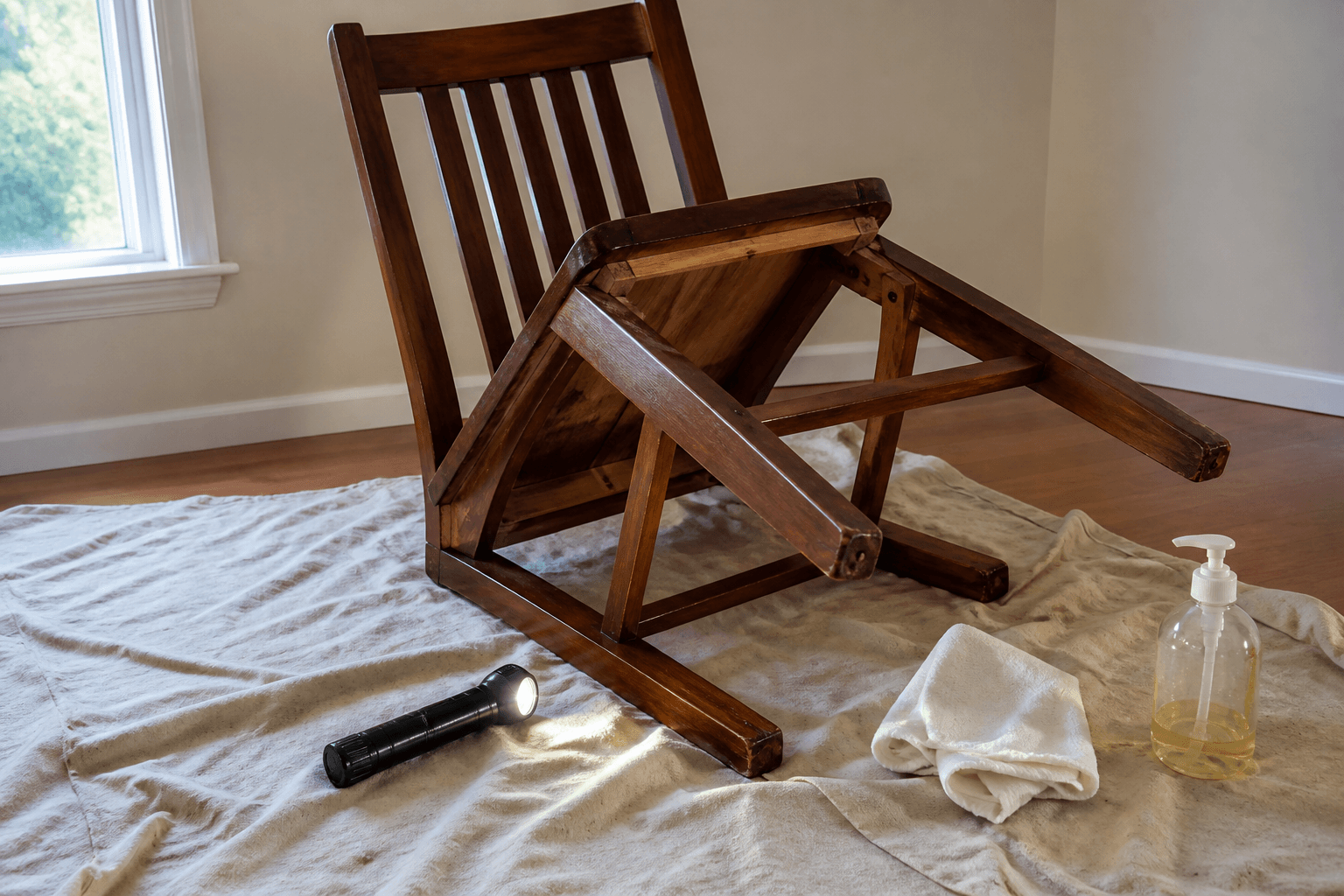
Felt under every foot that sits on wood, vinyl, or stone you do not own. Check pads every few months. They shine, then they scratch. Extra pads live in a drawer, not as a "wealth" bowl by the door.

That pad is the lease talking. The sofa can sit. The floor can survive. Felt is not a charm. Replace it when it is thin.
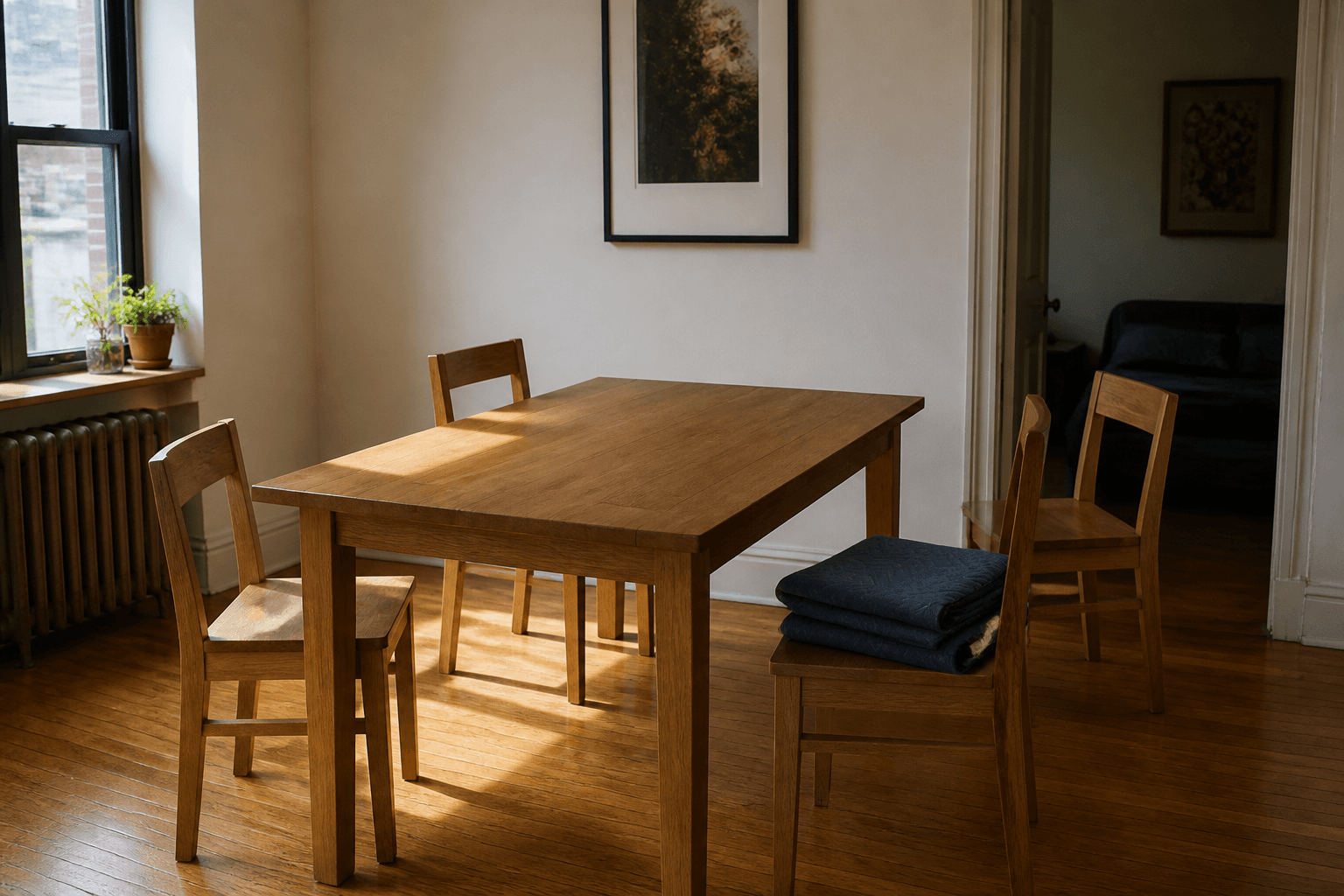
Folding tables earn a rental because they leave a walk when you need the floor, and they pack. A dining table that only exists as an eight-seat block in a studio is a scale fail you will also fail on moving day. If it does not fold, measure the stair and the elevator before you pay. The furniture hub already skips one-piece sectionals that will not turn a stair. This page repeats that skip as a lease rule, not as a living-room layout tip.
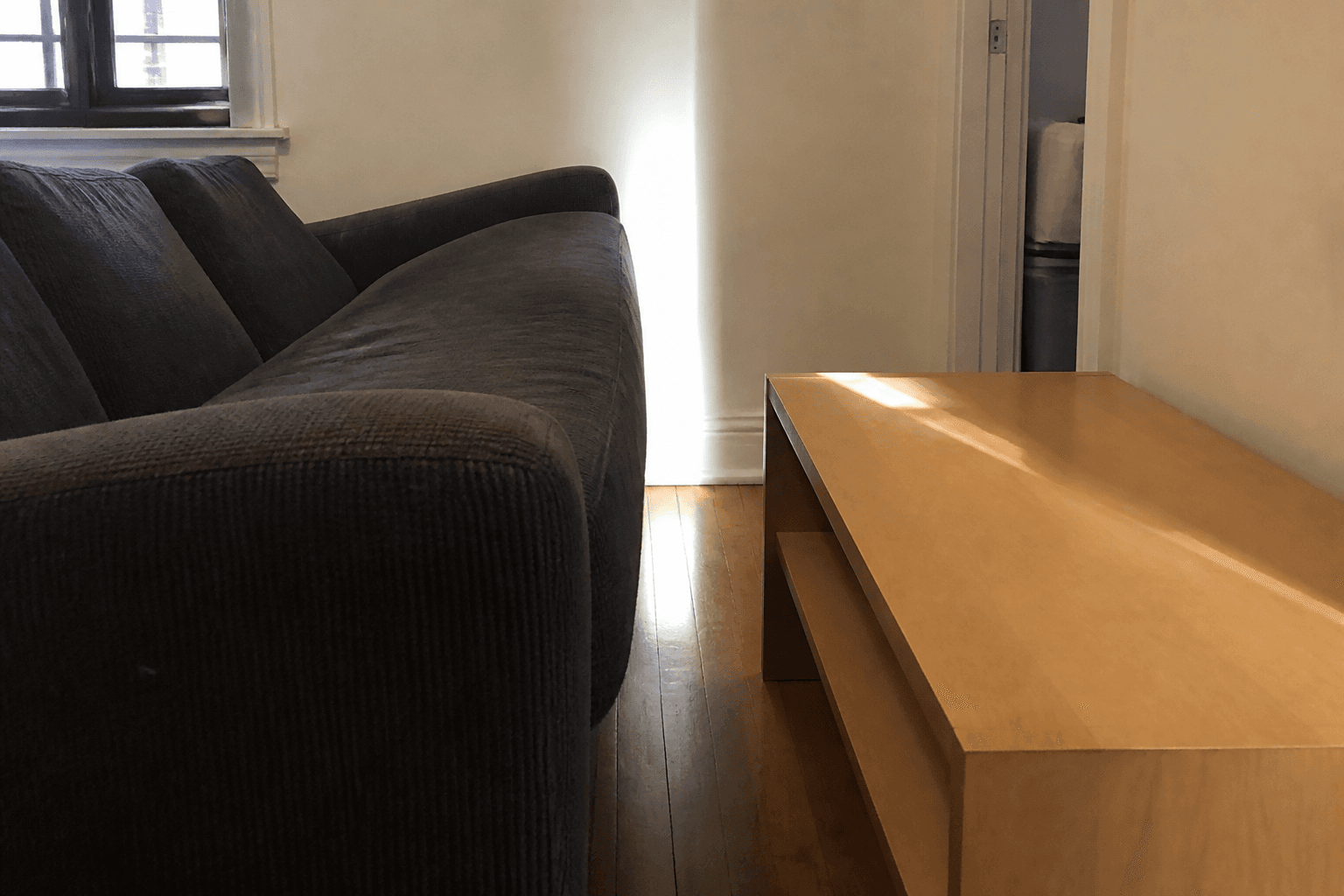
Modular sofas with separate seats are easier than a welded one-piece. You still tape the walk. You still sit for a minute if the piece is used. Springs and fabric are the secondhand-sofa article. Frame and smell are used furniture. Do not merge those inspections into this URL.
Beds: a frame you bolt together is yours. A platform the landlord built under a window is theirs. Do not saw it. Sleep geometry (window behind the bed, beams, nightstand height) is the bedroom hub. This page only asks: can the mattress and the frame leave without a demolition?
Desks: a folding or trestle desk you own is rental furniture. A standing desk bolted through laminate is a hole. Command at the office latch is the office guides. Do not use this article to place a desk. Use it to decide whether the object is yours to move.

That tape is the walk you must keep so a lease can end without a sideways shuffle. Furniture scale owns the full cart-and-footprint method. Here the tape is a move-out rehearsal: if you cannot reach the door with a basket, the piece is already too much for this rental, lucky throw or not.
Sliders under heavy sofas help you clean and help you leave. Do not drag feet. Dragging is how pads tear and how floors scar.
TV: a stand you own is reversible. A wall plate is a hole and often a stud finder mistake. Skip the plate in a lease unless the landlord installed it and you are allowed to use it. The living-room TV article is placement. This page is the mount you should not add.
Can a one-piece sectional pass a rental stair?
Only if you already measured the stair, the turn, and the elevator, and the piece still leaves a shoulder-width walk to the door you use. Most one-piece hulks fail one of those tests. Skip them. Buy parts. Or skip the sofa size entirely and live with a smaller two-seat you can rotate out.
A sectional that passes the stair can still fail the lease walk. Tape it. If you turn sideways with laundry, it failed. Do not "make it work" with a plant in the pinch. That is the scale article's warning, and it still holds when the piece is already in the room. Return it if you can. If you cannot, you now own a haul at move-out.
Reversible chaise pins matter because a rental floor plan changes when a roommate leaves. A missing pin is a gap. Prefer pieces you can turn.
Sleeper sofas: fold the mechanism twice. A stuck bar is a shin forever. If you will sleep on it, the mattress hygiene rule on the used-furniture page still applies. This page adds: will that sleeper go back down the stair?
What about leftover luck and used pieces?
Foam holds wear and odor, not fortune. If you buy used, do the frame, smell, and wash tests on the used-furniture page, then come back here and ask whether the object can reverse: felt, fold, stair, no nails. Do not smudge a wracked dresser. Do not keep a landlord built-in because it "holds history."
A prior tenant's nailed shelf is still a hole. You can fill with the paint the landlord specified, or you can leave it and note it on the inventory. Do not add a second shelf next to it as a balance.
Incense to "clear" a used sofa is a perfume war with foam. The incense page wants a watched dish. This page wants soap, air, and a skip if the smell stays.
Pets: claws on a used fabric sofa are a claw test. Bowls and toxic plants are the pets guide. For the lease, add felt so a scratching chair does not skate and gouge.
Renter steps you can reverse tonight
- Walk from the latch with a laundry basket. Mark the pinch with painter tape.
- List every piece you brought. If it cannot leave, treat it as theirs, not as a project.
- Stick felt under every foot that sits on landlord wood or vinyl.
- Fold the table if it folds. If it will not fold, measure the stair.
- Skip a one-piece sectional that will not turn the landing.
- Do not nail a shelf. Use tension or a free-standing case.
- Do not sand, paint, or oil a built-in you do not own.
- Photograph from the door so the walk is visible.
After the object is honest as rental inventory, then read sofa placement, desk command, or bed geometry on the room hubs. Buying a hulk and floating it will still be a hulk. Arranging furniture you already own is the living-room arrange article. This page will not rewrite that layout.
If you are replacing a piece, haul the dead one out first. A second sofa in the walk is storage. Compare sits, then one piece stays.
Keep extra chairs folded if you host twice a year. A dining set for eight in a one-bed is scale plus a move-out headache.
If the only storage you added is a wall of cube units stacked to look built-in, those still need to unstack without scarring laminate.
What this is not
It is not sofa placement: command, float versus wall, TV. Do that after the object can leave.
It is not desk command and not bed geometry. Those stay on office and bedroom URLs.
It is not the arrange-furniture layout clone. That page moves pieces you already own.
It is not leftover luck. It is not the used-furniture smell test in full, and it is not the furniture-scale cart class in full. Frame and tape still have their own pages. This page is what a lease can reverse: felt, fold, tension, skip their built-ins, skip the one-piece that will not turn.
It is not a refinish of landlord wood. Sand and oil are for a piece with your name on the haul.
What should you do tonight?
If you are shopping, tape the walk, measure the stair, buy fold and felt, skip the built-in project and the one-piece that will not turn. If you already nailed a shelf, stop adding holes. If pads are missing, stick them.
Then photograph from the door you use. If the first problem is a blocked latch, the inventory failed. What you can take with you is the rental furniture job. Layout tips can wait until the piece is still allowed to leave.