
Feng Shui furniture is the piece you buy, skip, or refinish so it fits the walk, gives a solid back, and can leave with you. It is store and workshop work. Room layout is a different page.
When we photograph apartments for analysis, the expensive miss is often a new sofa that ate the aisle. People search furniture online. They click a wood that a post called lucky. They do not measure the latch-to-wall run. This hub stays on the object. The arrange furniture guide stays on where a piece already in the room should sit.
What counts as Feng Shui furniture?
You are deciding whether a chair, table, bed frame, dresser, or shelf is the right object to bring in or keep. If the answer is no, you refinish, sell, or leave it at the store. If the answer is yes, you still place it with the room guides.
This is narrower than a living-room layout. That page wants the sofa to see the door and a path you can walk with a basket. A pretty oak grain does not cancel a hulking sectional in a studio. Buy after you know the walk.
Classical Form School writing cares about shape and backing. Popular shops sell "prosperity" wood. Treat the shop copy as copy. Your shins and your back are the test.
Renters use the same test as owners. The renter guide is lease-level: no masonry, no built-ins you cannot unscrew. This page is the cart and the sandpaper.
How do I check scale before I buy?
Measure the walk you already have. Then measure the piece. If the two numbers fight, the listing photo does not matter.
Do this in the room, not in the store aisle.
- Walk from the door you actually use to the seat or the bed wall. Keep a shoulder-width clear. Mark the pinch with tape on the floor.
- Sit or lie the way you will use the piece. If a floor model exists, use it. If you are buying online, cut a newspaper footprint and live with it for a day.
- Open every door and drawer on the drawing. A dresser that only fits with the drawers shut will fail on Tuesday.
- Check the back. Beds and chairs want a closed plane. A metal grid you can hook fingers through is a frame, not a back.
Write the pinch. The next sections are only about pieces that passed or failed that pinch.
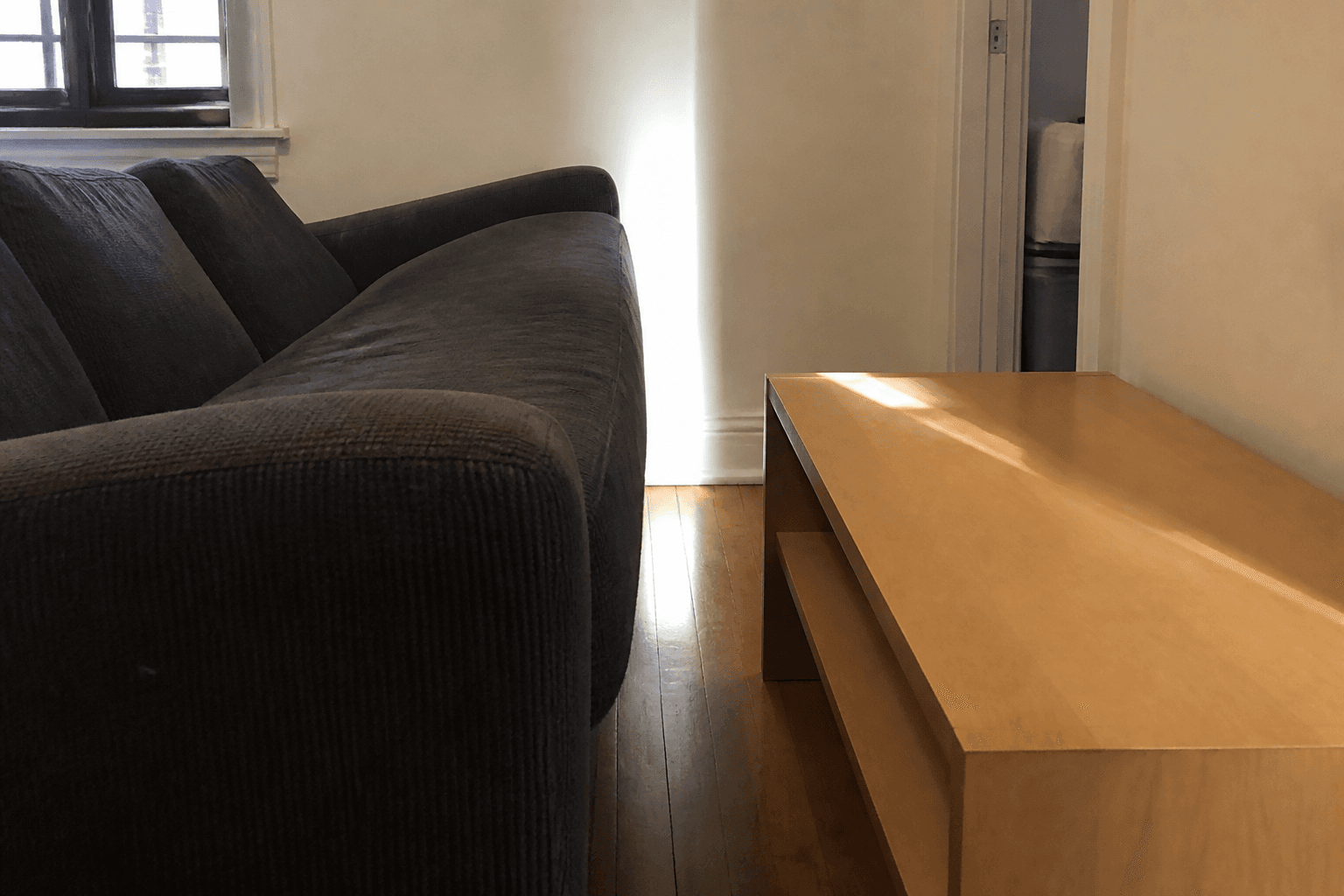
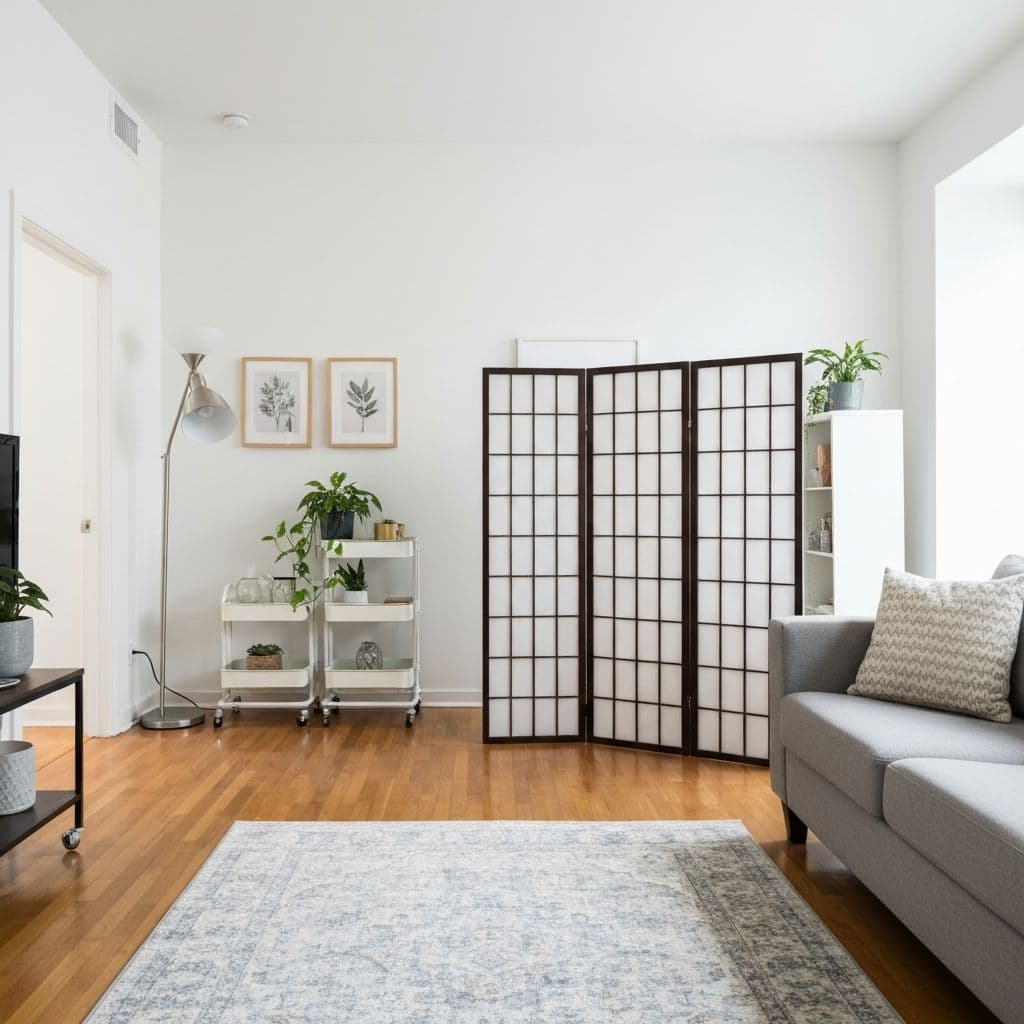
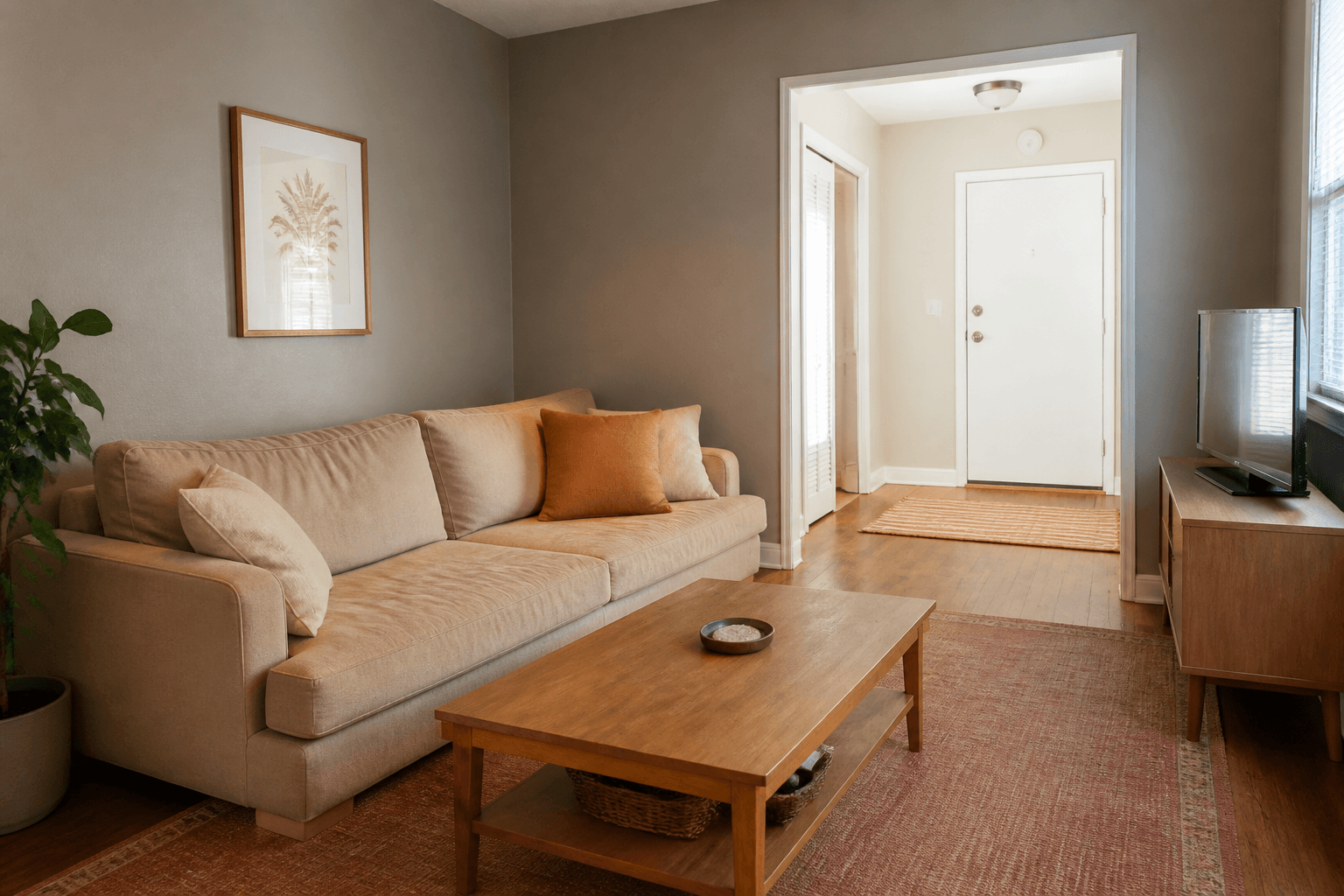
That bulky sofa is the usual online miss. The fabric can be fine. The aisle is not. Do not "feng shui" it with a plant. Return it or put it in a room that has the walk.
Store lighting lies
Showrooms run bright and wide. Your rental is smaller and yellower at 8 p.m. Photograph your empty wall in the same hour you sit there. Take that photo to the store. If the piece looks like a wall in your picture, it is too tall or too wide.
The sofa placement article is for a sofa you already own. This paragraph is the buy. Do not merge the two jobs in one URL.
What should I look for in used furniture?
Used is a good default when the frame is honest. You can see joints. You can smell smoke and mold. You can sand wood. You cannot sand a wobble that lives in the rail.
Skip folklore about who sat there. Skip a story that the dresser "holds old energy" unless the energy is mildew. Clean, dry, tighten, refinish. If a smell stays after a week of open windows and a washable cover, leave the piece.
A used-piece checklist
- Lift one corner. If the frame twists, walk away.
- Sit hard. Listen for a crack, not a friendly creak.
- Open drawers fully. Warped boxes that scrape will scrape forever.
- Check the back panel. Cardboard that is tearing is storage, not a mountain behind you.
- Fabric: if you cannot wash or professionally clean it, treat it as disposable.
A used table with a sound apron and a scarred top is a refinish candidate. A used sofa with a broken spring is trash you pay to haul.
Can I refinish instead of buying new?
Yes, when the bones are right and the room still wants that size. Refinish does not shrink a wardrobe.
Work on a drop cloth. Open a window. Keep stripper and oil off a landlord's floor. Felt pads go on after the finish dries so you can move the piece without scarring the plaster.
Oil and wax are the renter-friendly coats. They do not need a spray booth. Paint is fine on a piece you own. Do not paint a built-in you do not own.
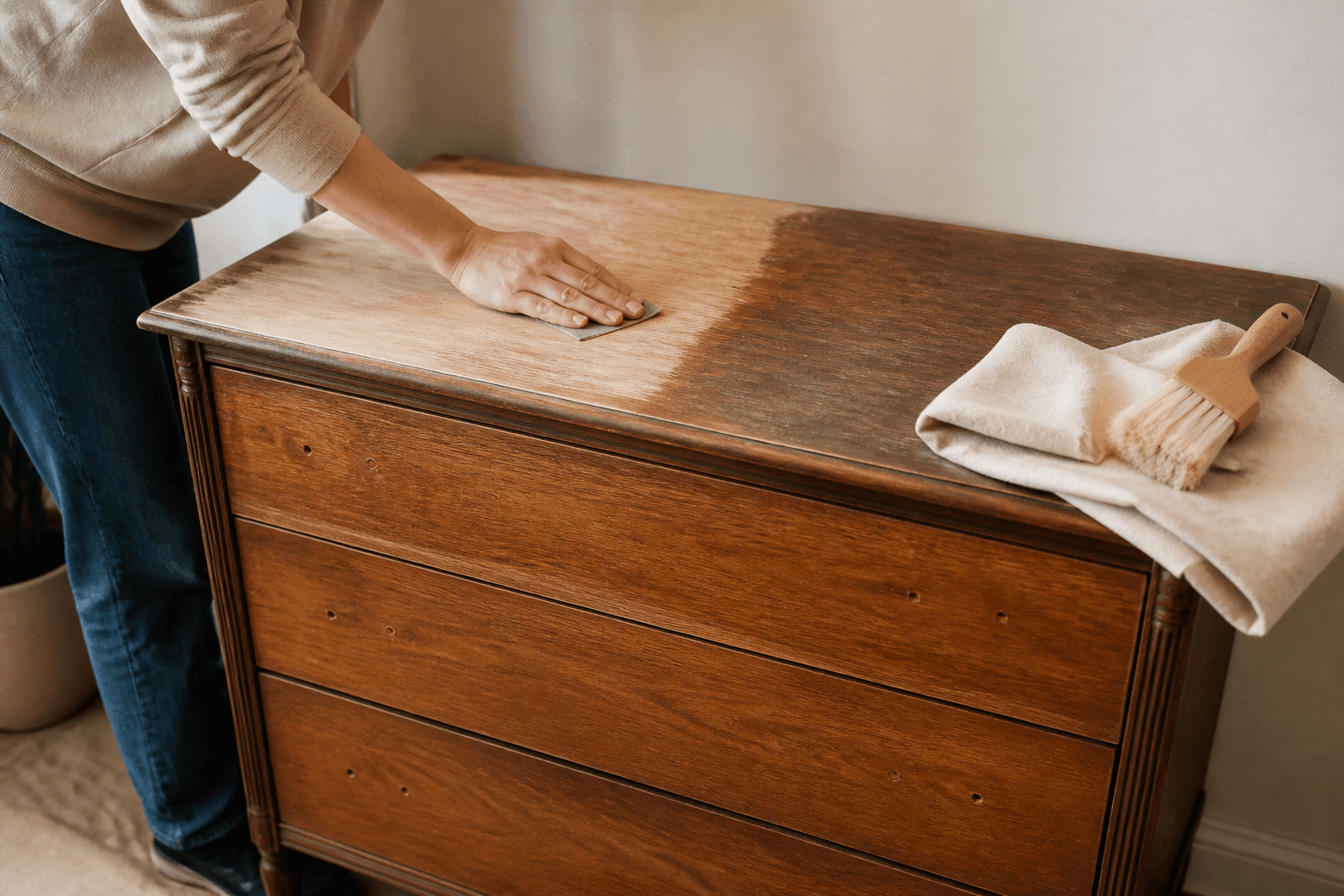
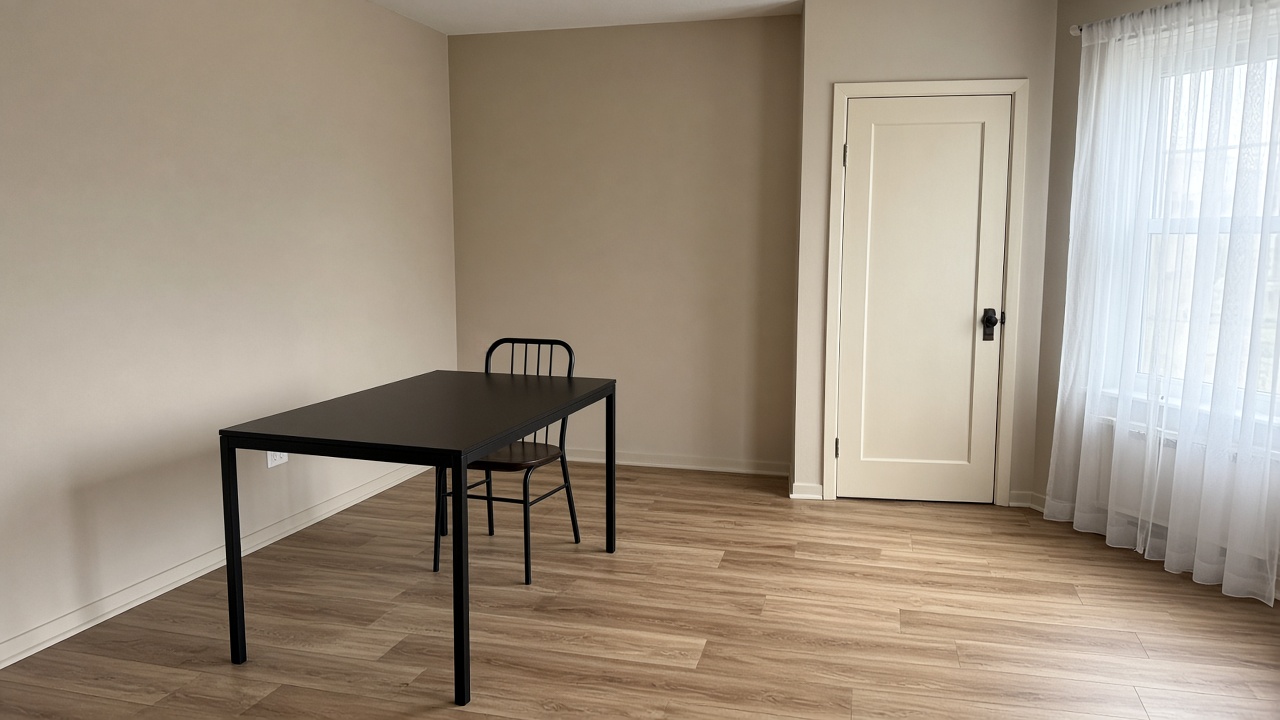
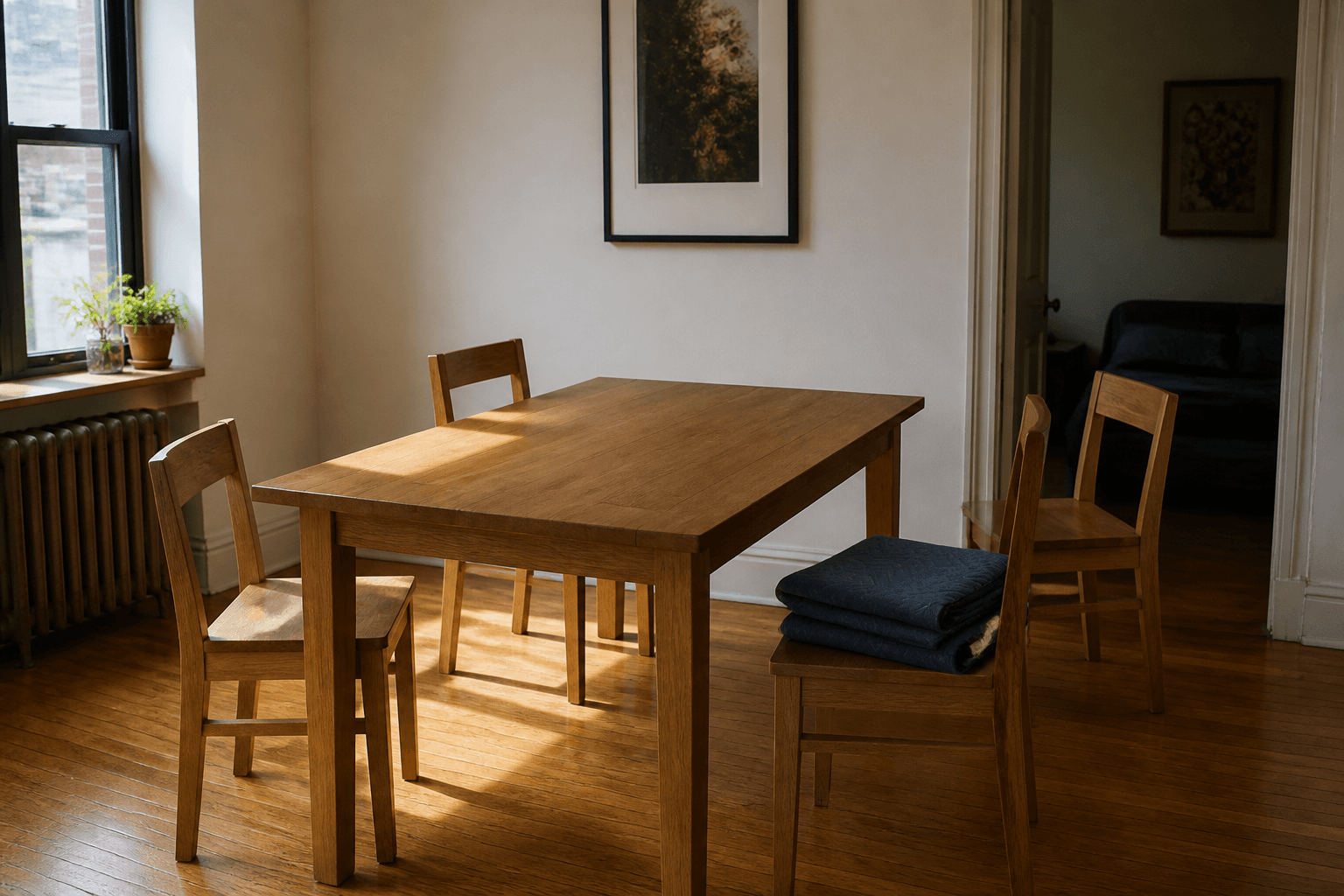
That half-done top is the honest middle of the job. The room will look worse for a day. Plan the walk around the cloth. Do not refinish in the only path to the front door.
A new finish will not fix scale. If the dresser already blocks the closet swing, sanding it is procrastination.
Which materials are easier to live with?
Closed wood and closed upholstery read as a back. That is why a solid headboard page exists on the bedroom hub, and why this page will not rewrite it. Glass and open slats need more floor around them because you see through and you kick them.
Metal frames are light to move and loud on a wood floor. Add felt. Glass tops show every cup ring and every pile. If you already live with visual noise, a glass coffee table will make the pile look larger.
Five-element talk about wood feeding fire belongs on the elements hub. Here, material is weight, glare, and cleaning. Buy what you will actually wipe.
Sharp corners
Tradition names a square corner on the walk a poison arrow. We keep the label as a label. The practical test is your shin. Turn the piece. Pad the corner. Buy a round table if you are already in the market. Do not throw out a sound desk because a blog said the corner cuts chi.
What should I skip at the store?
Skip the piece you cannot reverse. A wall-to-wall built-in in a one-year lease is someone else's furniture. A sectional that only comes as one sewn unit will not fit the elevator. A "lucky" carving on a wobbly base is still a wobble.
Skip a second matching set when the first set already fills the room. Pairing is a relationships-hub job when you share a bed. Buying two identical dressers "for balance" in a studio is storage you do not have.
Skip charms bolted to the furniture. If you want an object, keep it in a bowl you can empty. Hardware should hold the piece together.
What happens on delivery day?
Clear the path from the building door to the room before the truck arrives. The mouth of chi language on the entrance hub is the same physical test: can two people carry a table without hitting the latch.
Photograph empty corners. If a piece does not fit, you have evidence for a return. Do not accept a "we will just angle it" that scrapes the plaster you have to paint at move-out.
Assemble on the drop cloth. Tighten, then do the sit or lie test again. Store the extra hardware in a labeled bag taped inside a drawer so the next move is boring.
What this is not
A furniture buy will not raise income and it will not repair a relationship. Walnut is not luck. White oak is not a career. A refinished dresser will not diagnose insomnia.
This page is not the arrange furniture layout. It is not the sofa, desk, or headboard articles. Those stay on their rooms. If you only needed a new place for a piece you already like, go there.
Write down what you bought or refinished and the walk measurement. The next listing photo will look wide again. Your tape will not.
A simple buying checklist
Do this in order. Stop when the piece fails.
- Measure the walk and the wall. Write both numbers.
- Sit or lie on a floor model, or live on a paper footprint.
- Check a closed back on anything you rest against.
- Open doors and drawers on the drawing.
- For used pieces, do the lift, sit, and smell tests.
- For refinish, confirm the joints before you buy sandpaper.
- Photograph the empty room from the door in FengShui Hero, then compare the flagged walk with the tape.
If you only do one thing today, put tape on the floor where the new piece would live and walk past it at night with the hall light on. If you turn sideways, do not buy.
If the store lights still talk you into it, take the piece home only if the return window is in writing.