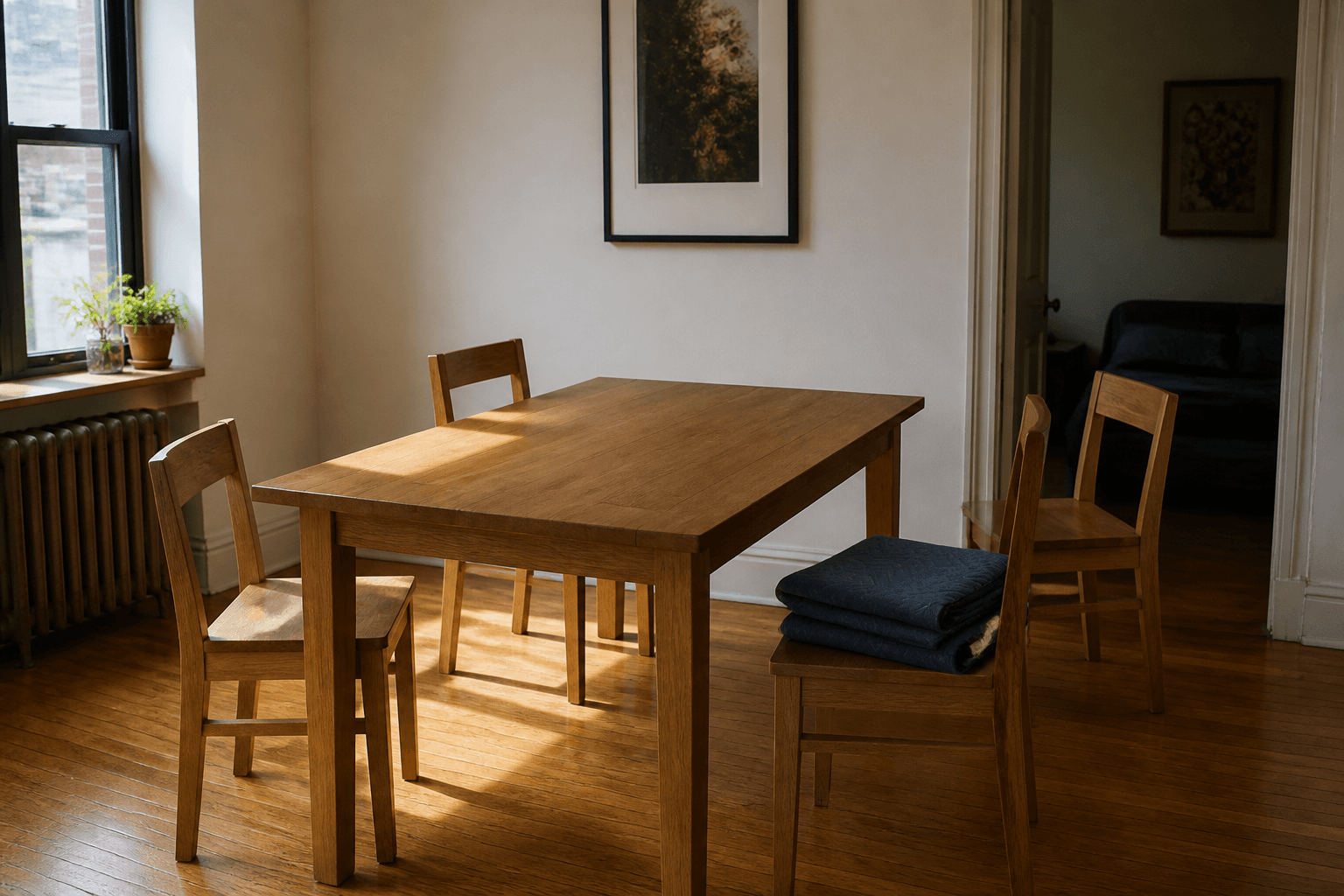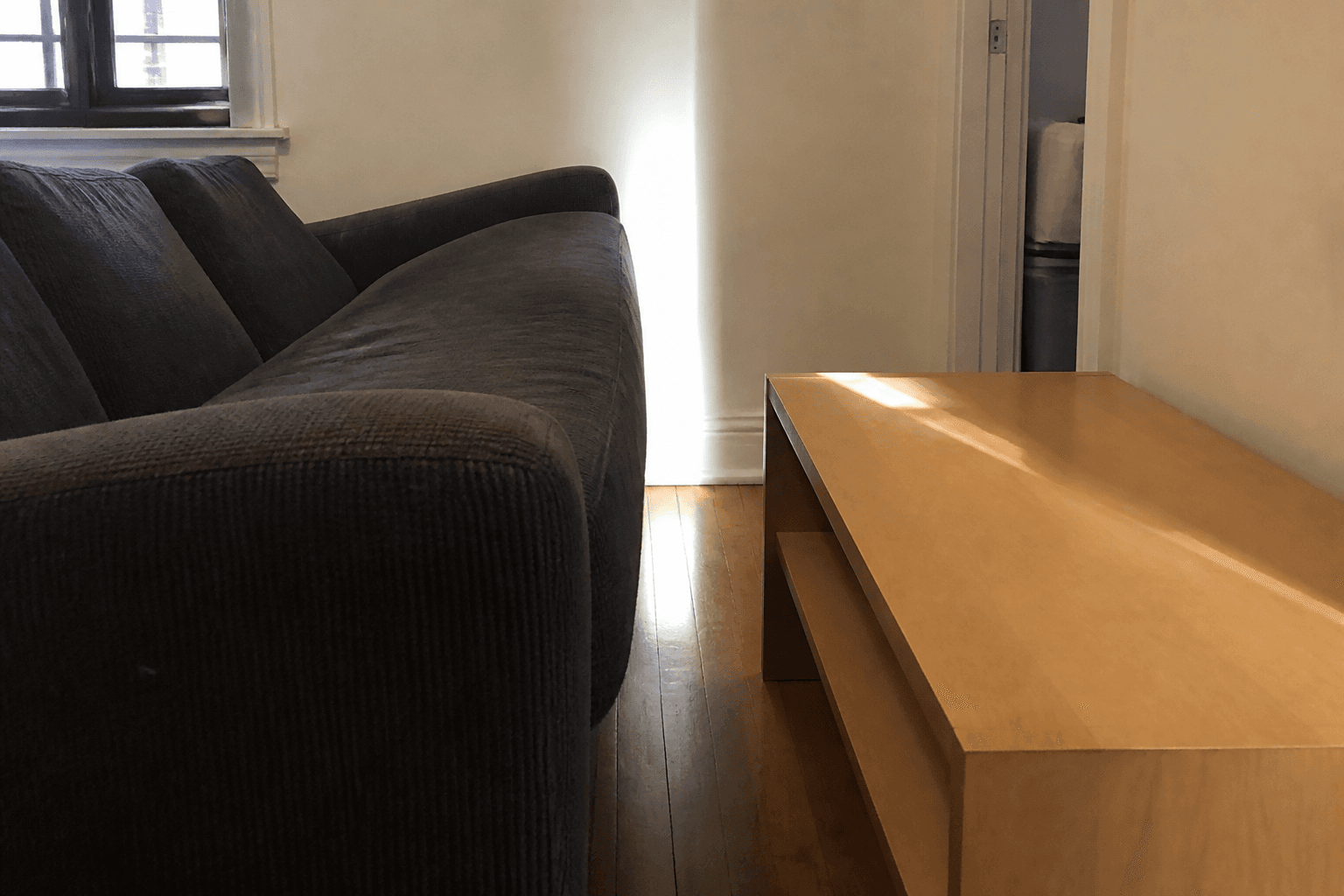
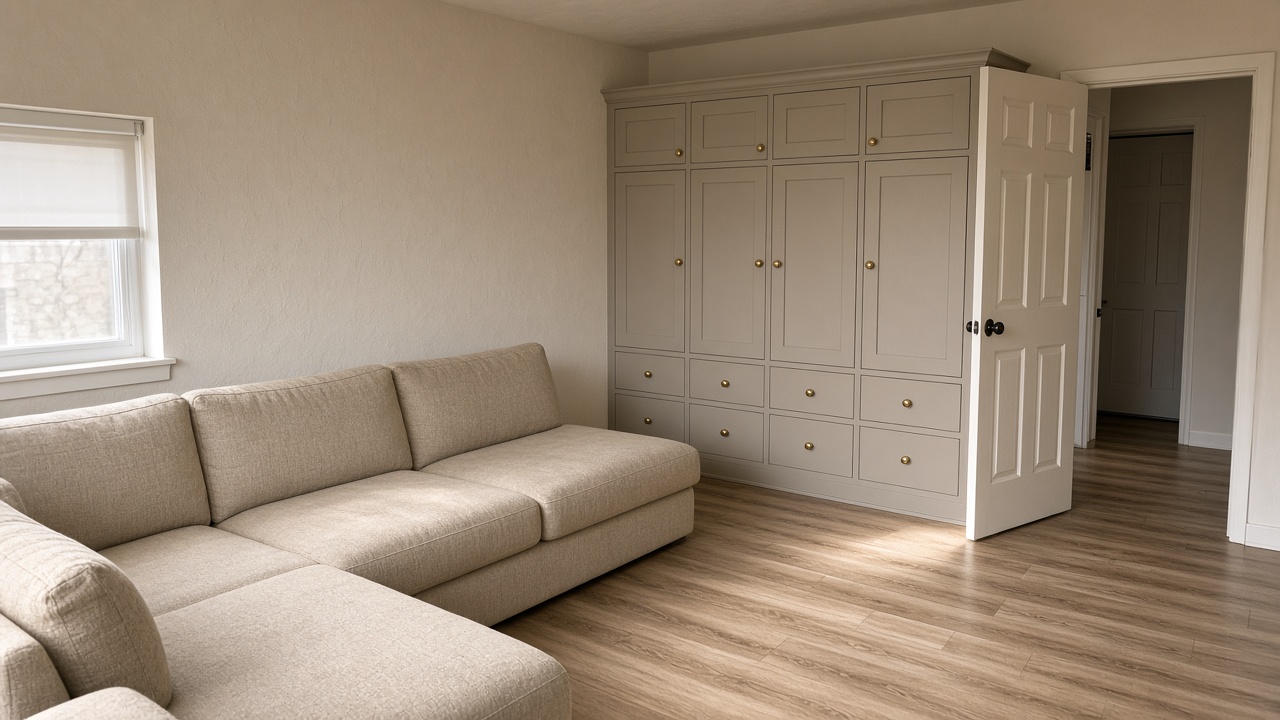
Feng Shui furniture to skip is inventory you refuse at the cart: landlord built-ins you would stain or upgrade, one-piece sectionals that will not turn a stair or leave a walk, and charm hardware that pretends a knob is layout. Renters keep pieces they can reverse.
When we photograph move-ins after a shopping weekend, the expensive miss is a one-piece sectional that still sits on the landing in wrap, plus a can of stain in front of a landlord cabinet, plus frog knobs on a dresser that already blocked the bedroom door. People ask which lucky wood to buy instead. We ask whether a laundry basket still reaches the latch they actually use. The furniture hub is buy, skip, and refinish in one place. This page is the skip list in full. Furniture scale is the tape before the cart. Rental furniture is felt, fold, and what a lease can reverse after you kept a piece. Do not merge those jobs in one URL.
How do we check furniture to skip?
We stand at the door you unlock with a basket. We open the swing fully. We look for millwork you do not own, a sofa that cannot turn the last corner, and novelty pulls that turned a dresser into a shrine. We do not read a flying-star date on the receipt.
If the listing called a wall of cabinets "custom," we treat it as the building's until the lease says otherwise. If a sectional is sold as one welded frame, we measure the stair and the elevator, not the showroom aisle. If the hardware is a frog, a coin, or an octagon shop pull, we ask whether the drawers still open after you swap to plain knobs you can take off at move-out.
Command, sofa float, desk versus the latch, and bed geometry stay on the room guides. This URL will not aim a sofa at a door. It will tell you which object should never leave the store.
Photograph the empty path in the hour you actually sit there. Take that photo to the cart. Store lighting is wider and brighter than your rental at 8 p.m. If the piece looks like a wall in your picture, it is already a skip, lucky species or not.
Should you skip landlord built-ins?
Skip them as a workshop. You can hang coats in a closet the building installed. You can set a kettle on a cabinet that already exists. You cannot "Feng Shui" that millwork with a new stain, extra screws, or a color a blog called lucky. Those marks are deductions. The refinish page is joints and oil on a piece you own. It is not a license to sand plaster the landlord painted.
A nailed-in shelf is the usual trap. It looks like storage. It is a hole pattern. Use a free-standing bookcase that still leaves a shoulder. If the walk is already tight, skip more storage. Tonight, do not add nails.
Owners skip the next built-in, not the closet they already have, when that closet still opens and the walk still works. Commissioning a bigger wall that pinches the latch is the same miss with a bigger invoice. Empty the stuffed doors so they close. Do not treat a jammed cabinet as a wealth cell you need to activate.
Kitchen appliances that came with the lease are not your furniture-hub objects. Do not refinish a landlord fridge. A folding cart you can take is extra landing space you can reverse. A second wardrobe that blocks the bedroom leaf fails this page even if the wood is pretty.
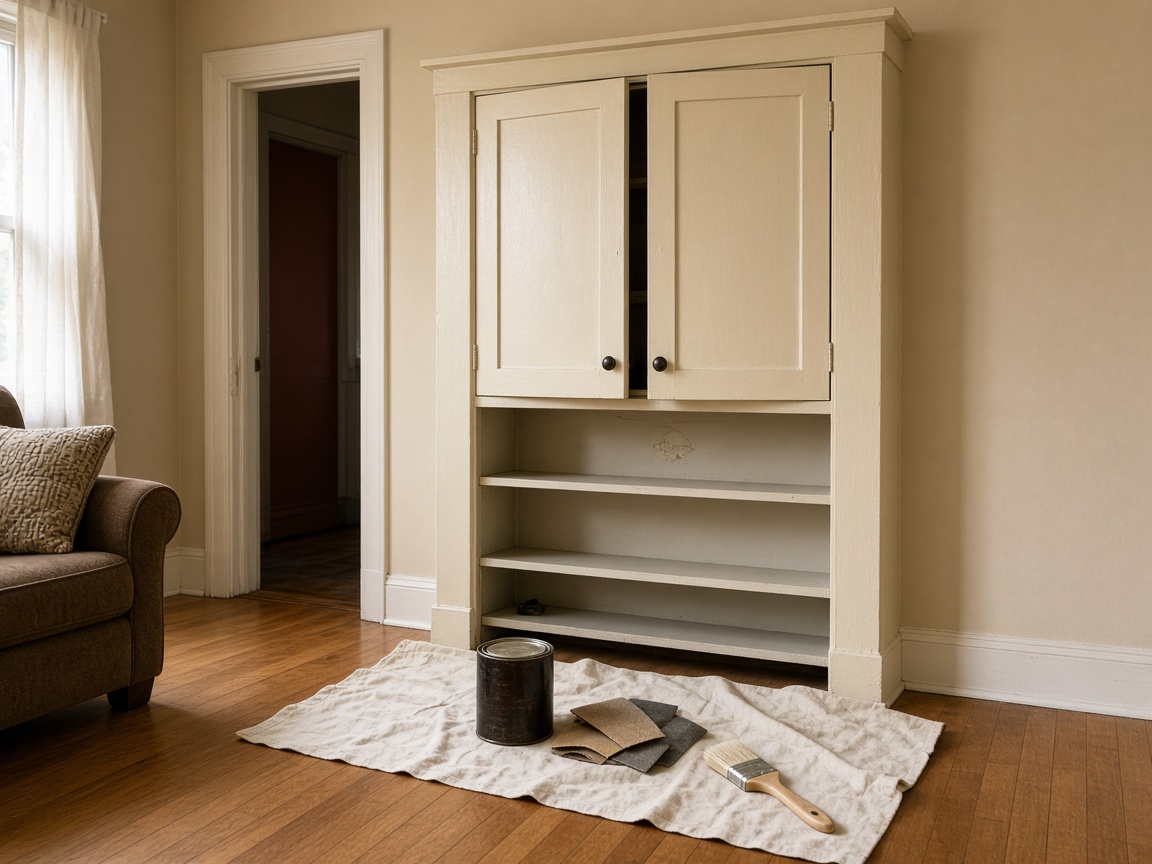
That drop cloth is the miss. The cabinet already works as a cabinet. Stain is a fight with the deposit. Use it closed, or bring a case that leaves with you.
How we check a built-in
We open every door and drawer on the millwork. If the leaves only close when the room is empty, the built-in already ate the walk. We look for fresh screws, a color that does not match the listing photo, and sandpaper dust in the baseboard. We photograph the empty wall at move-in so a later argument about holes has a date.
If you are not sure who owns it, read the inventory. If there is no list, photograph every attached shelf the day you get the keys. Hauling "free" landlord furniture to the curb as a cleanse is theft of their inventory, or at best a fight. Skip that too.
Are one-piece sectionals a skip?
A sectional is not a curse. Skip a one-piece hulk that will not turn a stair, fit an elevator, or leave a shoulder-width walk to the door you use. A lucky fabric will not shrink it. Secondhand sofa is springs, cover, and smell after you decide the object can even enter. This paragraph is the refuse at the listing: one welded frame versus modules you can carry.
Showrooms stage L-seats in rooms the size of a small barn. Your landing is a rectangle with a rail. Measure the tightest turn twice. If the piece is sold as one unit, believe the width on the spec sheet, then add the arms you cannot unbolt. Cut a paper footprint and live with it for a day. If you turn sideways, the listing is a skip.
Modules that unclip are the usual keep when you still want an L. Carry them one by one. Assemble in the room they will sit in, not the hall. Furniture delivery day is the truck after you already passed this refuse. Do not wait for wrap on the stringers to learn the corner is too tight.
A chaise that parks in the latch line is a walk fail even when the stair was fine. Pull the chaise off the door you use, or skip that configuration. Sofa placement after the piece is in is the living-room article. This URL stops at whether the object should exist in this building.
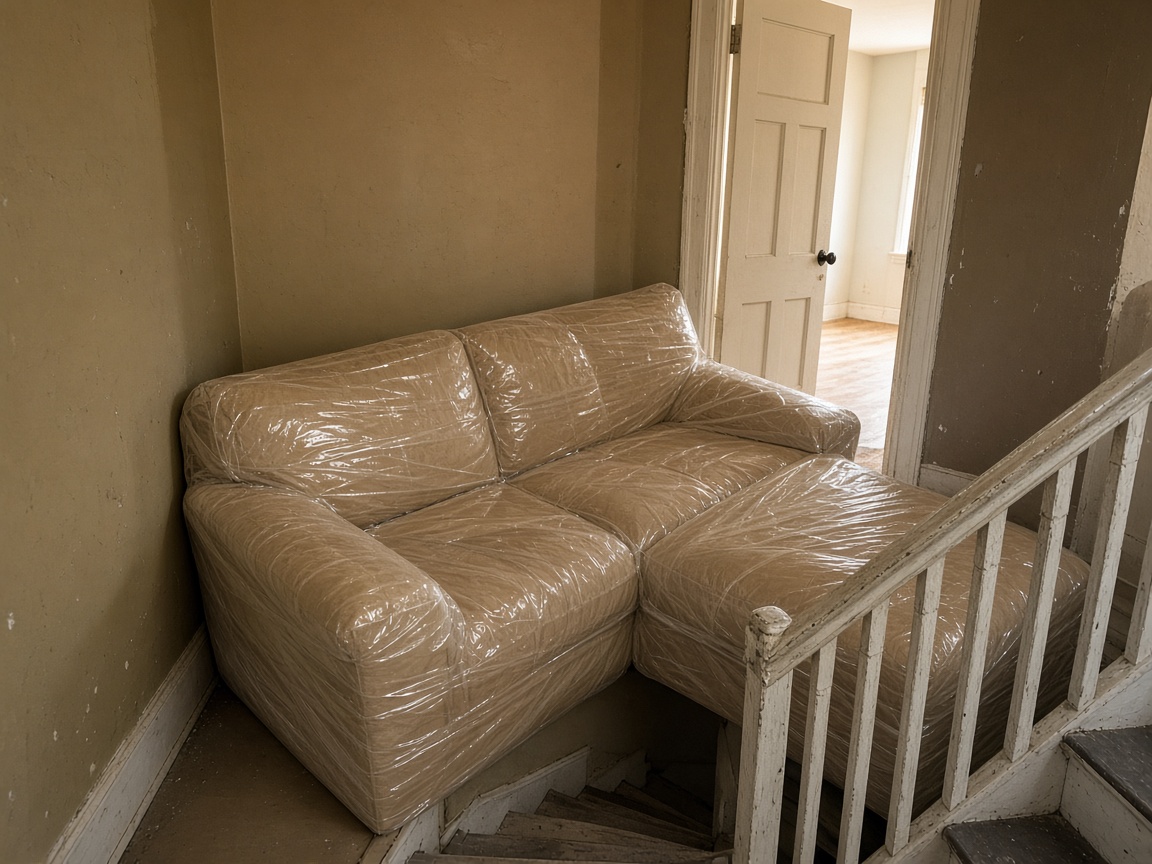
That wrap on the stairs is the expensive photograph. The crew cannot rotate it. Refuse it while the truck is still there if you can. A plant in the pinch will not help.
Two sofas, old plus new, is storage. If you kept the old sectional "until we see," you already failed scale twice. One piece leaves before the other sits. Recliners and sleepers that need a wall of clearance behind them fail the same way: sit the floor model, then open every motion twice.
Should you skip charm hardware?
Skip knobs and pulls sold as luck: frogs, coins, shop bagua octagons, "prosperity" characters, crystal knobs that catch every sleeve. They do not open a blocked door. They turn a dresser into a shelf of charms you have to dust with the shirts. The lucky charms guide is objects in a bowl you can put away. This page is hardware screwed to a piece you open every morning.
Plain round knobs, simple bars, or the pulls the piece shipped with are enough. If you own the dresser and hate the pulls, swap to something you can reverse and bag the old set. Do not drill extra holes in landlord millwork to mount a coin pull.
A metal bowl of spare knobs by the door is not a wealth cure. It is clutter in the first meter. Keep extras in a drawer labeled with the piece.
If a novelty pull bites your palm, change it or skip the dresser. Do not display a cracked frog as vintage.
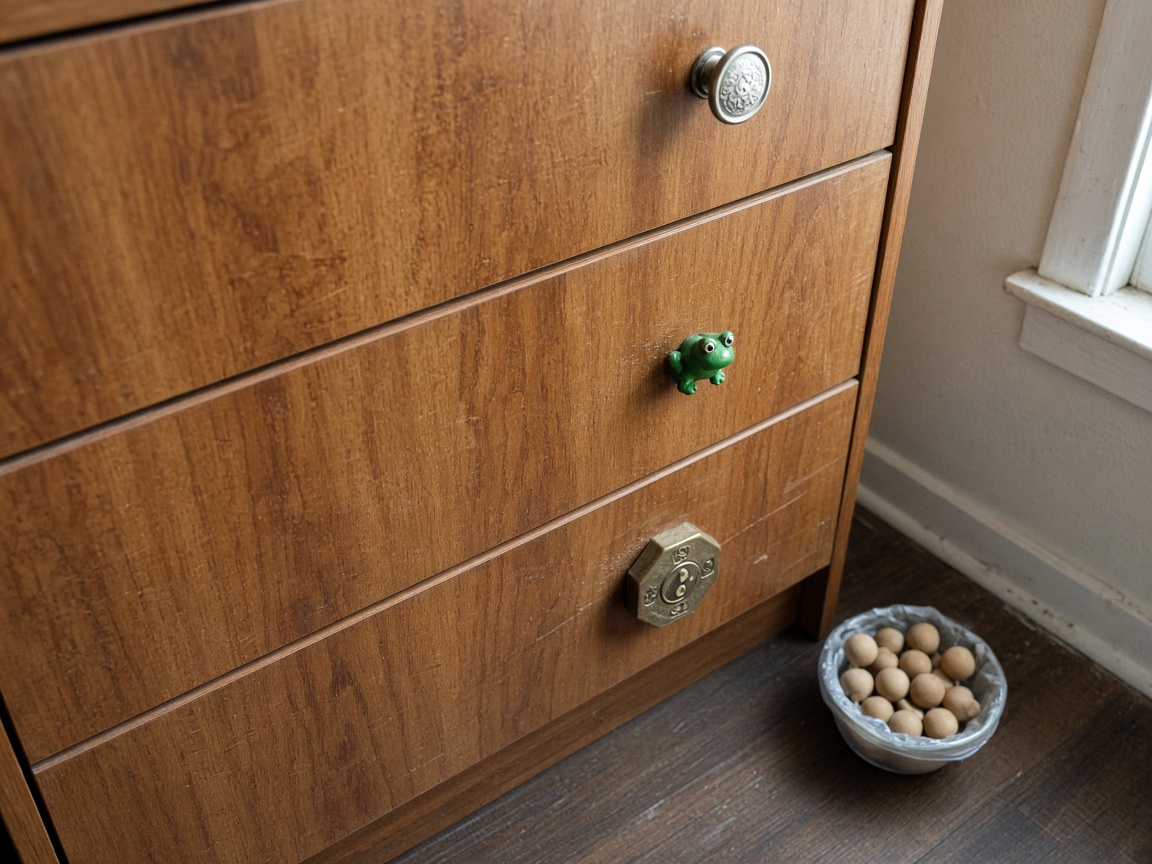
That frog does not pay rent. The octagon pull does not map a bagua. The bowl of plain knobs is the honest swap if you already own the case.
Hardware versus a charm shop
If you want one cultural object, keep it in a dish you dust, off the walk, on a piece that already passed scale. Do not multiply it across every drawer. A shrine of pulls is still a shrine. Income has other causes. This site will not claim a knob raises a paycheck.
Mirrored wardrobe fronts that face a mattress are a bedroom-mirror job, not a furniture-hub skip of the case itself. You can skip a mirrored piece at the cart if you already know it will stare at the pillow and you cannot place it elsewhere. That is still an object refuse. Covering glass you already own is the other URL.
What should you keep instead?
Keep a piece that leaves a walk, gives a closed back where you sit or sleep, and can leave with you if you rent. Tape first. Sit or lie the way you will use it. Open every door on the drawing. If the store will not let you reverse the order, walk away. What to buy first is nothing until one room's walk works, then a lamp, then a plant. This skip list is the furniture you still refuse after that week.
| Object | Skip when | Keep when | Other URL |
|---|---|---|---|
| Landlord built-in | You would stain, screw, or treat it as luck millwork | It already closes and you only use it | Rental furniture, refinish (owned pieces only) |
| One-piece sectional | Stair, elevator, or latch walk fails | Modules, or a sofa that still leaves a shoulder | Scale, delivery day, secondhand sofa |
| Charm hardware | Frog, coin, shop bagua, snag, extra holes in their wood | Plain pulls you can reverse | Lucky charms (objects, not knobs) |
| Extra wardrobe | It blocks a bedroom leaf | Free-standing case off the swing | Scale |
| "Feng Shui set" bundle | The pitch is lucky wood, not width | You measured the walk and the back | Furniture hub |
Used pieces still get the frame and smell tests. Skip a wobble you cannot fix. Used furniture owns that inspection. A cracked case with charm knobs fails twice.
Glass tabletops and open metal bars are glare and snag notes on the materials page. They are not this skip list unless the piece also fails a walk. Stay on built-ins, one-piece hulks, and hardware here.
Renter steps you can reverse tonight
- Photograph the path from the door you use, with the swing open.
- Mark the pinch with low-tack tape, or a paper plan if the floor cannot take tape.
- List every built-in. Write "not a workshop" next to each one you do not own.
- If a sectional is in the cart, measure the stair and the elevator before you pay.
- Open every motion on a floor model. If it needs a wall you do not have, skip.
- Unscrew one novelty knob on a piece you own. If you cannot reverse it, leave it.
- Bag spare hardware in a drawer, not in a bowl by the latch.
- Walk a basket. If you turn sideways, refuse the next piece, even if the wood is pretty.
Lease language beats a blog. If the building forbids moving large pieces in the elevator on Sundays, that is a calendar, not a gua. Skip a crew slot that also breaks quiet hours.
What this is not
It is not furniture scale in full. Tape-before-cart lives there. This page is the refuse list after you already know the walk number.
It is not rental felt-and-fold in full. Use that URL when the piece you kept has to sit on landlord wood.
It is not sofa placement, desk command, or bed geometry. Room hubs own those after the object is allowed to exist.
It is not how to arrange furniture. That page moves pieces you already own.
It is not a lucky-wood shop and not leftover luck in joints. Glue is glue.
It is not the beginners "what not to buy" charm list, and it is not a flying-star year. A skipped day at the cart is allowed. A skipped paycheck claim is required.
If the aisle already fails, you do not need a nicer sectional. You need the basket test.
What should you refuse tonight?
If a cart is open, refuse the stain kit, the one-piece hulk, and the charm knobs. If the piece already landed and failed the stair, start a return while the wrap is still on. If the landlord cabinet is still a cabinet, put the stain away.
Then photograph from the door you use. If the first problem is a blocked latch, the inventory failed before layout tips can help. The skip list is the cart job. Placement can wait until a person can still leave.