
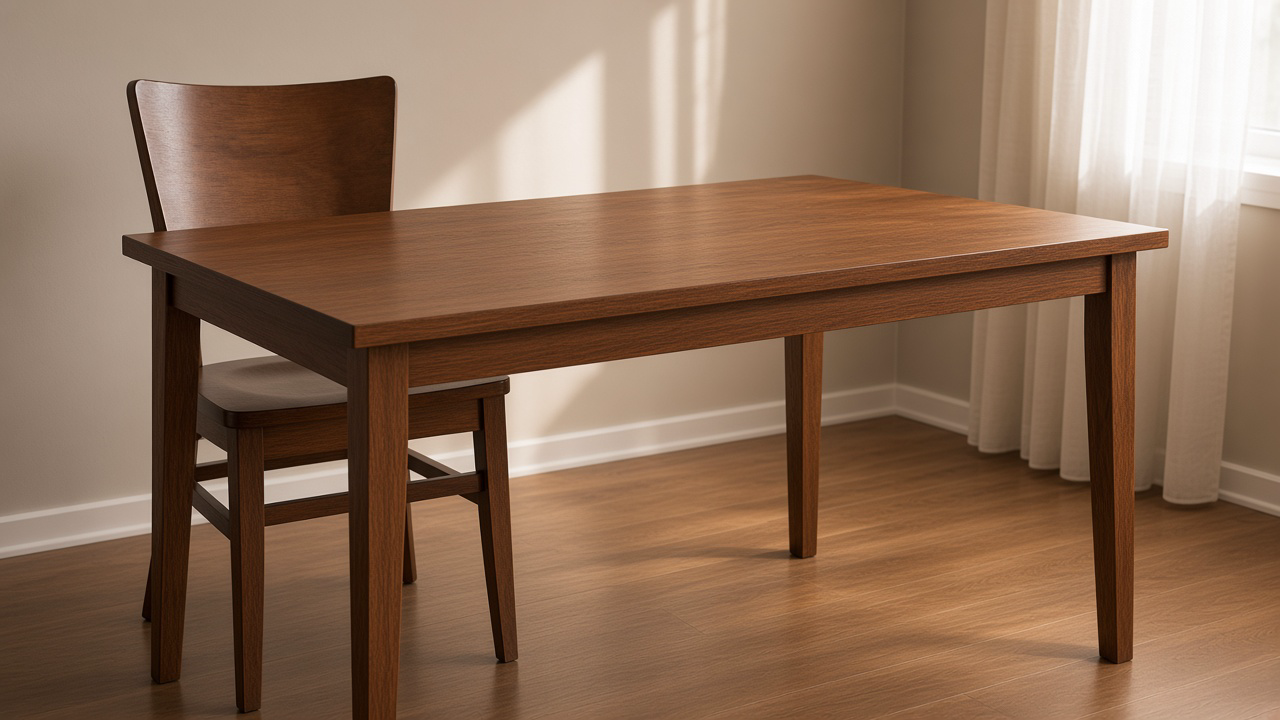
Feng Shui wood furniture is a wooden piece with a closed grain you can wipe and a back you can feel, not a lucky species that pays a bill. Oak, pine, and teak all fail if the panel is open, the veneer peels, or the walk is gone. Sit, knock, wipe. Then decide.
When we photograph rooms after a timber cart, the miss is often a chair a blog called prosperity oak: the back is a ladder you can hook a bag through, the face chips under a fingernail, and the aisle to the latch is gone. People ask which species to buy for the east wall. We ask them to sit, then wipe a corner, then walk past with a basket. If they rattle, gray the cloth, or clip a hip, the wood already failed. The furniture hub is buy, skip, and refinish in one place. Furniture materials is weight, glare, and a back across wood, metal, and glass. Refinish is sand and oil after joints pass. This page is the wood cart: grain you can wipe, a panel you can feel, and a species list you can ignore.
How do you check feng shui wood furniture in a store?
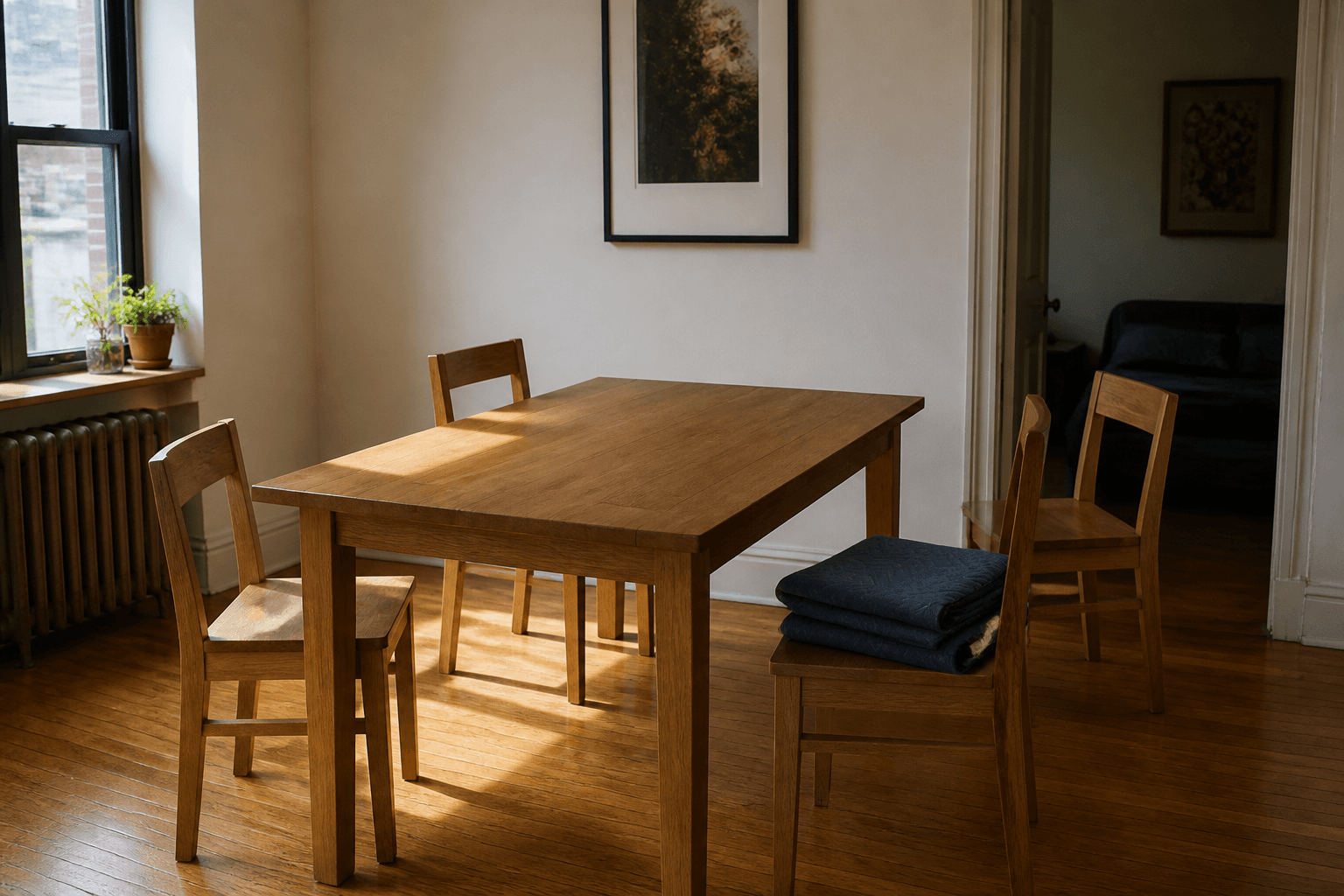
Sit the floor model the way you sit at 8 p.m. Feel the back with your ribs. Knock the top. Wipe a corner with a sleeve. Open every drawer and look at the edges. Then imagine the piece in the photo you took from the door you actually use.
Form School cares whether a body can sit and walk. Wikipedia's feng shui page still splits that shape work from Compass overlays. Form goes first here. A southeast sticker will not seal a peel.
Shop copy maps oak to wealth and pine to "too cheap to hold energy." Treat that as catalog language. Your ribs, your sleeve, and the walk you already taped are the test. We do not recommend a lucky timber.
If the client already bought a peeling sideboard, we still talk a haul or a used furniture skip, not a plant on the chip. Furniture scale stays the tape. A pretty grain does not shrink a hulk.
Photograph the empty wall in the hour you sit there. Showroom light is wider than a rental at night. If the piece looks like a wall in your picture, species will not help. Renters take a free-standing piece. No stain on landlord millwork. Owners still skip a slab they cannot get down the stair.
Does grain direction or species pick the piece?
Closed grain on this page means the surface is tight and sealed enough to wipe in one pass. It is not a shop word for maple over oak, and it is not a compass you draw on the board. Unfinished open pores hold gray film. A sealed oak can pass. A printed grain that bubbles fails.
Shops sell teak and oak as auspicious. Neither list opens a blocked latch.
Grain "direction" as a luck rule is homework. If the top is already on the base, leave it. Do not rotate a tabletop to point east. If the veneer is a photograph of grain, you are buying a print. Wipe it. If the print lifts, skip it.
Open-grain woods (oak, ash) can sit if the finish is sealed and the cloth comes up clean. They fail when the pores stay raw. Closed-pore woods wipe easier when the finish is honest. They still fail if the panel is a ladder or the walk is gone.
Do this on the floor model, not on the listing crop.
- Wipe a corner with a dry sleeve. Gray film that will not lift is a skip unless you own the piece and will finish it on a drop cloth.
- Look at the edge of a top or a drawer. A paper-thin face that wraps a crumbly core is veneer on particle. Press. If it powders, leave it.
- Knock the apron. A quiet thud can pass. A hollow drum with a rattle is a joint story. Send that to used furniture, not to a species blog.
- Ignore the hang-tag that names a lucky tree. Read the care card instead. If it forbids water and a damp cloth, it will not survive a rental dinner.
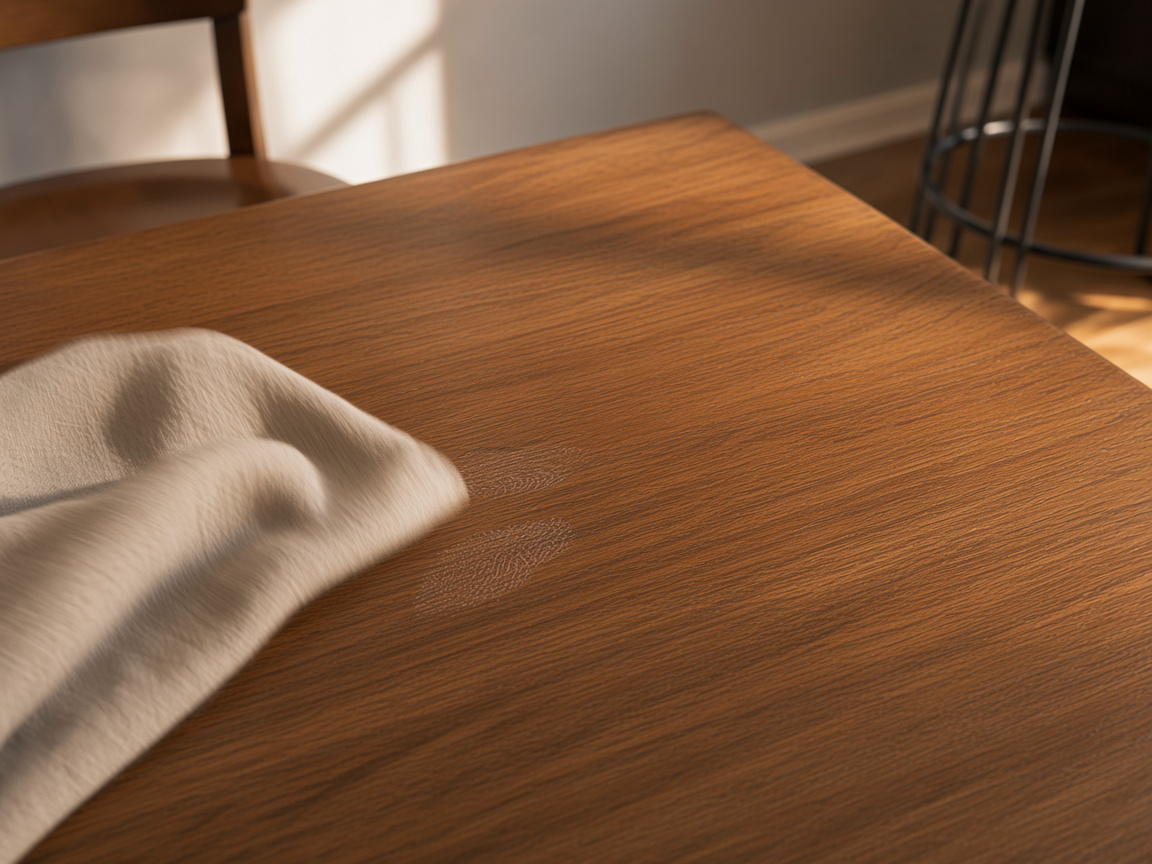
That wipe is the daily cost. Closed grain here means the fingerprints come off. Open raw pores keep a gray film. A print that will not wipe is already peeling in slow motion.
The wood element page is plants, green, tall shapes, and the cycle. A timber table is not automatically that overlay. Do not buy four oak pieces for the east wall because a chart said wood feeds fire. One honest piece that wipes is enough.
Species lists versus the wipe
| Shop claim | What we do instead |
|---|---|
| Oak for wealth | Sit, wipe, check a back. Sealed oak can pass. |
| Teak or sheesham as auspicious | Smell, joints, and a finish you can live with. Status wood still peels. |
| Pine is unlucky or "too light" | Pine with a closed panel and a quiet knock can pass. Wobble fails. |
| Avoid "dead" or burnt timber | Skip rot, powder, and a frame that wracks. History stories stay off this URL. |
| Point grain at the door | Leave the top. Rotate nothing for a heading. |
Bamboo and rattan snag and they dust. They can pass on a porch. Indoors, wipe or skip. High-gloss lacquer is glare with a wood story. If the showroom spots hide the gloss, take the piece to a window.
Why does a closed back matter more than oak?
A closed back is a panel you can feel behind your ribs, or a headboard that is a plane, or a bookcase with a back you cannot hook fingers through. Ladder backs, spindles, and grids are see-through. You can use them in a wide room. In a pinch aisle they read as a rack.
Oak does not replace a panel. A carved open splat in "solid oak" still catches a tote. Command still wants something behind you when you sit. That geometry stays on the room guides after the object can enter. Tonight the question is whether the piece has a back at all.
If you slouch off a skinny rail, it is not a back. If you see the wall through the chair, write "open." Open can pass when the walk is kind. It fails when every trip to the latch clips a hip.
Beds want a real headboard. A wood frame with no plane is a support skip. A window behind that frame is the window-behind-bed page. This URL will not rotate a mattress.
Bookcases want a back panel. An open ladder shelf shows every stack and sways. If you cannot keep open shelves empty, pick a case with doors you will close.
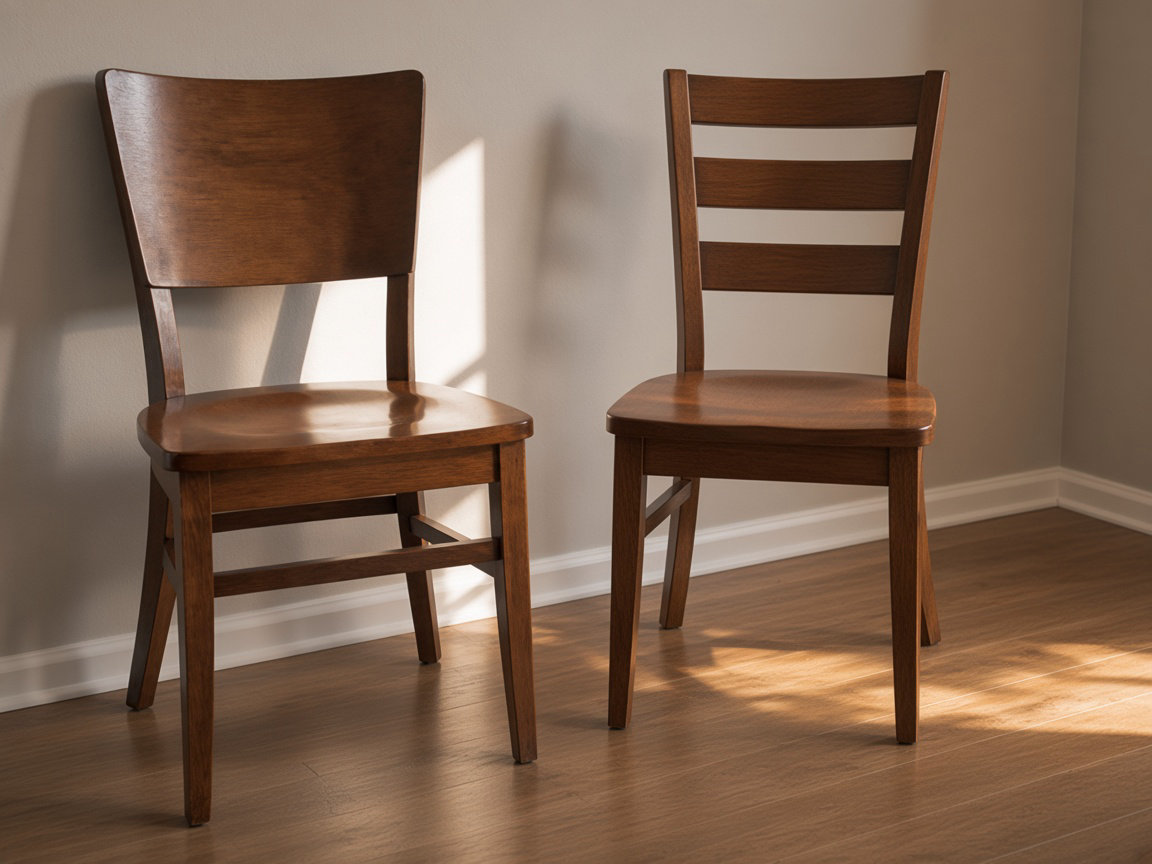
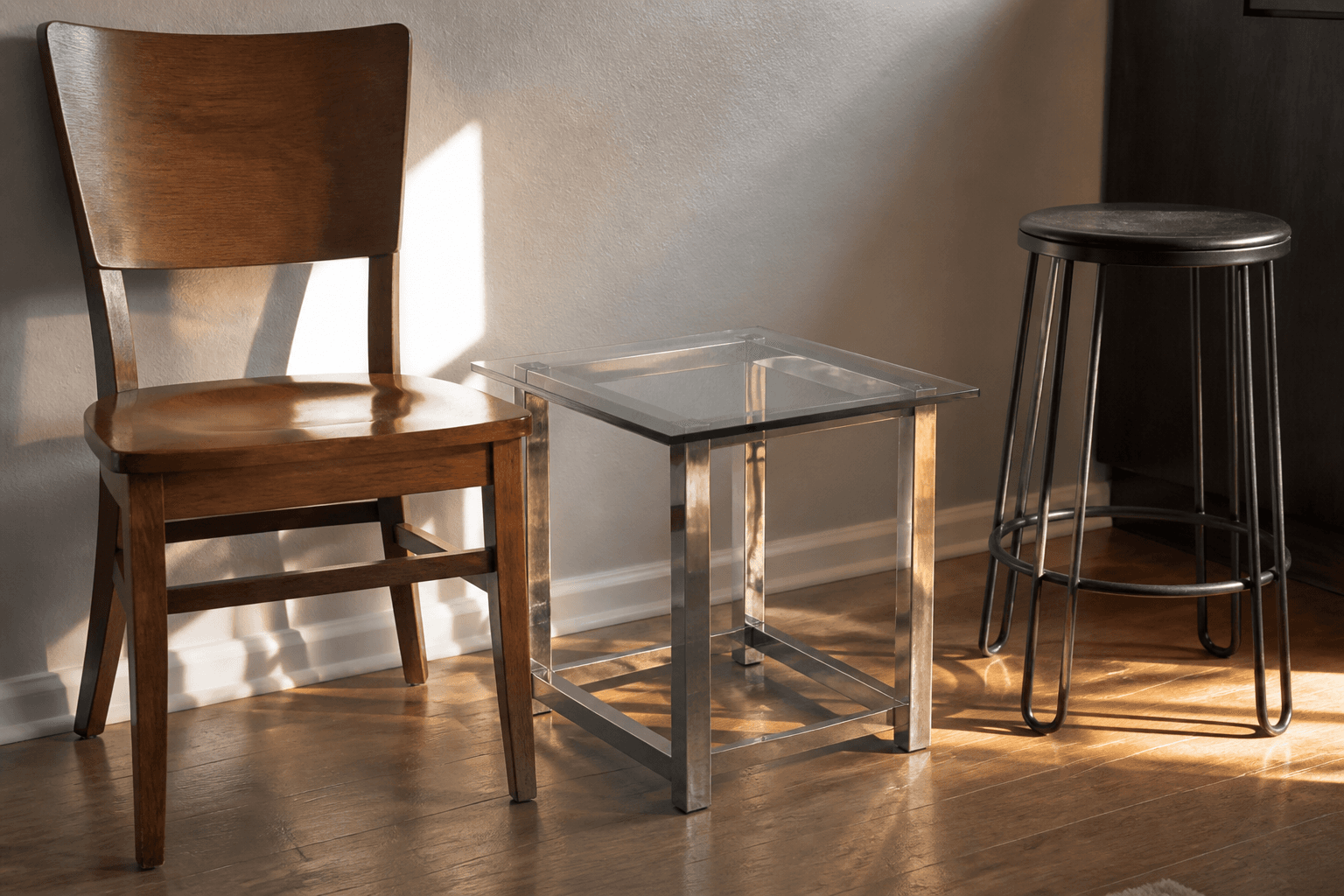
The left chair is the mountain people mean. The right chair is wood and still see-through. Keep the ladder if the aisle is wide. Skip it if a basket already fights the latch. Sharp corners are a shin test, not a curse. Round edges do not excuse a missing back.
Can renters keep veneer, MDF, or particle board?
Yes, when the face is sealed, the edges do not swell, and a fingernail cannot lift a chip. No, when the paper is already peeling, the core powders, or you would need glue in a lease.
Veneer is a thin face on a core. Press the edge. Look inside a drawer. Solid has grain on the unseen faces. A crumbly biscuit with a photograph on the front is particle with a costume. Particle can sit in a dry room if it stays sealed. It fails in steam and on a plant saucer.
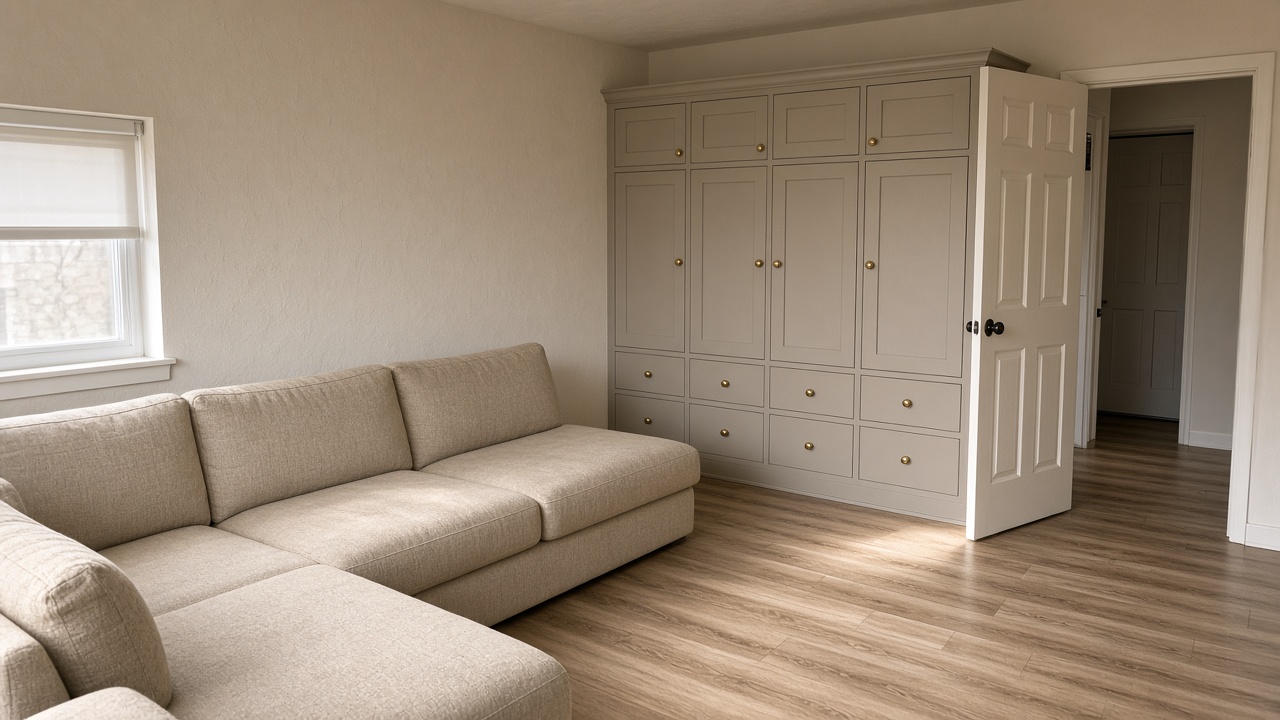
MDF takes paint and swells if you wet a raw edge. A sealed MDF dresser with a closed back can pass the wipe. Renters: do not cut landlord pieces.
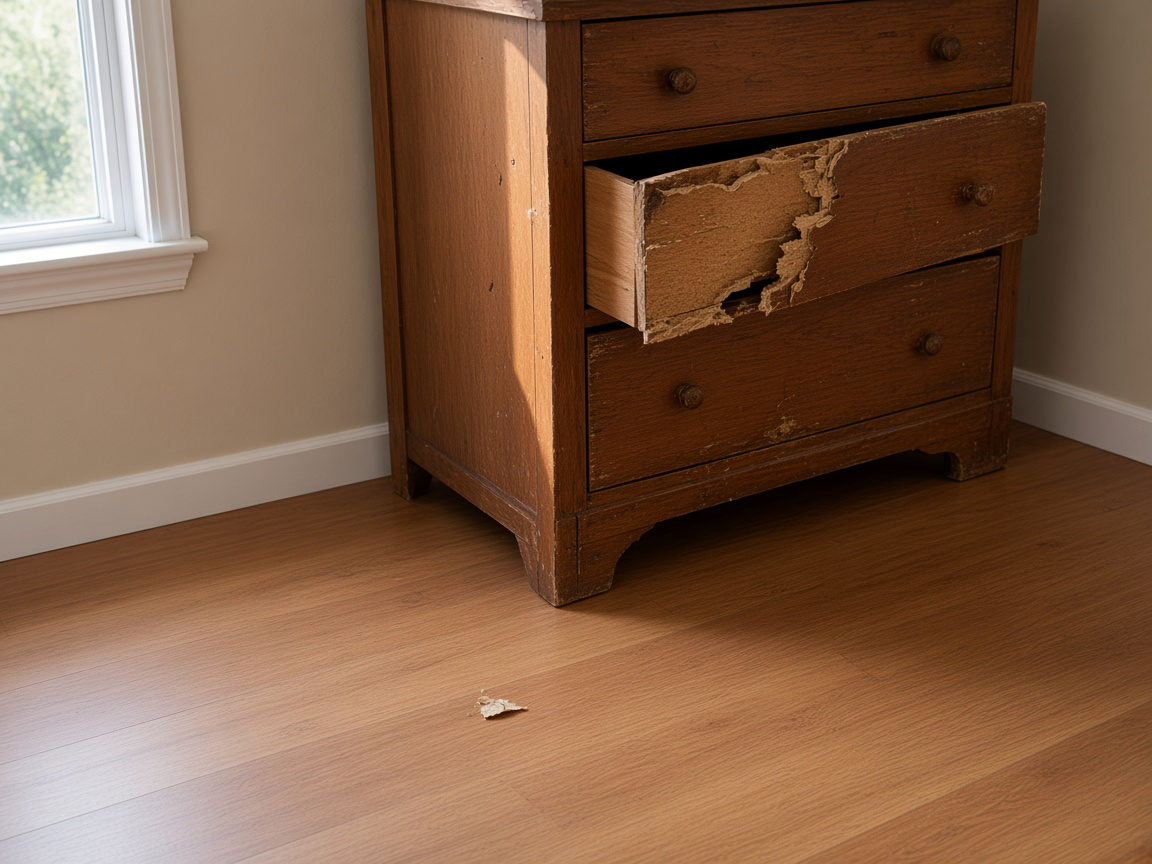
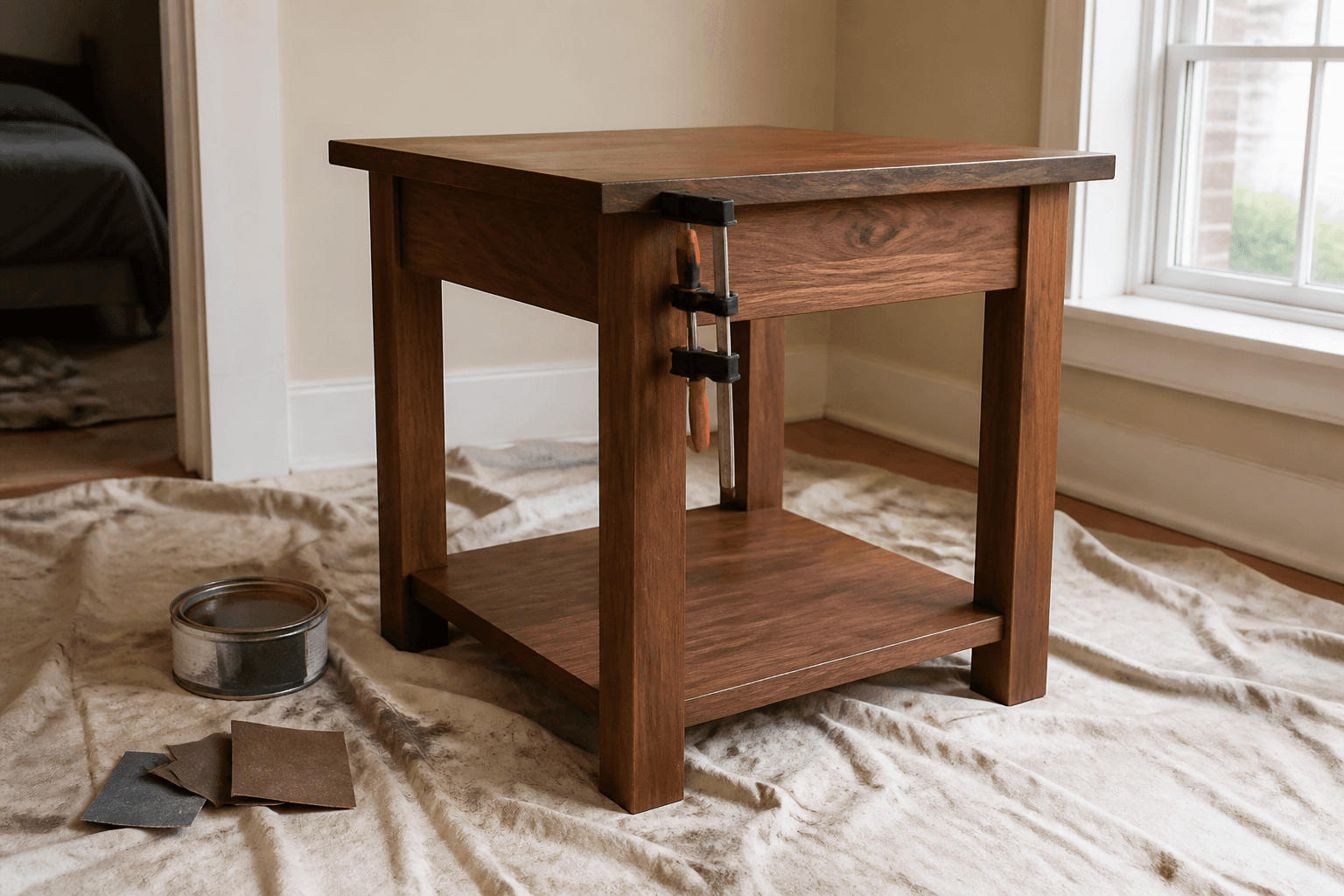
That flake is the skip. Do not glue it in a rental. Do not stain a landlord cabinet to "activate oak." Bring a free-standing case you can take, or use the millwork as it already works. Furniture to skip is the built-in workshop refuse. This page is the veneer on a piece you would own.
Renter-reversible wood moves
| Situation | Pass | Fail | Reverse |
|---|---|---|---|
| Free-standing chair or table | Closed panel, wipeable top, taped walk | Ladder in a pinch aisle, peel, hollow wrack | Take it at move-out |
| Veneer dresser | Sealed edges, drawers that still run | Chip you can lift, swollen sides | Do not glue. Haul or return. |
| MDF or particle | Dry room, sealed face | Steam, plant water, raw cuts | Skip the wet room. No extra holes. |
| Landlord wood cabinet | Use it closed | Sand, stain, lucky color | Photograph at move-in. Hands off. |
| Used timber | Joints square, smell gone | Rot, powder, leftover-luck story | Wash, then refinish only if you own it |
A beautiful teak that wracks is a no. A plain pine that sits still is a yes. Leftover fortune from a previous owner is folklore. Refinish only after the frame sits square. Sandpaper does not seal a peel on particle.
Felt on feet is a renter reverse. Wood legs scratch landlord plank. Outdoor timber belongs on the garden hub. If you cannot lift a corner in the store, you will hate the stair. Species will not help the landing.
What this is not
This is not sofa placement, desk command, bed geometry, or TV height. Those stay on room hubs. This is not how to arrange furniture you already own.
It is not income. A closed-back oak will not raise rent. Skip medical claims about wood calming a nervous system. If health is a problem, that is a clinician's job.
It is not the wood element cycle, and it is not a facing-house heading. East as family talk on a map does not pick this cart. Metal furniture as felt and rattle is a later row. Glass as glare already lives on materials.
Dining table shape (round versus rectangle) is the kitchen article. The top you wipe is this job. Photograph the door. Then sit the wood.
Tonight: sit, knock, wipe
Do this in order. Stop when you have sat the piece, felt a back, and wiped a corner.
- Confirm scale with tape at home first. Grain does not fix a too-big footprint.
- Sit the floor model the way you sit at 8 p.m. Feel the back. Walk past with a basket in your head.
- Knock the top and the joints. Rattle fails in a quiet rental.
- Wipe a corner. If the cloth grays, the grain is not closed for daily life. If a fingernail lifts a face, skip the peel.
- Ignore the species hang-tag. Read the care card. If you cannot reverse the finish in a lease, walk away.
- Photograph your room from the door in FengShui Hero, then compare the empty wall with the piece's visual weight.
If you only do one thing tonight, sit in the chair, knock, and wipe. A sealed grain and a panel you can feel beat a lucky tree name. Tomorrow, decide whether you still need timber, or whether the peel was the whole story.