
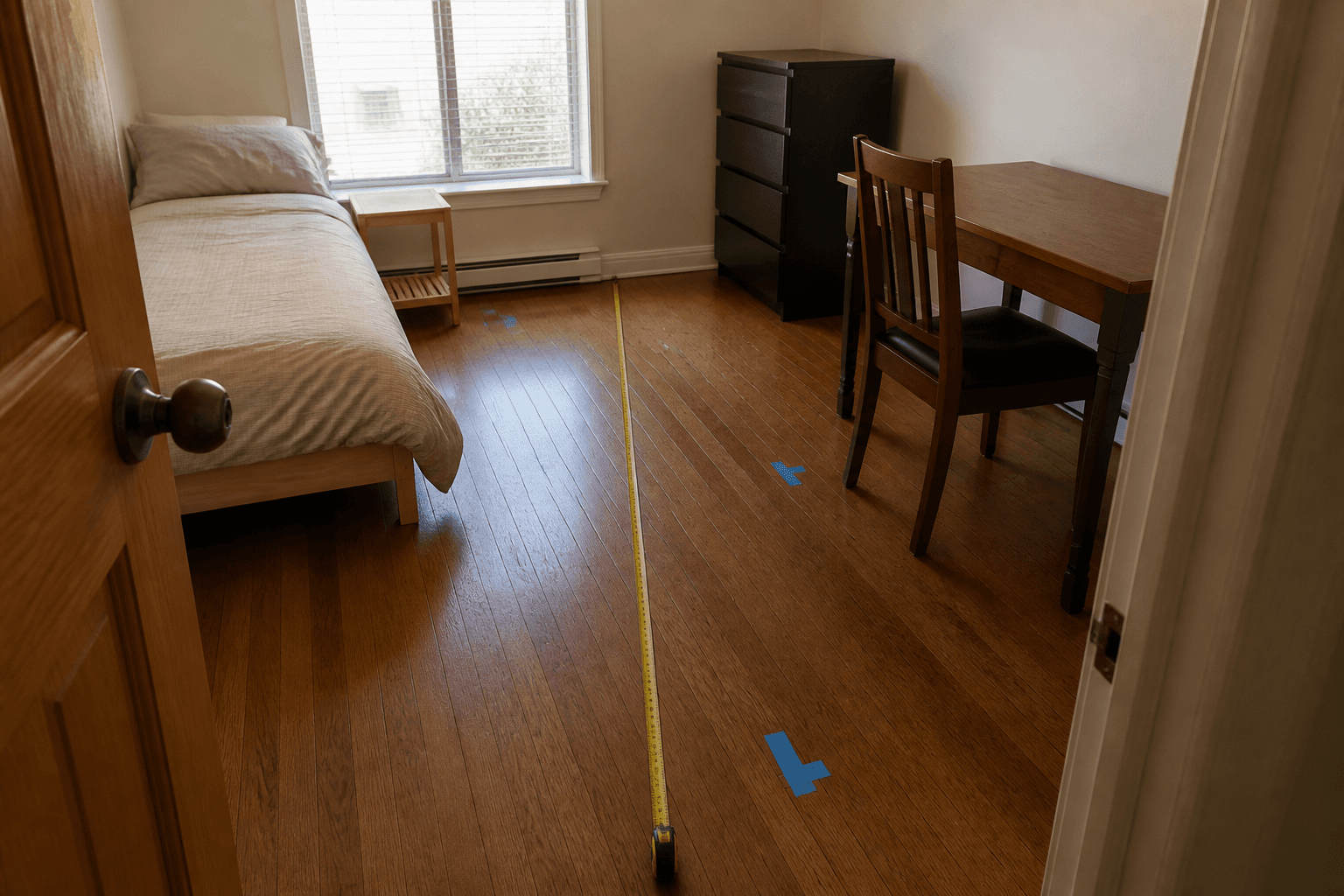
Feng Shui how to measure a room is the door swing, the bed or desk wall, and the walk between them, taped in the hour you actually use the space. A lucky number of meters will not open a stuck leaf.
When we photograph first-week rentals, people have a bagua printout and no idea whether the closet door clears the bed. They measured the pretty wall in the listing photo. They did not measure the swing. How to start is one room and three moves. First week rental is the order of those moves. Furniture scale is a piece versus the walk before a cart. This page is how to take the three numbers so those other jobs are not guesses.
What three numbers actually matter?
Door, occupied wall, walk. Everything else is optional overlay.
The door is the leaf you use, including the arc it needs on the floor. The occupied wall is where the bed goes if this is sleep, or where the desk goes if this is work. The walk is the path your shoulders take between those two, with whatever you carry on a Tuesday.
You do not start with nine cells. You do not start with a compass heading. You start with whether a human can enter and lie down or sit without a sidestep.
Write the numbers on one paper. Date it. Light in a listing photo is noon. Your room at 9 p.m. is a different width in the mind even when the tape is the same. Photograph in the hour you use it so the tape and the photo match.
How we check a real room
We open the door until it stops. We tape the arc. We put a mattress number or a desk depth on the target wall. We walk from latch to that wall with a basket. If we turn sideways, the walk failed. We do this before we talk bagua.
If the client already bought a laser gadget, we still walk with the basket. Gadgets lie when you skip the body.
How do you measure the door swing?
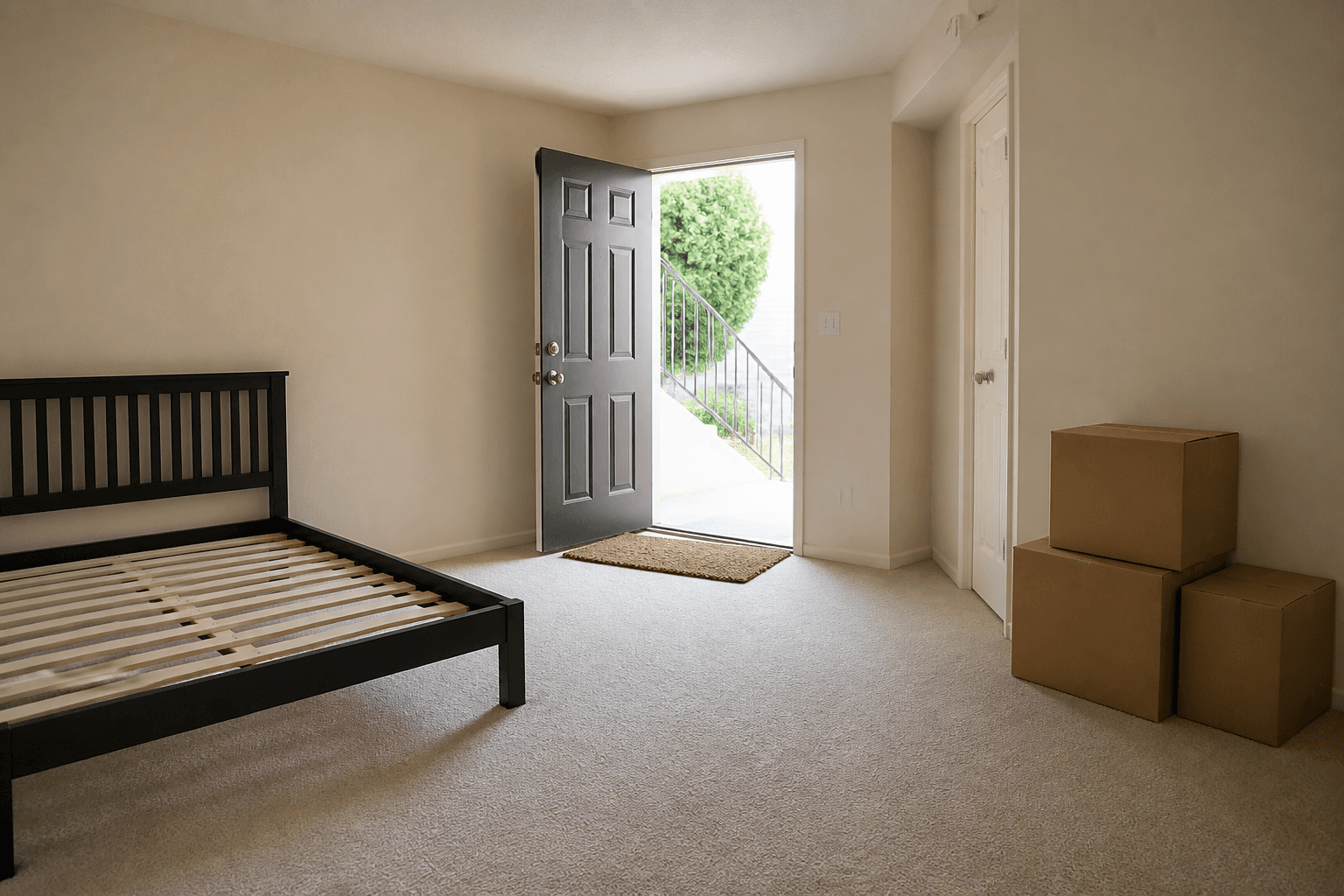
Stand on the hinge side. Open the door fully, the way you actually open it with groceries. Mark the farthest edge of the leaf on the floor. Measure hinge to that mark. That pie is not a shoe store.
A sliding door has a track, not an arc. Keep the track clear. Measure the opening width you actually walk through, which is often less than the glass width.
Closet doors are doors. A sliding closet that cannot pass the bed is a failed sleep wall, even if the head wall looks empty in a photo.
Bathroom doors that hit the bed are a later ensuite row. Tonight, if this room's own leaf hits the frame, you still mark it.
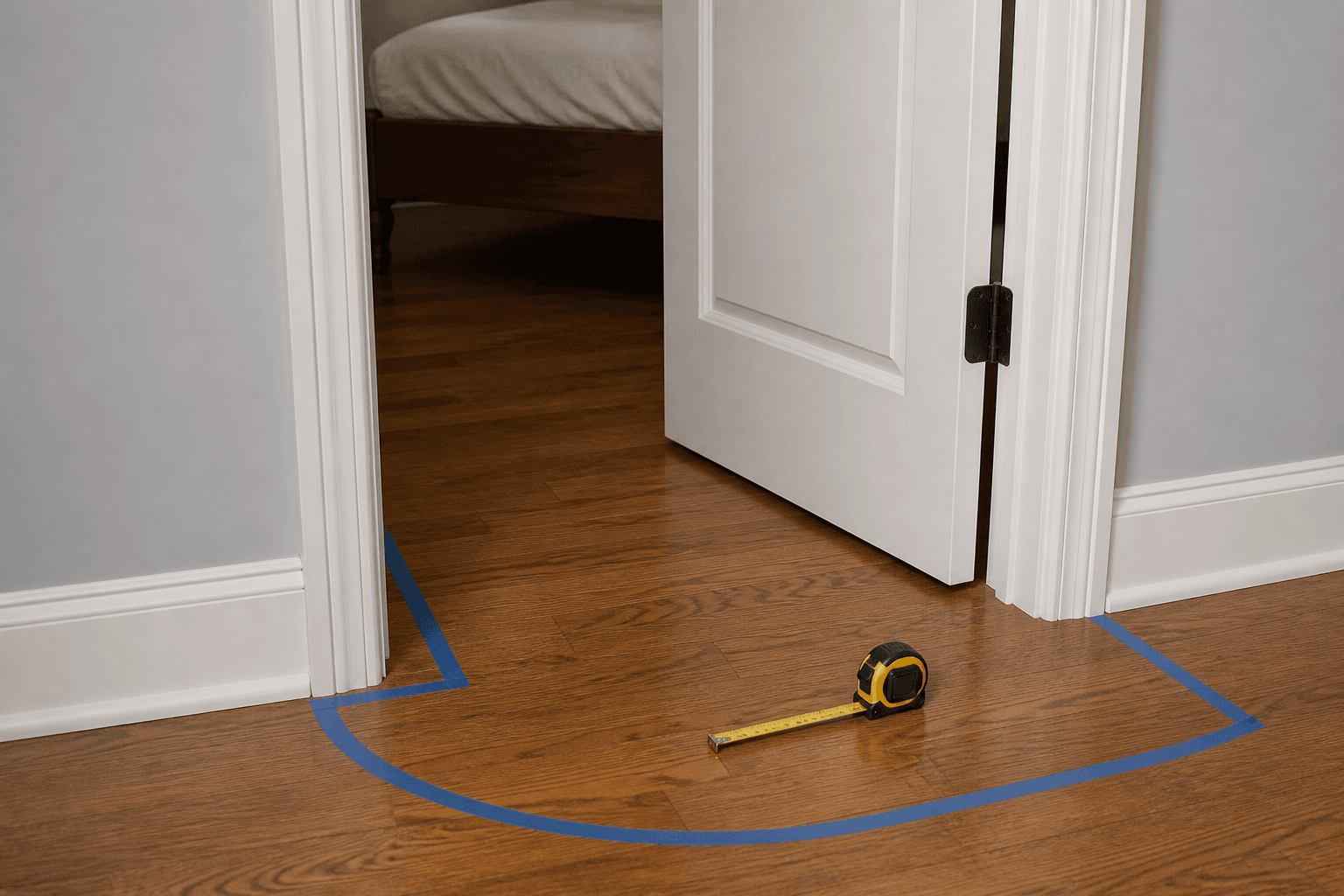
That arc is the first number. If a nightstand lives in it, the nightstand moves, or the door never finishes.
How do you measure the bed wall or the desk wall?
For sleep, measure the wall that can take the head. Include two nightstand widths if you use them, or be honest that one side is a wall. Measure the mattress you have, not the one in a catalog. A "king" tag assumes a room that can also walk.
For work, measure the wall that can take the desk depth plus the chair roll. Command (seeing the room door) is a desk-position job. Width still lives here.
Windows on that wall are a draft or glare note. They do not change the tape. They change whether you want that wall.
Height matters when a shelf or a bunk is in play. Measure from floor to the object that would sit over a pillow. Beams over beds are a different article. The number still goes on the paper.
How wide should the walk be?
Wide enough that you do not turn sideways with a basket. In a small rental that may be less than a store's three-foot slogan. If every trip to the latch is a sidestep, the walk failed, even if a blog sold you 90 centimeters as destiny.
Tape two parallel lines where you already walk. Live with them for a day. Open the door through them. If the tape annoys you, the furniture will annoy you more.
Open-plan rooms have a walk from the flat's front door through this room to the kitchen. Measure the desire line you actually take, not a pretty diagonal on a plan.
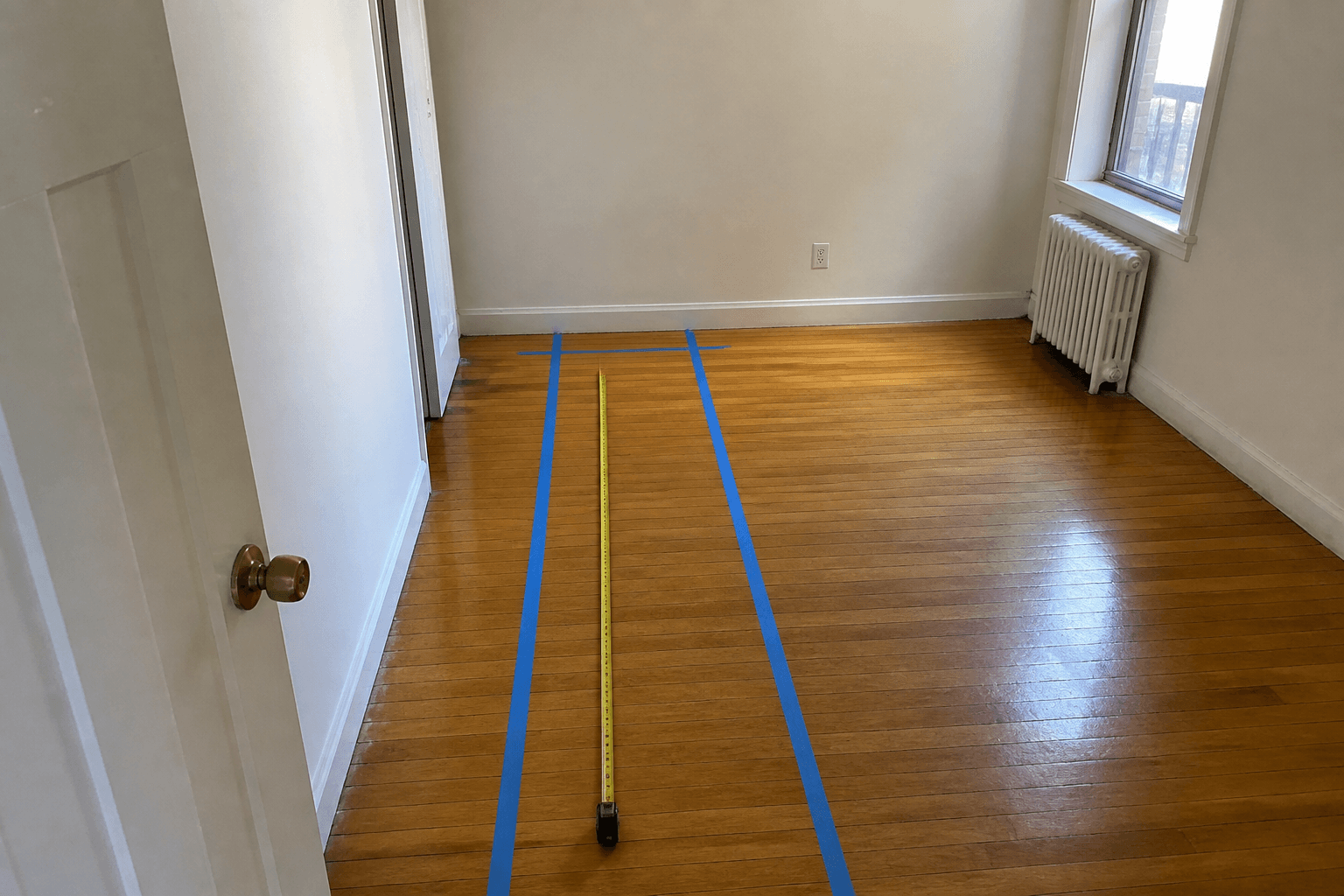
That person is the test. If you cannot walk like that with a basket, the third number failed.
Phone, tape, and what you should not measure yet
A cloth tape on the floor is enough. A laser is useful on a long loft. A phone AR measure is a sketch. Recheck with metal or cloth before you buy.
Do not measure a bagua cell until the three numbers work. Do not measure "lucky" dimensions from a flying-star book. Do not measure the whole house on day one if you only sleep in this room. How to start already told you to finish one room.
Owners still skip demolition. A deed does not add centimeters. A renter still uses painter tape.
If two people share the room, measure together. One person "seeing it" is how a dresser lands in the swing.
Desk, sofa, and rooms that are not sleep
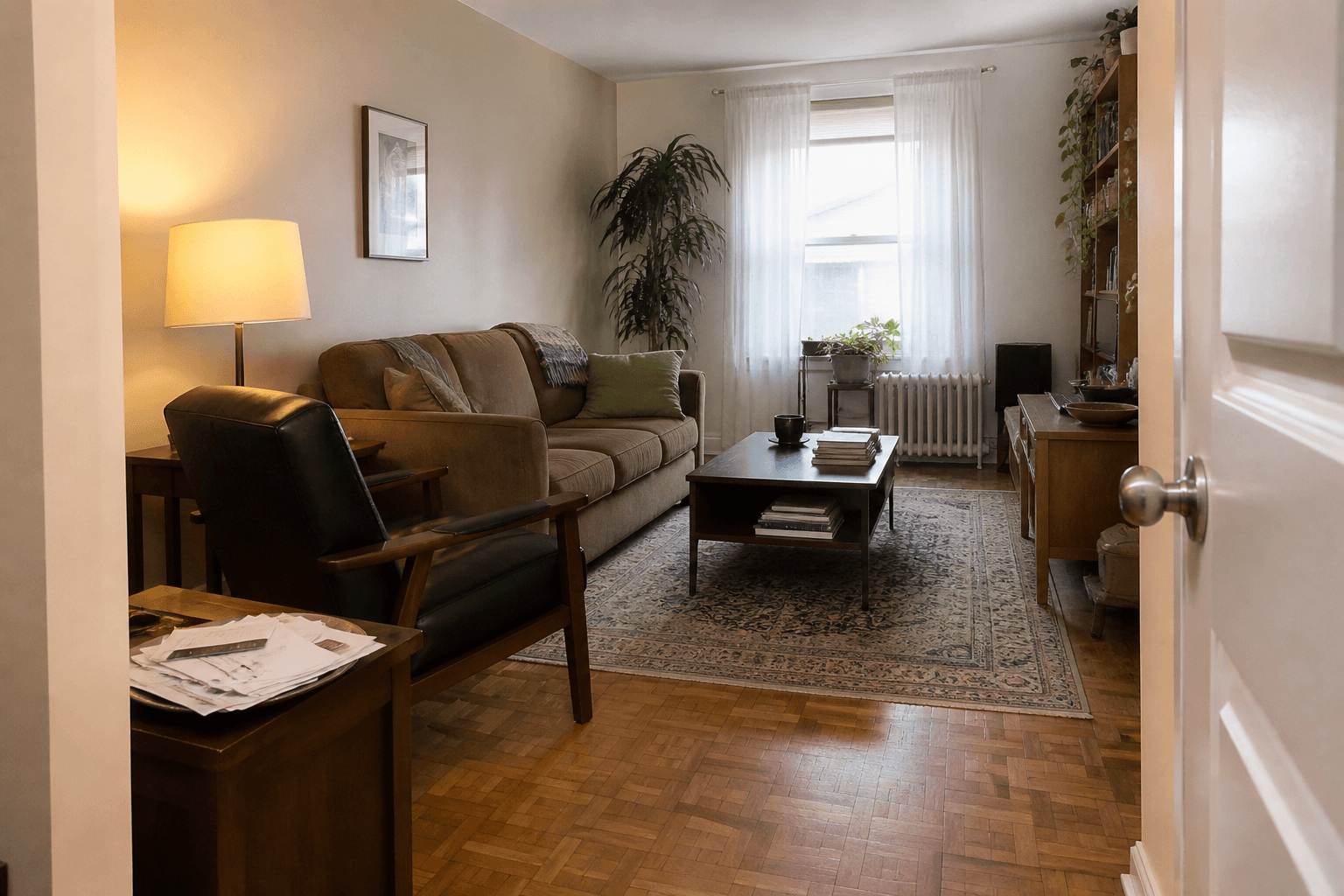
If the room is a living room, the occupied wall is the sofa wall, and the walk is latch to seat. Coffee-table shins are a living-room article. You still measure the sofa wall and the door swing first.
If the room is a home office, measure desk depth plus chair roll, then the glance to the room door. Command numbers (can you see the latch) are yes/no, not centimeters. The tape is still width.
A studio holds bed and sofa. Measure sleep first this week if that is the job you picked in how-to-start. Do not measure nine cells because the room does two jobs. One occupied wall tonight.
Open-plan: measure the desire line from the flat door through the room to the kitchen. That line is a walk even if a rug wants to own it. Furniture scale will use these numbers when you shop. This page is the room you already have.
Listings, photos, and the hour of the day
Listing photos crop the swing. They shoot at noon. Measure at the hour you sleep or sit. A wall that looks wide in daylight can feel tight at 9 p.m. when a lamp and a chair are out. Photograph from the door in that hour so the tape and the picture match.
Do not trust "apartment size" without numbers. Write width, depth, and swing on one paper. Take that paper to the store. Furniture scale owns the cart. You still need the three numbers from home.
Shared houses: measure the door you own (your room latch), not the street door, for this room's walk. The house bagua is a different overlay.
A tape that uses lucky numbers (8.88 meters, 9 "steps") is folklore. Write the real swing, the real wall, and whether you turned sideways. Those three facts beat a pretty number.
If the room is a bathroom, the walk is lid and door, which is a wet-room hub. Do not start a whole-home bagua because you measured a bath. This page is sleep, sit, or work.
Keep the paper in a drawer. Next week, when a listing tempts you, you already have the three numbers. Furniture scale will use them. How to start already told you to finish one room before you measure the rest of the house.
What this is not
This is not furniture scale, which is a listing width versus the walk before you buy. This is the room you already have. It is not how to start, which is three moves without a tape lecture. It is not a bagua how-to.
It is not income. Accurate numbers will not raise rent. They will stop you putting a bed in the door.
Skip medical claims about "correct" room proportions healing a body. Skip a consultant fee we did not charge.
Tonight with a tape
Do this in order. Stop when you have three numbers on one paper and a photo from the door.
- Open the door you use. Tape the swing. Write the number.
- Measure the sleep or desk wall, including nightstands or chair roll if you use them.
- Walk from latch to that wall with a basket. Tape the pinch. Write whether you turned sideways.
- Photograph from the door in FengShui Hero in the hour you actually use the room.
- Only then look at a listing, a bagua, or a cart.
If you only do one thing tonight, tape the door swing. Tomorrow, add the walk. The wall number can wait until those two are honest.