
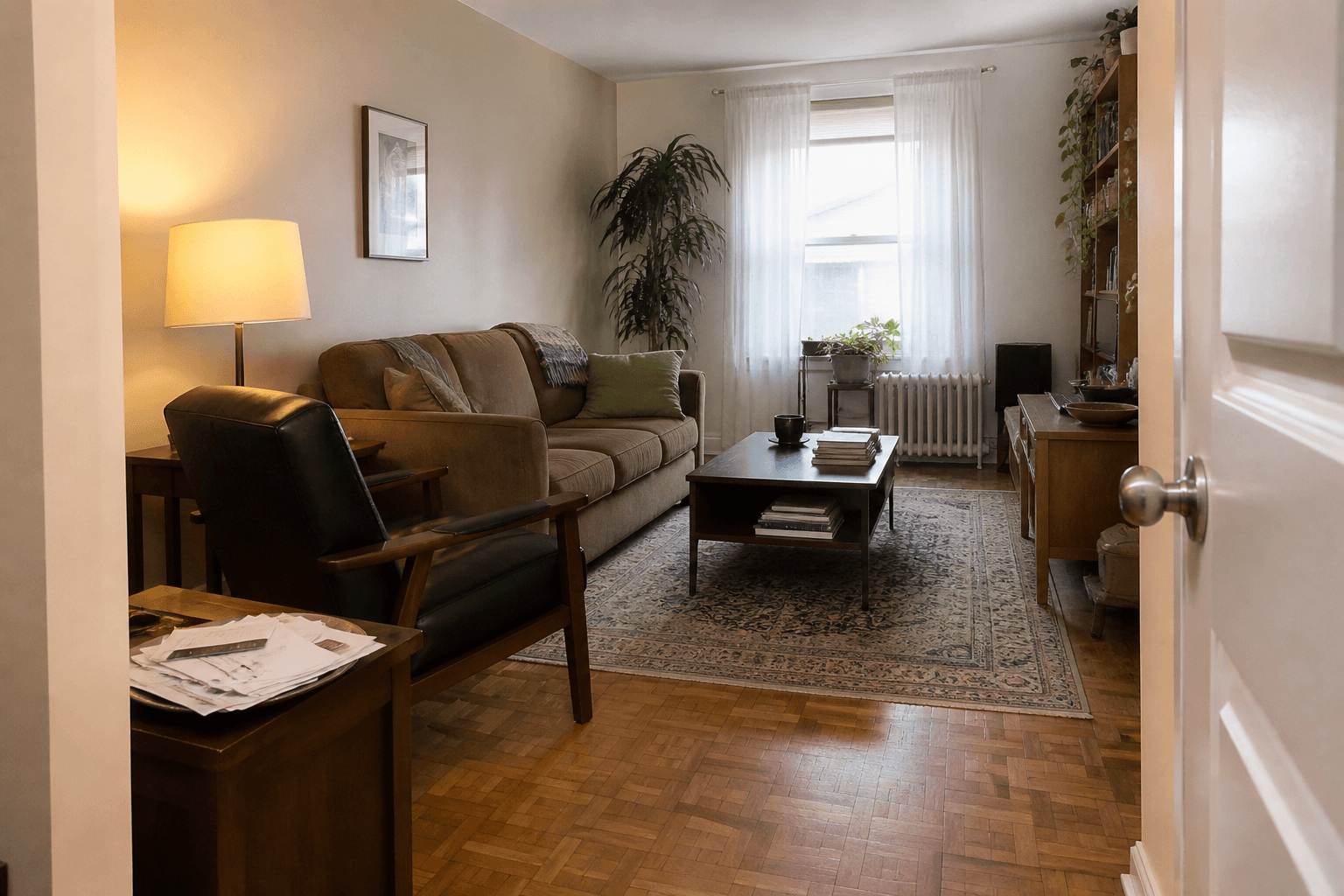
Feng Shui how to start is one room you already live in, three reversible moves this week, then stop. Skip bagua maps, shops, and the rest of the home. Owners and long-term renters use the same test on the room they already sleep or sit in.
When we photograph homes people have lived in for a year, the chair often faces a blank wall because the TV won the angle. A drying rack sits in the path from the bedroom door to the pillow. Mail covers the lamp you would use if you could reach the switch. People ask where the wealth corner is. We ask which room they actually sit in after they unlock the door they have used for months.
This page is that week. You already live here. The introduction to Feng Shui is what the word means, and when maps come later. The first week rental guide is new keys and a bed that still needs a wall. The mistakes to avoid article is a long do-not list. You do not need that list to finish these three moves.
| Page | Job |
|---|---|
| This article | You already live here. One room. Three moves. Stop. |
| First week rental | New keys. A new lease still finding a wall for the bed. |
| Introduction | What Feng Shui is. Sightline, then maps. |
| Mistakes to avoid | A long do-not list across many rooms. |
Which room should you start with?
After dinner, notice where your body goes. If you go to bed, that sleep room is the job. If you drop onto the sofa and stay there, the sit room is the job. Do not pick both because you feel behind. A second room is how this week turns into a house project.
Write the room on a scrap of paper and put it on the fridge. Opening the hall closet "quickly" counts as a second room. Close it.
A spare room is a trap because you do not live there. The kitchen and bathroom can wait. Styling the building entry is how people stall on the room they actually sleep in.
If you share a lounge you do not control, pick the room you sleep in. You can finish without a house meeting. A partner wants a different room: pick one anyway.
Owners should not start with the room they want to renovate. A deed does not make paint a first step. Renters should not start with a room they are afraid to touch. You are moving a box and a lamp, not asking for a new floor.
How do you pick between sleep and sit?
Use the last two evenings, not a floor plan. Evenings in bed with a book or a phone: pick sleep. Evenings on the same chair or sofa: pick sit. Nights split: pick sleep. You will still be in that room for hours with your eyes closed, and the door test is easier to finish on a bed than on a sofa you share with a housemate's laundry.
A desk is not the sit room unless you also rest there at night. Daytime work at the dining table does not make this week's room. This is a home job: the place you recover, not the place you answer email. If you bump things on the way to the pillow, pick sleep even if the sofa looks worse in photos.
What if the bed and the sofa share a room?
A studio still gets one job. The walls are the same. The job is not. Pick sleep: the walk is door to bed, and the command check is from the pillow. The sofa can stay ugly. Pick sit: the walk is door to the chair you actually use. Leave the bed angle alone until a later week.
Do not drag the mattress to face the TV "so the whole room commands." You will sleep in a corridor. Name the job. Do only that job.
What three moves belong in this week?
Do them in order on the room you already named. Skip the walk and jump to a lamp in a shopping cart, and you will still hit the laundry with your hip.
The three moves are: pick the room you sleep in or the room you sit in most, clear the walk you actually take and put the pile in a lidded box, then sit or lie so you can see that door and switch one lamp. Then stop. Leave bagua printouts and a second room for later.
Stand at that room's door. That door is the only latch this article cares about, unless the sit room is open to the hall and the opening you use is that opening. If the living room is the job, the bedroom can stay messy. If the bedroom is the job, the sofa can keep facing the TV. You are refusing a whole house week.
Clear the walk you already take
The walk is the path your body already uses, not a tour of the flat. Sleep: the line from the bedroom door to the bed. If you enter from a tight hall, include the pinch right outside that door. Sit: the line from the room door (or the opening you use) to the chair or sofa you actually sit in.
Walk it once at the speed you use at 11 p.m. Notice what your hip hits. That is the pile. In a home you already live in, that pile is usually mail, a drying rack, a returns bag that became furniture, a laundry basket in the aisle, chargers, or books that migrated to the floor.
Put the pile in a lidded box. One box. The lid has to close. Park the box in a closet, on a shelf, or under the bed you already have, as long as that hiding place is not the walk. Do not move the pile to the dining table, the other armchair, or the kitchen counter. That is another surface. If you can still see the mail, it is not in the box.
If the box is already full, that is a later weekend. Use a tote, a suitcase, or a bin that still closes. Emptying the hall closet into the walk is a new pile. A chair you pull out to sit belongs pushed in when you stand. A plant in the door line belongs off the walk. You are freeing a line a shoulder wide, not starting a plant guide.
Turn sideways and the walk has failed. Park the laundry basket against a wall, out of the door-to-bed line. That parked basket is the whole walk test when it is done.
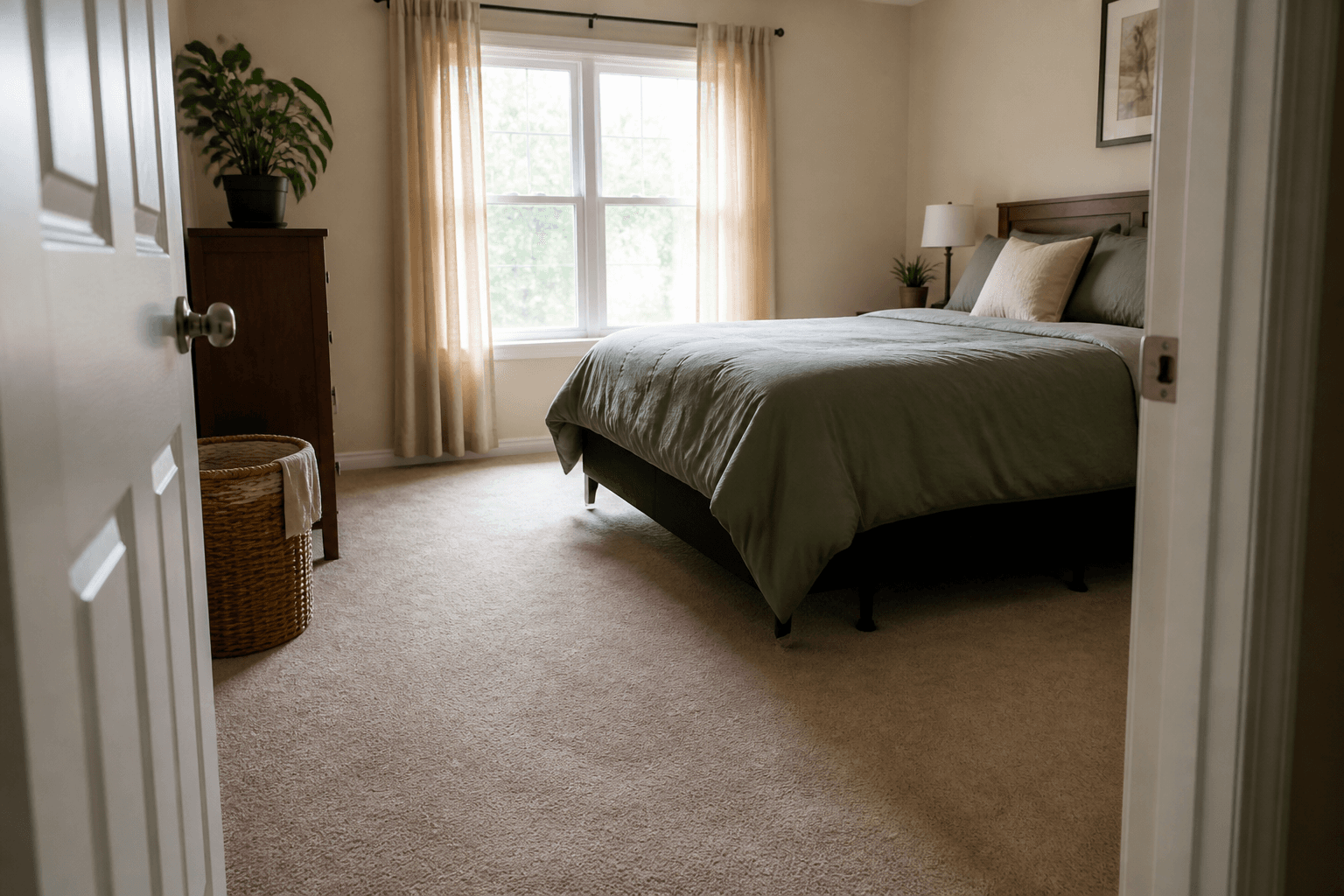
The basket is parked. The walk from the door to the bed is the job. Do not tape a bagua on the floor to decide where the basket belongs.
Sit or lie, see the door, switch one lamp
Command, on this page, is only this: from the bed or from the chair, you can see the door into that room. Lie down if you picked sleep. Sit if you picked sit. Turn your head. If you cannot see the latch, shift the bed or the chair a little off the centerline so the door is in view at an angle. A small shift you can undo is enough. A new frame is a shop.
If the bed cannot move, skip the purchase workaround. A mirror you already own, leaned so it shows the latch from the pillow, is allowed. Buying a mirror this week is a stall. If you have no mirror, keep the walk and the lamp, and write "sightline later" on the scrap with the room name.
You do not need to see the building's front door from a back bedroom. The door of the room you named is the one that matters at night. In a studio, that door may be the same one you unlock. In a one bedroom, the sleep check is the bedroom door.
Then the lamp. One lamp you can switch from the seat or the bed. If you have to cross a dark room to hit a wall switch, the lamp has failed even if the bulb is fine. Move a lamp you already own onto the side table you actually use. Test it sitting or lying down: can you turn it off without standing? An extension cord you already have is allowed. A new lamp is a shop. Clear the mail off that table first, into the lidded box. A lamp under a pile is a sculpture.
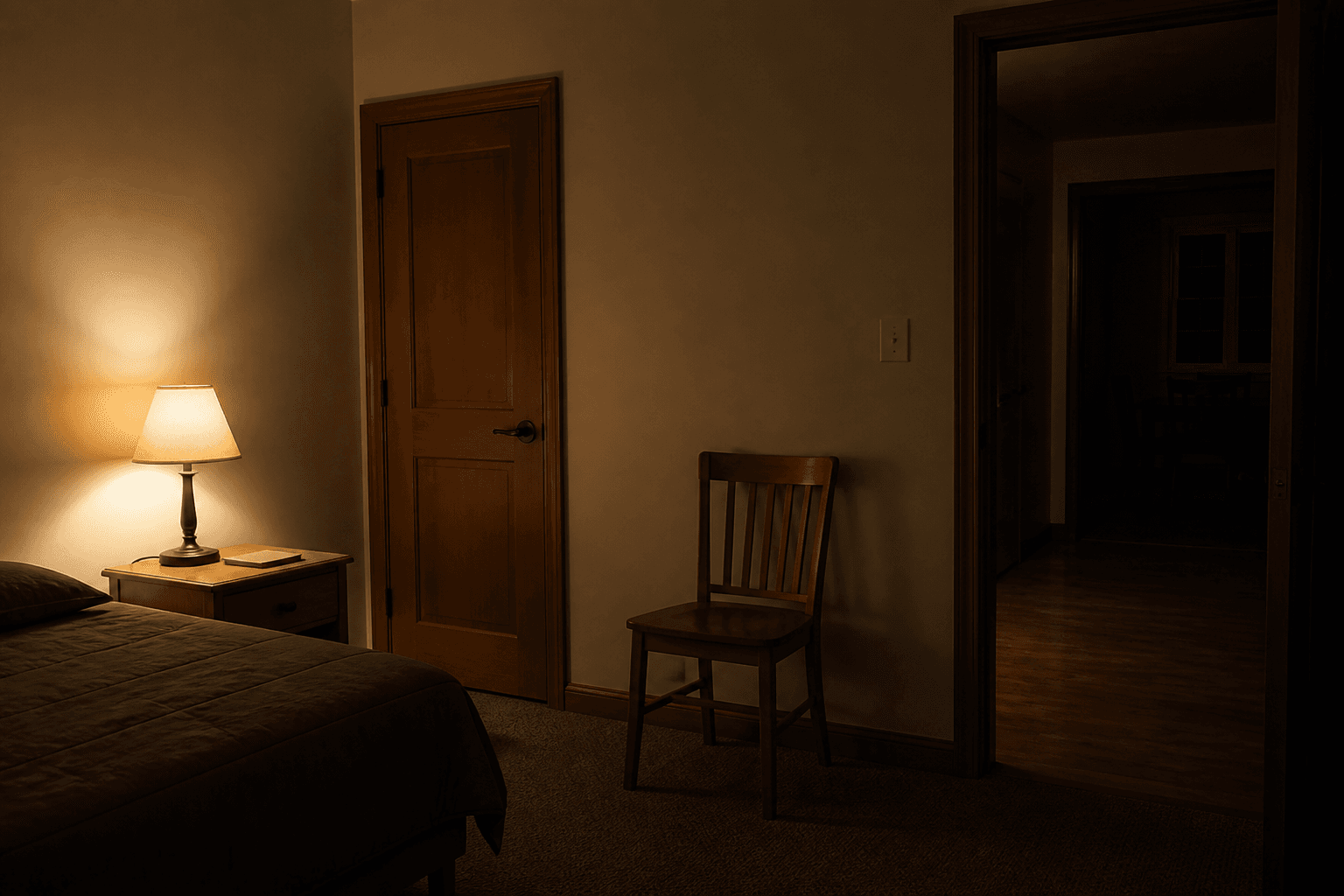
The lamp is on the table you actually use. The hall can stay dark this week. Do not steal the only living room lamp so the bedroom can pass. That is how a second room starts. Use what is already in the named room, or a spare you keep in a closet.
When the walk is clear, the door is in view from the seat or the bed, and the lamp switches from there, you are done with furniture for the week. Leave the closet alone.
When do you stop and skip the shop?
Put the shopping tab down. The week is finished when a photo from that room's door shows a walk you can take, a seat or bed that can see the latch, and a lamp you can switch from there. If those hold, you stop even if the paint is tired and the rug is wrong.
The shop is a stall. Crystals, a fountain, a new sofa, a printed bagua: none of them close a lid on the mail. Keep a plant you already own if it is not in the walk. Paint is a later fight. Command strips for a mirror you already own are the upper bound of hardware. If a move needs a drill, it is not this week.
What this page is not
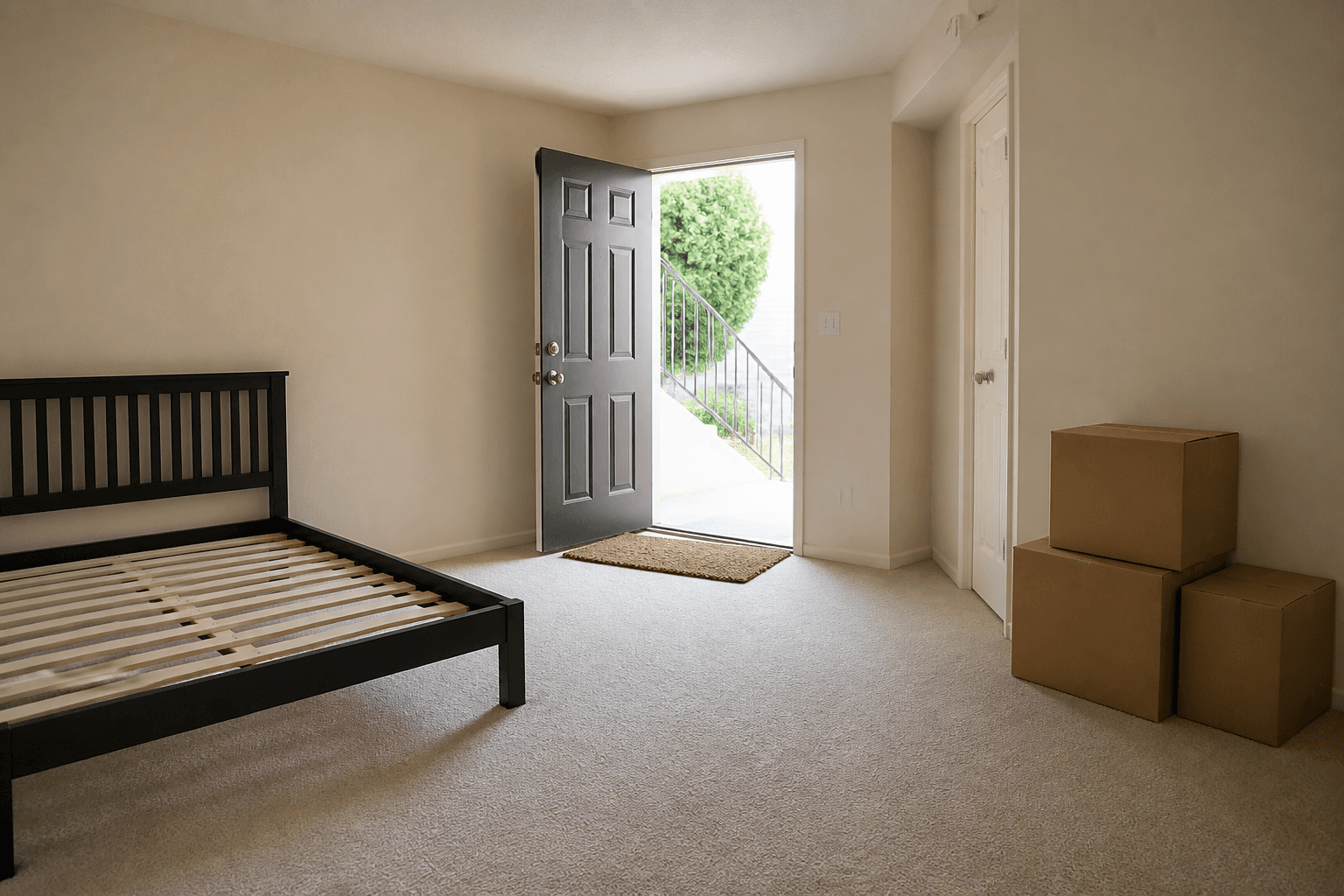
This page is for a home you already live in. It is not week-one move-in, not new keys, and not a truck. If you just got the keys, use the first week rental guide instead.
This page is not the introduction. You do not need a definition of qi, a school name, or a map order to move a drying rack. Read the introduction when you want the word and the maps. It is not a 15-mistakes clone either. That article is a long do-not list. It will not help you finish Tuesday.
This week will not rank luck. It will not raise income. A lamp you can switch is a lamp you can switch. A clear walk is a walk you will not hit with your hip. Other rooms can stay wrong. That is the point of stopping. This is not a whole house project.
Owners and renters use the same stop line
Owners and long-term renters do the same three moves. A renter uses a plug lamp and a box that can leave at the end of the lease. An owner still uses a plug lamp this week. Paint and a sconce are how owners inflate the list. Renters do not need to email the landlord. You are not making holes. A houseshare still starts in the sleep room. Write the name down and refuse the rest until the photo from that door looks like a walk.
Do this in order on one evening. Then leave it.
- Name the room (sleep or sit). Write it down.
- Walk the path you already take. Put the pile in a lidded box. Close the lid.
- Sit or lie. Confirm you can see that room's door, or lean a mirror you already own. Switch one lamp from there.
- Photograph that room from its door in FengShui Hero. If the scan still flags the walk, the pile is not in the box. Stop.
If a step fails, redo that step. Do not add a purchase. If you only have twenty minutes, do the walk and the lid.
Tonight, photograph that one room from its door in FengShui Hero. Do not scan the rest of the flat. If the photo shows a walk, a seat or bed that can see the latch, and a lamp, put the phone down. You started. You can stop.