
Feng Shui how to photograph a room is one shot from the door you use, then one from the pillow or the chair, in the hour you actually live there. Honest light. No charm grid in the foreground.
When we ask people to scan a room, they send a detail of a plant and a ceiling. The latch is missing. The walk is missing. The how to measure page is swing, sleep wall, and aisle with a tape. How to start is one room, three moves. The AI practice page is what a photo-in scan is for. This page is where to stand.
Where do you stand for the first shot?
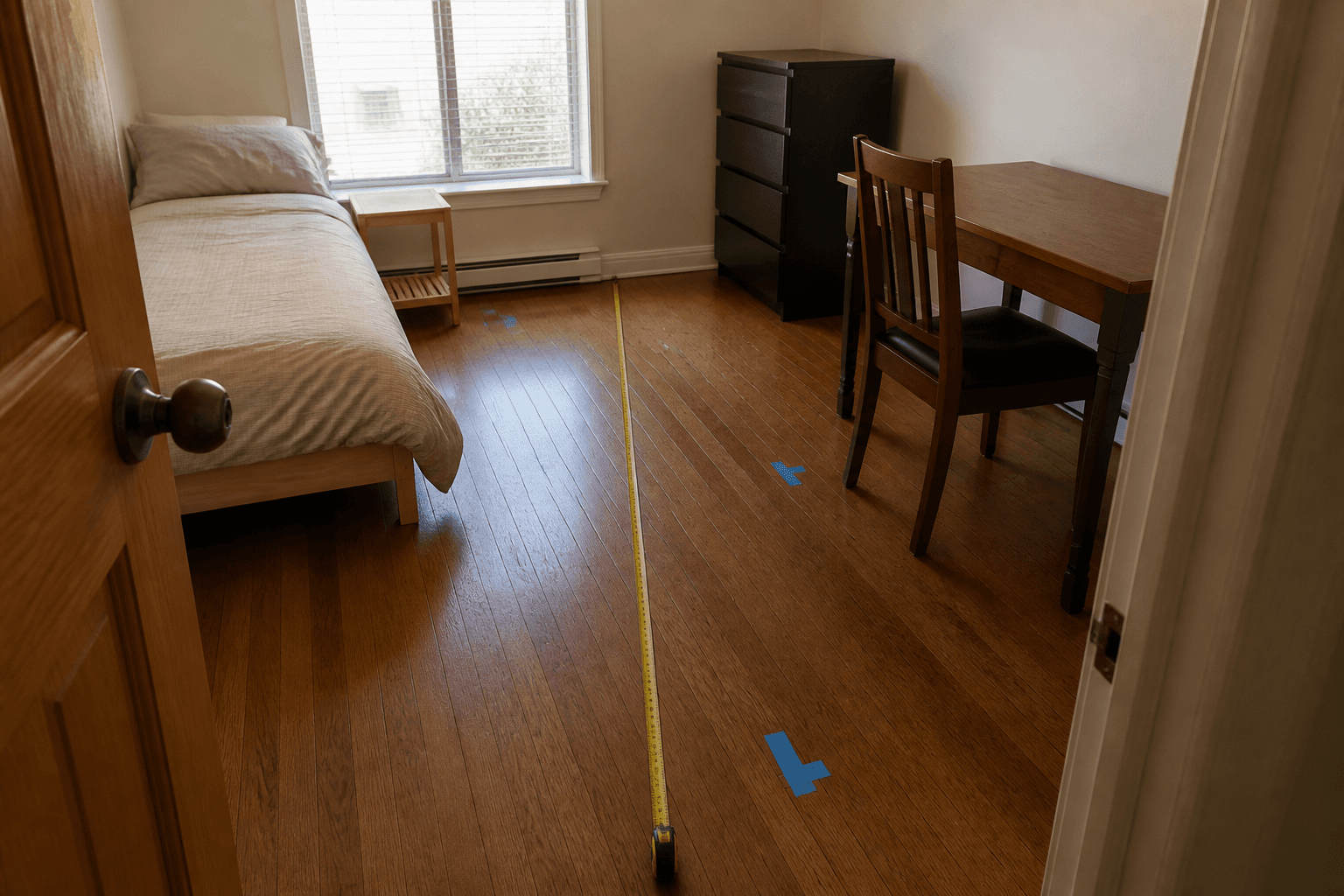
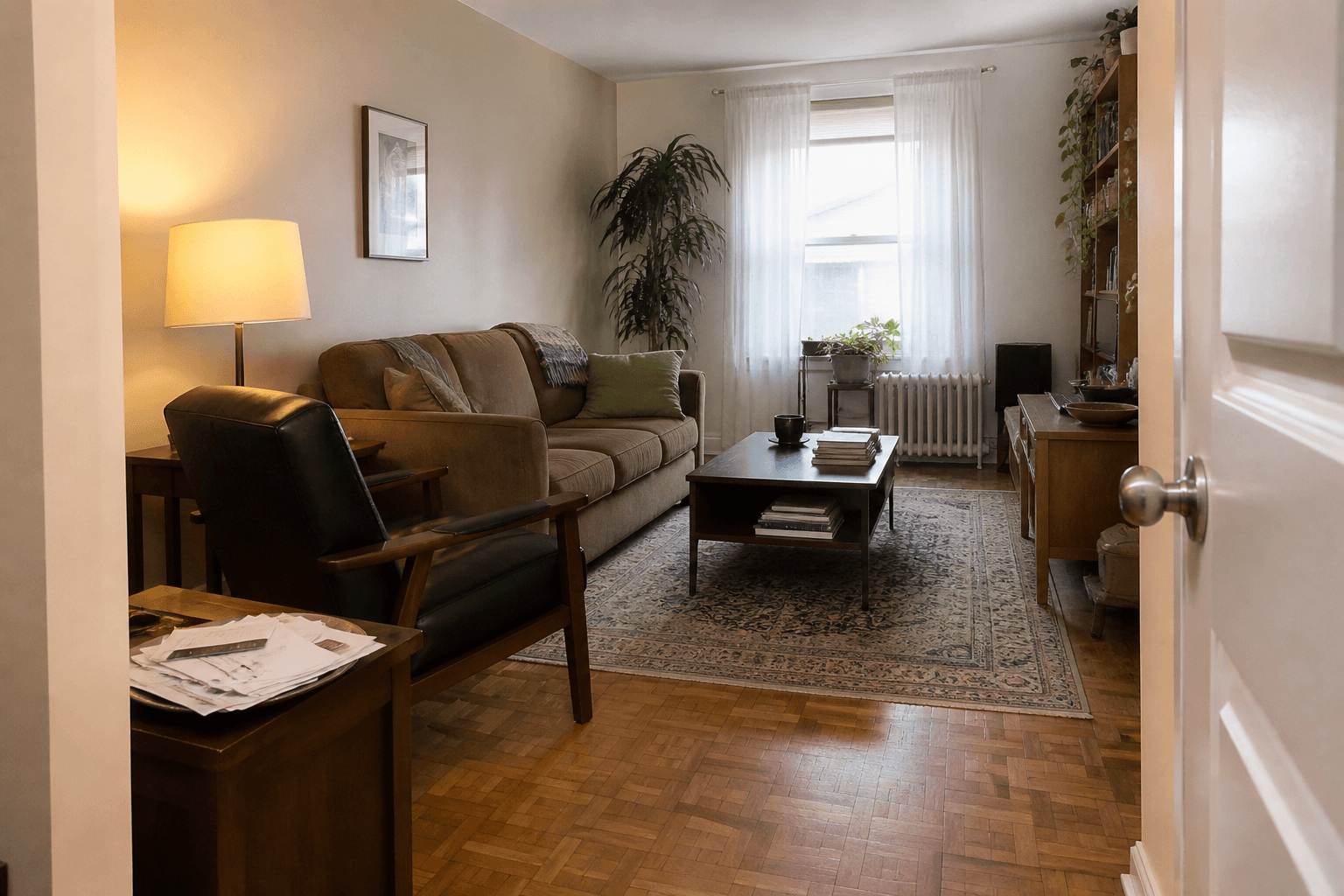
In the door you unlock on a workday, or the bedroom door you close at night if this is a sleep room. Hold the phone at chest height, not over your head, not at your knees. Include the floor walk and the main piece: bed, sofa, or desk. If the door leaf eats half the frame, open it fully and step to the hinge side so the swing is visible as empty air.
Shoot straight. A dramatic angle that makes the room look huge also hides the blocked corner. One honest rectangle beats a tour of five cropped details.
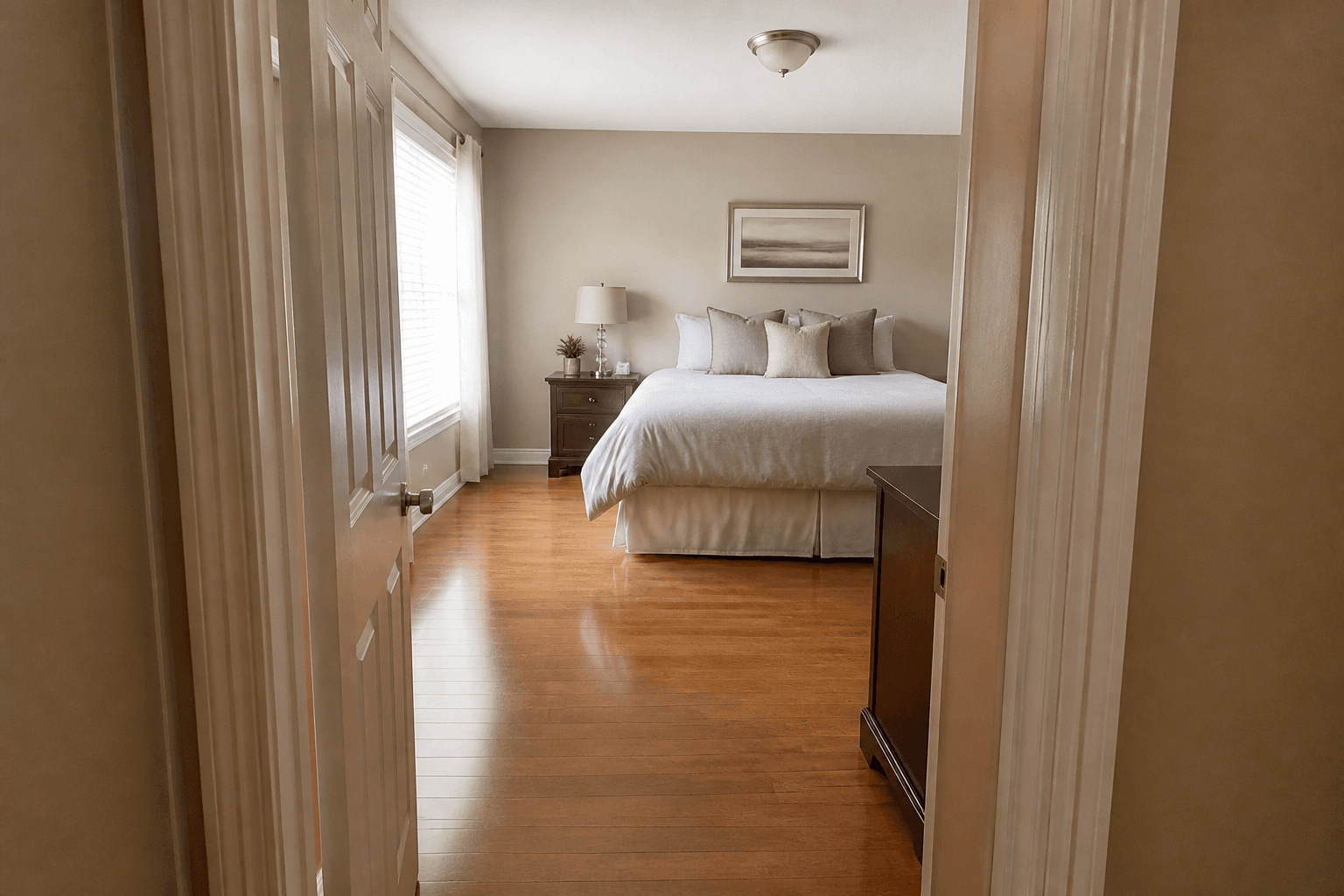
That door-frame shot is the first meter plus the sleep wall. If shoes fill the foreground, that is data. Do not kick them out only for the picture unless you will also keep them out.
How we check a real set of photos
We look for the latch, the walk, and the bed or chair. If we cannot find the door in any frame, we ask for a reshoot. We look at the time of day. A bedroom shot at noon with blackout curtains open is not the 11 p.m. room. We do not grade crystals in the foreground as a pass.
If the person sent only a mirror selfie, we still want the door shot. The face is not the layout.
Why shoot from the pillow or the chair?
Command is what you see when you rest or work. The second frame is from the mattress toward the door, or from the desk chair toward the office latch. If that frame is a wardrobe, you learned something. If it is a glowing screen and no door, that is the loft-bed or desk article.
Include a bit of the floor so the path is in the shot. A pillow-only crop of art on the wall is decor, not command.
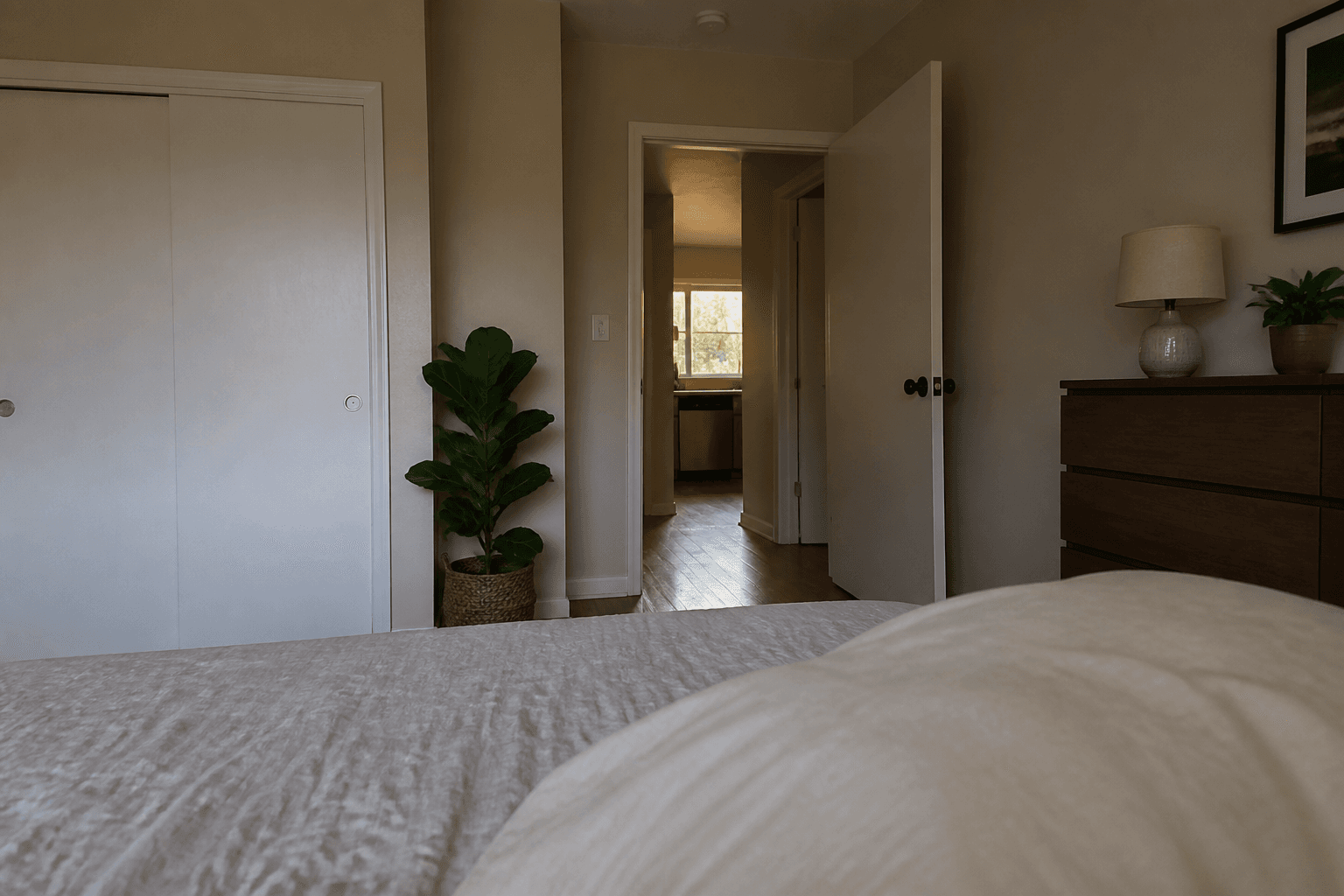
That pillow shot is the sleep sightline. If you cannot find the latch, the bed may need a shift. Photograph first. Drag second.
What should you leave in the frame?
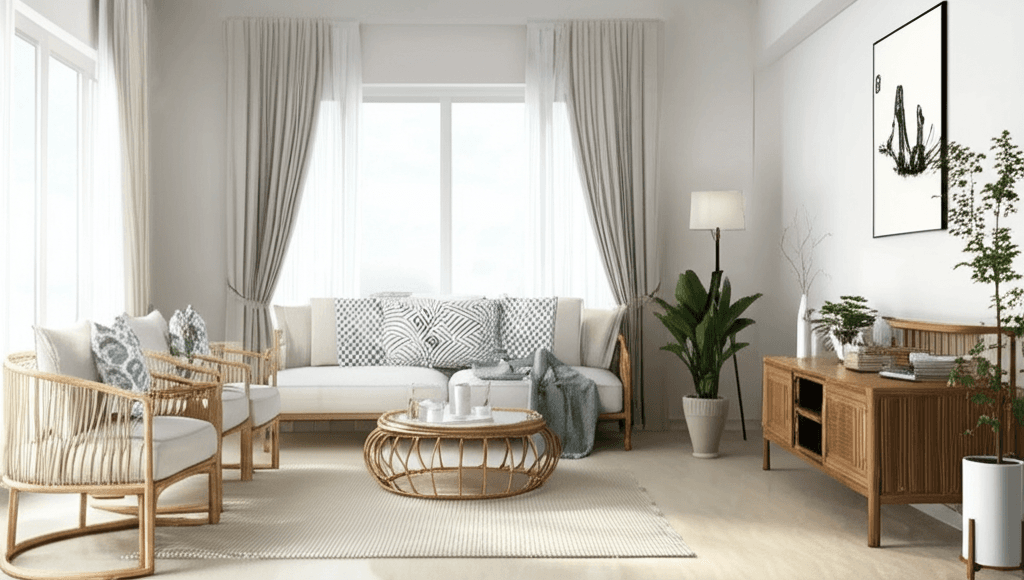
The pile. The radiator. The beam. The window behind the bed. Those are the problems. Staging a empty Airbnb that is not how you live teaches the scan the wrong room.
Turn off a filter that smooths the walls. Flash bounced off a white ceiling is fine at night. A ring light that turns the room into a studio hides lamps you actually own. Use the lamps you switch.
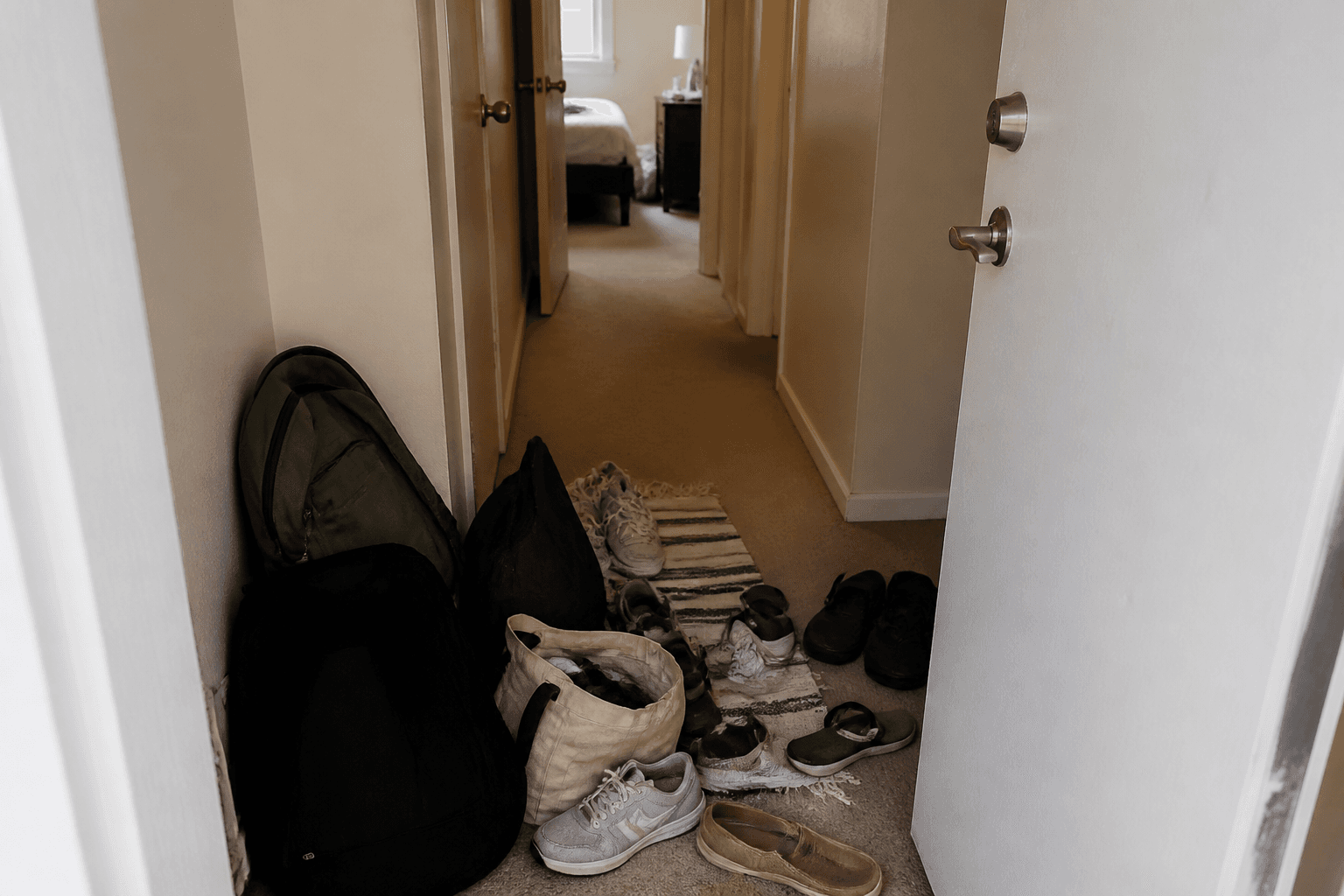
That entry pile is the mouth of chi in a photo. Kick it aside only if you are also doing the hallway-clutter job. A clean photo of a dirty habit is a lie you then ignore.
Listing hosts: shoot the guest door, then the bed, then live in that layout. A wide shot that hides the desk you stuffed in the closet fails checkout. Occupancy spells are not this page.
How many photos is enough?
Two per room you are working on this week. Door, then pillow or chair. A kitchen also wants stove, then door. An entry wants outside looking in, then inside looking at the swing. More than that becomes a tour you will not look at.
Name the files with the room and the hour if your phone allows. "Bedroom door 22:00" is more useful than IMG_4832. You do not need a fancy naming system. You need to know which night you meant.
Video is optional. A slow pan from the door often hides the blocked corner because you moved past it. Still frames force the pile to stay in the shot.
If you are sending photos to someone else, send the two frames, not a collage with arrows and a bagua sticker. The sticker is the mixing problem from the bagua articles. Layout first.
What light lies?
Noon sun through a south window makes a cave look fine. Night with one overhead glare makes a decent room look like a cell. Shoot both if sleep is the job. For a living room, shoot at the hour you actually sit, even if that is after work with a lamp on.
A phone that boosts shadows will hide the dark corner you meant to lamp. If the preview looks like a hotel and the room does not, trust the room. Add a lamp, then shoot again.
Mirrors: do not stand so the mirror shows you and hides the door. Step until the latch is in the frame. A mirror facing the bed is a bedroom-mirror job. Photograph it honestly if that is the problem.
Renter steps you can reverse tonight
- Stand in the door you actually use. Phone at chest height.
- Shoot the walk and the main piece in one frame. Leave the pile in.
- Lie on the pillow or sit at the desk and shoot back toward that door.
- Repeat once at the hour you sleep or sit, lamps on.
- Turn off a beauty filter that warps the walls.
- Do not add crystals or bagua stickers for the camera.
- For the entry, shoot outside looking in, then inside at the swing.
- Open the two frames and check that you can find the latch.
If the latch is missing, you stood too close or you cropped. Step back. The measure-a-room tape can wait until the photos show the walk. How to start is three moves after you can see the room.
A listing host repeats the same two angles the guest will live. If the photo hides a desk, the stay will show the desk. Occupancy is not a filter.
A kitchen photo from the fridge magnet wall hides the stove. Stand at the kitchen door, then at the cook hip. Two frames, same as sleep. A bathroom photo should include the lid state. If the lid is up, that is data for the wealth-leak article, not a styling fail you must hide unless you are also closing it for real.
Do not shoot down from a loft as your only "door" frame. Height lies about the walk. Come down and stand in the latch.
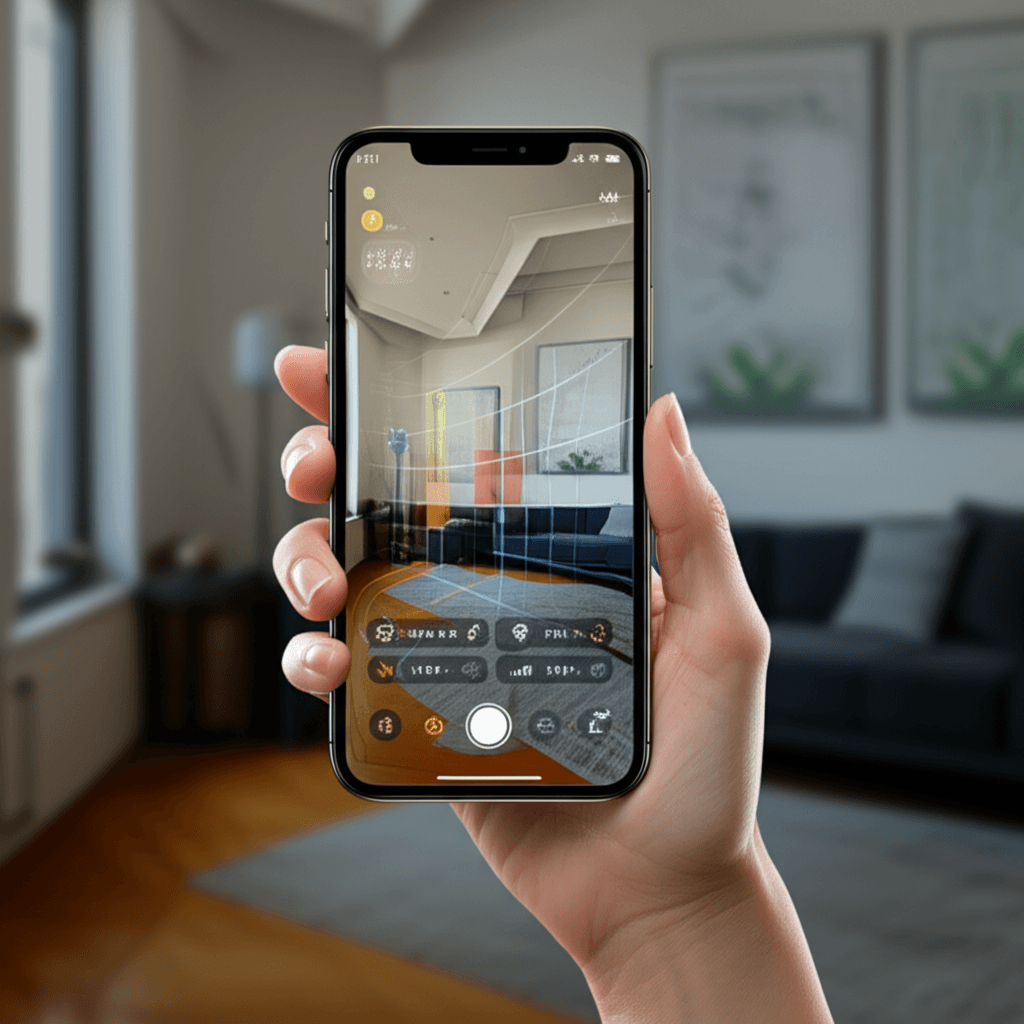
If the phone wants a portrait crop that chops the floor, switch to landscape for the door shot. The floor is the walk. You are not making an app store screenshot. The CTA block will handle the app. Your job is the room.
When you send a scan, send the room you will live in tomorrow. A cleaned room you will trash tonight teaches nothing. How to start is three moves on that same room after the photos.
Office photos: sit in the chair, shoot the door, then stand at the door and shoot the chair. A second monitor glare is the second-monitor article. Capture the pane and the screen in the same honest hour you work.
A garden or path photo is a different hub. For a room, stay inside the latch. The front-yard-path article is outdoor walking. Do not substitute a pretty stoop for a blocked bedroom swing.
If you wear glasses, shoot once with them off the lens so the frame is the room, not your reflection in dark glass. A smudged lens makes every room look like sha chi. Wipe the lens. That is not a joke overlay. It is the photo.
What this is not
It is not a photography course. Exposure triangles can wait. Straight-on, two frames, honest hour.
It is not a bagua overlay drawn on the photo. Tape the floor if you need a map. Do not photoshop nine squares onto a JPEG and call it analysis.
It is not medical or income. A dark corner is a lamp. It is not a diagnosis.
What should you do tonight?
Stand in the door. Shoot. Lie on the pillow or sit at the desk. Shoot. Use the lights you will use. Leave the pile in if it lives there.
Then open those two frames. If the walk is missing, you stood too close. Step back and shoot again. Measure after the photos, not before. The tape is the other article. The camera is this one.