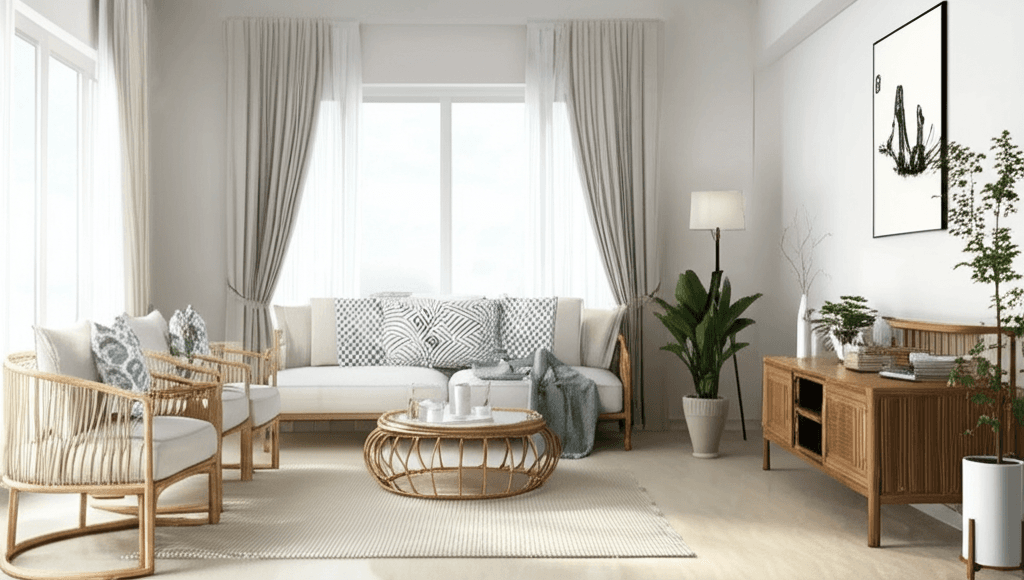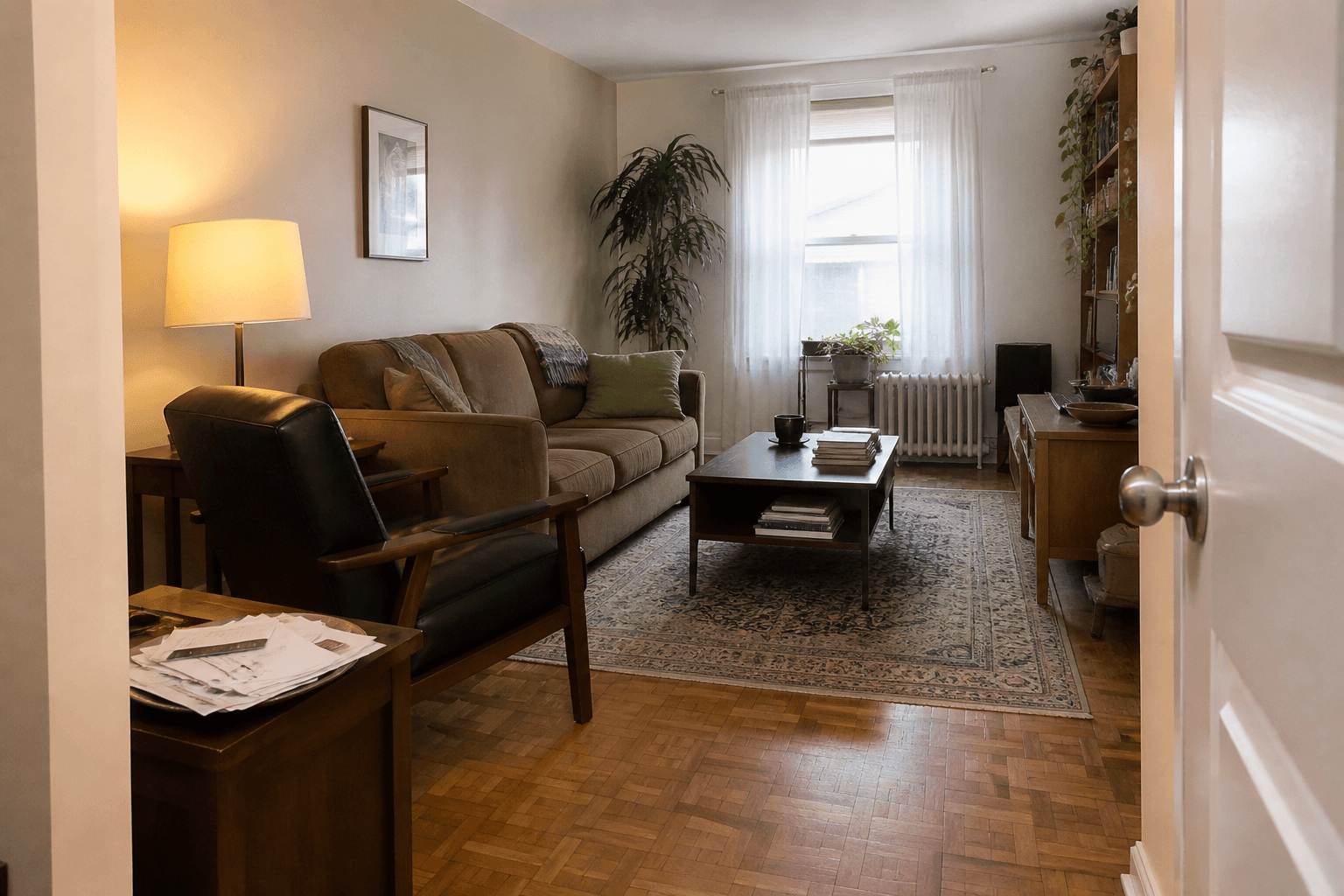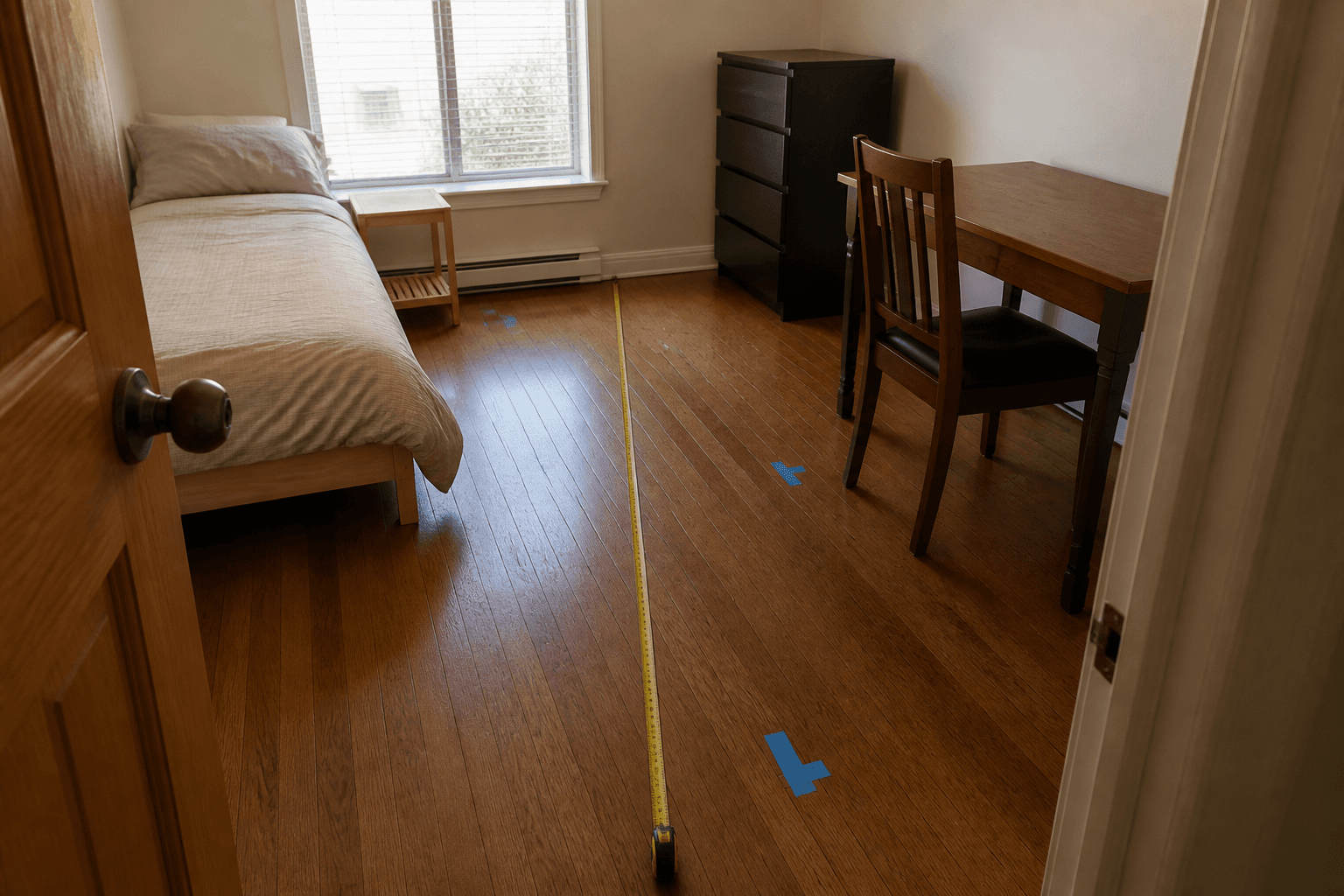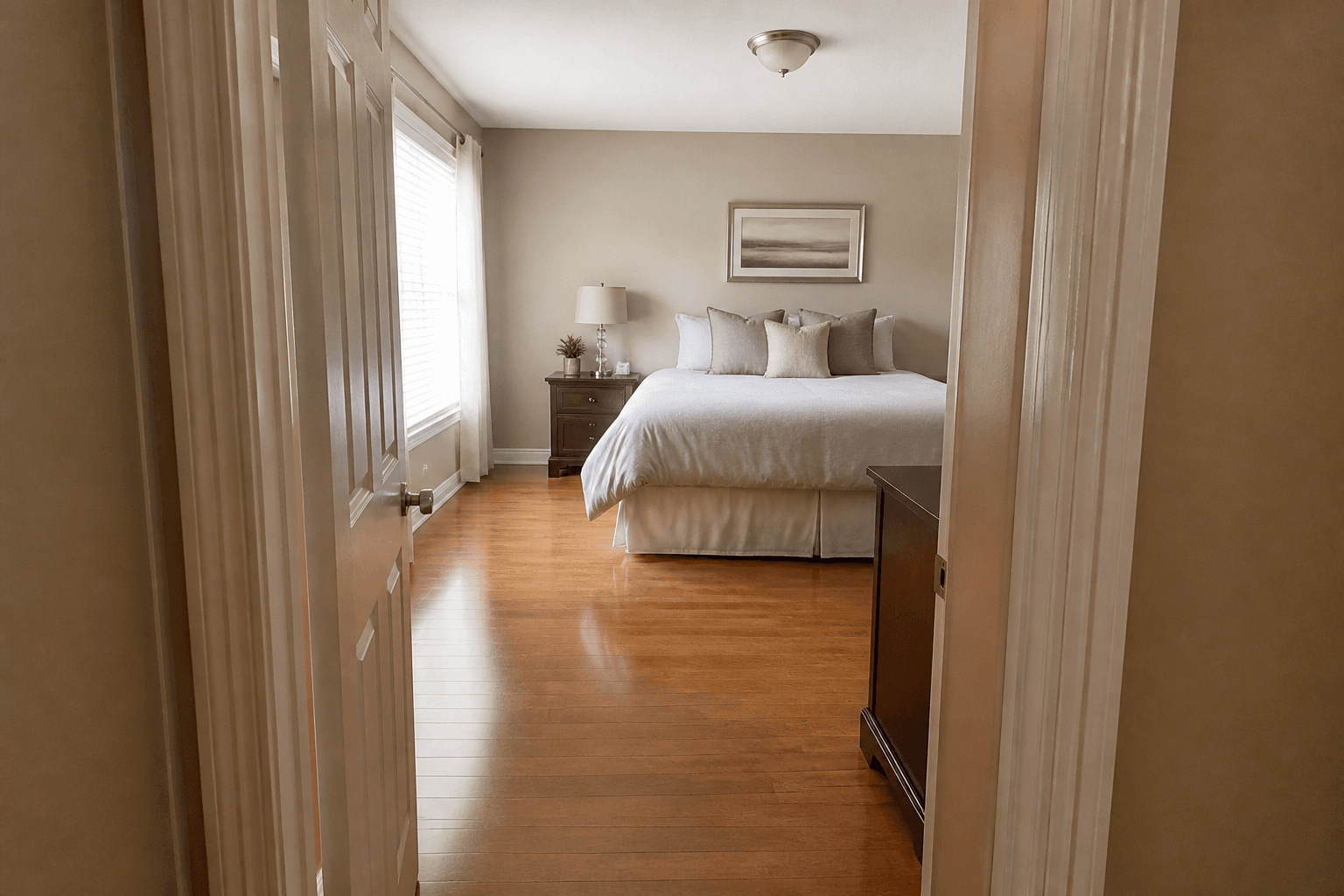
Feng Shui form school explained is reading a room by its shape: a solid back behind the bed or chair, an open front you can see into, and a walk that is not a shooting corridor. You do not need a compass for that job. Renters move furniture. They do not move walls.
When we photograph first rooms, someone is already holding a phone compass in the doorway. The sofa still faces a blank wall. The bed still points its feet at the hall. Mail sits in the only open floor. We sit in the chair they actually use and ask: what is behind you, what is in front of you, what is on each side, and can you name the latch without spinning. If those answers fail, a degree will not help tonight.
The introduction to Feng Shui is what the word means on this site. Maps wait. How to start is one room and three moves. How to measure a room is swing, occupied wall, and aisle with a tape. This page is the school that tells you why those numbers matter before anyone opens a luo pan.
What is form school in a room you already rent?
Form school (often labeled 形法, "shape method") looks at land, roads, building mass, and the furniture inside. Classical notes used mountains and water. In a lease, the mountain is the wall at your back. The open front is the floor and the view in front of you. The mouth of the room is still the door you unlock.
Apply it to one occupied seat. Bed, sofa, or desk. Write which. Sleep and sit are different tests even in a studio. Mix them and you will rotate the mattress to please the TV, then sleep in a corridor. A deed does not replace a wall behind the pillows. Tonight is the piece you can slide.
The four animal names (black tortoise at the back, red phoenix at the front, azure dragon on the left, white tiger on the right) are classroom shorthand for those sides. In a rental they become plaster, a window, a bookcase, and a lower table. If a blog sells you four figurines before you move the chair, skip the figurines.
How we check a real room
We do not open a compass app. We sit where they sit. We look behind the chair for glass, a hall, or a solid wall. We look at the floor in front for a dump. We look left and right for a tottering stack versus empty air. We look for the latch. Then we walk from that latch to the seat with a laundry basket. If we turn sideways, the form failed before any map started. A plant in a taped "wealth" cell does not give you a back.
Hosts: shoot the guest bed the way a stay happens. A listing that hides the hall shooting at the mattress fails this check in the photo. Occupancy is not a gua.
How do you check the four sides without a compass?
Score the seat you already use: a solid back, open floor in front, stable sides, and a latch you can name on a diagonal, not under your feet. Do this in the hour you sit or sleep. Pass or fail. Then move one piece. Degrees wait.
| Side | Classroom name | Pass in a rental | Fail |
|---|---|---|---|
| Back | Tortoise / mountain | Closed wall or a solid headboard you can sit into | Window, glass, open shelf, or a door behind your neck |
| Front | Phoenix / bright hall | Open floor you can stand in, latch in a glance | Pile, TV cabinet in your knees, or a blank wall ten centimeters from your face |
| Left as you sit | Dragon | Something stable: wall, closed bookcase, or a lamp table you do not trip on | A void that feels like a drop, or a tottering stack |
| Right as you sit | Tiger | Lower or quieter than the left, still not empty chaos | A sharp corner in the shin path, or a second desk crowding you |
| Door line | (form, not a gua) | Latch visible on a diagonal. Feet or knees not in the swing | Straight shot from hall to pillow or chair, or back fully to the latch |
Left and right are from the seated body looking forward, the way landform notes look out from the site. They are not left and right from the door unless you are standing in the door doing a house reading. Write "from the chair" on the paper. Matching nightstands are fine in a box room. The miss is one side a cliff of boxes and the other a drop into a hallway.
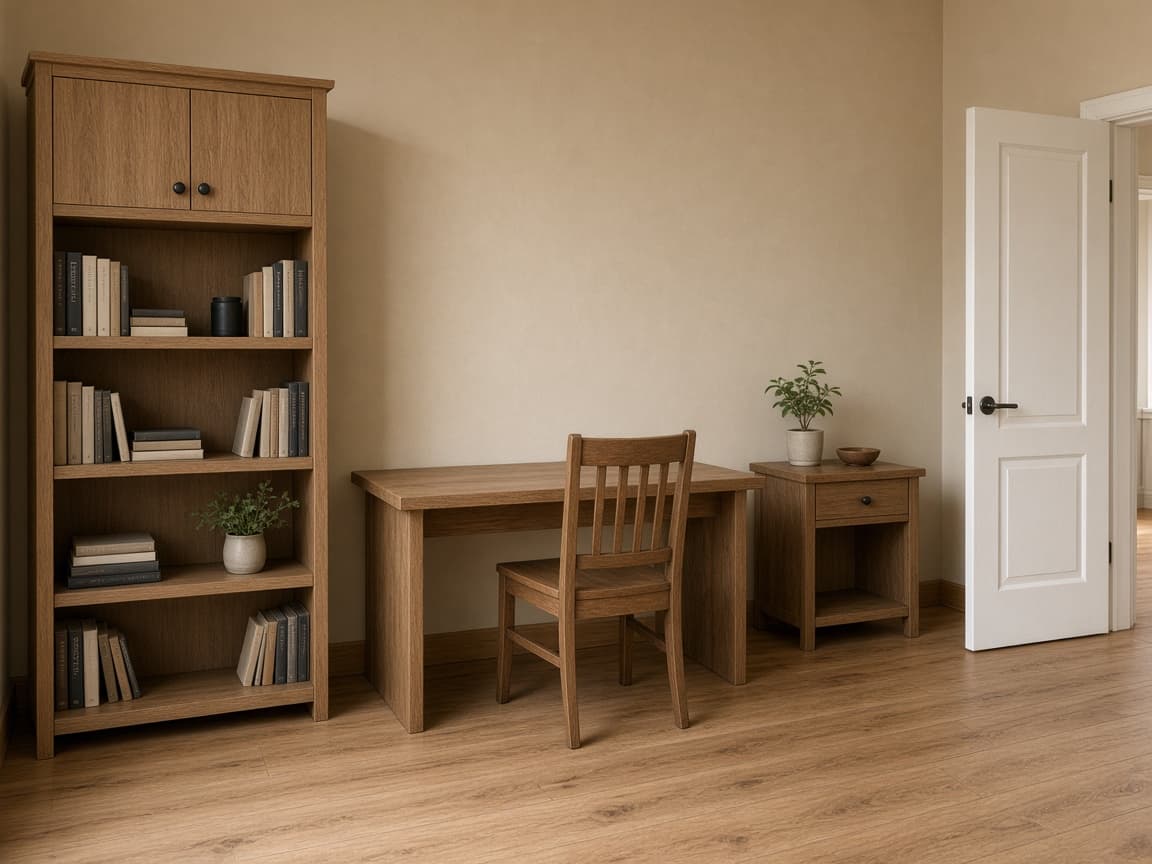
That desk is the armchair in furniture: wall at the back, taller closed storage on one flank, lower piece on the other, door in view. If your photo is a chair in the middle of the rug with its back to the latch, you have a floating seat, not form yet.
What counts as a solid back?
A wall you can touch with your shoulders. A closed headboard that reads as a plane. A sofa against plaster, not against a slider.
Glass behind the bed is the window behind the bed job: you still want a board you can sit into. The pane is not a mountain. An open bookcase behind a desk dumps paper onto your neck. Turn the case or put a closed side behind the chair. If every wall has a window, pick the most solid one you have and add a closed board. Do not nail a mountain plaque into plaster you do not own.
What counts as an open front?
Floor you can walk. A view that is not a closet door in your face. For a desk, enough depth that you can still glance at the room door.
A TV can live in the front if it is not a cliff in your shins and you can still name the latch. Command is a glance, not a stare-down with the opening. The bed facing door page is the coffin line: feet in the door path. Form school wants that line broken and the back filled.
Use the bed and door check when the seat is sleep. Use the desk check when the seat is a chair. Those tools ask the same sightline questions. They do not assign a heading.
What is a bright hall in a small rental?
A bright hall (明堂, the open court in front of a site) is the gathering space in front of the house, or in front of the seat. In an apartment it is the clear floor between you and the rest of the room. It is not a courtyard you must build, and not a second sofa you must buy.
If you cannot stand up from the bed without kicking a laundry basket, it failed. If the coffee table fills the only walk from the latch to the sofa, it failed. Slide the table. Put the basket in a lidded box on a wall that is not the front. Outside, the same idea is a stoop that is not bins. Tonight, if you only control the room, clear the indoor front.
A studio only needs a shoulder width of floor in front of the mattress or the chair. Showroom aisles are not the test. Sidestepping is the fail.
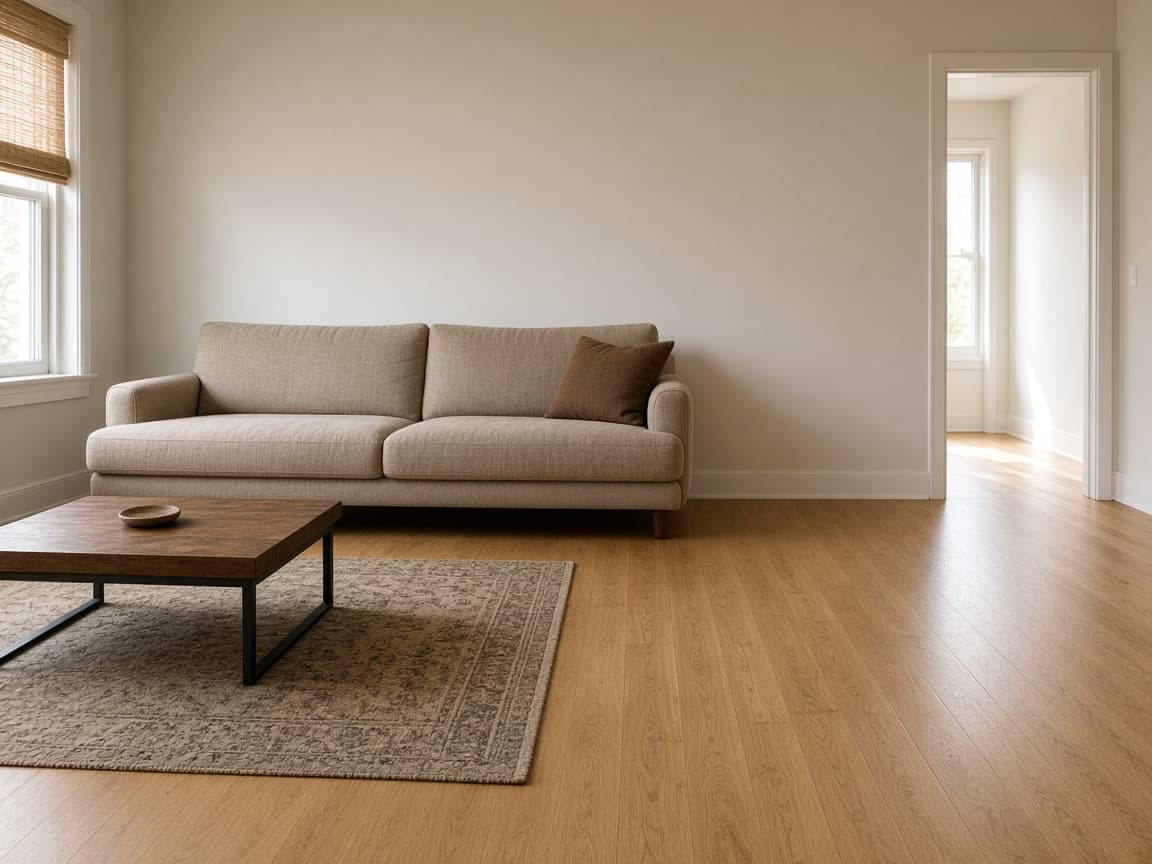
That open floor is the indoor court. If your version is boxes in that rectangle, the job is the lid, not a compass. Photograph in the hour you sit, the way how to photograph a room already asks: one frame from the door, one from the seat.
Does a long hallway count as a shooting path?
Yes when the hall aims at the bed, the sofa, or the stove like a gun barrel. Classical notes call a long straight corridor a rush of movement. You do not need the poetry. If a person in the hall sees the pillows before they see a turn, the sleep seat is in the shot.
You cannot move the corridor in a lease. You can shift the mattress so the feet are not in that line, add a footboard, or park a bookcase as a buffer if the walk still exists and the fire exit still works. Do not block a legal exit with a screen. Score the line from the far end of the hall, not only from inside the bedroom. The bed facing door article owns the coffin-line shift. This page only asks you to notice the hall as form.
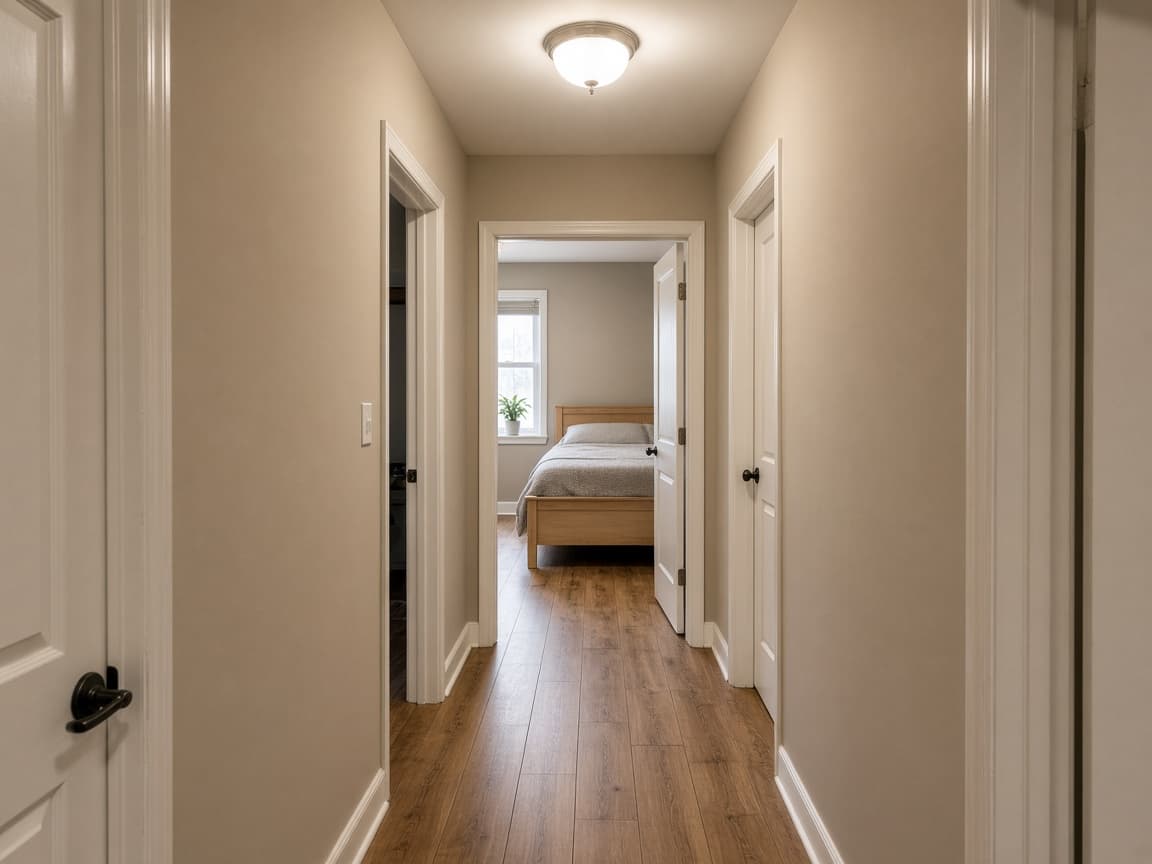
That shot is the fail. Close the bedroom door at night if the hall is shared. Shift the frame so the walk hits a side, not the body. Keep a path. Do not push the bed onto the only window wall just to dodge the hall if that kills the back. Write which fail is worse, shooting line or missing mountain, and fix the worse one first.
An L-shaped apartment is two rectangles. Rug the elbow. Do not treat every bend as a disaster. Treat a straight hall that can see the pillow as the problem.
When should you open a compass?
After the seat passes the table. Not before.
Compass school, kua numbers, and facing-house pages are later rows. Facing versus sitting direction is two headings, door face versus how a bed or chair sits. Black Hat versus compass bagua is two 3x3 maps. None of those overlays give you a wall. If you open them while the chair still faces a closet, you will rotate toward south and put your back to the latch.
| Job | Tool | Do it when |
|---|---|---|
| Shape of this seat | This page | First. No phone compass. |
| Three numbers | Measure a room | When you need tape for swing, wall, and walk |
| Door-based or north-based 3x3 | Black Hat vs compass bagua | After the walk works, if you even want a map |
| House facing heading | A facing-house article | When you mean the building door, not this chair |
Keep one school on the sticky note. A dragon statue, a southeast plant, and a "command" sofa that cannot see the door are unfinished jobs stacked on each other.
A desk that already sees the office latch still uses the desk position geometry. Do not spin it to match a front-door heading if the room door then sits behind your neck. Form wins inside the room you sit in. Tape the walk before you buy a larger sofa, the way furniture scale already asks.
What this is not
It is not a compass tutorial, a kua calculator, or a flying-star year. A heading will not replace a wall. It is not luck, income, or a medical outcome. A solid back will not treat insomnia. An open floor will not pay rent.
It is not the introduction with nouns swapped. That page is the order of work. This page is the four-side score on one seat. It is not a bagua. Nine cells are a map. You can live here for a month with no overlay. Four animal figurines are optional decor after the chair works. They are not the mountain. You do not square an L by building a wall. Renters use furniture and a lid.
Tonight: score one room, then move one piece
Do this in order. Stop when the seat passes back, front, and latch.
- Name the seat (sleep or sit). Write it on a scrap. Put the phone compass in another room.
- Sit or lie. Score back, front, left, right, and the door line with the table above. Photograph from the latch, then from the seat.
- If the back failed, slide toward plaster or add a closed board you already own. Keep a walk.
- If the front failed, clear the floor in front of the seat into a lidded box. Slide the table until you can stand up.
- If the door line failed, shift the frame so you see the latch on a diagonal. Recheck with the bed and door or desk tool.
- Walk from the latch with a basket. If you sidestep, the walk still fails.
- Leave the compass closed. One passing seat is the night.
If you only do one thing, sit down and look behind you, then look for the latch. If both fail, move the piece until one of them passes. Shape first. Degrees later.