

Feng Shui facing vs sitting direction is the door's outward face versus the way a chair or bed sits. Facing is how you look out. Sitting is the back or the head toward a wall. They are two compass jobs. A facing-house article is the house door, not this pair of terms.
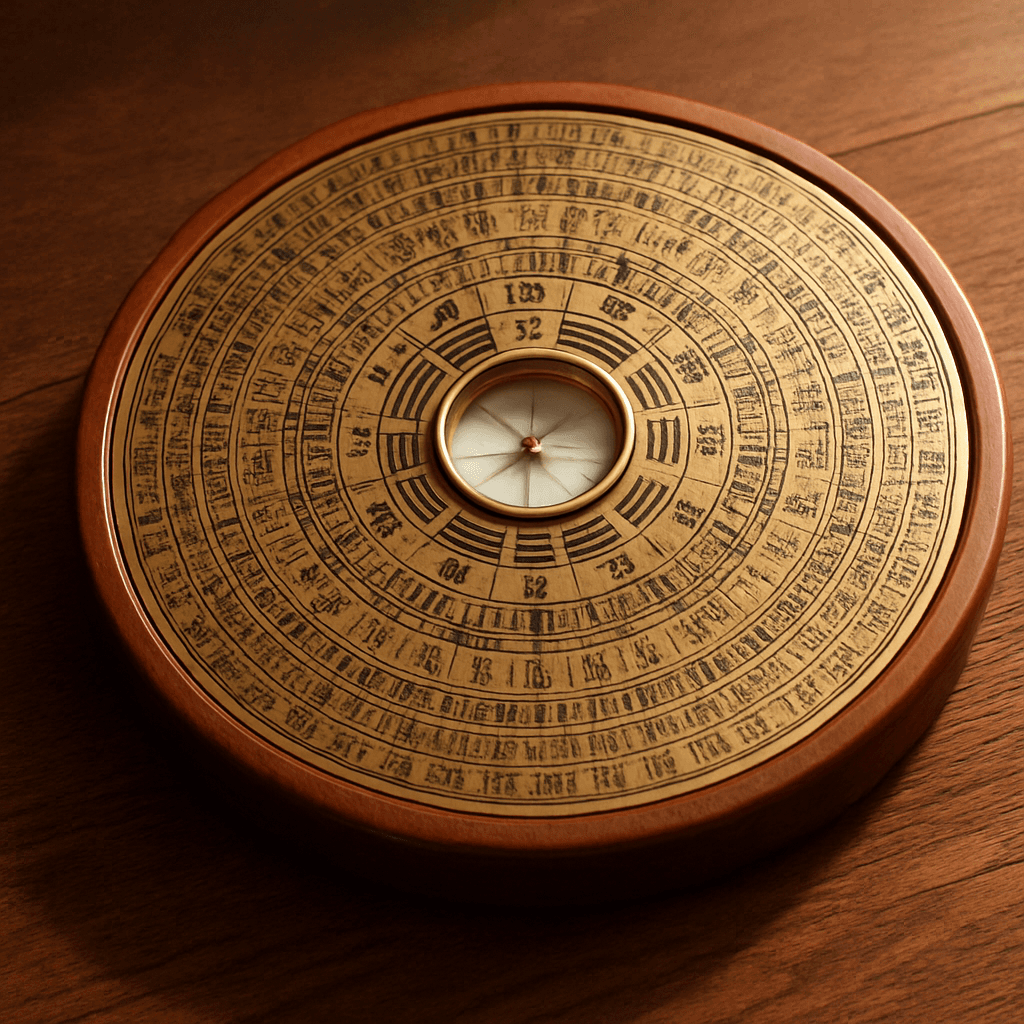
When we photograph rooms, someone has rotated a sofa "to face south" because a blog used facing and sitting as synonyms. The latch is now behind their neck. We ask them to stand in the door looking at the street, then to sit in the chair and name the wall behind them. The compass guide is the instrument: phone lies, steel doors, three readings. Black Hat vs compass bagua is door-based overlay versus north-based overlay. The five elements page is the cycle, not a heading. Facing-house pages (west, north, and the rest) are one house heading applied to sun and fade. This URL only keeps the two words from eating each other.
What does facing mean?
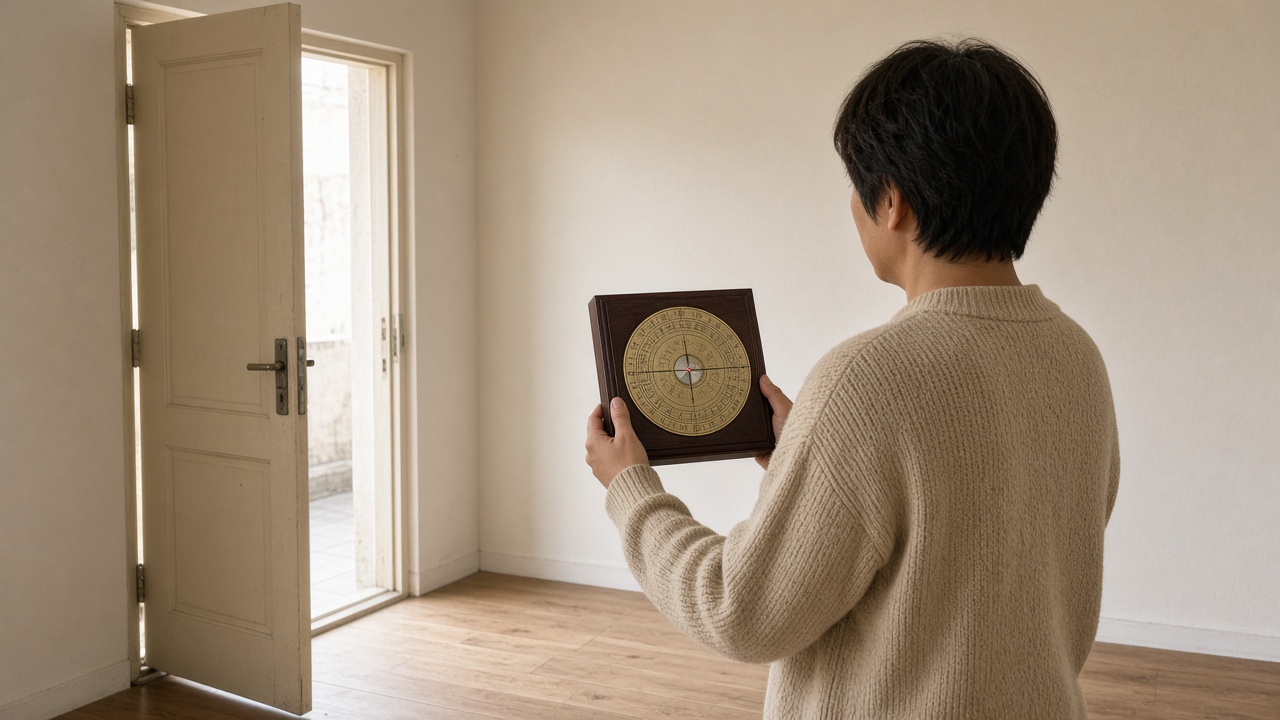
Facing is the heading you see when you stand in the door you actually use and look out. If that door is a side leaf, facing is that leaf, not the unused front. The side-door article is which latch. This page is the word.
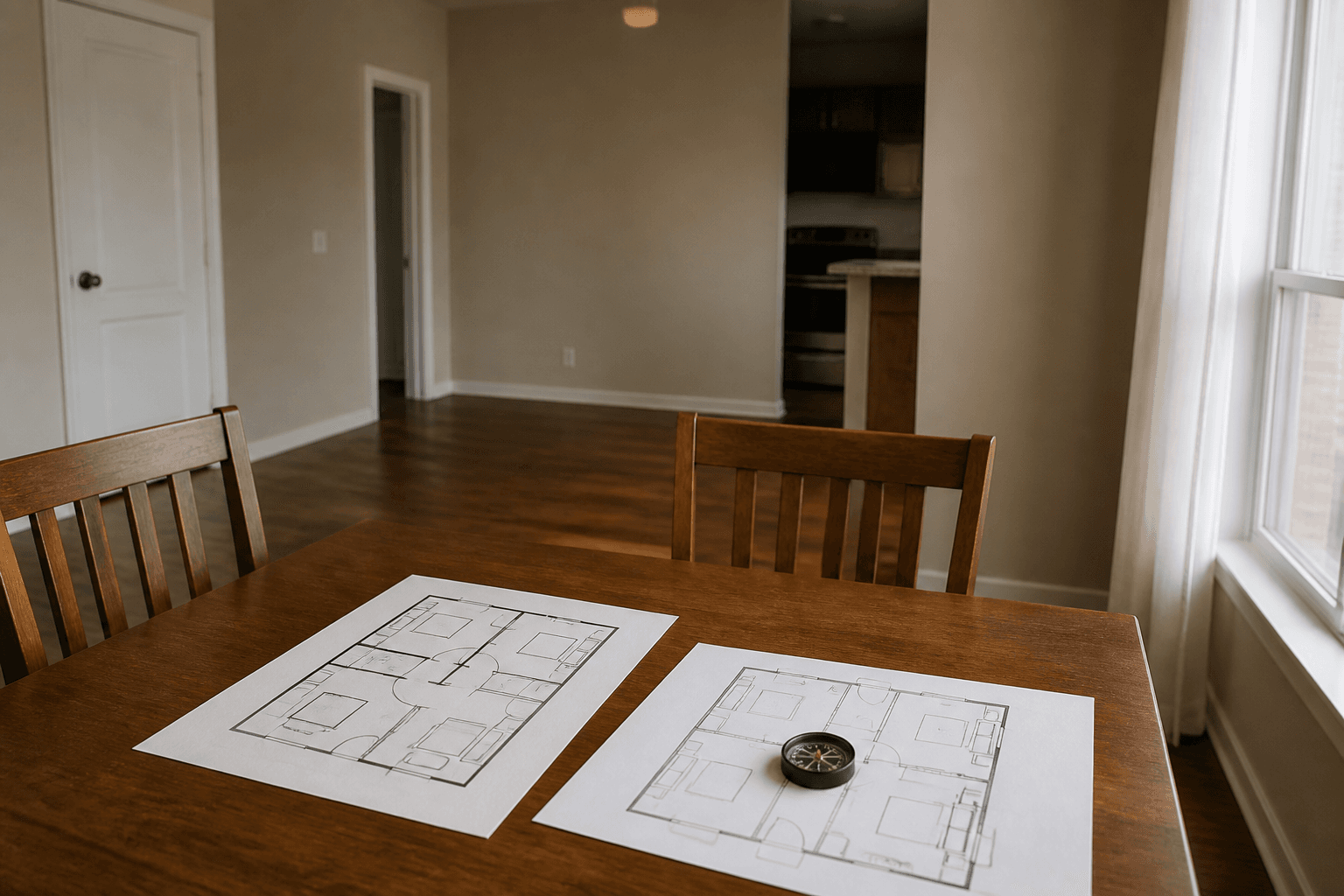
Write "facing: door, looking out" on the sketch. If your three compass readings disagree by a wide margin, you are too close to steel. Step onto the mat outside and try again. Do not average six wild indoor numbers.
Facing does not pick a career. Flying stars are optional homework on the compass page. This site starts with Form: a door that opens, a bed or chair that can see who enters.
A house that "faces south" on a listing is a marketing sentence. Confirm with a compass at your latch. A south-facing-house page is sun and fade on that heading. Do not copy it here.
How we check facing in a real doorway
We stand in the working leaf, looking out, compass level, off the frame. We take three readings. We write the heading and the door we used. We do not read the fridge magnet as north.
If the client already named the house from a neighbor's porch, we still read their own threshold. Steel in the door will lie. The compass guide owns that error bar.
What does sitting mean?
At the house door, sitting is behind you when you face out. If you look east out of the latch, sitting is west. Some classical notes pair facing and sitting as a 180 degree pair for the building.
At a chair, sitting is the direction the back points, the wall that supports you. At a bed, sitting is often used for the direction the head points, the mountain behind the pillow. Those furniture jobs have later calendar rows (sitting direction bed, sitting direction desk). Do not steal them. Tonight, write which object you meant: door, chair, or pillow.
Form School still wins the week: a chair with a wall behind you and a glance at the room door. If compass sitting wants your back to the latch, keep the latch glance and skip the heading until the furniture works.
A sofa "facing the TV" is living-room language, not compass sitting. Sofa placement is that page. Do not rename a conversation square as a luo pan.

That back is sitting talk for the chair: a wall behind you. The doorway glance is command, which is a different sentence.
How do you keep the two jobs from mixing?
Two lines on the sketch:
- Door facing: heading looking out.
- Seat or bed sitting: wall behind the back or the head.
If you only need one this week, pick Form. See the latch. Then, if you still want a compass label, add one heading and write the school.
Do not rotate a rental bed to "sit north" if that puts the pillow in the door's center line. Bed facing door is coffin line versus command. Compass sitting is extra. Command is not optional.
A desk that "faces" the window for a view may put your back to the office door. That is a glare and command miss. Second-monitor and L-desk pages own the screen. This page will not tell you to match the desk heading to the front door.
Black Hat bagua does not use these headings. It uses the door wall. If you are on a door-based map, you can skip facing versus sitting until you switch schools. Mixing both in one week is how two plants land in two corners.

That view out is facing. Behind you, inside the house, is sitting for the building. The chair has its own back.
Worked examples you can copy onto a sketch
Example A: you look east out of the working door. Facing is east. Sitting for the building is west. If your sofa back is on the north wall, chair sitting is north. Those are three different sentences. Do not write "we face west" because the sofa back is north.
Example B: a side door looks north onto a driveway. The unused street front looks east. Facing for this household is north. A north-facing-house article is then the right house page if you want sun-and-fade talk. Do not also run an east-facing article because the facade is prettier.
Example C: the bed head is on the west wall. Head sitting talk is west. If the door is south of the bed, command is still a glance south toward the latch. If a blog tells you to "face east" while sleeping, ask whether they meant the eyes, the head, or the house door. This page wants that question before anyone rotates a heavy frame.
Phone compass: hold it level, wait until the heading settles, take three readings off the steel jamb. If you get 20, 90, and 200, you do not have a heading. You have interference. The compass guide owns that lie. Do not pick the average.
Write on the sketch in plain words: "Door used: kitchen side. Facing: looking out, heading X. Chair: back to wall Y. Bed: head toward wall Z. Latch visible from chair: yes/no. Latch visible from pillow: yes/no." If any no, Form first.
Kua numbers and personal directions are a later row. They will still not override a door you cannot see.
Renter steps you can reverse tonight
- Stand in the door you use. Look out. Write "facing" and a heading if the needle is steady.
- Turn around. The wall you now look at is sitting for the building.
- Sit in your main chair. Name the wall behind you. That is chair sitting talk.
- Lie on the bed. Name the wall behind the pillows. That is head sitting talk.
- Check you can still see the room latch from the chair and from the pillow. If not, shift furniture first.
- Do not rotate a heavy frame tonight just to match a blog heading.
- Keep Black Hat and compass on separate weeks if you use both at all.
- Photograph looking out of the door, then from the chair toward the latch.
What this is not
It is not the compass instrument page. Error bars, steel, and luo pan notes live there.
It is not a north-facing or west-facing house article. Those apply one house heading to sun, fade, and layout.
It is not Black Hat versus compass bagua, except to remind you they are different schools.
It is not desk command or bed geometry. Those stay on office and bedroom URLs. Later sitting-direction rows will go deeper on one object.
It is not a destiny kua number. That row is later and still will not claim fate.
Keep a small table on the fridge if it helps:
| Phrase people say | What to write instead |
|---|---|
| The house faces south | Door used, looking out, heading south |
| The bed faces the door | Pillow can see the latch (command), or the bed is on the door's center line (coffin line) |
| I sit north | Chair back or bed head toward that wall |
| We should face the door heading | Only if command still works after the rotate |
If those four lines disagree, Form wins this week. A heading is extra homework.
What should you do tonight?
Stand in the door looking out. Write facing. Sit in the chair and name the wall behind you. If the latch disappears when you "sit" a heading, move the chair back to command.
Then photograph both views. If the first problem is a blocked door, the compass can wait. Labeling the two words is the facing-versus-sitting job. A facing-house layout can stay on its own URL.