
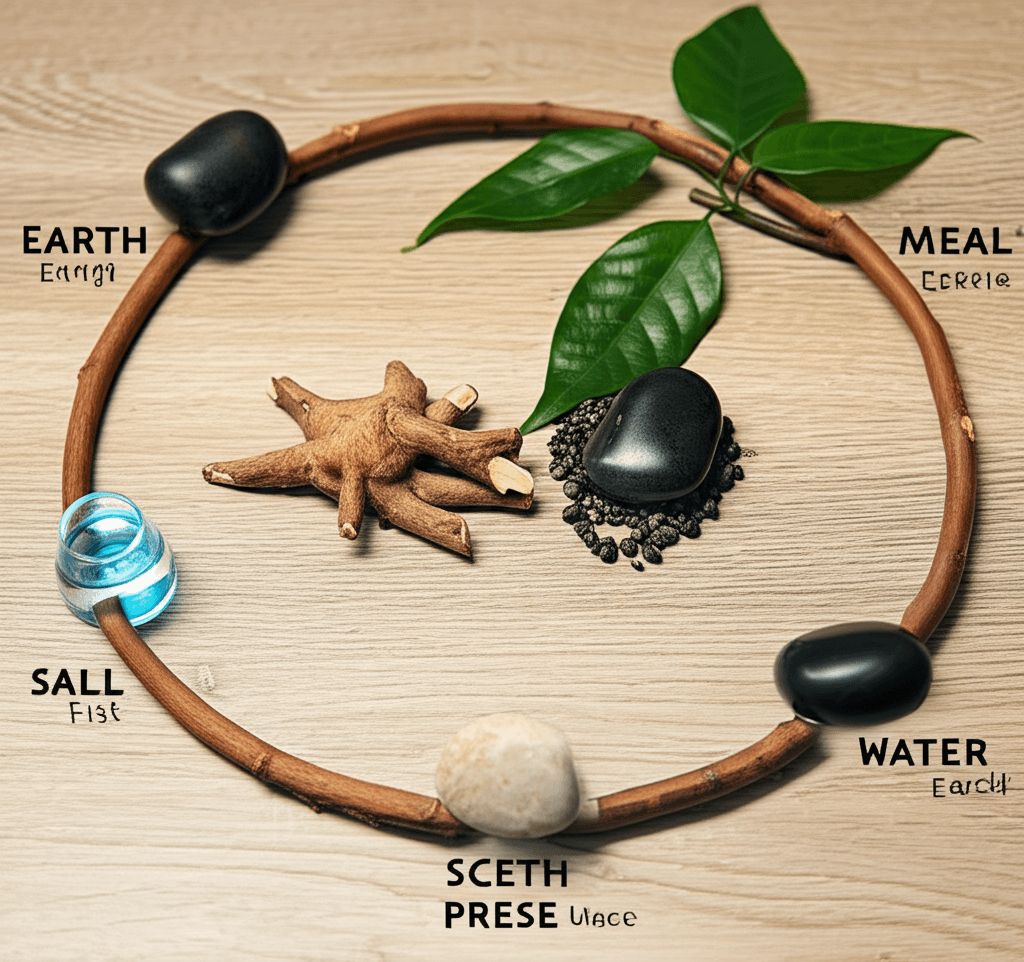
The five elements (wood, fire, earth, metal, water) are a relationship model used in Feng Shui to pair colors, shapes, and objects. They feed and control each other. They do not balance a personality or a paycheck.
When we photograph "element kits," a shelf holds a plant, a candle, a rock, a coin, and a fountain. People want harmony. The door still cannot open. This page is the cycle and the index. Child articles own the object.
Start here if the words are new: introduction. Paint: colors. Grid: bagua. Facing: compass.
The five, in one line each
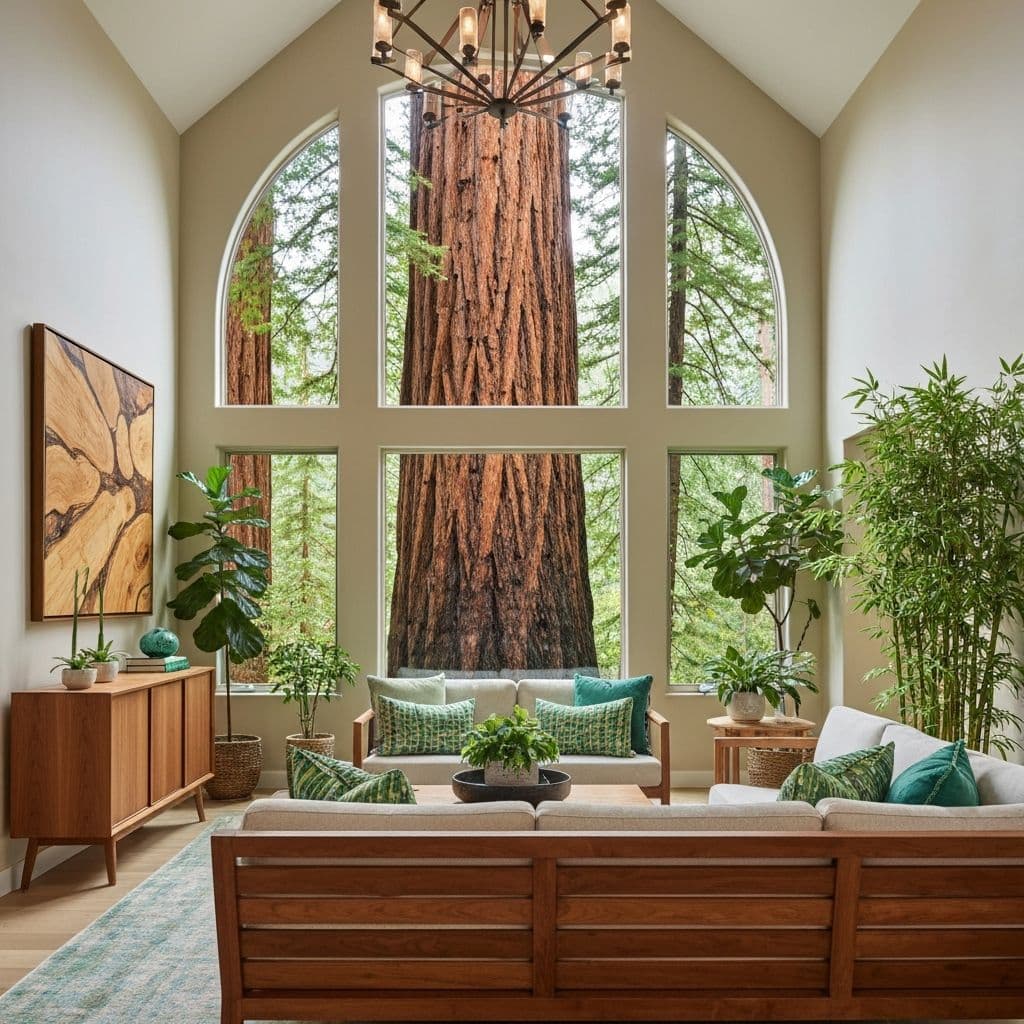
Wood. Plants, green, tall shapes. East and southeast on many maps. Wood.
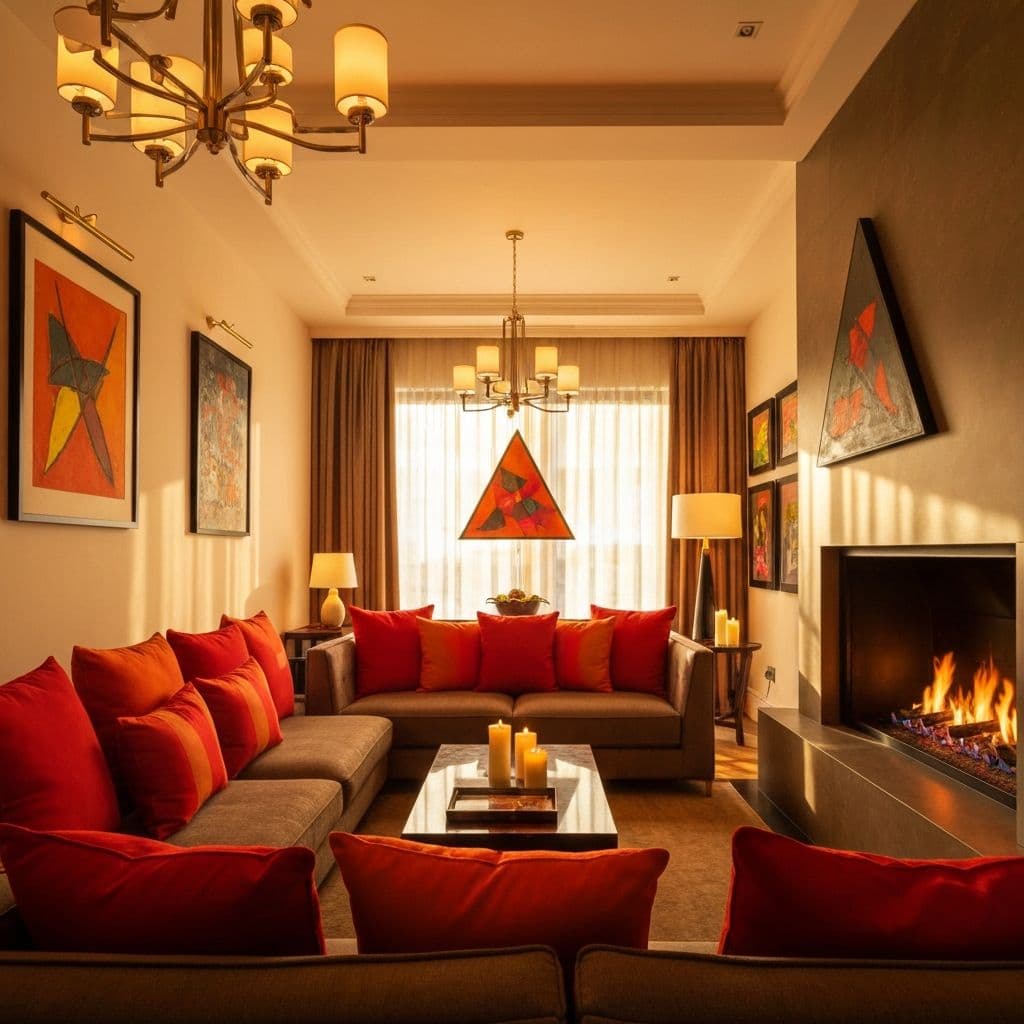
Fire. Lamps, watched flame, red, triangles. South. Fire. Candles.
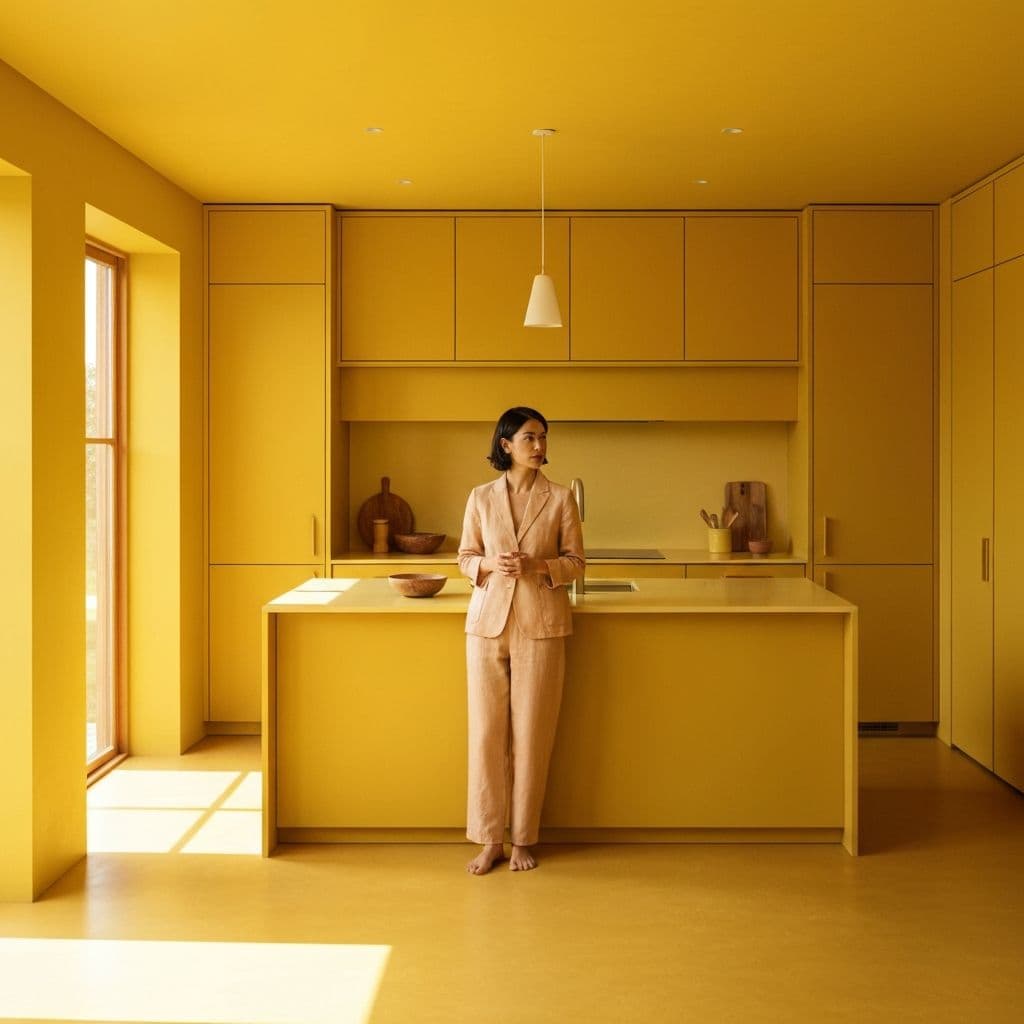
Earth. Clay, square, sand, yellow-brown. Northeast, southwest, center in many notes. Earth.
Metal. White, round, steel. West, northwest. Metal.
Water. Navy, waves, clean water, mirrors. North, sometimes southeast. Water.
Seasons and organs (spring/liver, summer/heart, and so on) appear in classical lists. They are correspondences, not a clinic.
How to pick one extra
Name the room job first: sleep, cook, work, enter. Then name one element you will actually maintain. A plant you water beats five objects you dust once.
Kitchen already has fire and water. Do not add a fountain next to the stove to "complete the set." Bedroom wants less fire at night: dim the flood, cover the TV. Entry wants a path more than a cycle.
If a shop list tells you to place wood in the east and metal in the west on the same night, you are decorating a map, not a room. Pick the wall you can reach. Leave the rest.
Do not mix the feed cycle and the check cycle in one sentence as a spell ("water destroys fire so add a bowl"). If the room is all chrome, add a lamp or a plant because the room is cold to sit in. That is comfort.
Productive cycle (feed)
Wood feeds fire. Fire makes earth. Earth produces metal. Metal collects water. Water nourishes wood.
Use this to add a neighbor: a plant beside a south lamp, a tray under a fountain. Do not build a pentagon of shopping.
Controlling cycle (check)
Wood uses earth. Earth dams water. Water puts out fire. Fire melts metal. Metal cuts wood.
Use this when a room feels one-note: all chrome, add a lamp or a plant; all red, dim and add blue or clay. Comfort, not a moral failing.
Some writers say "destructive" for this cycle. The useful word is check. You are not destroying a room.
Rooms already have elements
A kitchen is fire (stove) and water (sink). That fight is a layout job: kitchen. A bathroom is water. A bedroom wants less fire at night. An entry wants a path more than a cycle.
You do not need all five in a studio. You need a door that opens and a bed that can see it.
A studio bagua often stacks two sectors on one wall. Pick one element object. Do not put a plant, a candle, a rock, a coin, and a bowl on the same 80 cm shelf.
Center as earth. Many BTB notes call the middle of the plan "tai chi" and want it open. A square rug and a path you can walk are enough. A fountain in the exact center of a tiny flat is a trip.
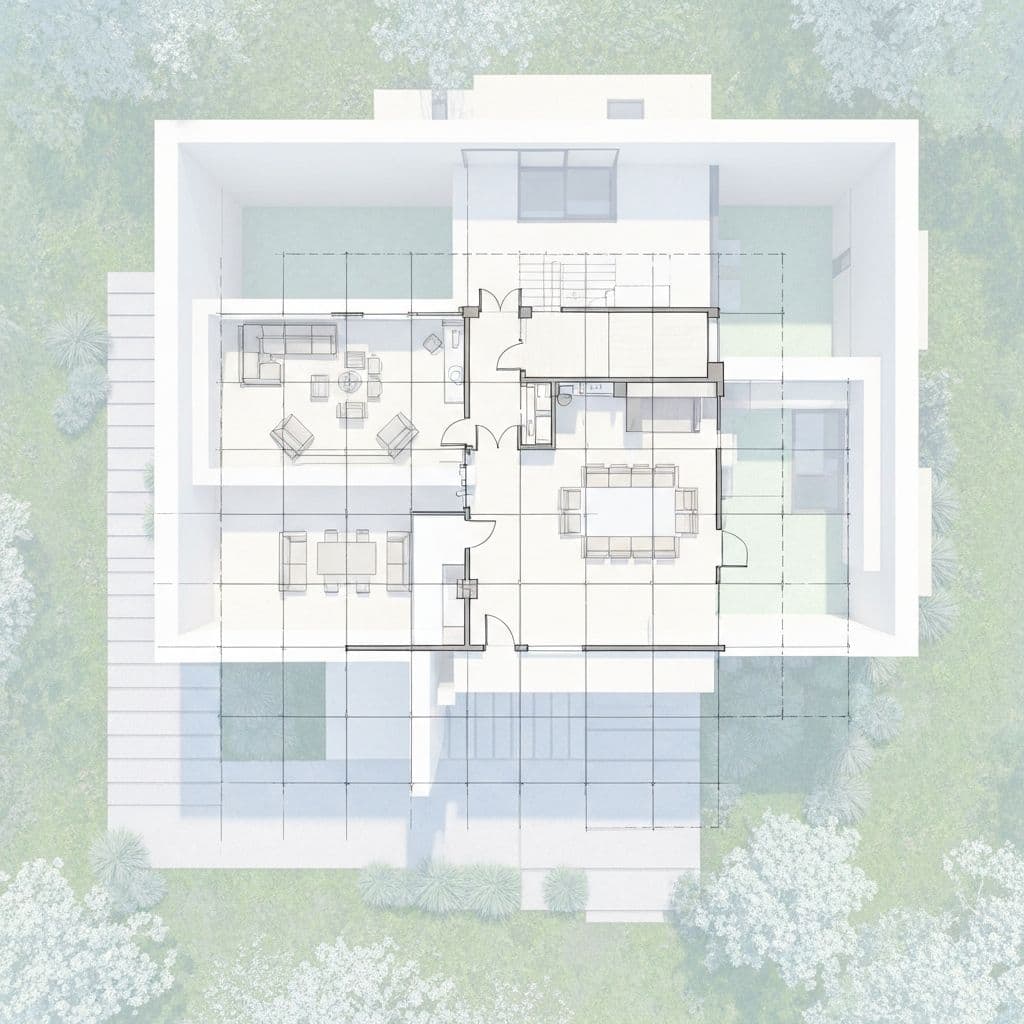
If bagua from the door and compass from north disagree, name which map you are using. Bagua. Compass. Do not average them into a third system tonight.
A whole-plan overlay and a one-room overlay are two jobs. If you only control the bedroom, map that room from its door. Do not also run a house bagua you cannot act on.
Colors are the dry version of every element. Colors if you will not keep a plant, a pump, or a flame.
How to use this hub
- Fix the path and the chair. Form School first.
- Pick one map (bagua or compass) if you care.
- Open one child element page.
- Add one object you will maintain.
- Stop for a week.
A scan that "identifies elemental imbalances" is overlay on a photo. It is not a blood test. How AI changes practice.
What to skip
Do not paste App Store links in the body. Do not keep scrape chrome, fake stars, or "245 reviews." Do not promise harmony. Do not buy a five-element kit for a blocked landing.
If two blogs disagree, they are mixing cycles or maps. Name the cycle, then the room.
How to judge a change
You can point at one object and say which element and which cycle line you meant. The door still opens.
Scan one room in FengShui Hero. Then open the matching child guide.
Sources and limits
Wu xing pairing here follows widely taught modern Feng Shui classroom notes. Classical sources vary. Empirical research on Feng Shui as a whole is limited and mixed.