
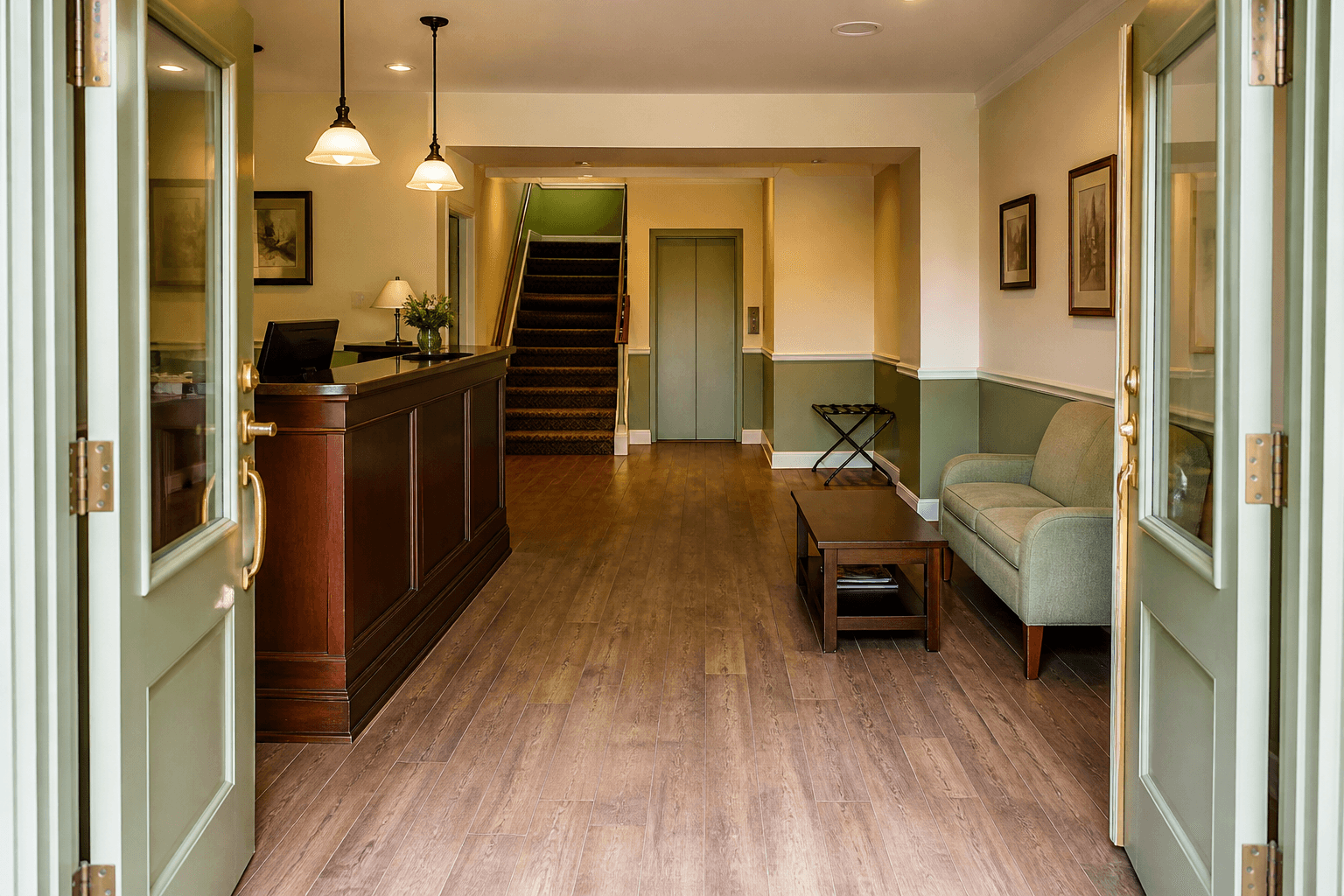
Feng Shui hotel lobby is the practice of treating a small inn or B&B reception as a mouth of chi: a clear walk from the street doors, a desk that sees arrivals without blocking the swing, and seating that does not block bags or the lifts. You are arranging furniture and lamps, not knocking out a foyer.
When we photograph small inns, the lobby is often a second storage room. Unclaimed bags in the doors, a sofa in the only walk to the stairs, a desk facing the back office with its back to the street. People ask which gua the fountain should sit in. We ask whether a guest with a suitcase can reach the desk without turning sideways. This guide is that walk, then the desk, then the sitting area.
What is a Feng Shui hotel lobby?
It is the indoor mouth of a small hotel: the street doors, the desk, the walk to the lifts or stairs, the chairs that wait. Form School cares about path, gate, and whether a house feels hugged or exposed. A lobby is that idea at inn scale. You cannot curve a leased rectangle into a courtyard. You can stop using it as overflow for brochures, leftover breakfast chairs, and last week's luggage.
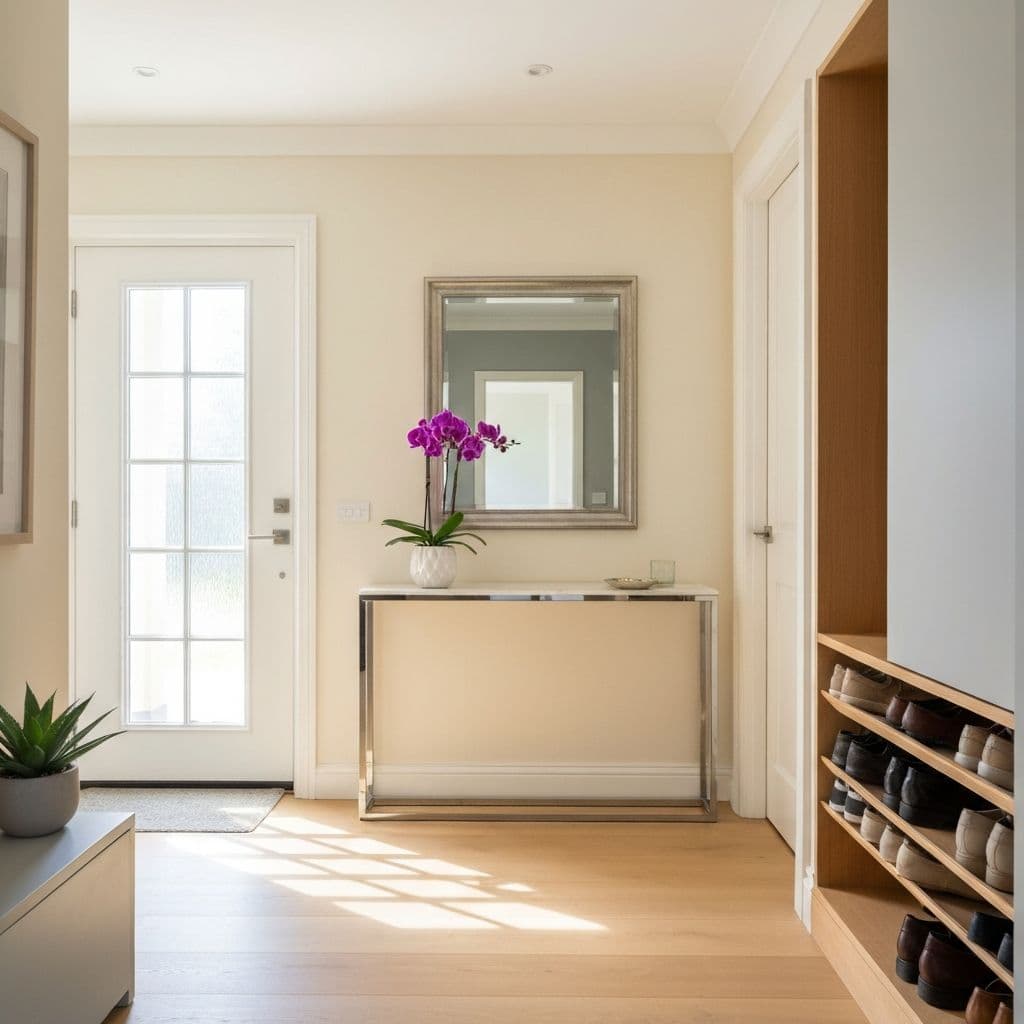
This is the same test as a house entryway mouth of chi. There the job is a door that opens and a floor you can walk. Here the landing is a reception desk and a line of people who will stand in the only walk if you let them.
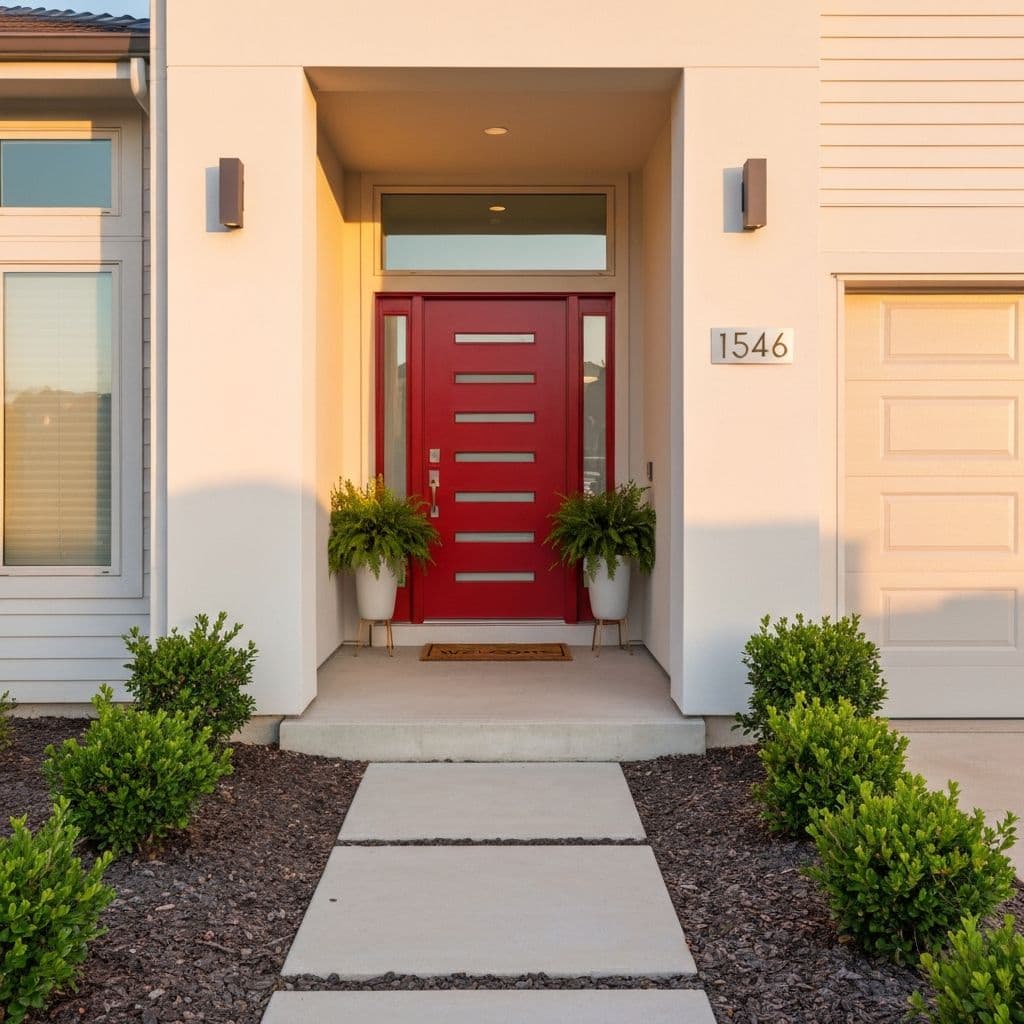
The street doors are also a front door swing and light problem. If the leaf cannot open because a planter or a sandwich board lives in the arc, the mouth is already closed. Paint color is optional. A working bulb and a full swing are not. A blocked door is stale because arrivals live in the swing. A plant by a side wall is ordinary upkeep. Neither needs a bagua sticker on the tiles.
A lobby you treat as a closet still counts as the mouth. Dusty leaflets and a locked inner door are a closed room. You need the hinge to move and a path a suitcase can follow. If guests enter through a porch or an inner leaf you lock after 10 p.m., scan that latch, not the pretty doors.
Where should the reception desk sit?
To the side of the street doors, with a glance at the latch and a view of the floor. The person at the desk is the one who sees who enters. A counter parked in the swing is a blocked mouth, the same class of problem as a shoe pile in a house foyer.
Face the doors, not only the booking screen. A clerk with their back to the street cannot see a guest arrive. A clerk who stares only at the glass misses someone waiting at the stair. A slight angle that catches both is enough. You are not sitting with your spine in the only exit.
If the lease gave you a built-in counter in the wrong place, treat it as a wall. Park a rolling desk or a smaller table off the jamb for greeting. Use the built-in for printers if the cable reaches. Do not demolish millwork for a weekend "chi" project.
A tall brochure wall on the desk turns the door into a cave. Keep the top low enough to see over. Clip-on lamps beat a dark landing. Point them down so you are not flooding the first sofa. Put the card machine on that desk, not on a podium in the walk. We will not claim that a drawer in a "wealth corner" raises the nightly rate. Put it where you can watch the door and still pass a room key. Angle the monitor so you still see the latch. Keys belong on a hook behind you. Mail belongs in the back office. Close that door if guests would otherwise stare into a mop closet.
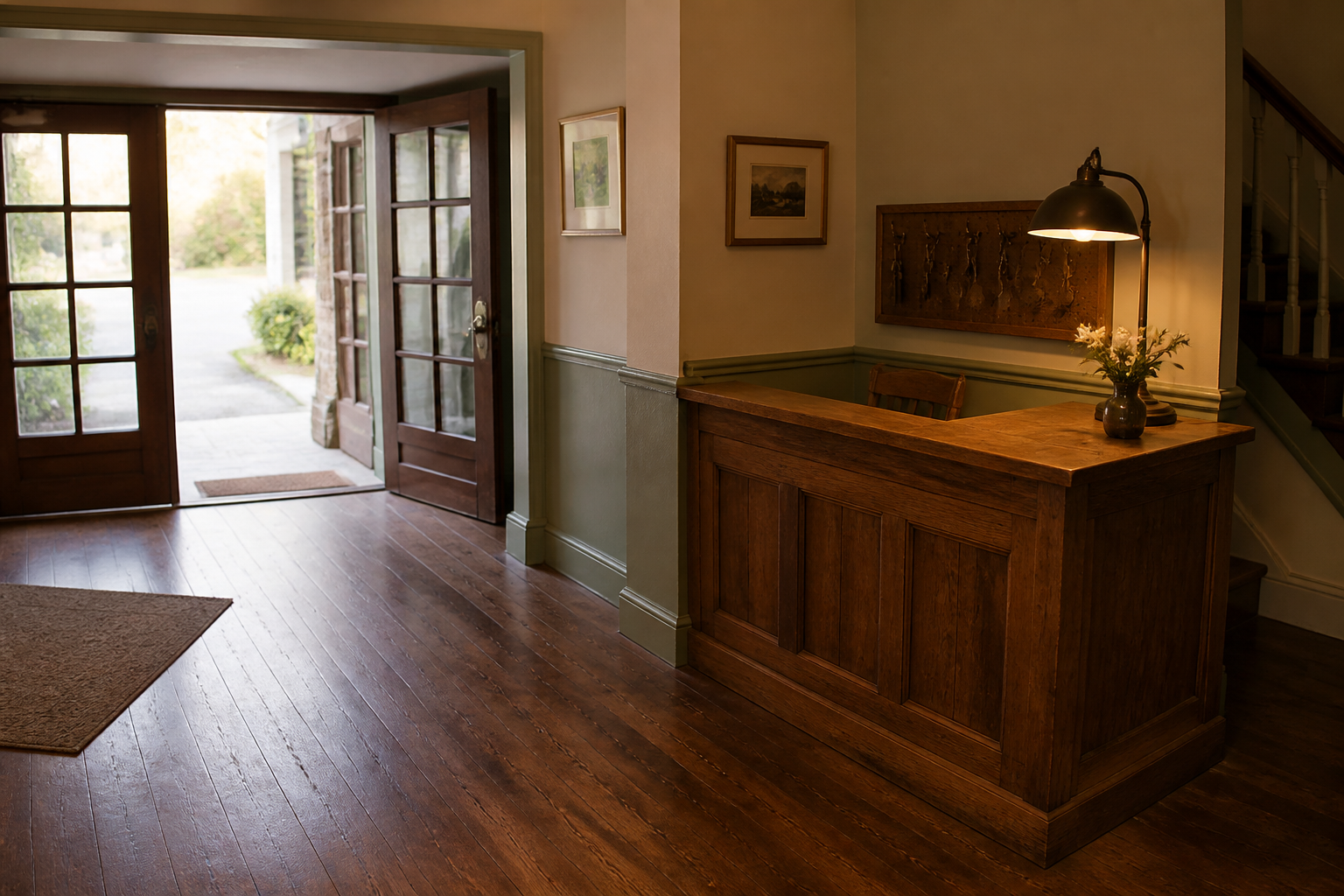
That desk sits off the swing. The clerk can see the street doors. Guests can stand without occupying the only path.
How do you keep a path to the lifts?
Leave a walk the width of a person with a rolling bag, from the street doors through the lobby to the lift or stair. Guests should not hip-check a sofa on every pass. If two people cannot pass without turning sideways, you have stored furniture, not received guests.
Pull the first sofa off the doors' center line. The seat in the door's center shot is the bad seat: every arrival is a face in the coffee. Shift that sofa a half-width toward a wall.
Stairs that dump at the threshold are a Form School complaint about fast downhill movement. You cannot rebuild a rental stair. Soften with a rug that does not bunch, a plant to the side, and a working handrail. Keep the first landing clear of a luggage rack. A lift needs its full opening too. Park plants and brochure carousels on a side wall, not in front of the doors. If your inn has only a stair, that stair is the lift for this article. Do not store the rack on the first tread.
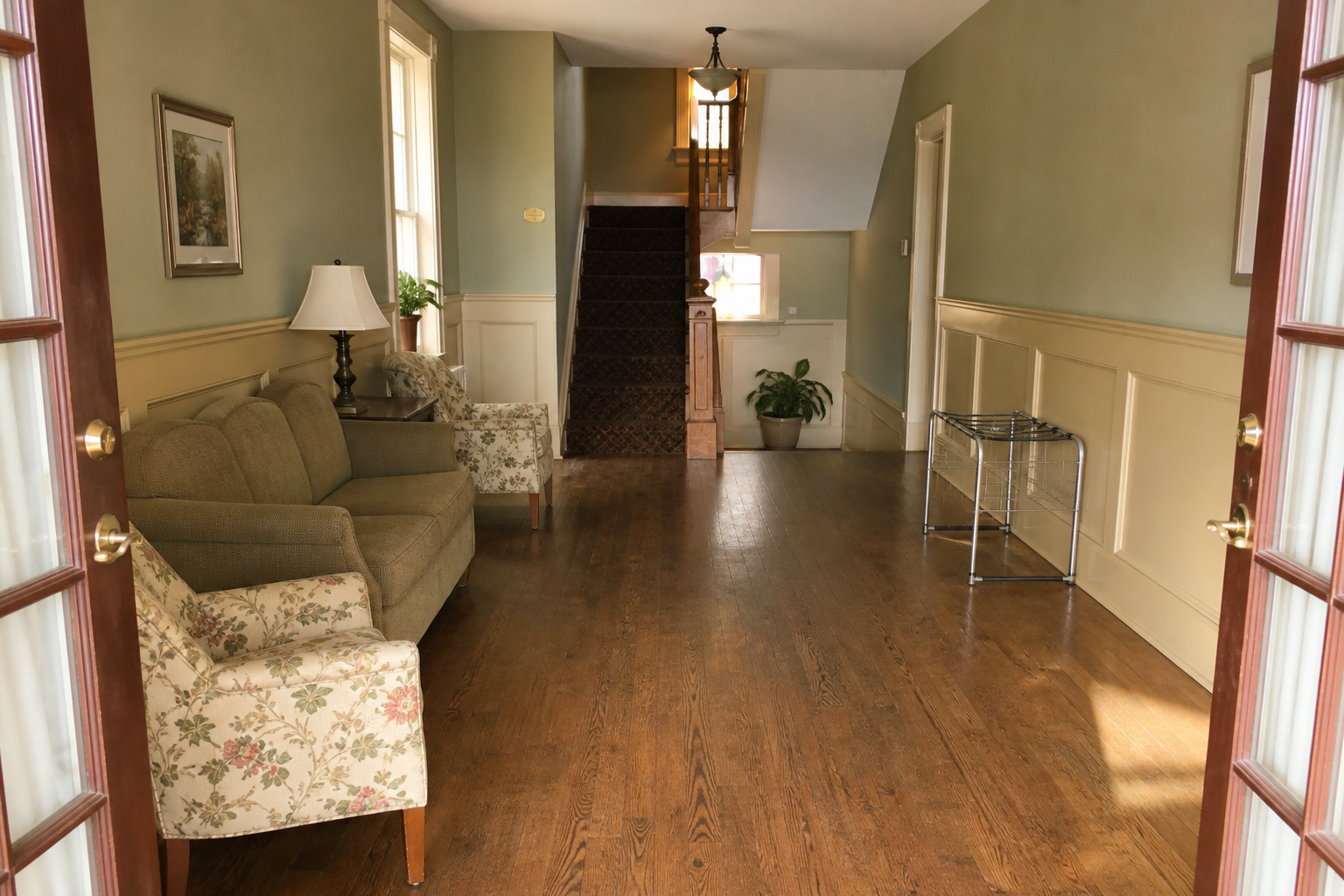
That center stays a walk. The sofa is along the wall. The rack is at the far end, not in the doors.
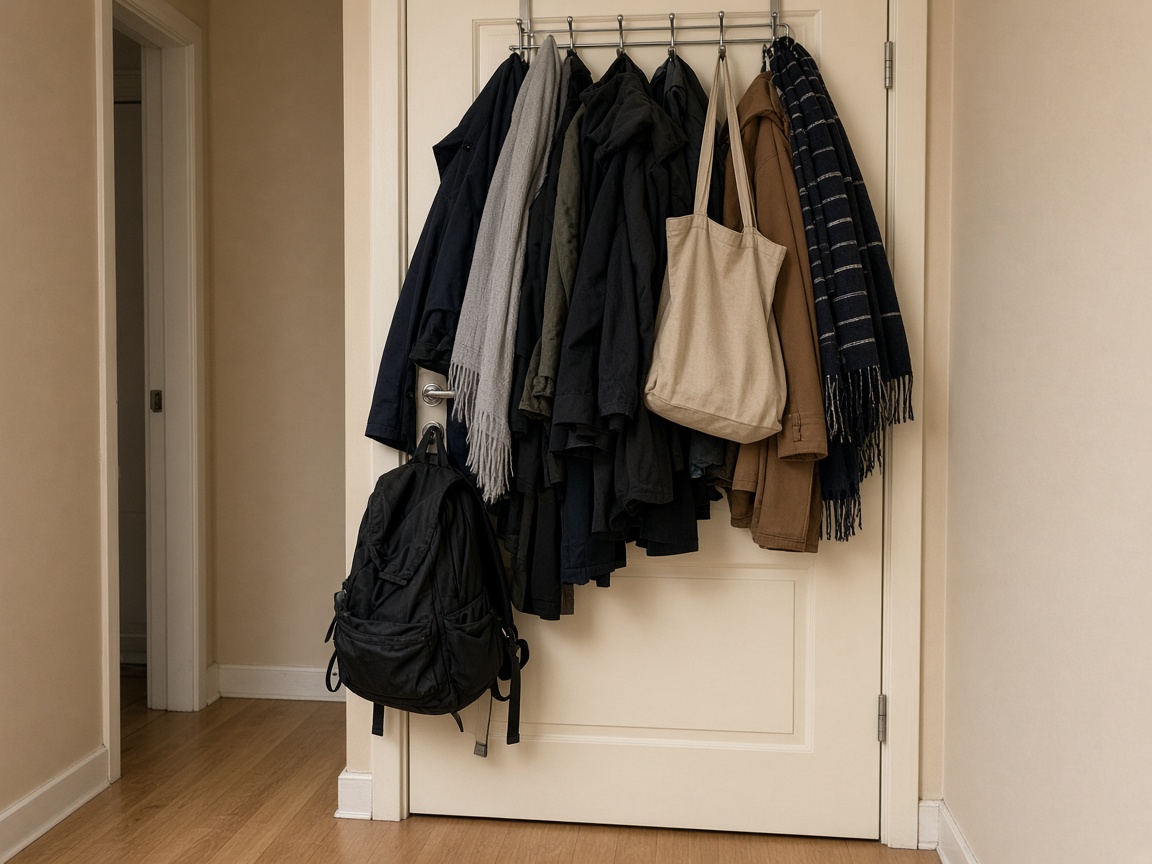
The mat belongs inside the threshold, flat, short enough that the door does not bunch it. Umbrellas go on a stand against a side wall, not in a puddle under the desk. A sandwich board belongs outside, and only if the leaf still opens fully.
Where do bags go without blocking the mouth?
Against a side wall, or in a rack you can see from the desk, never in the door swing and never in the lift path. Unclaimed luggage in the first meter is the hotel version of shoes in the foyer.
A small inn will always have bags. The miss is using the only indoor floor as a permanent left-luggage room that also happens to be the door. Park a rack parallel to a wall. Leave a walk the width of your shoulders. A trolley parked in the swing is a wall. Fold it when it is empty.
We will not invent folklore about suitcases draining the inn. A lobby that looks like a bus station is a poor place to sit. Fire code still wins: do not stack bags in front of an exit. Early arrivals can wait with bags in a locked closet you control, not in the public mouth.
Can the sitting area stay out of the walk?
Yes, if the chairs sit along a wall or in a corner that still sees the desk. The sitting area is a small living room, not a blockade.
Command for a sofa is a glance at the doors, the same idea as a home sofa. A chair that faces only a blank wall with its back to every arrival can feel exposed. A chair that sits in the door's path is the opposite problem: every guest walks into your knees. Angle a two-seat sofa toward the desk, off the center line.
A coffee table that fills the remaining floor turns the walk into a hop. Keep it small enough that a suitcase can pass. If the lobby is too small for a sitting area, skip it. A bench on a side wall is enough.
Breakfast overflow is the same class of problem as bags. If the morning tables live in the lobby, they need a path, and they need to fold or leave after service. Most B&Bs cannot be a dining room and a luggage hall at the same hour.
What about lighting and plants?
Warm overhead plus a lamp at the desk beats a cave. Replace the dead bulb. Point lights down so you are not flooding the street or the first guest's eyes. A dark lobby is a dark mouth, the same as a burnt-out porch.
The front-door article already wants a working lamp at the leaf. Inside, match that warmth. A cheap blue LED strip makes the desk look like a garage.
Plants belong along a side wall or in a window that still leaves the walk. A hedge of ficus in the doors is storage. Living plants beat silk because dust will tell on fakes. If you cannot water, do not add pots. Empty swept floor is calmer than terracotta by the desk. Put a saucer under each pot if there is a room below.
Skip a fountain in the entry that needs an outlet in a puddle zone. Skip a crystal grid on the coffee table. Those objects do not fill rooms. They do create a slip and a dusting job.
A mirror on a side wall can help staff see a corner the desk misses. Skip a mirror that faces the open street doors and bounces the view straight back out.
Should key rooms reuse bedroom command?
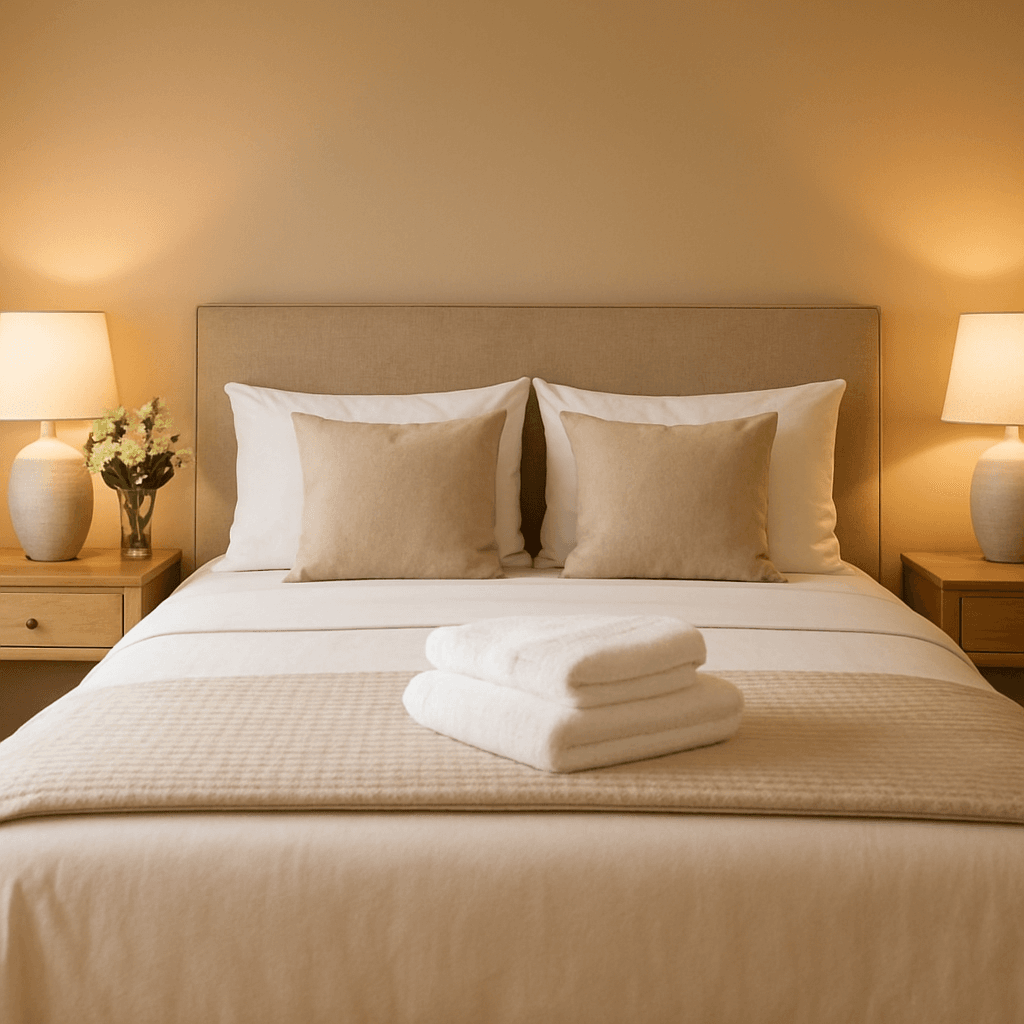
Yes. Do not rebuild the bedroom article in the lobby. Once a guest has a key, the room uses the same geometry as a guest room bed in command of the door: solid wall at the head, door in view from the pillow, mattress not in the threshold's center line, a path for a suitcase.
The lobby's job is to get them there without a fight. If you only have time for one bedroom move, put the bed where a tired guest can see the latch. Close mirrored closets. Leave an empty drawer. The guest-room guide already covers the overnight test. Apply it upstairs. Keep this page on the mouth.
Can a leased inn change the lobby without demolition?
A rolling desk, chairs, a luggage rack, plug-in lamps, plants in saucers, a mat. That is the kit. If you cannot restore it, do not install it.
Skip moving a stair. Skip new plumbing for a fountain. Skip painting a "lucky" color on a wall the landlord owns unless the lease says yes in writing. Skip bagua tape on the floor that a mop will eat. Skip drilling the street doors for a heavy closer you cannot reverse.
A privacy screen on weighted feet can hide a back office door from the first sofa. Check that it cannot become a trip. If an aisle is illegal according to fire code, the code wins. Clear path is the lobby method, and it is also the safety method.
A simple weekend checklist
Do this in order. Stop when a guest with a suitcase can reach the desk and then the lifts.
- Open the street doors fully. Remove the sandwich board, the planter, and anything in the swing.
- Park the desk to the side so it sees the doors. Clear the top enough to look over.
- Restore a suitcase-wide walk to the lifts or stair. Pull the first sofa off the doors' center line.
- Move bags to a wall rack. Park the empty trolley out of the walk.
- Keep sitting chairs along a wall. Shrink or remove the coffee table if it forces a hop.
- Replace the dead bulb. Water or remove plants. Skip the fountain.
- Photograph from the street doors looking in and from the desk looking at the doors in FengShui Hero, then compare the opening with what you just cleared.
If you share the floor with breakfast, agree which furniture is morning and which is overnight. Most small lobbies cannot be both. Street doors looking in show the mouth. The desk looking at the doors shows whether staff can actually see it.
What this is not
A hotel lobby will not fill rooms because a fountain sits in a gua. It will not raise occupancy or ADR if you add a money plant that then dies by the glass. It will not ruin you if the desk faces a few degrees off south.
Skip mystic grids on the tiles. Skip guaranteed luck from a particular crystal. Seat the people who booked.
Write down what you moved. The next time you look at a lockup, you will remember that "characterful inn" meant bags in the doors and a sofa in the stair. That note is worth more than a slogan about lobby energy.
If you only do one thing, clear the street doors and keep a walk to the lifts. Everything else in this article is a variation of those two moves.