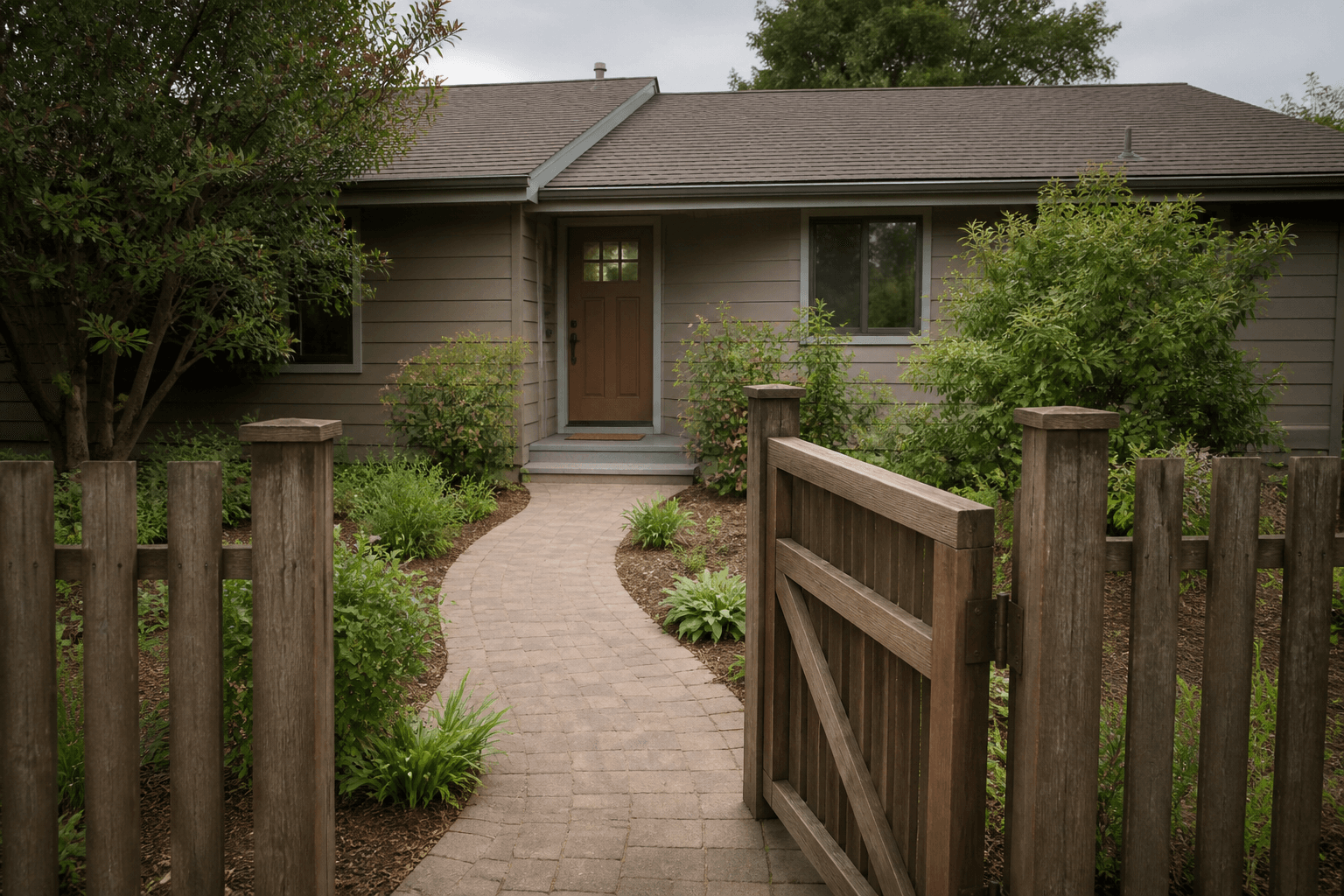

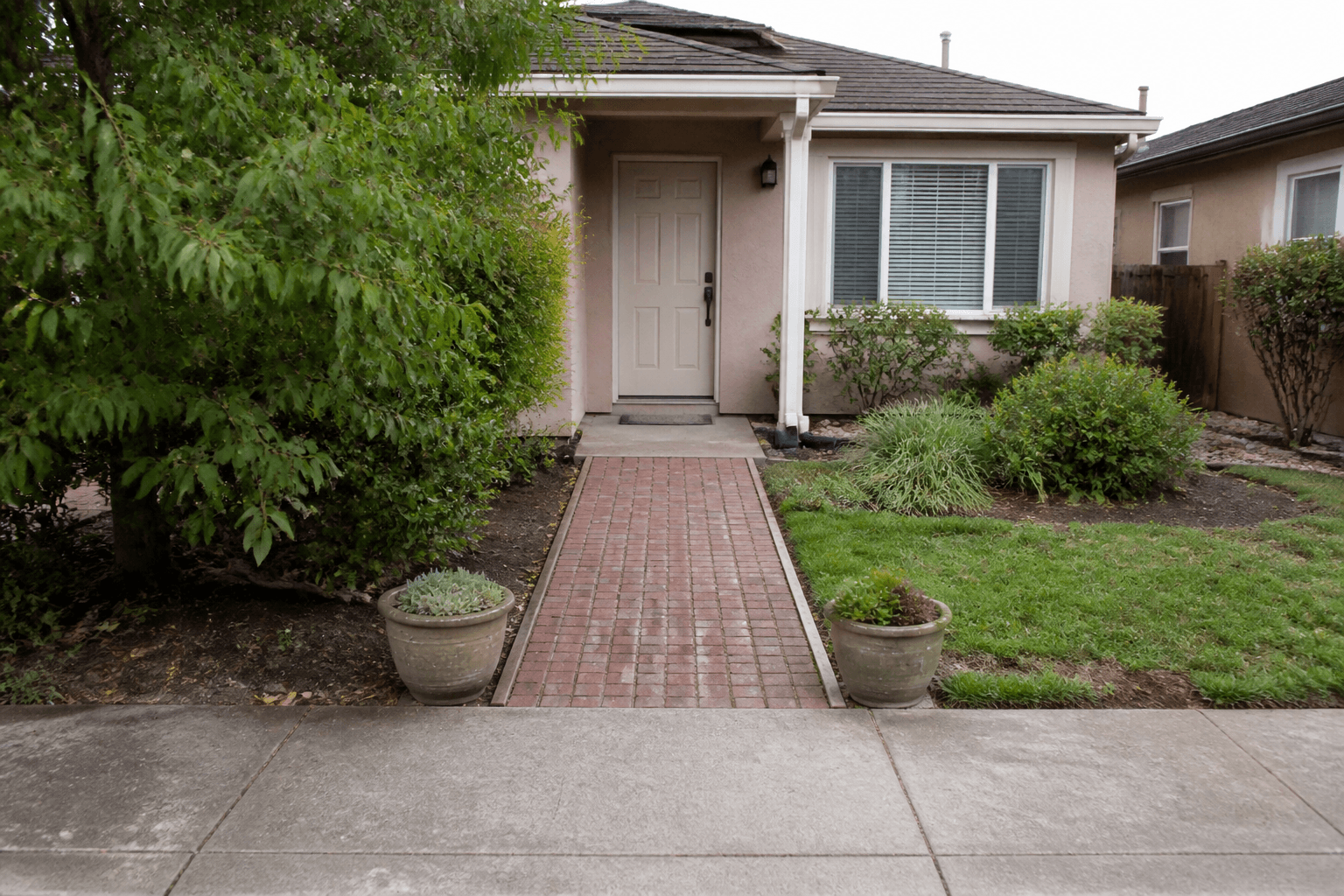
A Feng Shui front yard path is the outdoor walk from the sidewalk or driveway to the house latch you actually use. Keep the last meter clear and the walk findable. This is not a second gate article.
When we photograph fronts, the pretty door is behind a week of bins and a hose coiled on the only bricks. People still ask whether a curve would "slow chi" while they walk the lawn because the path is a trash court. We ask them to carry groceries from the curb without stepping off the paving. If they cannot, the layout is already talking. The gate and path page is the street latch and a gate that can swing. Outdoor lighting is how you find that walk at night. The front porch is the last boards and the mat, not the whole yard. This page is the path across the dirt you own or tend.
What is the job of a front yard path?
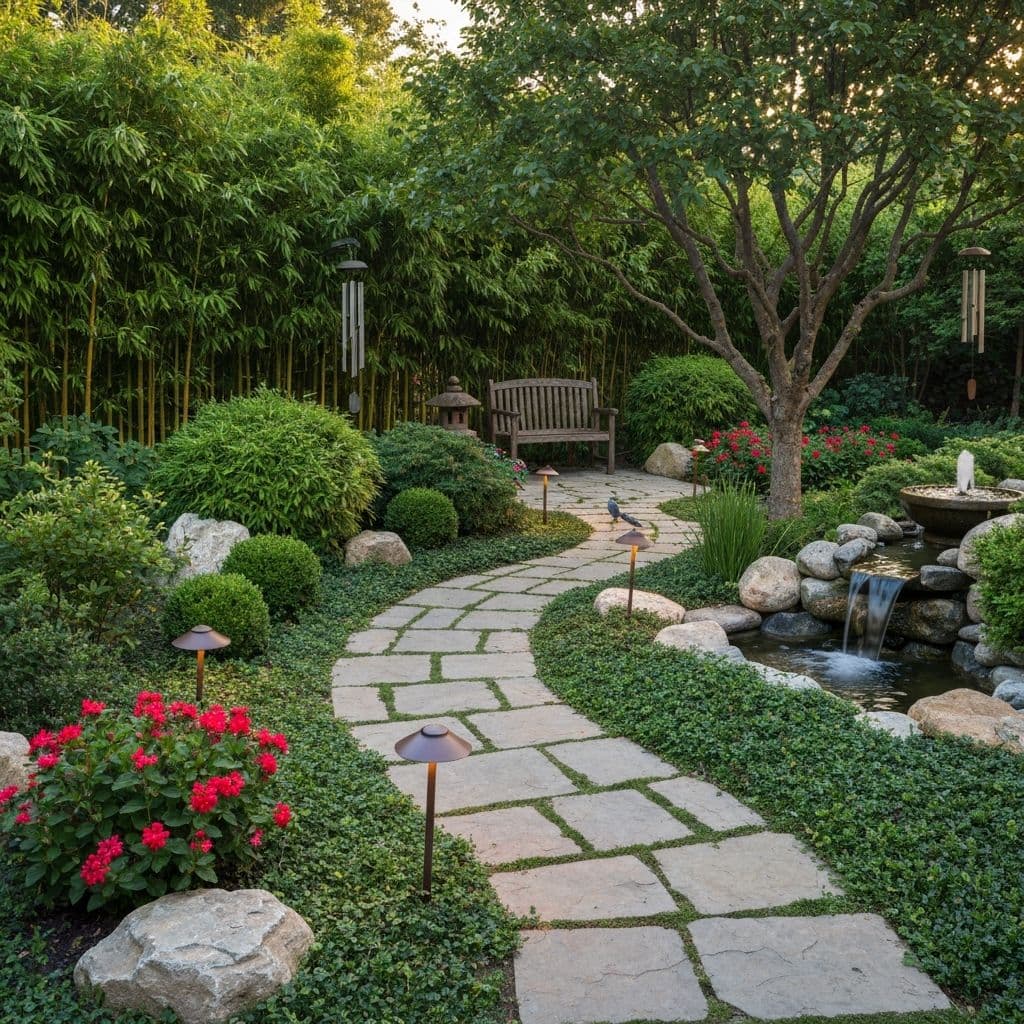
Form School cares about approach: can a person find the mouth of the house without a maze, and can they arrive without a pile in the last step. Classical preference for a gentle curve is a taste, not a building code. Plenty of good houses have a straight run of pavers. The miss is a path you abandon.
The path should be the line you actually take. A decorative ribbon of stone that no one uses, while the real walk is a mud stripe to the side, is two paths. Furnish the real one. Ignore the unused ribbon until you are allowed to pull it.
A plot with no gate still has this job. The sidewalk is the start. The latch is the end. Do not copy the gate article's hinge list onto a open lawn.
How we check a real yard
We walk from the public pavement to the door with a bag in each hand. We note where we step off. We note bins, hoses, bikes, and a pot in the last meter. We open the door through its swing onto the stoop. We do not recommend a new masonry curve.
If the client already bought a "meandering path" kit of cheap stones, we still walk the groceries test.
Is a straight path a problem?
Only if it is also a runway of clutter, or if you cannot see the latch until you are on the mat. Popular writing calls a straight shot rushing chi. You do not owe anyone a demolition.
Soften the last meter: a pot beside the walk, not on it, so the eye pauses. Keep the legal exit wide. A tree that hides the door is a different problem (limb on the roof is a later row). Tonight, if the door number is unreadable from the path, that is house numbers, not this URL.
A path aimed like a hose at the door is the folklore worry. If the builder already did that, you still keep it clear. You do not plant a hedge in the legal exit to "break the arrow."
How wide, and what sits on it?
Wide enough to carry bags without a sidestep into mud. Two people passing is a luxury on a terrace. One person plus recycling is the rental minimum. If the path is a single tile with grass eating both sides, cut the grass or accept that you walk the lawn.
Bins belong on a side pad or against the house wall off the walk, on collection morning they may sit at the curb, then they come back off the bricks. A hose on a reel belongs beside, not in the last meter.
Pots decorate. Pots on the center line are obstacles. One pot at a bend is enough. A shop of lucky statues is clutter.
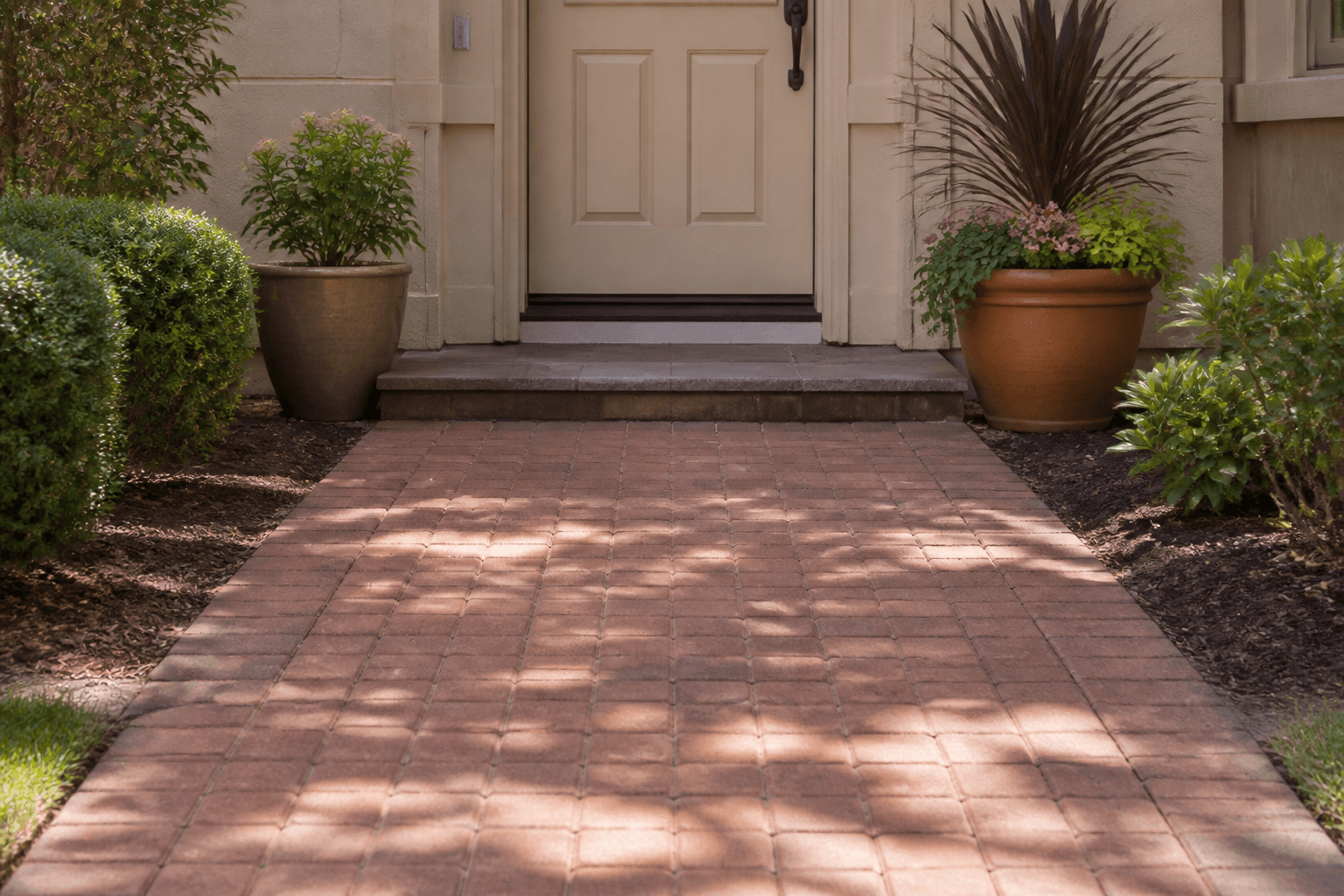
That last meter is the job. If you cannot see the latch from here, the path failed even if the far end is pretty.
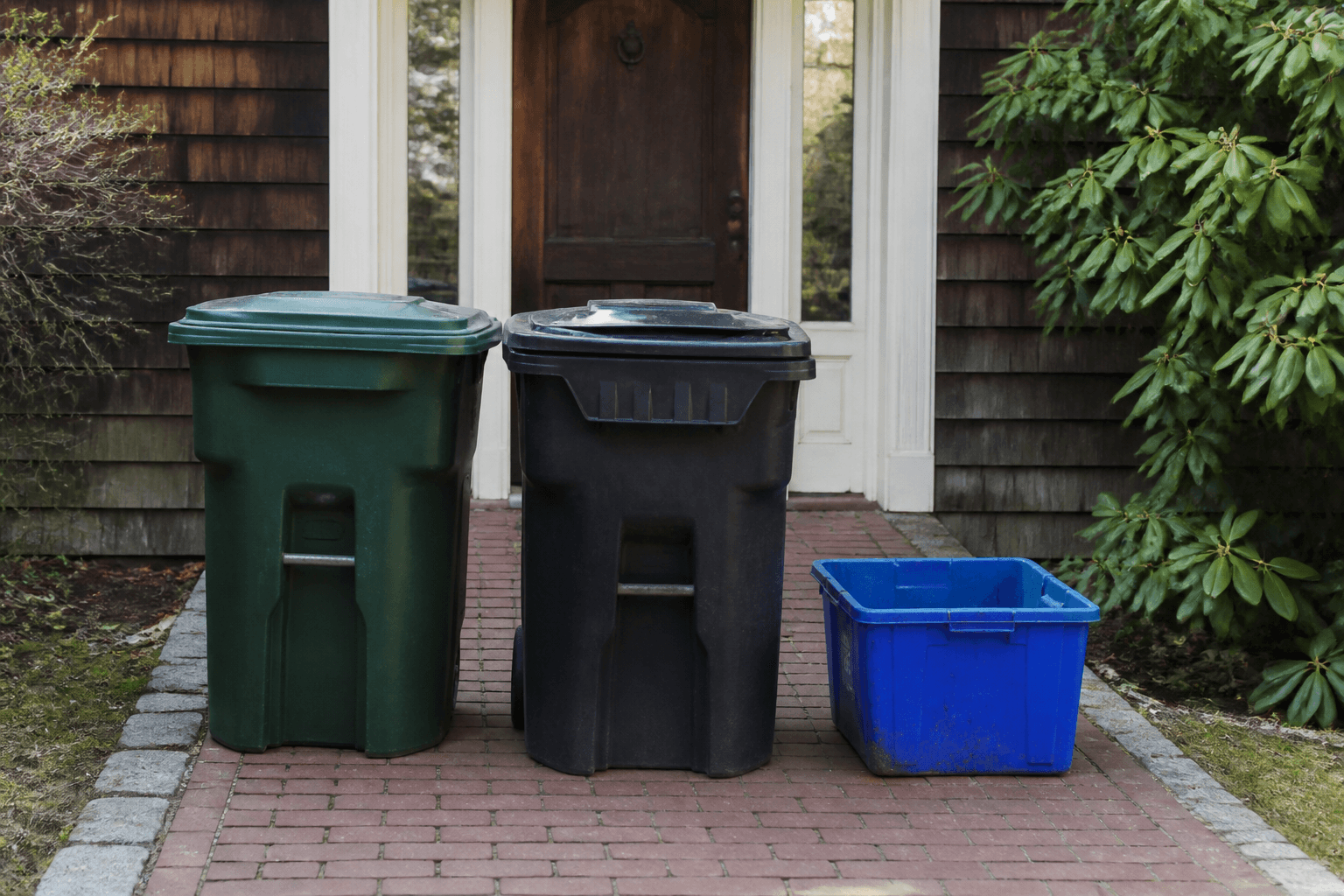
Those bins are the usual miss. The bricks still exist. They are just not a path until the bins move.
Renters, HOAs, and what you skip
Pull what you placed. Sweep. Ask in writing before you add pavers, lights on spikes, or a new curve. A solar stake may be allowed. Masonry is usually not.
Shared fronts: your doormat on the shared walk is the hallway-clutter problem outdoors. Keep your objects on your stoop.
A shop or cafe with a front walk to the door is the same grocery test for customers. Hosts photograph from the path. If the listing photo is a bin alley, guests already know the stay. No occupancy spell from a curved walk.
Ice and leaves are seasonal rows. Tonight, if leaves make the bricks a slide, sweep. Do not wait for a "autumn chi" article.
Driveway, side path, and the door you actually use
If you park and walk a driveway to a side door, that drive-plus-side-walk is the path you measure, not the unused front ribbon that photographs well. Facing-house articles name the door you unlock. This page names the outdoor line to that same door.
A path that splits to two doors: furnish the daily one. The unused front can stay tidy without becoming a second project tonight.
Steps in the path are part of the walk. Keep treads clear of pots. A broken step is a landlord repair, not a chi story. Write it down.
Curve versus straight, without demolition
A gentle curve is traditional taste. A straight terrace walk is common and allowed. If you want a pause at the last meter, one pot beside the walk is enough. A zigzag of cheap stones that no one uses is a trip. Do not add a maze to "slow chi."
Water that sheets across the path after rain is drainage, not a wealth stream. Keep the walk walkable. Outdoor fountains are a different article.
Neighbors' bins on a shared walk are a building rule. Move yours. Photograph yours. Do not start a war over theirs.
A hotel or inn path from the street to the lobby doors is the same grocery test at a larger scale. The lobby layout is the hotel article. The outdoor walk is still last meter and bins (or luggage racks) off the line.
Apartment stoops with a short path of three pavers still have a last meter. If that meter is a parcel pile, the path failed. Parcel piles are a later entrance row. Tonight, move the boxes off the bricks.
HOA rules about "no pots" win over a blog's pause-at-the-door plant. Keep the walk. Skip the pot.
| Path problem | First reversible move |
|---|---|
| Bins on the bricks | Move them to a side pad after collection |
| Hose in the last meter | Reel beside the walk, not on it |
| Straight shot you cannot see the latch | One pot beside the last meter, number readable |
| Unused decorative stones, real walk in mud | Furnish the mud line, ignore the unused ribbon tonight |
A cafe or shop with a front walk uses the same table. Customers are the grocery test. Till layout is the counter article.
Snow, ice, and wet leaves are seasonal. Tonight, if the bricks are a slide, sweep. Do not wait for a date page to make the latch reachable.
What this is not
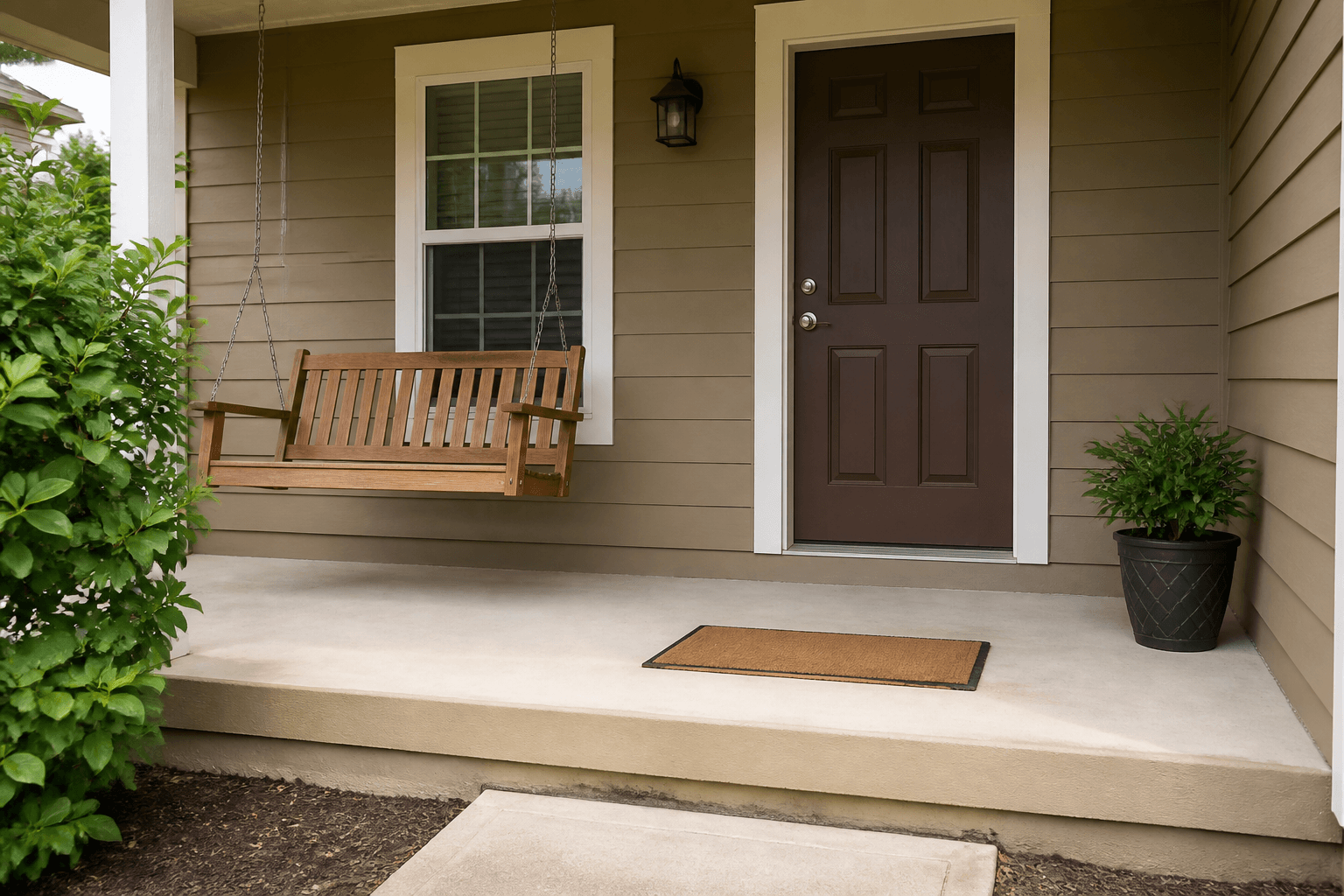
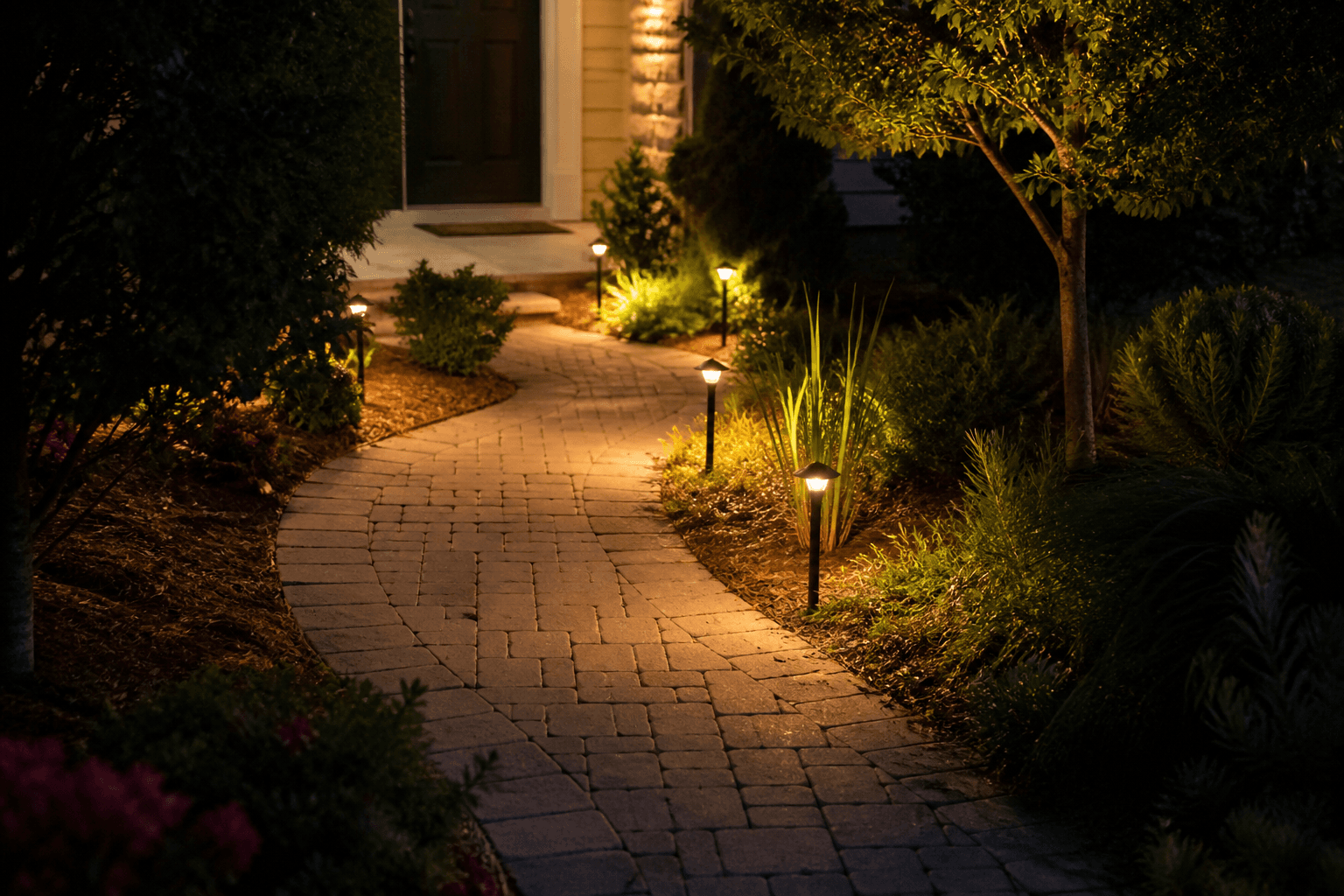
This is not the gate article. If you have a gate that will not swing, go there. It is not outdoor lighting, though a dark path at 9 p.m. needs that page next. It is not the front porch page, which is the boards and the mat.
It is not income. A clear path will not raise rent. It is not a medical claim about a "qi artery." If walking is a clinical problem, that is a clinician's job plus a walk you can actually use.
Skip a bagua mirror aimed at the neighbor from the path. Skip demolishing a straight terrace walk because a blog sold a curve.
Tonight from the curb
Do this in order. Stop when you can walk from sidewalk to latch with bags and the last meter is empty of bins.
- Walk the real line you take, not the unused decorative stones.
- Move bins, hose, and bikes off that line.
- Put at most one pot beside the last meter, not on it.
- Open the door. The mat stays on the stoop, out of the swing.
- Photograph toward the door from the sidewalk if it is safe, in FengShui Hero, and compare the flagged pile with the walk you just cleared.
If you only do one thing tonight, move the bins off the bricks. Tomorrow, look at the last meter and decide whether a pot beside the walk is even needed.