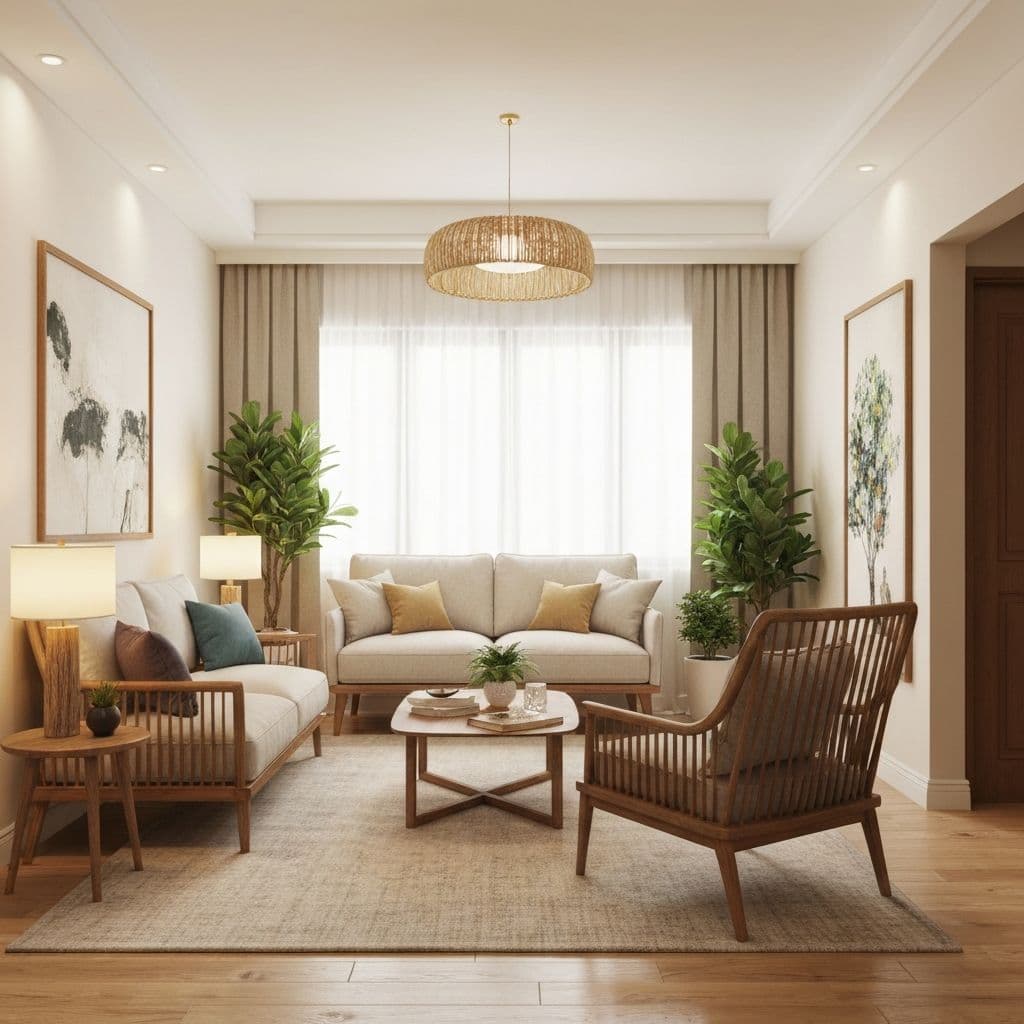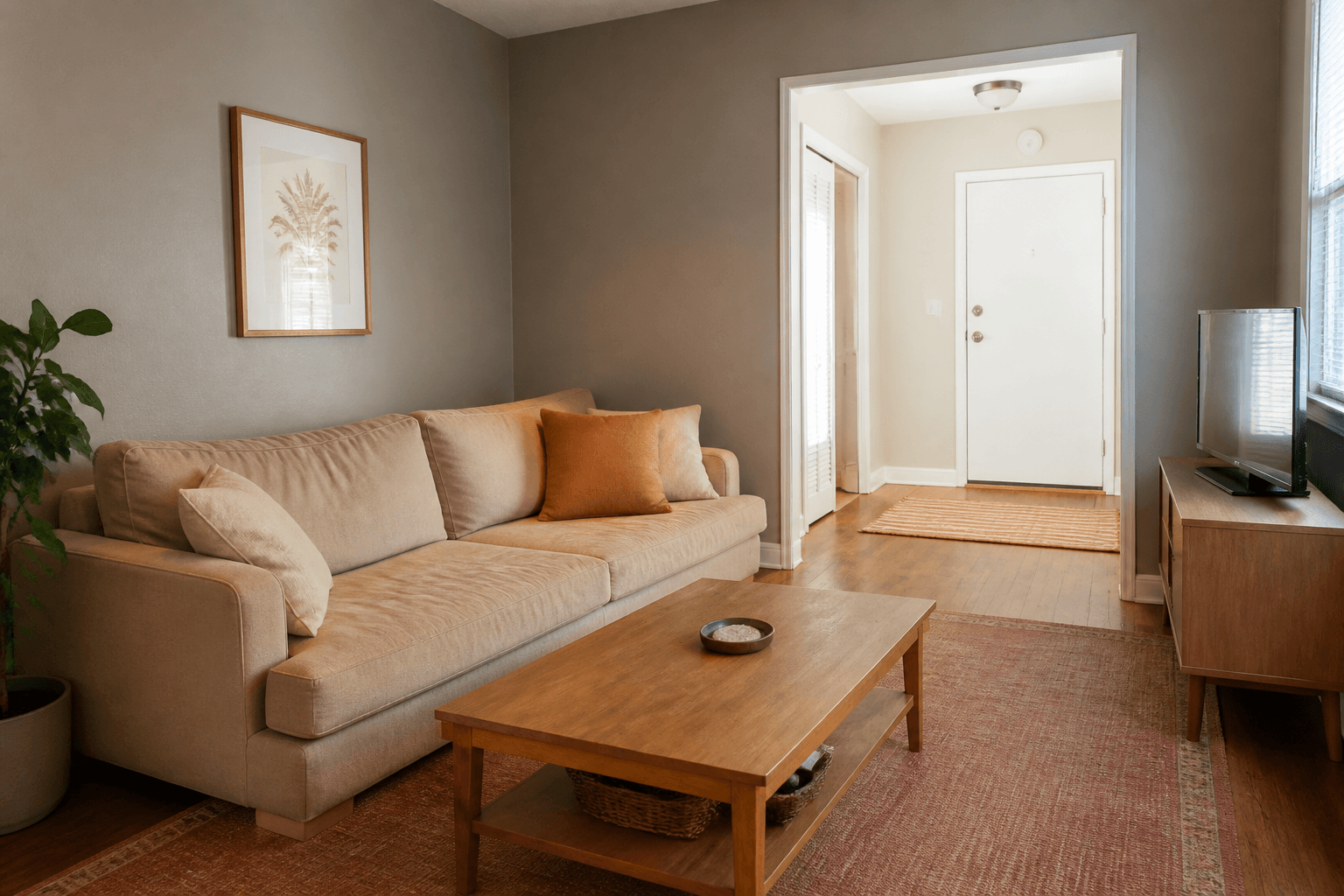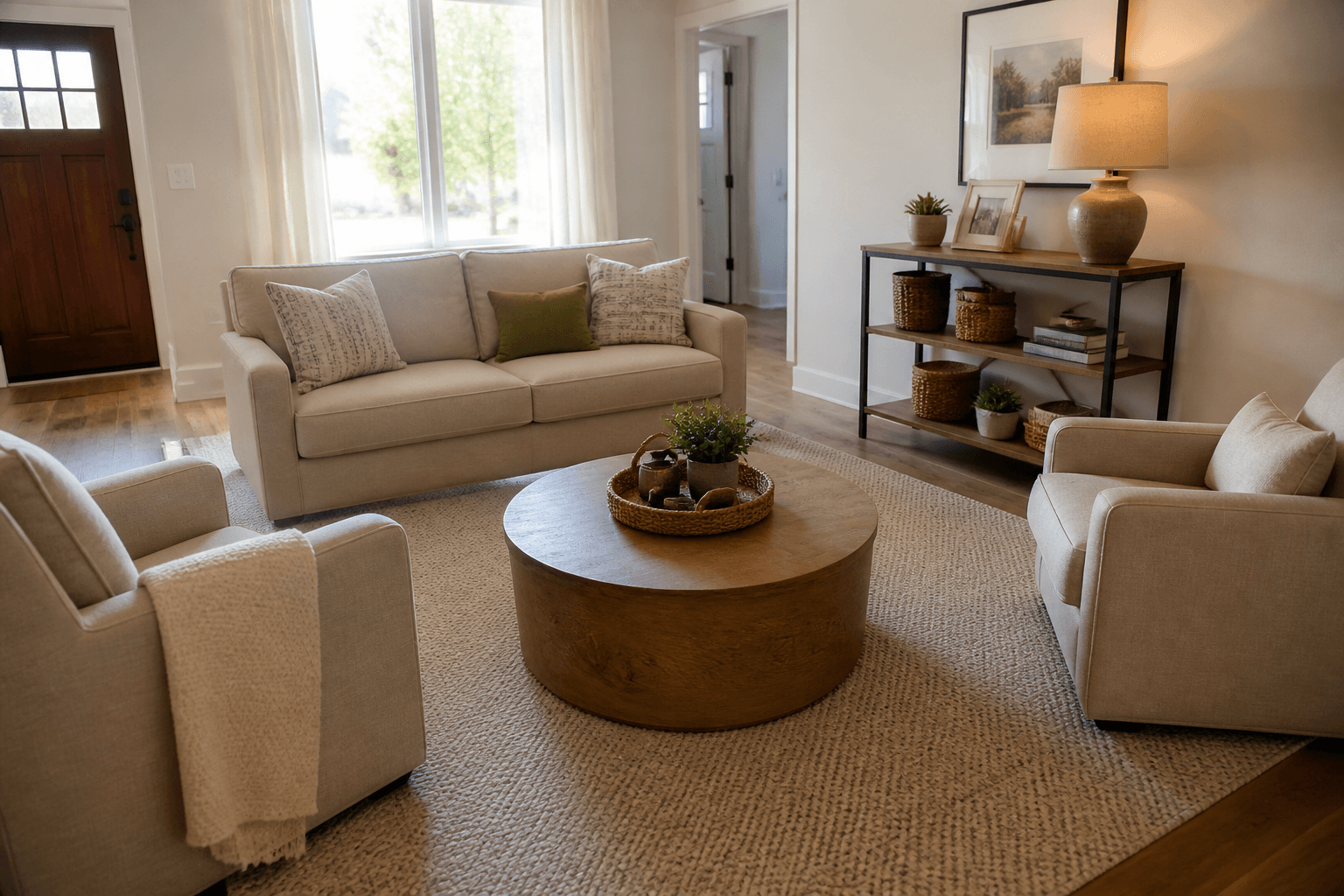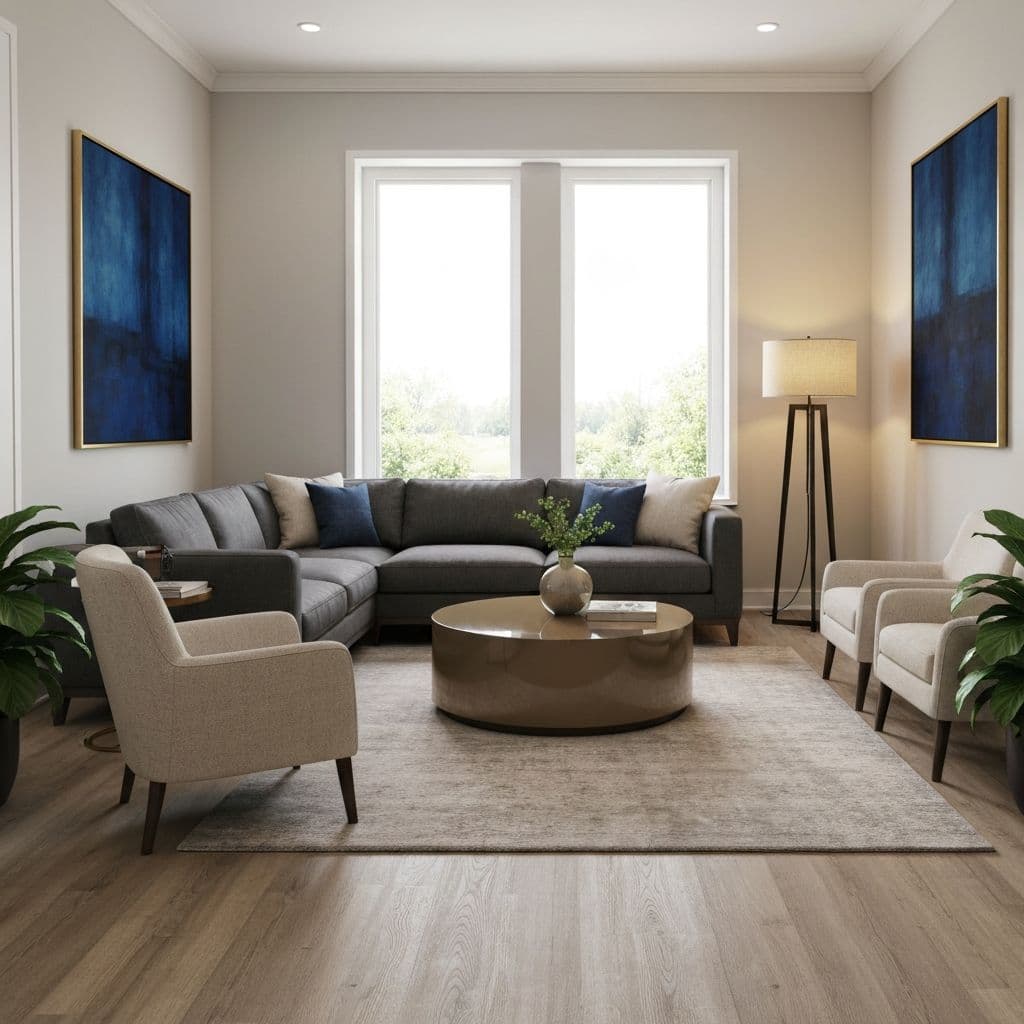

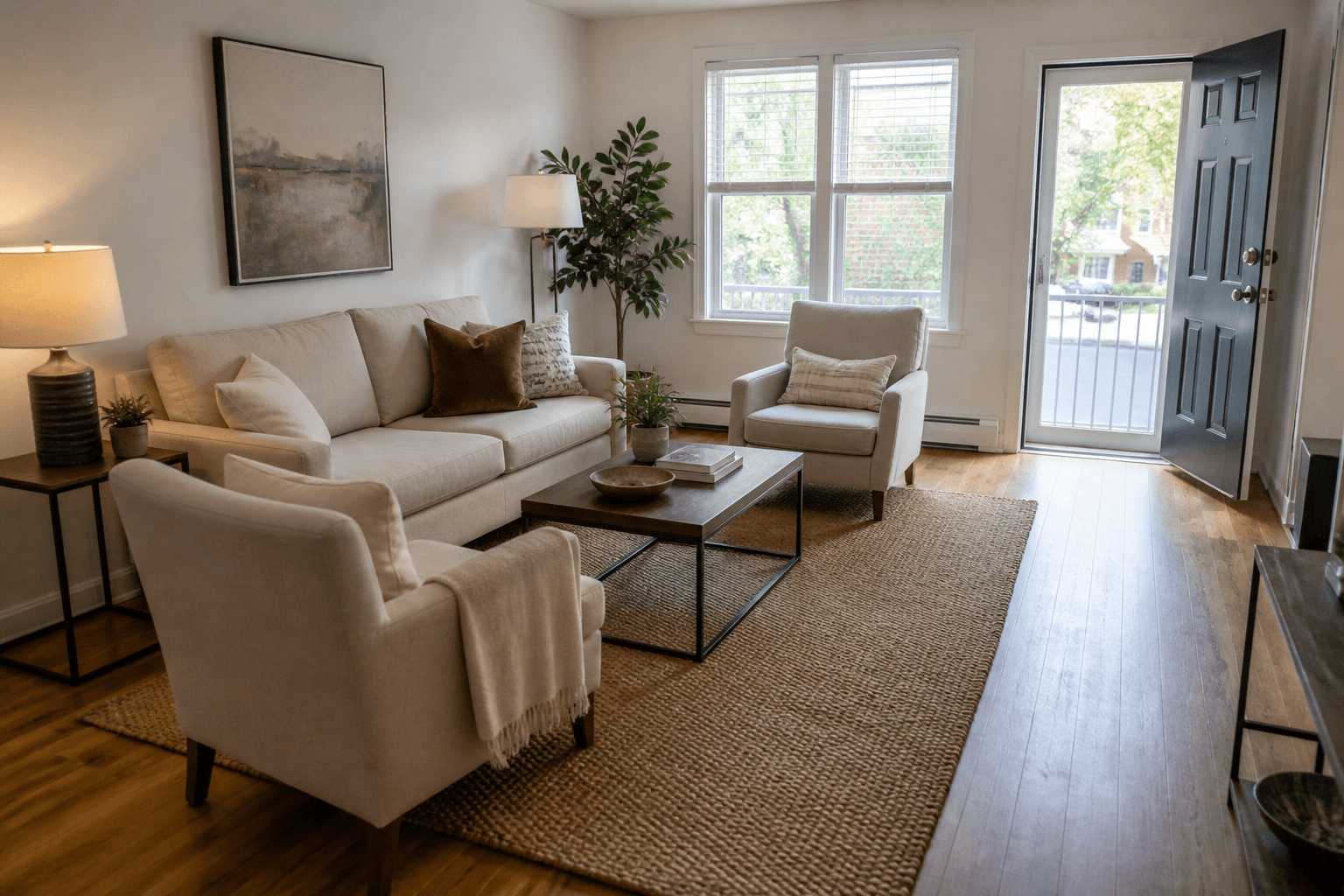
A Feng Shui living room rug is a floor plane that holds the front legs of the seats and leaves a clear walk to the door. It is not a wealth square. A tiny rug floating in the middle of the room is the usual miss.
When we photograph living rooms after a delivery, the new rug is often a bath mat in a sea of wood, with the sofa a full step away. People searched "unity" online and still clicked a 4x6 in a 12-foot room. We ask them to sit, then walk to the latch without tripping the edge. If they catch a heel, the rug already failed. Sofa placement is command and a conversation square. Coffee table placement is the shin path on top of that square. Arrange furniture is where pieces you already own should sit. This page is the textile that ties those seats without eating the aisle.
What is a living room rug supposed to do?
It marks where people sit together. Front legs on the cloth tell the eye the chairs belong to the same group. A walk around the cloth tells the body the door still works.
Classical Form School cares about a path you can take and a place you can rest. Popular shops sell purple "wealth" rugs for a bagua cell. Treat the shop copy as copy. Your heels and the latch are the test.
All legs on is a larger, calmer look if you have the width. Front legs on is the rental that still unifies. No legs on is a postage stamp.
How we check a real room
We sit in the main seat. We look at the door. We walk to the latch with a tray. We note which legs sit on the cloth. We note a corner that kicks up. We do not recommend a lucky color until the size works.
If the client already bought a small rug, we still tape a larger footprint on the floor before they return it.
Front legs on, or all legs on?
Front legs on is the rule we use most. The sofa's front pair and the chairs' front pair share the textile. Back legs can sit on wood. The group still reads as one.
All legs on needs a rug that extends beyond the back of the sofa, which in a small rental often hits the wall or the walk. If all-legs-on kills the aisle, go back to front-legs-on.
A runner in a living room is usually a hallway leftover. Use a runner in a hall. In this room, a rectangle under the seats.
Round rugs work under a round coffee table if the seats still catch the edge. A round rug under a long sofa often leaves two chairs off the cloth. Then you have a hierarchy of who is "on" the group. Size up or switch shape.
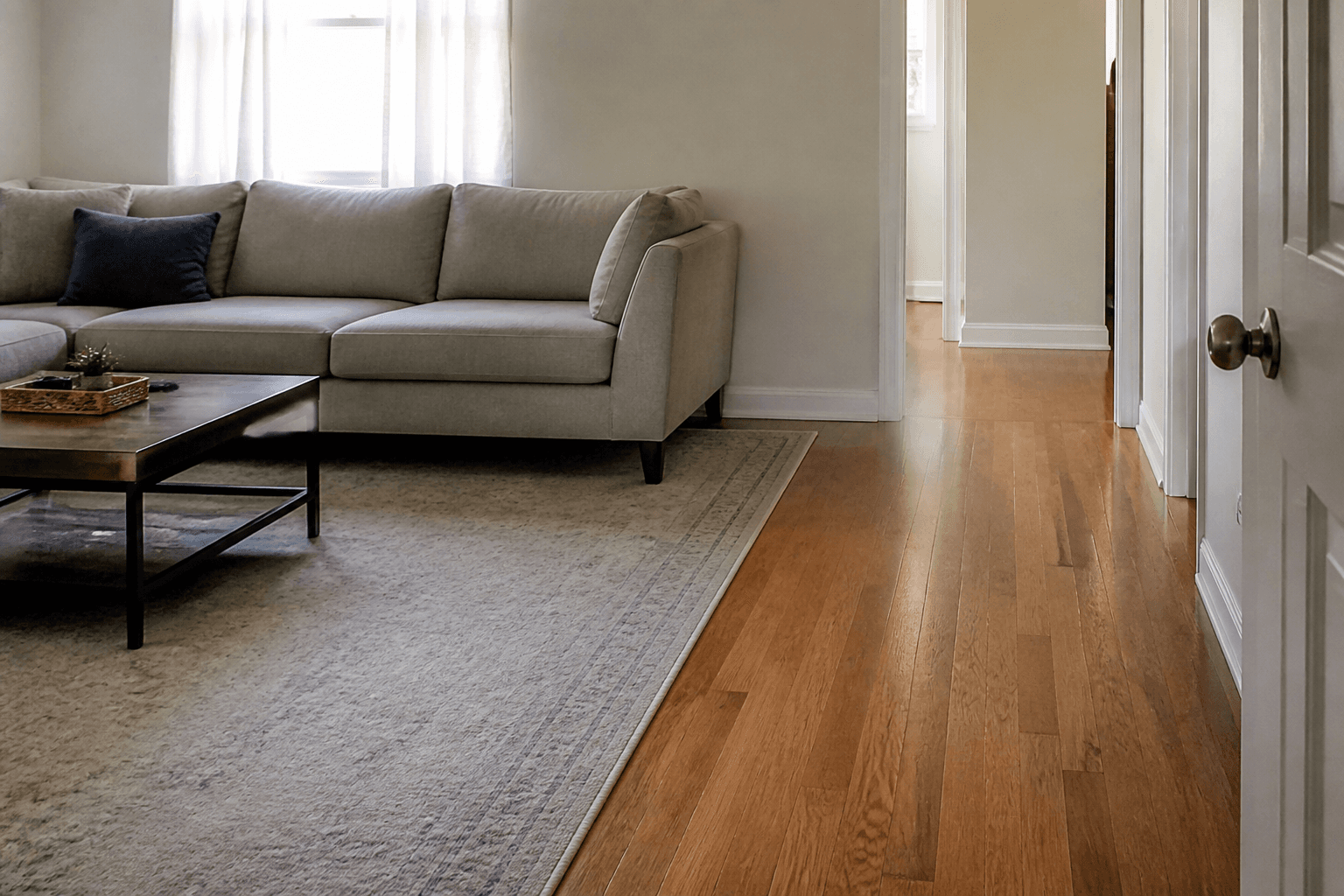
That aisle is the other half of the job. Front legs can be perfect and the rug still fails if you sidestep to leave.
What about a rug that is too small?
A floating rug with furniture around it is the catalog miss. Nothing is grounded. The edge is a trip in the dark. Popular writing calls it scattered energy. The honest fix is a larger rug or no rug.
Tape the size you think you need. Live with the tape for a day. Open the door over it. If the tape already owns the latch line, the rug is too big the other way.
Layers (a small rug on a large one) are extra. They are not required. If you layer, the top cloth still should catch front legs, not sit as a third island.
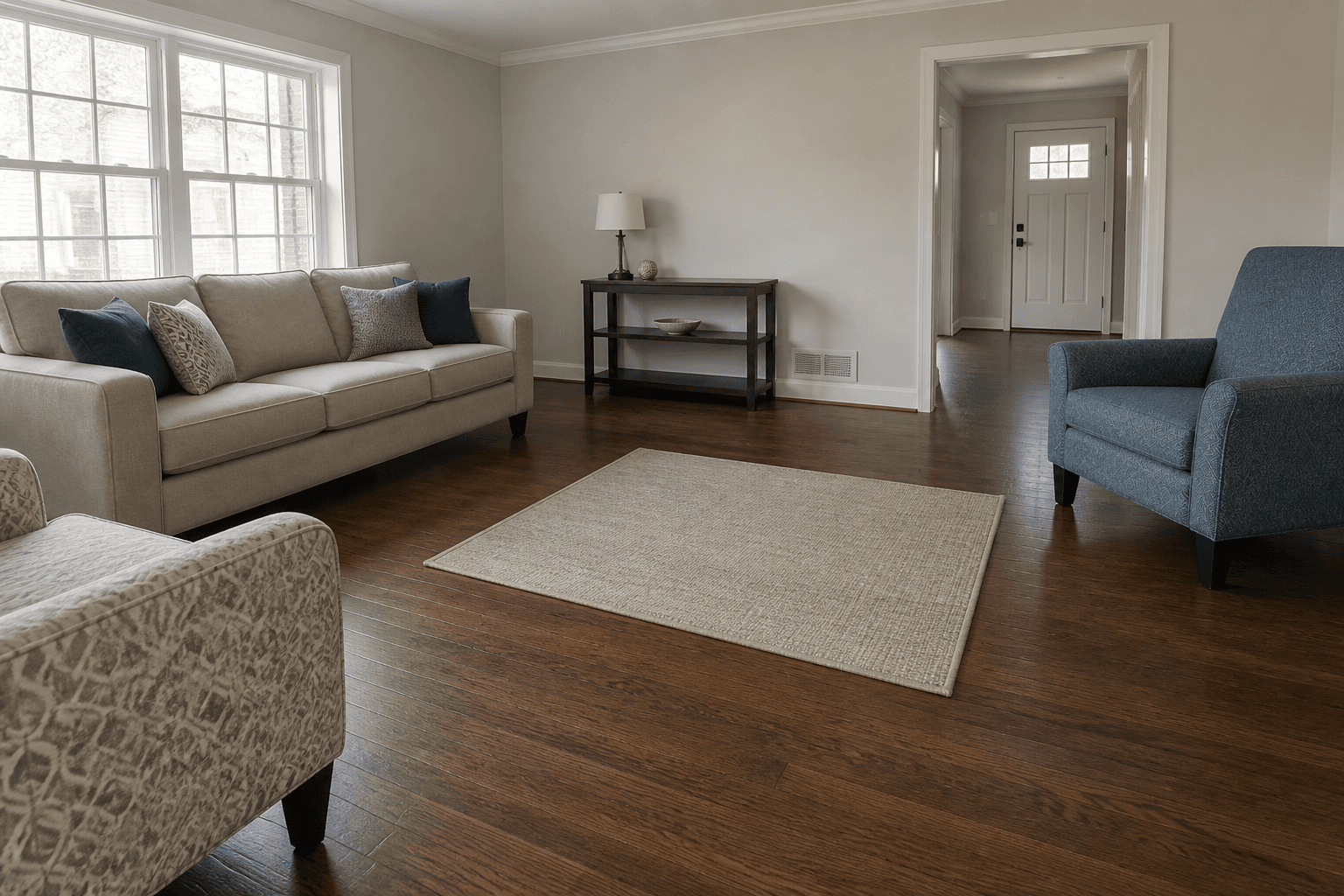
That island is the miss. Color and pattern will not unify seats that never touch the cloth.
How the rug works with sofa, table, and TV
The rug follows the seats. If the sofa cannot see the door, move the sofa first. Then size the rug to the new square. Do not buy a rug to "fix" a sofa that faces a blank wall.
The coffee table sits on the rug if the table is part of the group. Leave a shin path. If the table plus the rug edge eat the aisle, the table is the coffee-table article, not a reason to shrink the rug into an island.
TV glare is a living-room TV page. A pale shiny rug can bounce light at the screen. A matte jute usually does not. That is a finish test, not a gua.
Round, runner, and layered rugs
A runner belongs in a hall. In a living room it reads as leftover. A round rug under a long sofa often leaves chairs off the cloth. Size up or use a rectangle.
Layers: a large jute with a smaller wool on top can work if the top cloth still catches front legs. A tiny top rug that nothing sits on is two islands. Skip the top layer until the bottom size is honest.
Listing living rooms: a rug that unifies the seats photographs as a place to sit. A postage stamp photographs as an unfinished floor. Hosts still skip occupancy claims from a textile.
Kids' toys on the rug are a later living-room row. Tonight, if the toy pile lives on the only walk, the pile gets a bin that closes. The rug size is still this job.
Waiting rooms and salon seating use the same front-legs rule. A tiny rug under a coffee table with chairs off it is still an island. Unify the seats you actually use.
A rug that covers the whole room to the baseboards can feel like a hotel. Leave a wood or tile margin if you have it, so the door swing still has a hard floor. Wall-to-wall carpet is a landlord finish. This page is a rug you can roll.
Open-plan living: the rug marks sitting. It should not run through the kitchen triangle. If the only walk to the fridge crosses the rug on a diagonal that bunches, cut the size back and leave a hard-floor aisle.
| Rug size | What we see | First move |
|---|---|---|
| Nothing sits on it | Island in a sea of floor | Size up or skip |
| Front legs on, aisle clear | Group plus a walk | Keep |
| All legs on, door pinched | Hotel look, failed latch | Go back to front legs |
| Wall to wall, swing sticks | Carpet pretending to be a rug | Leave a hard margin if you can |
Photograph from the door after you tape. If the tape already fails, the cart is early.
Color, pile, and what this is not
Earth tones hide dirt in a rental. High contrast patterns hide crumbs and also hide the walk at night. A pale high-pile shag in the only aisle is a trip.
Element-as-color (green wood, red fire) is optional overlay after size. A red rug in the south cell will not mint fame. A purple rug in the southeast will not mint income.
Pads keep the rug from skating. Duct tape on a landlord floor is how you lose a deposit. Use a pad cut smaller than the rug.
Pets and kids: a washable flatweave you can take outside beats a "sacred" wool you never clean. A dirty rug is clutter on the floor.
This is not the bedroom rug row. Sleep paths in the dark are a different URL. It is not the kitchen runner at the stove. It is not bagua tape.
It is not sofa command. If the sofa cannot see the door, move the sofa. The rug follows the seats, not the other way around.
Skip medical claims about grounding your nervous system through wool. If health is a problem, that is a clinician's job. This page is legs and a walk.
Tonight on the floor
Do this in order. Stop when front legs share a cloth and you can walk to the latch without a heel catch.
- Sit in the main seat. Note which legs touch the current rug, if any.
- Walk to the door. If you sidestep or catch the edge, mark the pinch with tape.
- Tape a larger rectangle that catches front legs and leaves a shoulder-width aisle.
- If the tape fails the aisle, keep front-legs-on or skip the rug.
- Photograph from the door in FengShui Hero. If the scan flags a blocked path, the rug is furniture in the walk, not a textile upgrade.
If you only do one thing tonight, sit down and look at which legs are on the cloth. Tomorrow, tape a larger footprint before you open a cart.