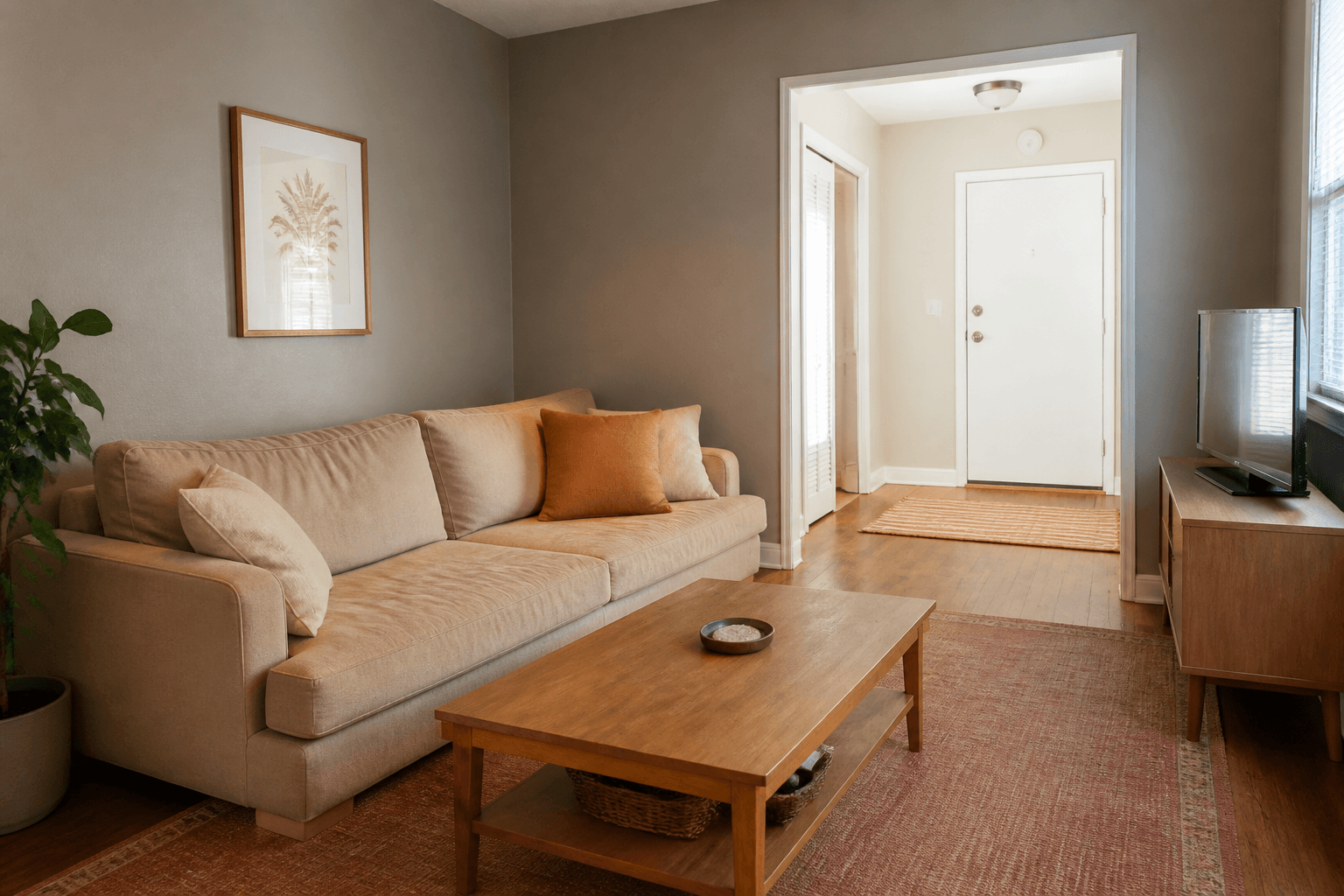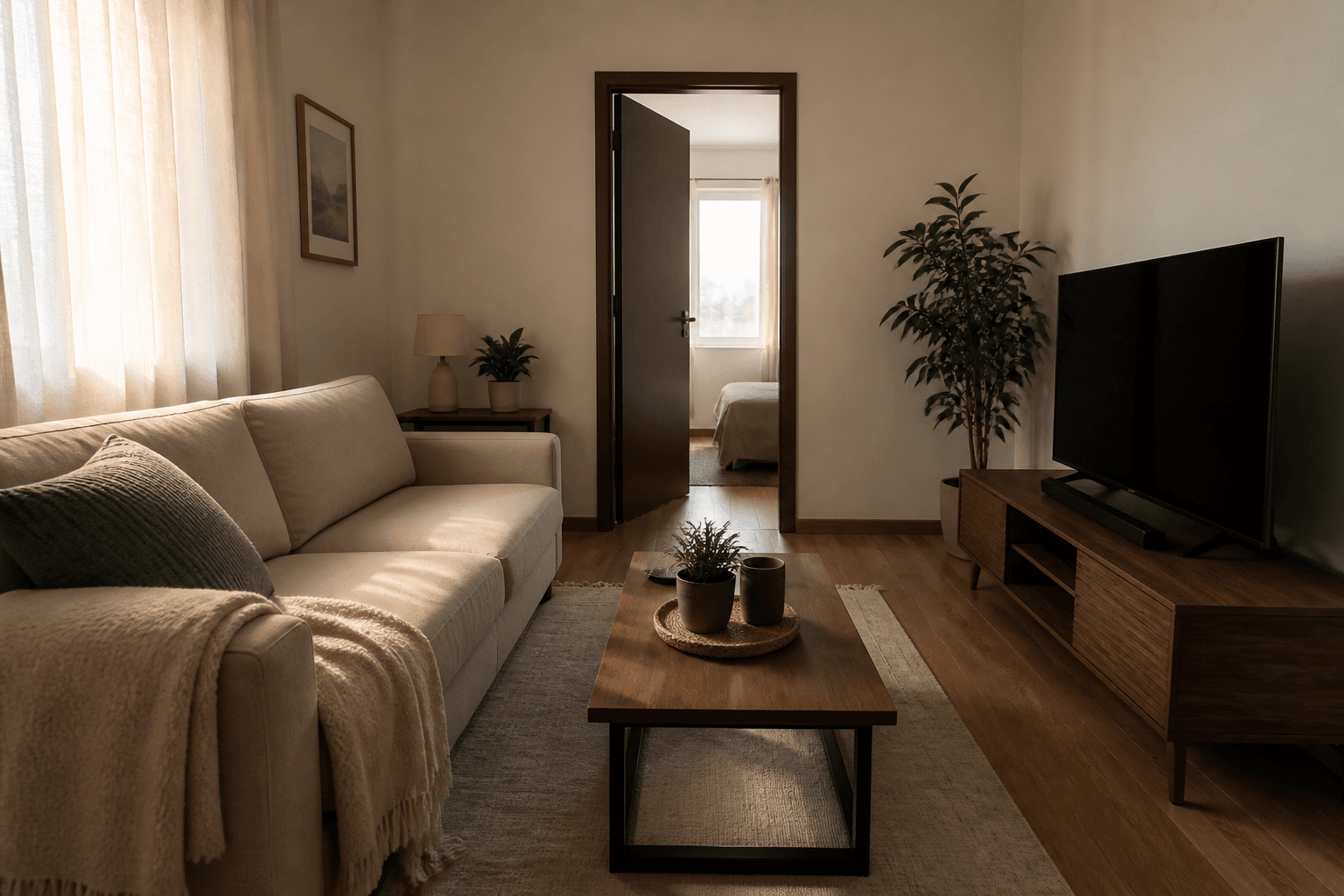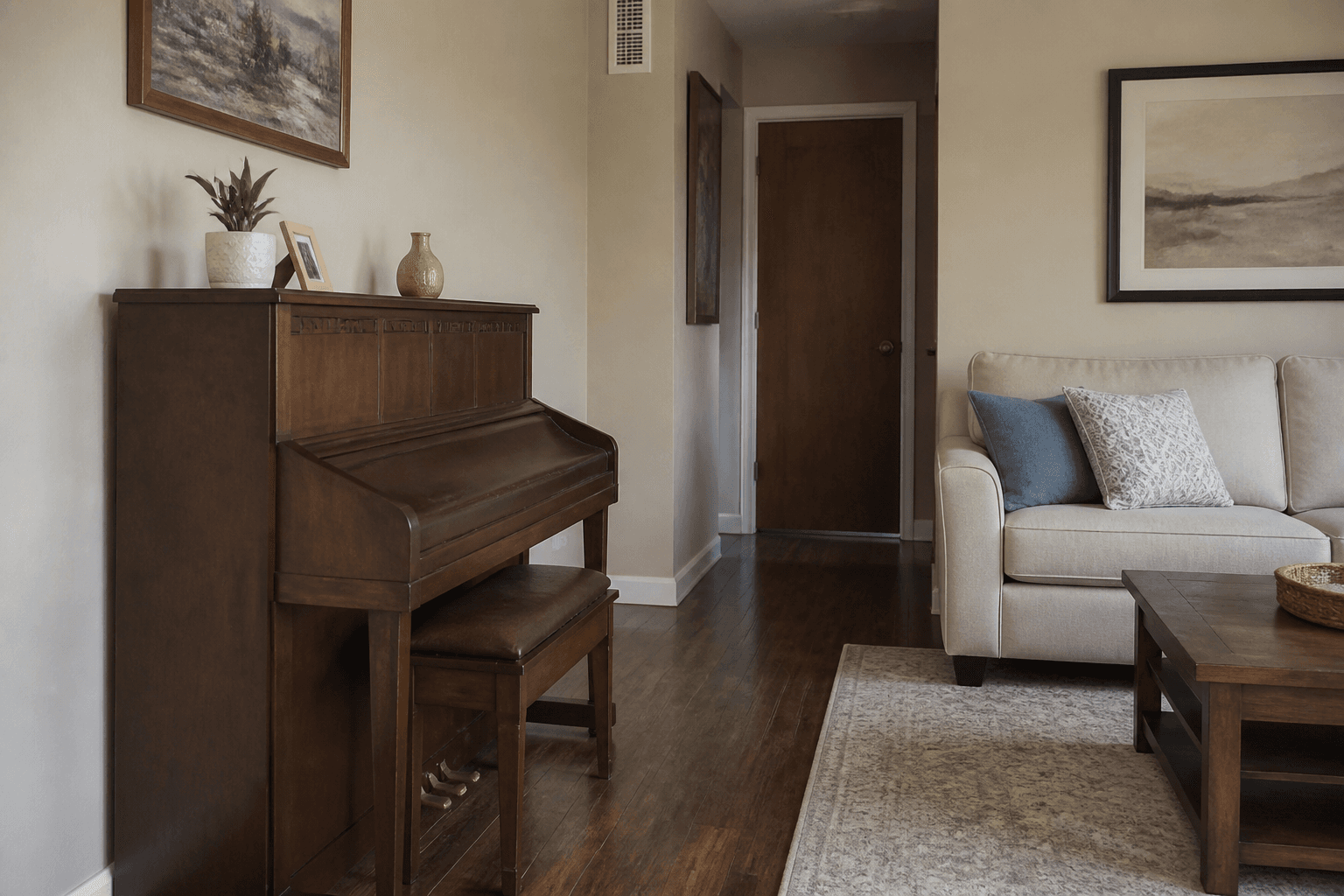


Feng Shui speaker placement is tweeters at ear height from the sofa command seat, with cables off the walk and the door still in view. Speakers are listening furniture. They are not a lucky subwoofer. Volume for neighbors is courtesy, not chi.
When we photograph living rooms, the pair is often on the floor beside the TV, firing at shins, with a black cable across the only path from the latch to the kitchen. Or two towers stand in that aisle like a gate. People ask which gua likes music. We ask them to sit on the sofa, name the door, then say whether the tweeters meet their ears. Sofa placement is the command seat. TV placement is the screen, glare, and neck line. Piano placement is a lid and a bench. This page is the boxes you aim.
How high should the tweeters sit?
Sit in the seat that already has command: a solid back and the door in a glance. That is the height test. The small drivers that make treble should meet that ear line. A little below is kinder than a blast above the skull. Looking up at tweeters for a whole record is a neck problem. The old language about chi settling is a head that is not tilted.
Bookshelf speakers belong on stands or on a low console that hits that line. On the floor they shout at ankles. On a high bookcase they shout at the ceiling. Do not stack them on a pile of novels to "raise the energy." Use a stand you can reverse. Felt under the stand if the landlord cares about the floor.
Floor-standing speakers still have a tweeter. That tweeter still wants the ear line of the command seat. A tower that only looks right in a catalog can fire over a low sofa. Pull the sofa height and the tweeter height into the same conversation. Skip a lucky number of inches. Sit in the seat and listen.

That ear line is the listening test. If you only see the TV logo between two boxes and you cannot find the latch, you cloned a shop wall. Move the lighter object. In most rentals that is the speaker stand, not the load-bearing plaster.
Toe the pair a little toward the sofa so the sound meets the seat, not the hallway. You do not need a protractor. You need the boxes to face the people who sit, without turning the doorway into a horn.
How we check a real speaker wall
We sit on the sofa. We name the door. We note whether tweeters hit the ear. We stand in the room door and see whether a tower or a cable is the first squeeze toward the kitchen. We look for a sub in the walk, a plant on a box, and a nest of leads. We do not ask which bagua wants bass. We ask whether anyone can walk, and whether the seated person can still see who enters.
A kitchen smart puck is not this article. This page is a stereo pair aimed at a living-room seat. A Bluetooth box you carry outside and put away is a put-away, not a tower job.
Can you still see the door from the sofa?
Command stays with the seat. Speakers do not get to build a fence that hides the latch. Two towers in front of the sofa, or a wide console of boxes that fills the view, turn the living room into a studio control room. Fine for a closed media room. Tiring for the place you talk.
The sofa still wants a glance at the entrance. Flank the TV if that wall is already the screen wall, but leave a gap so a person in the jamb appears in your periphery. A slightly off-center pair beats a sofa that stares only at cloth grilles.
Do not clone the TV article and stop. TV placement is the panel, glare, and whether a black screen greets the door. Speakers can sit on that same wall and still fail if they sit too low or park in the mouth of the room. Fix the seat first. Park the pair after the latch is in view, and clip the leads once the boxes sit.
The mouth of the room is the aisle from the door to the kitchen (or the hall you actually use). Towers, a sub, and a snake of cable in that aisle are a gate. People call that blocked chi. In ordinary language, you turn sideways with a grocery bag. Slide the stands off that line.
A speaker in the door swing is a startle and a scuff. Move it until the door opens without kissing a grille. Rear surrounds belong behind the sofa only if they are not a shin hit. Rental stands with felt beat in-wall cans you cannot take with you. If a rear box makes you flinch when someone walks to the kitchen, pull it.
Do speaker cables own the walk?
A mains lead or a speaker wire across a wood walk is a trip. Socks, a dog, a guest with a cup: someone will catch it. Clip the cord to the baseboard with removable clips. Run along the wall, not across the middle. Warm the adhesive when you leave so paint stays.

That crossing is the diagnosis. The sofa can be in command. The cable still fails the room. Hide the run. You do not get extra luck from a tidy lead. You get a floor people can use.
Do not bury a mains cable under a rug you slide on. Heat and wear are ordinary hazards. A flat cover strip you can lift is honest. Tape that peels in a week is clutter.
A nest behind the TV stand is visual static. One tidy power lead per box. Wireless for the signal is fine if you already own it. You still have power. Coil extra length with a strap, not a knot behind a plant. Pets chew and kids pull, so clip the cord where it cannot become a new trip.
Floor-standing or bookshelf?
Pick the boxes you already own or the ones that fit the room. Then run the same tests. The furniture difference is footprint and height.
| Type | What it does to the room | What to watch |
|---|---|---|
| Bookshelf on stands | Small footprint, height you can set | Stands in the aisle, top-heavy plants, cords |
| Floor-standing | Tall cabinets, real weight | Mouth of the room, door swing, tweeter vs low sofa |
| Soundbar under the screen | One bar on the TV wall | Later calendar row. Not this page. |
A soundbar that lives under the screen is a TV-wall object. We will write that as its own living-room row. Tonight, if a bar is all you have, keep it off the walk, pointed at the sofa, and still give the seat a door glance.
Bookshelf stands creep on vinyl when the bass hits. Cups or felt stop that. Take them at move-out. Floor-standing spikes punch landlord wood. Use the discs the stand came with, or skip spikes.
Do not use two towers as a room divider in the kitchen path. Speakers as a dam fail the home job. They are too easy to walk into. Keep the top of each box clear. A plant is a watering accident. Mail on a sub is a sideboard you did not mean to build.
What about a subwoofer and the neighbors?
A subwoofer is not lucky. Parking it in a southeast square will not raise a paycheck. Corners make bass louder because walls pile the sound up. That is acoustics in ordinary rooms. It is also how you annoy the person on the other side of the plaster.
Keep the sub off the walk and off the door swing. A cube in the mouth of the room is a shin hit with extra boom. Along a side wall near the fronts is the usual home picture. Pull it a hand off the plaster if the corner rattles dishes. You are not tuning a studio. You are stopping a rattle.
Volume versus neighbors is courtesy, not chi. Building quiet hours, a shared bedroom wall, a downstairs sleeper: turn it down or skip the sub after bedtime. Headphones on a small system are the renter mute, the same idea as a digital piano. Knock the wall if you do not know what sits next door. Assume a bedroom is possible.
Do not drill in-wall or in-ceiling speakers unless the lease says so. Free-standing stands reverse. Photograph the floor before you park towers so you can prove felt did its job. Give an amp air. Do not bury a receiver under records in the walk.
A piano is a sounding box with a lid and a player who needs a door glance. Do not point a tower at a crib in the same room. Loud sound at a sleeper is a household fight. Angle away, or use headphones after bedtime.
Jobs besides a family living room
A cafe or shop with speakers still owes the aisle. Fire code walks win. Ads that blast the entrance are noise at the mouth of the room. A short-let with a party-sized pair is a host problem if the towers steal the suitcase path. Do not promise bookings from a gua on the left stand.
Renter steps you can reverse tonight
- Sit on the sofa that sees the door. Name the latch.
- Set tweeters to that ear height with stands or by sliding towers.
- Toe the pair toward the seat, not toward the hallway.
- Move any box out of the door-to-kitchen aisle and out of the door swing.
- Clip cables to the baseboard. Get the run off the middle of the floor.
- Park the sub off the walk. Skip a wealth-corner story.
- Put felt or cups under stands if the floor scratches. Skip spikes on wood you do not own.
- Photograph from the sofa, then from the door.
If the only place the pair fits is the mouth of the room, you do not have speaker placement. You have a gate. Use a smaller bookshelf pair on the TV wall, or use headphones. Layout cannot invent a hallway. If you share the room, do the sit-test with the person who listens most.
Renters who cannot move a bolted soundbar should still clear the cables and the sub, then treat ear height as a stand for any separate pair. Holes in masonry wait for the lease.
What this is not
It is not TV placement. The screen article is glare, height of the picture, and whether a black rectangle greets the door. Speakers can share that wall and still trip someone.
It is not piano placement. A piano is a lid, a bench, and a case. Do not copy the fallboard checklist onto a grille.
It is not a lucky subwoofer or a wealth corner. Matching speakers is stereo. Matching nightstands is a different hub.
It is not a medical claim about hearing or mood. Playing music can be pleasant. If hearing or low mood is a health problem, that is a clinician's job. This page is height, path, and cable.
Skip a bagua sticker on a grille. Do not block a required egress with a tower. Fire codes beat a blog.
What should you do tonight?
Sit on the command sofa. Find the door. Raise or lower the tweeters to that ear. Pull the boxes out of the kitchen aisle. Clip the cable to the baseboard.
Then photograph from the seat. If the first object in the walk from the door is a lead or a tower, the pair failed. Listening is allowed. The mouth of the room still has to work. Neighbors get the volume you would want through a shared wall, not a chi story.