
Feng Shui deck placement is stairs that do not dump people at the sliding door, a landing you can pause on, and a walk across the boards that still reaches the handle. You use the deck you already have. If you rent, you move furniture. You do not pour a new deck.
When we photograph back gardens, the listing still shows a styled grill and the deck we get has stairs that spit you onto the glass. People ask which gua the boards sit in. We ask them to climb with a bag and open the slider. If they stop with their nose on the pane, the stairs already did the talking. The patio furniture page is outdoor seats that see the house door, on the ground. The gate and path page is the street latch to the front door. The balcony page is an apartment rail slab. This page is deck placement on the boards you already have: stairs versus the slider, then the walk.
Where should deck steps sit versus the slider?
Climb the stairs the way you come in from the yard. Hold a bag. If the last tread puts you against the glass, the steps dump at the mouth of the house.
Form School cares about approach. A stair that aims like a corridor at the slider is a hallway that ends in a door you cannot open until you shuffle. A house deck already has stairs. You work with the boards.
The useful geometry is a landing beside the slider, not in its face. You arrive, you set the bag down, you step sideways to the handle, you open the panel the way it was designed to travel. The glass is a door. It is not a wall you walk into.
Side stairs that land along the house wall already do this. You walk parallel to the glass and then reach the latch. Center stairs that hit the middle of the slider do the opposite. You are a delivery at the pane. Stairs at the far end of the deck are often kinder: you walk the boards first, then the door. Keep that walk as a walk.
You do not move stairs you do not own. HOA drawings and landlord timber win. The reversible job is the landing: keep it empty so a person can turn.
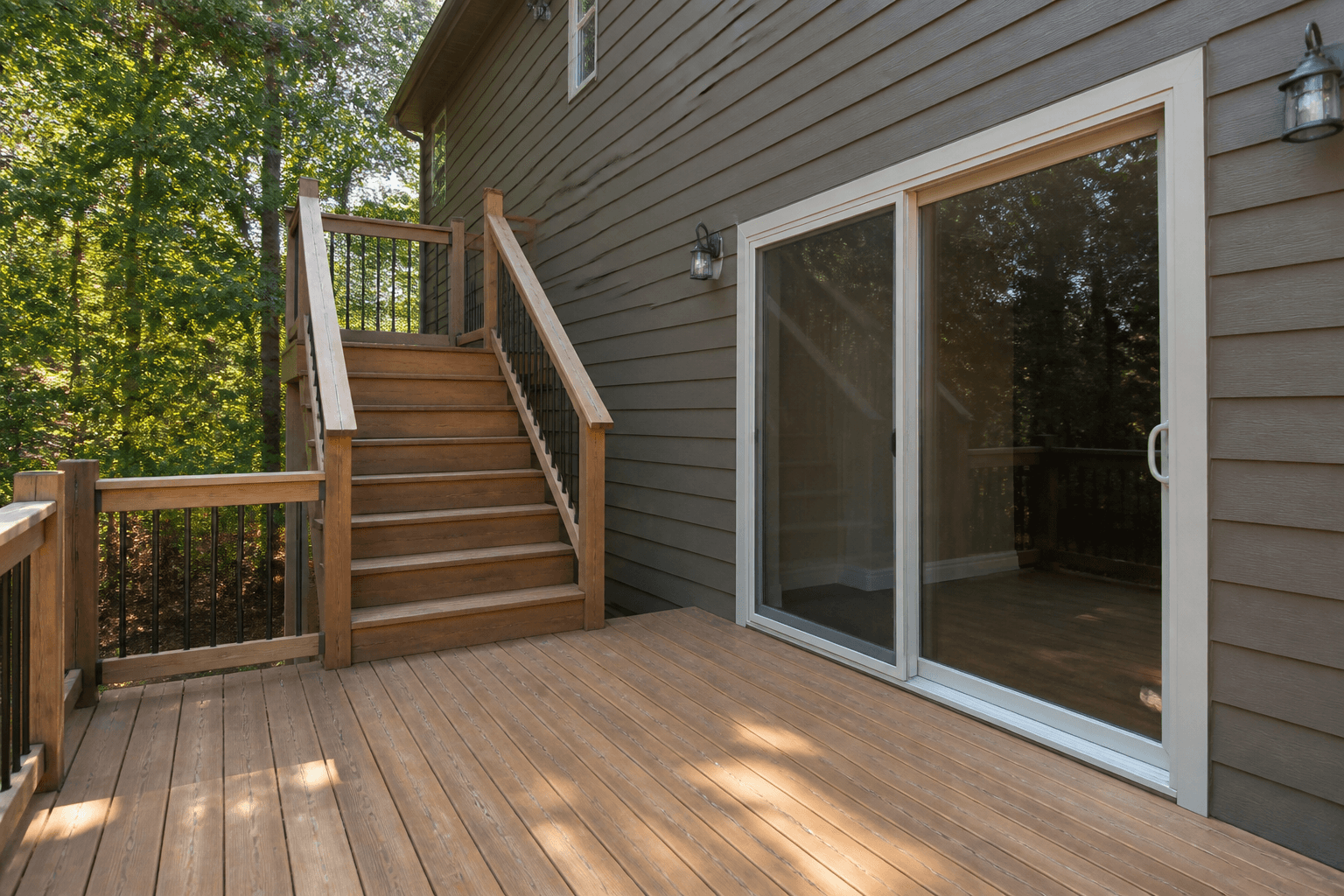
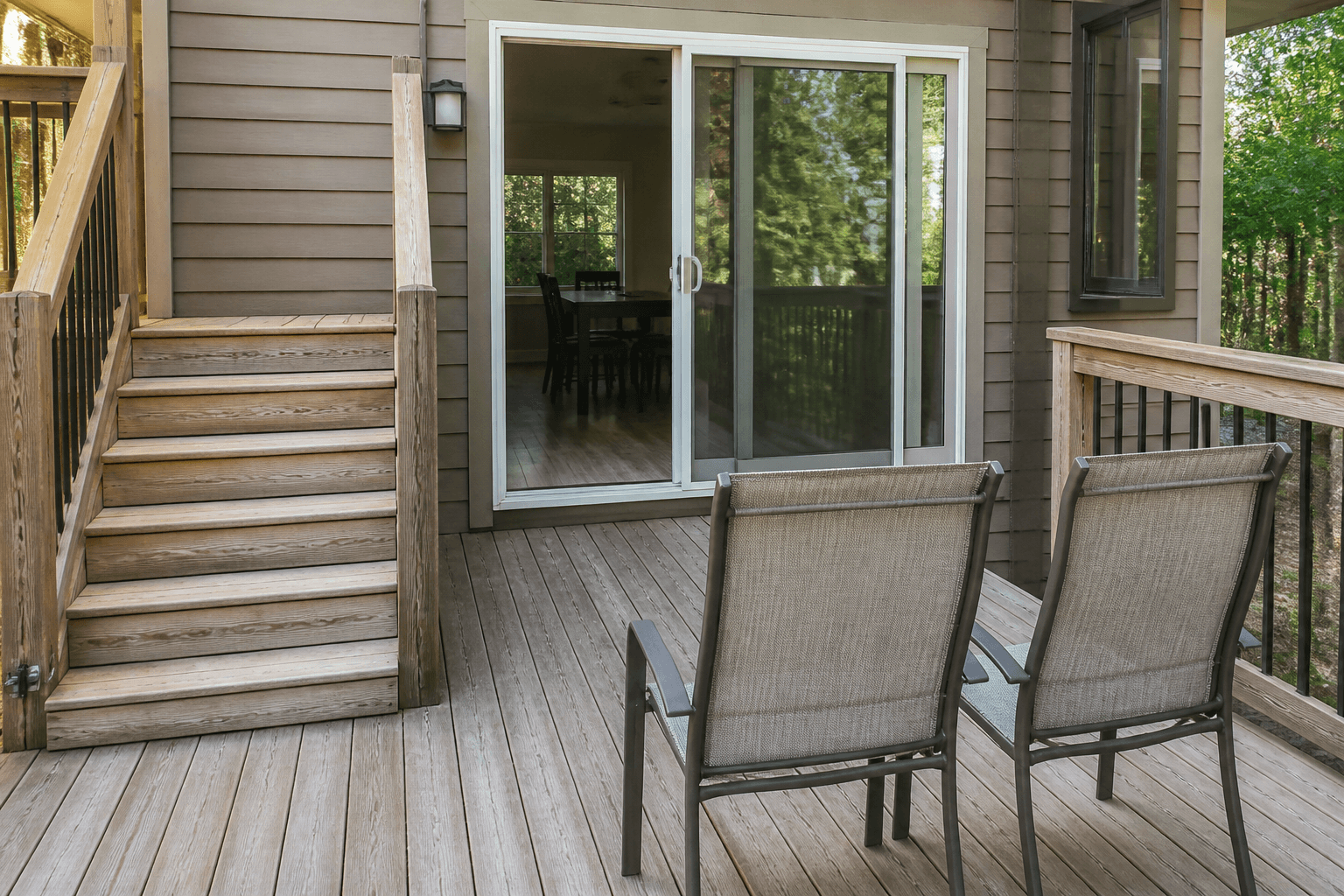
Those treads land beside the handle. The glass can open. If your stairs already look like this, stop shopping for a lucky stain. If they do not, you still keep that last rectangle of boards clear.
What if the stairs already dump at the glass?
Name the constraint. The stringers are staying. Your job is a pause and a turn.
Keep the last two treads and the landing empty. Keep planters and shoe crates off the nosing and the top step. Keep the grill off the last rise. You need a place to stand that is not the door pocket.
From that empty landing, step along the house wall to the handle. Open the panel so it slides away from the stairs if the track allows it. If the panel slides toward the stairs, the landing has to stay even clearer, because the glass will occupy the same boards you just climbed onto. Know which leaf moves before you park anything beside the fixed side.
A pot beside the landing, not on it, can nudge your feet to the side. A pot in the landing is a trip. Do not build a maze of terracotta that "slows chi." You need a turn you can do with groceries.
Wraparound decks often have stairs on the side and a slider on the back. That walk on the boards is the approach. Do not park the dining set as a wall between the stairs and the glass.
If there is no formal landing, the top tread is the landing. Treat that last board as empty space. A mat may sit fully on the deck, past the nosing, never bunched on the step itself.
Do not copy a bagua onto the stringers or hang one on the rail to "correct" a stair that already exists. The glass will still be in your face until you leave the landing empty.
A loose tread is a repair you report. If a built-in bench runs across the landing and you cannot unscrew it, sit elsewhere. Leave the landing as the path it still is.
What furniture blocks a sliding door on a deck?
Open the slider fully. Stand in the pocket. Name what is in the travel: a table corner, a chair leg, a grill lid, a storage box, a rolled mat. That pile is the miss. You will catch your hip on it every time you take the trash out.
The usual fail is a dining table parked so the glass cannot open, or so you have to lift a chair to reach the handle.
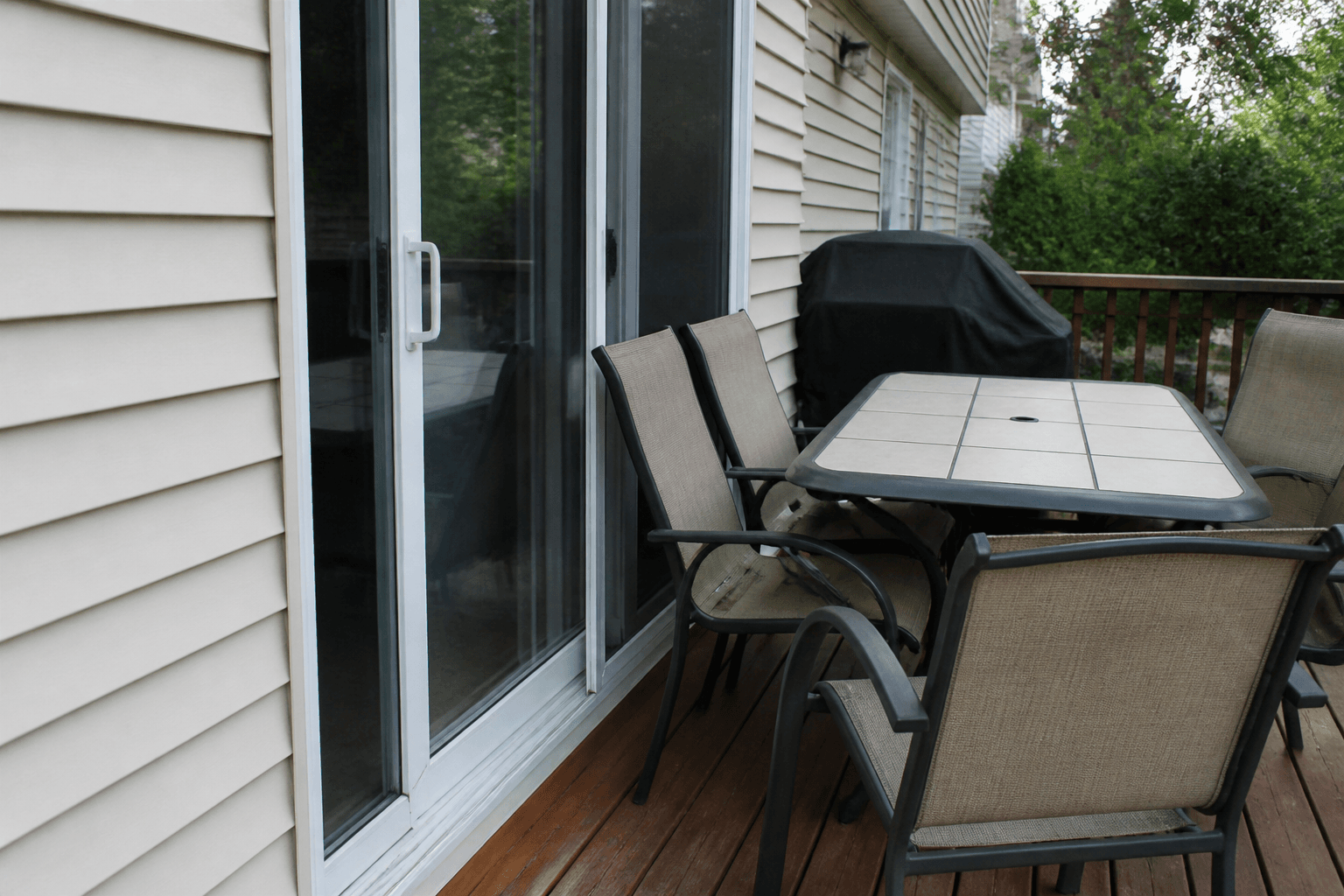
That table owns the opening. Slide it off the travel. Keep a walk from the landing to the handle. Then check whether a person can still come out of the house without kicking a chair.
A grill belongs off the landing and off the door pocket. Follow the fire rules you already have. Do not invent a five-element reason to put flame in the slider's arc. Bikes, bins, winter chair stacks, and an umbrella pole get the same test: along the rail, not in the line from stairs to latch. If the lease forbids storage on the deck, the lease wins.
A screen, if you have one, gets the same travel test. A bent track is a repair. Hinged doors onto a deck need their swing. A bench in that swing is still a blocked mouth.
Where do seats go on the boards?
On a deck, seats occupy raised boards that still have to work as a route. Put chair backs to the rail. Turn the seats toward the house so you can see who comes through the slider. A chair aimed only at the yard, spine to the glass, is how a tray hits you from behind.
Two chairs at the far rail with a small table between them, walk left open along the house wall, is a room you can leave. A six-top in the middle of a small deck is a restaurant with one blocked exit. If a carpenter built a backless bench facing the lawn, leave it and add one folding chair that faces the house. Do not unscrew HOA timber.
From the top of the stairs to the handle, the walk should be wide enough for a person with a bag. Chair legs catch in board gaps; if a seat wobbles, shift it onto a flat outdoor mat still off the door travel. Wet cushions come inside. Pots stay on the rail line. A planter that stops the panel is a wall.
How is a deck different from a patio or a balcony?
A deck is raised boards on a house: stairs, a landing, a rail, a sliding door. Placement starts with whether those stairs dump at the glass. After that you walk the boards and sit.
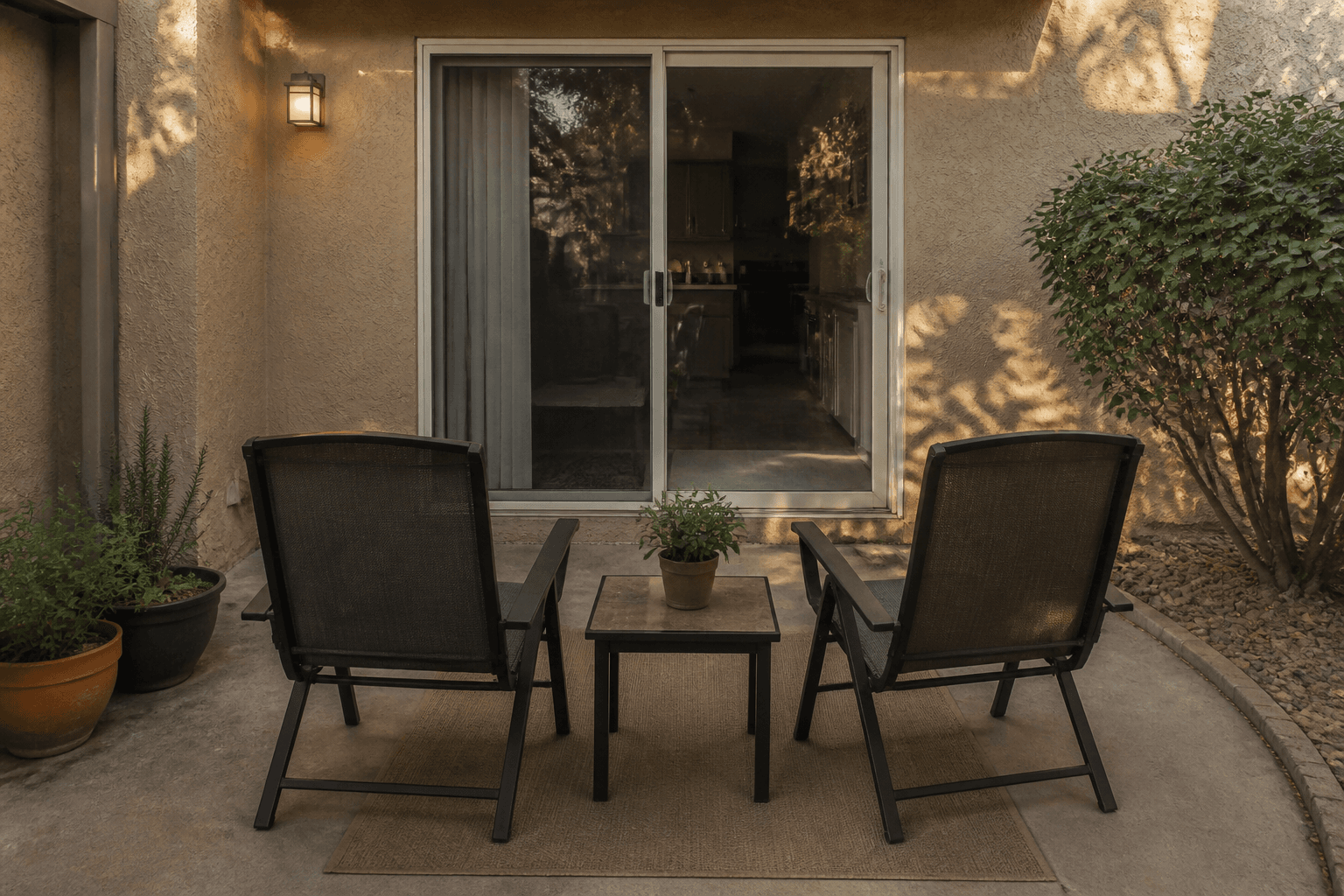
A patio is ground-level seats off a house door. You are not climbing onto timber. The patio furniture job is the chairs and the path to the latch on pavers.
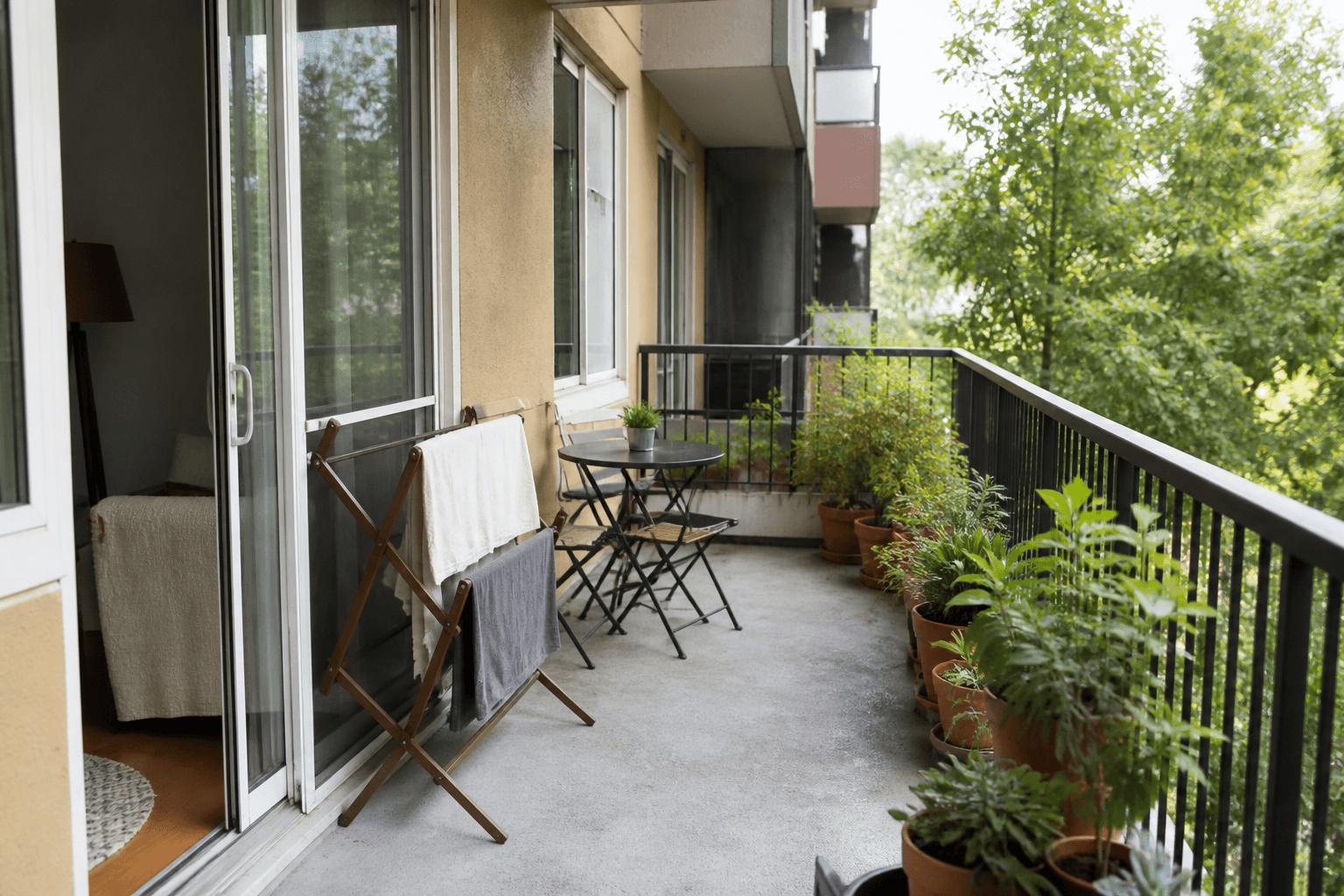
A balcony is an apartment rail slab: laundry, downstairs drip, and a walk from slider to rail, with no yard stairs. Use the balcony page for that rectangle.
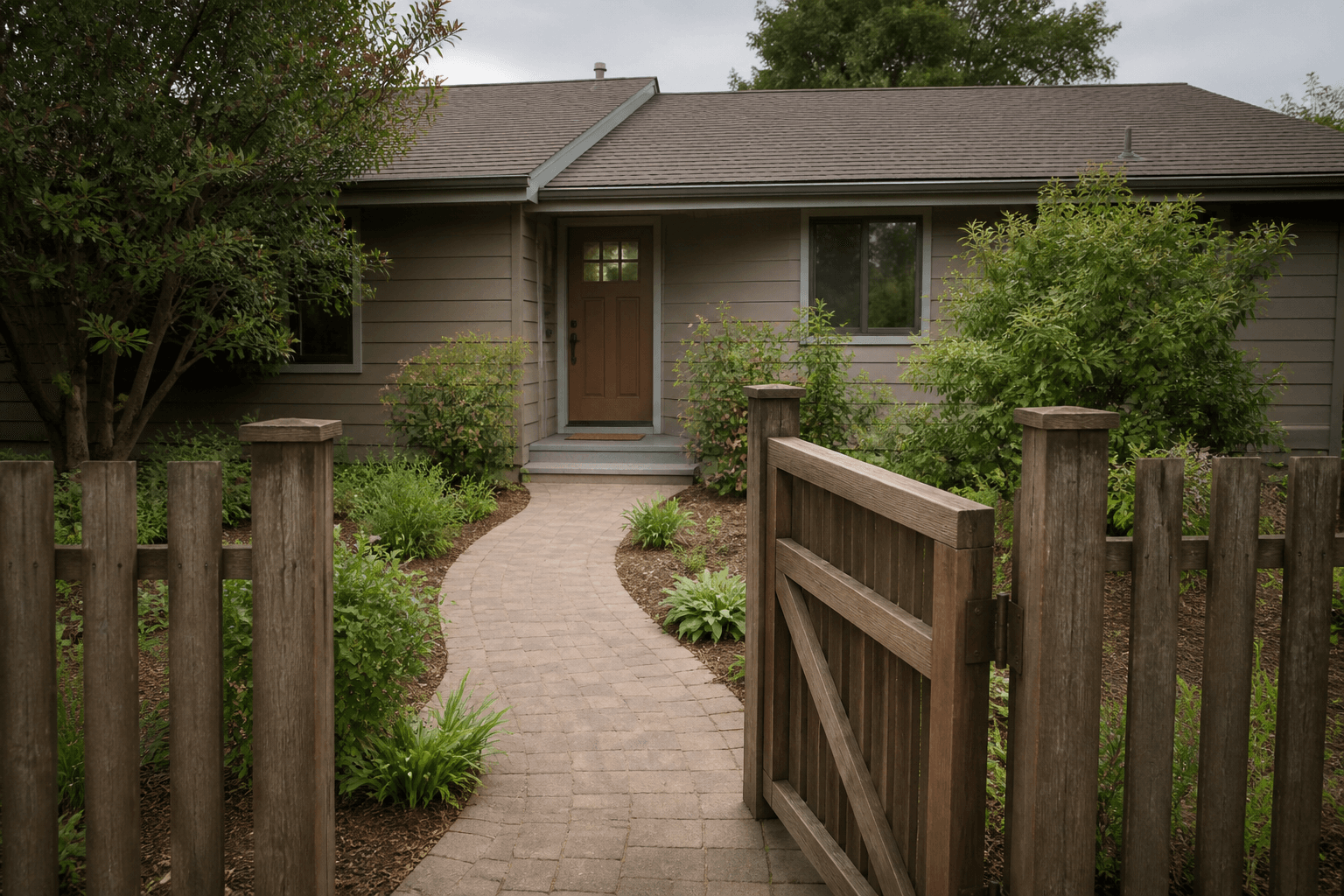
A gate and path is the first outdoor walk from the street latch to the house door. A back deck is a different latch.
Deck: stairs miss the slider. Landing stays empty. Walk the boards. Seats at the rail face the house. Patio: seats see the house door. Path on the ground still reaches the latch. Balcony: slider to rail on an apartment slab. Plants on the sides. Laundry out of the glass. Gate and path: street latch to front door. Swing and last meter.
Use the line that matches the photo in your hand. A townhouse with a front gate and a back deck needs both walks. They are not the same walk. This job is a house with a deck, including an HOA lot or a rental if the boards are yours to use. If you only have a twelfth-floor slab, stop here and use the balcony article.
Can renters and HOA members change deck placement?
Yes, inside what you may move. You slide furniture. You keep the landing. You do not pour a new deck, you do not rebuild the stairs, and you do not screw lucky hooks into boards you do not own.
The association's furniture rules still leave you the physics of the door. A required black metal set is allowed. Your job is still the landing and the travel of the glass.
Ask in writing before you stain, paint, or fasten anything to the structure. Folding chairs are the rental kit: a back, a lift, a closet in winter. Heavy teak is fine if two people can shift it off the latch. If the lease forbids furniture on a shared deck, the lease wins.
Do this in order. Reverse it at move-out.
- Open the slider fully. Name what is in the travel.
- Slide the table off the door travel. Move any chair that sits in the pocket.
- Keep the landing. Clear the last two treads. Set bags down there, then turn to the handle.
- Put chairs with backs to the rail, seats toward the house, until you can see the glass without a full spine twist.
- Park the grill, bins, bikes, and winter stacks along the rail, off the walk from stairs to latch.
- Bring wet cushions in. Move pots out of the door pocket.
- Photograph from the slider looking out in FengShui Hero. Compare the flagged pile with the landing you cleared.
If the association forbids umbrellas, skip the pole. Shared decks: agree where the table lives. Your layout does not include blocking their exit.
How we check a deck
We photograph from the sliding door looking out. We open the glass fully. We walk from the yard up the stairs with a bag, pause on the landing, and reach the handle without moving furniture. Then we sit with a back to the rail and look at the house door. Daylight first. Night is the outdoor lighting article. We do not read a compass on the stringers unless we are doing a facing-house article at the door.
What this is not
Deck placement will not mint luck and a stain color will not raise income. Facing west for the sunset is weather. A round table is easier on shins. That is the shin test, not a spell.
This page is not the patio seating article. It is not the street gate and path. It is not an apartment balcony. It is not a booking spell for a listing photo. You do not demolish stairs. You do not pour a new deck if you rent.
Skip medical claims about "fresh chi" as a treatment. If sitting outside helps you, that is ordinary air and a chair. Skip a fountain on the boards if you will not clean it. Skip mystic grids on the decking. Boards run the way the carpenter set them.
A simple evening checklist
Do this in order. Stop when you can climb, pause, open the slider, and sit with a back to the rail.
- Open the house slider fully. Name what is in the travel.
- Slide the table off the door travel.
- Keep the landing. Clear the last treads.
- Put chairs with backs to the rail, seats toward the house.
- Photograph from the slider looking out in FengShui Hero.
If you only do one thing tonight, take that photo and move whatever blocks the glass. Clear the landing so the stairs do not dump you at the pane. The new stain can wait.