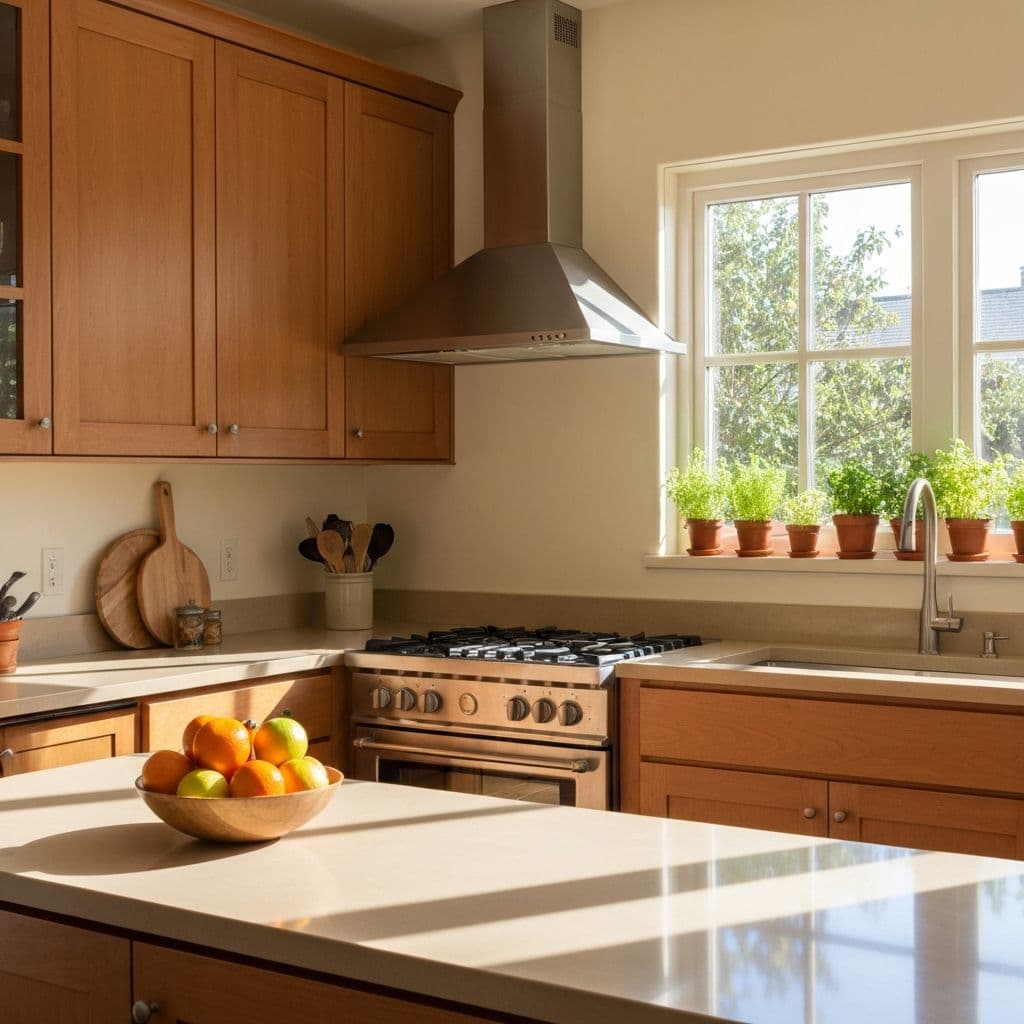

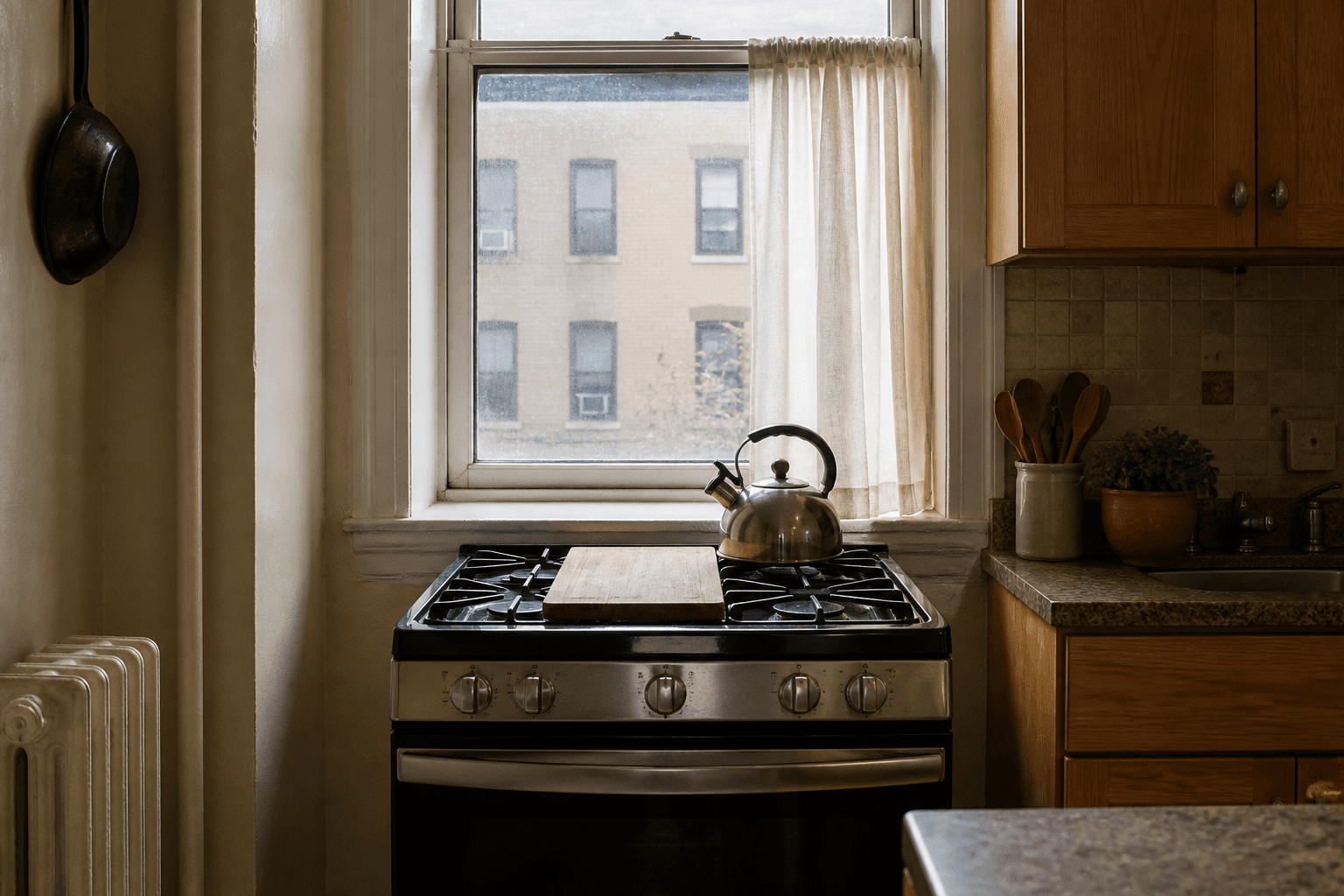
Feng Shui stove under window is a range sitting under glass, where a draft can pull a gas flame and grease hits the pane. You close the sash while you cook, and you add a renter curtain if the lease allows. You do not move the gas line.
When we photograph kitchens after a listing, the pretty window over the cooktop is the one that never opens because the last tenant fried it shut, or the one that always opens and leans the flame. People still ask which crystal will "hold the wealth fire" in the room. We ask them to boil water with the sash cracked. If the blue cone tilts, the layout is already talking. The kitchen layout page is the work triangle. Stove facing door is whether the cook can see who enters. This page is the glass behind the burners.
Why does a stove under a window bother people?
Classical kitchen talk wants a solid wall behind the fire. A window is an opening. Popular blogs turn that into money blowing out of the house. The honest daily problems are smaller and real.
A gas flame leans when wind comes through the sash. That wastes gas and can soot the glass. Steam and oil land on the pane, so you wipe more. A cook with their back to bright glass can feel watched from the yard, or chilled, depending on the hour. None of that is a bank account.
Electric and induction skip the leaning flame. They still get grease on glass. They still get a draft on the cook's neck if the window is the kitchen's only air.
Fridge placement is fire next to a cold box. This page is fire next to an opening. Do not merge those jobs in one URL.
How we check a real kitchen
We stand at the cook's stance with a pan-sized board on the grate. We open the sash an inch. We watch the flame, or we feel the draft on an electric top. We look at the glass for a grease film. We note whether a hood exists and whether it actually pulls. We do not recommend moving pipes.
If the client already bought a "stove window cure kit," we still do the sash test. Then we talk a curtain they can take at move-out.
What can you do without moving the range?
Keep the window closed while a burner is on. That is the first reversible step. If you need air, run the hood, or crack a different pane, or open the kitchen door after the pan is off the heat.
Hang a tension-rod curtain or a cordless shade on the window behind the cook. Lower it when you fry. Raise it when you want daylight and the knobs are off. Ask in writing before you drill a landlord frame.
A small splash of tile or a wipeable sheet on the sill is cleaning, not a mountain cure. Skip a wood partition you cannot remove. Skip a bagua mirror over the burners.
If the window is high and small, the draft is milder. You still wipe. You still close it to cook if the flame leans.
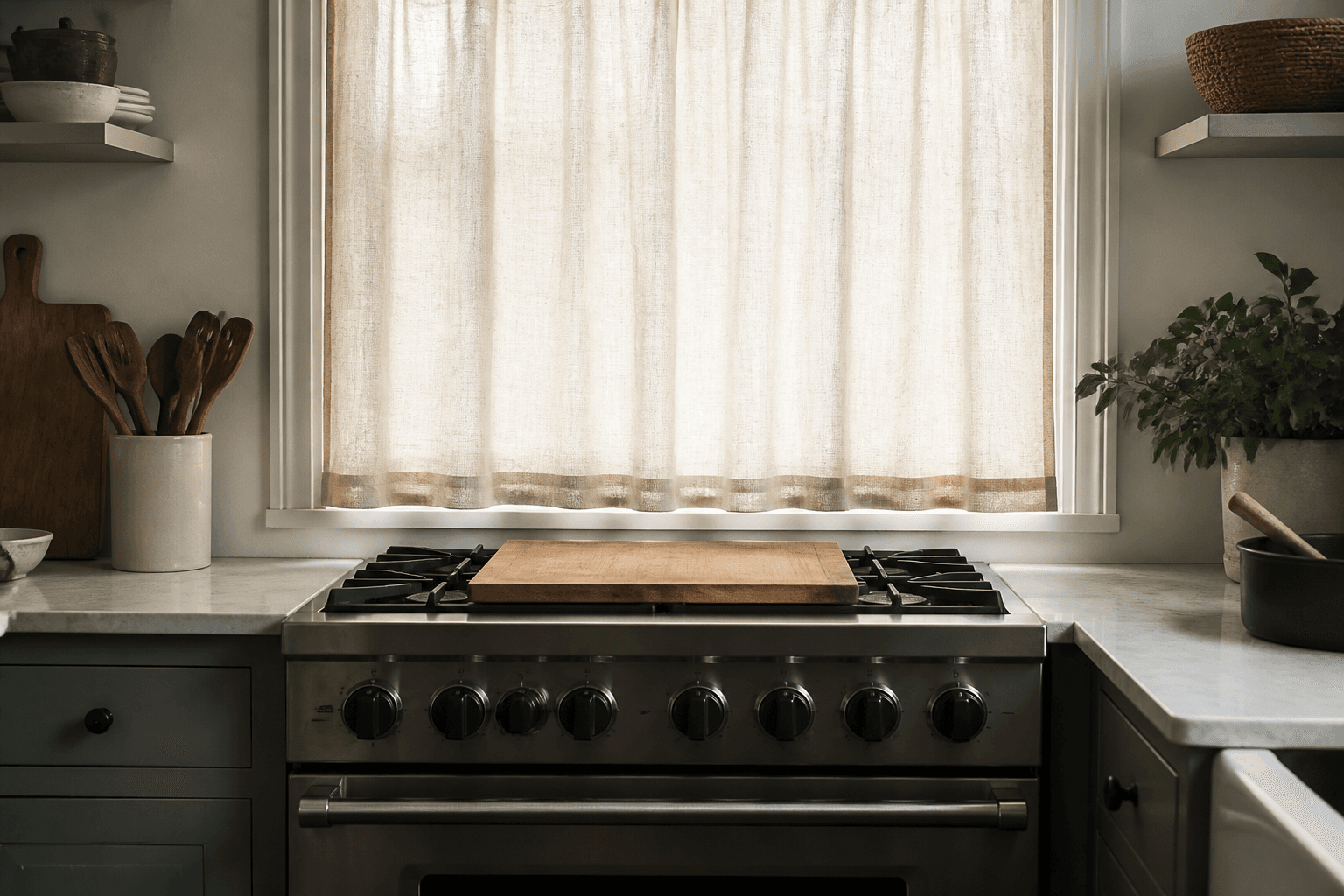
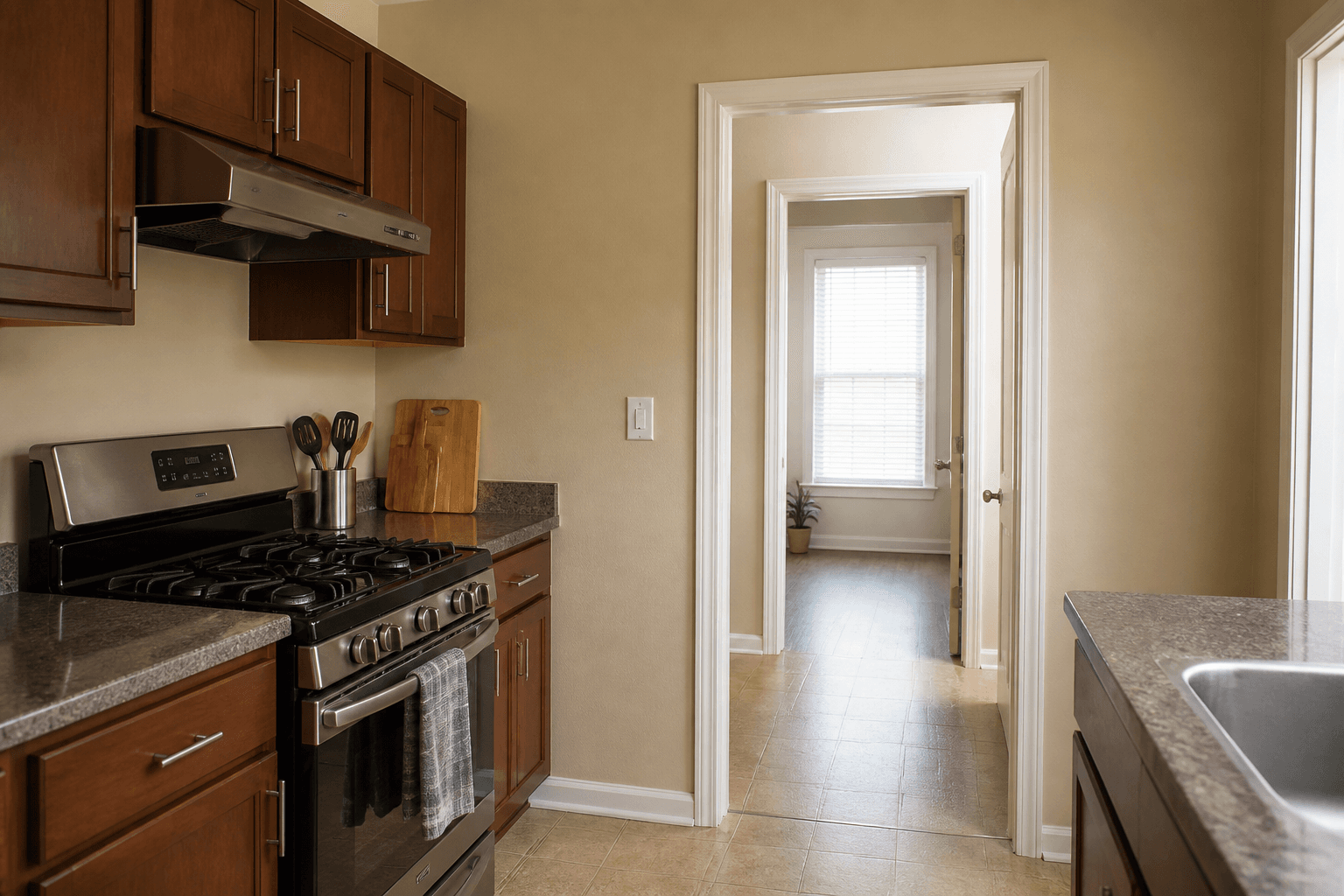
That cloth is doing the draft job. The sash is shut. If a person is at the pan, they should still glance at the kitchen opening, which is the facing-door article, not this one.
Does the flame actually lean?
On gas, yes, when the wind is right. Light a burner on low. Open the sash. If the cone tilts toward the room or toward the glass, cook with it shut. If you cannot see a tilt, you can still feel cold air on your wrist at the back of the grate.
Induction will not lean. You can still get rain on the sill and a greasy film. Treat those as maintenance.
Folklore about "wind scattering fire" is a classroom phrase. Use it as a reminder to shut the window, not as a diagnosis of the household.
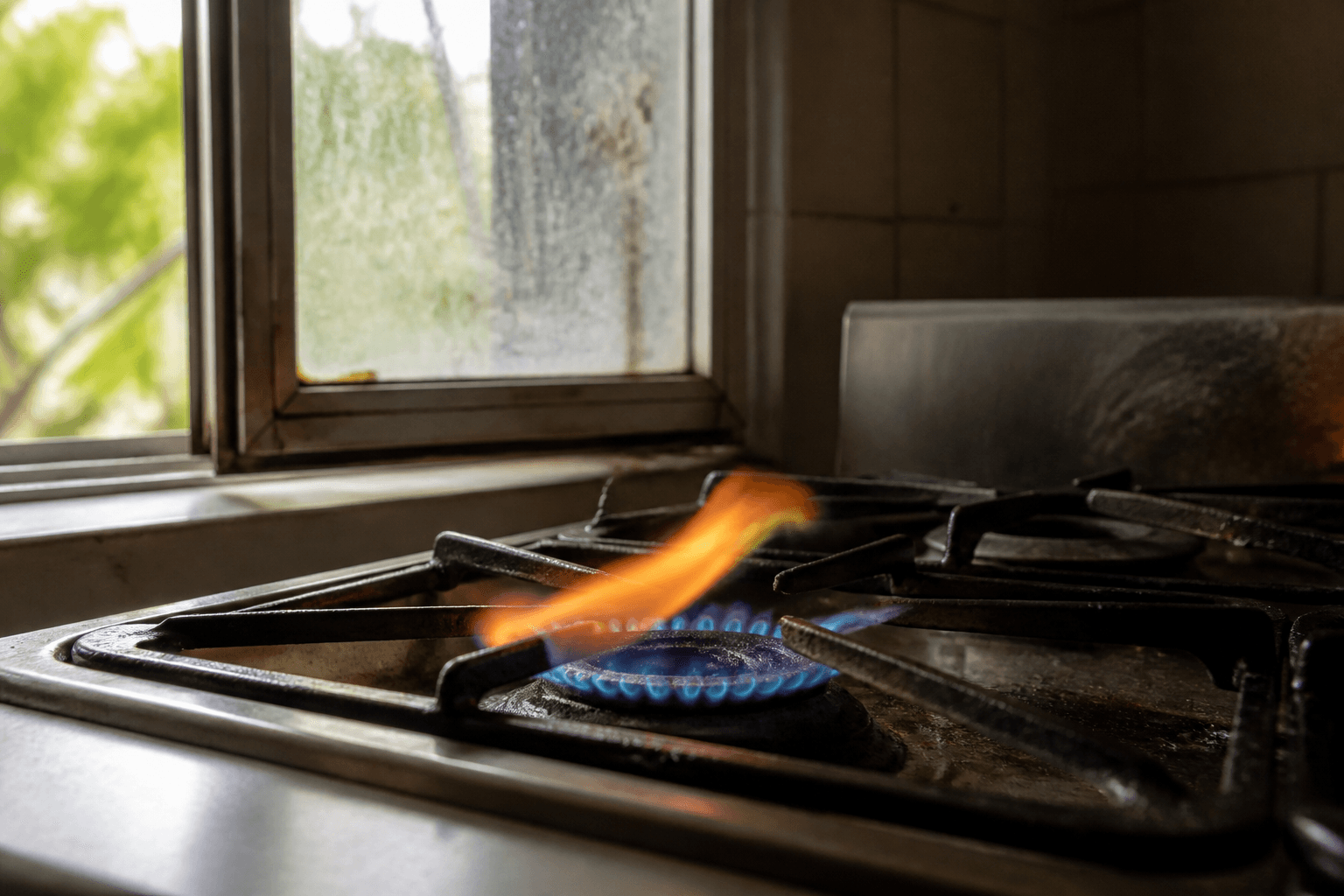
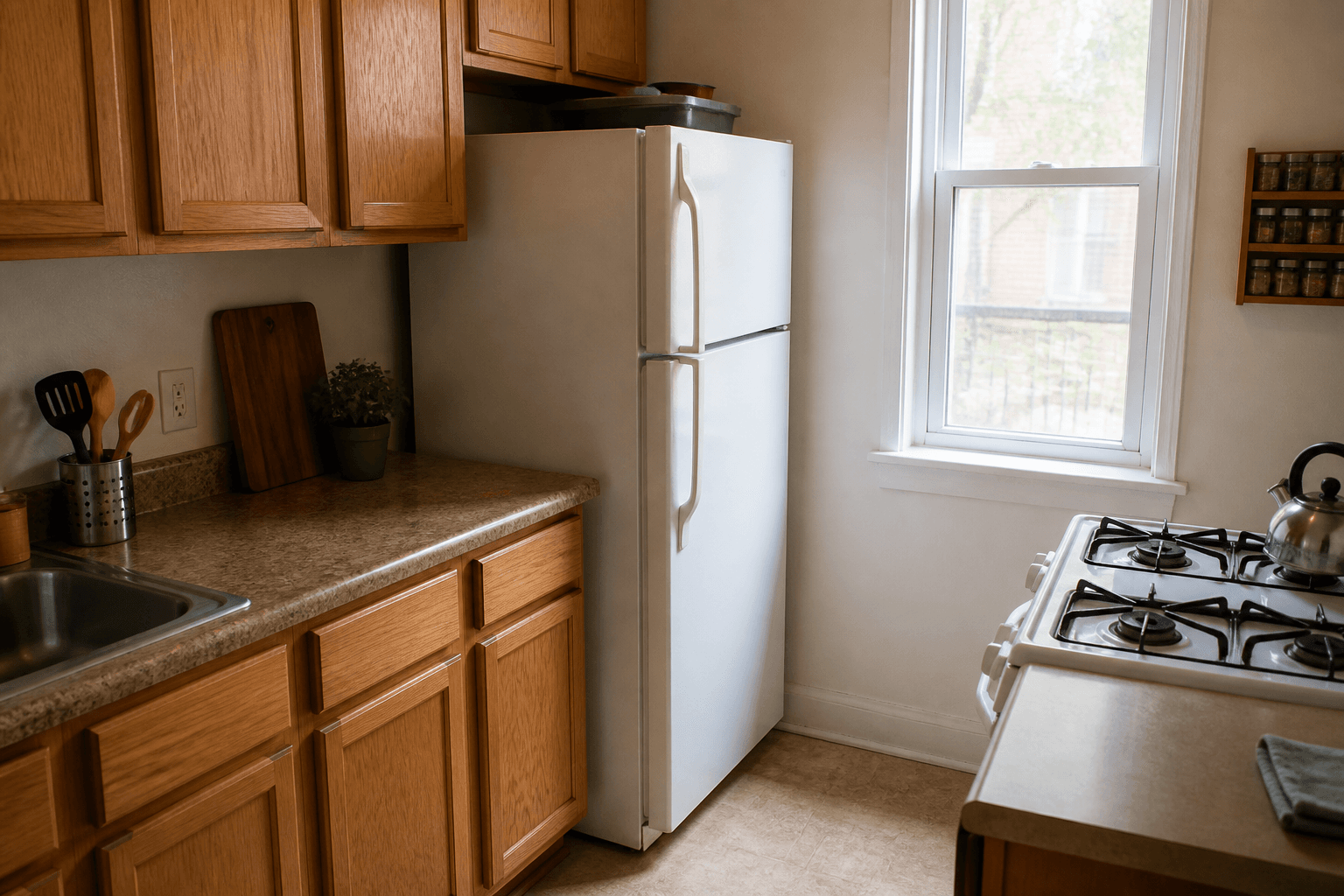
That tilt is the test. If your range is electric, skip this photo's flame and still shut the sash when the wind dumps on the board.
What about wealth talk and plants on the sill?
A jade plant behind a wok is a grease plant. Traditional writing may call the stove a hearth and dislike fire next to an opening. Label that. Do not hang coins on the splashback.
If you want a living thing in the kitchen, put it off the flame and the drain, which is a later kitchen-plants row. A clean empty sill you can wipe is allowed.
Door color maps and compass stove-facing (east cooktop stories) are optional overlays. They do not rotate a landlord range under glass.
Can renters fix this without a remodel?
Yes. Closed sash, reversible curtain, hood on, board you can see, walk to the kitchen door still clear. Photograph from the cook's stance before you add hooks. Plan for the rod to come out at move-out.
If the window is the only ventilation and the hood is dead, that is a landlord repair. Write it down. Do not cook with a wide-open sash because a blog said "fresh chi." You can air the room after the pan is off.
A restaurant pass with a window over the line is the same geometry at work. Close what you can. The full layout page owns the dining room. This page owns the glass behind the flame.
Gas, electric, and the hood you actually have
Gas is the draft test: the cone leans. Electric coil and ceramic tops still take wind on the cook's neck and rain on the sill. Induction stays the cleanest on flame talk and still gets a greasy film on glass if you fry.
A hood that vents out beats a recirculating filter when the window is the other "vent." If both are on, they can fight: the window dumps air the hood cannot catch. Cook with the sash shut, hood on. Air the room after.
If the hood is dead, that is a written landlord note, not a crystal. Do not run a wide-open sash over a wok because a blog said the kitchen needs "moving chi."
Side window versus window over the burners
A pane beside the range is a side draft. Treat it if the flame leans when that sash opens. A pane directly over the grates is this page. A pane over the sink is the kitchen-window row later in the calendar. Do not copy this article onto a herb sill at the washup.
A cafe pass with a street window behind the line is the same sash rule at work. Close it to cook. The restaurant layout page owns the dining room walk. The cafe-window-seats page owns glare on guests. The cook's glass is here.
What schools say, and what we keep
Classical notes want a solid wall behind fire. Popular blogs add wealth leaving through the opening. We keep the solid-back idea as a preference you cannot remodel, and we keep the draft as a test you can do tonight. We drop the income claim.
A "mountain" panel behind the stove is a renovation. Renters get a curtain. Do not build a wood box against a landlord window. Do not put a bagua mirror in the splash zone.
East-stove compass stories are optional overlay. They do not rotate a range that is already under glass. If a blog tells you to move gas to the east wall, that is a plumber fantasy. This site will not write that as a must.
What this is not
This is not stove facing door. Command at the cook is a different URL. It is not the kitchen window article about a sill used as storage over a sink. It is not a plumber fantasy.
It is not income. A curtain will not raise rent. It is not a medical claim about lungs and steam. If breathing is a problem, that is a clinician's job plus a working hood.
Skip hanging crystals over a gas flame. Skip painting the landlord window frame red for "held fire."
Tonight at the range
Do this in order. Stop when you can cook without a leaning flame and without a greasy open sash on your neck.
- Stand at the cook's stance. Note whether the window is over the burners or only beside them. Beside is a side draft. Over is this page.
- Light a burner or feel for air at the back of the top. Open the sash an inch. If the flame leans or your wrist goes cold, shut it to cook.
- Hang a tension-rod curtain or lower a shade while you fry, if the lease allows.
- Run the hood if it works. Wipe the pane after a greasy pan.
- Photograph from the cook's stance in FengShui Hero. If the scan flags a blocked walk, clear the aisle. The window job is still the sash.
If you only do one thing tonight, cook one meal with the window shut and see whether the flame stays upright. Tomorrow, decide if you even need a curtain, or whether the open sash was the whole story.