
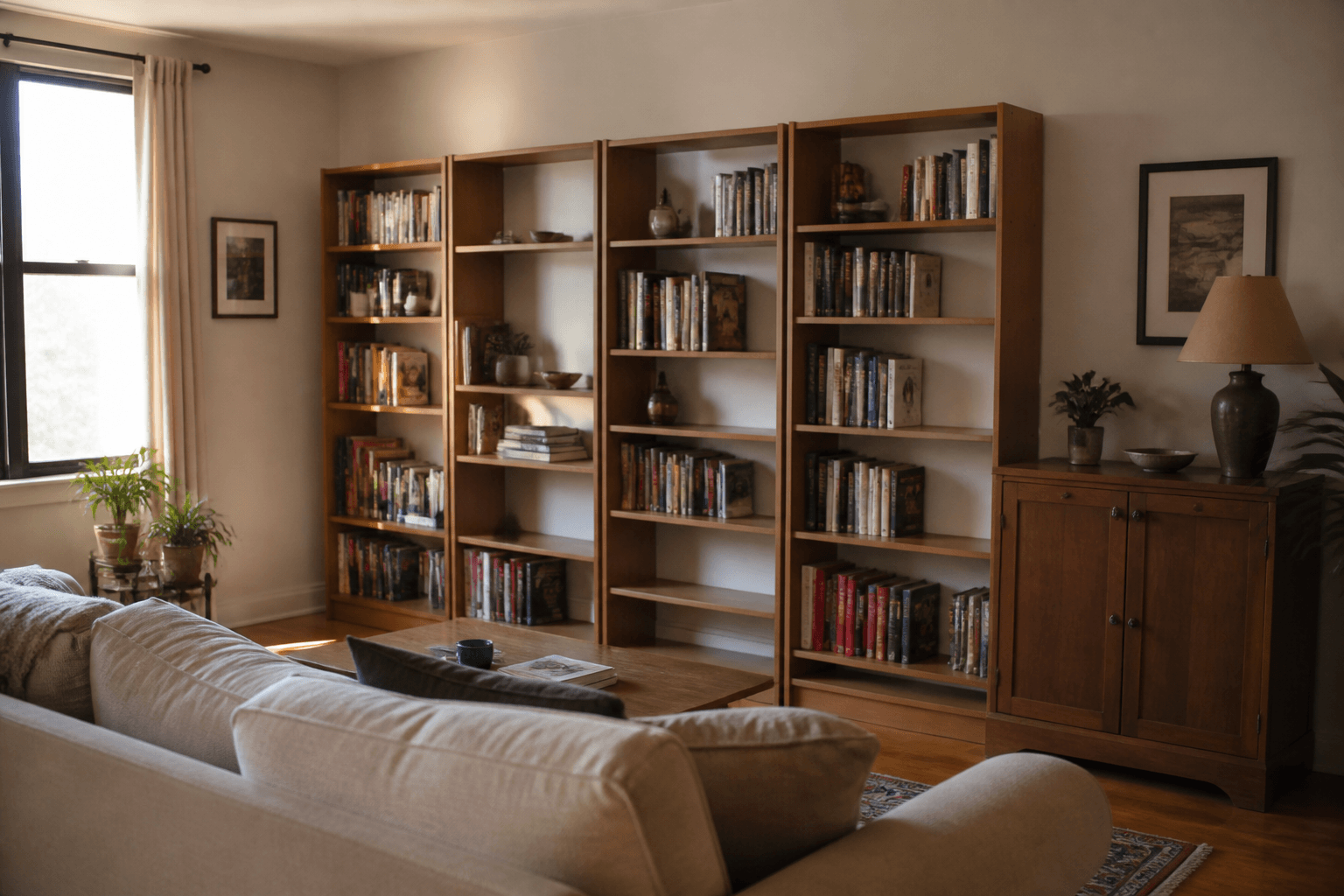
Feng Shui bookshelves are living-room storage arranged so books stay usable and the shelf does not spill into the walk. You close the lower cabinets and keep a few spines standing on an open upper row. The knowledge gua is an optional map. It is furniture work.
When we photograph living rooms for analysis, the bookcase is often the loudest wall after the television. People say they already "did the knowledge corner." The sofa still has its back to the door, and the shelves lean with stacked paperbacks and mailing boxes. They ask which titles are lucky. We ask whether they can take one book without moving four others. This guide is that storage, then the rental ways to close it.
What are Feng Shui bookshelves?
You are giving the case two jobs. The household should be able to find a title and put it back. The wall should go visually quiet when nobody is browsing, the same way a media cabinet goes quiet when the screen is off.
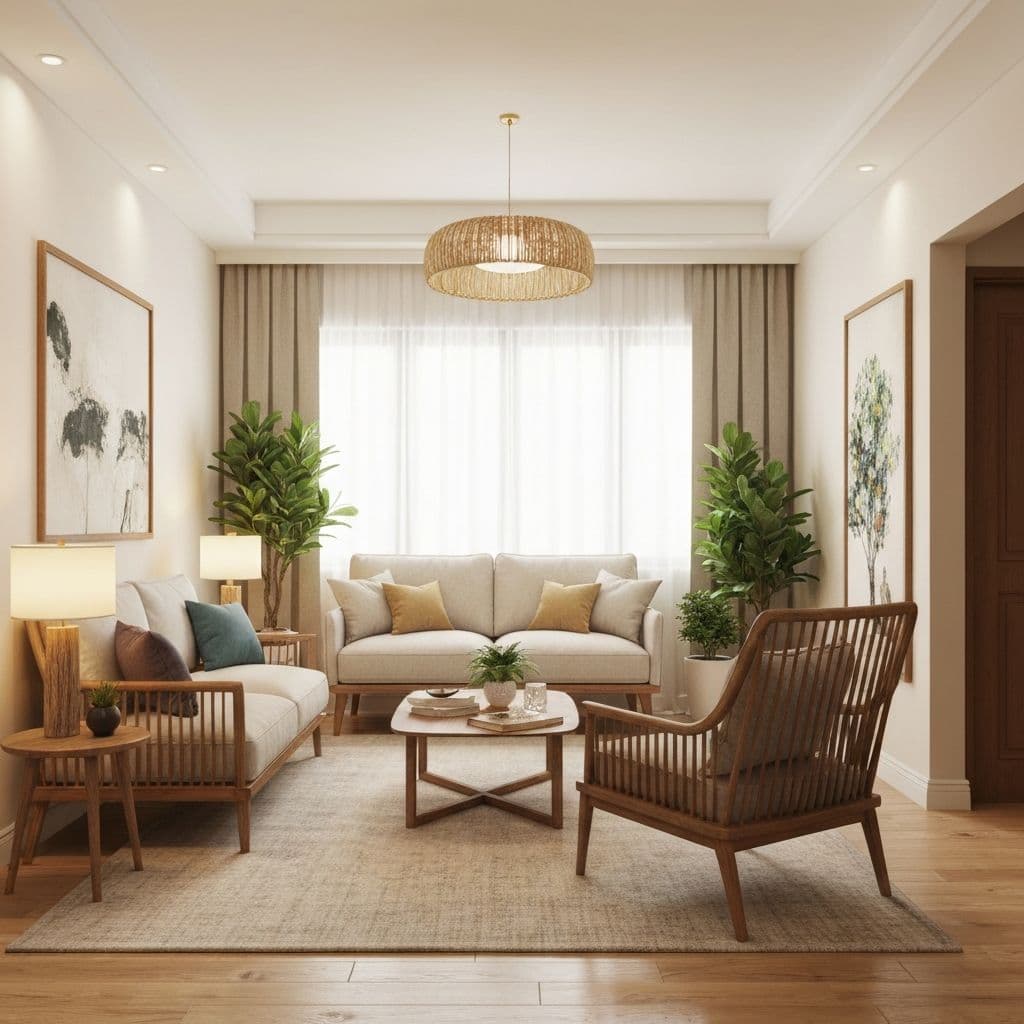
This is narrower than a full living room layout for family seating. That page wants a path and a door the seated person can see. A beautiful library wall does not cancel a sofa that greets no one. Fix seating first if the main chair cannot see the latch. Then look at the shelves.
Classical Form School writing cares about what sits on a main wall and whether you can walk. Later popular books added a bagua sticker: books belong in knowledge, so a tower in that square will make you studious. Treat the sticker as optional. Horizontal stacks on the lip of the shelf read as work you have not finished.
An open bay stuffed until things lean forward keeps asking for a hand. Closed doors stop that ask.
Does the knowledge gua decide where the bookcase goes?
Only if you want that overlay and the corner is actually usable. Door-based (BTB) bagua puts knowledge in the bottom-left square when the entrance is the bottom of the map. You can read that grid in the bagua overlay. Compass schools put knowledge on a different wall. Mixing both maps puts "study" in two places and helps no one.
If the knowledge square is a clear wall, a low case with closed lower doors is a reasonable fit. Books and a lamp are the usual note on that square. A laundry basket is not a study gua, even if the basket is in the "right" corner.
If that square is a radiator or the only run to the kitchen, skip the overlay. Put the bookcase where it can stand without blocking the walk and without stealing the sofa's view of the entrance. A readable shelf on a side wall beats a "mapped" tower people squeeze past every evening.
Do not move a working conversation layout to chase a square. The sofa's command of the door still wins. Knowledge as a life area has other causes, including time and teachers. A tidy case will not enroll you in a course.
Why do open shelves feel louder than closed cabinets?
Open bays are useful when the row is short and the spines stand. They fail when the shelf becomes a dump: books on their sides in piles, boxes parked in front of other boxes.
Stand at the living-room door. If the first thing you notice is a spill of paper, the case is already "on." You will do the same scan every time you walk to the kitchen. That is enough reason to close the lower half without a story about stuck chi.
Dust is the boring half of the same problem. Horizontal stacks collect it, so you avoid the shelf and the pile grows. Closed doors cut what you have to dust to the upper row you actually display. A wall of open cubes in a rental is the usual miss: the unit was cheap and the cardboard still lives in it.
Stacked books versus standing spines
Standing spines are storage you can use. You see a title, you take it, you put it back. Horizontal stacks are overflow. One short stack under a row of spines can be a stop for a leaning book. A shelf that is only stacks is a pile with furniture under it.
Keep the front edge clear. If an object hangs over the lip, it will be knocked. It also reads as the shelf being too full. Push objects back, or take them off.
Magazines and shipping boxes belong in a closed bay. A year of issues on an open row is a paper slope. Children's picture books can stay if a closing bin holds the extras. A floor fan of books next to the case is still a spill.
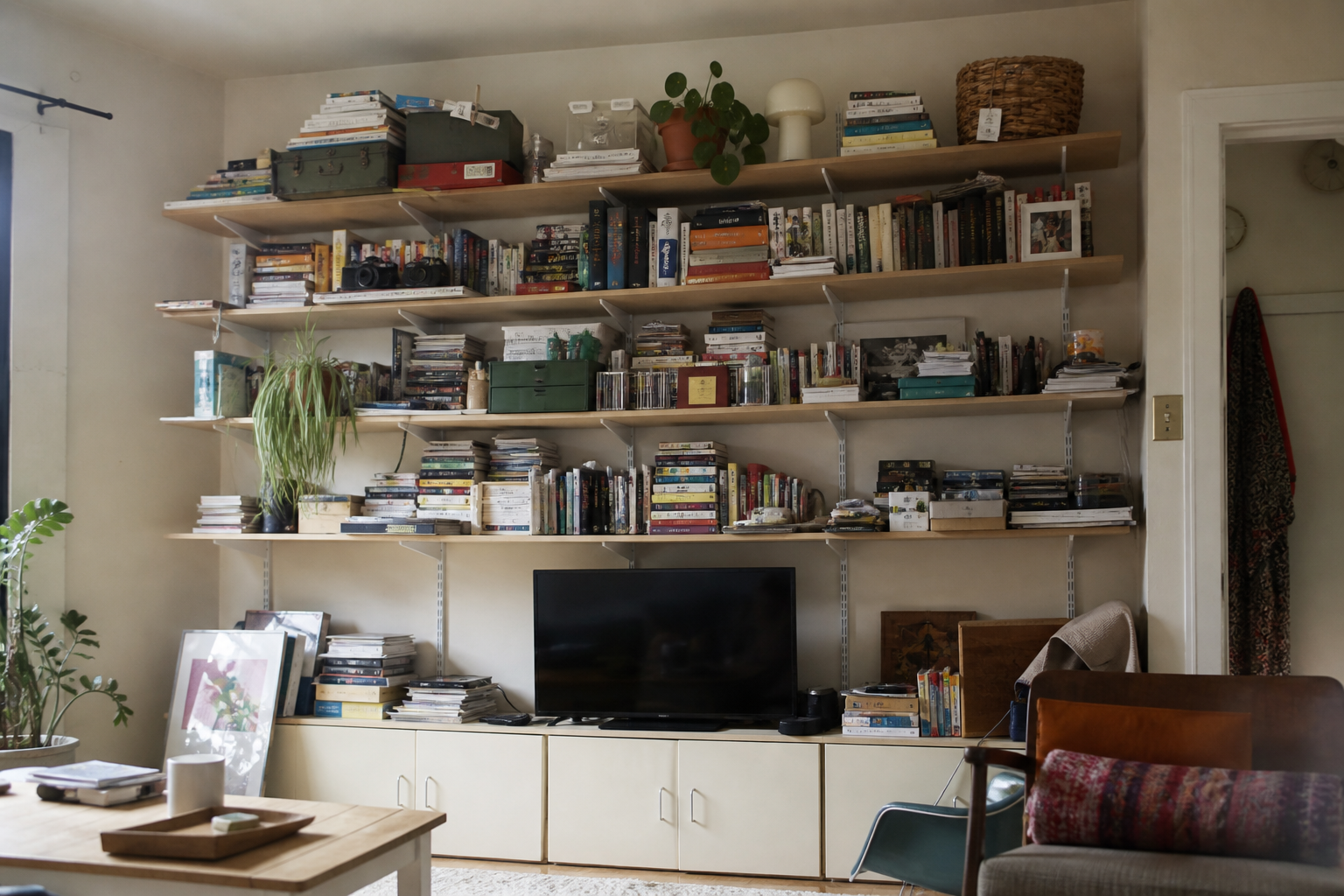
That spill is the diagnosis. The wood is fine. The contents are not. If your case looks like this from the sofa, do not buy a lucky bookend. Reduce what sits in view, and close the bays you will not browse daily.
Should the lower shelves be closed?
Yes, as the default. The lower bays catch the ugly useful things: extra paperbacks, games, cables, the board you use twice a year. Doors or fabric bins turn that layer into a wall. The upper row can stay open with a short run of standing books and maybe one object that is not a pile.
A fully closed case can work in a small room if you still know where a title lives. Label the inside of the door if you must. A living room that is only cabinet faces can feel like an office. Leave some spines in view so the wall still reads as a library you can approach.
If only the bottom row has doors and the middle row is still a spill, you have moved the mess up by thirty centimeters. Close until the open part is a row you are willing to dust weekly. I would rather see four standing books and a closed door than a wall of spines that nobody can pull without an avalanche.
Cube bins and door kits renters can take
If the unit is open cubes, fabric bins in the lower cells are closed storage. Choose bins that fill the cube so you do not see the clutter around them. Take the bins when you move. The cube frame can go too.
Some cases sell clip-on doors for the bottom bays. Those are the renter version of a built-in. They come off. They hide the spill without a screwdriver into plaster.
A curtain on a tension rod across a cheap open case is honest if you will actually close it. A curtain that stays bunched to the side is a decoration in front of the same spill. Do not nail trim onto landlord plaster. Photograph the wall before you park the case so you remember scuffs at move-out.
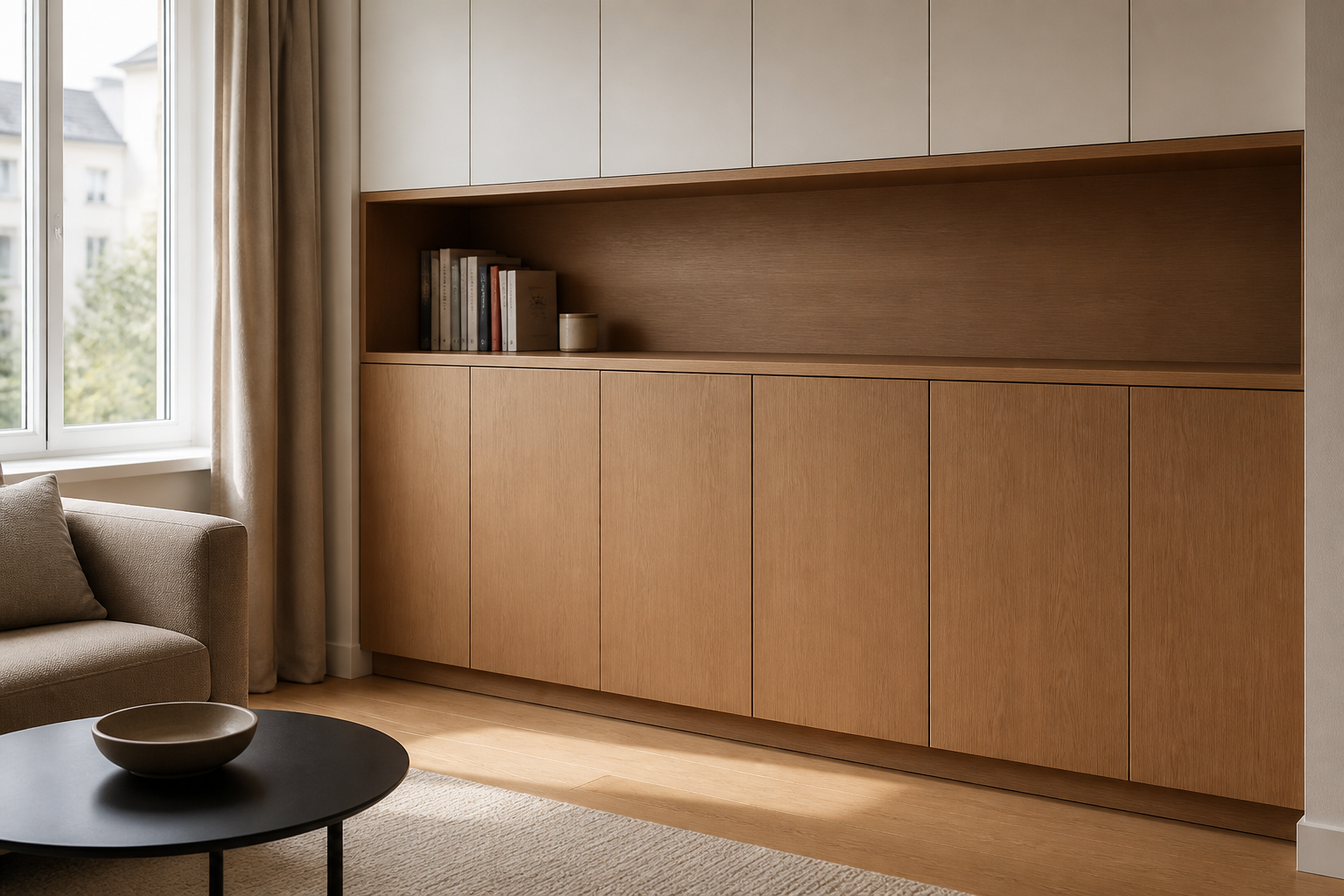
Those lower doors are doing the whole quieting job. A few books stand on the open upper shelf. That is the mix this article wants. Copy the ratio, not a catalog of figurines.
Where should a bookcase sit relative to the sofa?
Out of the walk, and preferably as a back or a side, not as a blockade between the seat and the door. sofa command and a solid back already uses a bookcase as a renter wall behind a floating sofa. That is a good use. The case gives the sitters a stop. A lamp on top is enough. Do not load that top with leaning frames that can fall on someone's head.
If the sofa is already on a solid wall, put the bookcase on a perpendicular wall so the conversation still has a center. A case on the same wall as the sofa, crowding the arm, turns the seating into a corridor.
Do not park a tall unit behind a sofa in a gap you cannot walk. A fake float with a bookcase jammed in the dust strip is worse than the sofa on the plaster. Either leave a real path or push the case elsewhere.
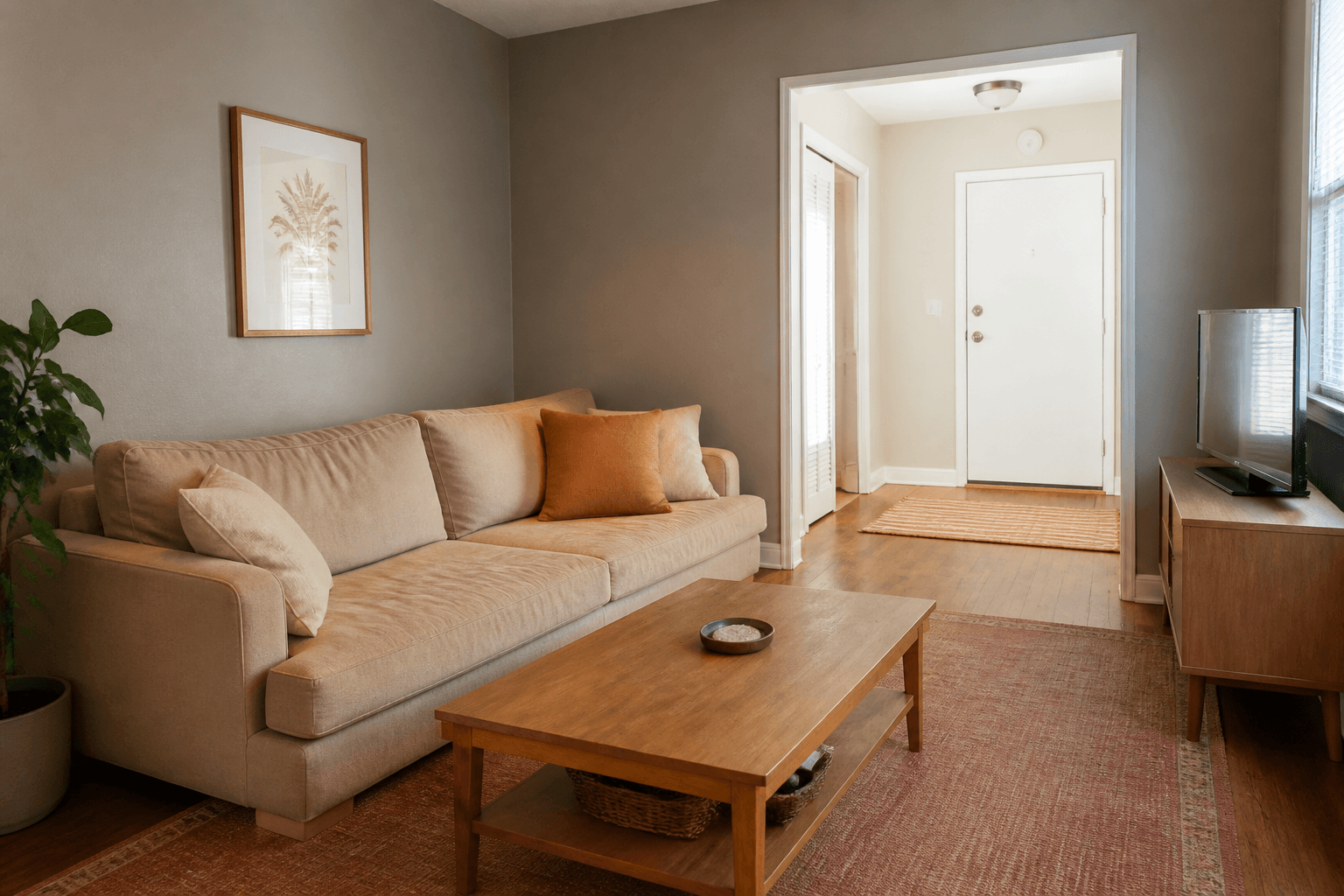
The door view still matters. A bookcase that fills the sightline from the seat to the entrance puts the household on defense while they read. Slide it until a glance still finds the latch.
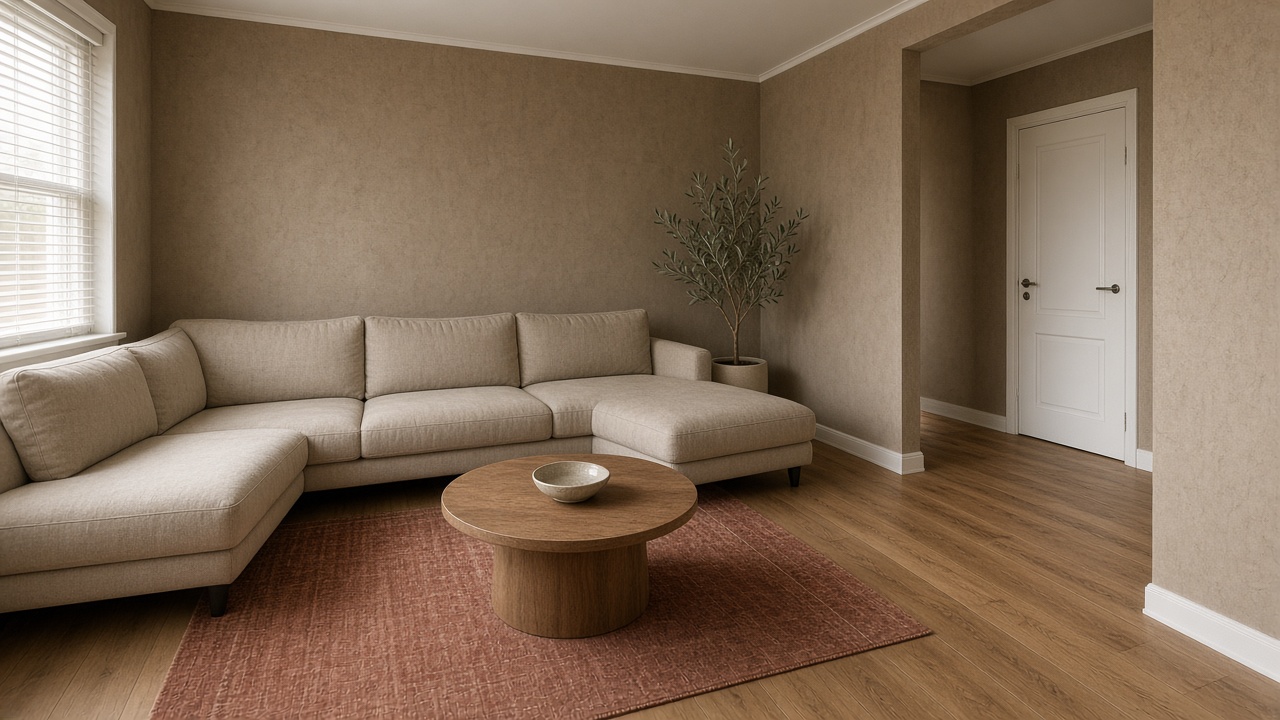
In an open-plan rental, a low case can divide living room from kitchen. A solid tall case that kills the window is a cave. Leave glass for light.
Can a packed shelf replace art on the wall?
No. A shelf of spill is not a picture. The art the sofa actually sees page wants something you can live with at 10 p.m., hung so heads are not cropped. Hang a print on the wall the sofa faces and keep the case as storage.
Empty wood on an upper row is rest. One plant you water is a stop. Twelve dusty objects is another spill. A print does not move money. If you only like buying books, close the extra ones behind doors so the room can still be a sitting room.
Can renters use a bookcase without drilling?
Freestanding is the default. Low and wide beats tall and skinny in a lease, because tall units want an anti-tip strap and a screw. If you have kids or a cat, a strap is safety, not Feng Shui. Use it if the lease allows a small screw into a stud, and fill the hole at move-out. If the lease forbids any hole, choose a short case.
Felt pads under the feet save vinyl. They also let you slide the unit to vacuum, which is how you notice the spill you shoved to the back.
Do not build around a landlord radiator. Do not block an HVAC return with a sealed cabinet. Leave the airflow the flat came with.
A folding bookcase that leans is a weak back for a sofa and a tip risk. Use a case with a real base. At move-out, empty the case before you slide it. Restore the wall. Take the bins and the door kit.
What this is not
A bookcase will not make you learned and it will not make you wealthy. It will not enroll you in night school if you park it in the knowledge square, and it will not ruin a career if the only wall that fits is on the "wrong" side of the rug.
Skip medical claims about clutter and your mood as a diagnosis. A spill is annoying to look at and hard to use. If low mood is a health problem, that is a clinician's job. This page is doors on the lower bays.
Skip a bagua sticker on the side of the case. The map is optional. A sticker does not change what the sofa sees.
Write down what you changed. The next time you move, you will remember that the open cubes looked like a library in the listing photo and felt like a storeroom by Thursday.
A simple evening checklist
Do this in order. Stop when the door view of the case is a closed lower band and a short standing row.
- Stand in the living-room door. Name whether the shelf is a spill or a filing wall of doors.
- Take floor piles next to the case and either bin them or give them a closed bay.
- Put fabric bins or doors on the lower cells. Leave the upper row for standing spines.
- Clear the lip. Anything hanging forward comes off.
- Check the sofa: can you still see the entrance, and does the case block a real walk?
- Photograph the room in FengShui Hero and compare the flagged wall with the bays you just closed.
If you share the room, agree which titles stay in view. The "correct" blog layout is useless if one person needs a textbook every night and that book now lives behind a door they will not open.
If you only do one thing tonight, close the lower bays or drop bins into the cubes that currently spill. Then take one photo from the door so you can see whether the wall went quiet.