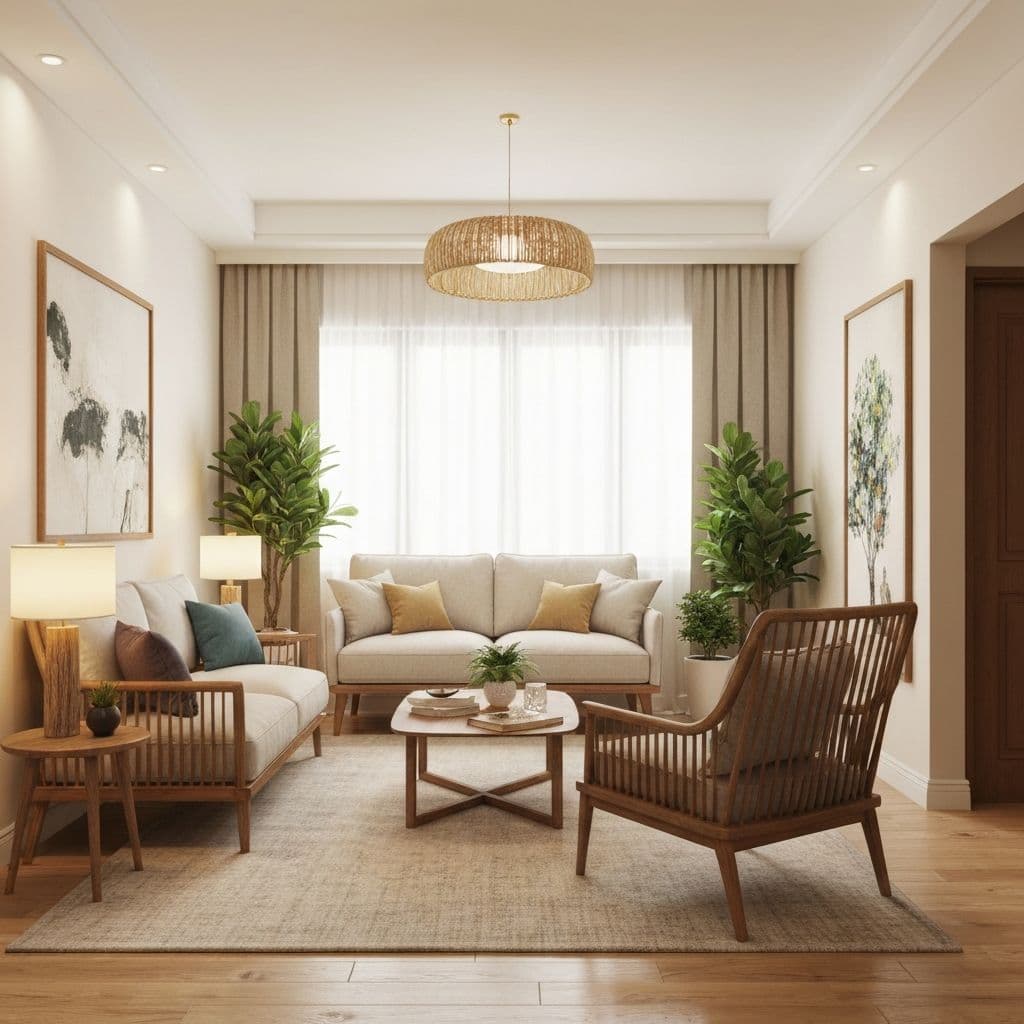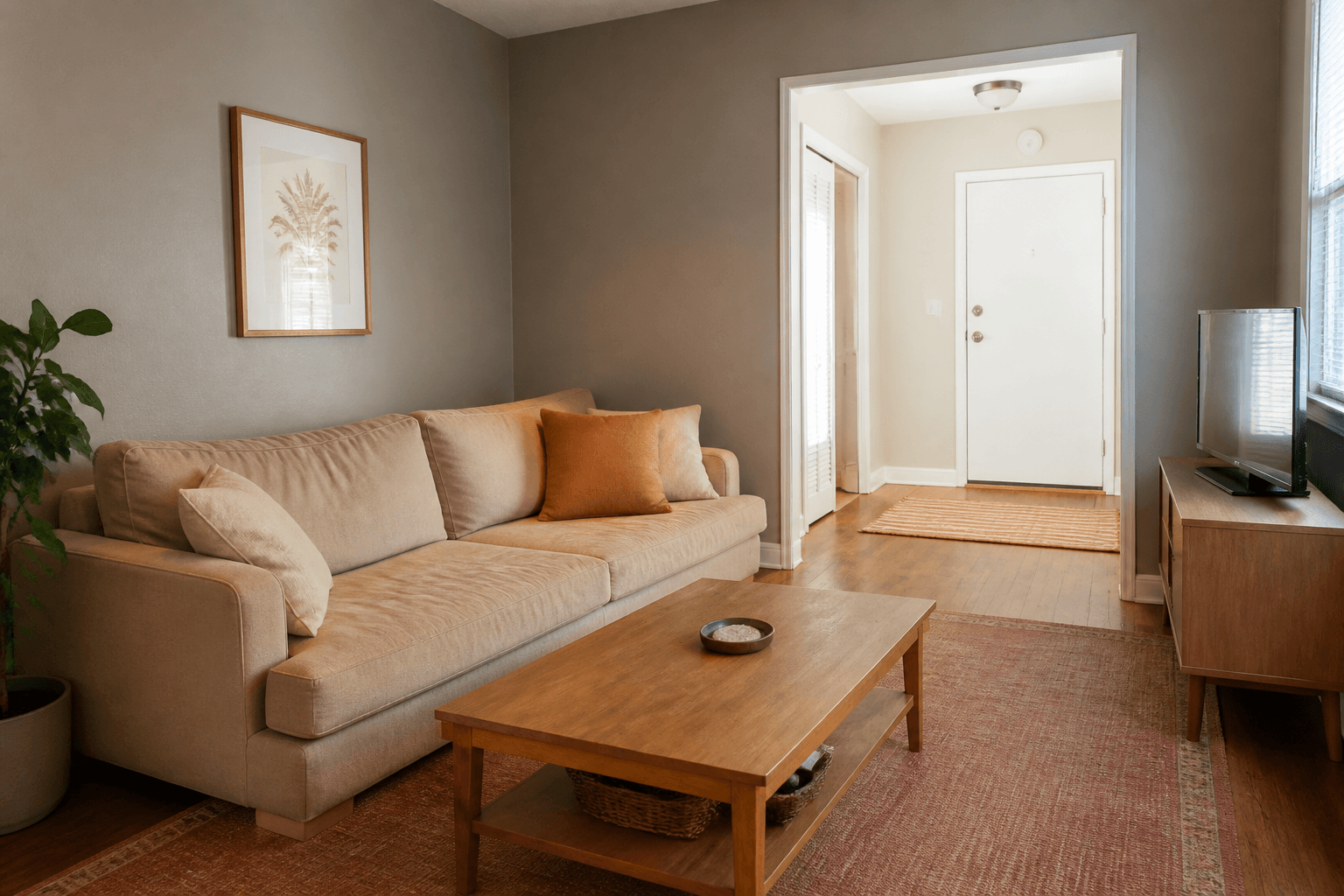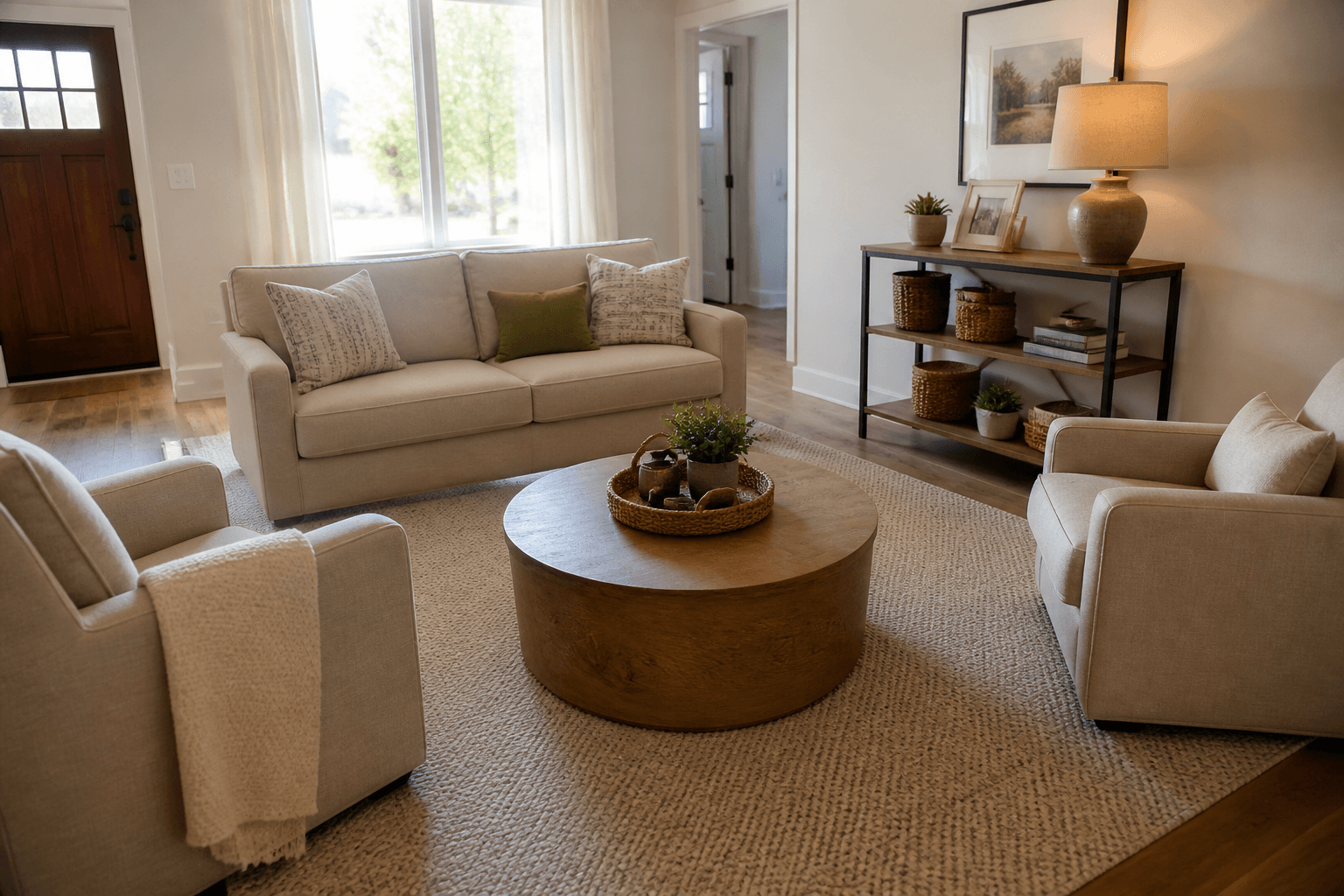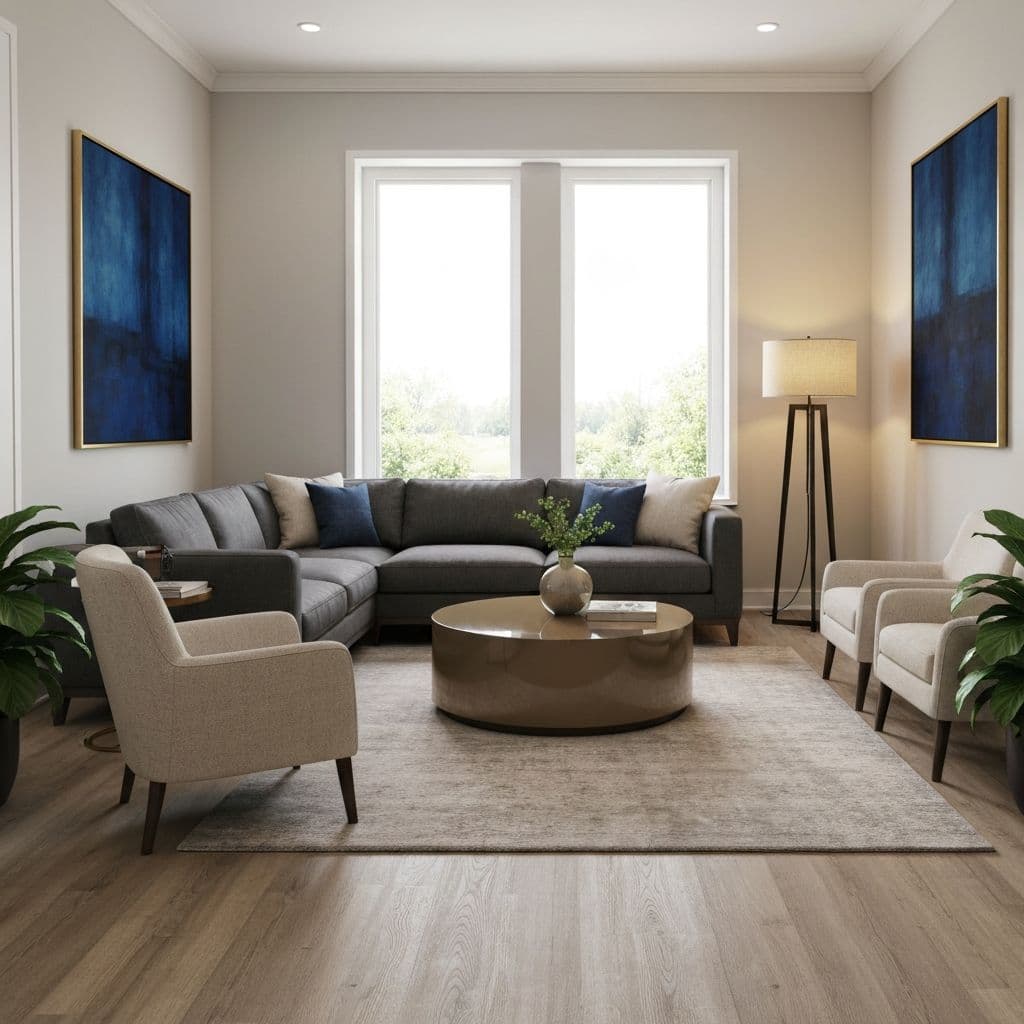
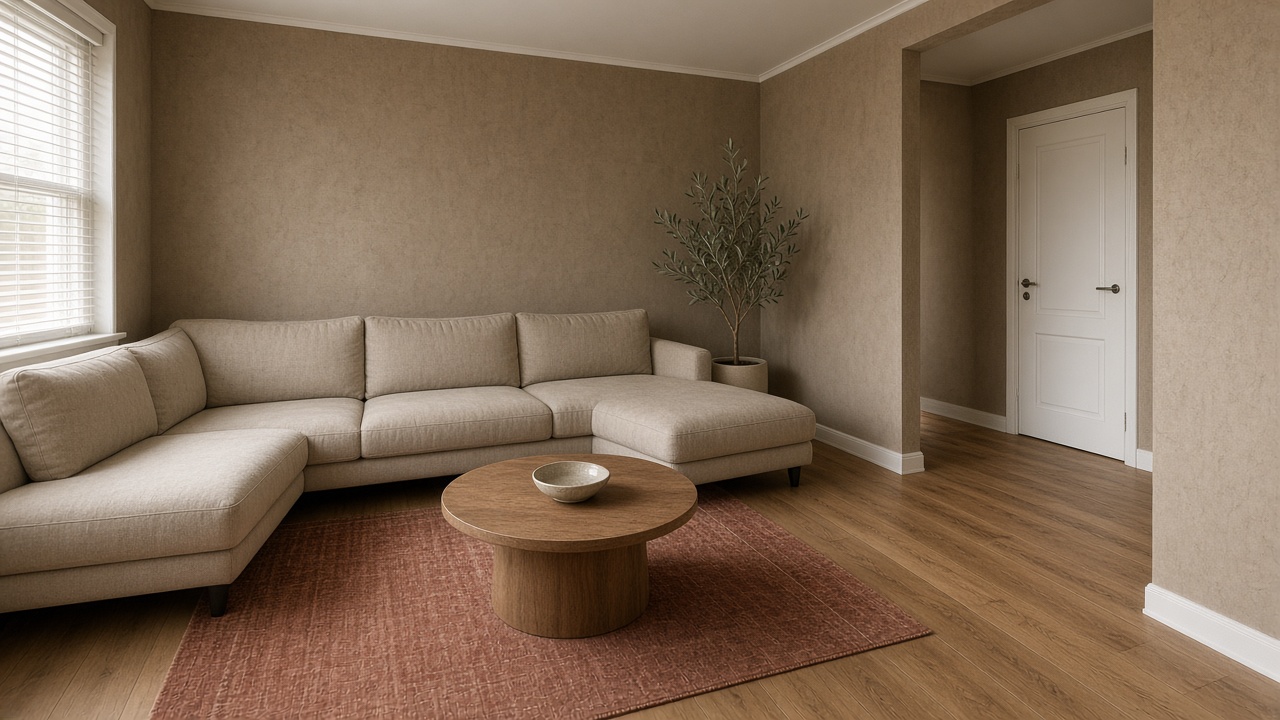
A feng shui corner sofa is an L-shaped seat whose long run and short return still let you glance at the door you use, with a walk that does not clip the chaise. Sit both legs. Tape the return if a grocery bag has to hop it.
When we photograph living rooms, the catalog L looks like extra seats. The room we get is one person on the long run who can see the latch, and a second person on the return who stares at a wall, with a chaise in the kitchen path. People ask if an L is "bad chi," or which fabric is lucky. We sit the inner corner, then the far end of the long run, then the return. If either body has to twist to see who entered, the L is already talking. Sofa placement is a straight sofa: command, float, or wall. Arrange furniture is the whole room. Furniture to skip is a one-piece hulk that will not turn a stair. This URL is the L after it is already in the room: both seats still see the door.
How we check a corner sofa in a real rental
We stand in the living-room door they actually use, not a balcony slider they keep locked. If the first object is the short return, the mouth of the room is a chaise. That is a walk fail before anyone sits.
Then we sit the inner corner, the far cushion of the long run, and the return, TV off. Door in a glance, a back that is plaster or a high cushion, and whether a bag still passes the joint. We do not overlay a bagua on the L. Wikipedia's feng shui page still splits Form (shape you can walk) from Compass overlays. Form goes first here. A lucky Ba Zhai sector does not rotate a welded frame tonight.
If you photograph a listing, shoot from the door the guest will use. A wide shot that hides the chaise still fails the bag walk. This page is a home living room you can change tonight.
Is a corner sofa bad Feng Shui?
It is bad when one of the two seats is on defense, or when the L becomes a wall in the walk. Form School cares whether a body can sit and leave without a bruise. Folklore blogs call the whole L trapped chi because two lines meet. Two lines meeting is how an L is built.
An L is useful in a rental because it holds more people than a loveseat without a second sofa that then has no path. That is not a defect. It becomes a defect when the return is a laundry bunk, or when the open end dumps into a hallway so every crossing is a hip-check.
Command still belongs to the sitters. If the long run faces a blank wall and the return faces the door, only one person is in command. Flip the L if the pieces allow it. Do not buy a crystal for the joint.
If you never sit the return because it is a dump, empty it before you argue about facing.
Which way should an L-shaped sofa face?
Face other people, and keep the door in a glance from both seats. The television comes after those two. Here you have two spines to check, not one.
Sit the long run. If you cannot see the latch without turning around, that run is on defense. Sit the return. Same test. A diagonal view is enough. Staring at the door like a guard is the opposite miss: arrivals walk into your knees.
The open end of the L should face the room, not a second doorway or the kitchen pass. Layout blogs that draw an L protection plan put one arm toward the entrance and the joint farthest from it. That drawing is Form, not a spell. If your open end is a hallway, every trip to the fridge clips the last cushion.
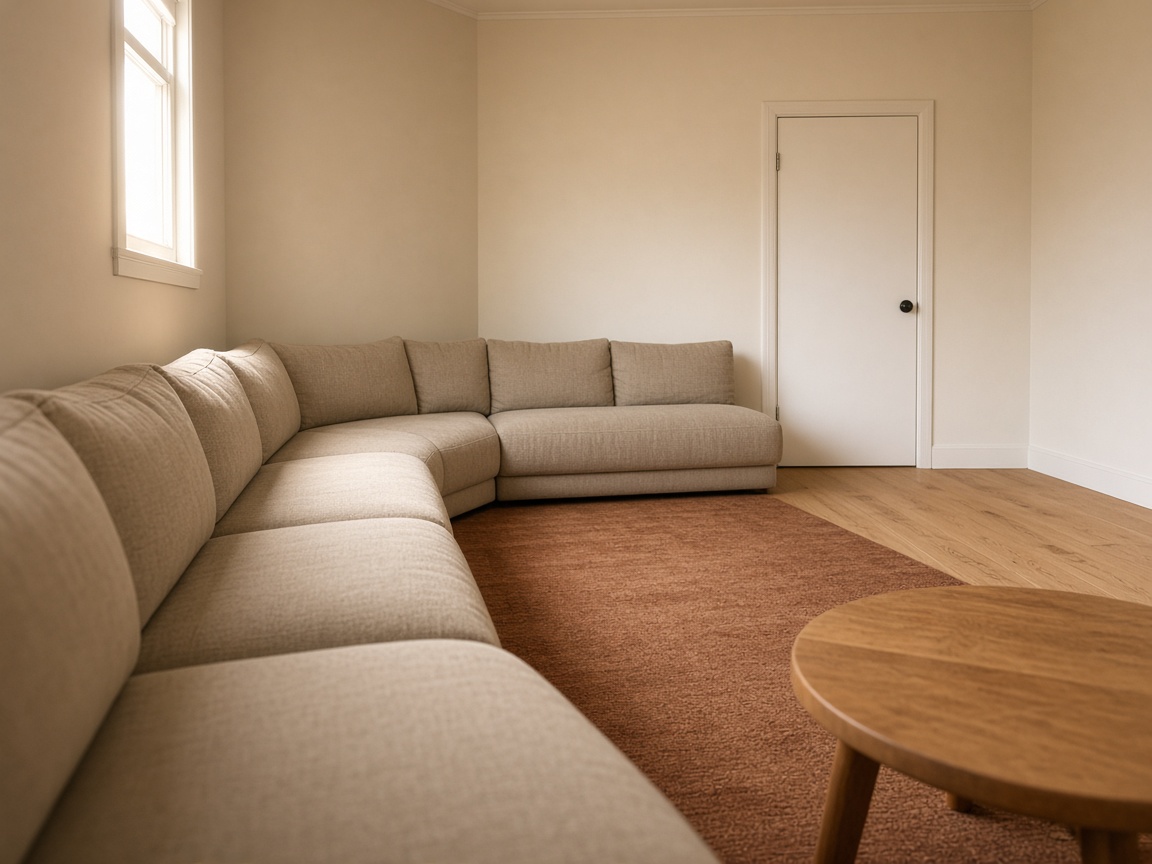
That seated view is the test. If the door is already gone when you sit the inner corner, the L is aimed at the wrong rectangle.
Put the longer run where the household sits most of the week. The return is an extra seat, not a storage shelf with a cushion. If the only way to watch a screen is the return with its back to the latch, the TV wall is wrong, or the L is backwards. Move the lighter object.
Two people on an L should still talk at a normal voice. If the return is so far around the joint that you shout, pull a chair into the open side.
The inner corner is a seat, not a shrine
Blogs warn that the joint gathers stagnant energy. What we see is throw pillows and a remote grave nobody uses. In a correctly aimed L, that inner corner is often the best command seat: farthest from the latch, solid walls on two sides, door still in view. Sit it. If you cannot see who entered, the L is backwards, not cursed.
If the joint itself points at the door, arrivals walk into the hinge. Rotate until the joint is in the far corner of the room. A plant in the leftover triangle is fine if it does not steal the walk.
Do not fill the inner corner with a sharp side table that bruises every stand-up. Coffee table placement is the shin path in the open square. Soften the L joint people clip, or leave it as cushion.
Where should the corner of the sofa sit?
Tuck the joint into a real corner, or into the far side of an open plan, so the L draws a sitting rectangle without blocking the door you use. The long run usually wants the longest solid wall. The short return wants the quieter side wall, not the kitchen desire line.
Do this before you declare the L impossible.
- Tape the full footprint, including arms and a chaise that sticks past the frame.
- Open the living-room door through a full swing. If the leaf hits the return, the L is in the latch.
- Sit all three positions: inner corner, long run, return.
- Walk a grocery bag from the door to the kitchen opening. If you sidestep the chaise, mark that object as the fail.
- If the pieces unclip, swap the return to the other end and repeat the bag walk.
| What you sat or walked | Pass | Renter move |
|---|---|---|
| Inner corner | Door in a glance, two-sided back | Rotate the whole L until the joint is farthest from the latch |
| Long run | Door in peripheral view, not a full twist | Float a little if a hallway is currently behind heads |
| Return / chaise | Same glance, or you treat it as a rare extra seat | Flip a reversible chaise to the quiet wall |
| Bag walk | No sideways shuffle at the joint | Pull the L off the desire line, or skip a welded hulk |
| Door swing | Leaf clears the arm | Slide the L back until the latch works |
You cannot invent a fourth wall tonight. You can stop parking the L as a fence across the aisle.
A living room rug still wants the front legs of the L on the textile. If the rug only catches the long run and the return sits on bare floor, size up or skip the rug until it can hold both legs.
Open-plan rooms use the long run as a low wall toward the kitchen. That only works if a console or the sofa back reads as a stop, and if at least one seat still sees the main door. A float that turns every sitter's back to the latch fails the same sit-test as a straight sofa.
What if the return blocks the door?
Then the L is a gate. Form does not care that the fabric is linen. If a grocery bag has to hop the chaise to reach the latch, the return is in the mouth of the room.
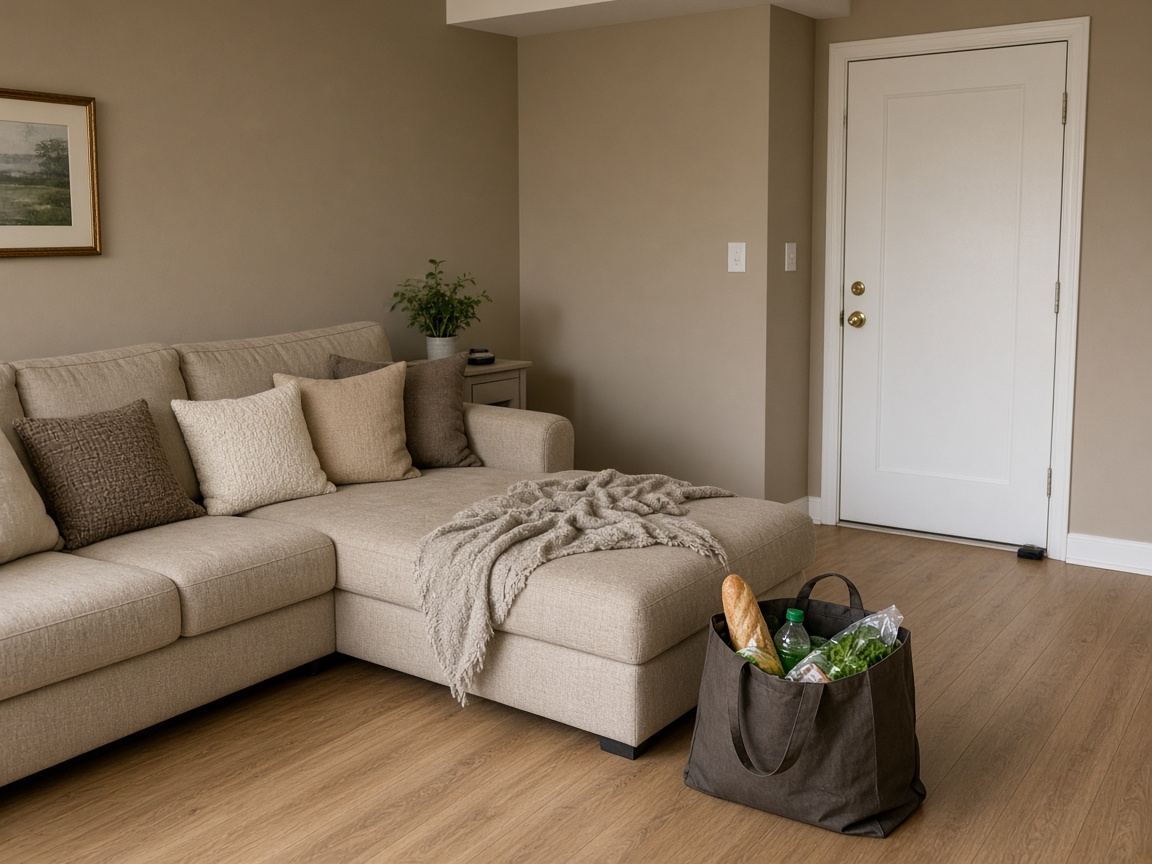
That tote in the remaining strip is the bruise photo. The chaise belongs on the wall that is not the walk, or it belongs unclipped and moved.
Fixes that stay inside a lease:
- Flip a reversible chaise to the other end of the long run.
- Pull the whole L off the door wall and tuck the joint into the far corner.
- Swap the return for a separate armchair that can sit out of the walk.
- If the frame is one welded piece and the room is too tight, skip it. Use the furniture-hub refuse for stairs, then come back here only if a smaller L can still enter.
A mirror on a side wall can show motion at the door when the long run cannot rotate. Do not aim a giant pane at the inner corner like a second person. A mirror is a patch, not command.
If the living room has two openings, pick the door you unlock with keys. The second opening is a pass. Do not try to command both with one joint.
Can a renter reverse a one-piece L?
Sometimes the floor, never the steel. Felt sliders and a second pair of hands will rotate a modest L. A one-piece frame that already failed the stair is not this page.
Modules you can unclip are the usual keep when you still want an L. Carry the return to the quiet wall. Assemble in the room, not the hall. If the store sold you a reversible chaise and you never flipped it, do that before you buy a second sofa.
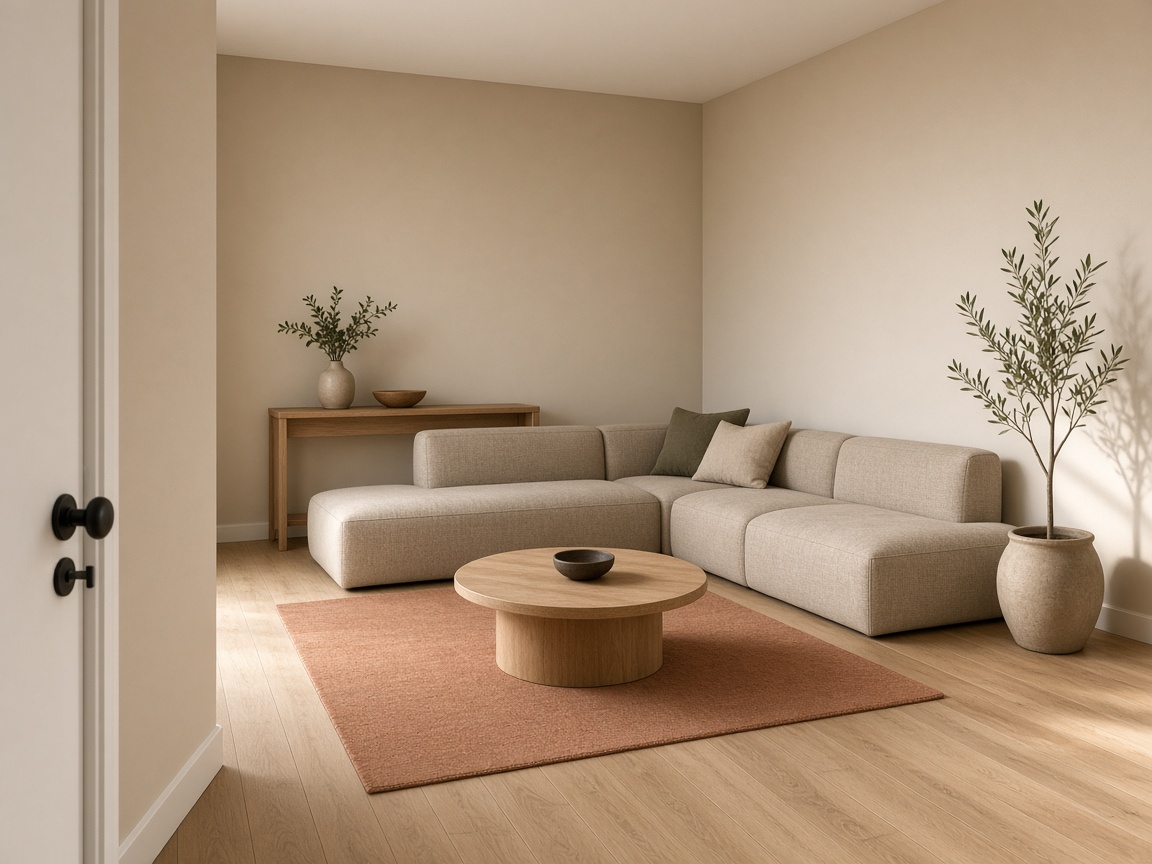
That view from the latch is the after photo we want: joint in the far corner, walk still a walk, console standing in for a wall. You can reverse a console at move-out. You cannot reverse a hole in plaster.
Skip drilling a custom niche for the L. A bookcase as a backer is allowed if it still leaves a shoulder. A folding screen that blocks the only exit fails Form even if it hides the kitchen.
If the L is simply too big, no angle saves it. A straight two-seat plus one chair often beats an L that ate the fridge path. That is still Feng Shui. It is also how you carry groceries without a sidestep.
Placement still beats upholstery. A loud cover you cannot replace is calmed by the wall behind it, not by a ritual cloth. If the return is a runway into a sharp table, keep the L on the wall and soften the table.
Photograph from the living-room door in FengShui Hero after you flip or tuck. Compare the flagged walk with the bag pass you made.
What this is not
A corner sofa will not pay rent and it will not fix a marriage by chi. A green cushion in the inner corner will not mint money. Unused seats are not unused income.
Skip flying-star years on the L, and skip a crystal grid on the joint. Do not claim income because the sofa sits in a wealth cell. Do not add a fountain behind the return. Water plus a walk is a spill.
This page is not permission to demolish a corner for a conversation pit. Sofa float versus wall and the stair refuse already have URLs. This page is both seats of the L those pages assume you can still use.
A simple evening checklist
Do this in order. Stop when both seats can glance at the door and a grocery bag can pass the joint.
- Stand in the living-room door. If the first object is the chaise, the L is a gate.
- Sit the inner corner, the long run, and the return. Write which bodies lost the latch.
- Tape the footprint. Open the door through a full swing.
- Walk a bag to the kitchen opening. Mark a sidestep.
- Flip a reversible chaise to the quiet wall, or rotate the whole L until the joint is farthest from the latch.
- Pull unused pillows off the inner corner so it is a seat again.
- Photograph from the door in FengShui Hero and compare the flagged walk with the pass you made.
If you only do one thing tonight, sit the return. If that person cannot see who entered, flip or rotate until they can, or stop using that cushion as a seat. The L needs a walk you can use and seats that still see the latch, not a lucky joint.