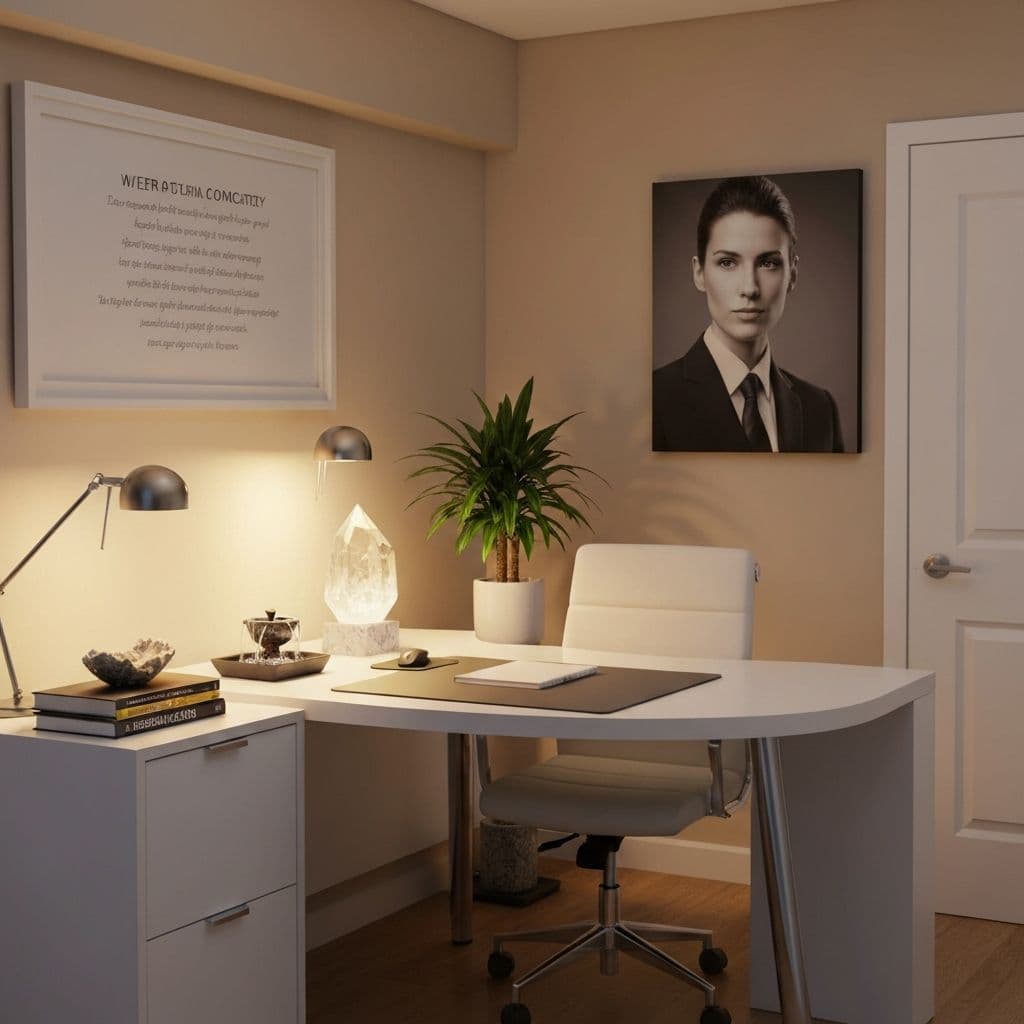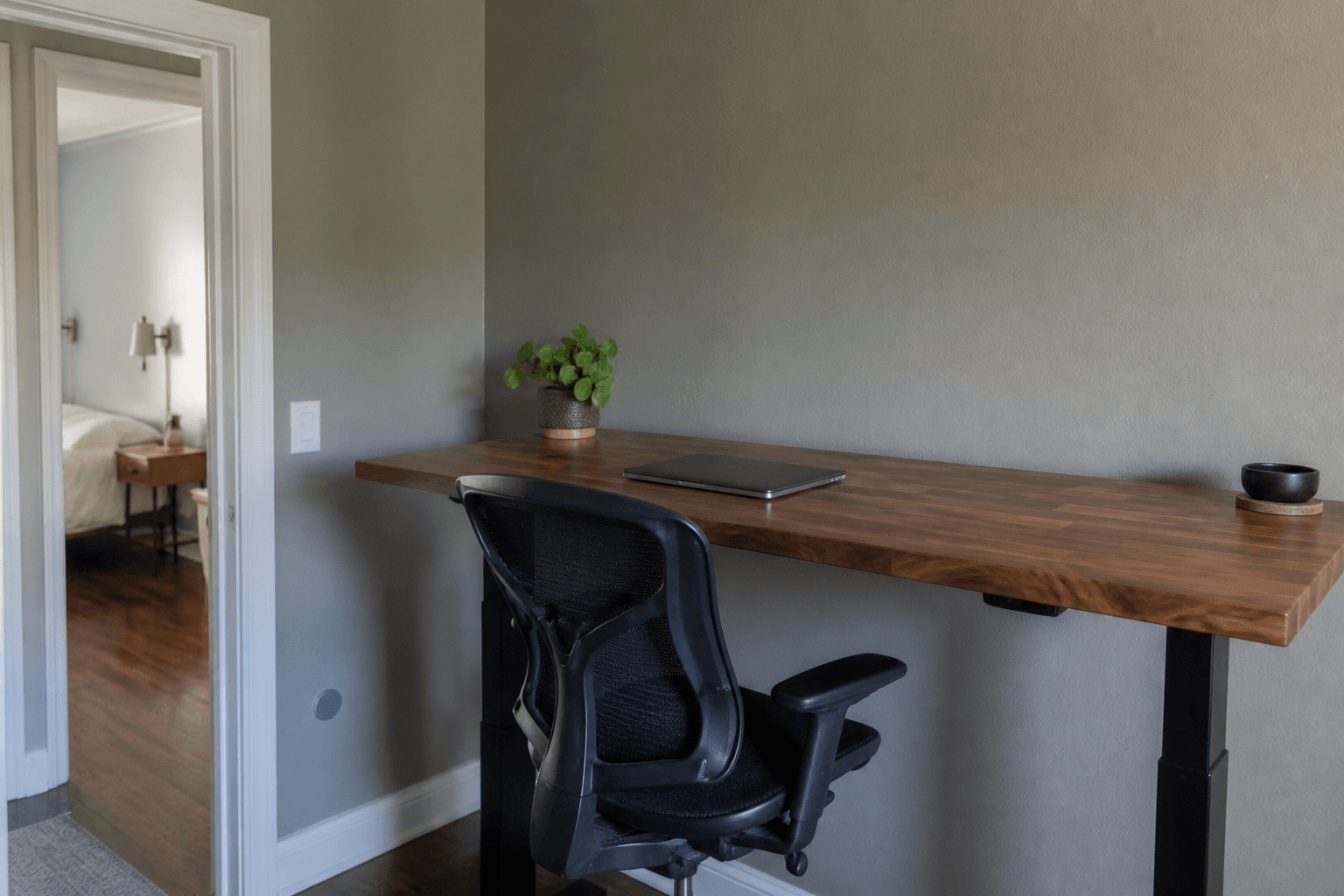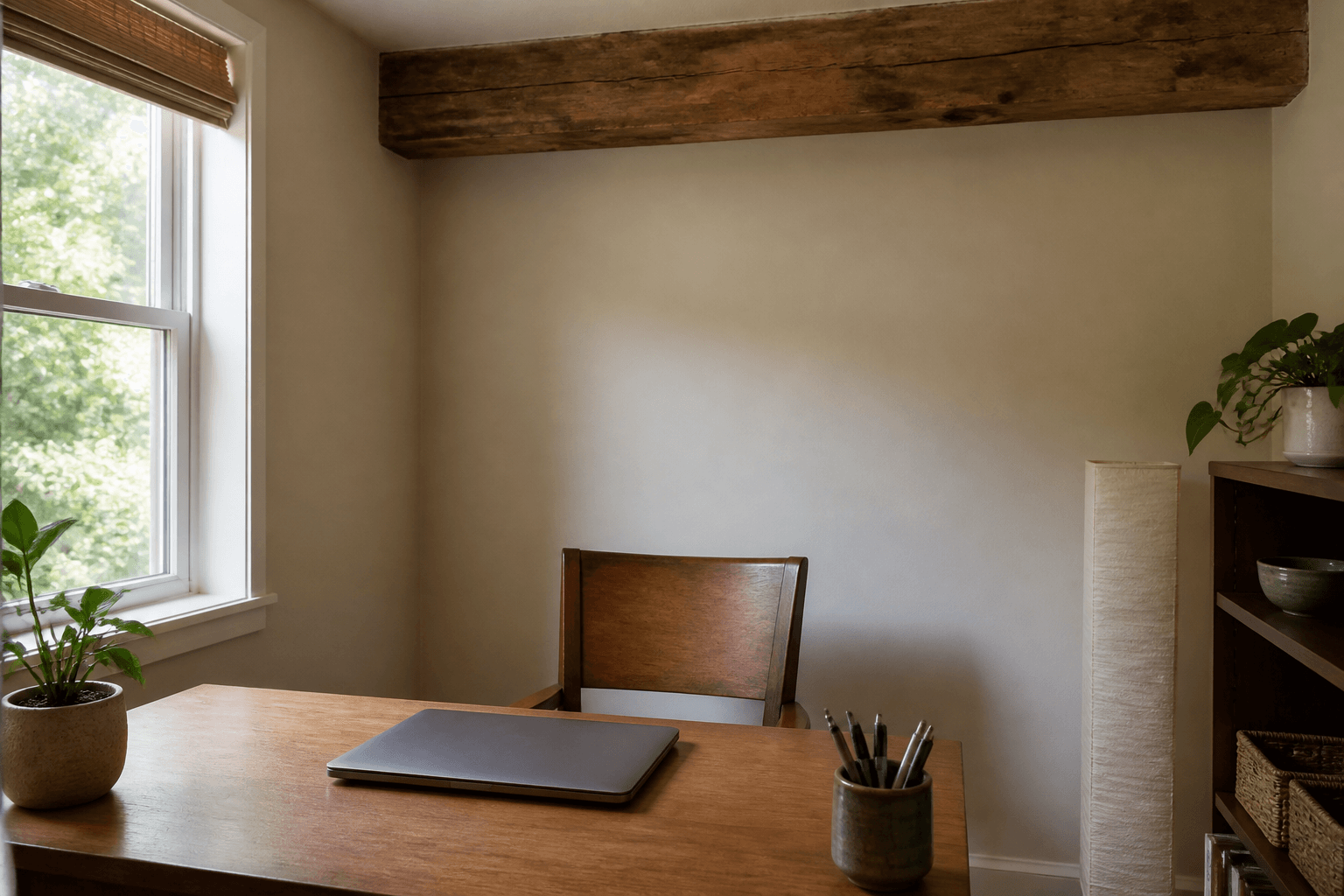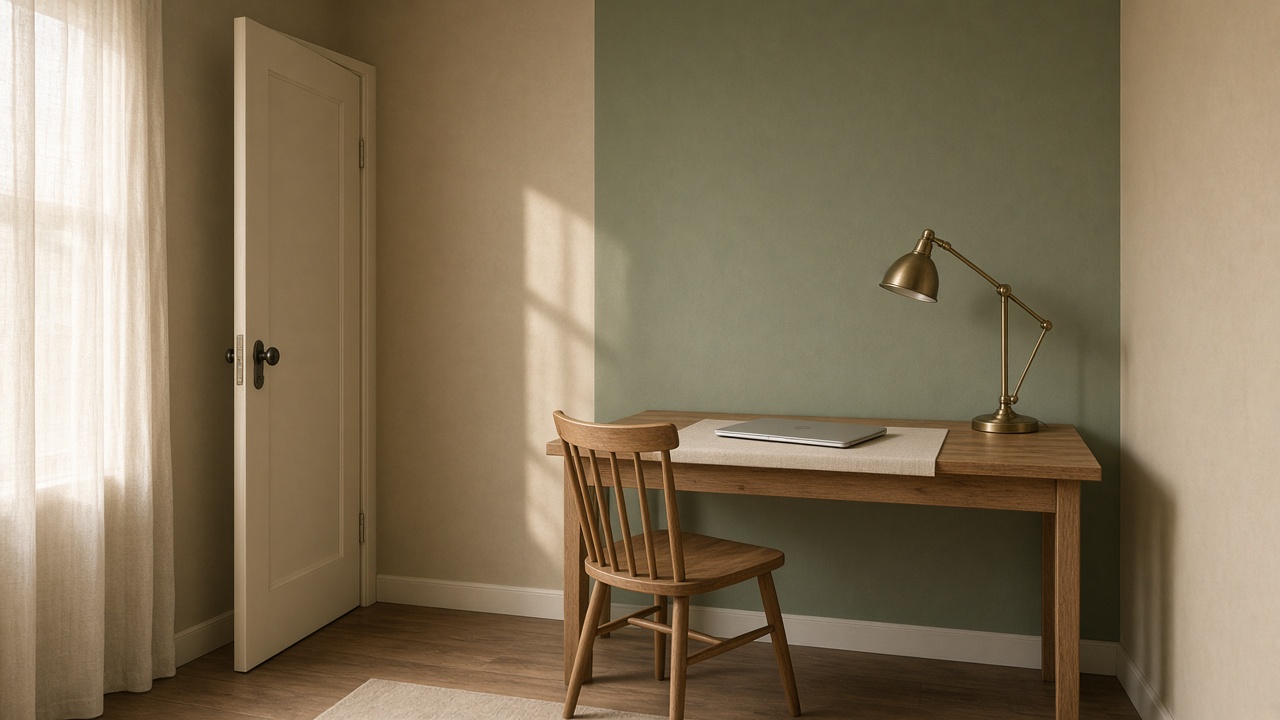

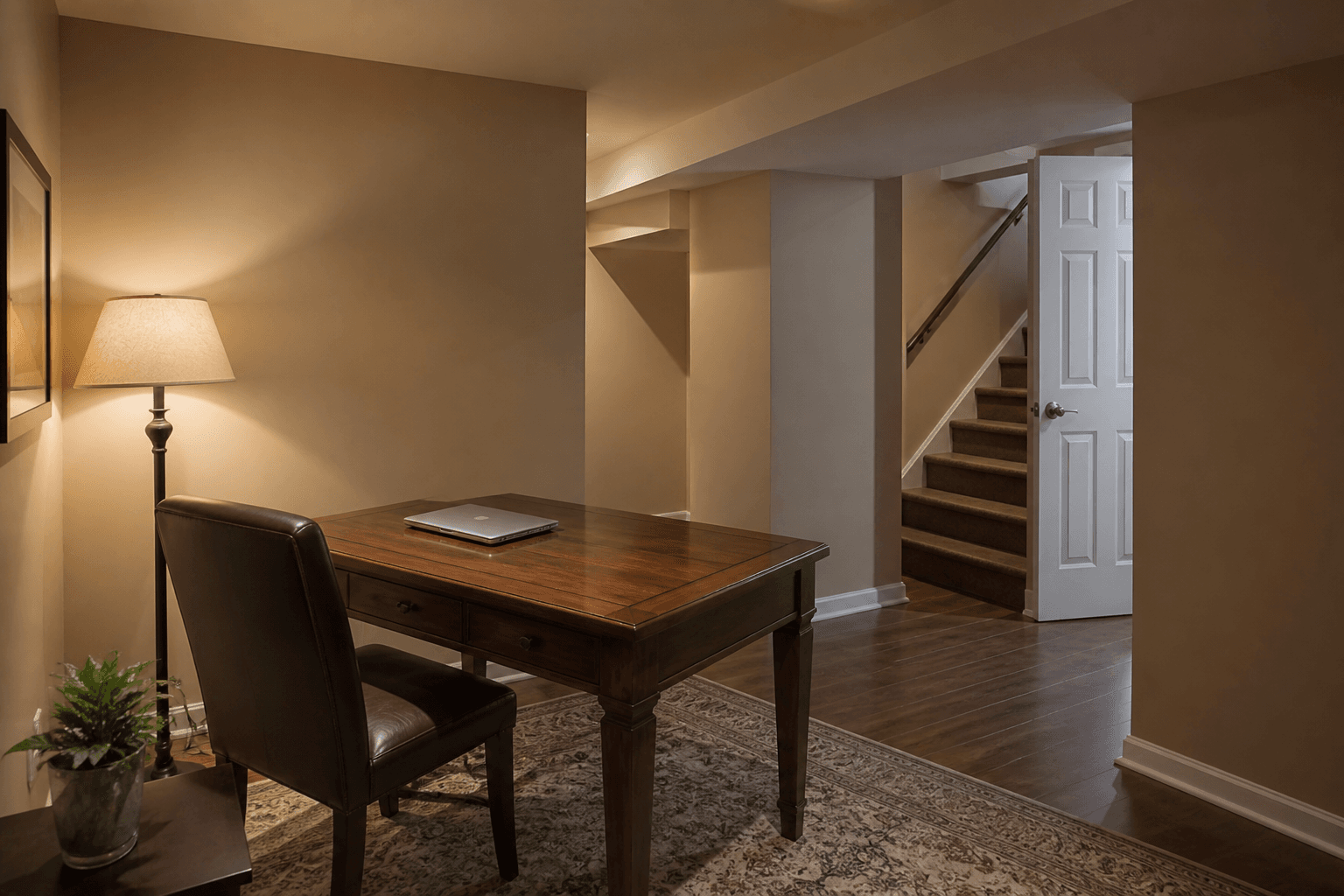
A Feng Shui basement office is a desk with light you add and a view of the door you actually use on that floor. Command matches an upstairs office. A cellar is not a career cave, and a lamp will not get you promoted.
When we photograph below-grade desks, the chair faces a blank wall under a bulkhead and the only bulb is a shop tube. People ask which water object will "raise the chi." We ask them to sit and look for the stair door. If they need a torch to read a label on a box, the layout is already talking. The desk position guide is command in any room. A standing desk still needs the latch. A beam over the desk is a cut above the chair. This page is the basement constraint: less daylight, a stair as the mouth, damp you treat as damp.
What makes a basement office different?
Daylight is scarce. High windows, if they exist, sit at sidewalk height. Many rooms have none. You cannot borrow the west-office glare article and call it done. You add lamps.
The door you use is often the stair door, not a street latch. Command is still "who enters this room." People coming down the steps are the visitors. A desk aimed at a furnace closet is not command.
Bulkheads and low plaster are common. If a beam sits over the chair, slide off that line or use the beam-over-desk page. Do not invent a lucky canopy.
Damp and smell are housekeeping. A wet carpet is a landlord message, not a gua. Do not put a fountain in a basement to "add water." You already have enough moisture to manage.
How we check the room
We stand at the bottom of the stair and look in. Then we sit at the desk. We name the light sources: window, overhead, lamp. We name the opening we can see. We note whether the walk from stair to chair is a slalom of boxes.
If the room is storage plus a desk, the desk still needs a zone. A rug that defines the work patch helps you stop treating the whole cellar as one pile.
How do you light a basement office?
Overhead tubes that hum are a glare on the laptop and a headache. Use them to find the chair. Switch them off for work if a lamp can take over.
A floor lamp behind you or to the side beats a lamp in the screen. A desk lamp with a shade you can aim is the task light. Warm enough to see paper. Cool white on a basement wall at 9 p.m. reads as a garage.
If a small window exists, sit so the pane is to the side, not in your face and not only at your back. Street feet at eye line are a privacy film or a sheer if the lease allows, not a reason to face the furnace.
No window: the lamp is the job. Two lamps are allowed if one is task and one fills the dark corner so the room does not feel like a closet. Do not buy a third to complete a bagua.
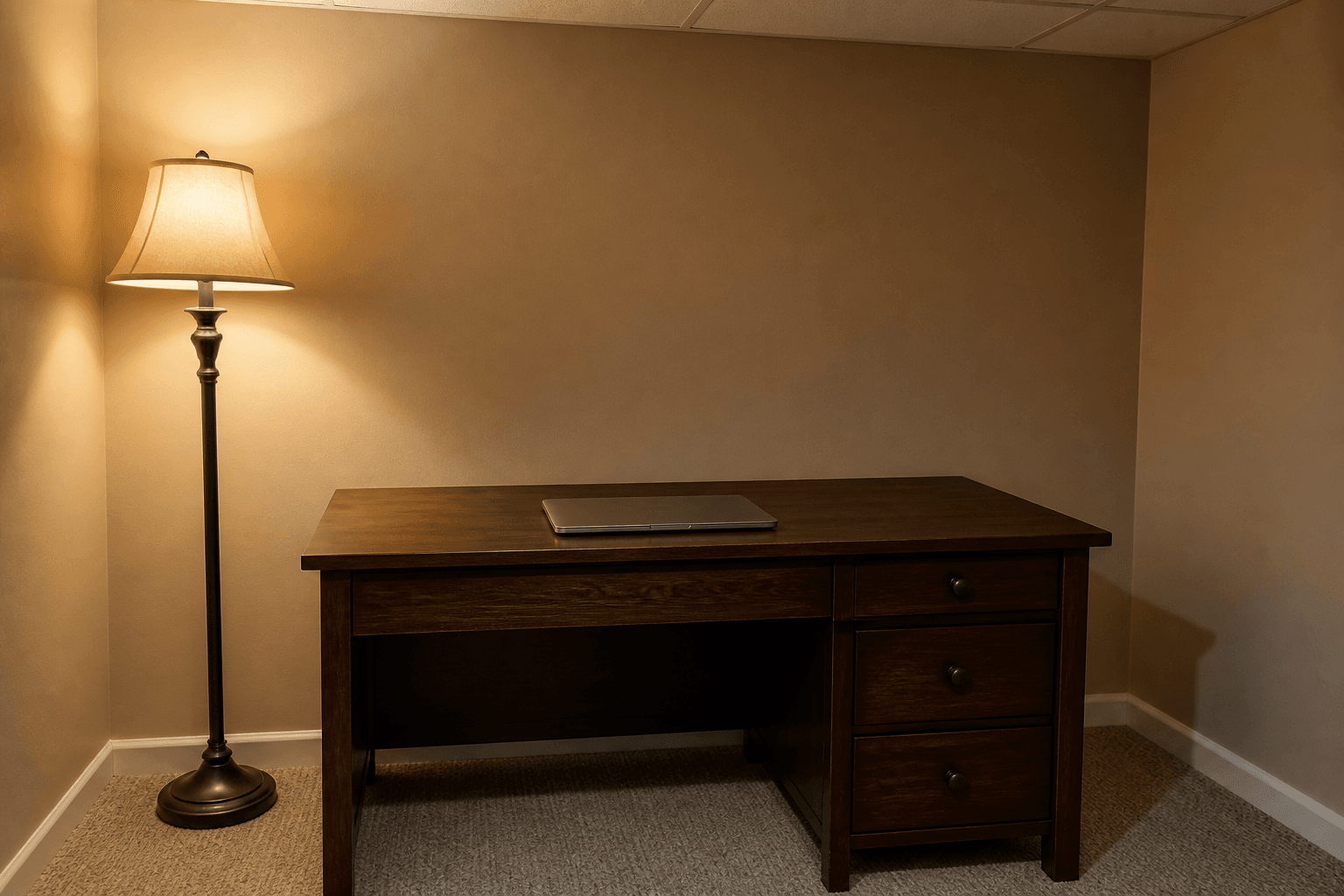
That lamp is doing the daylight job the glass cannot do. If your cellar still looks like a storage unit with a laptop, add the lamp before you add a plant.
Should the basement desk face the door?
Sit where you type. Look for the opening without twisting your whole torso. Angle the desk. Pull it off the door's center line.
If the only solid wall puts your back to the stair, a small stable mirror that shows the opening is the substitute, the same as an upstairs office that cannot turn. Do not hang a bagua octagon over the laptop.
A chair with a closed back still matters. A folding chair in the middle of the room is a stool, not a mountain. Put a wall, a bookcase you cannot fall through, or a solid chair back behind you.
Boxes behind the chair are a visual noise and a trip when you roll. Park storage along a side wall with lids, off the sightline to the door.
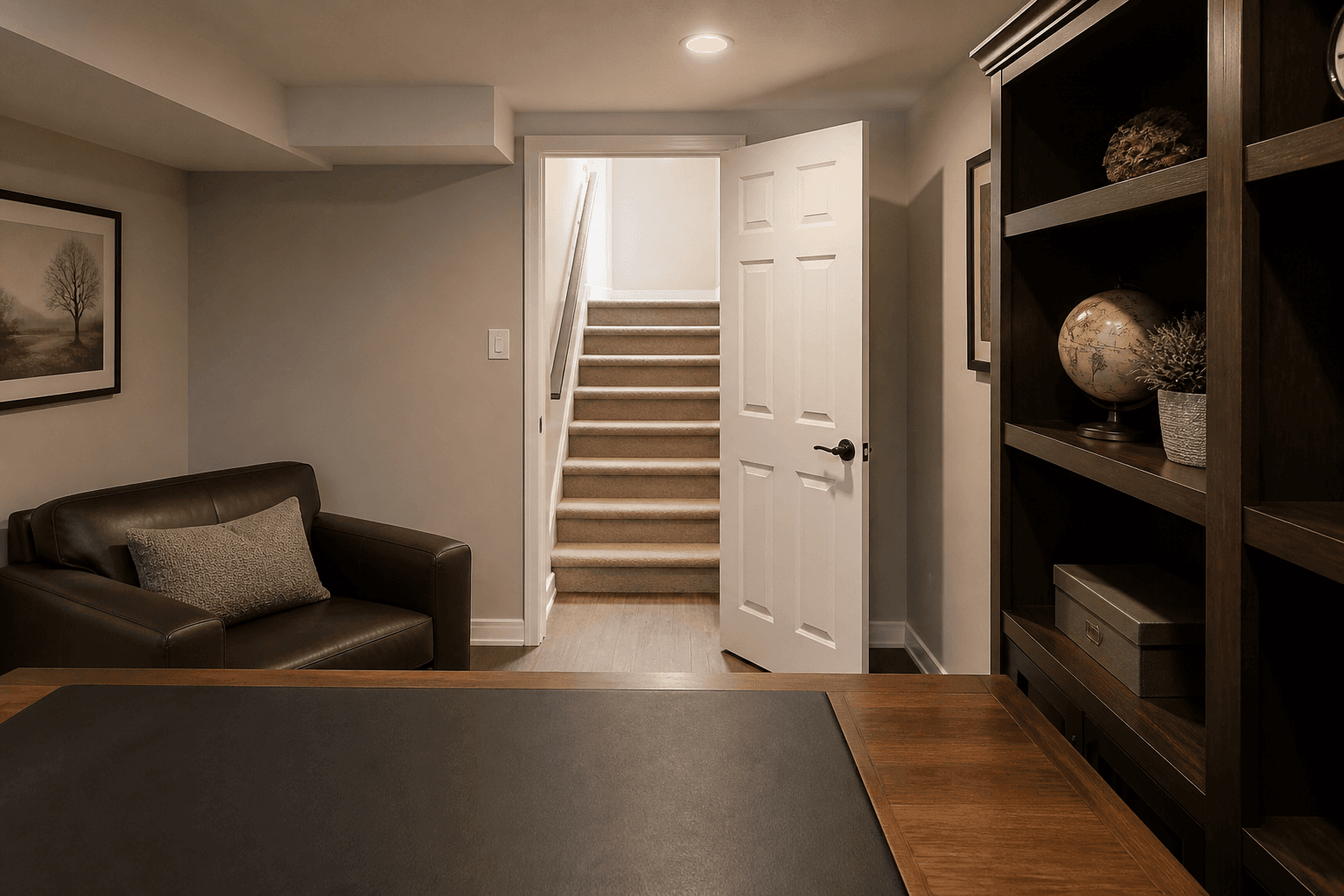
That opening is the mouth of this office. If you cannot see it from the chair, turn the desk or add a mirror that shows it. Do not add a career crystal to the bulkhead.
Damp, noise, and what to skip
If the floor is wet, stop decorating. Message the landlord. A rug on a damp slab is a smell. Work upstairs until it is dry if you can.
Washer rumble is a shared-wall problem. Close the utility door. Headphones are not Feng Shui. They are noise control.
Skip a fountain, skip an aquarium, skip a "wealth" bowl on the boiler. Skip a plant that needs a south window. One hardy pot you water is optional after the lamp and the door test pass.
Shared basements, laundry, and video calls
If the basement is a shared laundry plus your desk, the office zone has to close. A screen, a curtain on a tension rod, or a bookcase you can see through keeps towels out of the camera. Cover the desk at night if the room is also storage. Sleep still wins if a bed is down here. A guest mattress you put away is a later relationship row. A bed you work on all day is a sleep fail.
Washer cycles are noise. Schedule deep work off the spin if you can. Close the utility door. A rug under the chair cuts roll noise for whoever lives above. Headphones are not a gua.
Video calls in a basement show a bulkhead and a lamp. That can be honest. Face a wall that is not a pile of boxes. The WFH video-call page owns backdrops upstairs. Down here the extra job is light on your face without a tube in the laptop. Sit so the stair door is in glance range. A roommate appearing on the steps should not be a jump scare in the middle of a meeting.
A converter standing desk still needs the latch. Height is the standing-desk article. Darkness is this article. Do not raise the surface until you can see who enters and you can read the keys.
Storage walls and the walk
Lidded boxes on a side wall beat open piles behind the chair. Label them. The career gua is not a stack of archive paper you never open. File what you need in a closed drawer beside the desk. The rest belongs in storage that is not the sightline to the door.
A freezer next to the desk is a hum and a heat dump. Pull the chair off the blast. You will not move the appliance for a blog. A small rug zone still tells your body where work stops.
Electrical panels and meters stay accessible. Do not park a bookcase on a shutoff. That is code and a landlord rule, not a map.
If you only work down here two days a week, still do the lamp and door test on those days. A "temporary" cave becomes the room you hate. Twenty minutes to turn the desk and plug a lamp is the whole job.
Career gua talk on a basement map is overlay. The north wall of a cellar is still a wall. File invoices in a closed drawer. A below-grade desk will not mint a title.
Renter steps
- Stand at the stair door. Clear a walk to the chair.
- Sit. Name whether you can see that door.
- Add or move a lamp until you can read without the shop tube.
- Put a solid back behind you. Slide off a beam if one cuts the chair.
- Photograph from the stair door in FengShui Hero.
Skip new windows. Skip painting if you cannot reverse it. Take the lamps when you move.
What this is not
This is not the desk-position pillar. That page owns command in general. This is the below-grade version: light you add, stair as door.
It is not a standing-desk clone. Height still matters if you stand, but the first miss here is darkness and a spine to the stair.
It is not a diagnosis of "stuck energy" in your career. It is not medical advice about mold and lungs. If the room smells wet or you cough, that is a landlord and a clinician, not a crystal.
Tonight at the bottom of the stair
Sit at the desk. Switch on a lamp you own. Look for the door. If you cannot see it, turn the chair a little tonight even if the full desk move waits for the weekend. Photograph from that door in FengShui Hero. If the scan flags boxes in the walk, the career gua can wait.