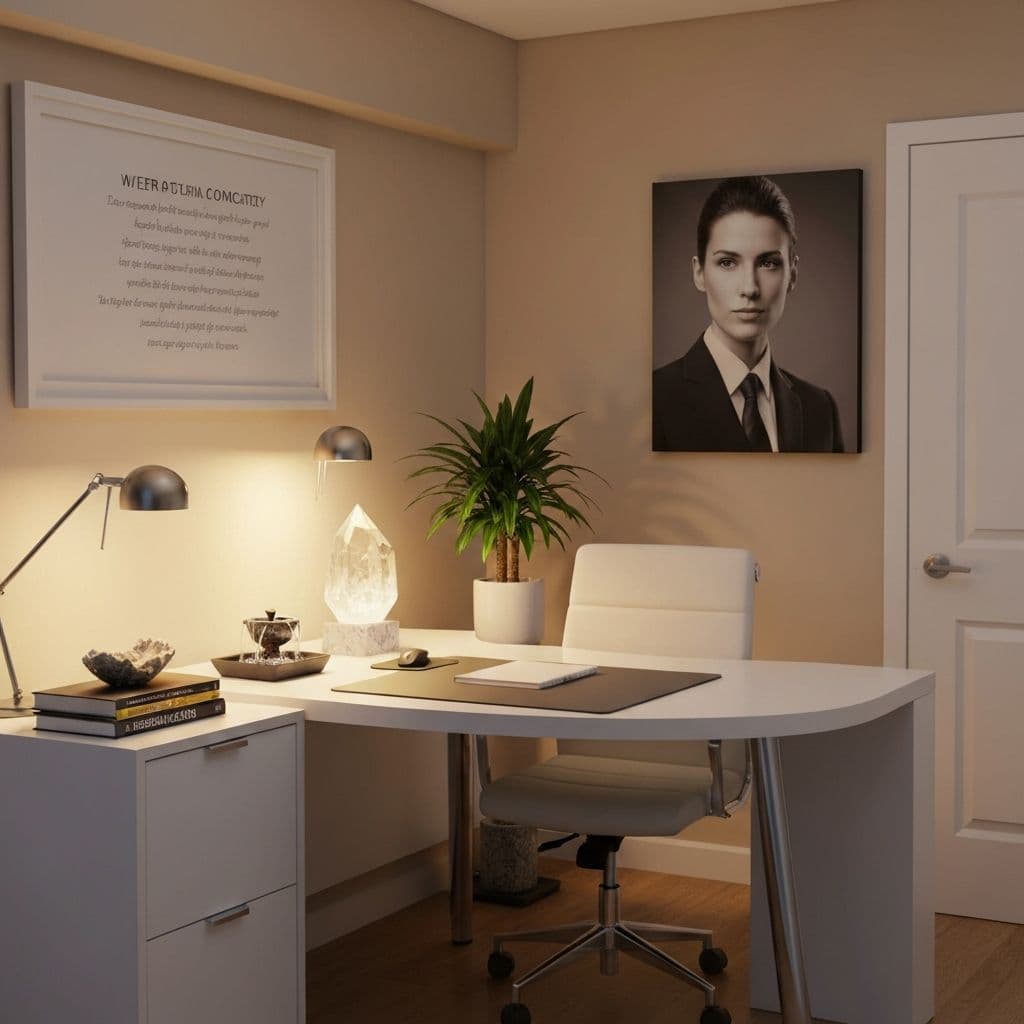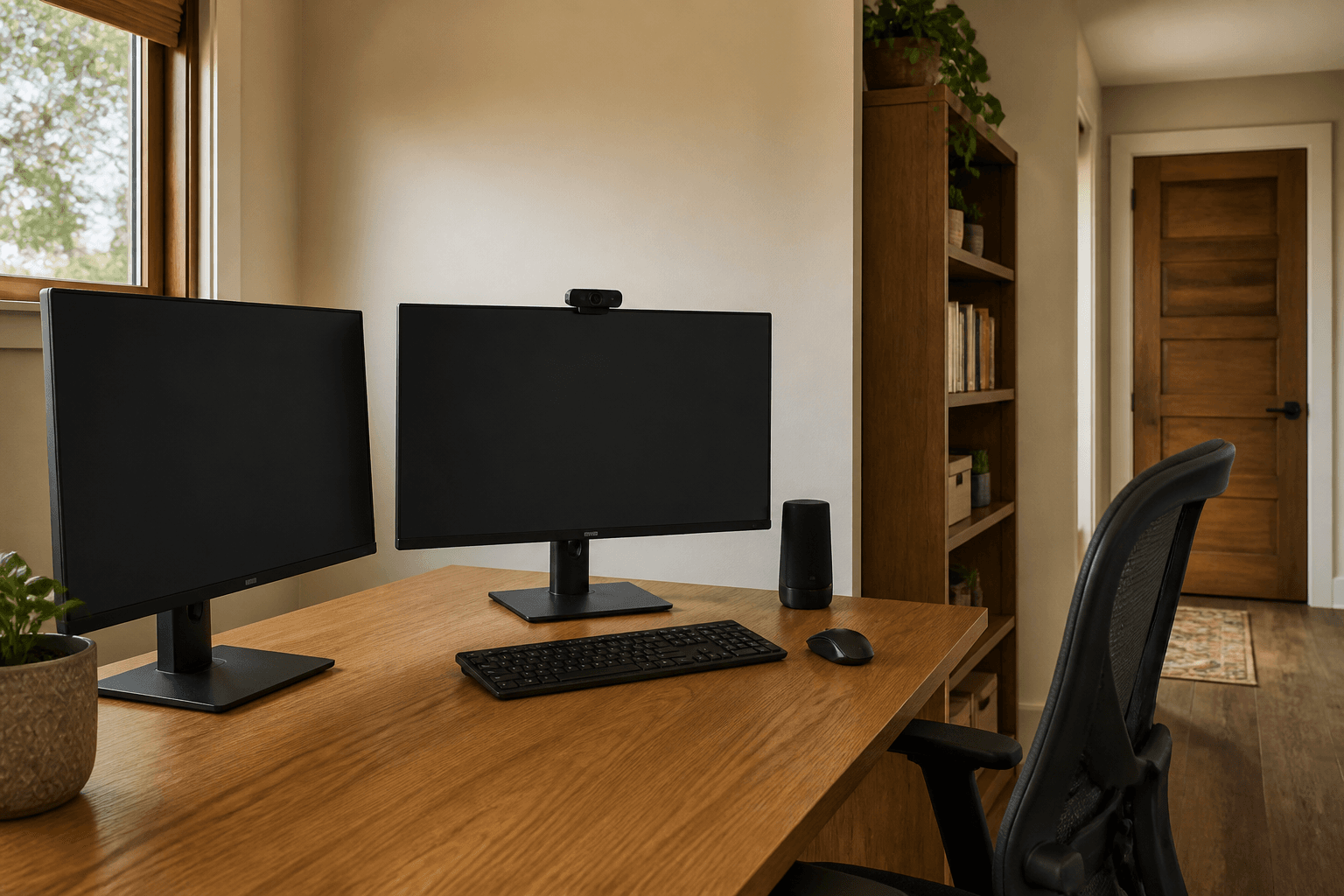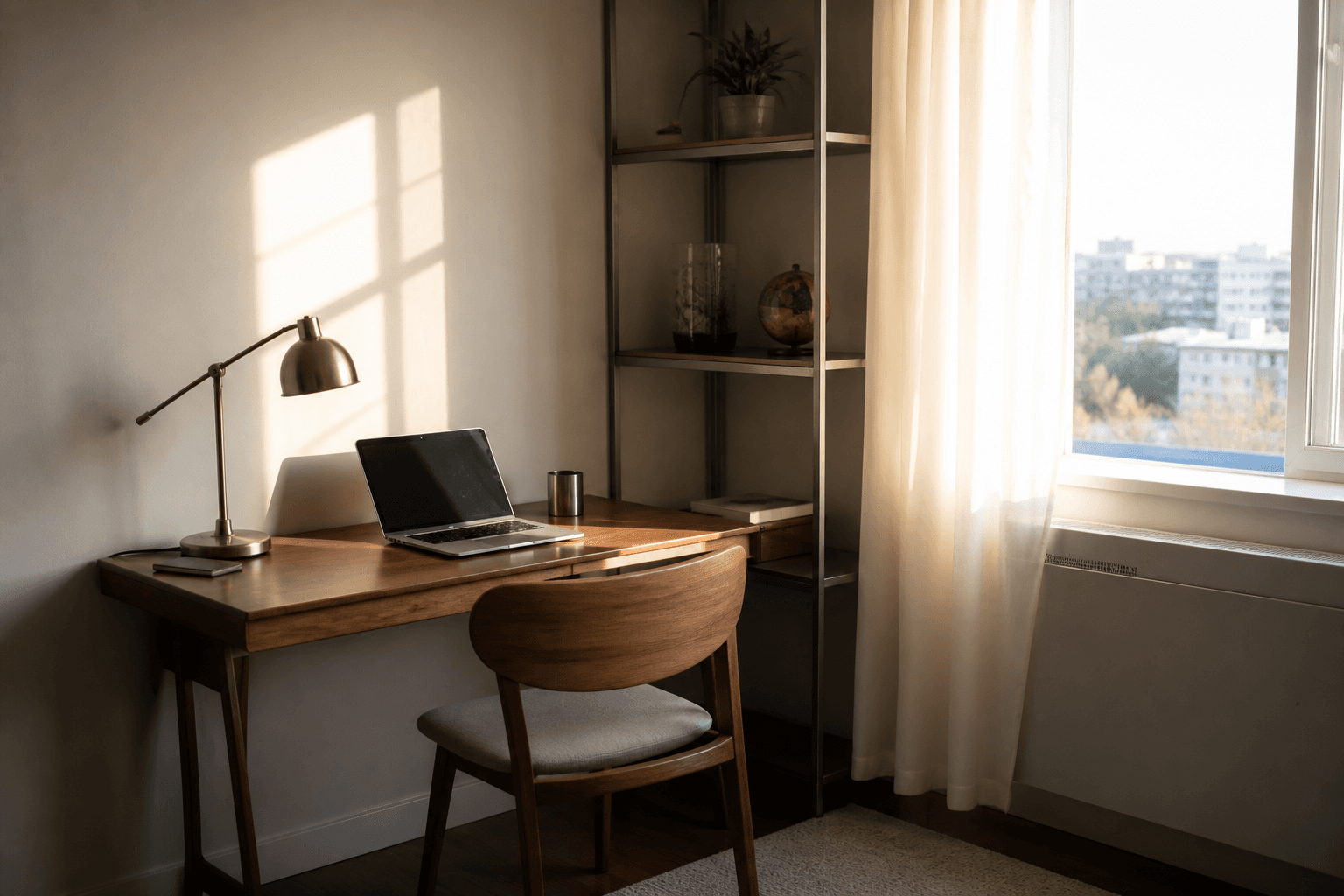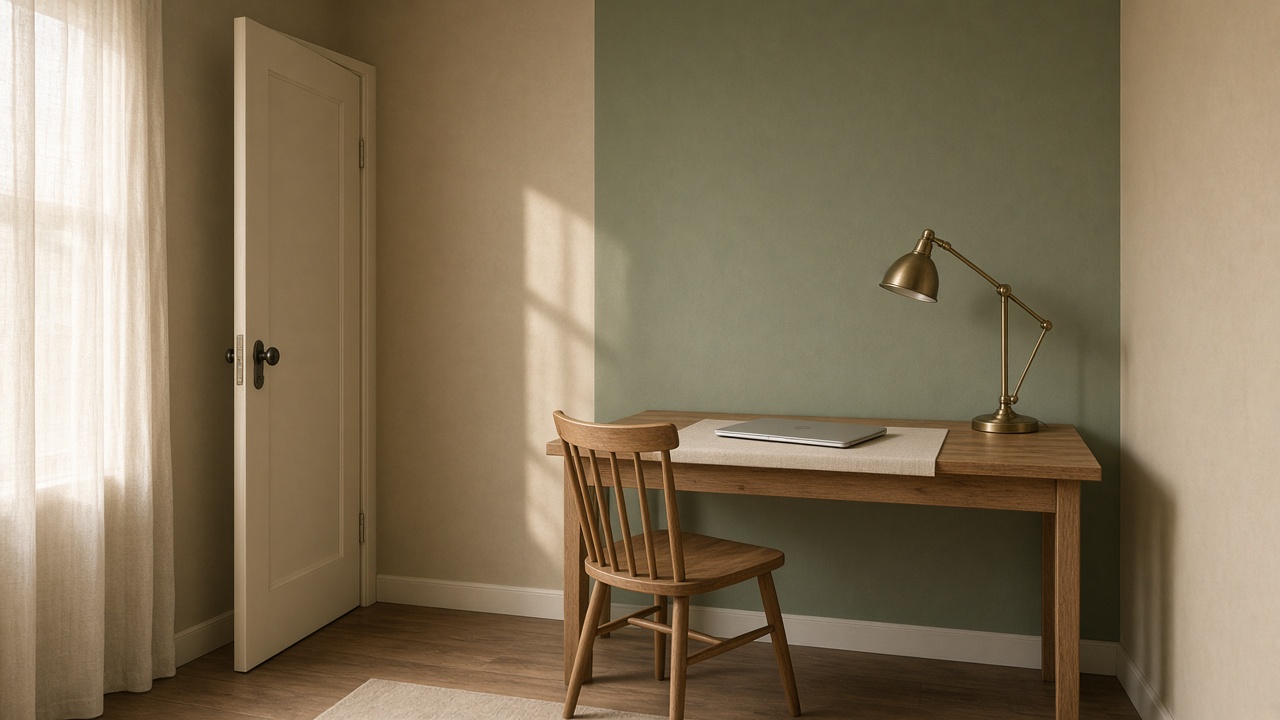

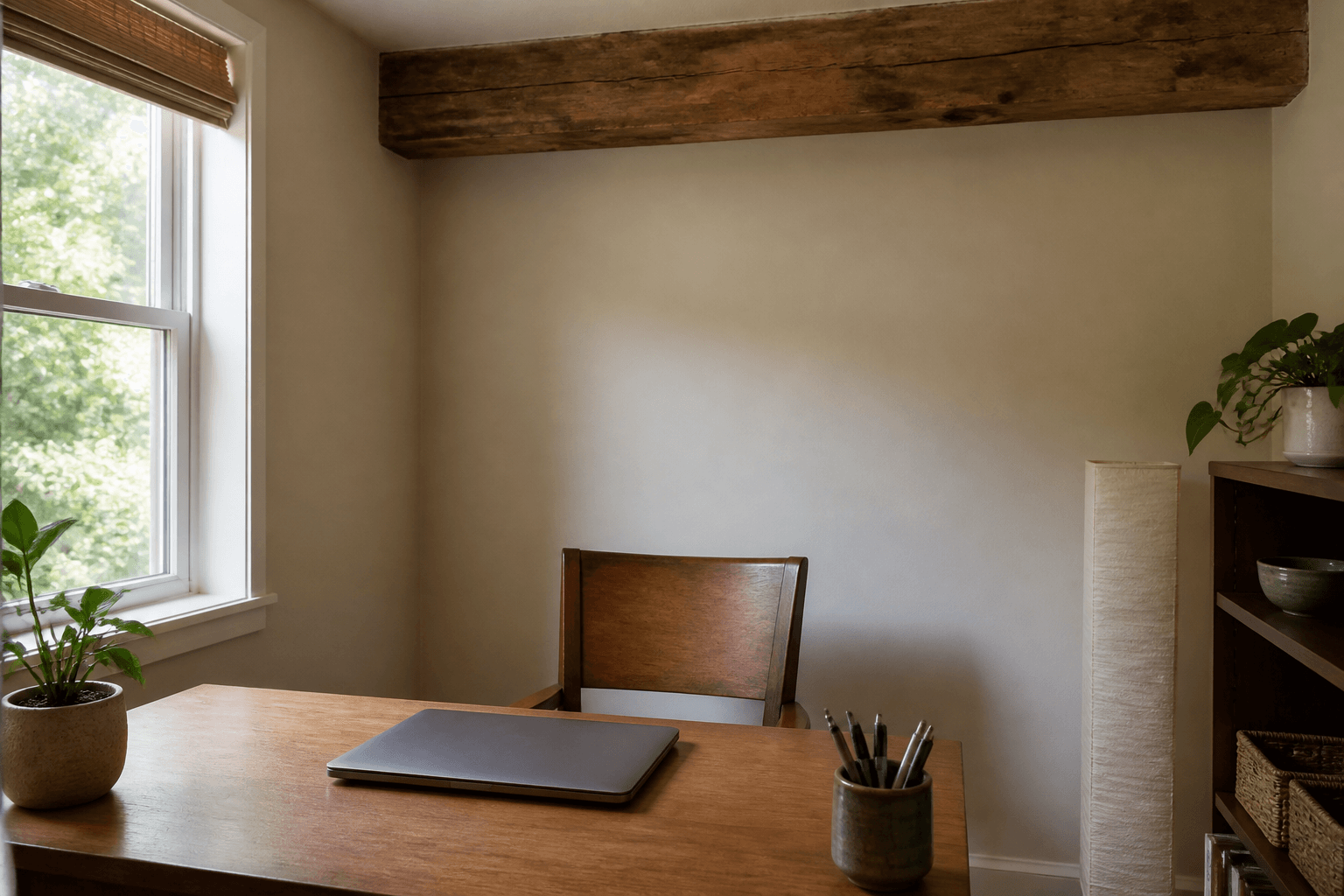
A Feng Shui beam over the desk is a hard line of timber, plaster, or a boxed soffit that sits above the chair and the screen. Traditional Form School calls that picture beam pressing down. You treat the visual weight as layout work: slide the seat off that line, or hang light fabric a renter can reverse.
When we photograph home offices, the listing still loves the loft joists. The worker sits at 2 p.m. with the same timber on the crown. People ask which flute angle will "lift career energy." We ask them to sit in the chair they actually use and look up. If a ridge cuts the head or the keyboard, the desk is unfinished. This page is that overhead line at a home desk. Sleep under a joist is a different article. Command still lives in the desk position guide. Afternoon glass is the west home office page. Extra screens are the second monitor article.
How do you check a beam over the desk?
Sit where you type. Look up. Stretch the way you do between emails and look up again. Then stand at the room door and see whether the first cut on the work seat is a joist.
Do this in the light you work in, including the harsh hour if you have west glass. A pale soffit can vanish in a noon photo and still sit on your hair at task time.
- Sit in your usual chair, feet where they land when you type. If a dark line crosses your crown or the primary screen, mark the beam as over the worker.
- Lean back. If the ridge is still in your overhead view, mark it again.
- Look at the latch from the chair. If the only slide that clears the joist turns your back on the door, mark command as the limit.
- Check that the chair moved with the table. The seat is the test, not the wood top.
Write which of those failed. The next sections are only those failures.
A boxed AC soffit counts, and so does a painted bulkhead over a condo "den" or a collar tie in a US, UK, or AU attic office. You are naming the line above the worker, not winning an argument about joist versus beam on a floor plan.
What is a Feng Shui beam over the desk?
You are deciding whether the person at the keyboard has a hard ridge in the overhead plane. Form School wants a solid back behind the chair, a glance at who enters, and a ceiling that does not chop the body. Popular career blogs then add a curse on promotions. Treat the poetry as poetry. The furniture job is a seat that is not parked under a dark bar.
This is narrower than whole-office layout. You still want command: door in view, not in the center line, something solid behind you. Escaping a joist into a face-the-closet posture is a worse desk. Read the latch first. Then look at the ceiling.
Classical notes name the picture beam pressing down. The claim is that a joist above the body feels heavy. You do not need a theory about energy to notice visual weight. A dark timber on a white ceiling is a stripe across the workday. You look up more at a desk than you think: stretch, take a call. The ridge is in that movie. Faux beams glued on for a loft listing still count if you see them. An I-beam in a warehouse desk corner is the same test with more steel. Do not drill it.
A beam behind the monitor, on the wall-ceiling join, is often quieter if it is not over your head. The miss is the line above the crown when you sit. A beam over a hallway is not this page. A beam over a bed is sleep. Stay on the chair.
The primary screen is part of the overhead picture. A joist that lands on the monitor makes the work wall feel chopped. Center the screen on your body after you slide. If you use two displays, do not park the second one under the remaining bar as a new problem.
Should you slide the desk first?
Yes, if the room allows a slide that keeps the door in view and a back you can feel. Moving the table and the chair together is the cheapest reverse. You do not need hooks or paint.
Get the worker out from under the line. Park the chair so the beam falls behind the seat, or over a gap you do not sit in. Keep a glance at the latch and a path to the door. If that mix is impossible, skip to fabric. Do not "win" the joist and sit with your spine to the entry.
Nudge the desk a hand's width at a time and sit after each nudge. The listing shot of a table under pretty timber is not a work test. Your crown is.
Common rental traps:
- The only wall that fits the desk has the joist centered on the chair. A small slide still leaves you under the bar. Try a bigger move, or accept that this wall needs cloth.
- You escape the beam by facing a blank wall with the door in your back. Command still wins. Hang fabric under the joist and keep the latch in the corner of your eye.
- You slide the desk and leave the chair in the old dent in the rug. The seat is still under the timber. Move the chair.
- You clear the beam and put the laptop on a west sill. Now you have glare. Pull off hot glass. Treat the joist and the sun as two checks.
A dining table used as a desk still counts. If the beam is over the only seat that sees the kitchen door, slide along the table. You do not need a new piece of furniture to leave the line. Video calls do not change the overhead test. Fix the backdrop after the seat is off the ridge, or after the cloth is up.
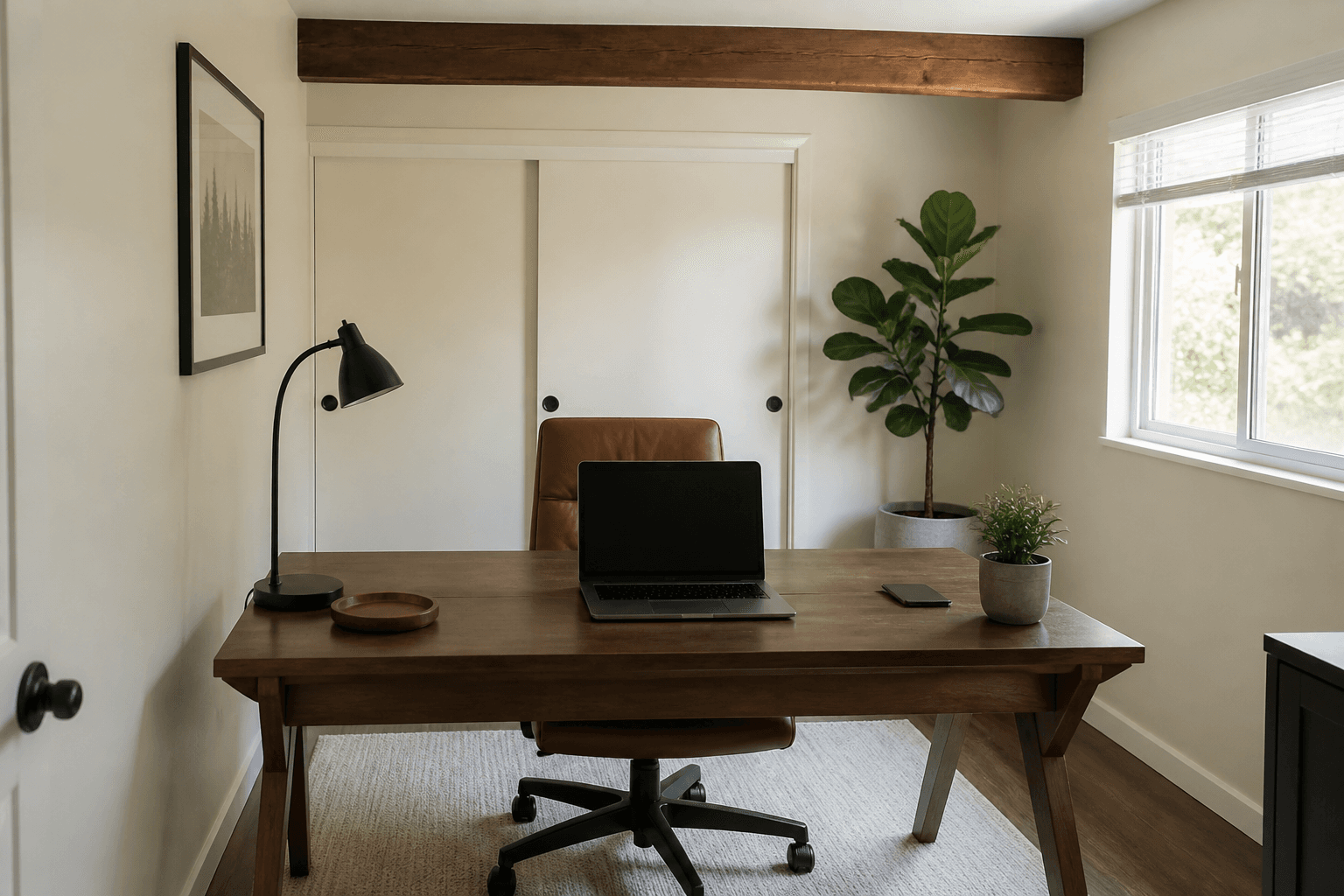
The timber is still in the room. It is behind the worker. If your sit-down view still has the bar on the crown, the slide is not done.
What fabric can a renter hang?
A light panel that breaks the dark stripe you see from the chair, hung so you can take it down at move-out. This is not a sleep canopy. It is a cloth ceiling over a work seat.
Keep the cloth light. Heavy drapery on a rental plaster hook is how holes happen. A cream panel or fabric on removable hooks is the usual kit. Follow the hook pack. If the building gave you notes for the joist or the beam, follow that manual. Do not hang a rod from crumbly popcorn. Do not drill an I-beam.
Ask before you put holes in a ceiling. Removable hooks that actually hold fabric are the renter version. A tension setup between walls can carry a light panel in a narrow den if the gear is meant for cloth.
Hang the panel so it sits below the ridge and above your stretch height. You should not hit it when you stand. You should still see a softer plane when you look up from the keyboard. A tiny charm on the joist does not do that job. Photograph the ceiling before you add hooks and put the inventory back at move-out.
If the beam crosses only the chair, cover the seat. If it crosses the chair and the screen, cover that span. A fabric panel does not replace a solid chair back. West sun through a panel is still sun. If the cloth glows at 4 p.m., you need a drape on the glass as well.
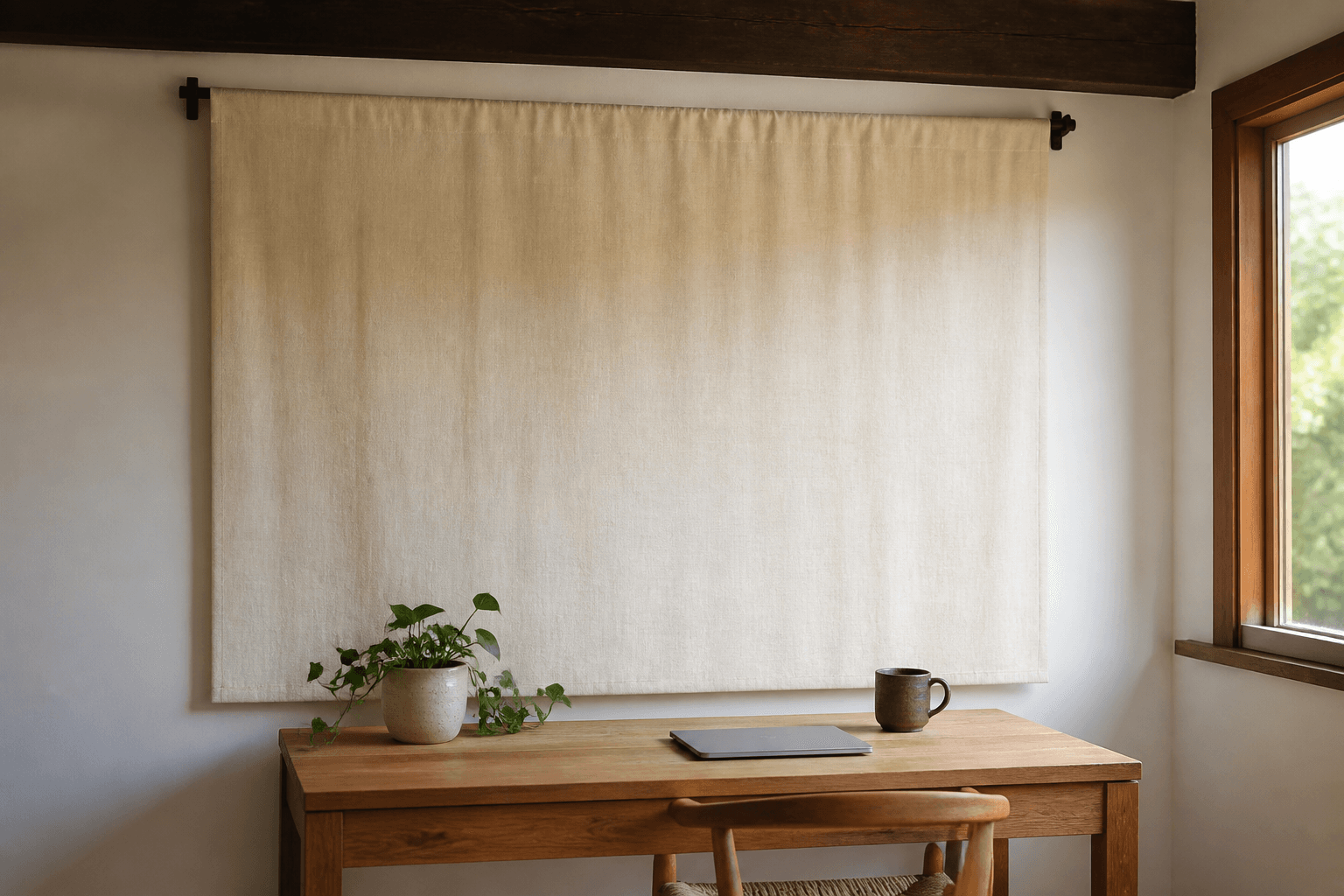
The timber is still there. The chair view is cloth. That is the renter cure when the desk cannot move.
Slide, fabric, paint, or folklore?
Pick the smallest reverse that clears the look-up test. Do not stack every row as a personality.
| Option | What it does | Reversible | When to pick it |
|---|---|---|---|
| Slide the desk and chair | Gets the worker off the line | Yes | First try if command and a solid back still work |
| Fabric panel | Softens the stripe you see from the chair | Yes if hooks and cloth come off | The only desk wall still has the joist |
| Paint the beam | Matches the ceiling so the bar is quieter | No without a repaint | Written permission, usually owners |
| Flutes, crystals, tassels | Folklore objects on or under the joist | Yes | Optional extra after the layout step |
Paint is contrast, not a raise. A dark stain on a white office ceiling is a louder line than the same ridge in ceiling white. If you own the place, or you have written permission, a sample on a card is the honest start. A renter who paints without a letter is paying at move-out. Skip masonry, and skip a "lucky" color on the joist as a substitute for moving the chair.
Do bamboo flutes fix a desk beam?
They do not fix a desk beam as the only step. Traditional shops sell a pair of bamboo flutes hung on a steep angle under the joist, sometimes with red cord. The story is that the flutes "lift" the press. That is folklore. You may hang them if you like the look and the lease allows a hook. You still do the look-up test. If the timber is the first thing you see from the chair, the flutes are decoration.
Crystals on a string under a work beam catch dust and swing in the AC. They do not slide a chair. A wind chime over a keyboard is noise on every call. If a seller promises that a flute set will mint a title, close the tab. Layout is the seat. Objects are optional.
Does command position still matter under a beam?
Yes. A quiet overhead with your back to the door is still a startle desk. Seeing who enters is the Form School job that does not wait for the joist story.
If you can slide off the beam and still see the latch, do that. If you cannot, hang fabric and keep the chair aimed at a slice of the opening. A small stable mirror that shows the door is the usual substitute when the room is a tunnel.
Two monitors that twist you toward the joist and away from the door make both jobs worse. Keep the primary on your body, then deal with the ridge. A west window plus a beam is two checks: cut the glare, and get off the line or cover it.
What this is not
A beam over the desk will not be sold here as a promotion, and it will not be blamed here as the reason a contract died. Furniture will not mint a title. If money is tight, a joist is not the invoice. Skip medical maps that point a ridge at an organ. Skip a guarantee that a cream panel will get you famous.
This is not the bed-beam article. Sleepers look up at 11 p.m. Workers look up between tasks. The cloth over a mattress is a canopy. The cloth over a chair is a panel.
Sun is glass. A beam is timber. You can have both in one den. Treat them in order: sit, name the stripe, name the sun, then move or cover.
A simple evening checklist
Do this in order. Stop when the look-up test is clean and you can still see the door.
- Sit in your usual chair and look up. Name whether a ridge crosses your crown or the primary screen.
- Check the latch from that seat. If you cannot see who enters, mark command as unfinished.
- If the room allows it, slide the desk and chair so the beam falls behind the seat. Keep a walk to the door.
- If the desk cannot move, hang a light panel below the joist on removable hooks. Follow the hook pack. Follow the beam notes in a building manual if you have one.
- Optional: flutes or a crystal as folklore. Not required.
- Photograph from the chair in FengShui Hero with the ceiling in frame, then compare the flagged line with the slide or the cloth.
If you only do one thing tonight, sit down and look up. If a beam cuts the chair view, slide the seat off that line, or put the light panel up so you work under fabric instead of a dark bar.