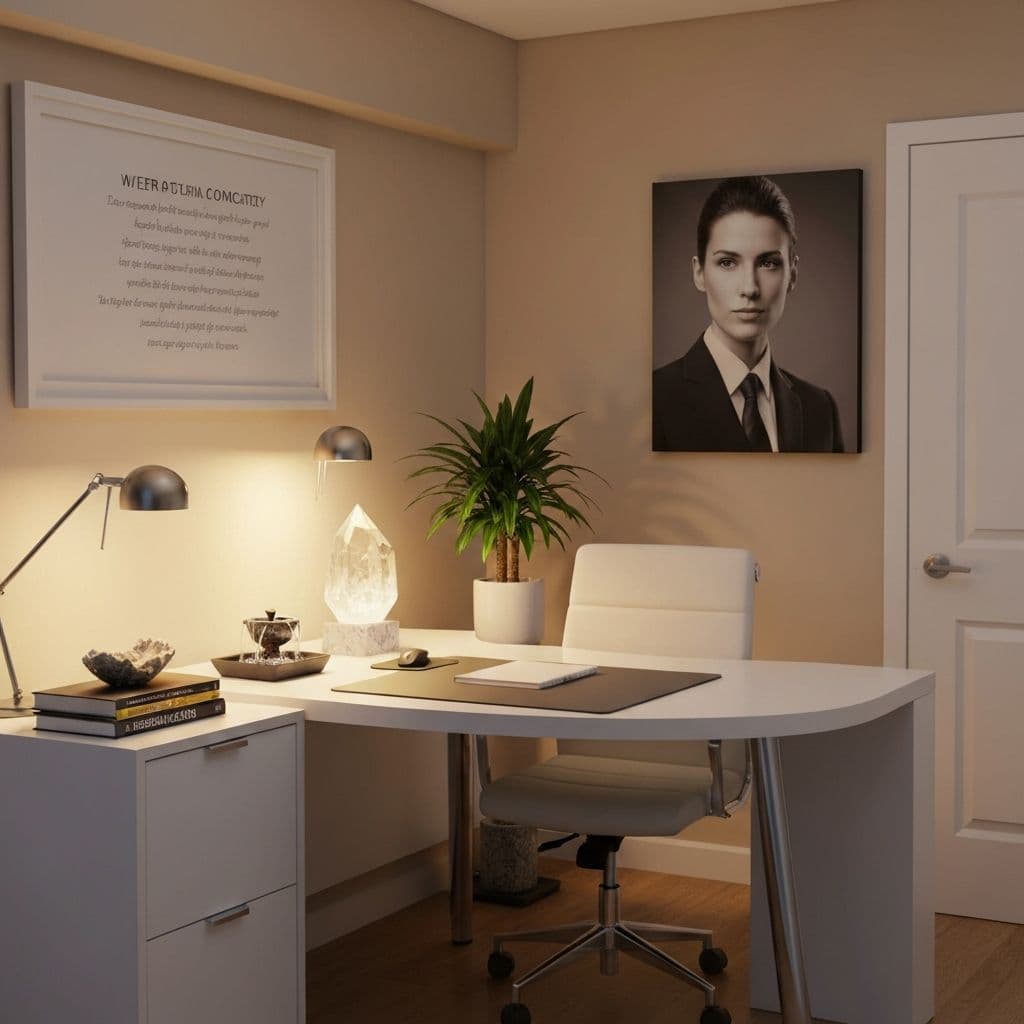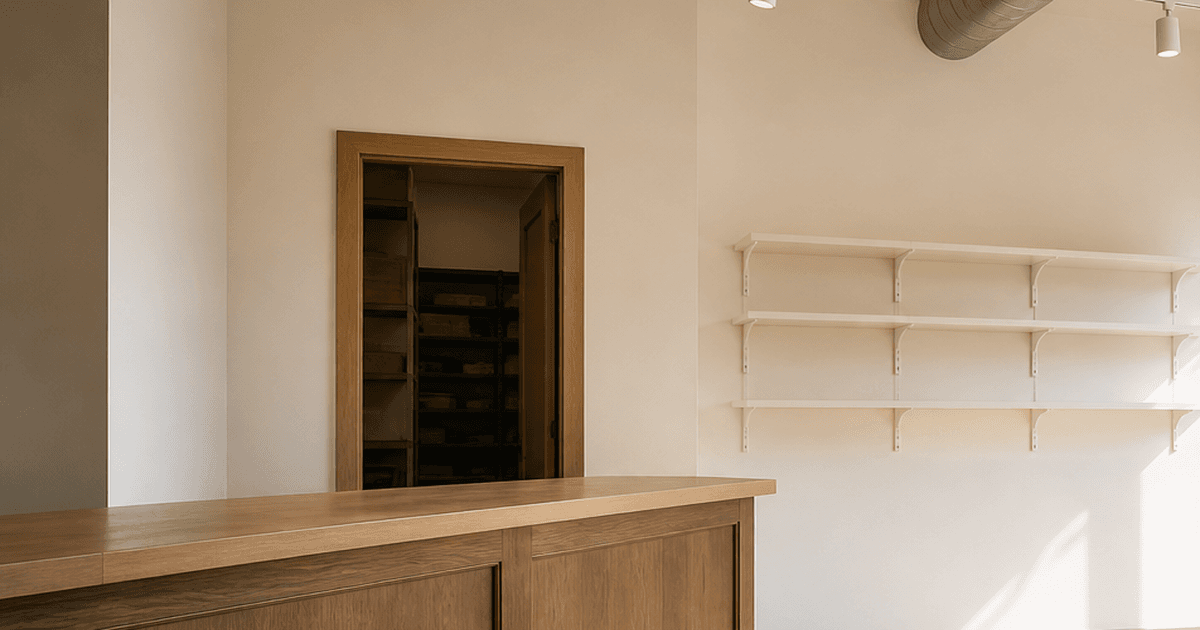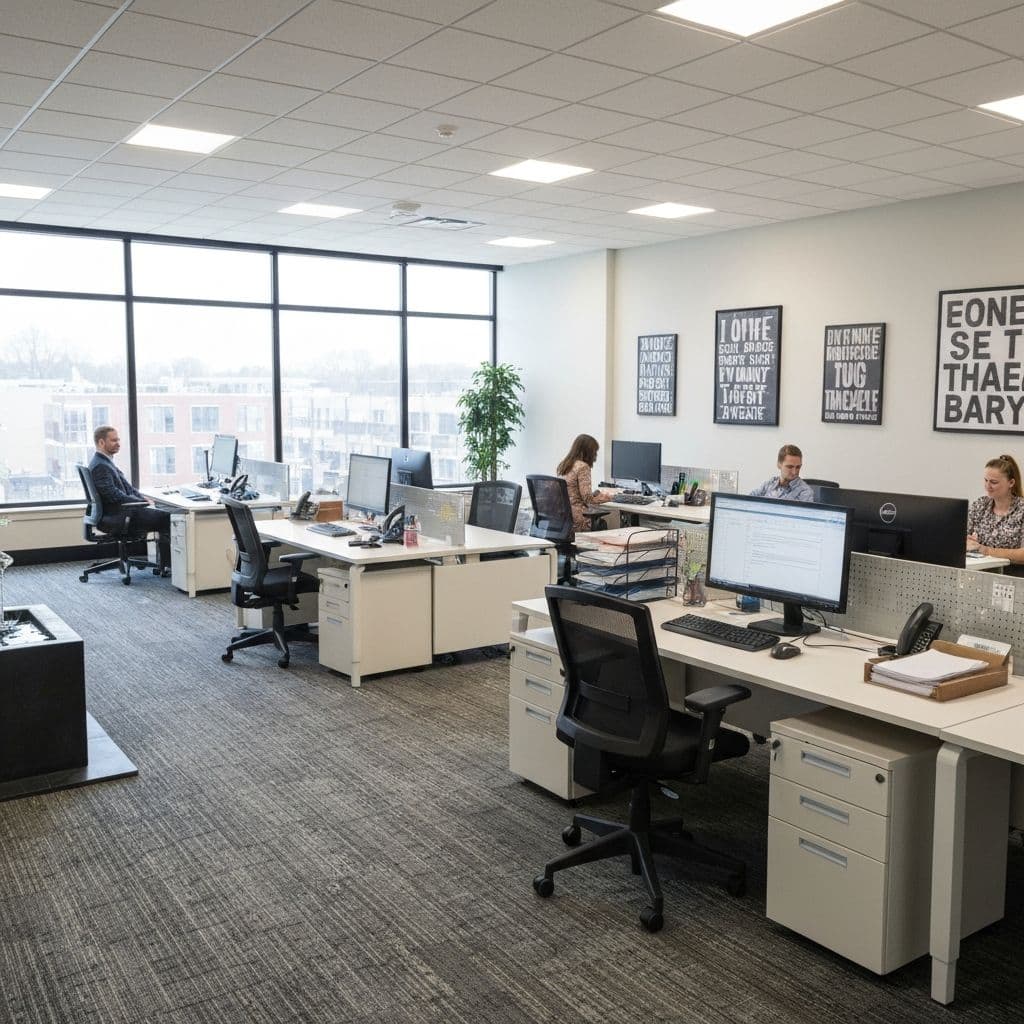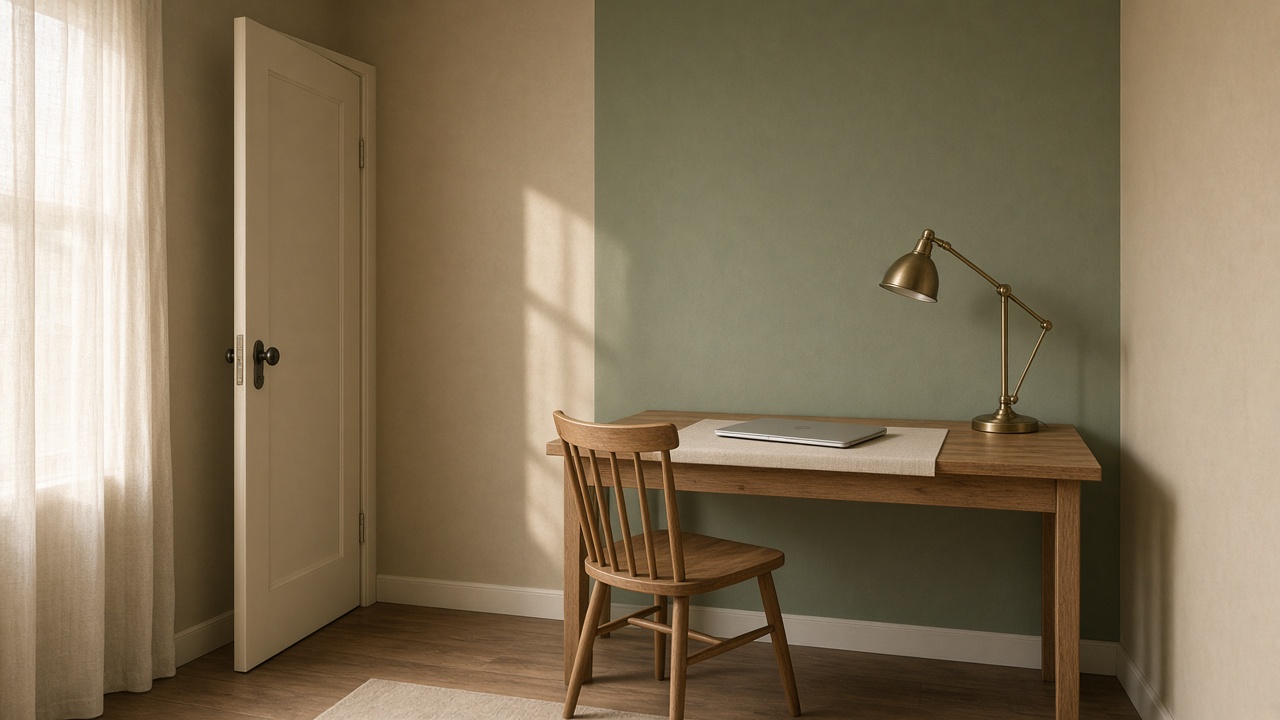

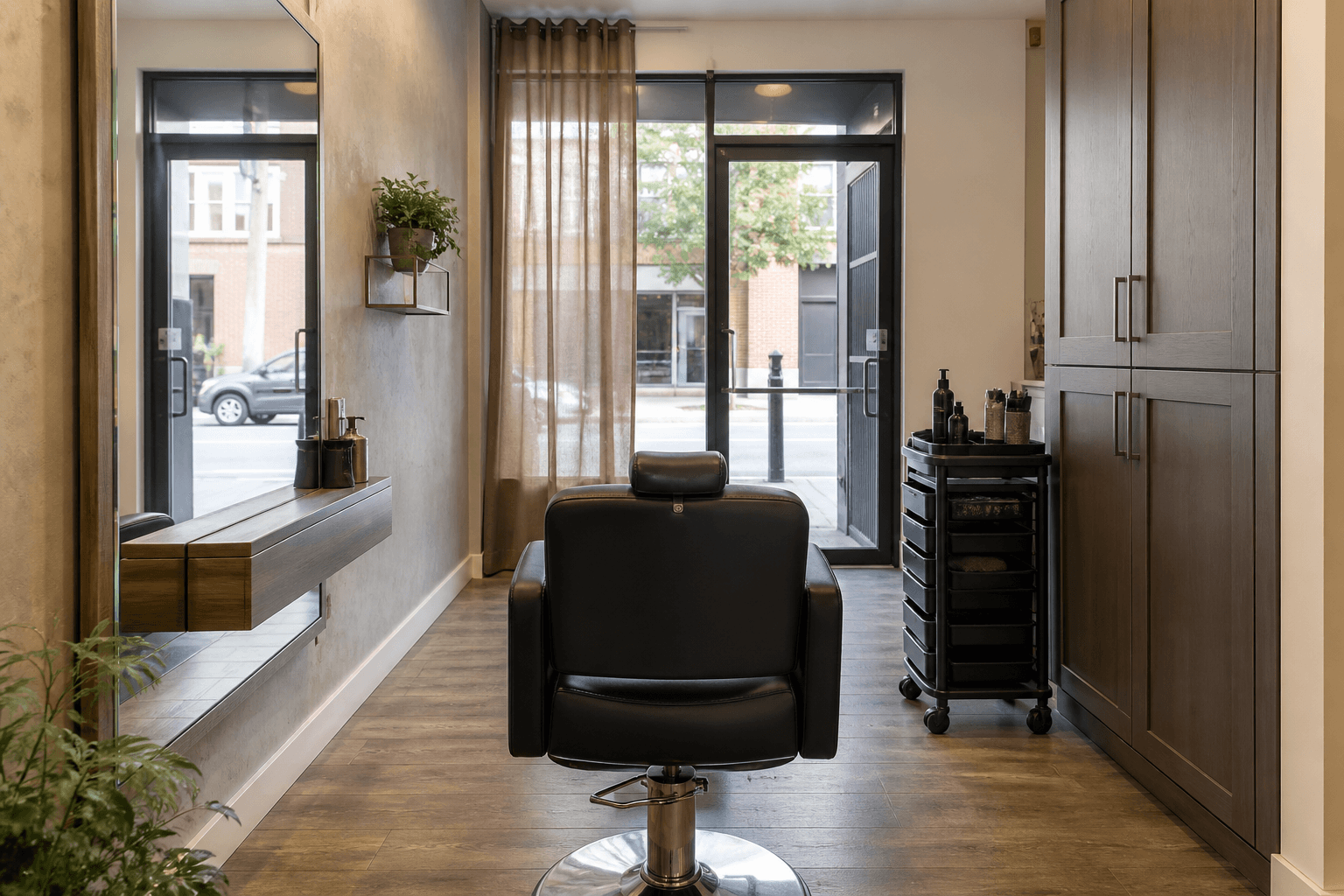
A Feng Shui salon station is a chair that can see who enters, with a wall or closed cabinets behind the stylist if the lease allows a quarter-turn, and a walk that stays a fire-code aisle. You are arranging a leased room. You are not booking a gua.
When we photograph small salons, the chair is a stool facing a mirror wall with its back to the glass, or a trolley in the only walk to the door. People ask which crystal belongs on the color tray. We ask whether a person with a bag can open the street door without turning sideways, and whether the person cutting hair can see that latch. The small shop counter article is the till. The desk position article is a work chair at home. This page is the station: chair, mirror, trolley.
What is a Feng Shui salon station?
You are working with your back, your sightline, and other people's heads. Form School wants command: see who enters. A salon adds mirrors, which double whatever is messy, and a trolley, which becomes a second island. Popular posts then sell a wealth gua under the chair. A chair does not mint bookings.
The till may sit elsewhere. If you take money at the station, you still need a view of the door. If a receptionist takes money, your job is still not to sit blind to the glass. Two jobs, one aisle.
A booth rental is still a lease inside a lease. You control the chair and what rolls. You do not control the stair. Command what you own.
Start from the street door, not from a bagua taped to the floor.
Should the stylist face the door?
You want a glance at the opening. You do not want the chair in the swing. Command is seeing who enters, the same rule as a desk. A chair aimed only at a mirror, back fully to the street, is how every arrival is a surprise.
Angle a quarter-turn if the plumbing for a shampoo point allows it. If the chair is bolted, angle your own body and the mirror before you dream of a new floor plate. Ask the landlord before you unbolt.
A chair that faces the door in a straight coffin line is less of a sleep problem than a bed, but a client staring at the latch the whole cut can feel exposed. Offset so you see the door and they see a wall or a calm view, not the bell.
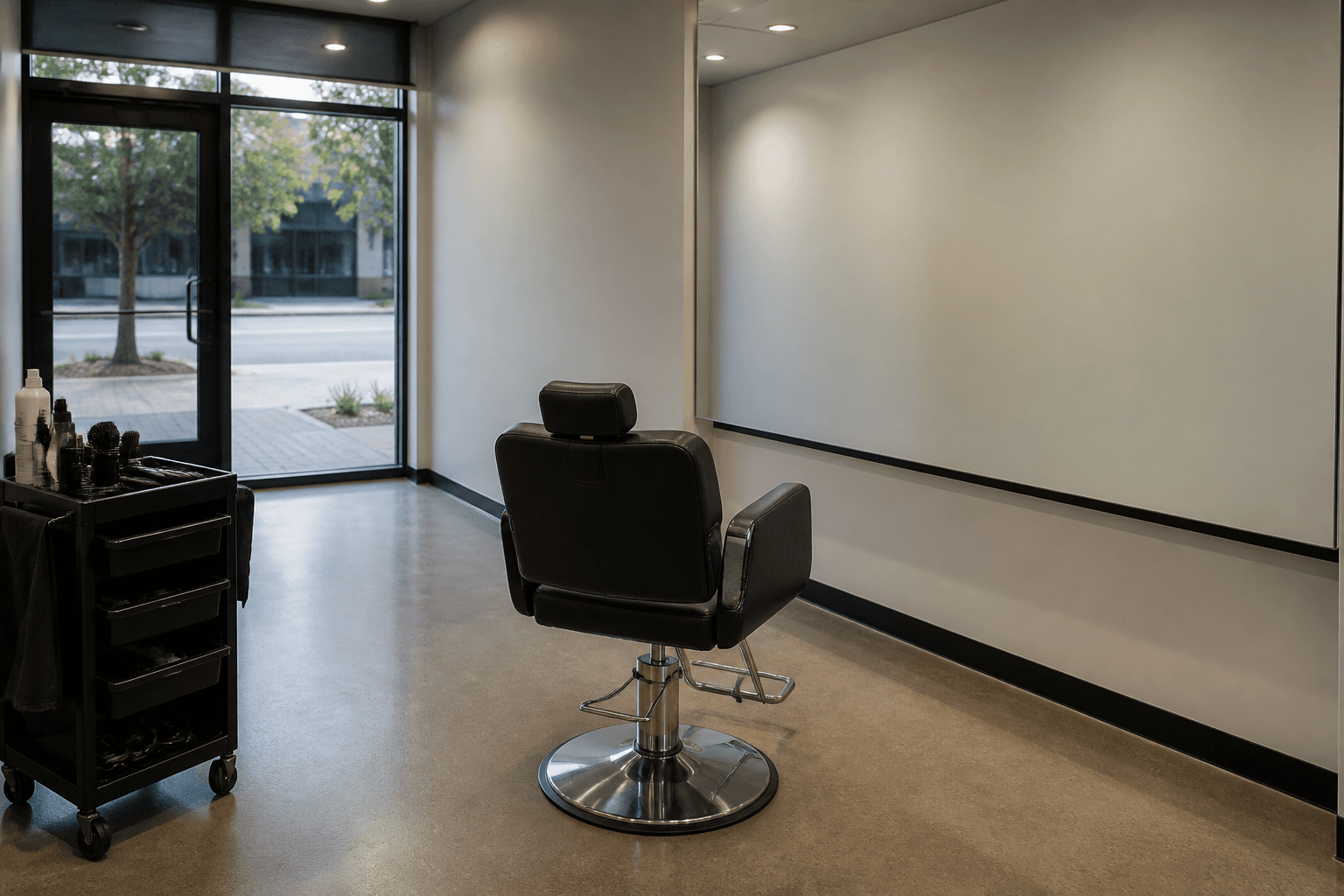
That back to the glass is the usual leased-shop fail. The mirror is doing all the work. The bell is a jump scare. If your station looks like this, do not add a crystal to the trolley. Turn the chair or move the mirror until the latch is in sight.
Where should the mirror and trolley go?
A side mirror, or a mirror on the cabinet you use as a mountain, beats a mirror that turns the street into a second show. Test reflections: you should see the client and a slice of the door, not a stack of product labels forever.
Do not hang a bagua mirror at a station. Indoor octagons aimed at the street are a neighbor fight and a client story you do not want. Ordinary glass for work is enough.
The trolley stays against a wall, off the aisle. Fire code is not optional. A pretty layout that blocks egress is a failed layout. Close a cabinet on extra product. Open shelves of color tubes are a clutter cliff under shop lights.
Sharps and chemicals belong stored, not on display at the door. That is safety. It is also visual quiet.
Till, waiting, and the first meter
If the till is at the station, treat it like the shop-counter page: view of the latch, not a seat in the swing, stock behind you. If the till is at a separate desk, do not let waiting chairs eat the station aisle.
Waiting seats should glance at the door the way a sofa does, without sitting in the bag path. A row of chairs that faces only a blank wall with backs to every arrival can feel exposed. A bench in the door's center line is worse.
Light the chair so you can see hair, not so the street gets a glare show. A task lamp you can angle beats a harsh overhead as the only source. The living-room lighting guide is layers. Here the task is the head in front of you.
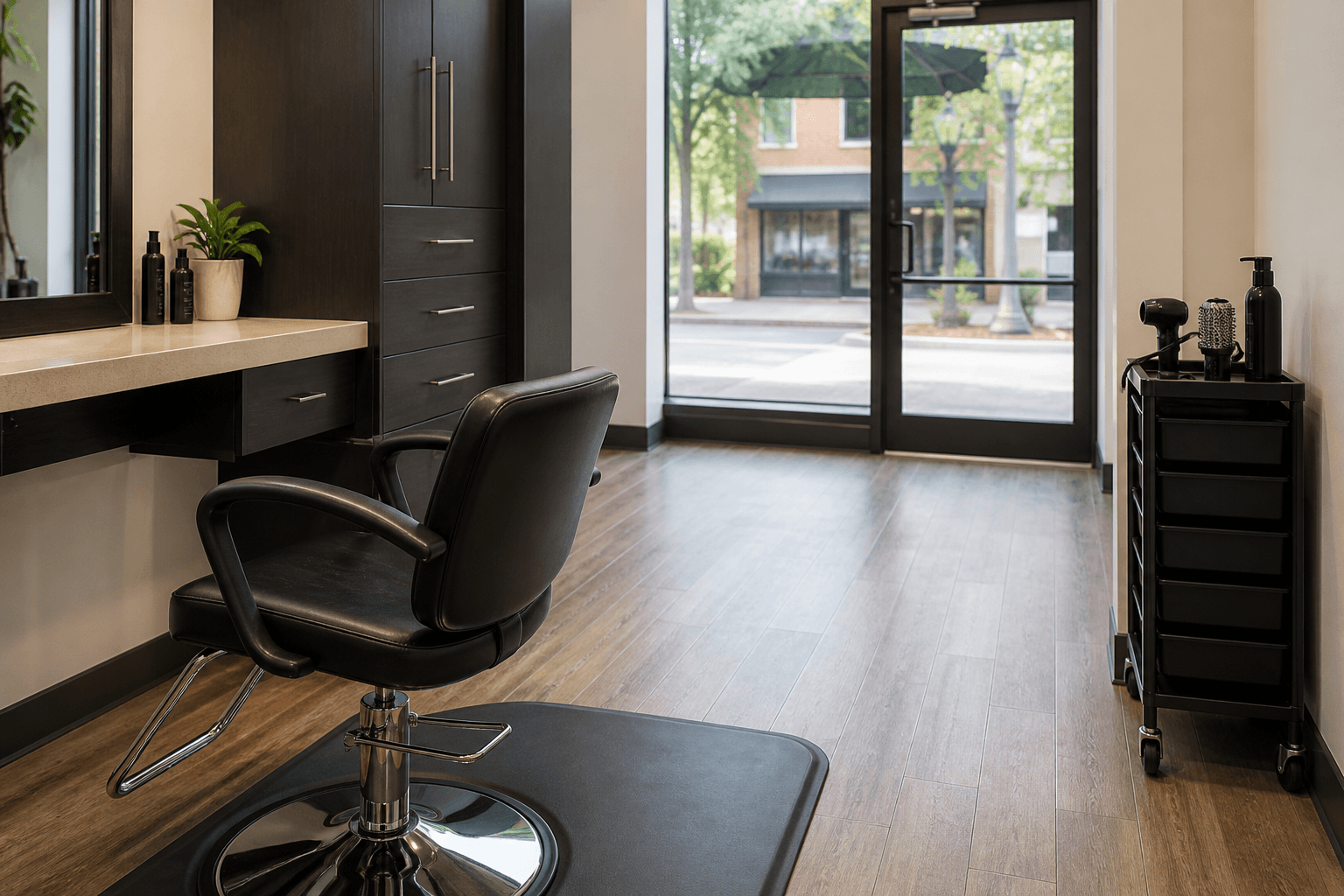
That latch in the corner of your eye is the job. The cabinets are the back. The aisle is empty. If your station can look like this, stop shopping for a lucky chair cover.
Can a leased salon do this without remodeling?
Yes. Chair angle, trolley park, a lamp, a plant off the walk, a mat that does not trip. Skip new plumbing for a compass story. Skip painting a "wood wall" for growth if the lease forbids it. Photograph before you drill a mirror the inventory did not name.
If you cannot see the door no matter how you angle, name it. A screen or a small mirror aimed at the latch is the renter version of a rearview. Test it for a week. If it makes you dizzy, take it down and keep the aisle honest anyway.
Shared stations mean you do not move someone else's chair. Command your rectangle. Leave theirs.
A barber shop and a nail bar use the same geometry. The object changes. The door does not.
How we check a salon station
We enter as a client with a bag. We walk to the chair without turning sideways. We sit in the stylist seat and look for the latch. If we cannot see it, we try a quarter-turn. We look at the trolley. If it is an island, we park it.
We do not count bookings as proof of a gua. We do not put a fountain by the door on a wet floor.
We check the office layout idea of a room plan before decor. Product displays are decor. The chair and the aisle are the plan.
Shampoo bowls are plumbing you probably cannot move. If the client reclines with their back to the door, you still need a view from where you stand. Do not climb over a trolley to see the bell. Park the trolley first. A bowl in a closet room with no view of the floor is a named constraint. Put a small mirror or stand where you rinse so you can glance at the opening, or agree that a colleague watches the door during that minute.
Color mixing on a station that faces the glass turns the street into a second audience. Mix where you can still see the latch, or mix in a back bar and walk the aisle you already cleared. Spills in the first meter are a slip, not a creative look.
Capes and towels belong on a hook or in a closed bin, not on the waiting-row arm. Damp cloth on a chair is the mudroom problem in a shop. Dry them. Put them away.
Music volume that drowns the bell is how arrivals become surprises even if the chair faces the door. You can hear a latch without a lucky chime. If the street is loud, a simple bell you actually notice beats a sculpture you ignore.
End of day, reset the station the way a home desk gets an off switch: tools in a drawer, floor visible, chair facing the door you will use tomorrow. A station left as a bomb is tomorrow's blocked aisle.
What this is not
A salon station will not book your calendar if you add a crystal, and a chair with its back to the door will not curse the business. A lucky year will not rotate the plumbing.
Skip income claims. Skip occupancy spells. Skip medical claims about "head chi." If a client has a health issue, that is not your layout's job to treat.
Skip a bagua on the floor that you trip on. Skip incense in a small shop if anyone has a lung issue or a lease ban. Smell is not a substitute for a view of the door.
A simple evening checklist
Do this in order. Stop when you can see the latch from the chair and a bag can pass.
- Stand in the street door. Walk to your chair. Name the squeeze.
- Sit in the chair. Find the latch. Angle a quarter-turn if you can.
- Park the trolley on a wall. Close a cabinet on extra product.
- Check the mirror for a glare fight with the door or a clutter double.
- Move waiting seats out of the swing.
- Photograph from the door and from the chair in FengShui Hero and compare the flagged aisle with the park you made.
If you only do one thing tonight, turn the chair until the door is in view and take the trolley out of the fire path. The renovation can wait.