
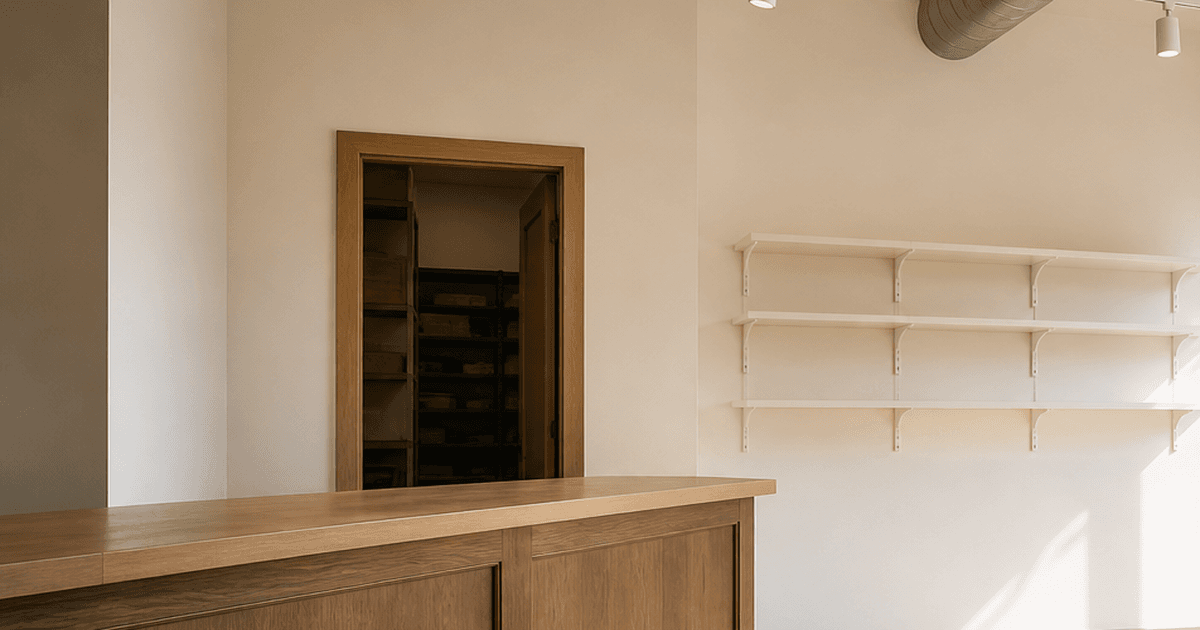
Feng Shui small shop counter is the layout work that puts an independent shop, salon, or studio till where you can see who enters, keeps stock behind your body rather than a blind back to the street if the lease allows a quarter-turn, and leaves the door swing clear. You are arranging a leased room.
When we photograph small lockups, the till is a stool in the swing or a laptop facing a stock pile with its back to the glass. People ask which gua the register sits in. We ask whether a person with a bag can open the street door without turning sideways, and whether the person taking money can see that latch. This guide is that walk, then the stool, then the stockroom.
What is a Feng Shui small shop counter?
It is the work seat of a retail room: the street door, the till, the aisle, the stock behind you. A leased rectangle will not become a courtyard. You can stop using the first meter as overflow for parcels and last week's delivery.
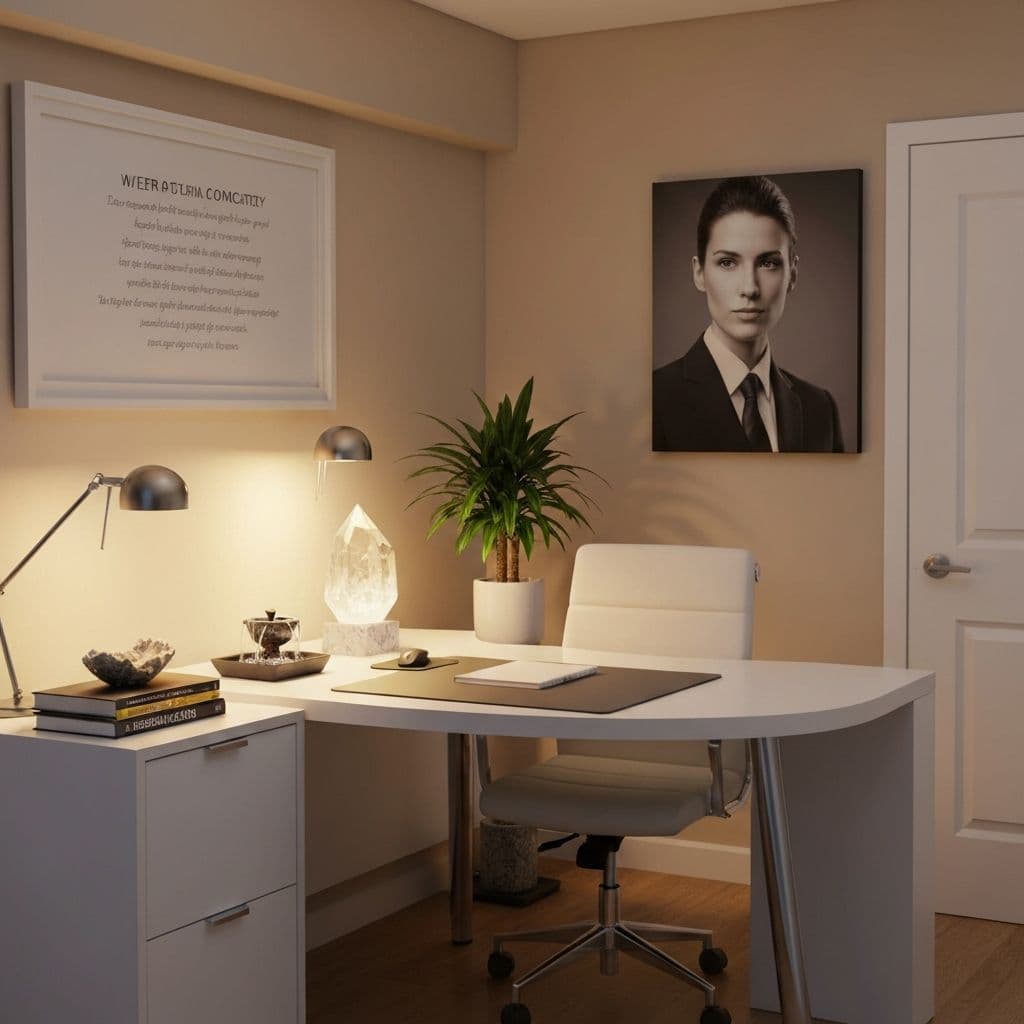
Command here is the same sit-test as a desk command position. You see who enters. You are not the first object on a straight line from the jamb. Something solid is behind you. A north till will not pay the lease.
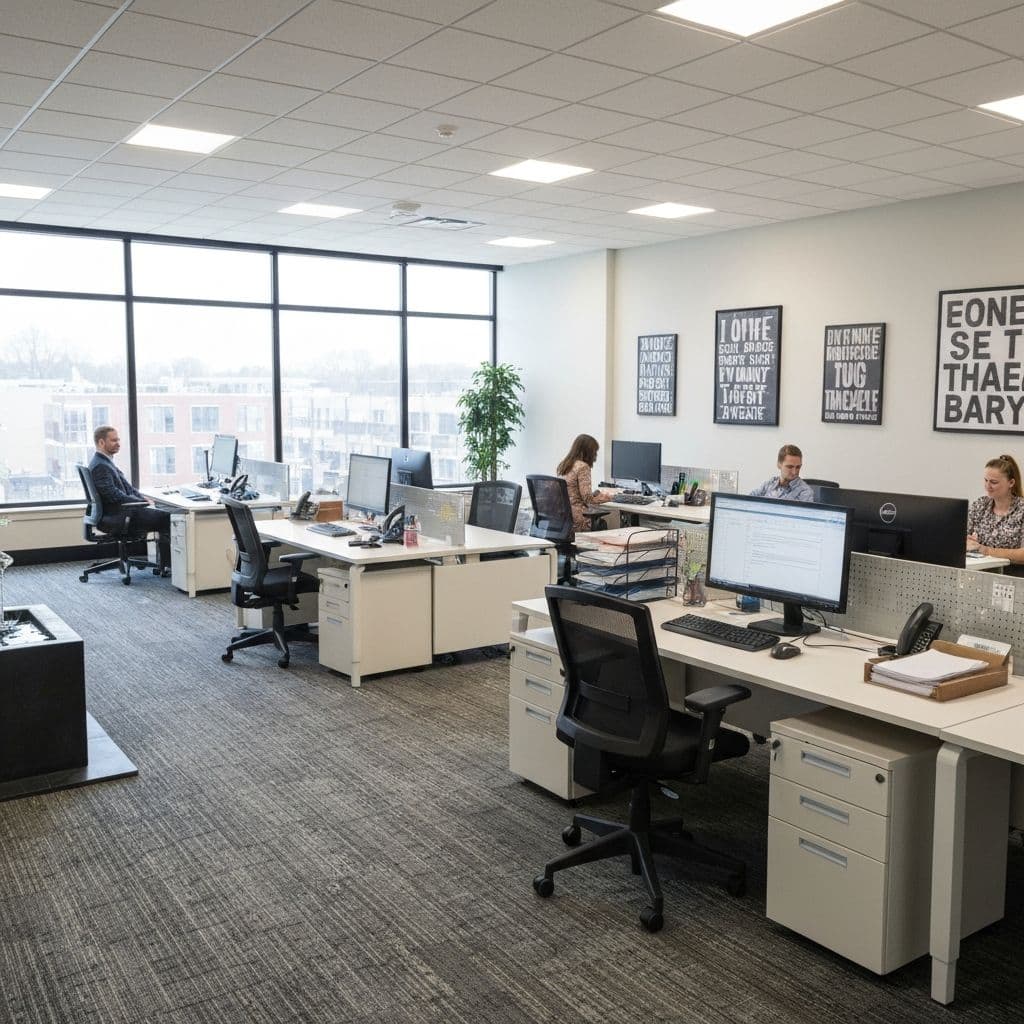
The whole floor is closer to office layout than to a blotter bagua. Who sits in traffic. Whether the extra rack cuts the back of the only stool. Read the room plan, then the chair.
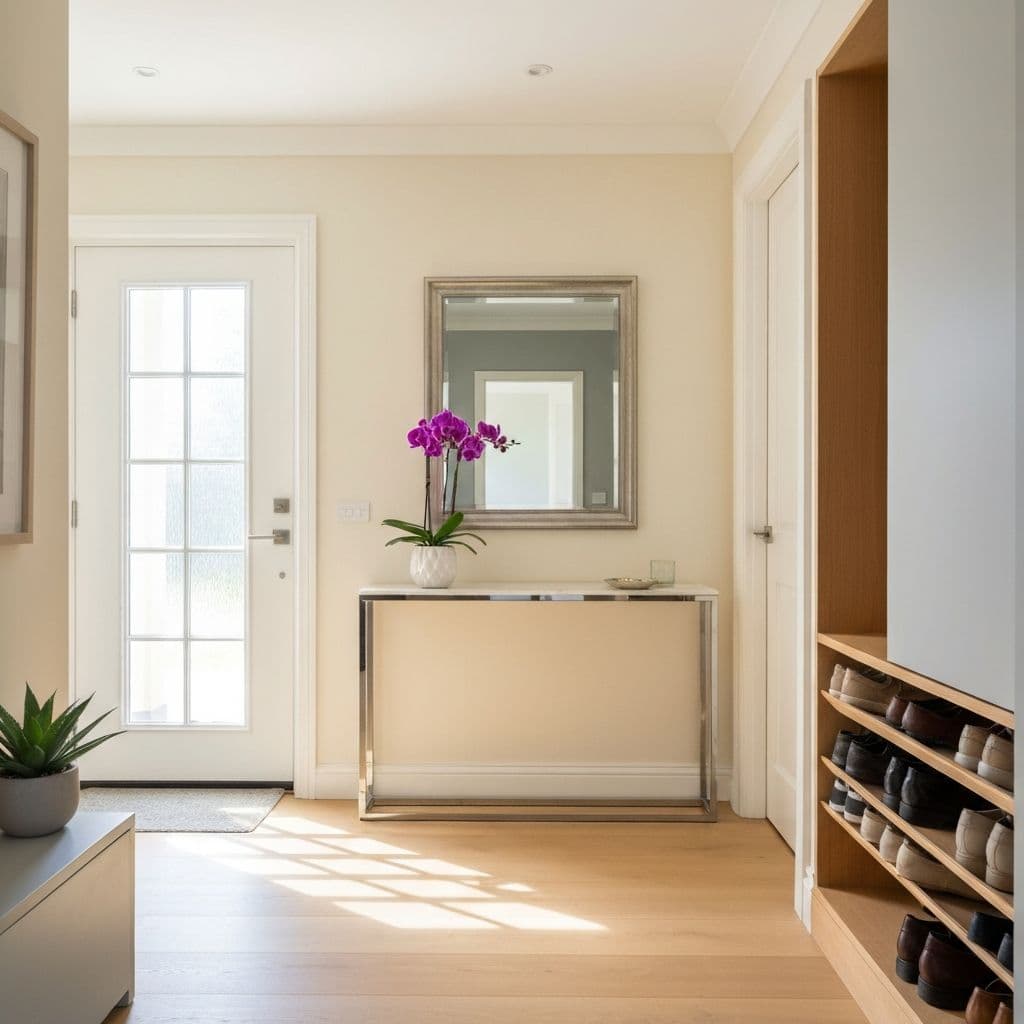
It is also an entryway mouth of chi problem. In a shop, that mouth is the street latch customers use, not the staff door in the alley. If a sandwich board, a parcel stack, or the till itself lives in the swing, the mouth is already blocked.
A cafe till versus the door is a cousin. Use the restaurant till versus the door notes if you serve plates and a pass. Here money changes hands at a counter, stock lives in a back room, and nobody is plating soup.
Where should the till sit relative to the door?
To the side of the street door, with a glance at the latch and a place for one customer to stand without occupying the only walk. A register parked in the swing is a blocked mouth, the same class of problem as a shoe pile in a house foyer.
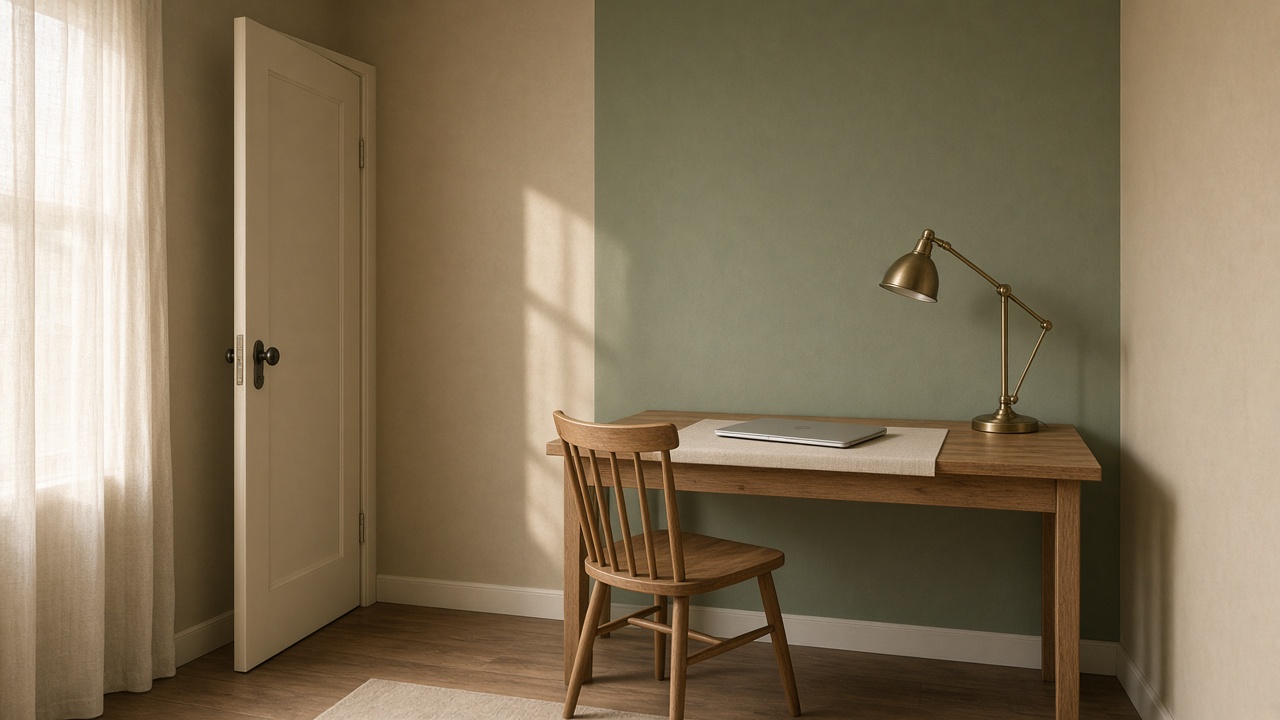
Open the street door to 90 degrees with a tote beside you. If the leaf hits the counter, a spinner rack, or a stool, that object is in the mouth. Slide it along the wall or take it out. A door that slams into a cash drawer is a fight you will lose on a Saturday.
Face the opening, not only the product wall. A cashier with their back fully to the glass cannot see a person until the bell rings at their spine. A slight angle that catches the latch and a slice of the floor is enough. You are not sitting with your spine in the only exit.
If the lease gave you a built-in counter in the door line, treat the millwork as a wall. Park a rolling till off the jamb for greeting. Use the built-in for bags if the cable reaches. Do not demolish a landlord's counter for a weekend chi project. Do not run new conduit through a rented floor so the POS can face a lucky degree.
A tall display on the counter turns the door into a cave. Keep the top low enough to see over. Clip-on lamps beat a dark landing. Dim the POS at night so the window is not a blue box to the street. Point the screen away from the queue.
The queue belongs along the face of the counter or a side wall, not in the arc of the door. A second person should not have to hold the leaf open. If you use a rope, park the posts off the swing.
We will not claim that a till in a wealth corner raises the average ticket. Put the drawer where you can watch the door and still pack a bag.
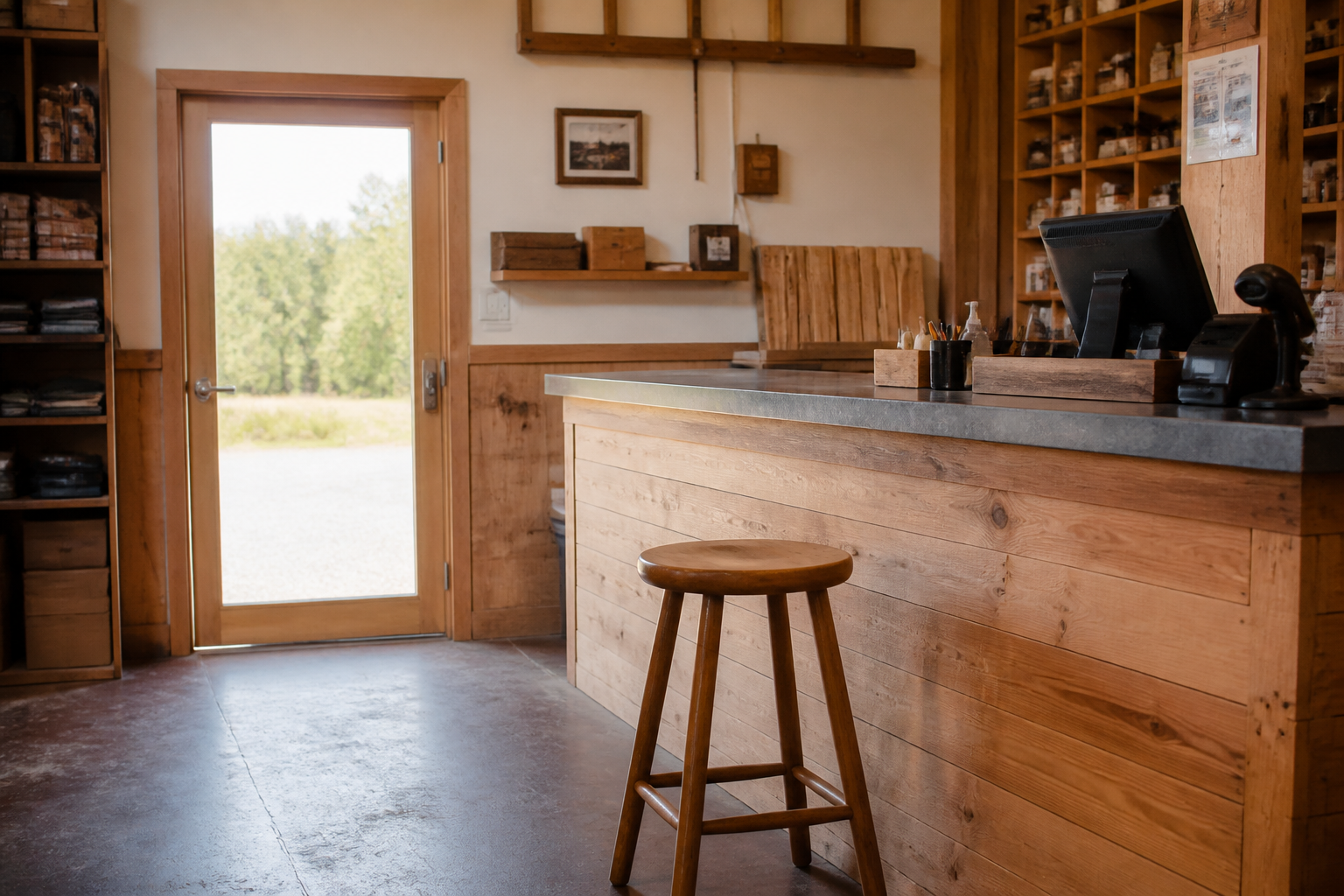
That till sits off the swing. The stool can see the latch. A customer can stand without occupying the only aisle.
Should the stockroom sit behind you?
Yes, if the lease lets you put a wall, a closed stock door, or lockable shelves at your back. That is the mountain: the body has something solid behind it. A shopfront is a long window. Sitting with a blind back to the street is the common miss on a narrow lockup.
Turn a quarter if the cable and the floor plan allow. You keep the glass in a glance and the stockroom at your spine. You need to know when the door moves.
If the stockroom is across the aisle, you will keep standing up. Park a low closed cabinet behind the stool as a temporary back. Do not stack open cartons behind your head and call it support.
Stock that lives in the first meter is not a mountain. It is a blocked mouth. Deliveries get opened in the back or along a side wall, then the cartons leave. Returns do not live on the till. A shop that uses the street door as a warehouse will fail the sit-test even if a bagua sticker looks tidy on the plan.
Fire-code aisle wins. If the inspector wants a clear walk to the exit, that walk is also the Feng Shui walk. Do not park a screen, a fountain, or a plant in an escape line. Do not claim a gua needs that crate in the aisle.
A fitting-room door you can glance at from the stool is ordinary shopkeeping. Keep that swing free of hanging stock. A locked stock door behind you should still open. A mop bucket in that swing is the shoe pile again.
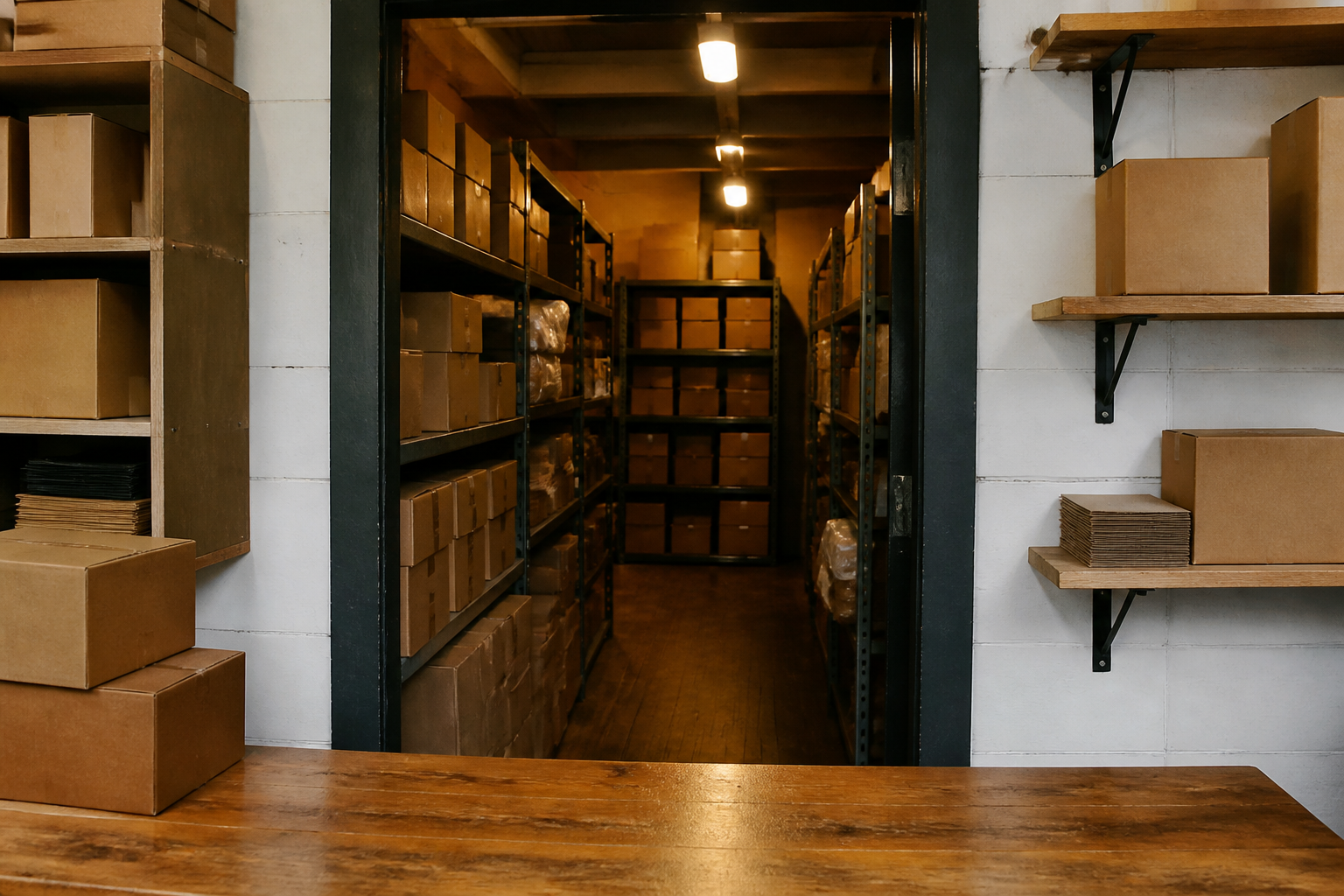
The stock door is the back. The street is a side glance. That is the quarter-turn we ask for when the lease allows it.
What about a salon station or a studio checkout?
A salon has two seats that get confused. The reception till is this article. The styling chair is a different command test: glance at who walks from reception, not a blind back to the salon door if a quarter-turn is possible. You need the person taking money to see the latch.
Product walls behind reception can be the mountain if there is no stockroom. Keep the top short enough to see the door over the bottles. A tower of retail that blinds the till is the same cave as a tall display.
A studio often has one table that is both workbench and till. When someone pays, sit so the door they use is in view. Mats, easels, and cases do not live in the swing. Scan the latch customers use, not a pretty facade you never unlock.
Can a leased shop change the counter without demolition?
Furniture, a lamp, a plant, a mat. That is the kit. If you cannot restore it, do not install it.
Skip cutting a new door. Skip chasing cable through a slab so the register can face southeast. Skip painting a lucky color on a wall the landlord will want white. Skip a fountain in the entry. Skip bagua tape on the floor that a mop will eat.
A rolling till on the existing outlet, a clip-on lamp, and a washable mat that does not bunch under the leaf are the usual moves. One living plant on a side wall, in a saucer, is fine if you will water it. A dead plant by the till should leave. Empty counter is calmer than crispy leaves next to the card machine.
Replace the bulb over the latch first. Customers should find the handle without a scavenger hunt. Incense at the latch will not clear a blocked swing. Open the door and move the pile.
A side-wall mirror that helps you see the door is the same substitute a wall-facing desk uses. Shop glass already faces the street. You do not need a second sheet of glass on the till as a sales object.
How do you scan from the street door and the stool?
Stand at the latch customers will touch. Photograph the room before you pick a pretty corner that hides the parcel pile. Then sit on the stool and photograph toward that latch. That pair is what you scan in FengShui Hero. The app flags a blocked opening and a seat that cannot see who enters. It does not diagnose sales, income, or luck.
If you hide the returns bin for the photograph, put it back where it will be on a Tuesday. Better: leave it out of the first meter so the photo and the weekday agree. A command stool in the photo and a door-line stool at opening is the mismatch that matters.
Shoot the entry with the door open at 90 degrees so the swing is visible. Move the rack instead of cropping it. If fire code wants a clear aisle to the exit, that aisle stays clear even when a blog calls the corner a wealth gua.
A closing-time checklist
Do this in order. Stop when you could sit the first hour tomorrow without moving a pile.
- Open the street door fully. Remove whatever was in the swing: sandwich board, parcels, a spinner, the till if it crept forward.
- Sit on the stool. If you cannot see the latch without twisting your whole spine, turn a quarter or slide along the wall.
- Put a solid back behind you: stock door, wall, or a closed cabinet. Get open cartons off that line.
- Clear a shoulder-width walk from latch to till, then past the till to the exit the inspector named.
- Park the queue along the counter face. Take hanging stock out of the fitting-room swing.
- Light the latch. Shake the mat. Water or remove the plant.
- Photograph from the street door and from the stool in FengShui Hero. Compare those frames with the floor you just cleared. If they disagree, change the furniture, not the gua.
If you share the lockup with another trader on alternate days, agree which objects are daily and which are overnight storage. Most leased shops cannot be both a carton warehouse and a counter at the same hour.
What this is not
A shop counter will not raise sales because a crystal sits on the drawer. It will not raise income if you add a fountain that then sits dirty by the mat. It will not ruin you if the till faces a few degrees off south. A gua does not pay rent.
Skip mystic grids on the floor tiles. Skip guaranteed luck from a particular compass facing. Earth-tone wood is here because it hides wear and matches a rental wall, not because brown is a secret.
Write down which door customers actually use, and which way the stool faced after you moved it. The next time you look at a lockup listing, you will remember that "characterful shop" meant a till in the swing and a blind back to the glass. That note is worth more than a slogan about retail energy.
If you only do one thing, clear the street door and sit where the stool can see the latch, with stock behind you if the lease allows. Everything else in this article is a variation of those two moves.