

Feng Shui bagua on one bedroom is a 3x3 overlay on the single bedroom you control, lined up from that room's door as the mouth. You map a housemate room, a parents' house bedroom, or a sublet, not the whole unit. Labels are classroom names. Sleep geometry still wins.
When we photograph "mapped" sleep rooms, the printout is often a whole-house bagua stolen from a blog, rotated until wealth talk sits on a wall the reader does not own. The bed still faces a closet. The latch still hits a laundry basket. People ask which lucky square owns the pillow. We ask them to close the bedroom door and look at one rectangle. The bagua map page is how a 3x3 is drawn and what the nine labels are. Black Hat versus compass is the fight between door-based and true north. Studio bagua is one grid on a whole one-room apartment. This page is narrower: one sleep room inside a larger home you do not run.
How do you overlay a bagua on one bedroom?
Close the bedroom door. That leaf is the mouth of this grid. The hall, the kitchen, and the front latch of the building are other people's volume. Measure the two walls that meet at your bedroom jamb. Write length and width. The rectangle is the floor you sleep on, including the closet if that box sits inside those walls. A shared bath down the hall is not your cell.
Stand just inside. Face in as if you just came to bed. For Black Hat, the wall behind you (the wall that holds the door) is the bottom of the square. Divide each side into thirds. Low-tack painter tape on wood or vinyl is how a renter draws the overlay. Run two lines each way. Duct tape marks a landlord finish. If the deposit makes you nervous, draw the same 3x3 on paper and keep it in a drawer.
Live with the lines until you can walk them in the dark. The center cell is often the only path from pillow to latch. Leave it empty of "earth" piles. You still need that walk at 2 a.m.

That tape is a classroom overlay on one sleep floor. If your grid runs under the hall runner, you measured the wrong room.
How we check a real bedroom
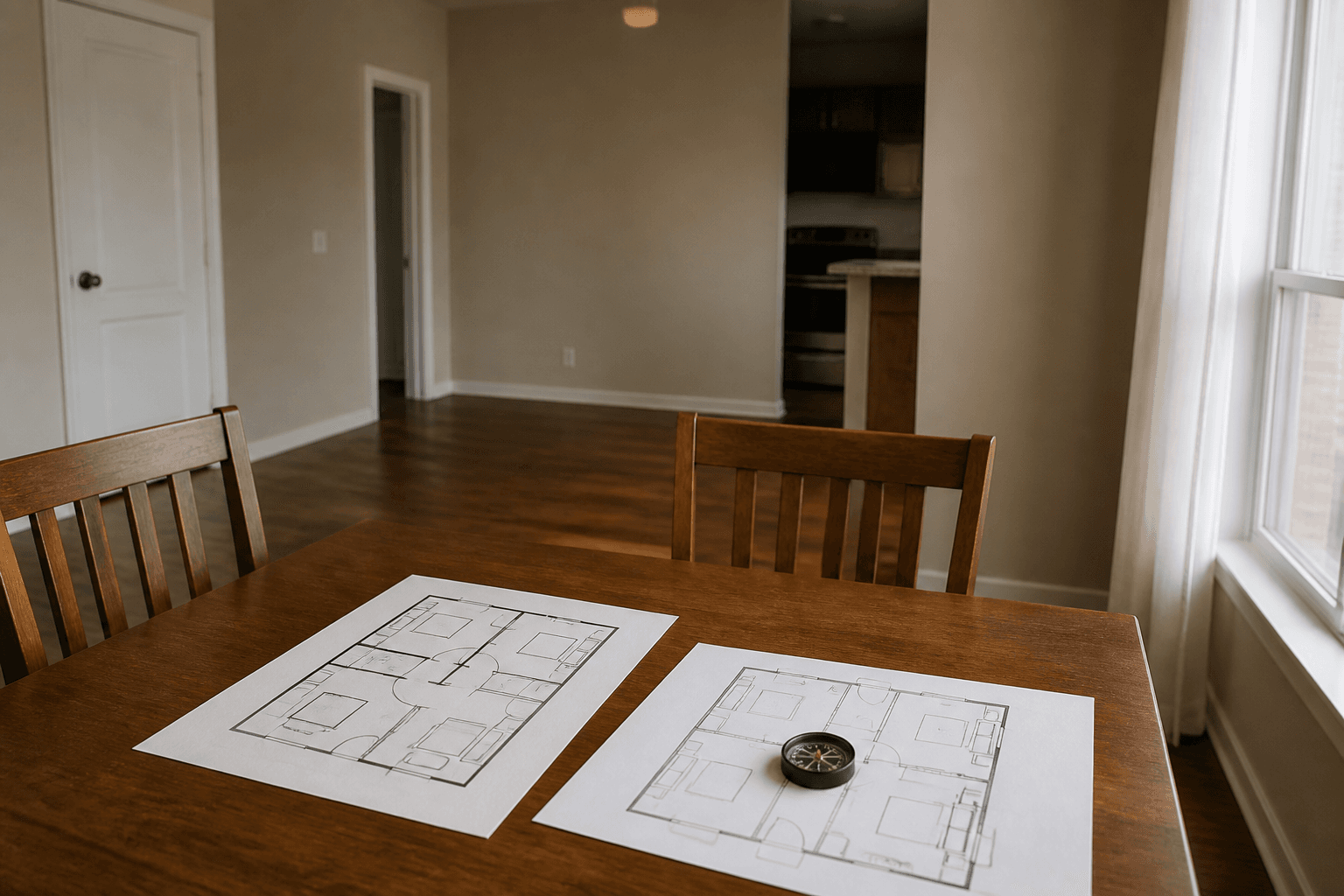
We stand at the bedroom door, not the building entry and not the closet. We look across to the far wall. We ask whether they meant this room or the whole flat. Then we tape one 3x3, or we sketch it on a printed plan of the bedroom only. We lie on the bed and look for the latch. We do not hang nine objects because a shop sold a "complete bagua kit."
A sliding closet is a door you use for clothes. It is not a second bagua mouth. Map from the leaf that opens onto the hall. If the client already mapped the house from a front door they do not unlock, we start over at the sleep latch.
Is this the same as a studio bagua?
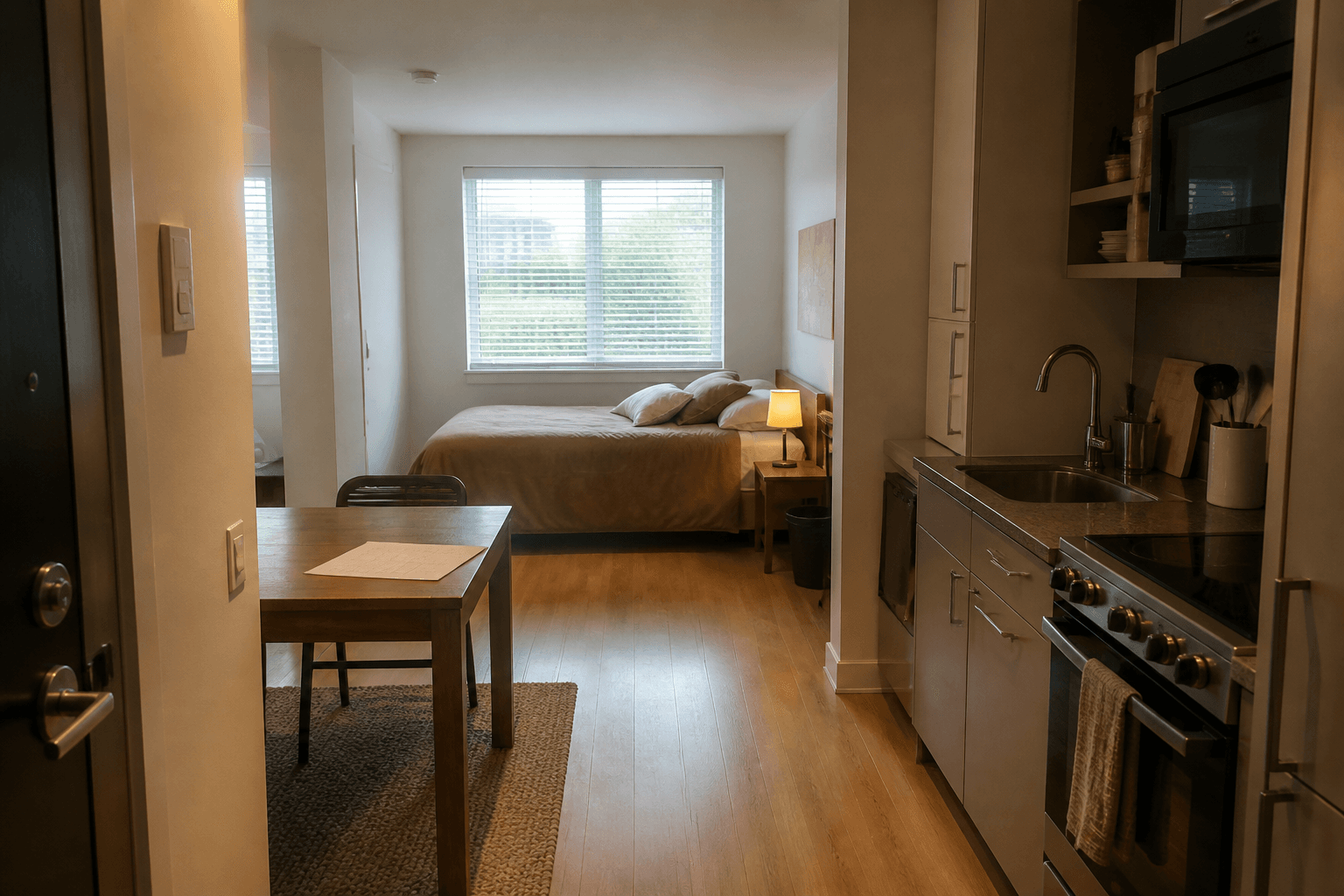
No. A studio overlay covers the one rectangle you rent: sleep, kitchenette, and often the bath, from the door you unlock with your key. This overlay covers a bedroom that sits inside a larger plan. The kitchen is down the hall. Someone else may own that hall.
If you try to treat a housemate bedroom like a studio, you will invent a wealth cell in a fridge you do not open. If you try to treat a studio like this page, you will leave the kitchenette off the map and then argue about two grids. Pick the article that matches the walls you heat.
An L-shaped sleep alcove with no door is an open volume, closer to a studio than to this page. Use furniture zones. Stop forcing a sleep-only square onto a room that is also the sofa.
Sublets with a lock on the bedroom door are this page. A sofa in a shared living room is not a room you close.
Should you use Black Hat or compass on one bedroom?
Pick one school. Write the name on the paper. Live with it for a month.
Black Hat (also called BTB or Western bagua) is the map we recommend when you only control this latch. You do not need true north. You need the door you actually close. Bottom left as you look in is knowledge talk, bottom middle is career talk (often the door itself), bottom right is helpful-people talk. Far left is the cell lists call wealth. Far right is relationship talk. Center is the walk.
Compass bagua puts the same names on compass thirds of that same bedroom rectangle. North is career talk. Southeast is wealth talk. The bedroom door can sit in any cell. A phone against a steel bed frame, a radiator, or a metal nightstand will hunt. Step to the middle of the floor, away from the springs. If the needle will not settle, skip compass for this room. You are placing a lamp, not filing a survey of the house.
Do not average. Averaging is how the closet becomes career on Monday and wealth on Tuesday depending on which screenshot is open. If you already mixed them, keep the map that matches how you found the first object, then pull the duplicate plant.
A heading for the whole building is extra homework from the compass school. It is not required to tape a sleep room. If you care where southeast sits in the house, that is a house map, and you do not own the house. Stay on the bedroom door.
Do the nine labels move the bed?
No. Sleep geometry still wins. The bedroom layout page already owns that test: a solid wall behind the head, a view of the door without lying in the door's center line (the coffin line), and a path you can walk in the dark. A gua name does not outrank a wobbling headboard.
Do not slide the bed into the far-left cell because a list called that cell money. Do not put the pillow under a window because the far wall was labeled fame. A window at your head is a draft and a glare. Do not park the mattress in the swing of the door because career talk sat on the latch. You will kick the frame every night.
Walk each cell and say what is there. Door wall: maybe a dresser, maybe the desk you were not supposed to bring home. Middle: the walk. Far wall: the bed, if you were lucky with the plan. One corner: a closet. You are done naming. Adding a shrine to each cell is how a small sleep floor dies.
A closet will hold two labels. That is normal. Hang clothes you wear. Do not hang two "enhancers" on the same rail. If relationship talk lands on a pile of laundry, wash it. If knowledge talk lands on a desk, the desk still needs a glance at the bedroom door, then a cover at night so the bed is not a workplace.

That view is the sleep test. If you cannot see the latch from the pillow, fix the bed before you argue about which third is helpful people.
Mirrors: a closet door that shows the bed is a bedroom-mirror job, not a gua job. Close it at night if you can. Do not add a bagua octagon above the pillow. Indoor trigrams over sleep are clutter.
What if you only control this room?
Then you map this room. You do not tape the housemate's kitchen. You do not rearrange a parent's sofa because southwest is love talk on a house overlay you printed. You do not "cure" a missing corner of the building by stacking boxes in your closet.
Housemates: agree that the bedroom door is your mouth. Shared hall shoes are not your career cell. A plant in the shared bath is a plant in a room you do not close. Keep your tape inside your jamb.
Parents' house: the childhood bedroom is still one rectangle. The front door of the house is theirs. If they want a house bagua, that is a different conversation. Tonight you can move your bed off the coffin line and tape your floor, then take the tape up before a visit if that keeps the peace.
Sublet: your lock is the mouth. A landlady's living room is not a fame cell you must decorate. Do not drill. Painter tape and a paper plan reverse at move-out.
A listing that rents this room by the night still photographs from the bedroom door guests will use. Hosts can skip the overlay and still pass the sleep test. Occupancy is not a gua. A hotel key room is the same geometry with a tighter clock: see the latch, skip nine labeled corners.
Can the rest of the house stay unmapped?
Yes. That is the point. A 3x3 on one bedroom does not obligate a 3x3 on every other room. House tutorials that tell you to bagua the bed, then the house, then each room, are how people own four wealth stories and a blocked latch.
If you later control the whole unit, start over from the door you unlock for the building. Do not keep this bedroom grid and add a house grid on top.
Missing corners belong to the plan of the unit, not to a sleep room you can close. Do not invent a "cure wall" of books, and do not rotate the bed because a flying-star year number changed.
Renter steps you can reverse tonight
Do them in order. Stop when you have one map or zero maps, and a bed that can see the latch.
- Close the bedroom door. Confirm this is the only floor you control tonight.
- Measure length and width of that rectangle. Exclude the hall. Include the closet only if it sits inside the room.
- Pick Black Hat (door-based). Write it on a scrap. Skip compass unless you already trust a heading off the steel.
- Tape a 3x3 with low-tack painter tape, or draw the same grid on paper. Door wall is the bottom row.
- Name what already sits in each cell. Do not add nine objects.
- Put the bed on a solid wall. See the latch from the pillow if the room allows it. Get the mattress off the door's center line.
- Clear the center walk. Shoes, a laundry basket, and a drying rack leave the path.
- Photograph from the bedroom latch looking in. If the first object is a basket in the swing, the map can wait.
You can stop at the bed and skip the tape. If you share the room, agree which door counts. Two mouths is how two maps start.
A desk in the sleep room is still a desk. Face the bedroom door if you can. Cover the work at night. Do not assign the desk to knowledge talk and then leave the laptop open toward the pillow. Take the tape with you at move-out.
What this is not
It is not a whole-house bagua. The building latch is someone else's mouth. Do not print a nine-square poster of a plan you do not rent.
It is not a studio bagua. A studio is one grid on one whole unit. This is one bedroom in a larger unit.
It is not missing-corner demolition. You will not rebuild a wall because a cell is short. You will not stack a fake corner of crystals.
It is not luck, income, or a diagnosis. Classroom labels will not rank a lease. A 3x3 will not raise a paycheck. A bed that cannot see the door is a startle, not an illness we will name. If sleep is a medical question, that is a clinician.
It is not a magnet set. The words on the chart do not pull furniture. Sleep geometry still decides where the pillow goes.
It is not a second bagua on the mattress. Do not grid the duvet. One overlay on the floor you walk.
What should you do tonight?
Close the bedroom door. Stand just inside, facing in. Decide Black Hat out loud. If you want a map, tape the door wall as the bottom row, or draw it on paper. Then lie down and look for the latch.
If you cannot see who would enter, move the bed before you name a cell. If the first object in the photo from the door is laundry in the swing, pick up the laundry. The overlay can wait in a drawer. The room you control is this one. Map that, or map nothing, and sleep.