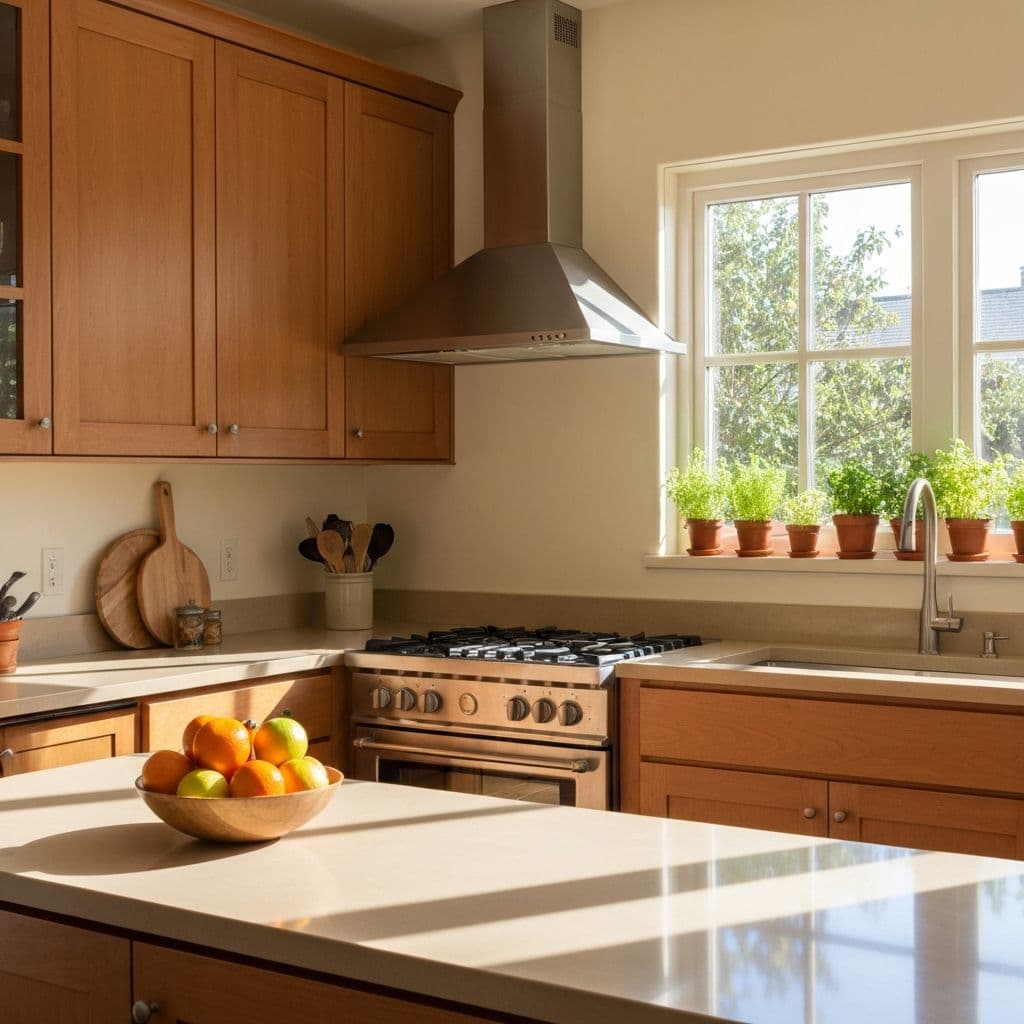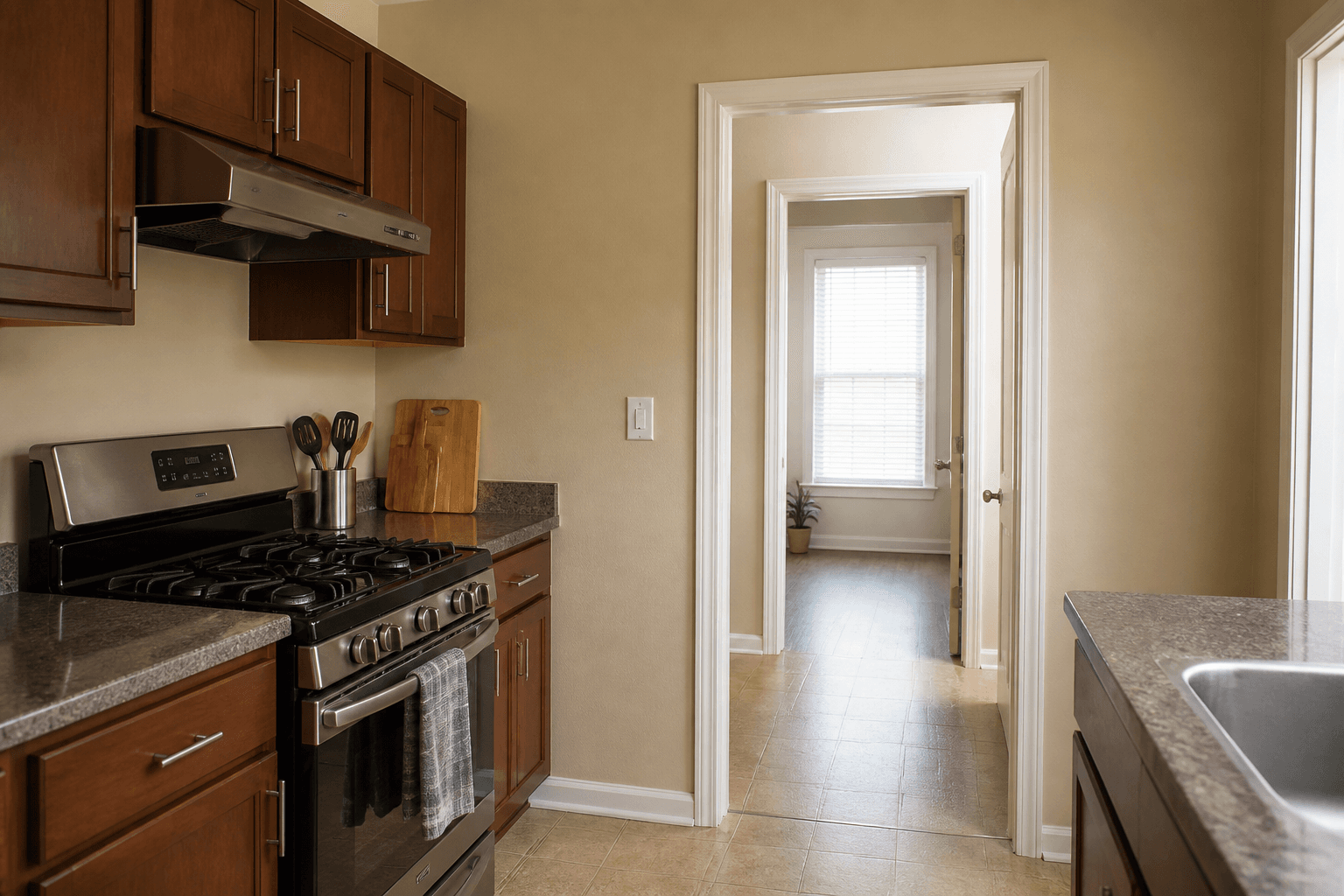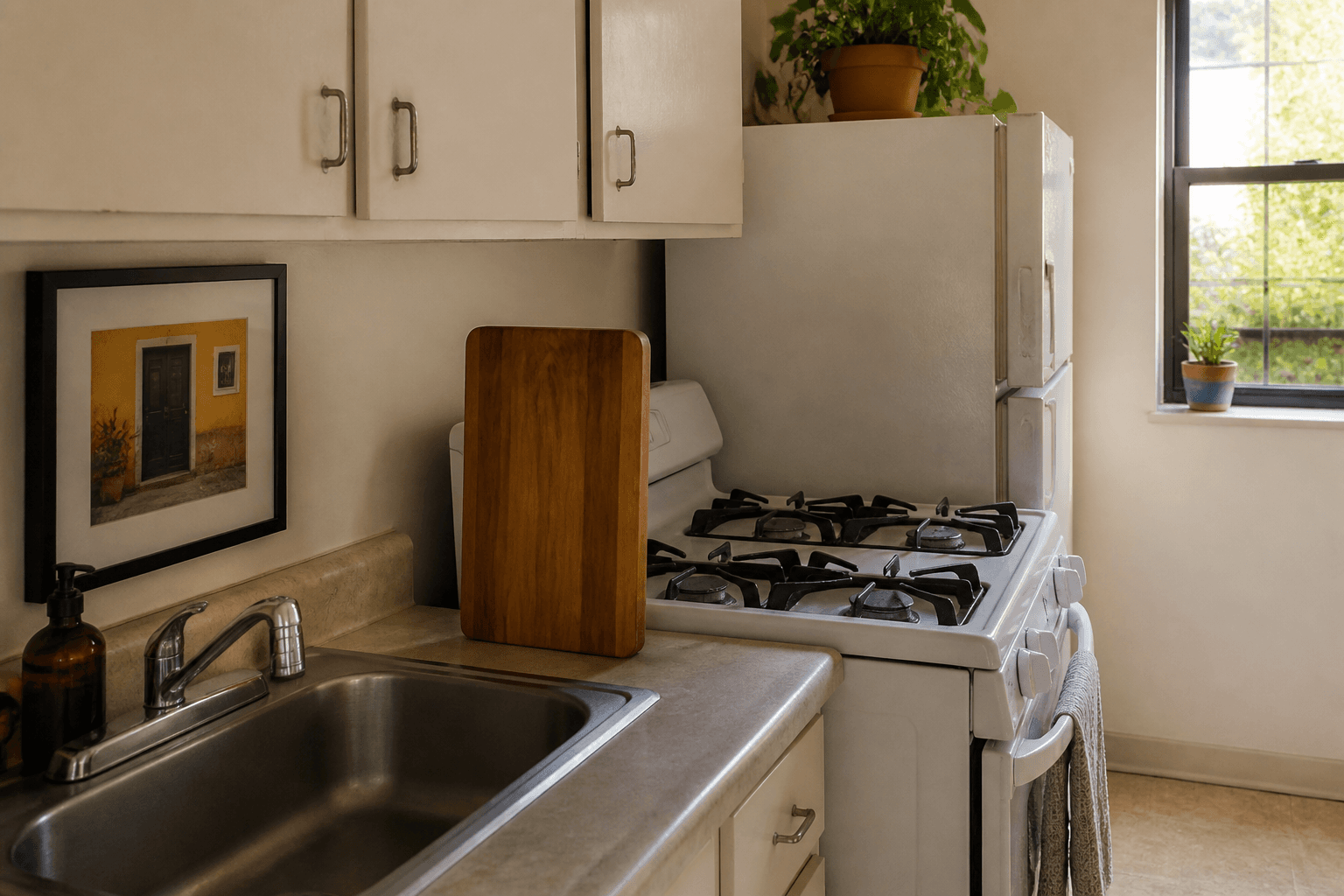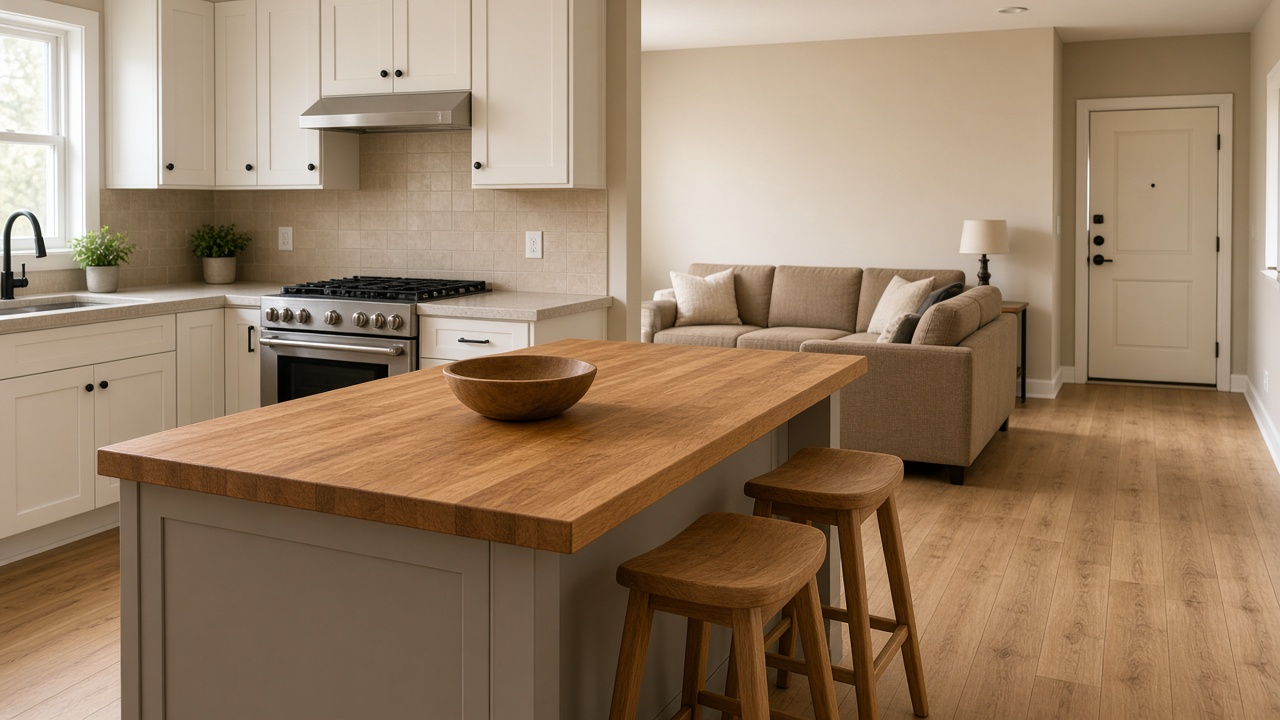


Feng Shui kitchen lighting is task light on the cutting board and the flame, plus a walk you can see, not a lucky pendant. Renters use plug-in under-cabinet strips and bulbs in existing fixtures. Chrome glare is a wipe or a bulb change. Dark corners get a lamp you can unplug.
When we photograph kitchens at dinner, the listing still shows a styled island fixture and the room we get is a galley with one tired ceiling disk. People chop in their own shadow and ask which crystal belongs on the range hood. We ask them to stand at the board with the overhead off. If they cannot see the knife, the layout is already talking. The kitchen layout page is the walk, fire and water, and what we will not claim about wealth. Stove facing door is whether the cook can see who enters. Sink placement is the basin versus the flame. This page is the light on those same jobs.
Where should the light actually land?
On the work. The cutting board needs a downward wash so the knife is not a guess. The burners need enough light that you can see a flame or a hot coil without leaning into the pan. The aisle from the kitchen door needs enough light that a roommate is not a silhouette.
Stand where you chop. Look at the board. If your head is the only thing lighting the onion, the fixture is in the wrong place even if the ceiling looks bright. A pendant over an empty island while the actual board lives on the back wall is a magazine shot. Move the work under the light you have, or add a strip under the cabinet that already hangs over that board.
The cook still needs a glance at who enters. A bare bulb aimed at the cook's face makes the door a white hole. Dim the overhead for plating if you must. Keep a quieter wash on the board so the sightline stays usable.
A wood board between sink and stove is the clash extra on the sink page. That board also needs to be lit, or you will cut in a grease shadow. Do not add a candle on the board. Flame next to a towel is a fire, not a mood.

That strip is the whole task job for a rental. It comes off at move-out. It does not pretend the landlord rewired the soffit.
How we check a real kitchen
We stand at the kitchen door, then at the board, then at the burners. We switch the ceiling off. We ask whether the knife is visible. We look for a chrome hot spot in the cook's eyes. We walk the aisle with a plate. We note a cave corner that has become a bag pile. We do not assign a gua color to the bulb.
If the client already bought a "wealth pendant," we still look at the board. A pretty fixture over empty floor is decoration. Dinner happens where the knife is.
Can renters add under-cabinet light without a new circuit?
Yes. The kit is a plug-in or battery LED strip with adhesive that lets go. Clean the cabinet underside so grease does not reject the tape. Stick the strip toward the front edge so the light hits the board, not the backsplash only. Run the cord down a corner to an outlet you already have. Keep the cord off the grate and off the sink splash.
Battery pucks are fine for a week of testing. They die at dinner. A plug-in strip you can switch is kinder for a kitchen you actually use: one strip on an existing outlet, with a switch you can find with wet hands.
Ask in writing before you drill a driver into a cabinet floor. Most leases do not want new holes in the underside. Adhesive that pulls off is the reversible version. If the finish is glossy and the strip will not stay, a small removable hook under the cabinet can carry a puck you already own. Plan to leave the cabinet as you found it.
Existing fixtures: change the bulb before you change the can. A dead tube in a rental kitchen is a replace, not a chi story. Match the other bulbs in that room so the board does not sit under one blue disk and one yellow disk. Flicker is a headache. Change that bulb tonight.
Hood lights: if the range hood already has a lamp, use it while you cook. Wipe the cover. Grease turns a useful downlight into fog. You still may need the under-cabinet strip for the board if the hood only lights the back burners.
Skip hardwired under-cabinet kits unless you own the box and you will keep it. A renter who cuts into a cabinet for a driver is paying for someone else's next tenant.
What do you do with chrome pendant glare?
Treat glare as a sight problem. Chrome bowls bounce the lamp back at the cook and at the stainless cooktop. The room looks "on" in a photo and hostile when you stir.
First try the bulb. A lower-glare shape (a covered LED, not a clear pin of light) often fixes a rental pendant you cannot swap. If the fixture takes a shade, add a shade you can take with you. If the landlord's chrome bowl is fixed and ugly, stop looking at it for luck and light the board from below instead. You can cook with the pendant off.
Do not hang a second shiny object to "balance metal." You will double the bounce. Do not drape a cloth over a hot pendant. That is a fire.
An island pendant that sits in the walk is a forehead problem before it is a bagua problem. Raise nothing you cannot raise. Walk around it. If guests hit it with a tray, the fixture failed. Task light on the actual board still matters more than centering a dome on a classroom cell.

That bounce is the fail we photograph. The flame is hard to read. Change the bulb or ignore the pendant and light the work.
A window over the sink at noon is a different glare. Close a cheap drape or work slightly aside. You cannot relocate the glass.
Does a dark corner need a wealth lamp?
No. A dark corner is a corner you do not wipe. Bags and a drying rack migrate there because nobody looks. A small plug-in lamp, or the leftover spill from the under-cabinet strip, is enough to keep it honest. A purple bulb, a salt lamp, or a crystal on a timer is a shop list. Income is not in that outlet.
If the corner is the fridge's shadow, the fridge page already owns the leaf and the gap. Add light only if you still cannot see the floor when the fridge is shut. A cave behind a door that never opens is storage. Open it or stop calling it a kitchen cell.
Night: you still need a path from the hall to the sink if someone gets water. A low nightlight in an existing outlet is so you do not fall. It is not protective energy. Sleep rooms go dark. Kitchens can hold a dim path without staying in restaurant mode until 1 a.m.
The living-room lighting guide is layers and kelvin talk for sitting rooms. The bedroom lighting article is lamps at the pillow. Borrow the idea of layers. Do not copy a nightstand pair onto a galley, and do not copy a sofa lamp onto a grease wall.
How do you light the walk and still see the door?
Keep the aisle from becoming a tunnel. If the only bulb is over the sink, the cook's back to the hall is a dark mass. A strip under the inner cabinet run, or a plug-in lamp on the far counter that is not a trip, lets a person appear as a person.
Do not place a spotlight in the cook's eyes so they "face the door." That is a startle with extra glare. If the stove faces a wall, use the side-mirror extra from the stove-facing-door page, and keep the task light on the pan. Wipe the glass. Grease on a command mirror is a smudge that also reflects the bulb.
Open kitchens dump kitchen light into the sofa. Dim after cooking if people are trying to sit. A bright disk over the range at 10 p.m. keeps the living room in prep mode. Task strips you can switch independently are kinder than one breaker for the whole volume.
Galleys: one person with a pan already owns the shoulder path. Light that path so the second person stops at the end instead of arriving at your elbow in the dark. A drying rack in the only lit square is how glare and clutter share a cell. Fold the rack after dishes.
Jobs besides a family kitchen
A listing kitchen photographs bright. Guests then chop in a cave. Hosts should show the actual evening light: board lit, aisle walkable. Occupancy is not a pendant spell. A cafe pass wants light on the plate and a glance at who walks up. Borrow that. Do not copy a restaurant rail into a rental galley.
Renter steps you can reverse tonight
Do them in order. Stop when you can see the knife and the burner without squinting, and you can still glance at the kitchen opening.
- Stand at the board with the ceiling off. Name whether you see the knife.
- Stand at the burners. Name whether you see the flame or coil, and whether chrome is in your eyes.
- Walk from the kitchen door with a plate. Note a dark stretch and a trip cord.
- Stick a plug-in under-cabinet strip over the board if the cabinet is yours to tape, cord to an existing outlet, off the grate.
- Change a dead or flickering bulb in a fixture you already have. Skip a new chandelier.
- If the pendant glares, try a covered bulb or cook with that fixture off.
- Put a small plug-in lamp in the cave corner that collects bags, or clear the bags and skip the lamp.
- Photograph from the kitchen door and from the cook's stance with only the task light on.
You can stop at the strip and the bulb. If a strip cord crosses the only hip space, reroute it along the wall. Keep plugs away from the splash.
Move-out: pull adhesive slowly. Residue is a sticker remover you already own, not a sanding job. Take the strip. Leave the landlord's chrome bowl.
If the only outlet is behind the toaster pile, do not invent a new fire. Clear the pile so the plug is honest, or use a battery puck for the one board you actually cut on, and replace it when it dies.
What this is not
It is not a wealth spell. A pendant over an island does not pay a grocery bill. Unused bulbs are not unused money. Use the lights you cook with.
It is not the bedroom lighting article. Warm lamps at the pillow live there. A kitchen that stays that dim is a cut hazard.
It is not a clone of the living-room lighting guide. Sitting rooms can layer for mood. This room has a knife and a flame. Task first.
It is not a diagnosis. Flicker can be a headache. If light bothers your eyes as a health question, that is a clinician. Layout only decides whether the board is visible.
It is not permission to rewire a rental. No new ceiling boxes. No cutting cabinets for a driver you will abandon. No candles as the main kitchen light.
It is not the stove-under-window article, and it is not unused burners as a paycheck story. Those fights stay on the layout page.
What should you do tonight?
Stand at the cutting board. Switch the ceiling off. If you cannot see the knife, add a plug-in strip under the cabinet you already have, or move the board under the one downlight that works. Change a flickering bulb. If chrome is in your eyes, ignore that pendant for cooking.
Then photograph from the kitchen door with only the task light on. If the aisle is a cave, add the smallest lamp that makes a person visible. If the first object is a bag pile in the dark corner, move the bags. When the board, the flame, and the kitchen opening are visible, the lighting job is done. The pendant can wait in its chrome.