
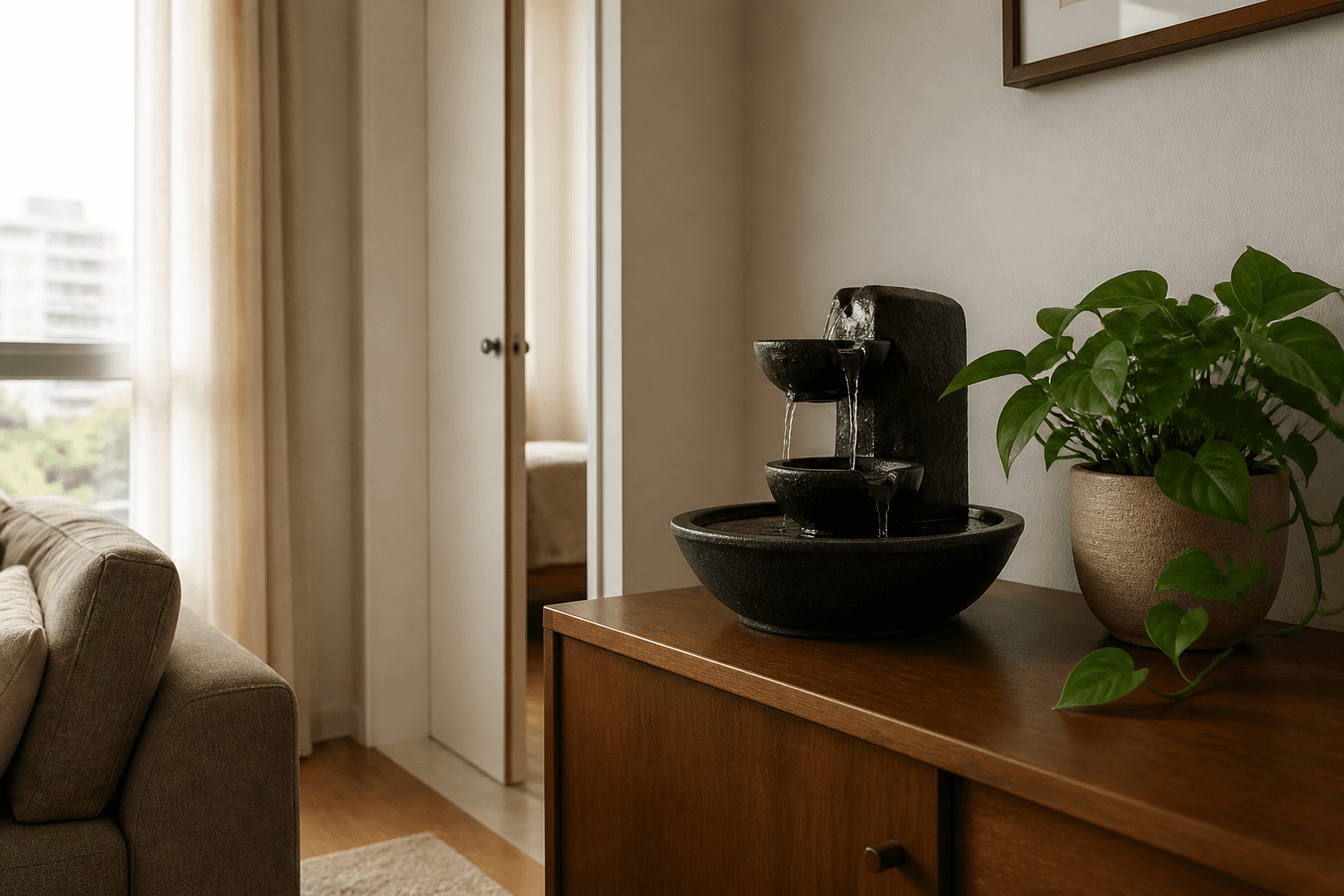
Feng Shui indoor fountain placement is the practice of putting a small pump of moving water in a room you will actually clean, usually a living room or office, never beside a bed. You aim the spout into the room, sit the object on a solid cabinet with a tray, and treat it as a water-element object, not a paycheck. No fish.
When we photograph "wealth corners," the fountain is often the prop that gave up first. The pump is dry. The basin has a white crust. Or it sits on a nightstand because someone read that water equals money and the bedroom was the only free surface. This guide is the furniture version: where a renter can park a tabletop fountain, and when to skip it.
What is a Feng Shui indoor fountain?
It is a basin plus a pump. Water moves in a loop you can see and hear. That is the whole object. Traditional lists file it under the water element: dark color, flow, a thing you must keep clean. Popular wealth writing then parks it in a mapped corner and talks about income. Keep those layers separate.
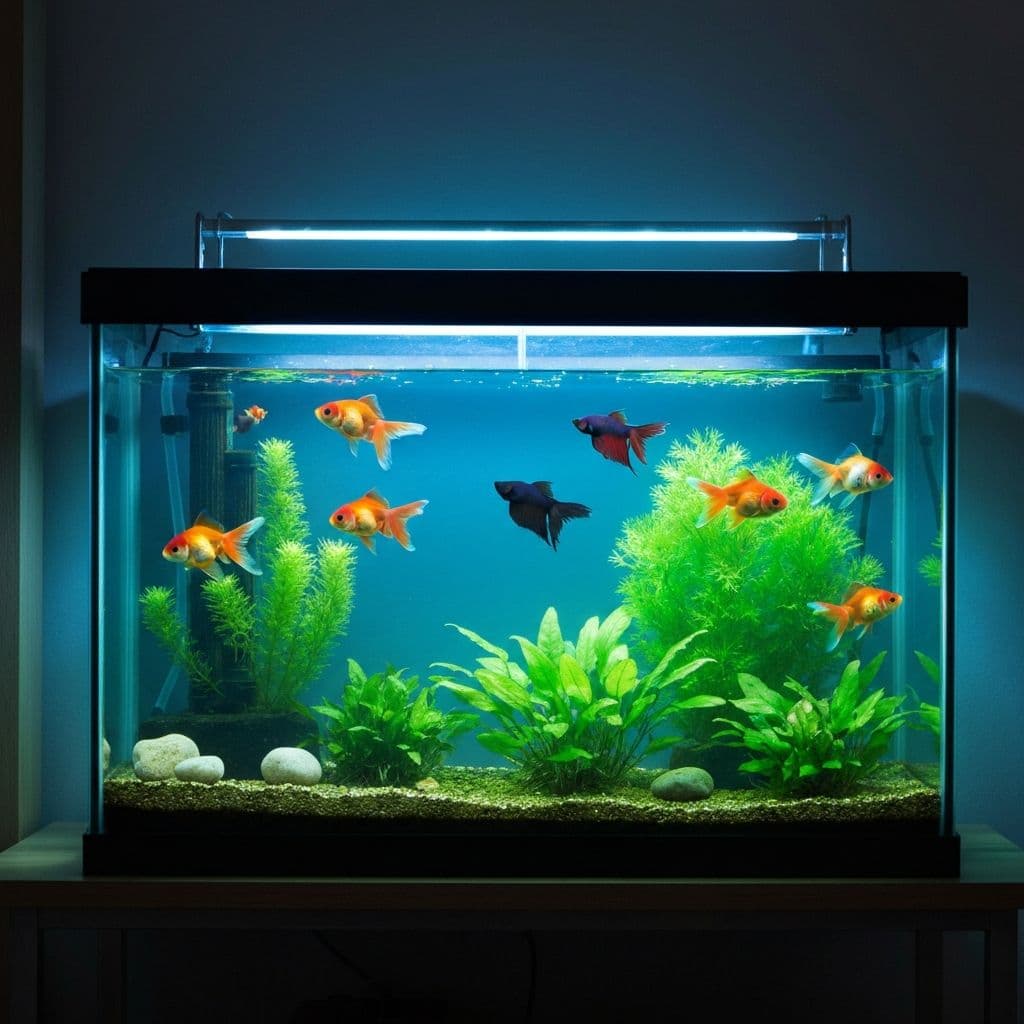
An aquarium is a different job. Fish have stocking limits, filters, and a body when something dies. A fountain has none of that. If you want living water with animals, use that page. If you want the sound and a wet symbol without livestock, stay here.
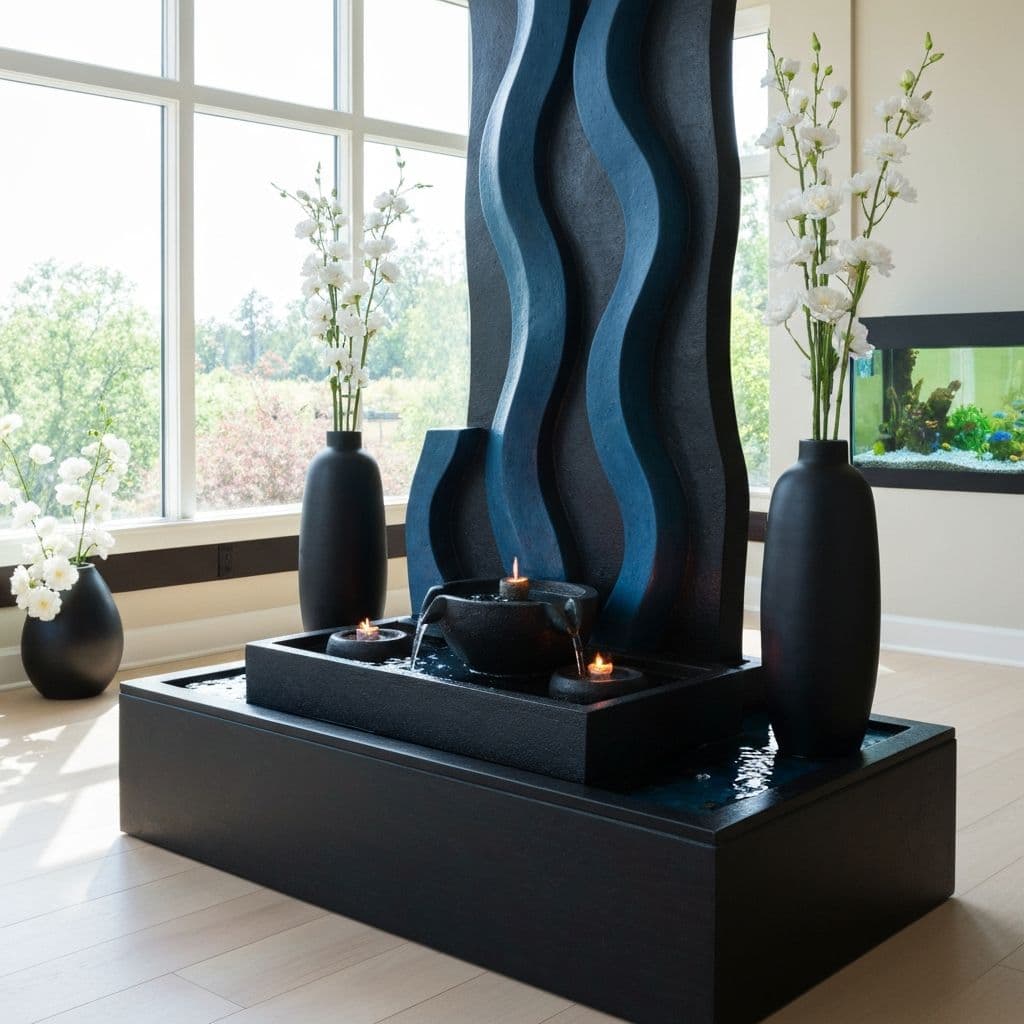
Size matters more than style. A tabletop unit you can carry to the sink is the rental default. A floor fountain that needs a dedicated outlet behind a sofa is a commitment you should only make if you already like the sound at conversation volume. You do not get extra symbolism from a heavier basin.
Navy textile, a wavy print, or a clean bowl you change can stand in if you will not keep a pump. The water-element article already says that. Buy a fountain only if you will refill it and wipe the splash.
Where should an indoor fountain sit?
Stand in the doorway of the room you actually use after work. Notice a cabinet that is not a walkway and not a TV stare. That is your first candidate. The object should be visible enough that you remember to tend it, and out of the hip-check zone.
Compass talk, if you use it, usually offers north (career and path) or southeast (the wealth sector in many notes). Black Sect / Western bagua may land "wealth" on a far-left corner from the door instead. Those maps do not always agree. Pick one system for the home and stay with it. The wealth corner article is the overlay. This page is the object that might sit there.
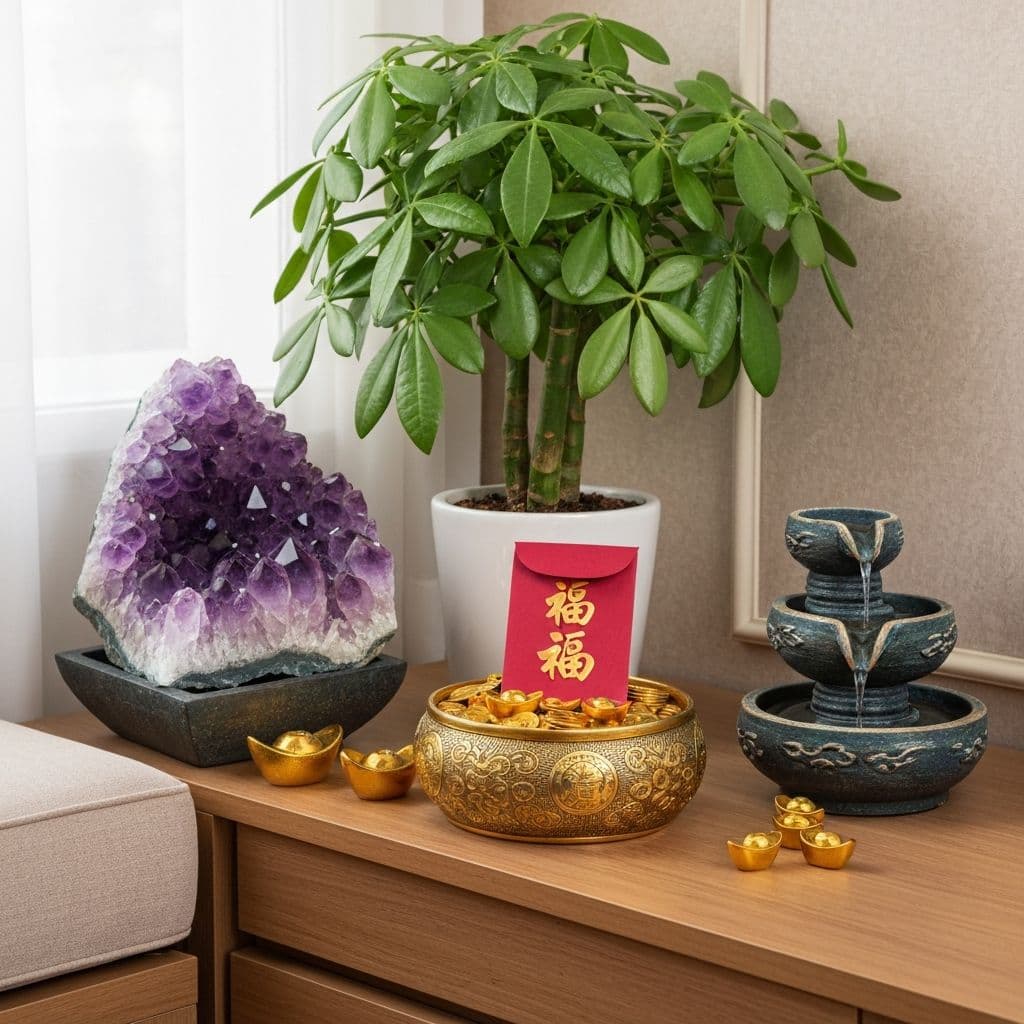
A living room cabinet is the usual win. You hear the water while you sit. Guests see a plant and a basin, not a shrine. An office corner works if the desk still has a view of the door and the pump is not shouting into a microphone. Kitchen stove walls are a poor neighbor: fire and water on the same work line is the clash caution in five-element talk, and it is also a splash next to grease.
Do not aim the fountain at the front door like a second mouth. Incoming and outgoing get confused in the folklore, and in ordinary language you have a wet object greeting people with noise. Keep it in the room, facing in.
Cabinet, tray, and the spout
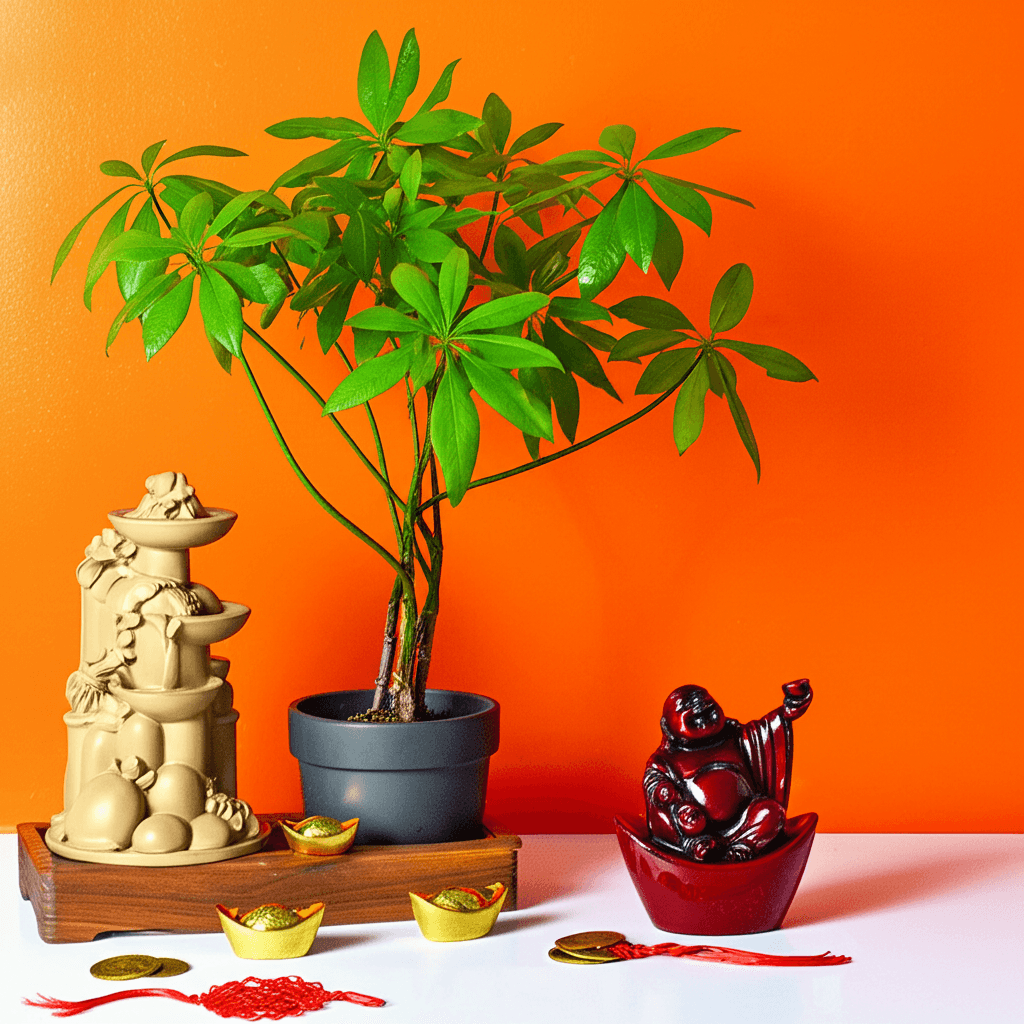
Sit the fountain on wood, stone, or a stable shelf. A wobbly side table next to a sofa arm will travel. A waterproof tray under the whole footprint catches the splash you will otherwise find in the veneer six weeks later.
Aim the spout into the basin, then rotate the whole object so the visible stream leans into the room you sit in. You do not need a laser. If the water looks like it is leaving toward a hallway, turn it a few degrees. Popular wealth language calls that "flow toward you." The practical version is: the wet side faces the life in the room, not the exit.
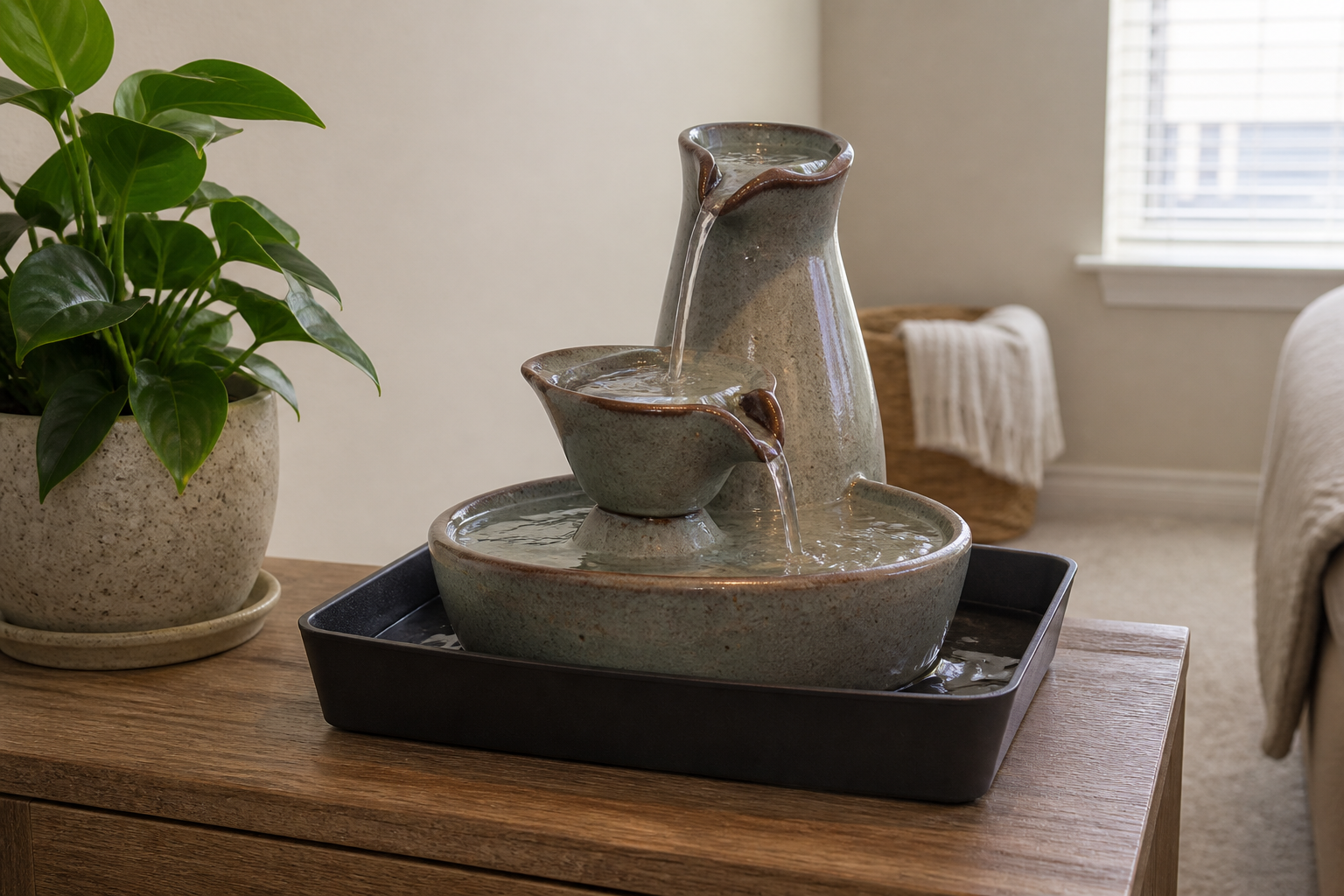
The tray is the part people skip. The photo is a close pump on a wood top with a dark rectangle under the basin. That rectangle is the difference between a symbol and a stain.
Power cords count. Tape or clip the lead down the back of the cabinet. A fountain with a bright adapter on the floor looks like a gadget, which is what it is. You can still make the cabinet look finished.
Why keep water out of the bedroom?
Sleep rooms want less motion, less sound, and less humidity. A pump gives you all three. Even a "quiet" unit has a motor note you will hear at 2 a.m. once you know it is there.
We also see fountains on dressers because the bedroom was the mapped "wealth" sector in a studio. Map or not, the pillow wins. Put the water in the living half of the apartment. If you only have one room, put it on the table side, not the sleep side, and unplug it at night.
A fountain next to a bed is also a spill next to fabric. One knock from a half-asleep hand and you have a wet mattress. That is not a mystical warning. That is laundry.
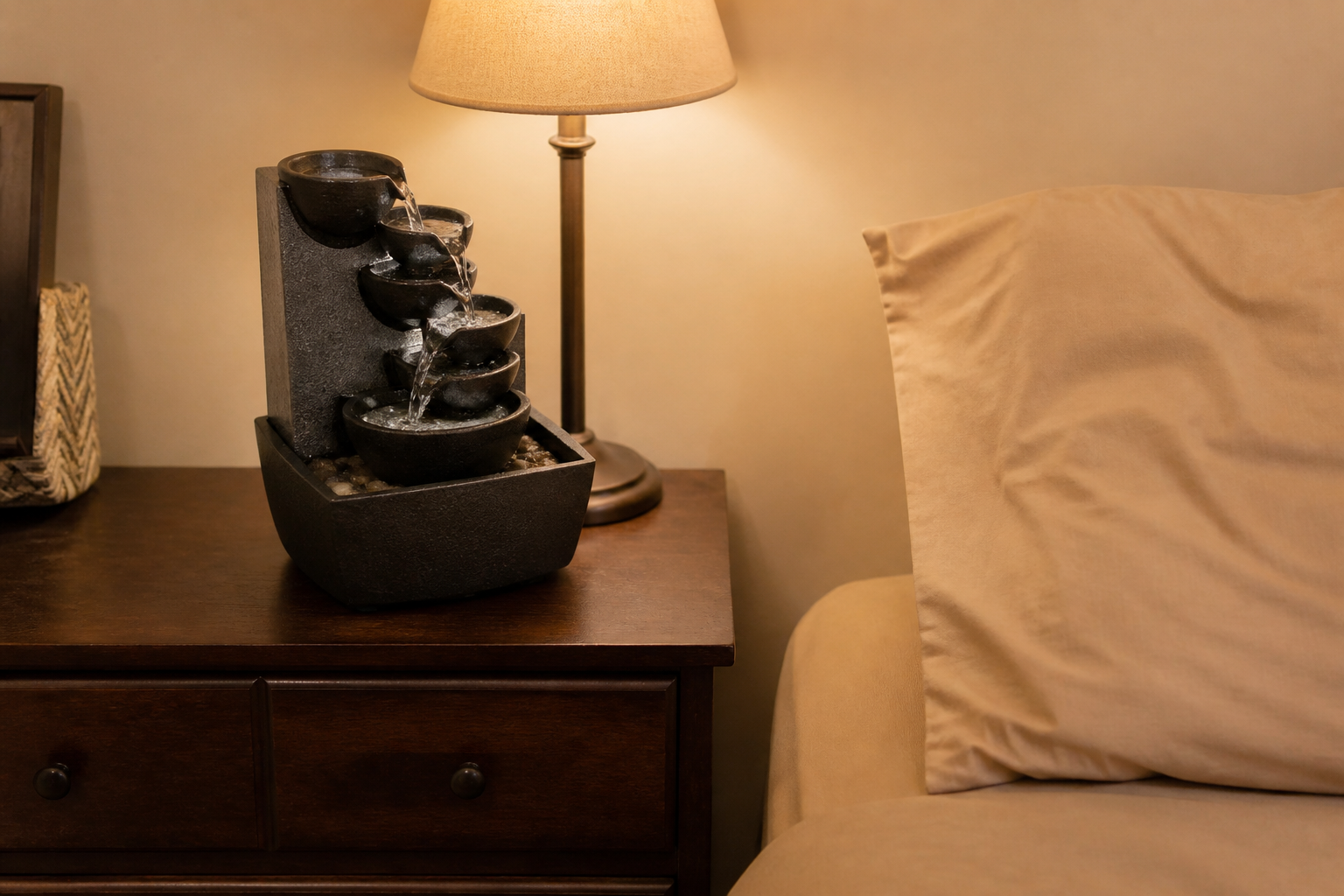
That nightstand layout is the miss. The lamp and the pump are both "on." Move the basin to a room you use while dressed.
South-facing fire walls are the other usual caution in element lists. You can skip water there without a speech. A fountain does not belong on a stove shelf either.
How do you keep a fountain from becoming a chore?
Assume you will forget it. Design for that.
Fill only as high as the manual says. Top it up twice a week in dry weather, more if you run heat. When the water line drops, the pump sucks air, then it burns. Unplug before the basin is a puddle of dust.
Wipe the white crust. That is mineral scale, not "blocked chi." White vinegar on a cloth, then rinse, is enough for most tabletop units. If the water smells, empty it and start clean. Dirty still water is a chore with a story attached. Traditional writing already disliked stagnant water. Your nose agrees.
Go away for a weekend? Empty the basin or leave enough water that two days of evaporation will not kill the motor. Unplugging is safer if you are unsure.
Algae on a sunny windowsill is ordinary biology. Move the fountain a meter off the direct patch of sun, or run it less. You do not need a special "fountain cure." You need less light on standing water.
If you hate the sound after a week, you are allowed to stop. A navy cushion and a healthy plant in the same corner will carry the water-and-wood story without a motor. Do not leave a dry fountain in place as a monument to a plan.
Can renters use an indoor fountain?
Yes, if it is a plug-in object you can lift. No, if the plan involves a hole in a wall, a copper line, or a landlord's built-in niche.
Use a cabinet you already have. Felt pads if you slide it. A tray you can hide in a cupboard at move-out. Skip hanging a reservoir on plaster. Skip river rocks collected from a park if the building has rules about water on upper floors. A leak is a downstairs neighbor problem.
Studios still work. Zone the sleep wall as dry. Put the fountain on the desk or the media console, then unplug it when you want the room quiet. The small apartment logic applies: one door, two jobs, do not make the bed share a pump.
If the lease is strict about humidity or you already fight condensation on windows, skip the fountain. A closed-loop pump still puts water into the air. A plant you water at the sink may be the better wet object.
A simple setup checklist
Do this in order. Stop if you will not keep the pump.
- Pick a living room or office cabinet, not a nightstand and not a stove wall.
- If you use a map, check north or southeast (or your chosen bagua corner) and confirm it is not the bed wall.
- Set the fountain on a tray. Fill it. Plug it in behind the cabinet.
- Aim the spout into the basin and into the room.
- Sit for ten minutes at conversation volume. If you dislike the sound now, you will dislike it more at night.
- Photograph the corner in FengShui Hero and compare the flagged wall with the bed line.
Write the fill day on a calendar if you are the kind of person who kills houseplants. A fountain is a plant that cannot wilt to warn you. It just seizes.
What this is not
A fountain will not deposit money. It will not repair a career. It will not ruin you if you keep a dry bowl for a month while you decide. People get stuck on lucky fish counts that do not apply here, then skip the stain on the cabinet.
Skip religious objects you do not already use. Skip buying a "wealth spout" widget with a coin glued to the rim unless you like the look. Wood under the basin, a tray, a room you are awake in, and water you will change are the whole method.
If you only do one thing, take any pump off the nightstand and put it on a living-room cabinet with a tray. Everything else in this article is a variation of those two moves.