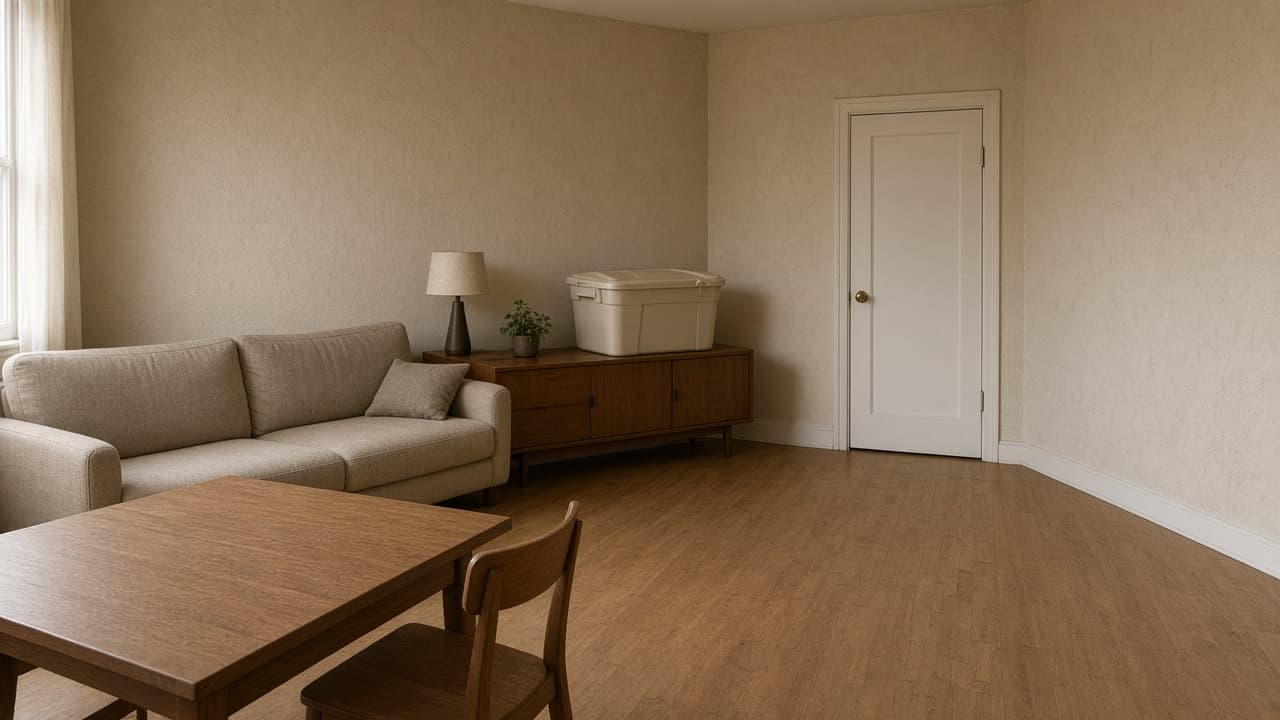
A feng shui hobby room is a project space you can close so the rest of the home can sit again. You shut a door, click a lid, or fold the table. Leftover kits in the walk are clutter, not creativity. A west-wall color will not finish the puzzle for you.
When we photograph apartments billed as a "maker corner," the corner is usually dinner. A puzzle lives on the only table. Paint trays sit in the aisle from the front door to the kitchen. People ask which gua likes watercolors. We ask whether anyone can sit down to eat. The yoga space page is a mat you unroll and roll away. The home gym page is iron and sweat off the mattress. The reading nook is a chair and a lamp you switch. This page is a project you can close.
How we check a hobby room in a real room
We stand at the door you actually use. We name the surface that holds the hobby. If you cannot point at it without a tour, you do not have a hobby room. You have a story about a kit that lives in a tote in the hall closet.
Then we open the latch fully and walk the ordinary path to the kitchen or the sofa. If we have to sidestep a drying board, a thread tangle, or an open model box, the project owns the mouth of the room. Form School cares whether a body can move. The kit can wait.
Then we sit in the hobby chair, if there is one. We look for the room door the same way we would at a desk. A back fully to the latch is a startle every time someone comes in. Angle the seat or turn the table a few degrees. The desk and door check is the same sightline test. Command here is not a career gua. It is whether you see who enters while you sew or glue.
Then we try to close the project. Door, lid, or fold. If the only close is a throw over a mess, that is not a close. We write which check failed: walk, chair, or close. Compass and Black Hat can argue about west. The job is a surface you can restore.
Where should a hobby room go?
Use a spare room with a door if you have one you actually close. That is the honest version of a hobby room: a latch you shut so the rest of the house can sit. The chair still wants a wall at your back and a glance at that room's door. A window as the only back is glare and a draft. Pull off the glass a foot.
If you rent a one-bed or a studio, the dining table you already own is the usual surface. That is allowed. The table has to become dinner again. A lidded bin on a sideboard you already own is the close. A folding table that leans in a closet is the other close. Do not invent a second living room by leaving the leaf up all week.
A closet office can hold a hobby if the door opens while you work and shuts when you stop. Glue and hangers in the hall is the fail. Same geometry as work. Different object.
Skip the only aisle from the front door to the kitchen. That aisle is the mouth of chi in a small flat. A card table in that lane is a trip with a hobby caption. Tape the table's footprint once if you move it for a session, then put it back.
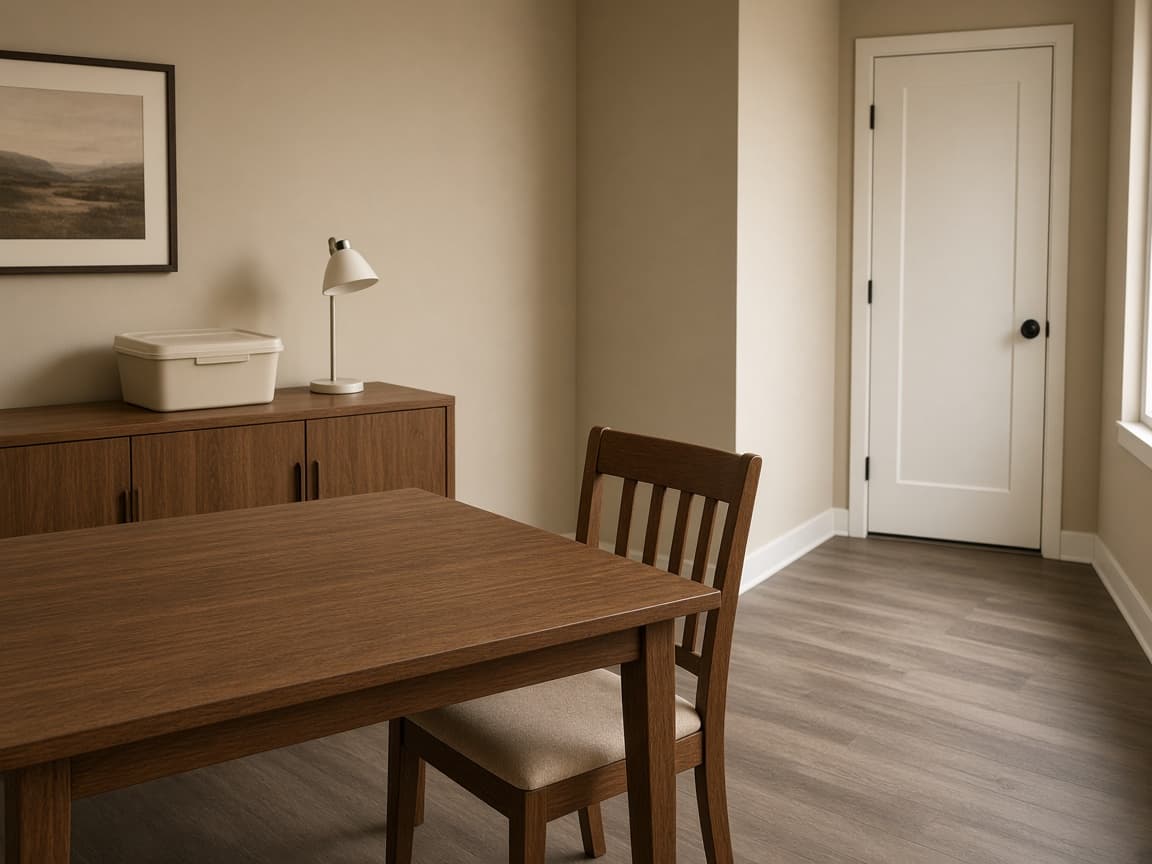
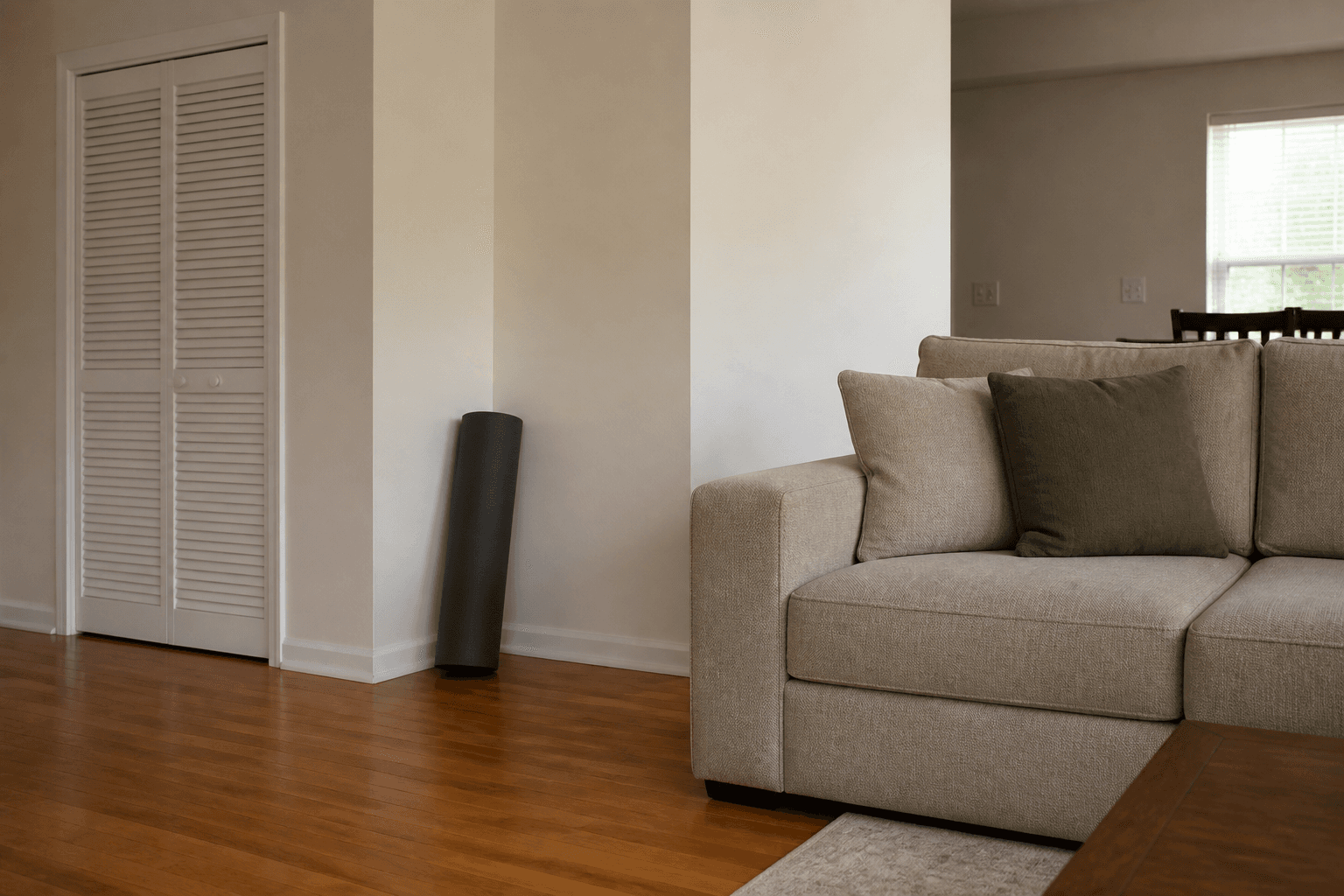
That cleared table is the layout this article wants. The bin is closed. The chair is tucked. The walk to the door is a walk. A shrine of open trays is the other photo.
Placement choices
| Setup | Pass | Fail | Renter move |
|---|---|---|---|
| Spare room with a door | Latch shuts, house walk still works | Door stays open, spill into the hall | Close the door after the session |
| Dining table | Bin or fold, table is dinner again | Open kit overnight in the aisle | Lid bin on a sideboard you own |
| Closet or cloffice | Door open while you work, shut after | Glue on hangers, hall pile | Latch closed. Same as the closet-office page |
| Bedroom desk | Cover and bin at night | Kits at the foot of the bed | Move the bin to a living closet |
| Hallway or entry | Never as a daily table | Mouth of the house is a trip | Use the living table, then close it |
A listing "craft nook" that is leftover mess in the guest walk fails checkout. Hosts can leave a closed bin in a closet, not an obstacle on the dining leaf. In a shared house, your room is the hobby room if you can shut that door. Do not claim a gua on a housemate's kitchen.
If the hobby is a piano, use the piano placement page. A portable keyboard you fold and bag belongs here.
Is it bad to leave a project out overnight?
A feng shui hobby room that still works in the morning is one you closed. Leave a project out overnight only if the surface is not dinner, not the sleep wall, and not the only walk. A spare room with the door shut can hold a wet painting you labeled so nobody sits in it. A dining table cannot.
We keep seeing the same miss. The puzzle is "almost done," so it lives on the table for eleven days. Guests eat on the sofa. The walk from the latch skirts cardboard. Nobody meant to turn the living room into a workshop. The close never happened.
Covering the mess with a tablecloth is not a close. You still cannot put a plate down. You still hip-check the boxes. Put pieces in the lid of their own box, or in a bin that actually clicks.
Wet paint is the exception people cite. Move the board to a spare-room floor or a folding table that is not the aisle. Do not dry canvases in the front-door swing. Thread, beads, and small parts on a low table are a pet and kid problem before they are a chi story. Lift them.
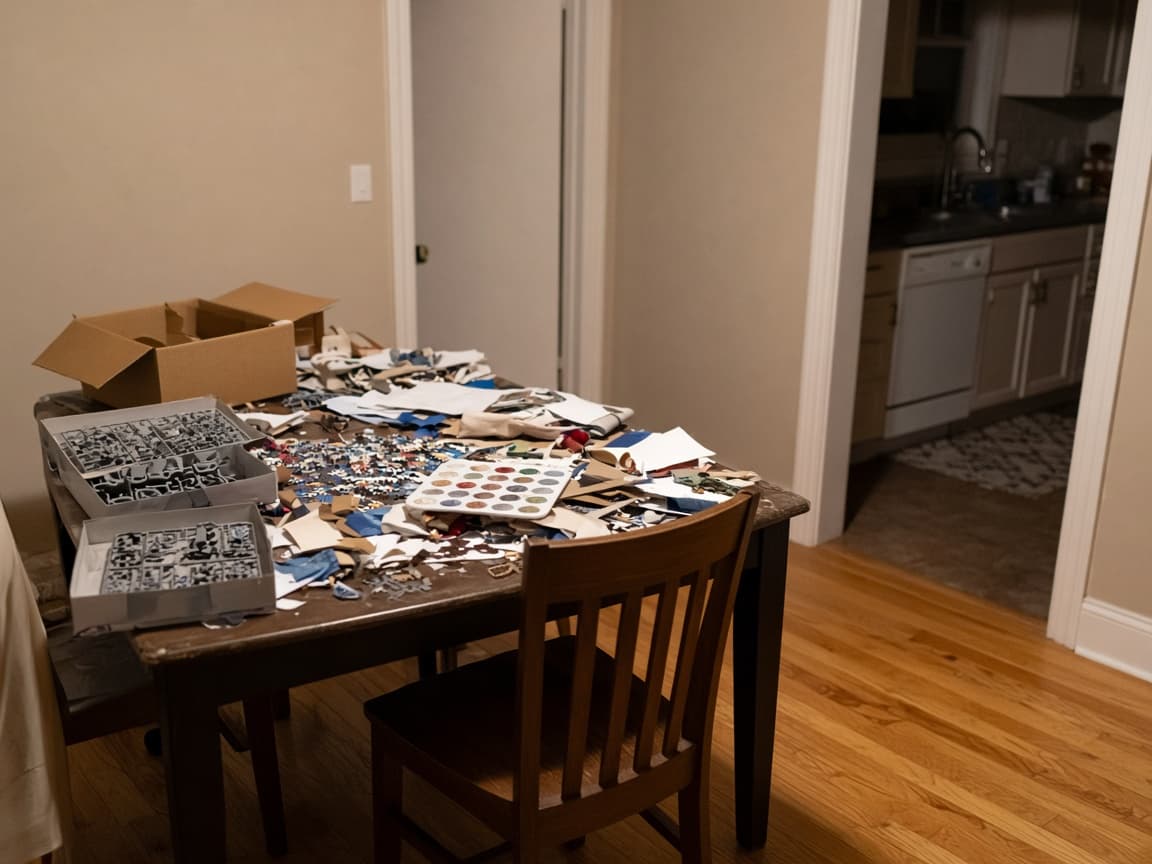
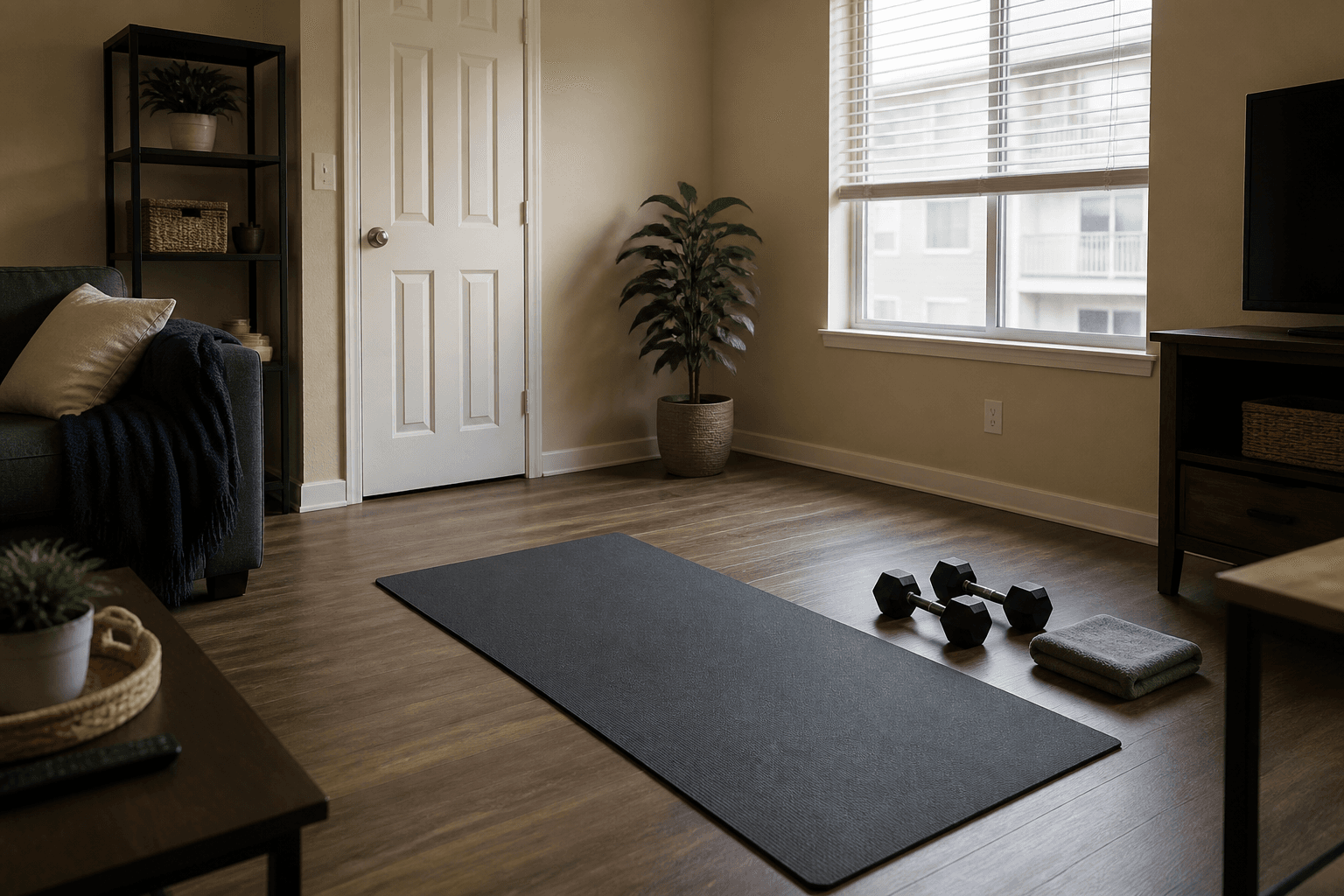
That table is the fail. Dump keepers into a bin. Recycle the cardboard. Wipe the wood. If you will not do that tonight, you have leftover clutter with a creative caption. A stretching corner on the same floor needs the towel put away too. Do not leave both out as a "wellness zone."
Can a hobby room sit in the bedroom?
Use the session if that is the only floor, then close it. Sleep still wins.
Lie on your back. If you can count paint caps, a sewing machine, or a half-built model without sitting up, the sleep room is still a workshop. The gym article already banned iron at the foot of the bed. A hobby kit there is the same visual: work in the pillow's view.
A small desk in the bedroom can hold a laptop by day and a kit in a drawer if the drawer actually shuts. An open cutting mat on the duvet is a skip. Close the laptop at night so the desk is not a second office plus a second workshop.
Mirrors: a closet door that shows you while you sew is useful. Glass that then faces the mattress all night is a bedroom mirror job. Close the closet when you sleep.
Smell: solvents, spray adhesive, and oil paint in a sleep room are a window and a door you open, then a bin that leaves. If the building bans fumes, the hobby does not live in the bedroom. Layout cannot invent ventilation you do not have.
In a studio, the living half is the hobby half. Put the bin on the desk side or a cabinet, not beside the pillow. A screen or a curtain you already own can hide the closed bin. It cannot hide an open mess.
Do you need the west creativity gua?
No.
Some Black Hat notes put children and creativity in the west or the middle-right of the plan from the door. Compass schools will point at a different wall. Popular blogs then tell you to fill that cell with white metal, circles, and unfinished art so you become more original. A wall color does not sew the seam.
If you already picked one map for the home, you can sit the closed bin in that cell. You can also sit it where the table already is. The bagua map is how the grid is drawn. This page is whether the project closes.
"Activate" in practitioner language means the sector is not a dump and not dark. A working lamp and a walk already do that. An open kit in a labeled creativity cell is still an open kit.
Skip crystals on the cutting mat and incense next to fabric. Many buildings ban flame. The incense page wants a watched dish. Open a sash instead. Dead leaves on a puzzle leave.
A coffee table as a cutting surface puts your back in the aisle. Use the dining height you already have. What to buy first is still nothing, then a lamp. A new craft island is not that list.
What this is not
It is not a diagnosis and not a talent spell. It will not treat anxiety, ADHD, or a slump. The health guide already drew that line. Layout only decides whether the house can sit.
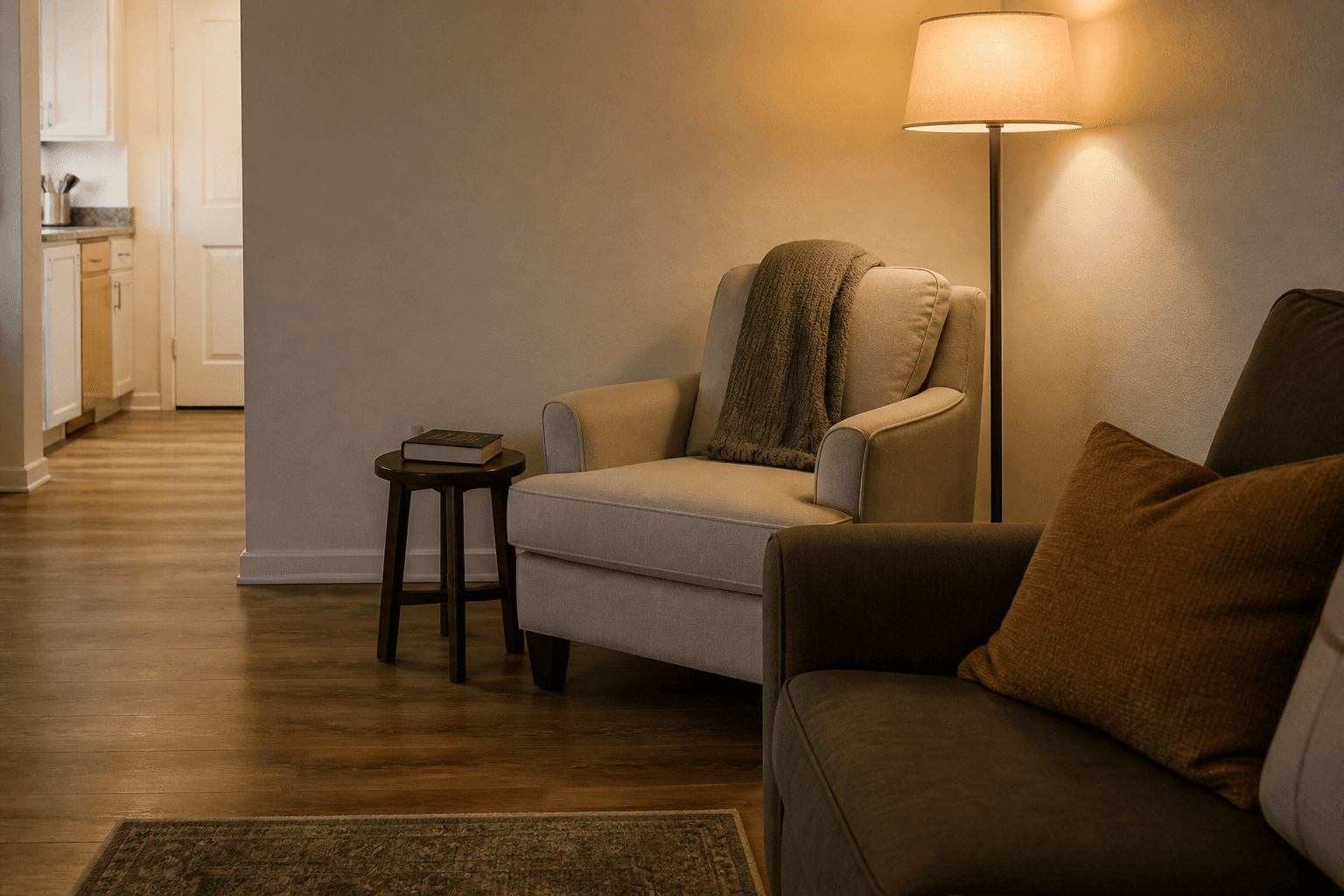
It is not a yoga space with nouns swapped, not a home gym if bells live in the bin, and not a reading nook if the chair sits on a cutting mat. Rubber rolls away. Iron leaves the mattress. A book chair can share a room with a closed bin.
Later calendar rows cover a makers mess with a lid, a craft table you sweep, and a storage wall of closed doors. Those are narrower objects. Tonight you only need a close on the surface you already use. An Etsy corner does not get a pay claim because you mapped west. Do not knock a wall out for a missing creativity cell.
Tonight: close the project once
Do this in order. Stop when the surface is dinner or sleep again, or when the spare-room door is actually shut.
- Stand at the door you use. Name the hobby surface. If you cannot, pick one table and ignore the rest for tonight.
- Sit in the chair. Turn it until the latch is in a glance. Use the desk tool if you want the same three questions in writing.
- Finish or pause the piece. Put keepers in a lidded bin or the kit's own box. Recycle scraps you will not use.
- Click the lid, fold the table, or shut the spare-room door. A throw over a pile does not count.
- Tuck the chair. Walk from the latch to the kitchen without sidestepping.
- If the bed can still see the kit, move the bin to a living closet.
- Photograph the table and the door in FengShui Hero. Compare the flagged pile with the close you just did.
If the photo still looks like an open workshop in the aisle, you are not done. The gua is not the problem. The lid is. Steal a lamp from another room if the table is dark. Do not add a pendant for luck.
If you only do one thing, get the kit off the dinner table. A spare room you close is better. A bin on a sideboard you already own is enough.