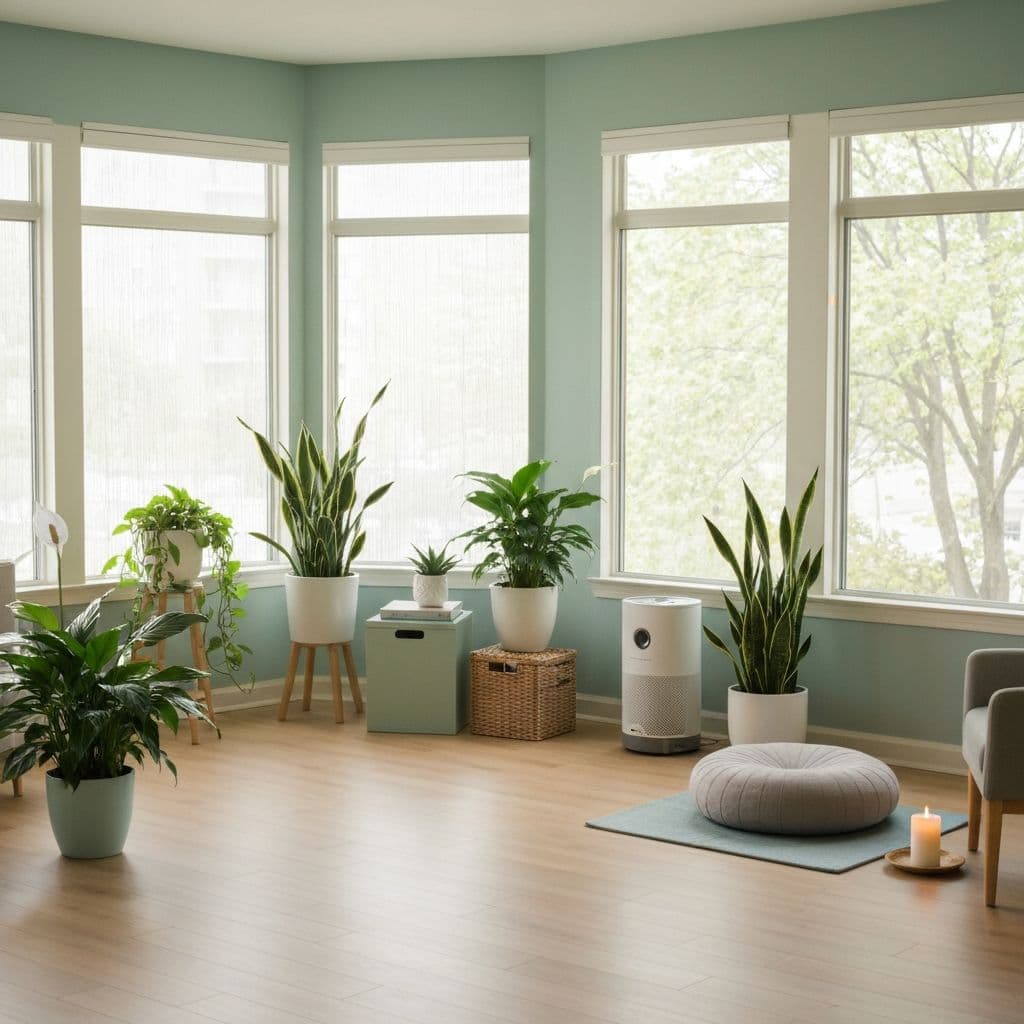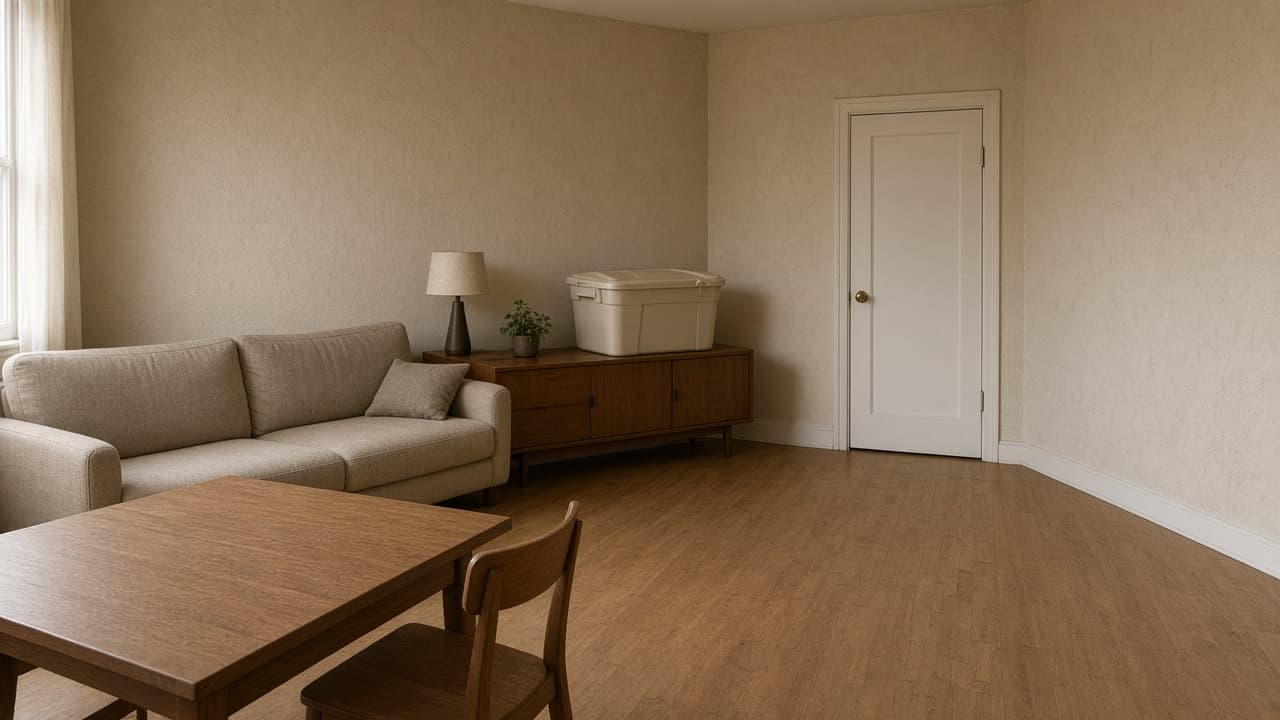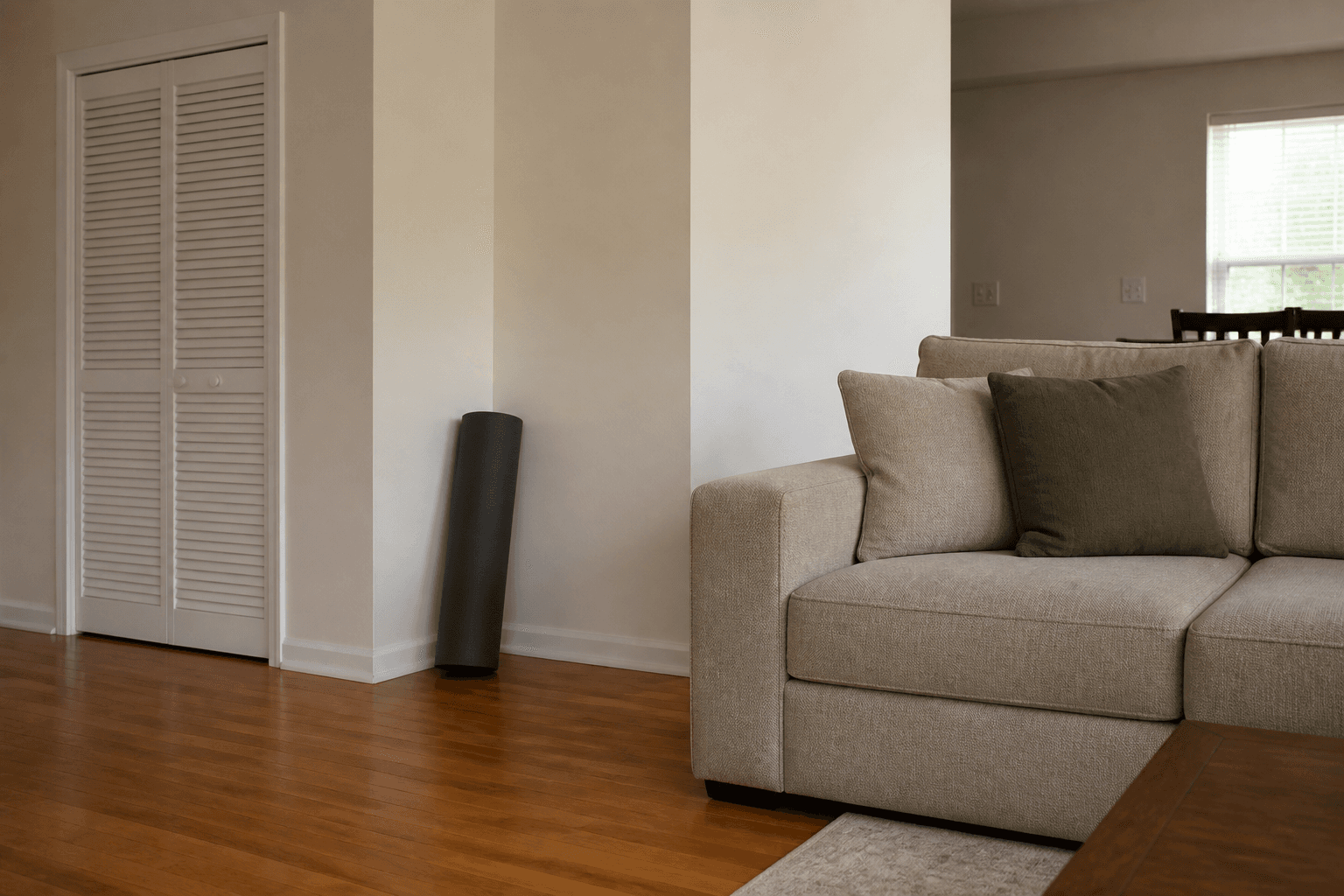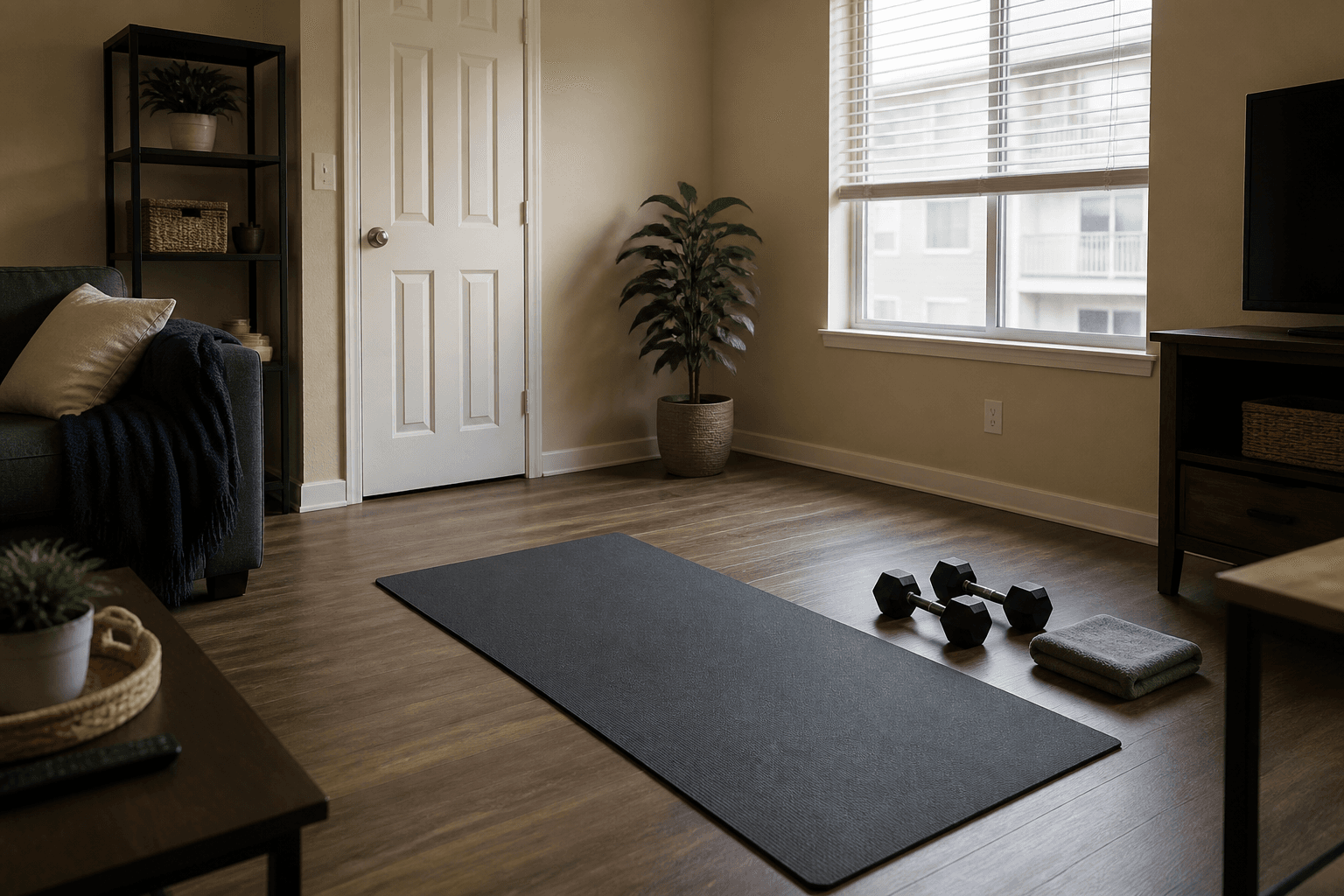

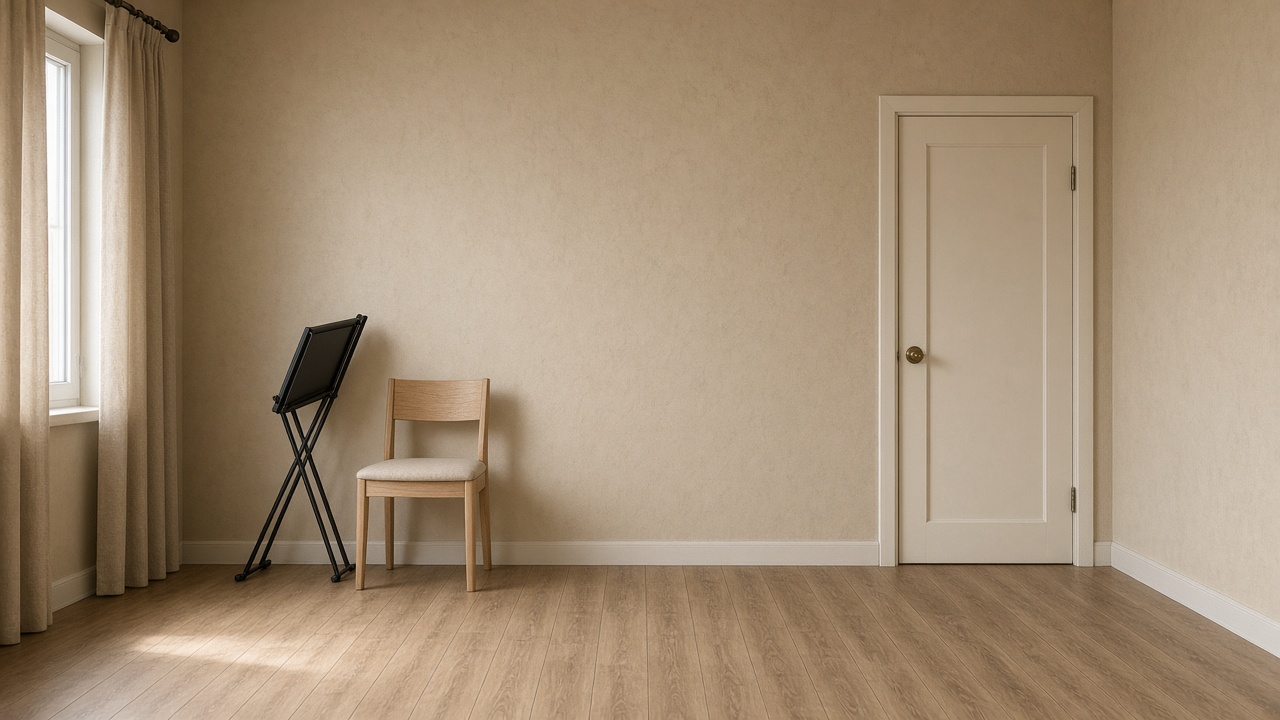
A feng shui music practice room is a stand you can fold and a door you close so the rest of the home can sit again. You practice in that room, then fold the stand off the walk. It is not a talent spell. A west-wall color will not learn the piece for you.
When we photograph apartments billed as a "music nook," the nook is usually the hallway. An open stand sits in the only path from the sofa to the kitchen. Sheet music fans across the floor. The spare-room door is ajar, or the bedroom has become a stage with an amp at the foot of the bed. People ask which gua likes scales. We ask them to sit in the practice chair and name the latch. The hobby room page is a project you close with a lid. The yoga space page is a mat you roll away. This URL is a stand and a door.
Wikipedia's feng shui page still splits Form (shape you can walk and shut) from Compass overlays. Form goes first here.
How we check a music practice room in a real room
We stand at the door you actually use for the session. We name the stand. If you cannot point at it without a tour, you do not have a practice room. You have a story about a case in a hall closet.
Then we sit in the practice chair, if there is one. We look for that room's latch the same way we would at a desk. A back fully to the door is a startle every time someone comes in. Angle the seat a few degrees. The desk and door check is the same sightline test. Command here is not a career gua. It is whether you see who enters while you play.
Then we open the latch fully and walk the ordinary path. If we have to sidestep the tripod, a cable, or a pile of sheets, the session owns the mouth of the room. Form School cares whether a body can move. The metronome can wait.
Then we try to close the room and fold the stand. A door that stays open is not a close. A throw over an open tray is not a fold. We write which check failed: walk, chair, door, or fold. Compass and Black Hat can argue about west. The job is a stand you can restore.
Renters: you cannot hang bass traps that take plaster with them. You can fold the stand you already own. Photograph from the door you use so move-out is a wipe, the same habit as how to photograph a room. An open stand in a listing hero is leftover gear, not a talent photo.
Where should a music practice room go?
Use a spare room with a door if you have one you actually shut while you play. The chair still wants a wall at your back and a glance at that room's door. A window as the only back is glare on the page. Pull off the glass a foot.
If you rent a one-bed or a studio, a living-room corner you already own is the usual surface. That is allowed. The corner has to become a walk again. Fold the stand. Tuck the chair. Do not invent a second living room by leaving the tray up all week.
A closet office can hold a stand if the door opens while you play and shuts when you stop. A horn in the hanger row is the fail.
Skip the only aisle from the front door to the kitchen. A tripod in that lane is a hip-check with a repertoire caption.
An upright piano you cannot move is not this page. Use piano placement for the case, the lid, and the bench. A portable keyboard on an X-stand belongs here. Fold it.
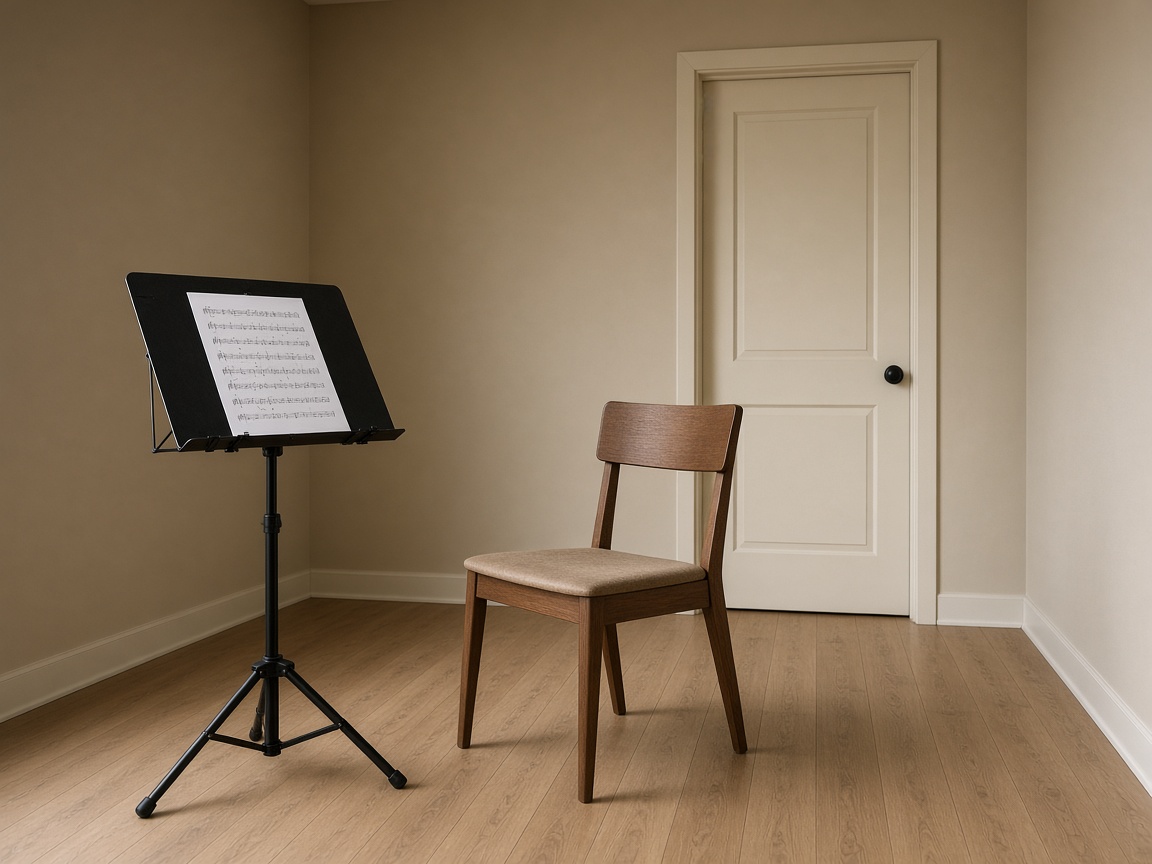
That chair can see the latch without a full twist. The stand is in use. The walk is still a walk. Copy the angle even if your stand is uglier than the photo.
Placement choices
| Setup | Pass | Fail | Renter move |
|---|---|---|---|
| Spare room with a door | Latch shuts while you play, house walk still works | Door stays open, spill into the hall | Close the door for the session, open it after |
| Living-room corner | Stand folds, sheets file, sofa path returns | Open tray overnight in the aisle | Fold and park against a side wall |
| Closet or cloffice | Door open while you play, shut after | Horn on hangers, hall pile | Latch closed after |
| Bedroom floor | Fold and store before sleep | Amp or stand at the foot of the bed | Move the kit to a living closet |
A listing "music nook" that is leftover metal in the guest walk fails checkout. In a shared house, your room is the practice room if you can shut that door.
If the "practice" is only listening from the sofa, use speaker placement. This URL is the player.
Should you close the door when you practice?
You close the door while you play so sound stays in that room, then you open it when the session is over so the rest of the house can walk. Headphones are the renter version after quiet hours. A closed door is courtesy and a visual off switch. It is not a soundproof studio.
- Sit the chair. Name the latch. If you cannot see it without a full twist, turn the seat.
- Shut the door for the session if the room has one. If it does not, you are in a living corner and the fold later has to be honest.
- Play at a volume the building already has in daytime. If someone in the next flat can name the piece through plaster, you are loud, not lucky.
- After the last bar, open the door so the room can air and the house can walk. A sealed box all afternoon is a stale room, not a shrine.
Folklore blogs like an always-open door because "music wants to flow." What we see is a concert in the hall and a stand that never leaves the aisle. Shut for the session. Restore after.
Quiet hours are the lease, not a flying-star hour. Headphones or a practice mute are the kit you already own. Do not tell a landlord the map requires new insulation.
A singing bowl is a short hand sound you put away. Keep it off this stand. It is not a treatment.
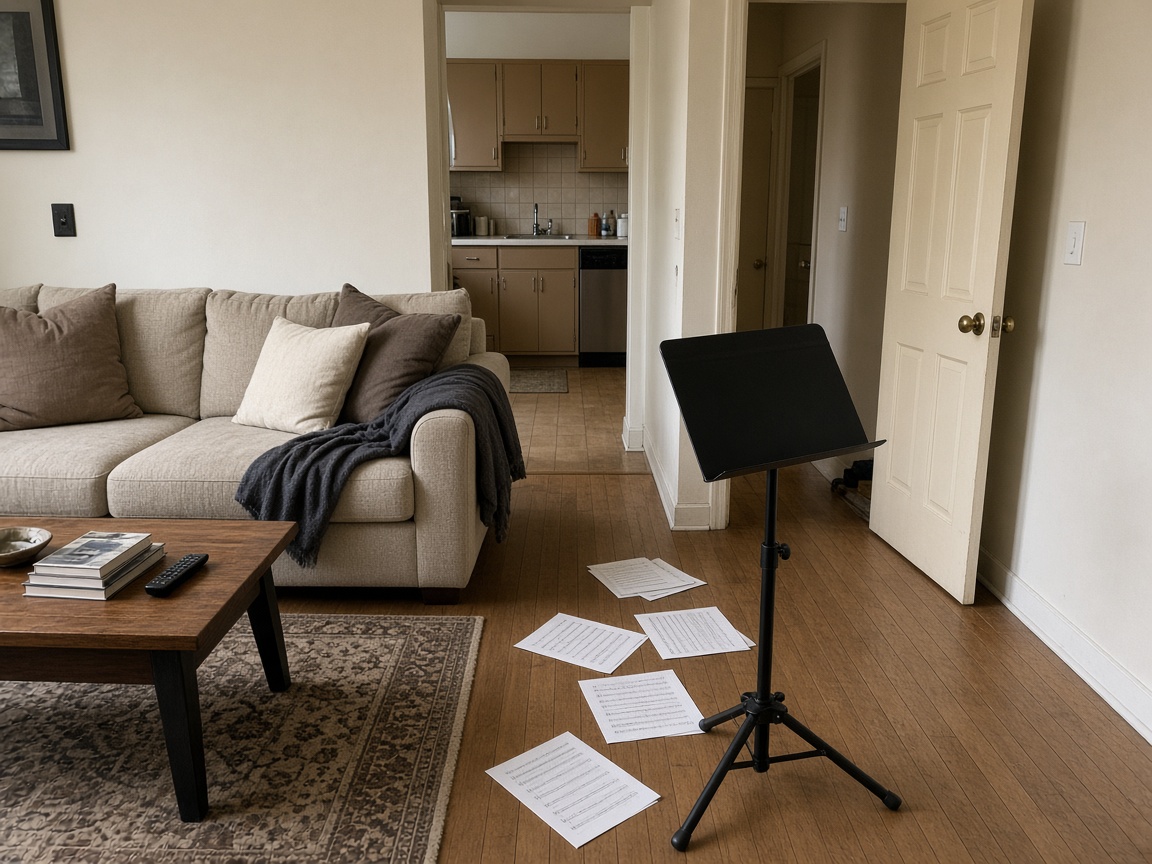
That aisle is the fail. The sofa still works. The stand does not. Fold it. Pick up the paper. The kitchen walk has to stay a walk.
What do you do with the music stand after practice?
Fold it. File the sheets. Park the metal against a side wall or in a closet, off the walk.
An open stand is architecture. It eats a hip line the same way an open piano lid eats an aisle. You walk to the fridge and you keep seeing a tray that says the room is still on. Close the tray. Collapse the legs. If the only "fold" is leaning it half-open in the doorway, that is still in the swing.
Sheets go in a folder or the book they came in. Loose pages on the floor are a trip. A clip on the tray is for the session, not storage.
Cables for a small amp or a keyboard follow the speaker rule. Run them along the baseboard with removable clips. Unplug after if the lead crosses the only path.
Cases belong closed, against a wall you already have. A gig bag in the front-door swing is hallway clutter. This page owns the stand you used.
A metronome that keeps ticking on the coffee table keeps the living room in rehearsal. Put it in the folder.
Can you practice in the bedroom?
Use the session if that is the only floor, then fold. Sleep still wins.
Lie on your back. If you can count an amp, a tray of sheets, or a keyboard without sitting up, the sleep room is still a stage. The gym article already banned iron at the foot of the bed. A stand there is the same visual: work in the pillow's view.
A small desk in the bedroom can hold a laptop by day and a folding stand in the closet if the closet actually shuts. An open X-stand on the duvet is a skip.
Unplug a warm amp. Let it cool off the pillow wall. If the building bans loud hours, the bedroom is the worst room to test the lease.
Glass that faces the mattress all night is a bedroom mirror job. Close the closet when you sleep.
In a studio, put the folded stand on the desk side, not beside the pillow. A curtain you already own can hide the closed kit. It cannot hide an open tripod.
Form School still wants a solid back for sleep and a walk you can do in the dark. Compass talk about a west bedroom will not make the stand disappear.
Do you need a creativity gua for music?
No.
Some Black Hat notes put children and creativity in the west or the middle-right of the plan from the door. Compass schools will point at a different wall. Popular studio blogs then tell you to fill that cell with white metal and unfinished scores so you become more original. A wall color does not learn the interval.
If you already picked one map for the home, you can sit the folded stand in that cell. You can also sit it where the spare-room door already is. The bagua map is how the grid is drawn. This page is whether the stand folds and the door shuts.
A lamp and a walk already keep a cell from going dark. An open stand in a labeled creativity square is still an open stand. Skip crystals on the tray and incense next to paper. Many buildings ban flame.
A coffee table as a music desk puts your back in the aisle. Use a chair you already have, with the latch in a glance. What to buy first is still nothing, then a lamp. A later calendar row owns a recording desk with a mic arm. This URL does not.
What this is not
It is not a diagnosis and not a talent spell. It will not treat anxiety or a slump. The health guide already drew that line. Layout only decides whether the house can sit.
It is not piano placement with nouns swapped. A heavy case and a lid are that article. It is not speaker placement if the sofa is doing the listening. It is not a hobby room if the object is glue or a puzzle, and not a home gym if bells live beside the stand. A portable keyboard you fold can live here.
It is not a soundproof studio or a promise that neighbors will stop hearing you because you mapped west. Courtesy hours and headphones are still the lease. Do not knock a wall out for a missing creativity square.
Tonight: fold the stand and close the door
Do this in order. Stop when the walk is a walk again, the stand is folded, and the spare-room door is a door you can shut.
- Stand at the door you use for practice. Name the stand. If you cannot, pick one corner and ignore the rest for tonight.
- Sit in the chair. Turn it until the latch is in a glance. Use the desk tool if you want the same three questions in writing.
- Shut that door for the session if it exists. If the building is in quiet hours, use headphones or skip the session.
- When you stop, take the sheets off the tray. File them. Fold the stand until the legs collapse. Park it against a side wall or in a closet.
- Unplug the amp. Coil the lead along the baseboard or into the case. Tuck the chair.
- Walk from the latch to the kitchen without sidestepping. If the bed can still see the kit, move the stand to a living closet.
- Photograph the corner and the door in FengShui Hero. Compare the flagged pile with the fold you just did.
If the photo still looks like a concert in the aisle, you are not done. The gua is not the problem. The tray is.
If you only do one thing, fold the stand and close the door. A spare room you shut is better. A living-room corner you restore is enough.