
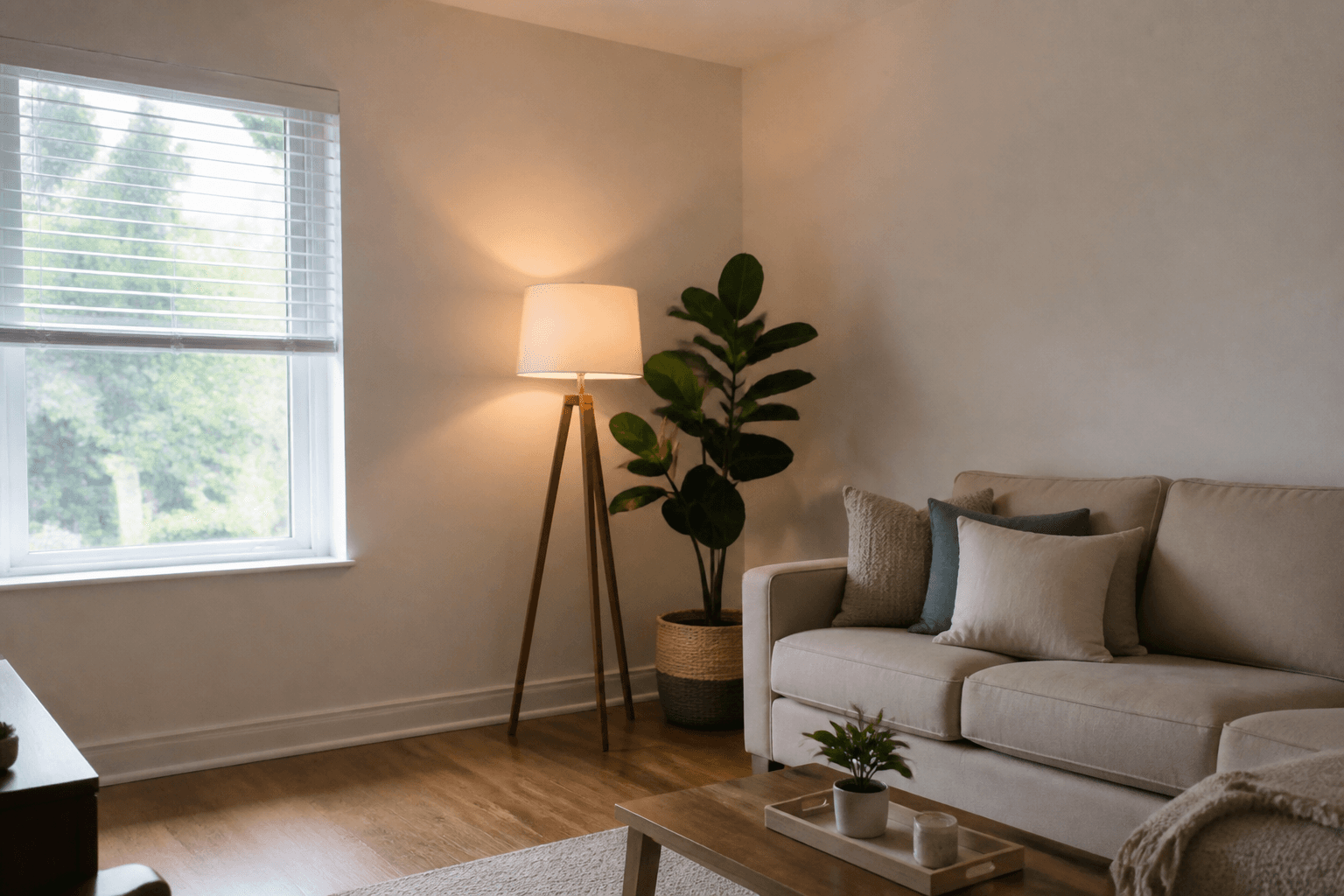
A Feng Shui missing bagua corner is a cell of a 3x3 overlay that sits outside the walls. You mark it on a door-based map or a compass map, not both. You add a lamp, a plant, or a mirror on the inner walls. You do not demolish, and you do not treat the gap as fate.
When we photograph L-shaped rentals, the inner elbow is usually a dump: vacuum, bags, a dead plant. People ask which crystal completes the wealth gua. We ask them to stand in that elbow at night. If it is a hole, the map is already loud. The bagua map page is how to draw the grid. The small apartment page is zones in one room. Renters is what you can reverse. This page is the missing cell: furniture and light, no builder.
What is a missing bagua corner?
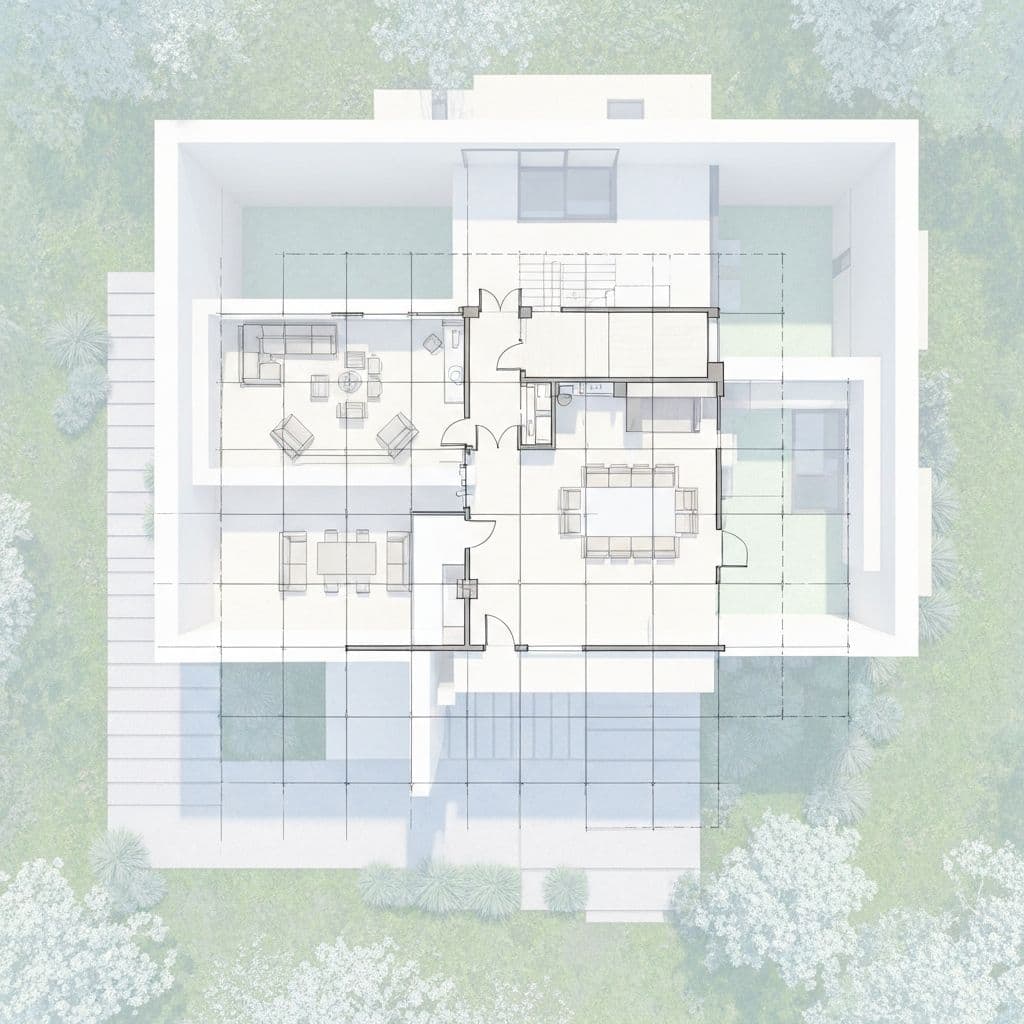
You are looking at a floor that is not a clean rectangle. An L, a bite out of one side, a diagonal wall. When you draw the smallest rectangle around the plan, part of that rectangle is air. Schools that overlay a 3x3 on the whole home call that air a missing gua.
Door-based (Black Hat) lines the bottom row on the wall that has the front door. Compass lines the grid on north. They will name different life areas for the same notch. Pick one overlay. Write which one on the sketch. Averaging them is how you buy two cures for two stories.
A small bump on the plan is often an extension: extra room, extra support in that school. A large void is the missing case. Rules of thumb like "more than half the wall" exist in popular books. Use your eyes. If the void is a balcony you already use, it may be extra outdoor room, not a hole. If the void is a neighbor's unit, it is a hole in your overlay, not a moral failing.
Form School still goes first. A clear walk and a bed that can sleep beat a perfect sticker on a missing cell.
How do you find it without a consultant?
Tape the lease plan to a table. Draw a box around the whole footprint. Sketch 3x3. Stand at the door you unlock and face in if you chose door-based. Or set north if you chose compass. Mark which square is outdoor void.
If the void is under a third of a side, some writers shrug. You can still light the inner walls. You do not owe a ritual.
Do this on one story at a time. A two-story house is a later article. Apartments are one rectangle (or one L) on one floor.
Inside cures that reverse
A lamp in the inner elbow so the cut is attended. A plant you will water, not a silk grave. A round table if the elbow is large enough to sit. These are furniture. They do not pour a slab.
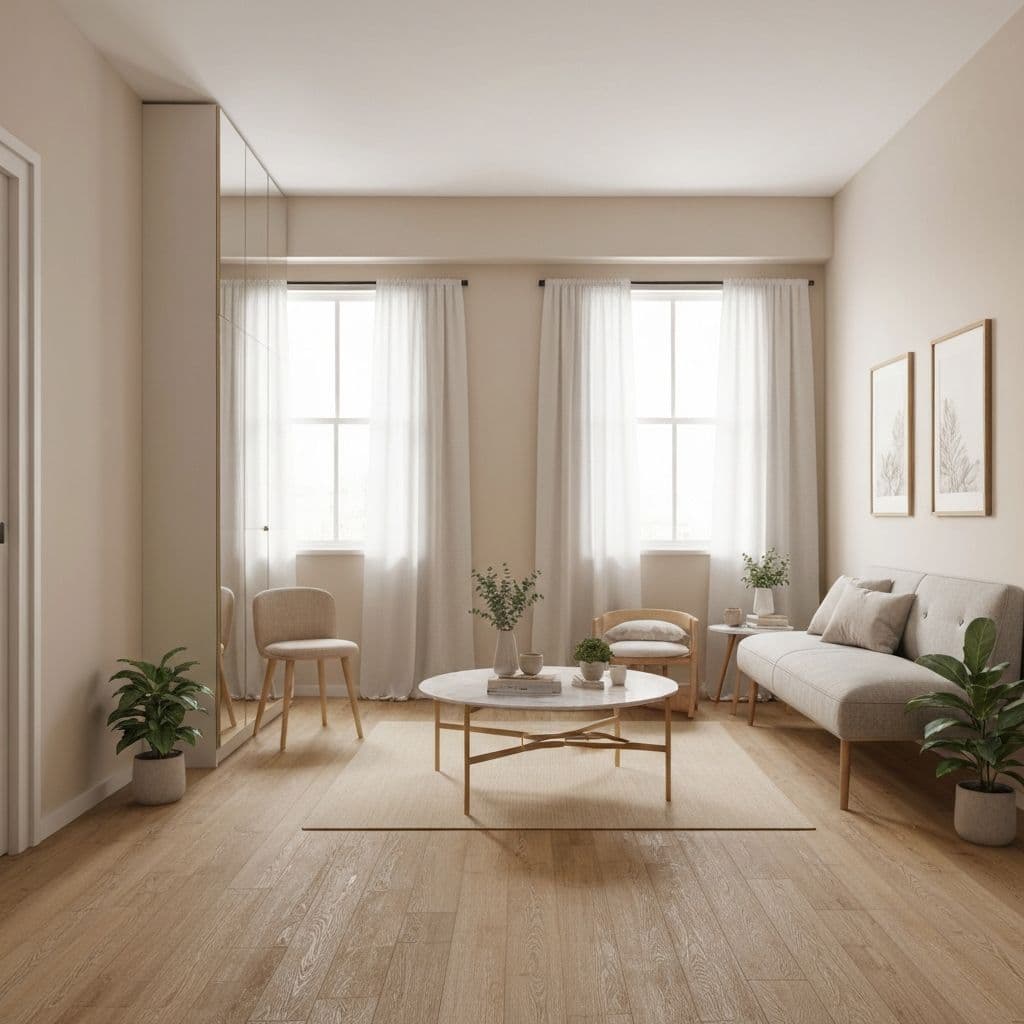
A mirror on the wall that faces the void can make the room read as complete. Honest limits: not the pillow, not the toilet, not a blast of street into the sofa. If the mirror only shows a pile, you doubled a pile.
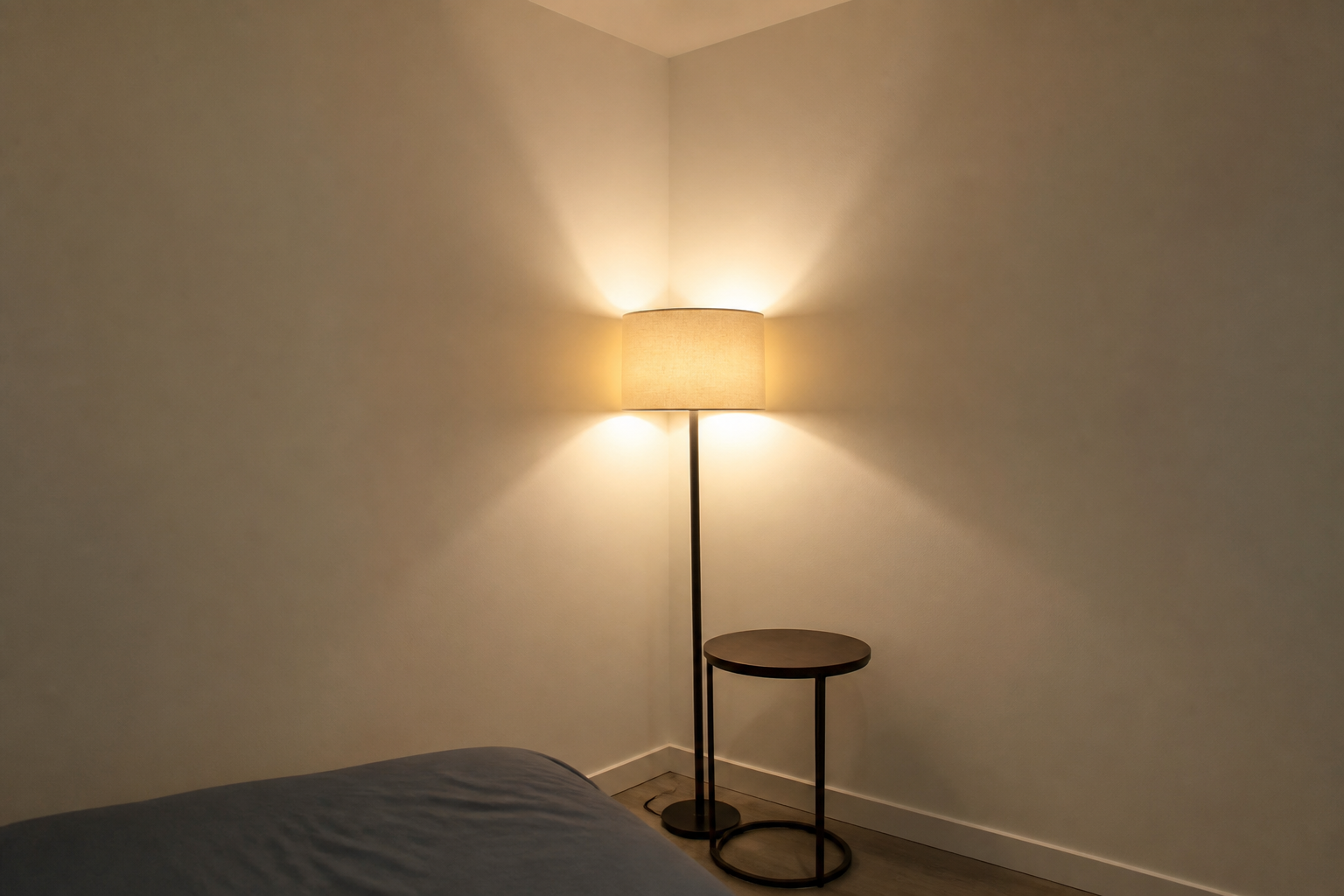
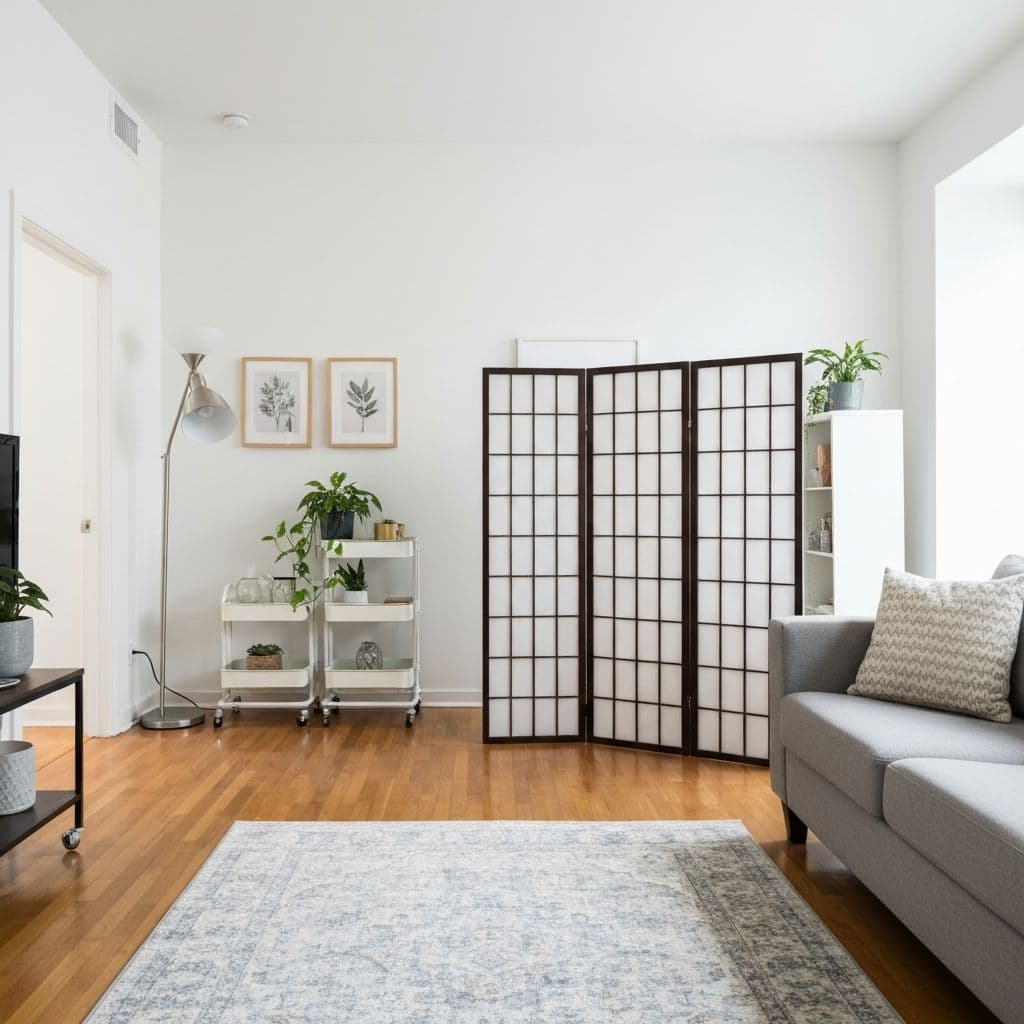
That lamp is the whole indoor cure for a renter. The walls still meet in an L. The elbow is no longer a dump. Copy this before you shop for a gua-colored plaque.
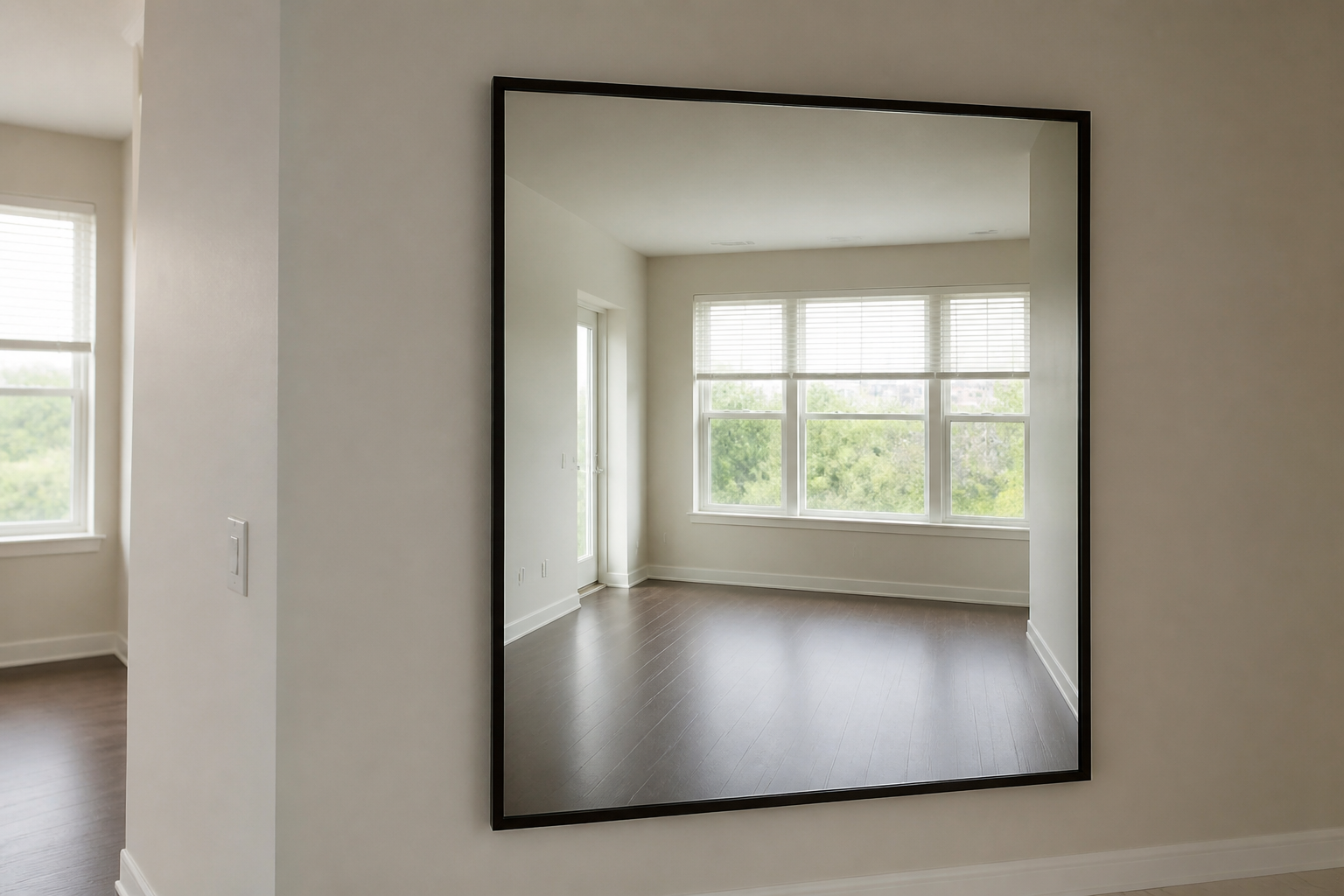
That glass is optional. It continues the room in the reflection. If you jump when you turn the corner, take it down. A lamp stays.
What about the yard version?
If you own a patch of outdoor void, a pot, a solar light, or a bench where the missing corner would have been is the popular exterior cure. Point light back at the house if you like that picture. Do not annex a neighbor's grass.
Renters with no yard skip this. A balcony can stand in if the missing cell is on that side and you already control the slab. Keep the balcony walk clear. A pot in the missing-corner story is still a pot you water.
Do not build a wall. Do not hang a bagua mirror aimed at a neighbor as a completion spell. That is a fight, not a grid.
How we check a missing cell on a real plan
We put the lease plan on the table and we draw the box. Then we walk the inner walls that face the outdoor void. If those walls are a dump, the map is loud even before we name a gua. If those walls are a window onto a balcony you use, the "missing" cell may already be a room you own. Call it outdoor space and keep the walk. Do not cure a balcony with a second plant shrine that blocks the slider.
Popular books use a half-wall or one-third rule to split extensions from missing cells. Use it as a sanity check, not as a court. A tiny notch for a meter box is not a life-area crisis. A whole missing third of the rectangle is worth a lamp.
Room-level bagua (a 3x3 on one room from that room's door) is how renters stop obsessing about a notch they cannot build. The bedroom still wants command. The wealth label on a whole-home missing cell does not override a bed in a doorway.
Lamp, mirror, outdoor object
| Cure | What it actually does | Skip when |
|---|---|---|
| Lamp in the inner elbow | Makes the cut usable at night | You will not change the bulb |
| Mirror on an inner wall | Makes the room read deeper | It faces the bed, the toilet, or a pile |
| Outdoor pot or light | Marks the phantom corner if you own the soil | Neighbor's yard, no access, a fire escape |
A bathroom that lands in a "missing" overlay is still a bathroom: lid, door, fan. It does not leak your paycheck through a notch in the plan. The toilet-lid folklore page is that argument. This page will not restack it.
If the geometric center of the dreamed rectangle falls outside the walls, some writers panic about tai chi. Keep the actual center of the home walkable. That is the floor you have. Do not build a round table in a courtyard you do not lease.
Stickers, plaques, and gua-colored washi tape are optional memory aids. They do not pour a slab. If they make you feel oriented, put them on a printout, not on landlord plaster.
If two schools in your household disagree, write both names on the sketch and then pick one for ninety days. Switching overlays every weekend is how you buy two mirrors for two stories. The furniture in the elbow can stay while you argue. The dump cannot.
A missing corner on a townhouse that is really a garage notch is often a car room, not a life-area hole. Keep the garage article for the car. Keep this page for the living overlay. Do not cure a parking pad with a crystal.
If the missing cell is on a wall you share with a stair void, light the landing you do own. You cannot complete a stairwell with a houseplant. Keep the stair clear. That is the staircase article if the dump is on the steps. A lamp on the living side of that wall is still allowed. Photograph both sides so you do not "cure" a void that is actually a legal fire path.
What this is not
A missing corner will not doom a marriage, a job, or a body. Map names are labels. If money is tight, the notch in the building is not the cause.
Skip demolition advice. Skip "complete the floor plan" as a builder brief unless you are actually extending and you have permits.
Skip a shop kit of nine stickers. Skip flying-star years on this page. If you hired a compass person, use their chart. This site will not invent one.
A simple evening checklist
Do this in order. Stop when the inner elbow is a place, not a dump.
- Sketch the plan. Pick door-based or compass. Mark the outdoor void.
- Stand in the inner walls that face that void. Name the pile.
- Add a lamp you own. Add a plant you will water or skip the plant.
- Optional mirror with the bed and toilet tests.
- If you have yard you control, one pot or light on the phantom corner.
- Photograph the elbow in FengShui Hero and compare the flagged pile with the lamp you added.
If you only do one thing tonight, put a lamp in the inner corner of the L and take the bags out. The gua name can wait until the sketch exists.