
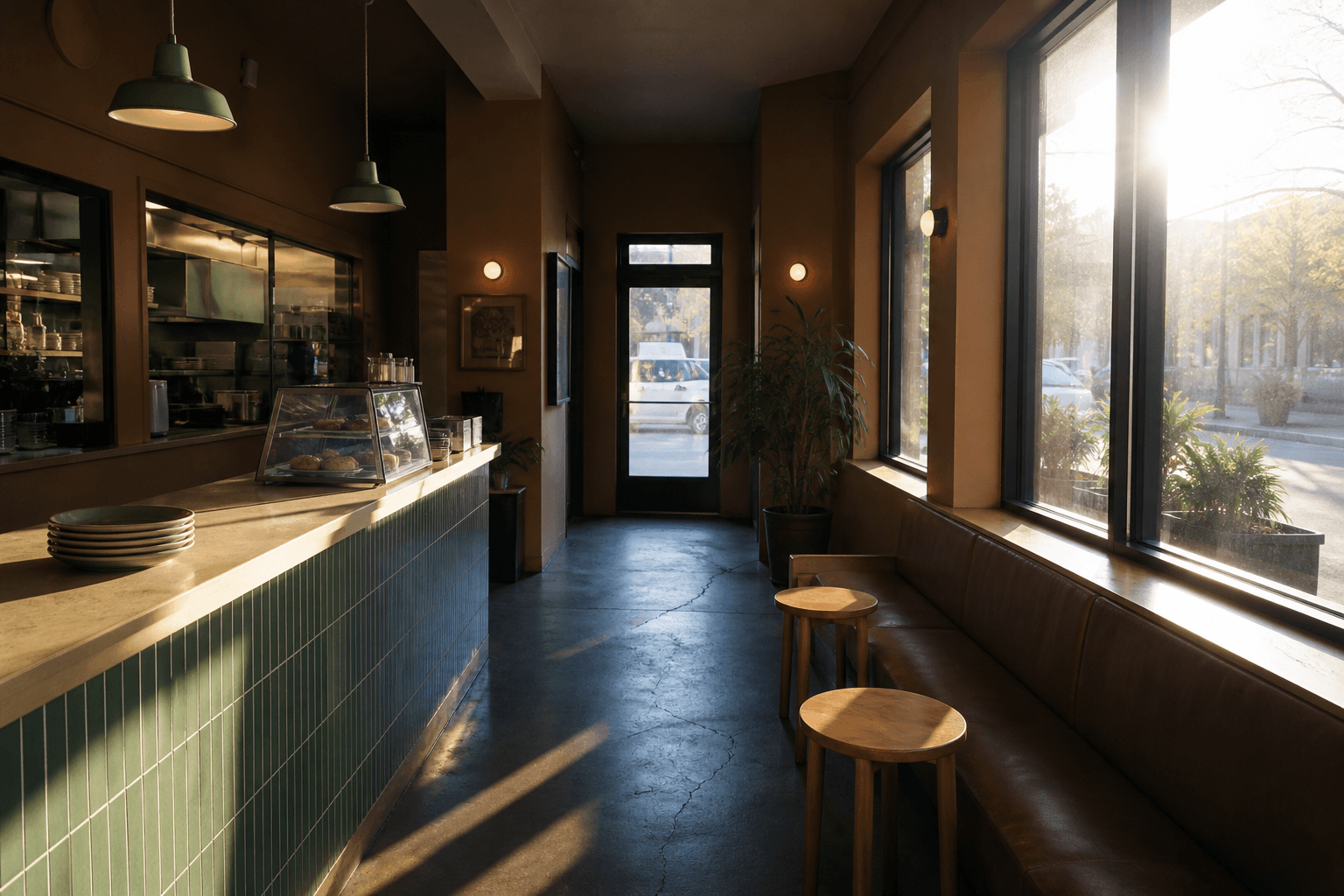
Feng Shui cafe window seats are the glass line in a leased shop: a banquette or stools at the window, glare that empties those seats before lunch, and a walk that still has to reach the pass. You move stools, add film or a sheer, and keep the fire aisle. You are not buying a gua that fills covers.
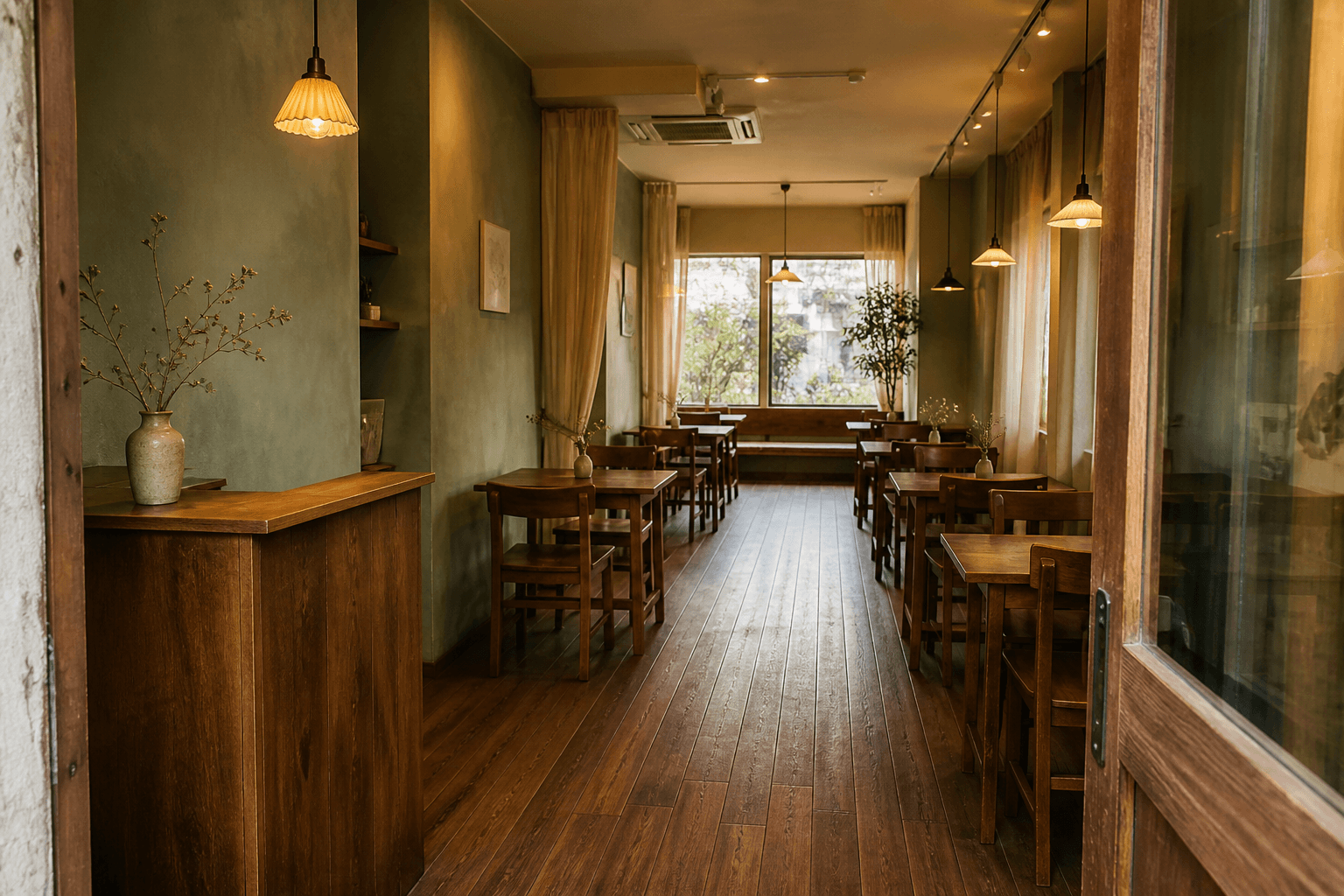
When we photograph leased cafes, the listing shot is a sunny banquette and the late-morning floor is empty wood stools with the sun in every face. People ask which bagua the window sits in. We sit down. If we cannot read a menu, the seat is a prop. The restaurant layout walk from door to pass already owns the host stand, the till, and the tray aisle through the middle. Stay on this page for the glass.
What is a cafe window line in Feng Shui?
It is the indoor edge of the street: glass, a sill, and whatever you put there to sit on. Form School cares about path and whether a room feels hugged or exposed. A shop window is that idea in public. You cannot curve a leased rectangle into a courtyard. You can stop treating the glass as overflow storage for extra stools and a plant that died in the heat.
Chi talk at the window usually means light and whether anyone can sit without squinting. A blocked aisle along the glass is stale because the queue and the cooks share one skinny strip. Neither needs tape on the tiles.
Strangers will not complain about sun in the soup. They take a darker two-top in the back, and the glass row photographs as busy while it sits empty. A bolted cafe banquette is not a home dining table shape argument about round versus rectangle for a family of four. You are deciding whether a guest can sit at hot glass without blocking the pass.
Should cafe window seats face the glass?
Most guests want the street. They also hate a surprise from behind and a face full of sun. Face the pane if the view is why they came, then give the body a slight angle so they can still see the floor. A seat that only stares at glare is a stage. A seat that only stares at a wall, back fully to the window, wastes the glass you pay rent for.
Command at a cafe table is the same idea as a desk: see who walks up if the room allows. Back fully to the room and you jump when a tray lands. Face fully into morning sun and you leave. A quarter turn is enough.
The first stool in the door's center shot through the glass puts a diner on display. Shift that seat a half-width along the wall so the door's center line is a walk, not a face. The restaurant-layout page already pulled the first interior table off the latch. Here the latch line is the pane.
Winter glass is a cold spine. Summer glass is a radiator. Pull loose seats off the pane by a hand's width if the floor allows. If the banquette is built in, use film and a throw you can wash, not a crowbar. High stools that aim knees into the aisle fail even when the view is good. Bags slide into the walk.
Sit in every window seat at the hour you sell breakfast or lunch. Bring a printed menu. If you squint, the guest will too. Note which seats fail. Do not film the whole wall because one stool baked.
Banquette or stools at the glass?
A banquette is calmer when it is already there and the depth still leaves a walk. You should still be able to wipe crumbs out of the crack. People slide toward the wall and stay. That can be fine for a long coffee. It is a problem when the pass needs that edge as an aisle, or when nobody can get out without a full row standing up.
Stools are the leased-shop tool. They move when the sun moves and they leave when a fire aisle is short. They fail when they never tuck, or when you add two more because the window looked sparse on a phone photo.
Stools at the glass have the same tuck test as island stools that must leave the cook a hip path. If the seat stays in the aisle, it fails, even if the street view is the best thing in the shop. Push them in when empty. A decorative stool that cannot hide is storage in the walk.
A booth you did not build is a wall. Do not saw the end for a weekend "chi" project. Soften the corner that hits hips with a felt pad, and keep the outer edge off the pass line.
| Seat at the glass | Glare and heat | Walk and pass | Renter move |
|---|---|---|---|
| Loose stools | Easy to pull out of the sun | Steal the aisle if they do not tuck | Move them, fewer of them |
| Built-in banquette | You cannot shift the box | Fixed depth, often the pass fight | Film, cushions, keep the outer edge honest |
| High two-top at the pane | Faces take the blast | Bags and knees in the walk | Lower seat or pull off the glass |
Empty extra stools along the sill "for abundance" are still empty stools. They photograph as a crowd you do not have. They also give the inspector something to count in a blocked exit.
How do you cut glare at the window line?
Sit in the seat at the hour the sun hits. If you cannot read a menu, change the light or move the stool. A crystal on the sill will not dim the pane.
Morning sun on empty wood is the usual photo we take: bright glass, nobody sitting, the pass glowing so cooks squint too. Guests walk past that row and sit in the dim corner. Staff call the window "bad energy." It is a lighting problem.
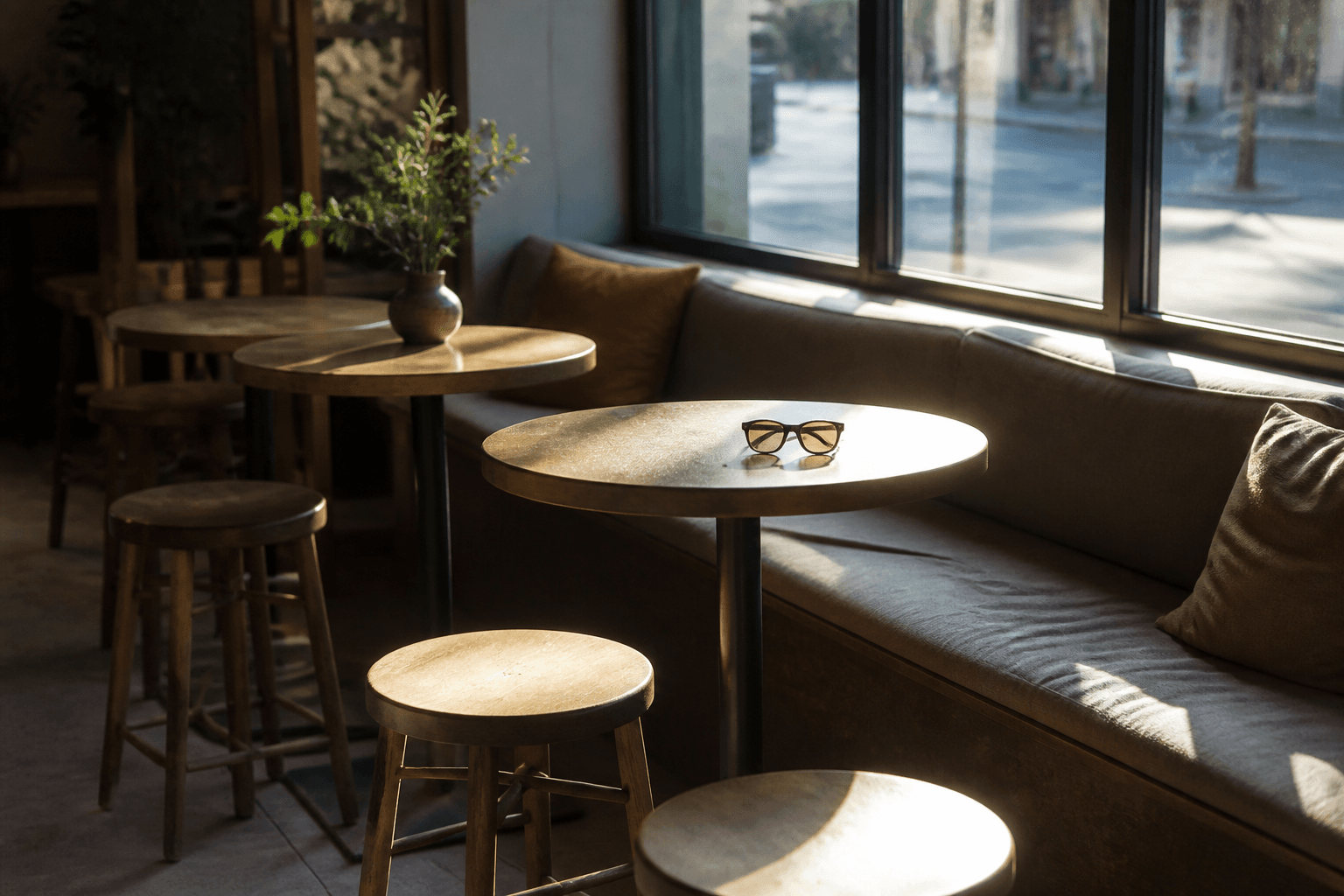
Those stools are a listing prop until someone can read a menu there. Film or a sheer is the fix.
Removable static-cling film is the renter default if the lease allows it. It cuts the blast and still shows the street. Ask in writing if the landlord is picky about glass. Peel it at lockup. Do not etch or paint a "lucky" mural on a pane you do not own.
A sheer on a tension rod is the other kit you can take down. Draw it for the harsh hour and open it when the sun moves. Wash it. Closed roller blinds all service turn the window into a cave.
Plants on the sill look kind and then cook. A hedge of pots that blocks the street also blocks the reason people sat there. Skip silk if you will not wipe grease off it. Dim a neon OPEN sign if it blasts the first seat, or move it. Clip-on lamps pointed down at the table help when a deep shop goes dark. Do not put a fountain on the sill. Water in a traffic path is a slip. Light the seat so a person can sit.
Where should the pass sit versus the window seats?
The window row and the pass often fight over the same strip of floor. Cooks need a lip they can plate at and a glance at who walks up. Guests at the glass need somewhere to put a bag that is not the cooks' hips. If those two jobs share one shoulder-width, both fail.
Keep a tray-wide aisle between the pass opening and the first stool or the banquette's outer edge. Fire-code aisles beat bagua. If the inspector wants that strip clear, the inspector wins. Do not park extra window seats in an exit path and call it a wealth corner.
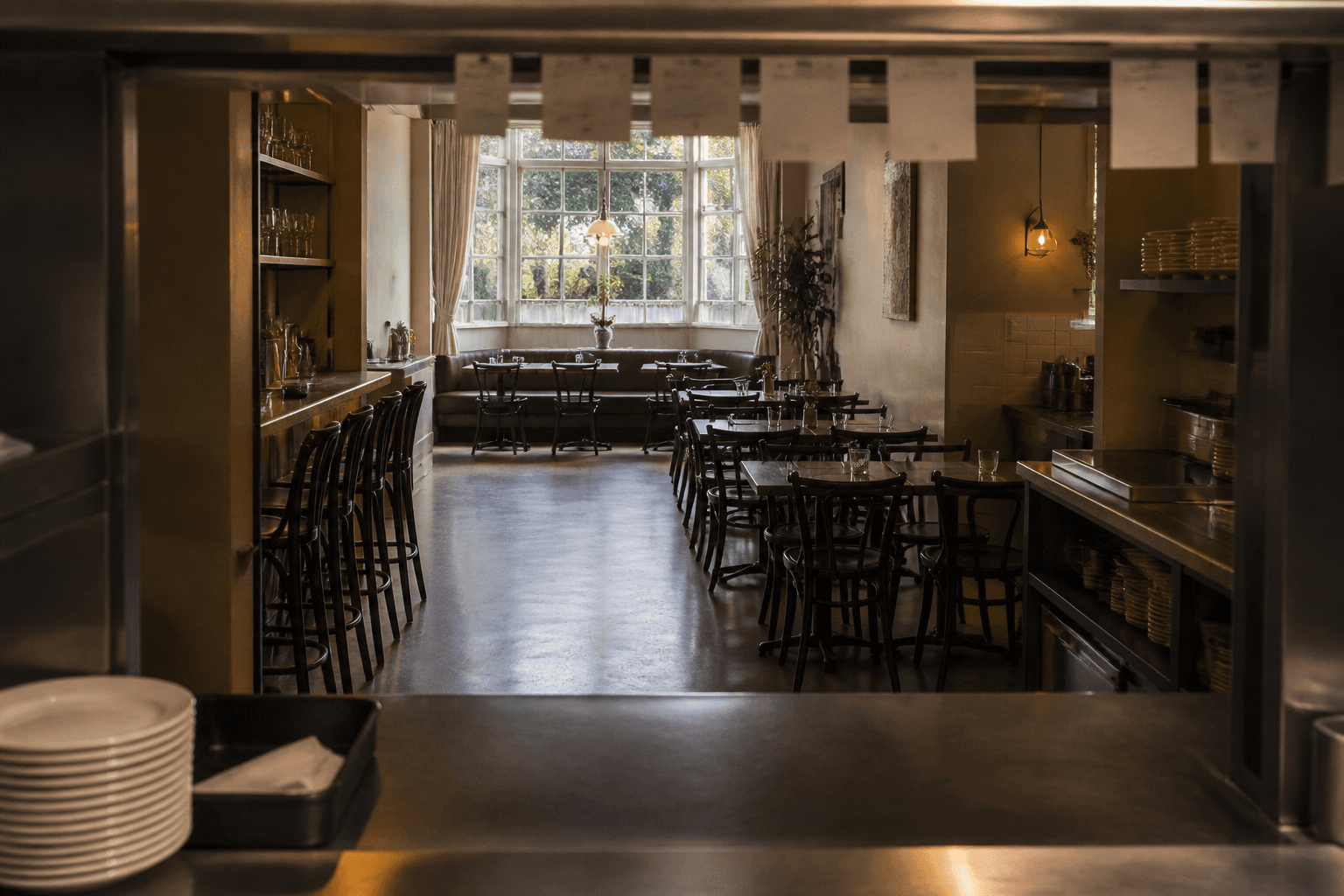
That opening still sees an approach. The window seats stop short of the lip. The hood stays put. You are looking at a walk, not a compass overlay.
If the pass looks straight into bright glass, cooks cannot read faces or tickets. Backlight turns guests into silhouettes. Angle the body a quarter when you plate. Wipe stainless or a small mirror that shows the opening if the line is wall-facing. Do not take the hood down so the window "connects," and do not shift a drain because a blog wanted the pass in a friendlier gua.
Stacked hotel pans on the pass, plus a window row that starts at the lip, is a closed mouth with a bruise attached. Keep the lip clear. Do not use the banquette as the dirty-plate shelf all afternoon.
A window wall is a hard place for the pass because heat and glare hit the rail. Many shops cannot move it, so you manage seats, not masonry. Pull the glass row back and film the pane that blinds the line. If till glow hits the window at night, dim the screen. Host stand and till rotation stay on the restaurant-layout article. This page only cares when the glass seats eat that system.
What can a leased cafe change without a contractor?
Loose stools, cushions, static-cling film, a tension-rod sheer, plug-in lamps, a plant in a saucer that still leaves the walk. That is the kit. If you cannot restore it, do not install it.
Skip unbolting a banquette, painting the pane, or moving a hood so the window seats "align." Skip bagua tape on the floor that a mop will eat, and skip a fountain under the sill.
Write down what you moved. The next lockup you will remember that "characterful window seating" meant empty stools in the sun and a cook who could not see.
If you share the shop with a morning bakery and an evening service, agree which window furniture is daily. A row of upturned stools along the glass at open is a closed mouth to the street. Stack them on a side wall, not in the exit.
A simple evening checklist
Do this in order. Stop when a guest can sit at the glass without squinting and a cook can still walk the pass.
- Sit in each window seat at the hour the sun hits your service. Hold a menu. Mark the seats that fail.
- Move loose stools out of the blast and out of the pass lip. Tuck them when empty. Remove extras that only exist for the photo.
- If the banquette is loose enough to shift a hand's width off the glass, shift it. If it is built in, leave the box and work with cushions.
- Add removable film or a sheer on a tension rod for the harsh hour. Open or peel back when the sun moves. Wash the cloth.
- Restore a tray-wide fire aisle between the pass and the window row. If code wants it clear, it stays clear.
- Walk from the street door along the glass with a tray. If you turn sideways, you still have storage, not seating.
- Photograph from the street door looking at the window line in FengShui Hero, then compare the flagged opening with the aisle you just cleared.
What this is not
This is not a covers spell. Window seats in a "wealth" gua will not book the lunch rush. A crystal in the sun will not dim the glass.
This is not the full restaurant layout article. It is not a home dining table clone either. Host stand, till, restroom path, and the middle table walk stay on the layout page. Round versus rectangle for a family meal is a different job. This page is glare, banquette versus stools at the pane, and how that line fights the pass.
This is not demolition. Leave the hood, the wet wall, and the bolted booth. Furniture, film, a sheer, and an aisle you can put back are the work. Skip mystic grids on the window. Seat the people who showed up.
If you only do one thing tonight, stand at the street door and photograph the glass line in FengShui Hero. Then sit in the brightest stool with a menu. If you cannot read it, move that stool or hang the sheer before you open tomorrow.