
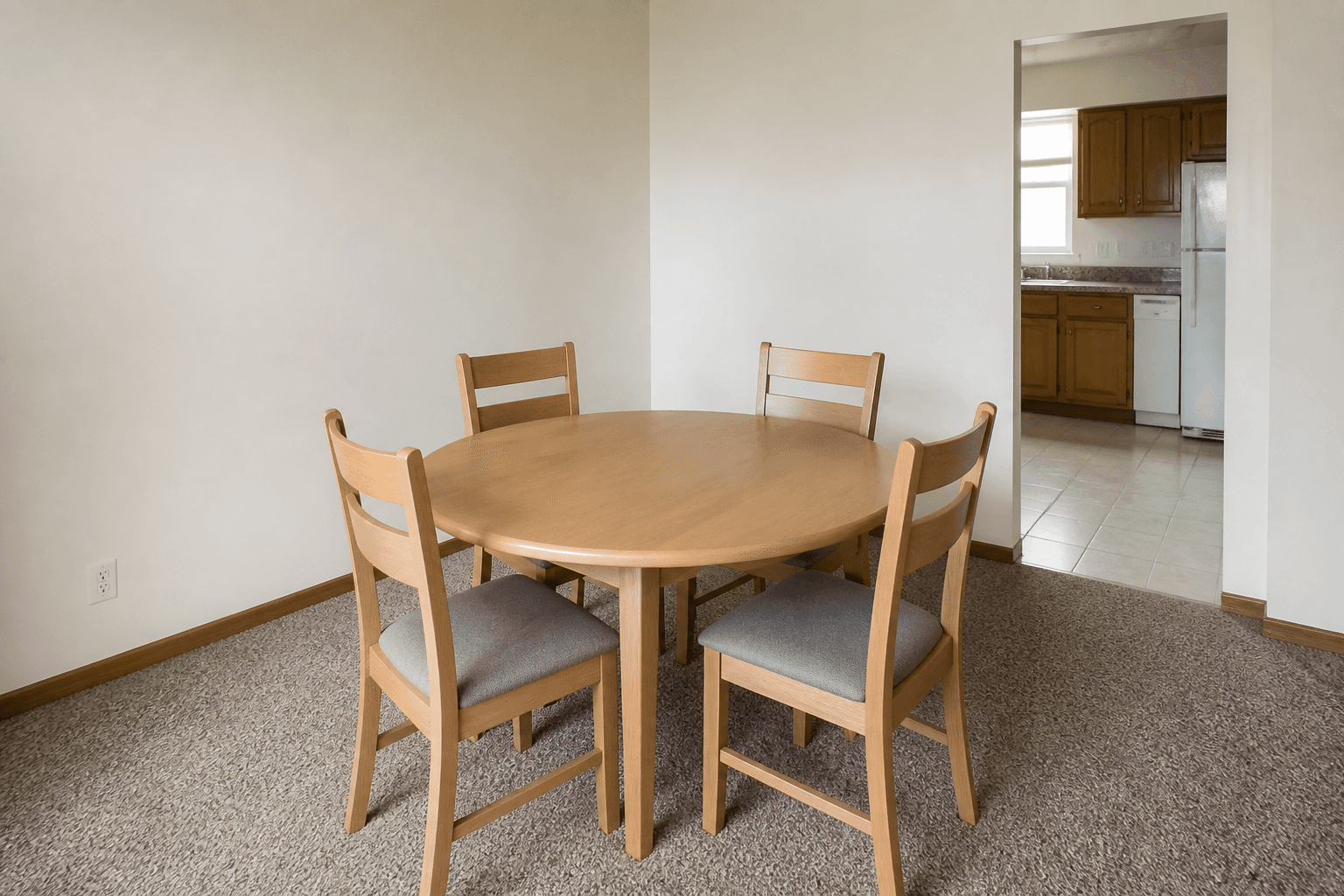
Feng Shui dining table shape is the plan of the top: round or oval for even talk, a rectangle when the room is long. You leave a walk behind the chairs and you soften corners that hit hips. You do not pick a shape to mint money.
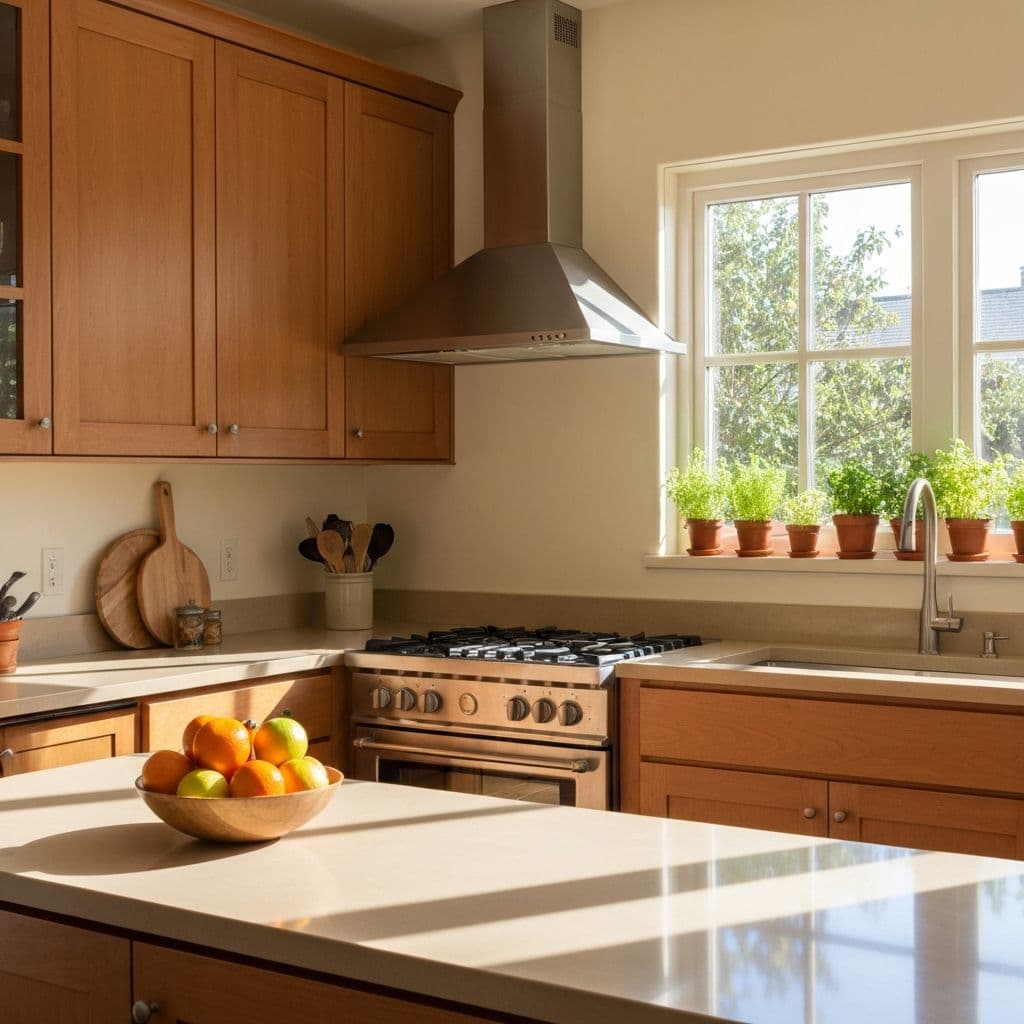
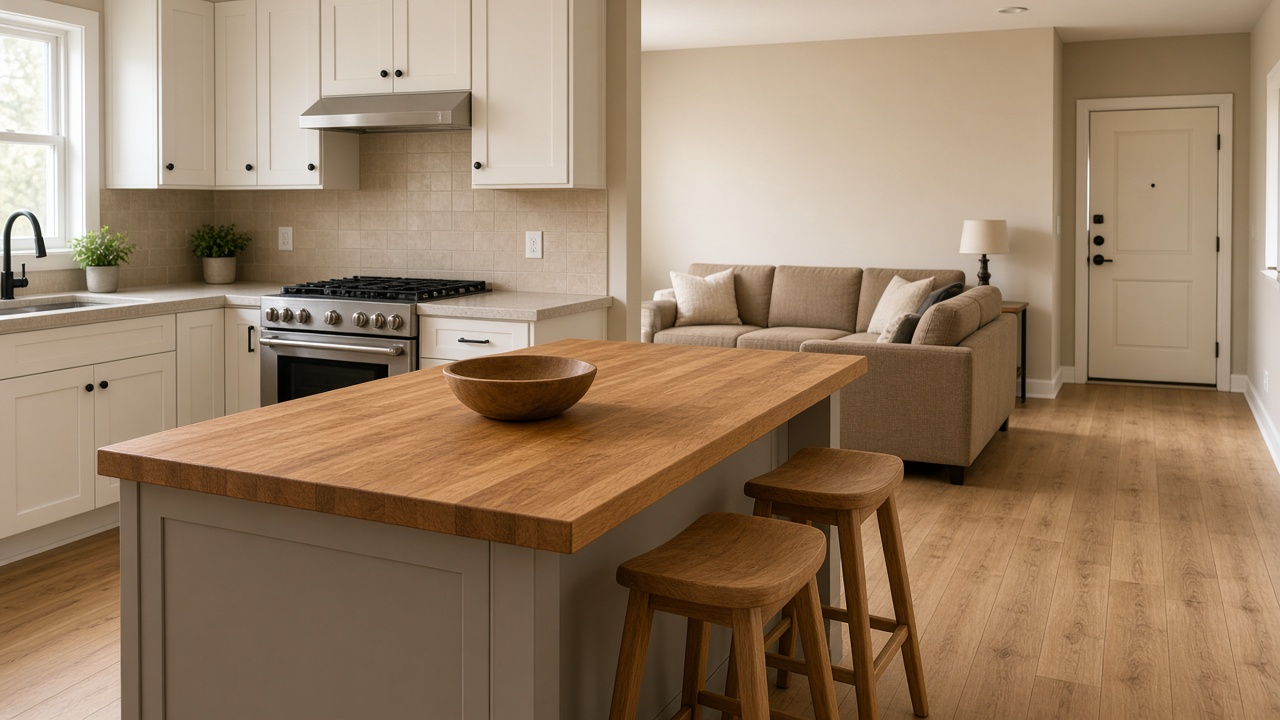
When we photograph eat-in kitchens, the table is often a rectangle that was free, shoved into a square alcove so two chairs never pull out. People ask whether round wood will make the family kinder. We ask them to walk behind a seated person. If they have to turn sideways, the shape debate is a shop trip. The dining room guide is seats, the TV, and the door line. This page is only the top: round versus rectangle, and what a renter can do with the table they already have.
What does table shape actually change?
You are deciding how people sit relative to each other and relative to the room. A round top has no head of the table. Elbows share a curve. A rectangle has two long sides and two short ends. Someone sits at an end. That is furniture. Popular posts call the end a power seat and the corners poison arrows. Treat the power talk as optional poetry. A corner in a hip is a real bruise.
This is narrower than kitchen layout. The stove and the sink still need a cook who can work. The table should not sit in the fridge door. Shape will not fix a work triangle.
A square of four is a rectangle with equal sides. It behaves like a small round in talk and like a rectangle in corners. Fine in a tiny room. A boat-shaped oval is the compromise for a long room that still wants a softer edge.
Start from meals. If the table is a laptop dump, shape will not save dinner. Clear it. Then measure.
Is round always better than rectangle?
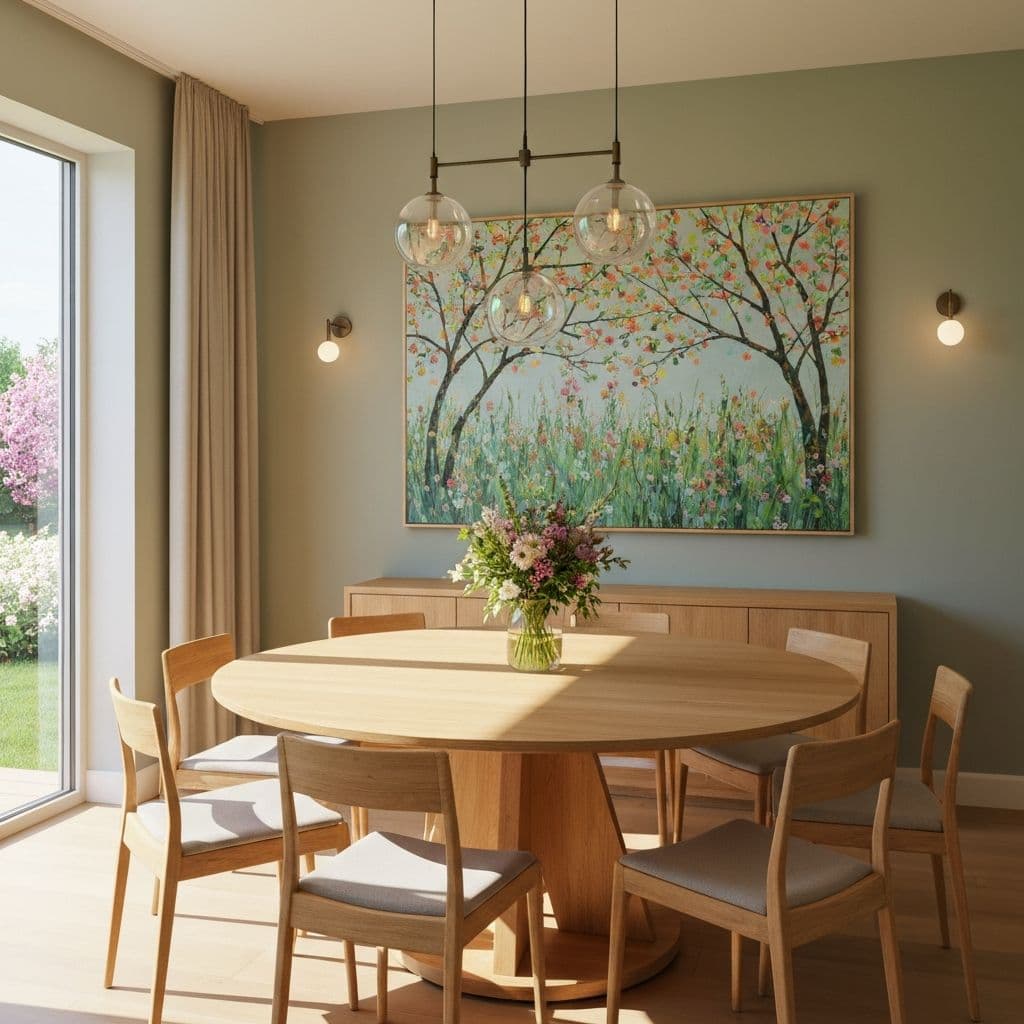
Round is easier when four people eat most nights and the alcove is close to a square. You can talk across. You are not aiming a corner at a child's ribs. A pedestal base helps feet. A four-leg round still works if the legs are not where knees go.
Round fails when the room is a galley. A big circle in a narrow strip eats the walk on both sides. Then a rectangle or an oval aligned with the long wall is the honest table. Hosts who need a leaf should not buy a 120 cm round and then eat on the sofa at Christmas.
Rectangle is what most rentals already own. Keep it if the chairs pull out and the walk behind the sitters is a person wide. Soften if the corners catch people: a thick cloth, a felt pad, or a round placemat that hangs over the corner during meals. You do not owe the landlord a saw.
Glass tops show the shoe pile. Wood hides it. If the glass stays, the floor has to stay empty. That is housekeeping, not a five-element crisis.
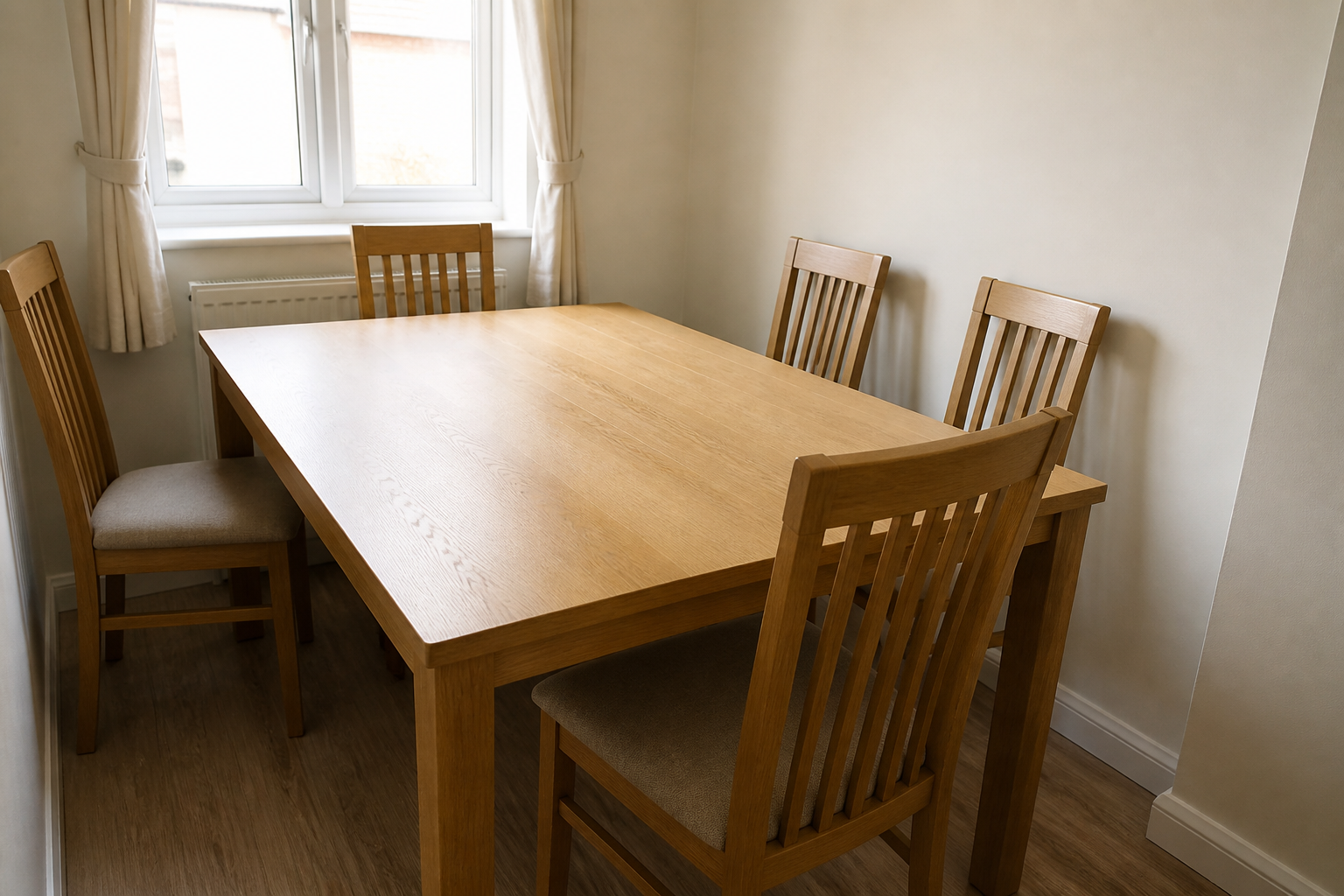
That rectangle is too big for the room. The chairs have nowhere to go. Do not blame the shape first. Measure the pulled-out seats. If the room is actually long enough, keep the rectangle and free the walk.
How do families pick without a luck story?
Count the people who eat here most weeks, not the people you wish would visit. Add one spare chair only if it has a wall to live against. An empty sixth chair in a studio is a trip.
Even numbers are a magazine preference. Three people can eat at a round four-top. Odd counts do not curse the meal.
If two adults want a clear "head" for homework papers at one end, a rectangle already has that end. A round table makes homework a shared pile. Choose the fight you actually have.
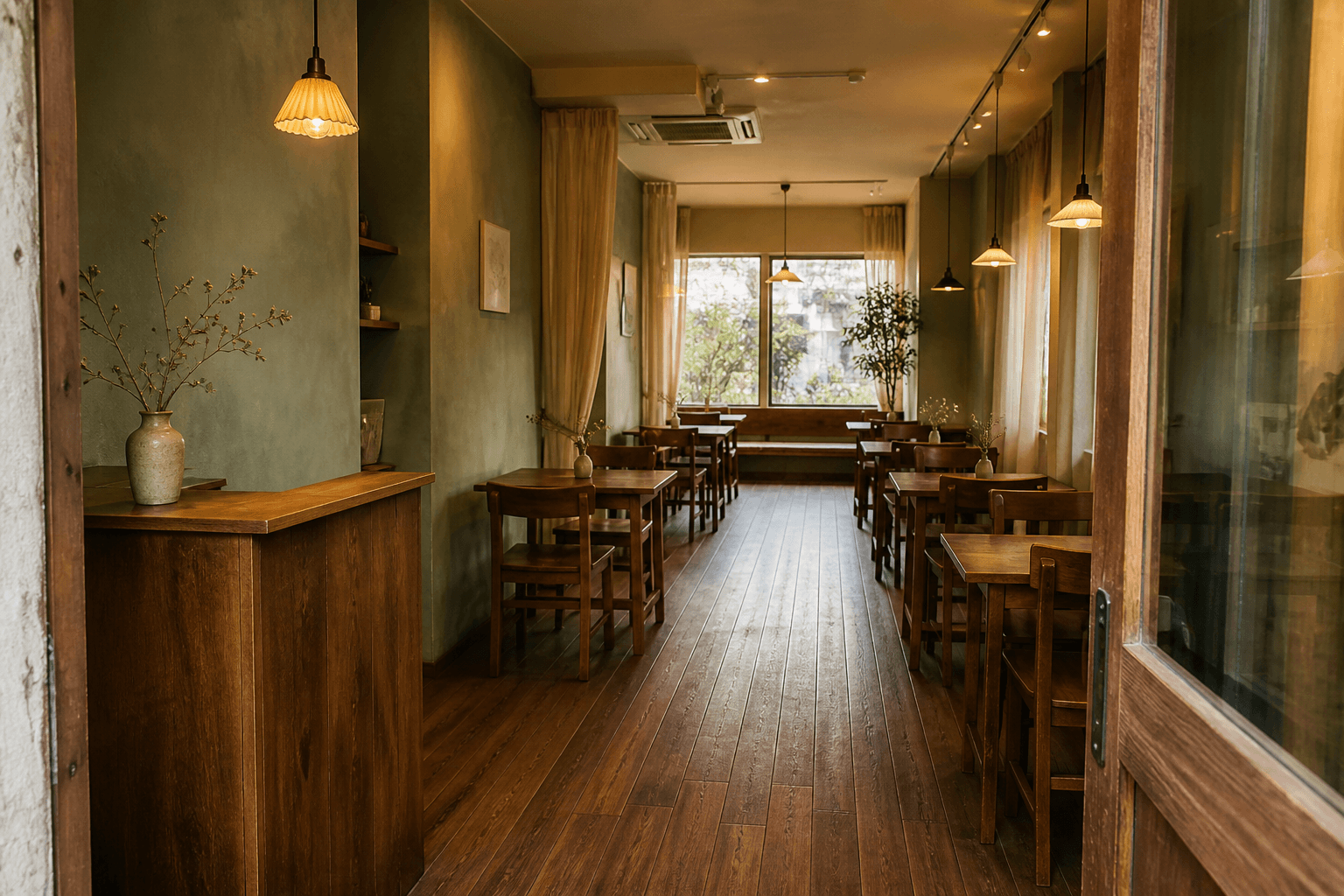
A restaurant or cafe pass is a different job. Sightlines and the walk between tables live in the restaurant layout guide. Do not put a family round table in a leased dining room because a blog said unity. Put the table where covers can sit and staff can pass.
The walk and corner test
Do this before you order a replacement.
- Seat the usual number of people, or use bags as stand-ins.
- Walk behind each chair. If you turn sideways, the table is too wide or too close to the wall.
- Run a hand along each corner at hip height. If you would bruise, mark that corner.
- Open the kitchen door or fridge. If it hits a chair, mark the placement, not the destiny shape.
Write which failed. Shape shopping is only for a fail you cannot fix by sliding the table.
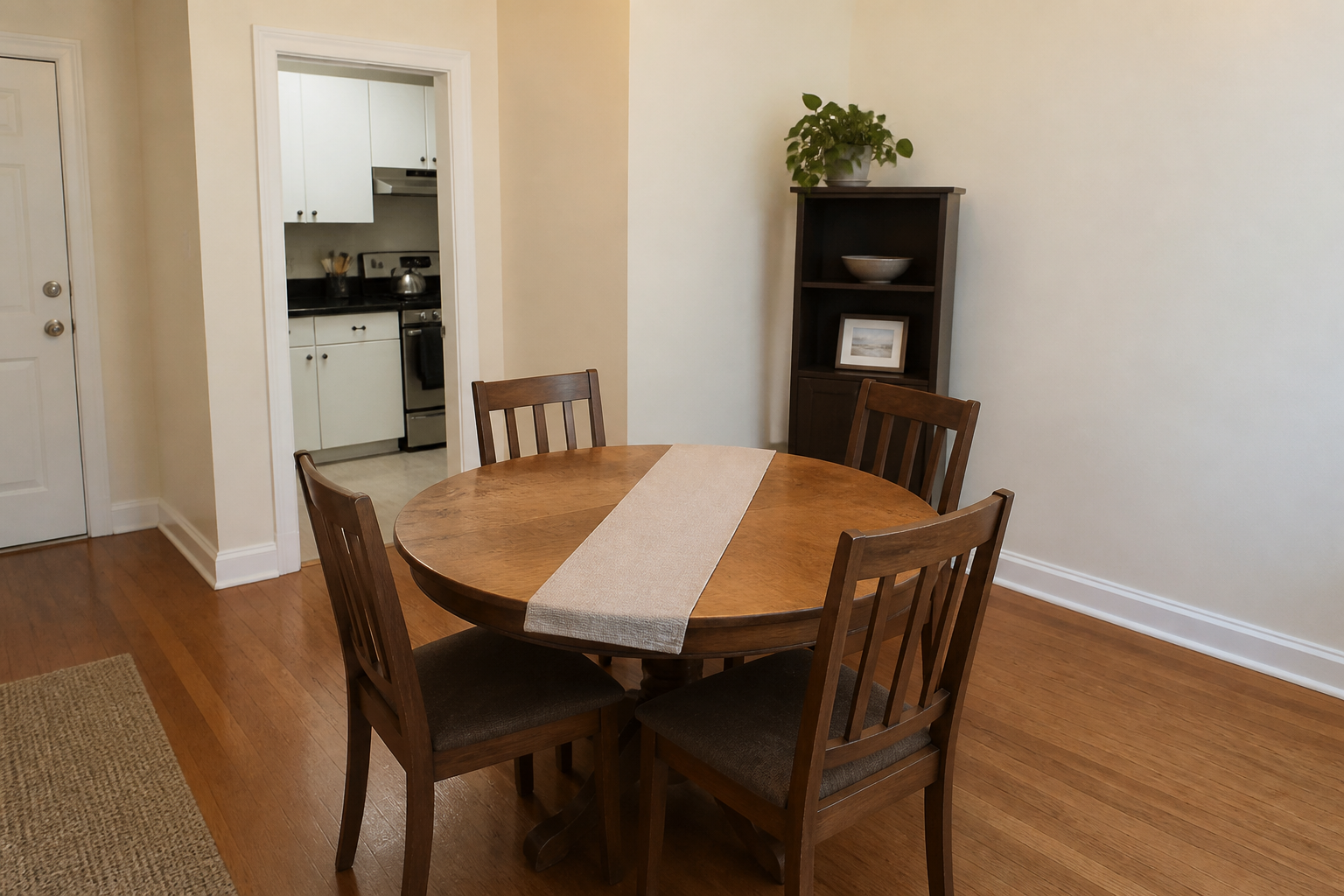
That round top is doing the talk job in a room that can take a circle. Keep the walk. A cloth is optional. The kitchen doorway staying in view is useful so the cook is not surprised. It is not a wealth spell.
What if the table is in the inventory?
Do not cut corners off a landlord rectangle. Use a runner that visually breaks the long edges. Pull two chairs to a wall between meals if the room is a hallway. Eat at the end that sees the room, not with backs in the door.
If you own the table and hate the corners, a round top swap is rare and expensive. A cheaper test is a heavy cloth to the floor for a month. If you still bruise, then shop.
Extendable rectangles are allowed. Close the leaf when you do not need it. A permanent extra meter of table in a small room is the same fail as a too-big round.
How we check a table in a real eat-in kitchen
We photograph from the kitchen opening, then we sit. If the first frame is a laptop farm, shape is not the conversation yet. If two chairs are permanently parked in the fridge door, placement is the conversation. Only then do we look at corners and whether a round top would even fit.
An eat-in galley with a drop-leaf already has a shape strategy: small most nights, larger when people visit. That is more honest than a forever round that blocks the cook. A booth bolted to a wall is a rectangle with a bench. You cannot walk behind the bench. Leave the aisle that remains. Do not add a fourth chair in the only gap.
Oval tops are the long-room compromise. You keep length for a leaf household and you lose the sharpest corners. Measure the widest point. An oval that is as wide as a failed rectangle still fails the walk.
Square tables of four work in a tiny room the way a small round does. Corners still exist. A thick cloth on two corners that face a hallway is enough.
Glass versus wood is housekeeping. Glass shows the basket of toys under the table. Wood hides it. If children eat here, you will still wipe either top. Pick the one you already own unless the glass is a daily fight with crumbs in the seams.
Home table versus a cafe
A family table is talk and homework and a walk. A cafe table is covers and a pass. The restaurant article is sightlines for staff. Do not shrink a family rectangle to a bistro two-top because a blog said intimacy. If five people eat, they need five seats that pull out.
Lucky numbers of chairs are folklore. Empty seats that trip you are furniture. Store the sixth chair in a bedroom if the dining leg is a squeeze, and bring it back when you need it.
If the table is also the desk, the remote-work flip still applies: screens off before plates. Shape will not save a dual-monitor centerpiece. Clear it, then judge the top.
A renter with an inventory rectangle can still run the walk test every season. Holiday leaves go on, then come off. A permanent extra meter in January is how the room stays a storage unit.
What this is not
Table shape will not rank the children, repair a marriage, or double food in a mirror. A lucky number of sides is folklore.
Skip medical claims about digestion from round wood. Skip income claims from an oval. If meals are a health topic, that is a clinician's job. This page is a top, chairs, and a walk.
Skip buying a new table because a color blog said wood is growth. If the current top works, keep it.
A simple evening checklist
Do this in order. Stop when people can sit and you can walk.
- Clear the table of laptops and post.
- Seat the usual household. Walk behind each chair.
- Mark corners that hit hips. Add a cloth or slide the table.
- If the room is square and chairs fail on a rectangle, measure a round that still leaves the walk.
- If the room is long, keep the rectangle or try an oval. Do not force a circle.
- Photograph from the kitchen door in FengShui Hero and compare the flagged pile with the walk you just tested.
If you only do one thing tonight, pull the chairs out and walk the loop. If you cannot complete it, the next purchase is a smaller top or a different placement, not a luckier species of timber.