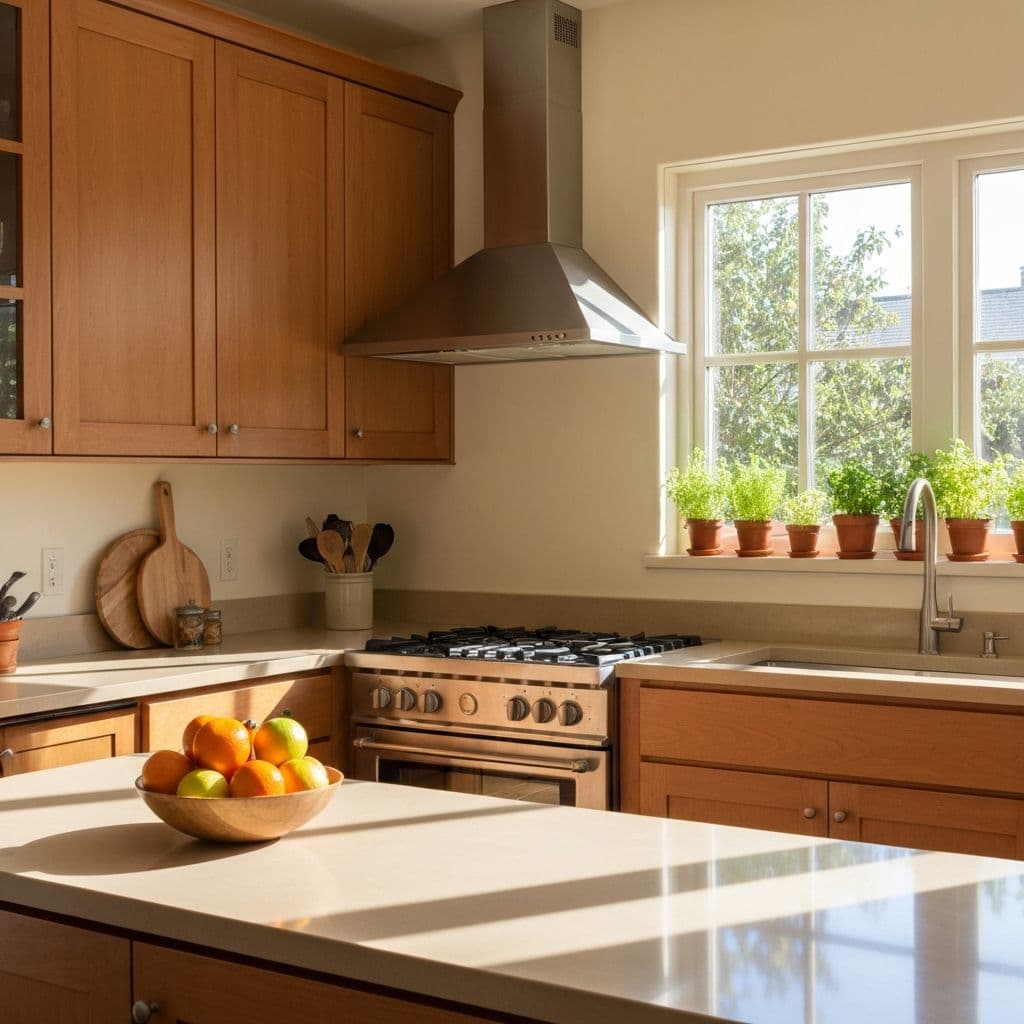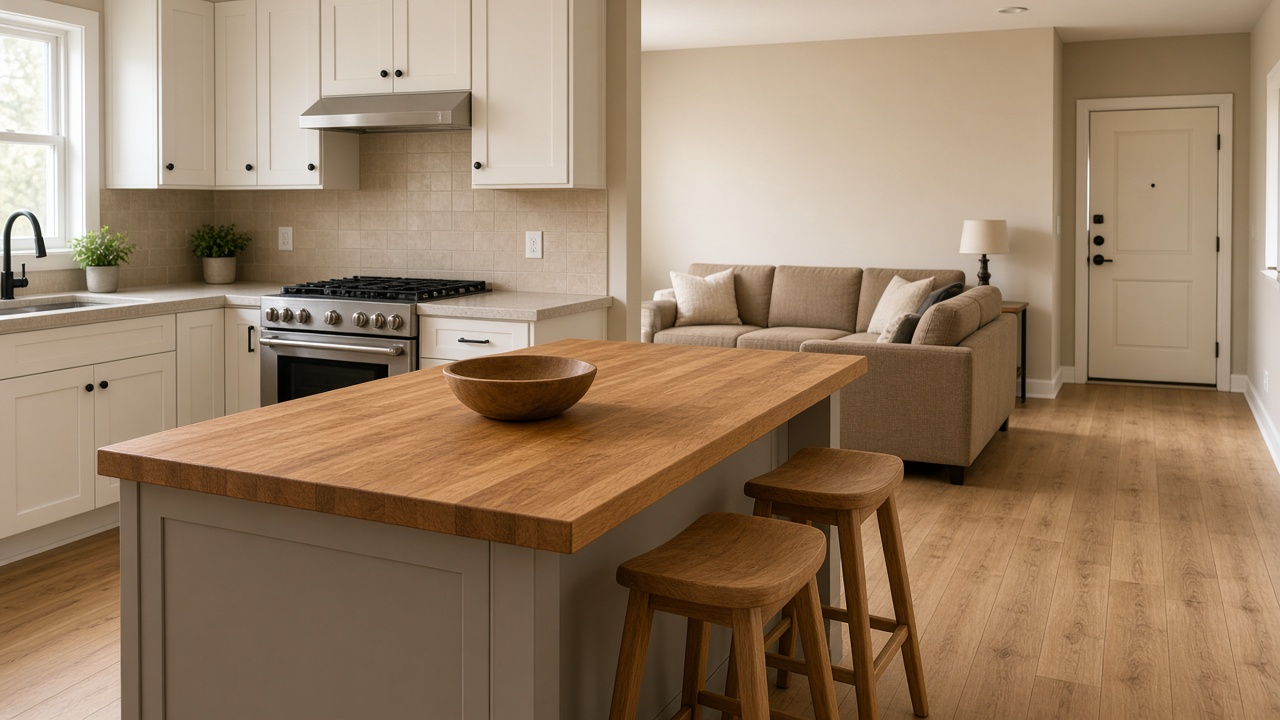

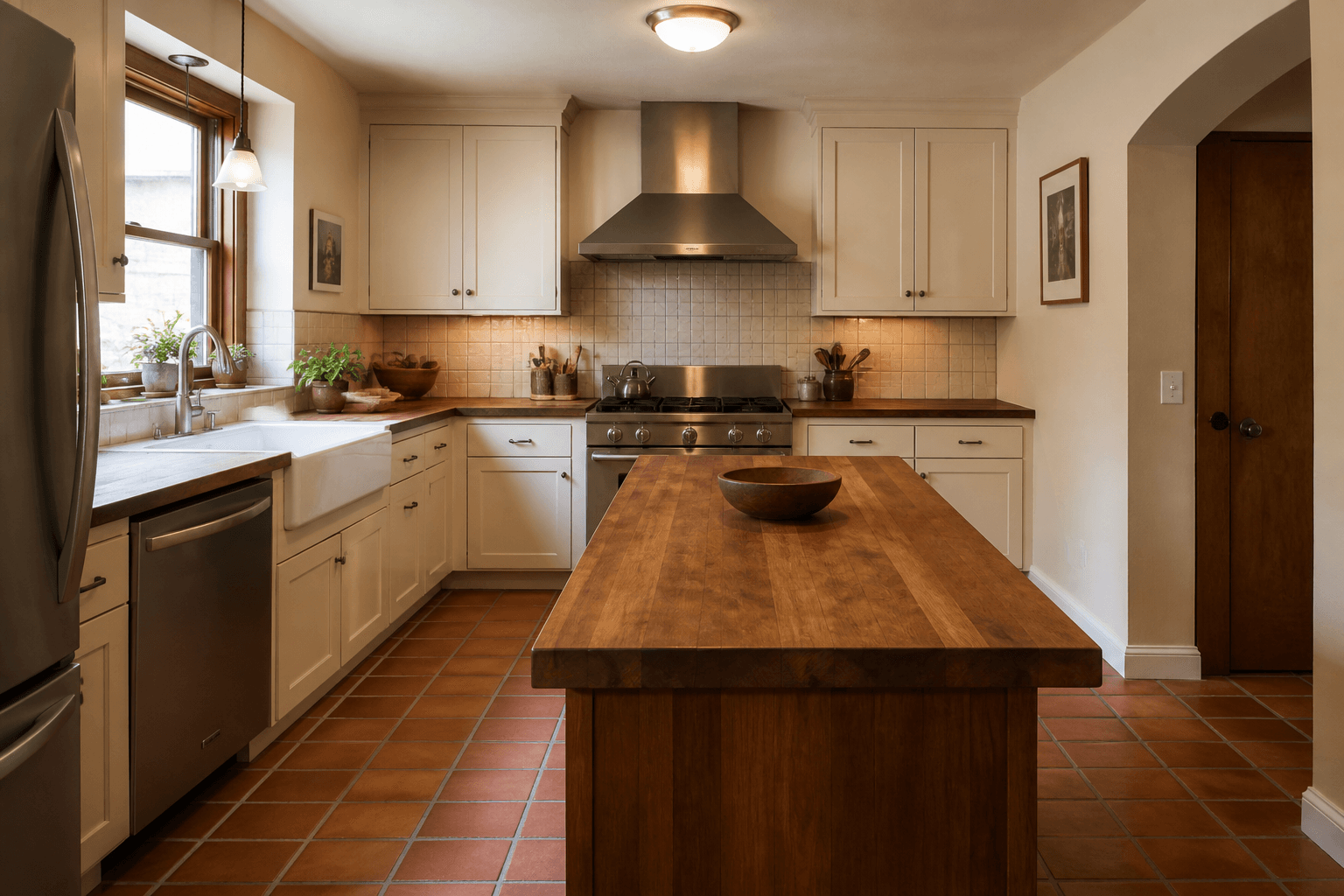
A Feng Shui kitchen island is extra prep in the middle of the room that must still leave a walk, and must not slam stove fire into sink water across a tight aisle. You tuck stools, you keep a landing for pans, and you buffer a head-on clash with wood you can reverse.
When we photograph kitchens, the island is often a dumping ground: mail, a knife block, two stools half in the path, and a cook who cannot see who enters. People ask which bagua sector the island "activates." We ask them to walk a grocery bag from the fridge to the board without turning sideways. This page is the island. The kitchen layout article is the whole triangle. Do not clone that page with a new noun.
What is a Feng Shui kitchen island actually doing?
You added a block of counter in the middle. Form School cares whether the cook can move and whether a hip hits a corner. Five-element talk calls the stove fire and the sink water. When those two face each other over a short gap, blogs call it a clash. Treat the poetry as poetry. The furniture job is splash, grease, and a trapped cook.
An island with only prep (no sink, no cooktop) is the easiest case. It is a table you stand at. Keep the top clear enough to chop. Soften a sharp corner with a round board or a folded towel if kids run past.
An island with seating is a dining hybrid. That is allowed. It is not a second dining table shape article. Here the test is whether stools leave the aisle after you eat.
An island with a sink or a cooktop is an appliance in the walk. That is when the clash talk starts. You still cannot move the pipes tonight.
The grocery-bag walk
Do this before you buy a pendant or a crystal for the island.
- Carry a bag from the fridge to the main board. If you must shuffle sideways, the island is too fat for the room.
- Stand where you cook. Look for the kitchen door. If your back is the only view, mark command as a fail.
- Stand at the sink. Look at the stove. If they stare across a narrow aisle, mark a buffer.
- Pull every stool out as if guests sat down. If the cook cannot pass, stools fail.
Write which of those four failed. The next sections only fix those.
Should the stove sit on the island?
A cooktop on the island can be fine if you face the room and you have a place to set a hot pan that is not the guest's elbow. The miss is a range on the island with your back to the latch, stools behind your hips, and no landing.
Command is the same as the rest of kitchen work: see who enters if the room allows. A small mirror on a backsplash or a shelf that shows the door is the rental substitute. Grease on glass is a wipe, not a ritual.
Do not park a fruit bowl on the only landing. Do not hang a rack of pans at forehead height over the island cooktop. Overhead metal is a bump. A beam over the cook is a separate problem. This page will not tell you to move a joist.
If the island cooktop faces a sink on the wall, you have the head-on case below. If it faces a blank wall, you have a view problem, not a water problem.
Keep a fire extinguisher where you can reach it. That is safety, not a five-element cure.
What if the island sink faces the stove?
Popular Feng Shui kitchen notes dislike stove and sink in a straight fight. Water on fire is also how you get a scald and a greasy basin. Consumer kitchen writing still likes a work triangle among sink, stove, and fridge. Maytag's kitchen triangle explainer describes each leg in a roughly 4 to 9 foot band for a comfortable cook path. Many rentals are tighter than that. Cite the band as design advice, not as a luck measurement. Do not demo a wall to hit 9 feet.
What you can do:
- Leave a wood cutting board or a butcher-block strip in the line between flame and tap.
- Put a small herb pot on that board if it will not burn or drown. Water the plant. Dead herbs are clutter.
- Stop using both at once when the aisle is a single shoulder. That is ordinary cooking, not a ceremony.
A rolling cart parked as a buffer is allowed if it still leaves one clear pass. A cart that becomes mail storage is a new pile.
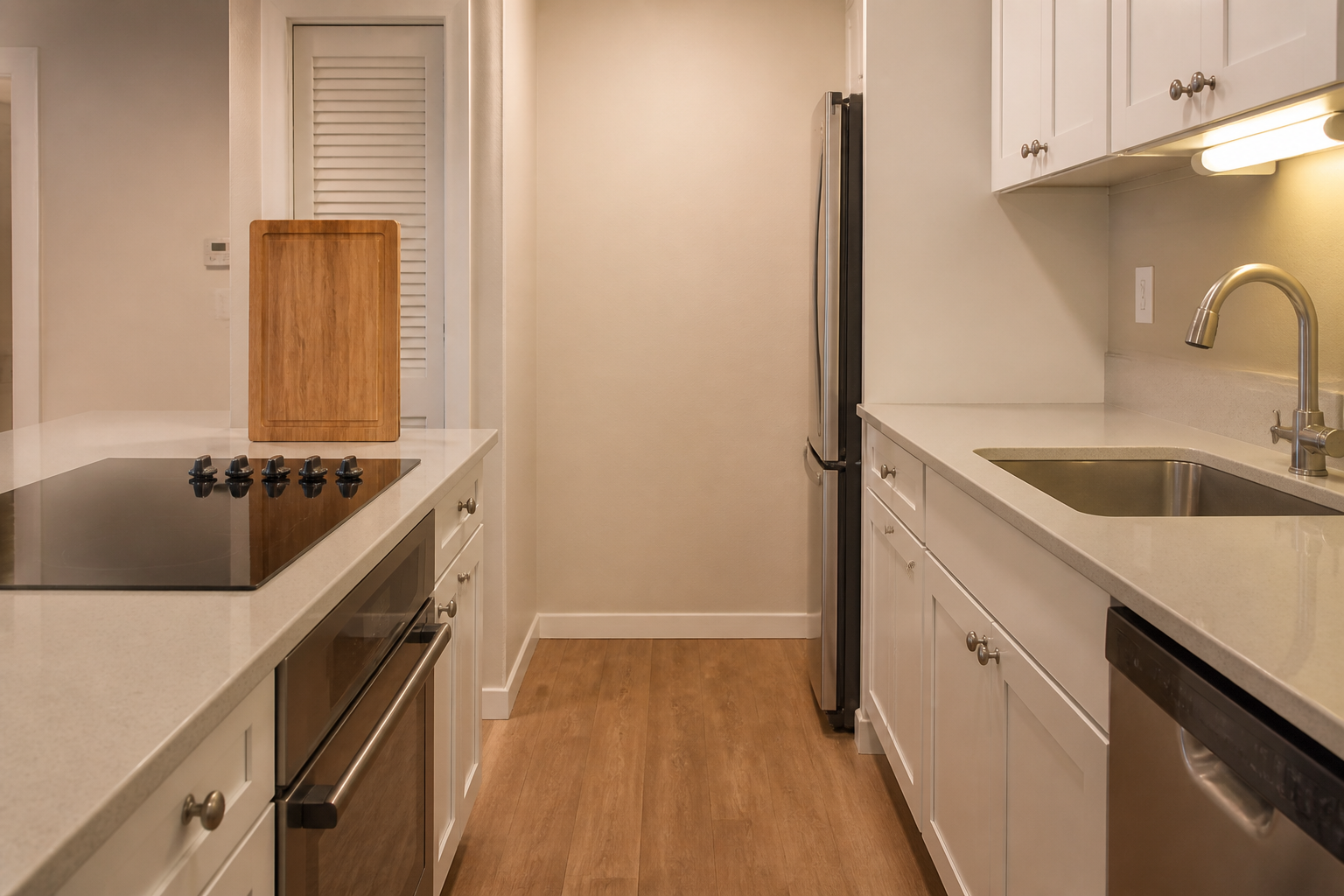
That stare is the clash photo. The board is the renter buffer. It will not raise a paycheck. It will stop you from swinging a pan into a running tap.
How do island stools stay out of the mouth of the cook?
Stools must tuck. If the seat stays in the aisle, the island is a bruise factory. Choose stools that slide fully under. Teach guests to push them in. That is the whole "professional" seating rule.
A breakfast bar on the living-room side of the island is useful when the cook still has a pass on the kitchen side. If both sides are stools, you have a restaurant pass with no cook lane. Pull one row.
Kids on high stools next to a flame is a supervision problem. Put the child seat on the far side, or use the dining table for meals.
Pendant lights over the island should clear a tall person's head. A fixture you hit with a platter is sha in the ordinary sense: a bump. Raise it if the lease allows, or use a lower lamp on the wall and leave the pendant off.
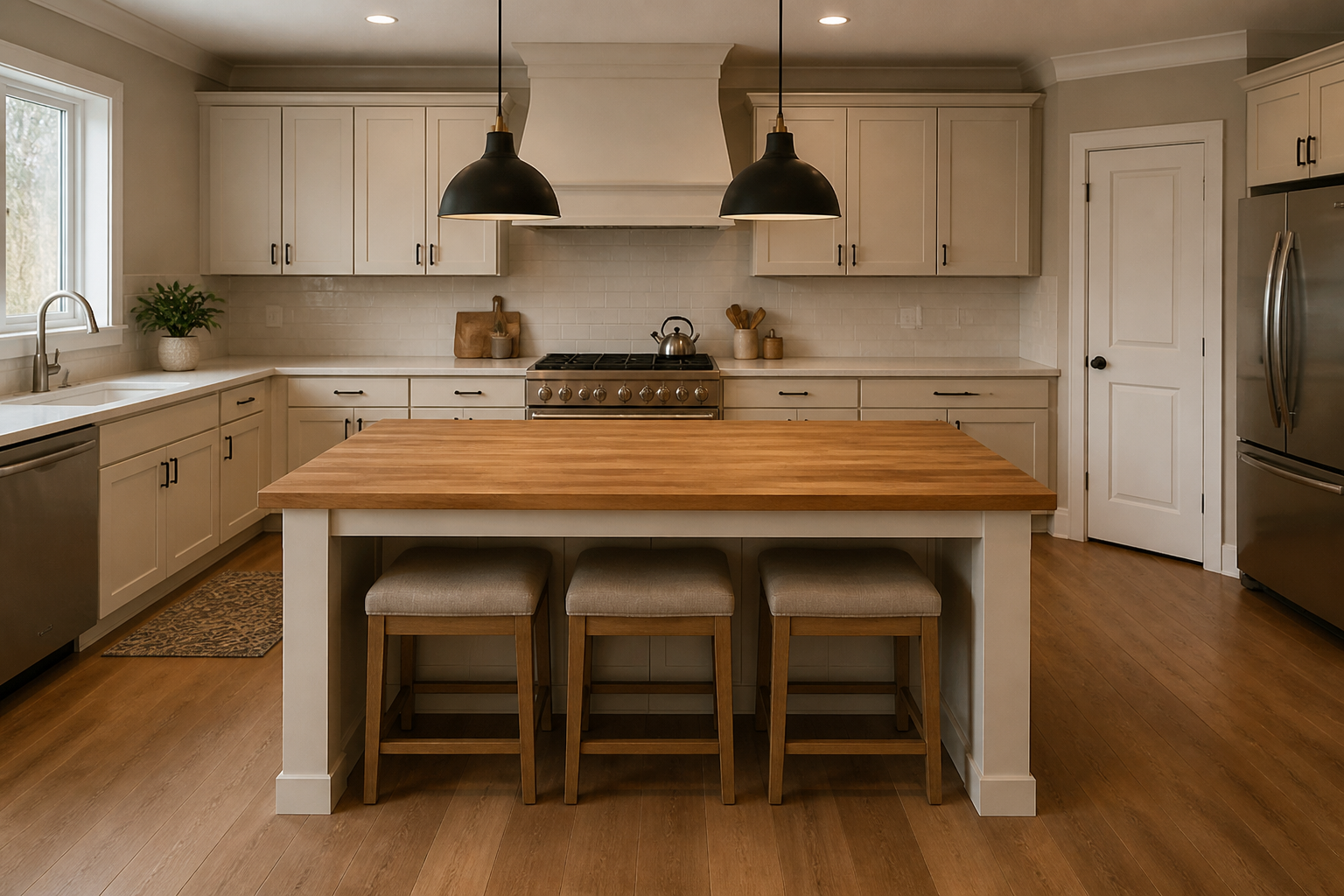
Tucked seats are the pass. If your photo still shows knees in the aisle, the island is seating, not a kitchen.
How we check an island in a real room
We stand in the kitchen door first. If the island is the first object and it is covered in mail, the mouth of the kitchen is a desk. Clear the top to a board, a bowl you use, and a lamp if the room is dark.
Then we stand at the cook. Door sightline. Landing. Stool hips. Then we look at stove versus sink. A wood buffer is enough homework for a renter.
Open shelves on the island end become visual noise. Closed cabinets below are better if you already have them. Baskets that overflow onto the floor steal the walk. Same test as any clutter path: if you kick it, it leaves.
A kitchen that opens to the sofa still needs a cook path. Guests on stools should not be in the knife radius. Turn the seating to the living-room face of the island when you can.
Island jobs compared
| Island type | Main test | Renter move |
|---|---|---|
| Prep only | Walk on both long sides | Clear the top, soften a corner |
| Seating | Stools tuck, cook still passes | One row of seats, push in after |
| Cooktop | Command, landing, no forehead rack | Mirror for the door, keep a pad |
| Sink | Splash vs stove, not a wealth drain | Wood buffer, do not dual-wield in a skinny aisle |
You cannot relocate a plumber's island. You can stop decorating it like a shrine.
What this is not
An island will not feed a family by chi and it will not pay rent. A green runner between stove and sink will not fix a bad marriage. Unused burners are not unused money.
Skip flying-star years on the cooktop. Skip a crystal grid on the butcher block. Skip claiming covers or income because the triangle is "activated."
Do not add a fountain on the island. Water plus food prep is a spill. Do not aim a bagua mirror at the fridge.
A simple evening checklist
Do this in order. Stop when a grocery bag can pass and the cook can see the latch or a mirror.
- Walk the fridge-to-board path with a bag. If you turn sideways, clear stools and floor piles first.
- Stand at the cook. Name the view: door, wall, or island clutter.
- If stove and sink stare, put a wood board in the line. Use it as a board, not as a charm.
- Tuck every stool. Remove one row if both sides steal the cook lane.
- Clear mail and knives off the landing.
- Photograph from the kitchen door in FengShui Hero and compare the flagged walk with the pass you made.
If you only do one thing tonight, push the stools in and take the mail off the island. The cook needs a board, not a second desk.