
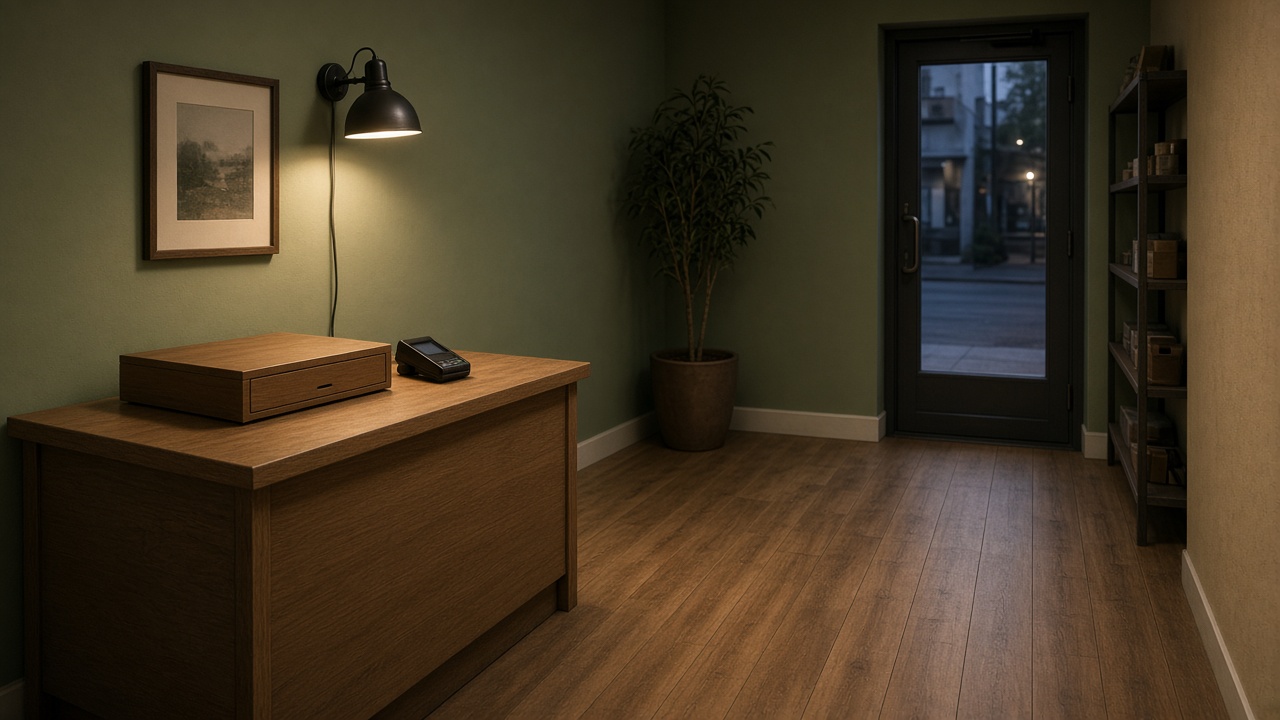
A feng shui cash drawer is a shop till you close after the last sale: notes and coins leave the counter, the lid shuts, the screen dims, and the float sits in a room you can lock. It is not a charm that raises tickets. A leased millwork still closes.
When we photograph lockups after the last customer, the stool is already empty and the till is still a stall: an open tray of mixed bills, a glowing POS aimed at the street, a lucky coin pile fused to paperclips, a zip bag on the glass ledge. People ask which gua the register sits in, or which emperor coin will "feed" an empty tray. We stand outside the street door they actually unlock and look through the glass. If we can still count notes, the close already failed. Wikipedia's feng shui page still splits Form (shape you can walk and lock) from Compass overlays. Form goes first here.
The daytime job, till versus the latch you watch while you sell, lives on the small shop counter page. A cafe pass is the restaurant layout cousin. A dish you dust at home is the wealth bowl. Brass on an inside handle is coins at the door. This URL is the hour after the last sale: lid, bag, screen, and a cabinet that does not face the glass.
How we check a cash drawer in a real shop
We come after close, not at noon with the queue still in the swing. We stand outside the street leaf the keeper used all day. We look through the glass before we ask to be let in.
Then we open the drawer they actually count. We dump the contents onto a towel: float, receipts, paperclips, charms, a spare key, yesterday's sandwich bag. We count what they meant to keep. Everything else is a junk tray with a lock.
Then we walk the bag. If the float stays on the counter, or on a shelf that still faces the street, we write window display. If it goes into a cabinet they can lock, off the first sightline, we write bag. We do not score prosperity. We write which check failed: glass, lid, screen, or bag.
Form School cares whether a body can enter in the morning without a till in the swing, and whether a stranger at the glass can inventory the cash. Compass and Black Hat talk will argue about which tiles own the register. Treat the map as a label you pick once on the wealth corner page. The job tonight is a lid that clicks.
Renters and leaseholders: you cannot chase new conduit through a slab so the POS can face southeast. You can shut the drawer you already have. Photograph the counter from the street so move-out is a wipe, the same door-first habit as how to photograph a room. A listing still gets shot from that latch. An open till in the hero frame is a theft photo, not a wealth photo.
Should a feng shui cash drawer stay open after hours?
A feng shui cash drawer stays shut after hours. You bag the float, click the lid, and point the screen away from the street. An open till after close is a window display of cash, not a wealth gesture. Compass talk about a southeast till does not ask you to leave the drawer breathing overnight.
Do this in the clothes you close in, not in a styled noon shoot.
- Stand outside the street glass. If you can name a bill in the tray, mark glass-fail.
- Open the drawer. If the lid was already ajar, mark lid-fail.
- Dump the tray onto a towel. Separate float from receipts, hardware, and charms.
- Bag the float. Shut the lid until it clicks. If it will not click, the jam is receipts, not chi.
- Dim or cover the POS so the window is not a blue box. Walk the bag off the glass line.
Write which failed. The next sections only fix those.
Folklore blogs like an open tray because "money likes to breathe." What we see is dust, a hip that dumps coins, and a night view from the pavement. Shut is the Form answer. Breathing is a caption.
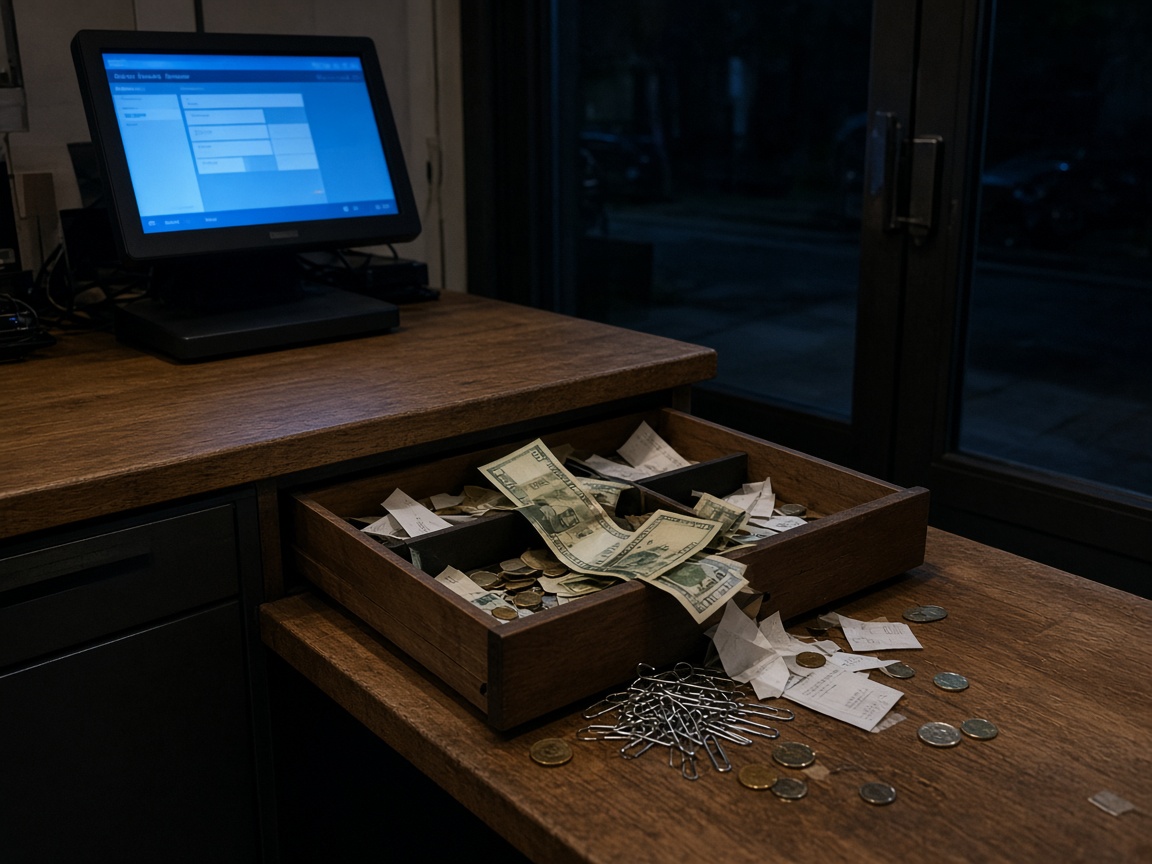
That open tray is the fail. The millwork still works. The close does not. A crystal on the keypad will not hide the bills from the street.
A salon reception till is the same close. The styling chair does not keep overnight cash.
Is an empty cash drawer bad Feng Shui?
No. Shop lists treat an empty tray as a poverty magnet and then sell a "seed" coin kit. After you count and bag, empty is ordinary. You are not starving the gua. You are not leaving a snack for a burglar.
A couple of coins you can name, seated so they do not rattle, are optional culture, the same class of object as a short string on an inside handle. They do not write a deposit. Feng Shui for wealth already set that limit. This drawer inherits it.
If you like a seed, keep two or three you could spend tomorrow, not a mixed shrine of foreign tokens, broken charms, and last year's lottery tickets. Overflow here is clutter, not abundance. A lucky charms shelf does not belong inside the till.
Do not leave the float in the drawer "so it never looks empty" and then sleep in the back room. That is a safe problem, not a map problem. Bank or lock. An empty tray after a real count does not empty a lease.
A cash box on a kitchen counter for a side hustle is still a till. Close it. Do not park it as a living-room wealth bowl. The bowl page is a dish you dust. This page is notes you can steal.
Where does the till go if the millwork cannot move?
It stays. You close it.
Daytime placement, off the swing with a glance at the latch, is the counter article. If the landlord bolted the station in the door line, treat the millwork as a wall you cannot saw. Park a rolling till off the jamb for greeting if the cable reaches. Use the bolted box for bags. Do not demolish a rented counter so the drawer can sit in a money cell. A later calendar row owns "till on a wealth gua." This URL does not.
After hours the question is sightline from the street, not a compass sticker under the POS.
| After close | Pass | Fail | Lease move |
|---|---|---|---|
| Lid | Clicks shut, no gap a hip can catch | Ajar, receipts holding it open | Clear the jam, then shut |
| Float | In a bag, in a cabinet you lock | On the counter, on the glass ledge, in an open tray | Walk the bag tonight |
| Screen | Dark, or faced away from the pane | Blue glow to the pavement | Dim, cover, or turn the tablet |
| Walk | Shoulder-width from latch to stool in the morning | Till crept into the swing overnight | Slide it back along the wall |
| Objects | Two named coins, or none | Charm pile, paperclips, sandwich bag | Dump on a towel, keep the float |
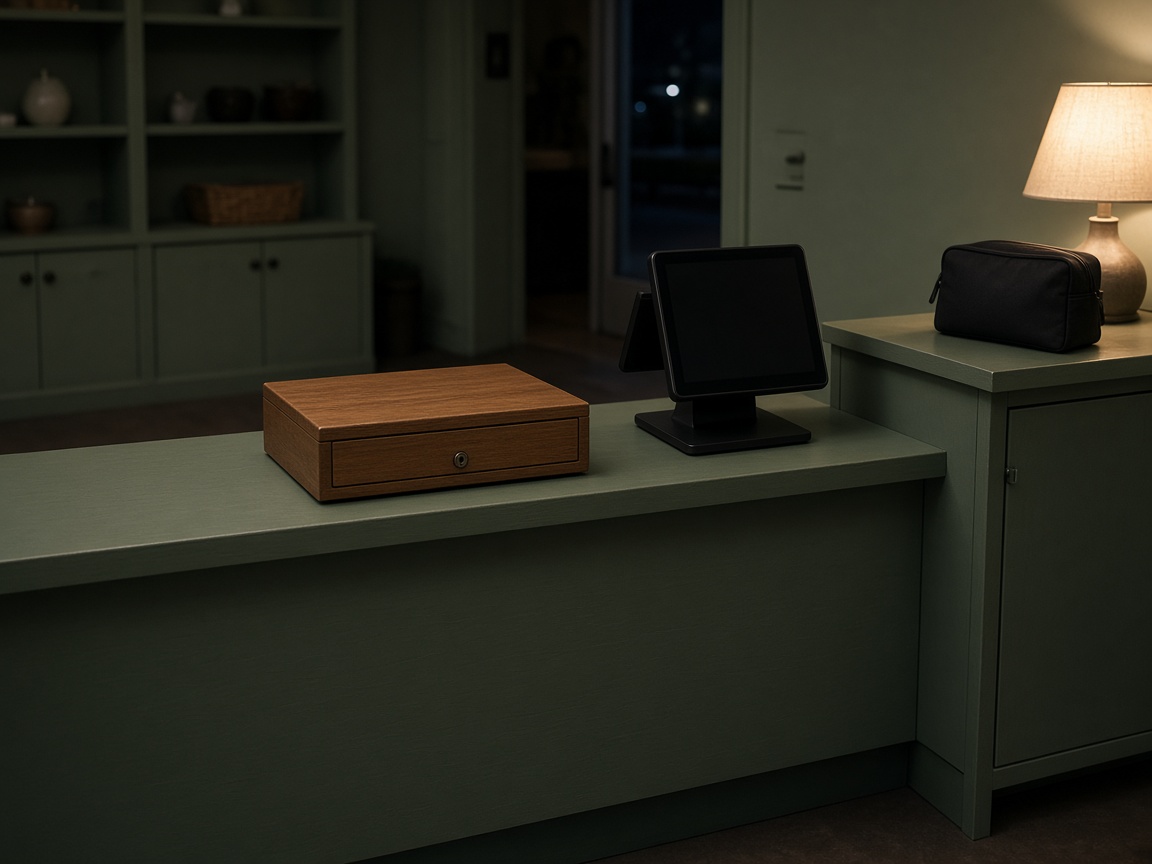
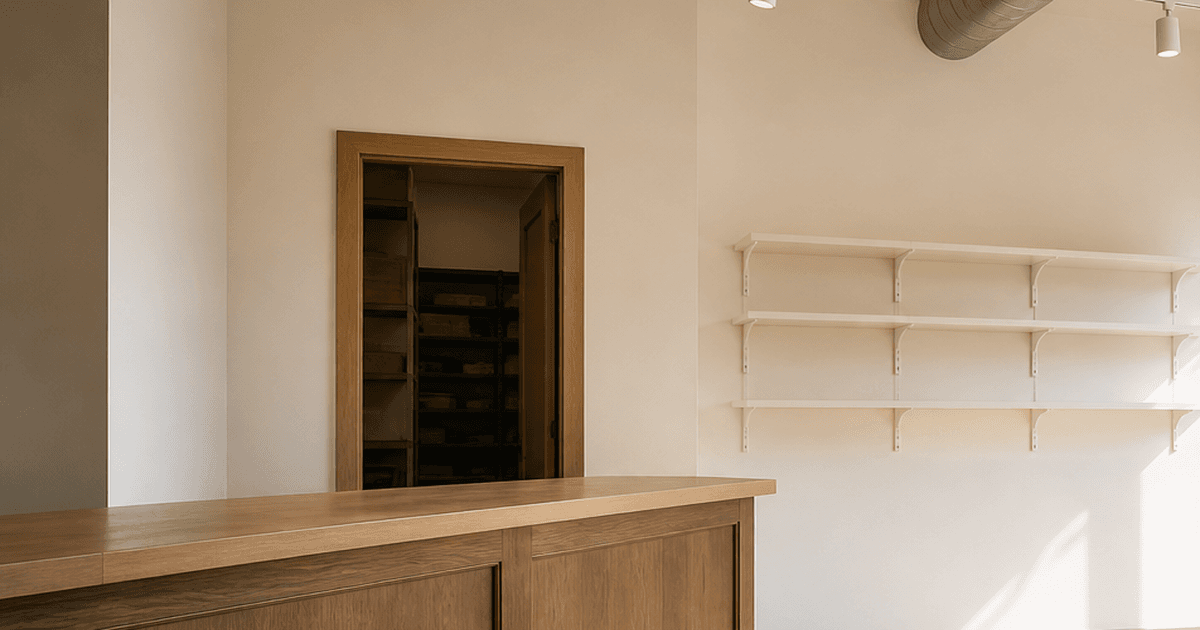
That closed box is the pass. The bag is already off the glass line. Copy the geometry even if your POS is uglier than the photo.
If you count in a back office, count there. Do not count on the sales top with the street still watching. Close the inner door. Skip bagua tape on the floor that a mop will eat.
Fire-code aisle still wins. Do not park the till or a plant in an escape line overnight "to activate the corner."
What belongs in the drawer besides notes?
Float you can count. A spare receipt roll if it fits without jamming the lid. A pen you will still find. That is the honest list.
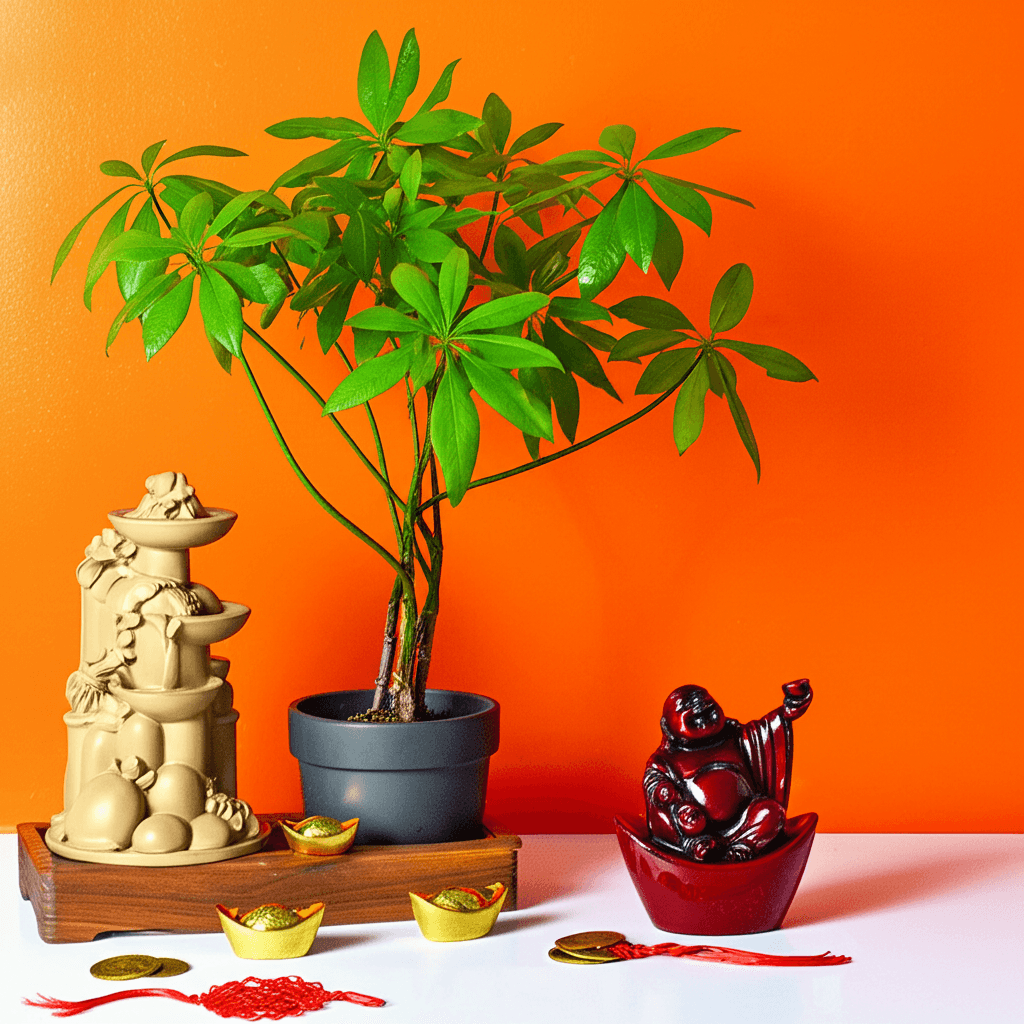
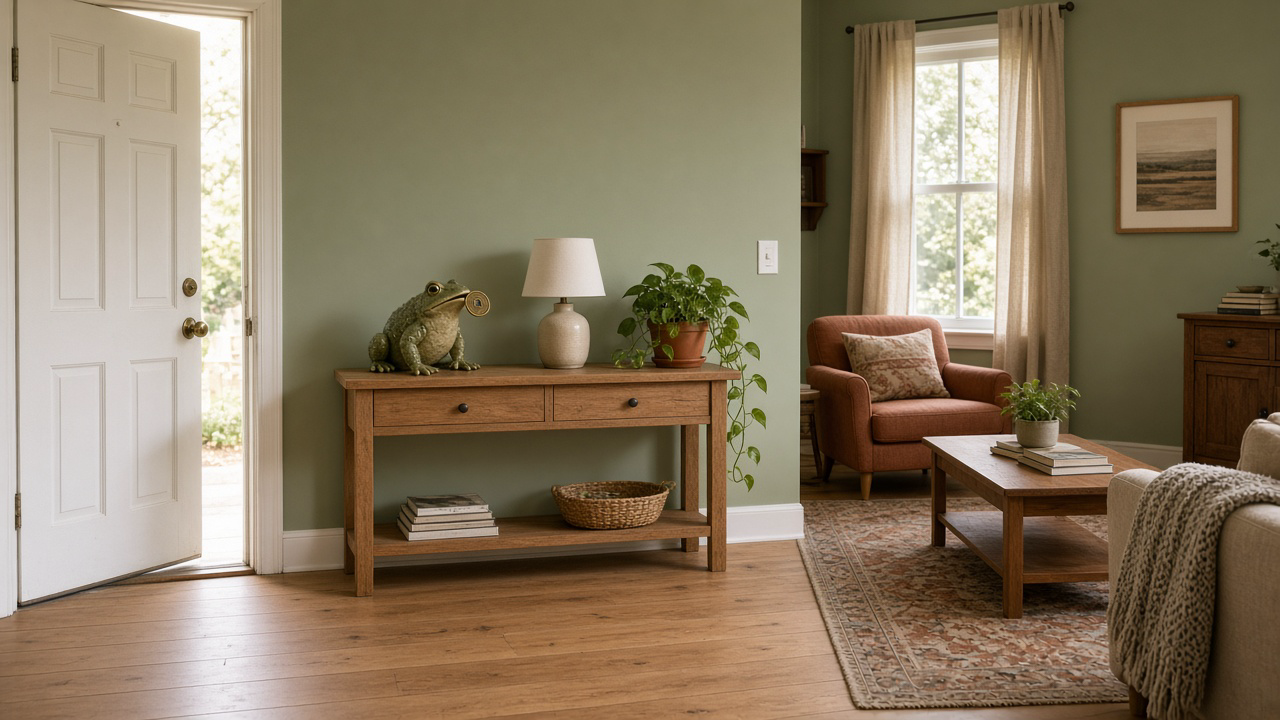
Not a wealth bowl. Not a three-legged toad. Not incense ash. Not a salt jar. Not a dripping plant saucer. Wet and brine turn a till into a stall, then a rust stall.
Keys: one spare for the cabinet the bag goes into can live in a staff pocket, not in the tray that faces the glass.
Food leaves with the closer. A till that smells like lunch is a pest problem.
Paper: today's batch, then it files or it shreds. A month of receipts in the tray is a junk cliff with a lock.
If a customer can see into the tray while you pack a bag, angle the station so the compartments face you. That is ordinary shopkeeping, not a southeast ritual.
How is this different from the shop counter article?
The counter page is open hours: stool sees the latch, stock at your back, swing clear, queue along the face. Command there matches a desk that sees the door. This page starts when that stool is empty.
You can pass the daytime sit-test and still fail tonight. A till in perfect command at 3 p.m. that stays open at 9 p.m. is still a window display.
You can fail the daytime sit-test and still close well. A bolted millwork in a bad line still gets a lid, a bag, and a dark screen. Fix the line later with a rolling unit if the lease allows.
Salon reception closes here. The chair does not hold overnight cash. A studio table that was both workbench and till still latches, then the bag leaves the work top. If you plate soup, use the restaurant notes for the pass, then still shut the drawer.
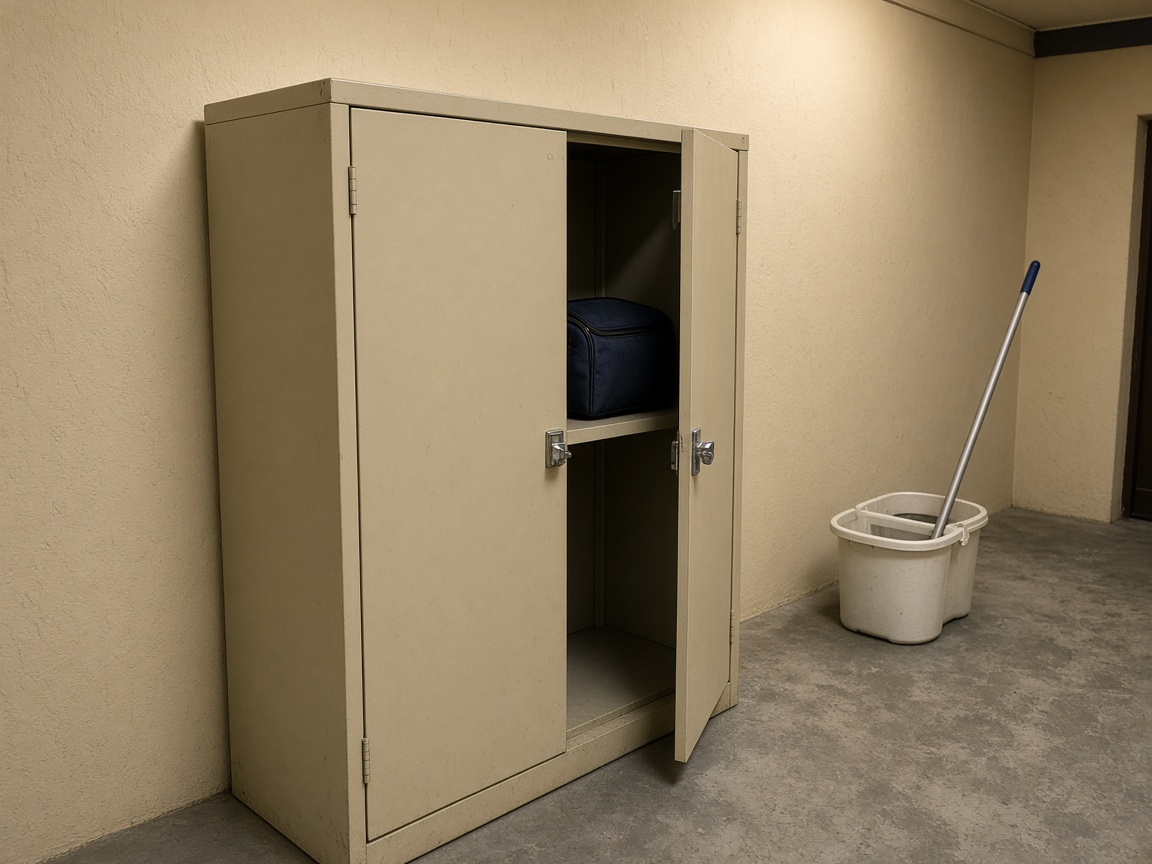
The bag on a shelf you can lock is the end of the close. The mop can stay. The cash cannot stay on the sales top.
What this is not
This is not the small shop counter how-to. Sightline to the door while you sell lives there. If you already have that layout, still shut the drawer tonight.
It is not a wealth-corner map, a wealth bowl, coins on a handle, or a toad on a console. Those objects have their own URLs. A till is not a shrine.
It is not guaranteed sales, luck, or a booking bump because the register "sits in money." We will not cite a study. We will not pick a flying-star year for the POS.
If the shop is a safety problem, that is a locksmith and a landlord, not a gua. Do not tell a landlord the map requires a new counter.
Skip a bagua mirror aimed at the till. Skip salt at the corners as a theft device. Skip leaving one bill in the tray as a spell if you will not bank the rest.
Tonight at the till
Do this in order. Stop when a stranger at the street glass cannot inventory the cash, the lid clicks, the screen is dark, and the bag is off the sales top.
- Name the door customers used today. Ignore a prettier facade you never unlock.
- Stand outside that glass. If you can still see notes, mark the fail before you go in.
- Dump the drawer on a towel. Keep the float. Recycle receipts and charms you cannot name.
- Bag the float. Walk it to a cabinet you lock, not a ledge that faces the pane.
- Shut the lid until it clicks. If it will not click, clear the jam.
- Dim or turn the POS. The window should not be a blue box.
- Slide anything that crept into the swing back along the wall. Tomorrow's mouth still has to open.
- Photograph from outside the glass in FengShui Hero. If the scan flags a pile, the crystal was not the job.
If you only do one thing tonight, shut the drawer and take the cash off the counter. Tomorrow you can argue about whether the millwork should move. The close needed a lid, a bag, and no story about an empty tray cursing the lease.