
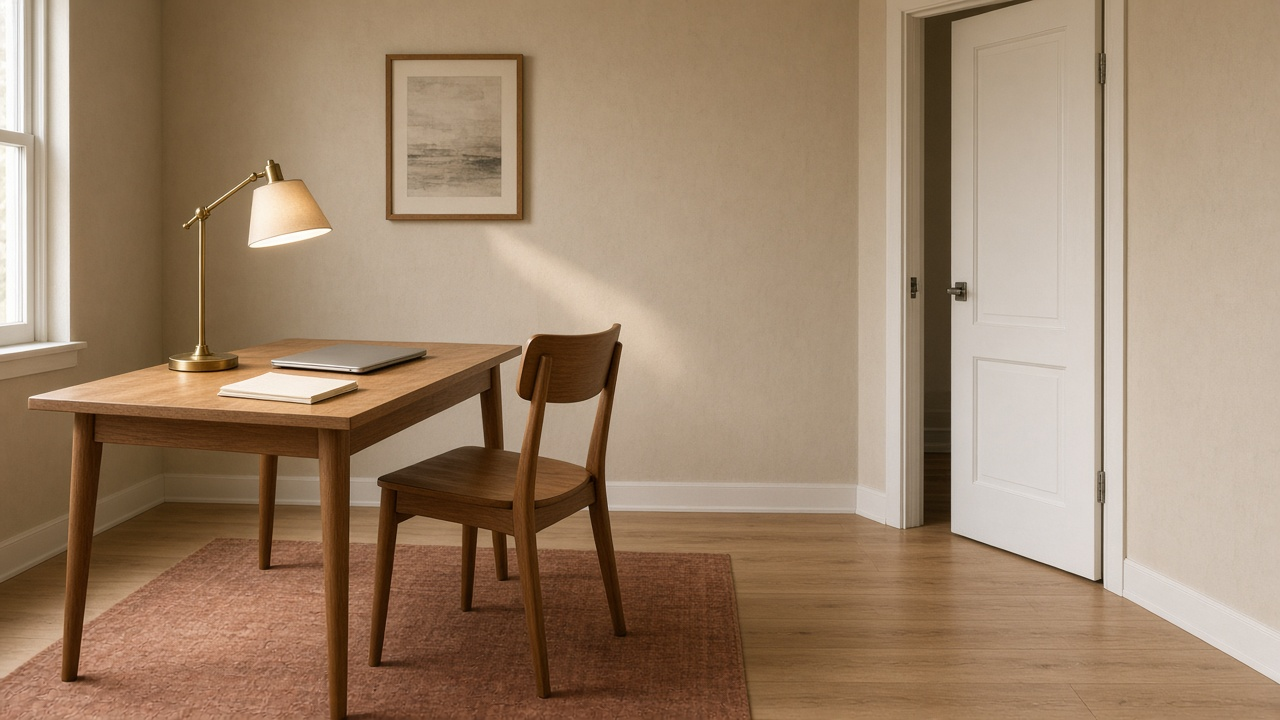
Feng shui office lighting is a task lamp at the work so you can see the page and still glance at the door, without a bright wash on the screen. It is not a career-gua ceiling color. Renters plug in a lamp they can take.
When we photograph home offices at 4 p.m., the listing still shows a styled brass lamp and the room we get is one tired flush-mount. People type in their own shadow, then ask which green bulb belongs in the career corner. We ask them to switch the ceiling off and turn on one lamp they already own. If they can read a line and still see who entered, the layout is already talking. Desk position is the chair versus the latch. Second monitor is a side screen that must not steal that glance. Work-from-home video calls is the camera wall. This URL is the light on those same jobs.
How we check office lighting in a real rental
We sit the chair they actually use, not a guest seat they keep for photos. Ceiling on, then ceiling off, then the task lamp only. We look at the page, the laptop glass, and the latch. We walk the aisle with a mug. We do not assign a gua color to the bulb.
Wikipedia's feng shui page still splits Form (shape you can work in) from Compass overlays. Form goes first here. A lucky Ba Zhai sector does not un-glare a screen tonight.
If you photograph a listing or a leased shop desk, shoot from the chair and from the door they unlock. A wide shot that hides the white plate on the lid still fails the sit-test. This page is a home desk you can change tonight.
Where should a desk lamp sit?
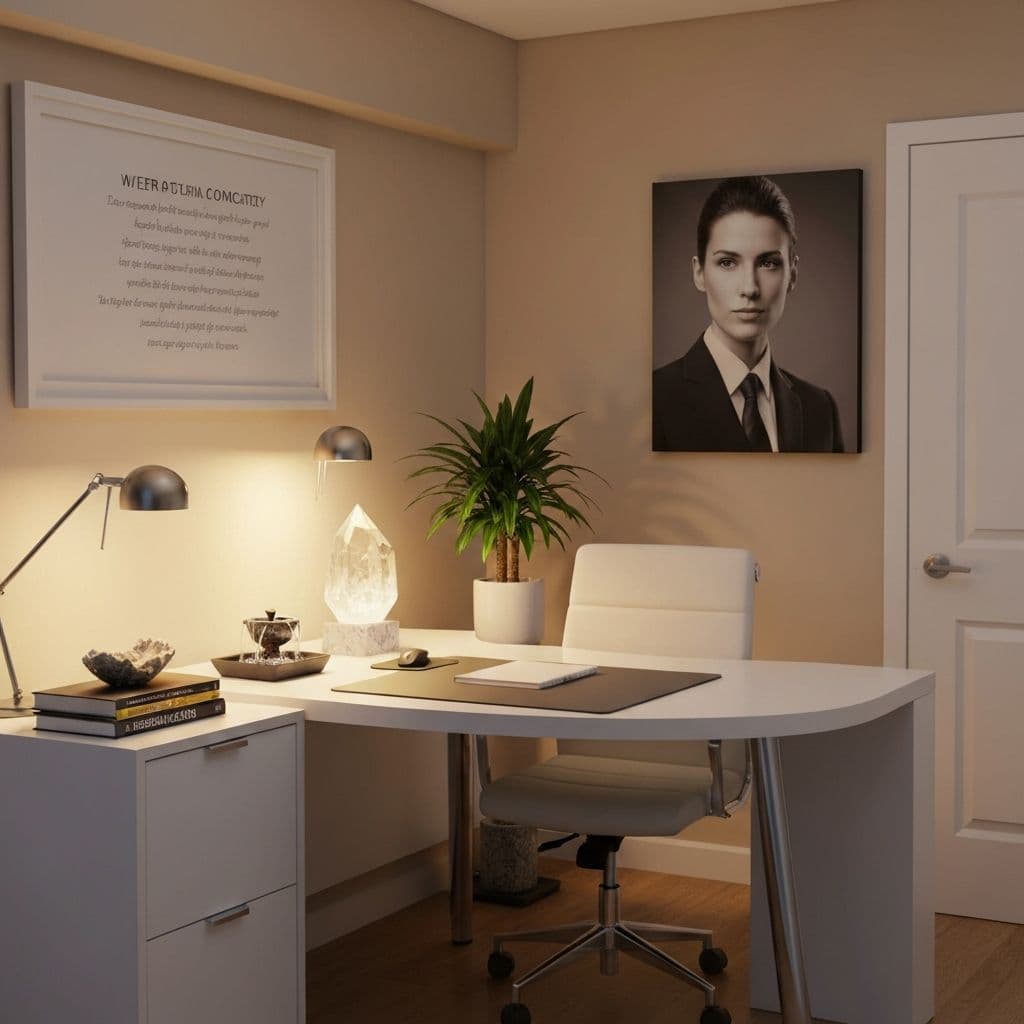
On the work. The notebook needs a downward wash so the line is not a guess. The chair still needs a glance at who enters. A bare bulb aimed at your face makes the door a white hole. Shade down. Pool the light on the blotter, not on the laptop glass.
Sit where you type. Look at the page. If your head is the only thing lighting the sentence, the fixture is in the wrong place even if the ceiling looks bright. A floor lamp in the far corner while the actual work lives under a shadow is a magazine shot. Move the lamp to the work, or move the work under the lamp you have.
The desk and door check is the same sit-test this page assumes: latch in view, something solid behind you, aisle clear. Light is the remaining switch once the chair already passes.
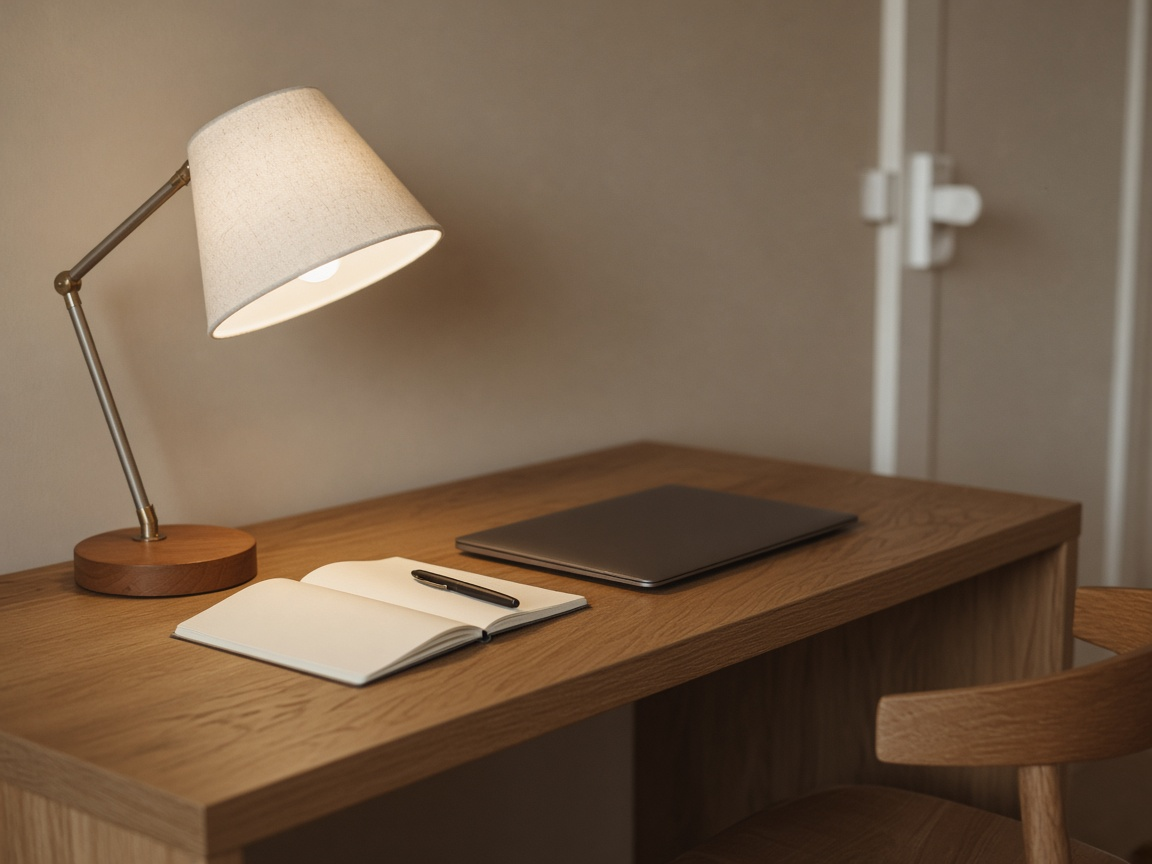
That downward shade is the whole task job for a rental. It unplugs at move-out. It does not pretend the landlord rewired the soffit.
Do this before you order a "career" floor lamp.
- Sit. Ceiling off. One lamp on.
- Read a paragraph on paper or a dim screen. If you lean into the page, the pool is too far or too high.
- Glance at the latch without squinting. If the shade edge is a knife of light in that glance, rotate the head.
- Look at the laptop with it closed, then cracked. If you see the bulb in the glass, move the base or lower the shade.
- Open the office door through a full swing. If the leaf hits the lamp cord, the lamp is in the mouth of the room.
A clip lamp on a shelf behind the lid can work if it lights the blotter and not the camera. A ring light sold for calls is a face tool. Park it for the meeting, then switch it off so the evening desk is a page again.
Existing fixtures beat a new can
Change the bulb in the landlord disk before you fight facilities. A dead tube is a replace, not a chi story. Flicker is a headache. Change that bulb tonight. Match the other bulbs in that room so the desk does not sit under one blue disk and one yellow disk.
The living-room lighting guide already names warm evening bulbs and a cooler desk if you need to see. Use that page for kelvin. Stay here for where the pool lands relative to the chair and the door. Bedroom lighting is sleep height. Do not copy those side lamps onto a work blotter and call it an office.
If the only outlet is behind the chair, run the cord along the wall, not across the aisle. A trip in the walk is a Form fail before anyone argues about left versus right.
Is overhead office lighting bad Feng Shui?
It is bad as the only source when the disk puts glare on the lid or a cave on the page. It is useful to find socks and to clean. Form School cares whether a body can work without a bruise or a squint. Folklore blogs call fluorescent "sha chi" because the tube hums. A humming tube is a replace. It is not a curse on your title.
An overhead that stays on all day also flattens the room so every corner looks equally bright in a photo and equally useless at the keyboard. Switch it off for the stretch you actually type. Keep the task lamp. You can still flip the ceiling back on when someone knocks.
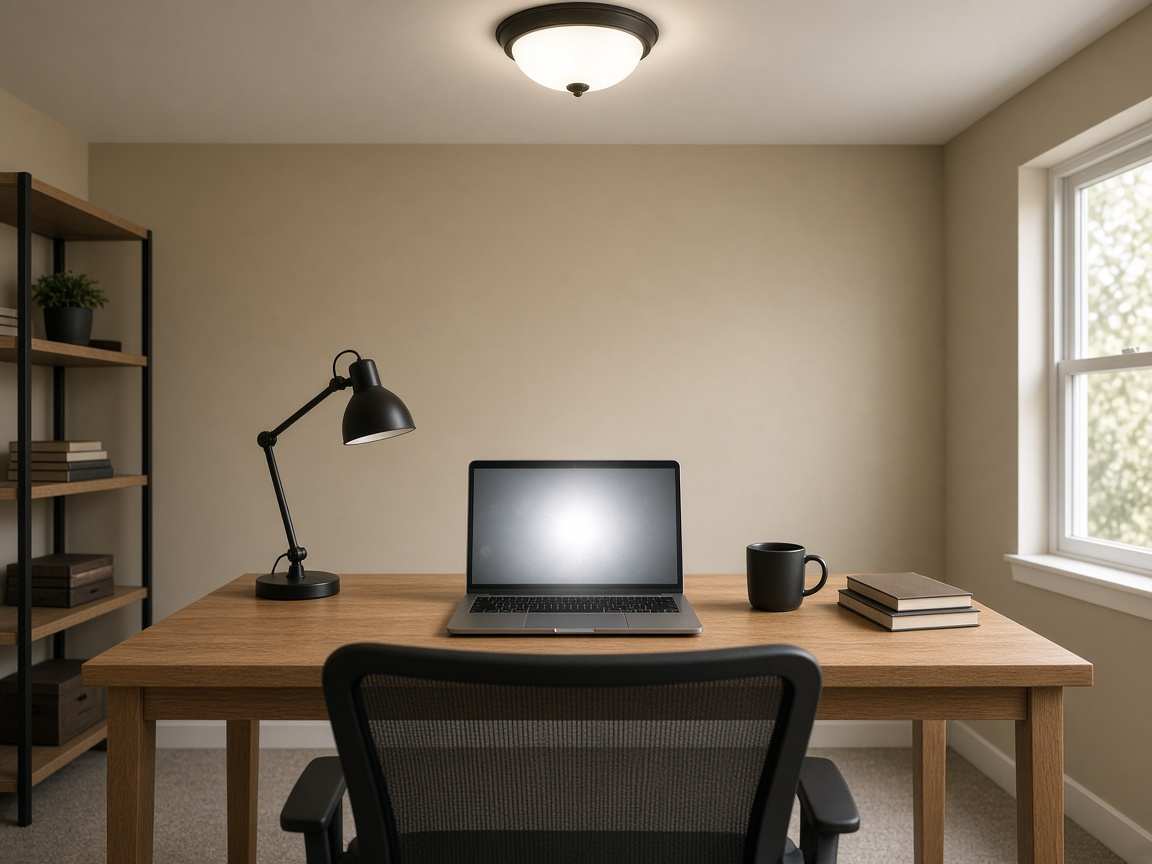
That white plate on the lid is the fail. The ceiling can stay. The work cannot live under it alone.
Chrome or a glossy lid makes it worse. Close the laptop when you write on paper. Tilt the screen a few degrees if a reflection walks. OSHA's computer workstation notes tell you to keep display faces at right angles to windows and lights, and to use blinds when you need them. That is eyes, not a protocol we invented.
A standing desk raises the same problem to a new eye line. Stand where you type and repeat the glare glance. A higher lid can catch a fixture the seated chair missed.
Landlord rules: you can usually change a bulb. You cannot usually add a can. Do not install a track because a blog said the career gua was dark. A plug-in lamp in that corner, if the corner is actually the work, is the reversible version.
If the office is a closet office or a basement office, the disk is often the only built-in. Then the task lamp is not optional. The cave is the room. Light the blotter or you will work in a hallway leftover.
Should the lamp sit on the left?
Put it where your writing hand does not throw a bar of shadow across the line, and where the bulb does not live in the screen. For many right-handed people that is left of the keyboard. That is a shadow check, not a lucky left.
Blogs copy "left-front" as if it were a gua. Left-front is a drafting-table habit so the pencil does not shade the page. If you are left-handed, try the right. If a window already lights that side, you may not need a lamp there at all during the day. Add it when the pane goes dark.
The miss we photograph is a lamp on the left that also sits in the door glance, so every arrival is a flare. Rotate the head toward the page. If the only place the cord reaches is the door-side corner, shorter cord or a different outlet. Do not keep a lucky left that blinds the latch.
A plant on the same corner as the lamp is two objects in one pool. Office plants already said one pot, off the keys. Move the pot. Keep the lamp on the work.
What if the lamp is the only object that sees the door?
Then you are lighting a wall and sitting in defense. Turn the desk first. The lamp follows the chair. A beautiful pool on a blank plaster does not count as command.
How do I stop screen glare without losing the door?
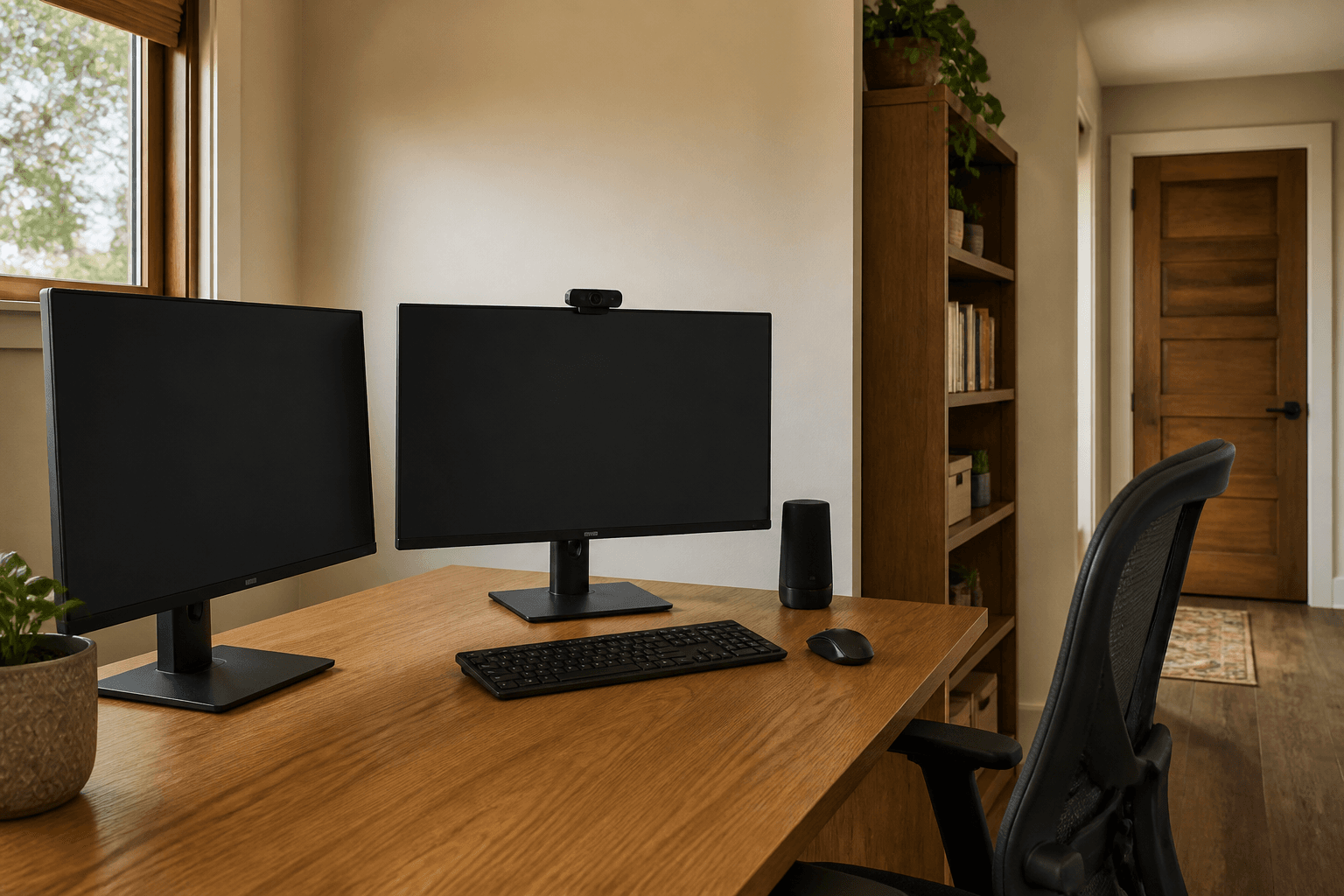
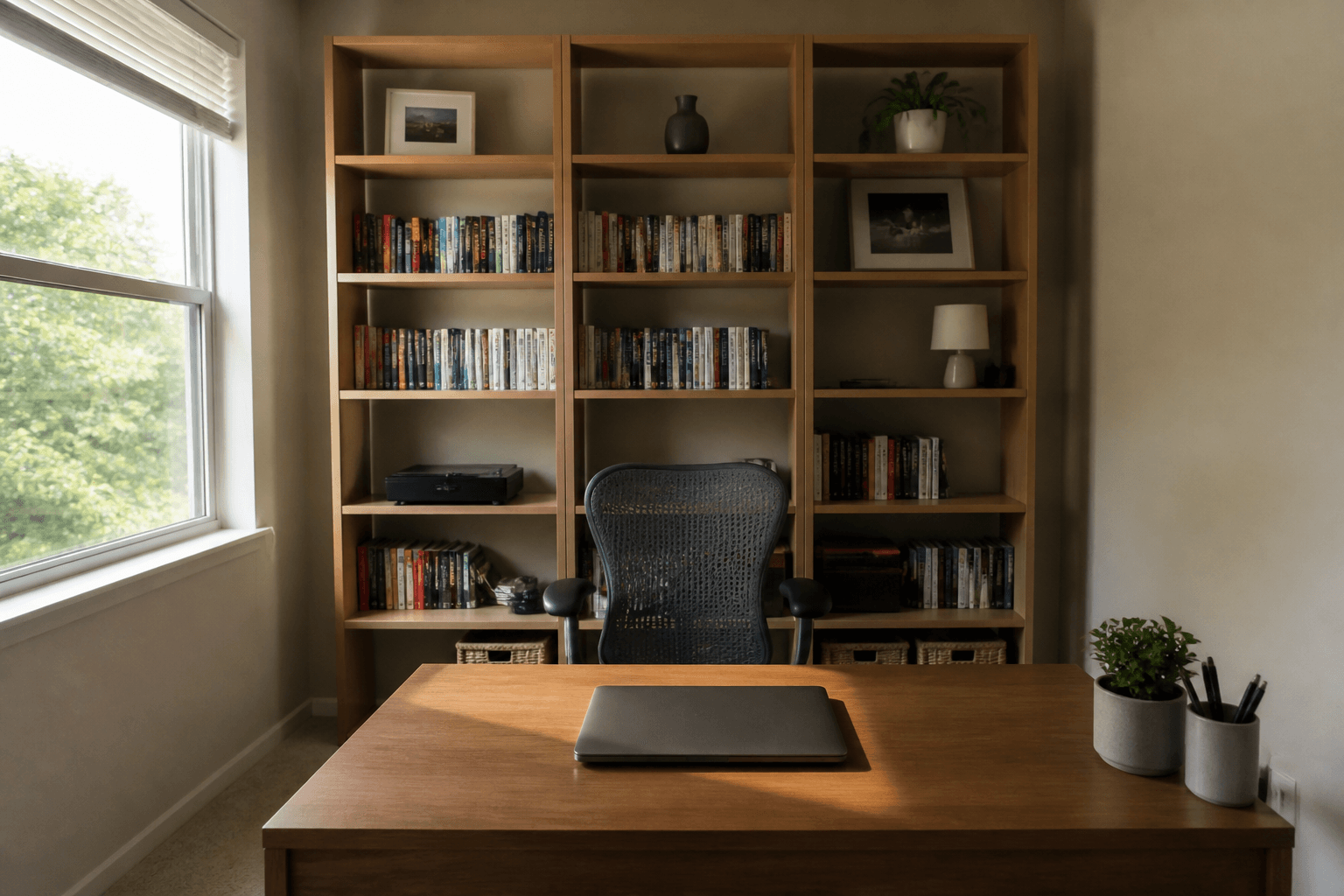
Put daylight to the side when the room allows. A window behind the chair turns the lid into a mirror. A window as the only view in front of you often puts your back to the latch and your eyes on the weather. Side light is the boring compromise that keeps both jobs.
If the desk cannot turn, drop a renter blind on the pane that owns the glass. Angle the screen a little. Move the lamp off the reflection. A small clip mirror that shows the latch is the substitute when the chair still faces plaster. The mirror is a patch. It is not permission to keep a cave.
| What you sat or looked at | Pass | Renter move |
|---|---|---|
| Page or keyboard | Line visible, no lean | Pull the lamp over the work, shade down |
| Laptop glass | No bulb, no window blob | Angle the lid, drop the blind, move the base |
| Door glance | Latch in peripheral view, no squint | Rotate the shade, then turn the desk if the chair still faces a wall |
| Overhead only | Fine to clean, not the work source | Switch it off for the typing stretch |
| Cord and swing | Leaf and mug clear the cable | Rerun along the wall, tape you can peel |
Do not sit with a bright pane as the wallpaper behind the lid to "activate yang." That is a silhouette on a call and a headache at the keys. Video-call backdrop is already a separate page. This page only needs the same side light so the work exists after you hang up.
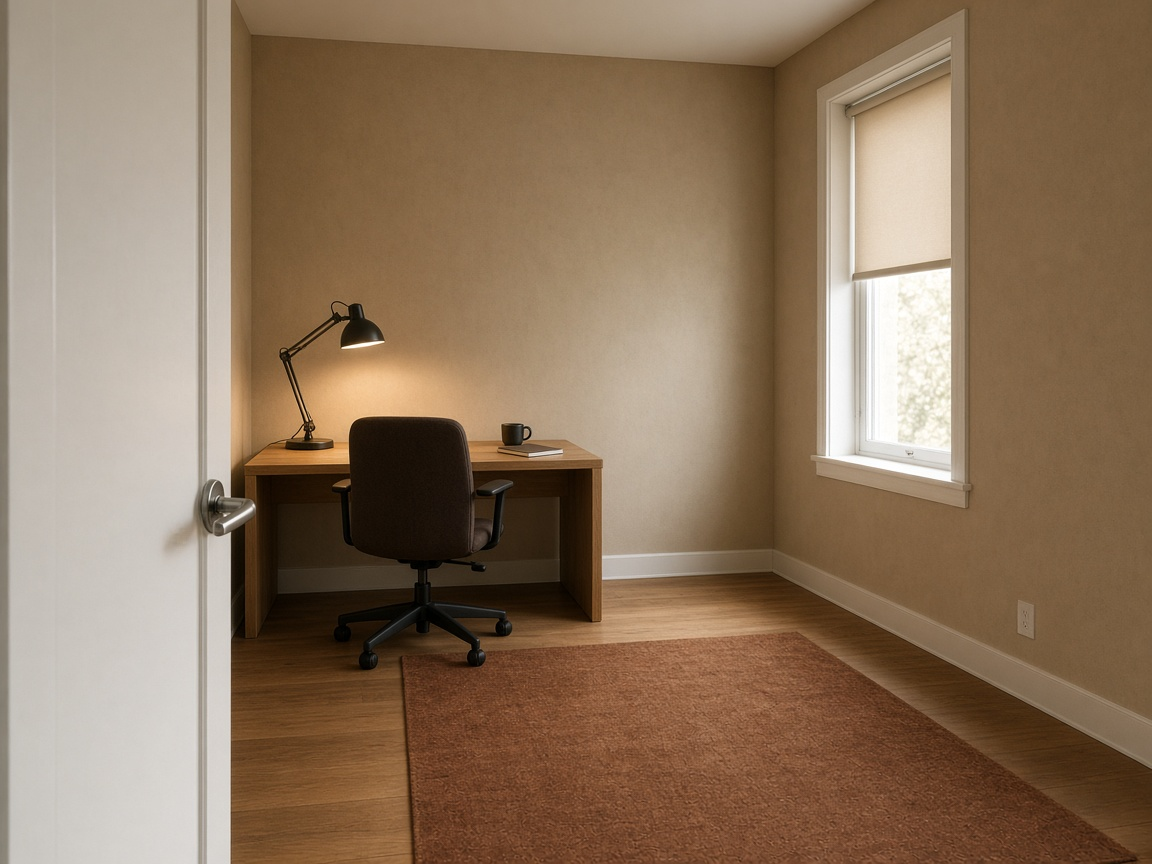
That view from the latch is the honesty photo. A lamp on a desk that faces the wall still fails command. Light the blotter after you turn the chair, not instead of turning it.
Fixes that stay inside a lease:
- Plug in a lamp you already own. Shade toward the page.
- Switch the ceiling off while you type.
- Drop the blind on the pane that paints the lid.
- Turn the desk until the door is in a glance, then repeat the lamp check.
- Change a flickering bulb in the fixture you already have.
- Tape a cord along the baseboard so the mug walk stays a walk.
Skip a new ceiling box. Skip a smart track you will abandon. Skip a crystal under the lamp.
If you only control a bedroom corner desk, close the laptop at night so the task lamp does not become a second overhead on the pillow. Sleep lighting is the bedroom URL. This page stops at the work.
What this is not
Office lighting will not get you a raise. A green bulb in the far left of the desk will not mint a title. A dark corner is hard to file in, not a blocked promotion.
Skip flying-star years on the fixture, and skip a salt lamp as a health device. A corded rock is a warm bulb you will dust. It does not replace a shade on the page.
This page is not the career-area map, not the west-office metal wall, and not a second lighting pillar. Kelvin and dark corners in any room already have a living-room URL. Dual screens have a glare paragraph of their own. Stay here for the task lamp versus the landlord disk on a desk you can reverse.
Do not demolish a soffit for a skylight. Do not tell a landlord the gua requires a can.
A simple evening checklist
Do this in order. Stop when the page is visible, the lid is not a white plate, and the latch is still in a glance.
- Sit the chair you work in. Photograph that stance if you want a record.
- Ceiling on. Note the lid. Ceiling off.
- One task lamp on, shade down on the work.
- Read a paragraph. Glance at the door. Check the glass.
- Drop the blind if a pane still owns the screen.
- If you cannot see who entered, turn the desk, then repeat the lamp.
- Photograph from the chair and from the door in FengShui Hero and compare the flagged walk with the mug pass you made.
If you only do one thing tonight, switch the ceiling off and pull one lamp over the page. If you still cannot see the latch, the chair is the next object, not a luckier bulb. The desk needs light on the work and a door you can glance at, not a career-colored ceiling.