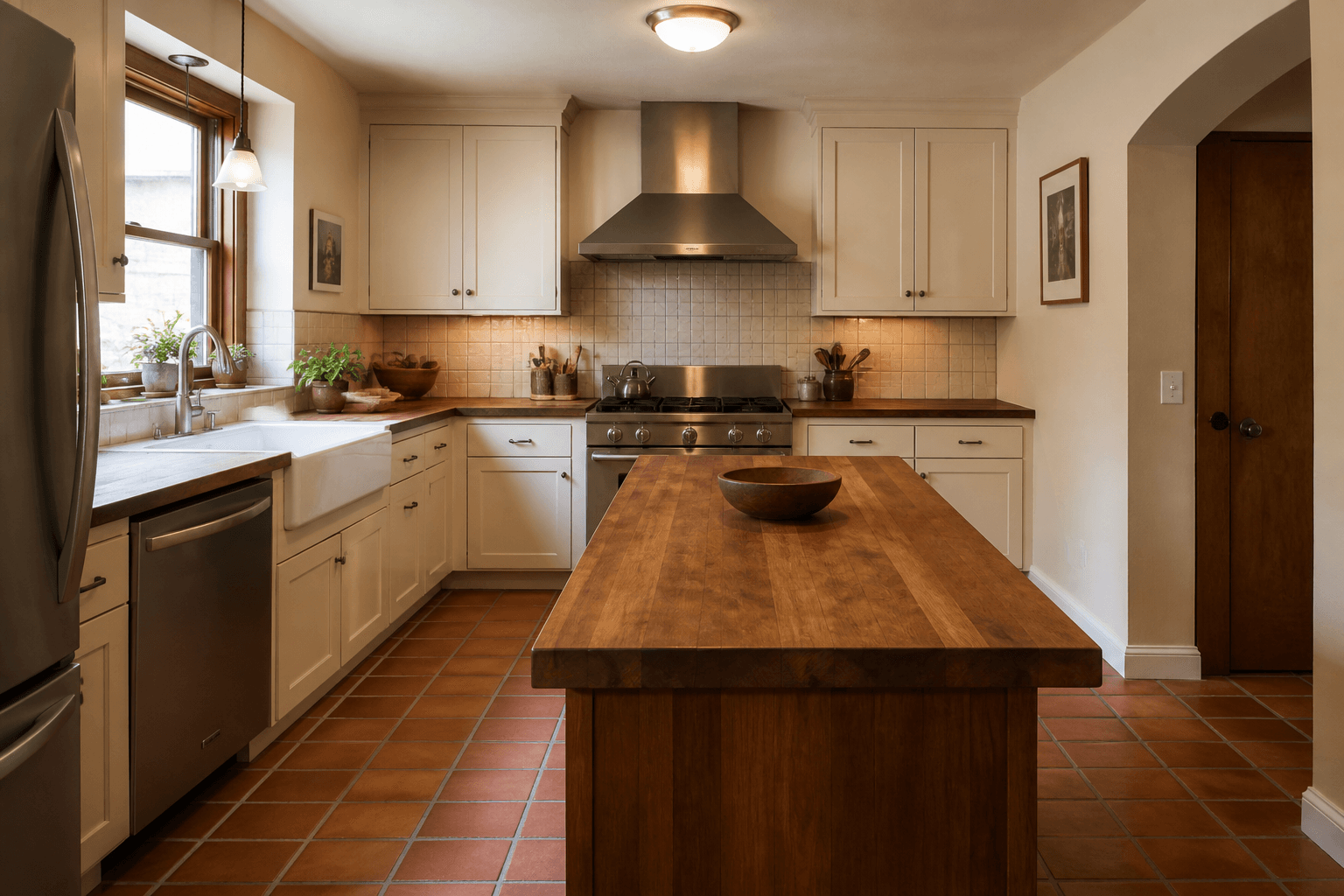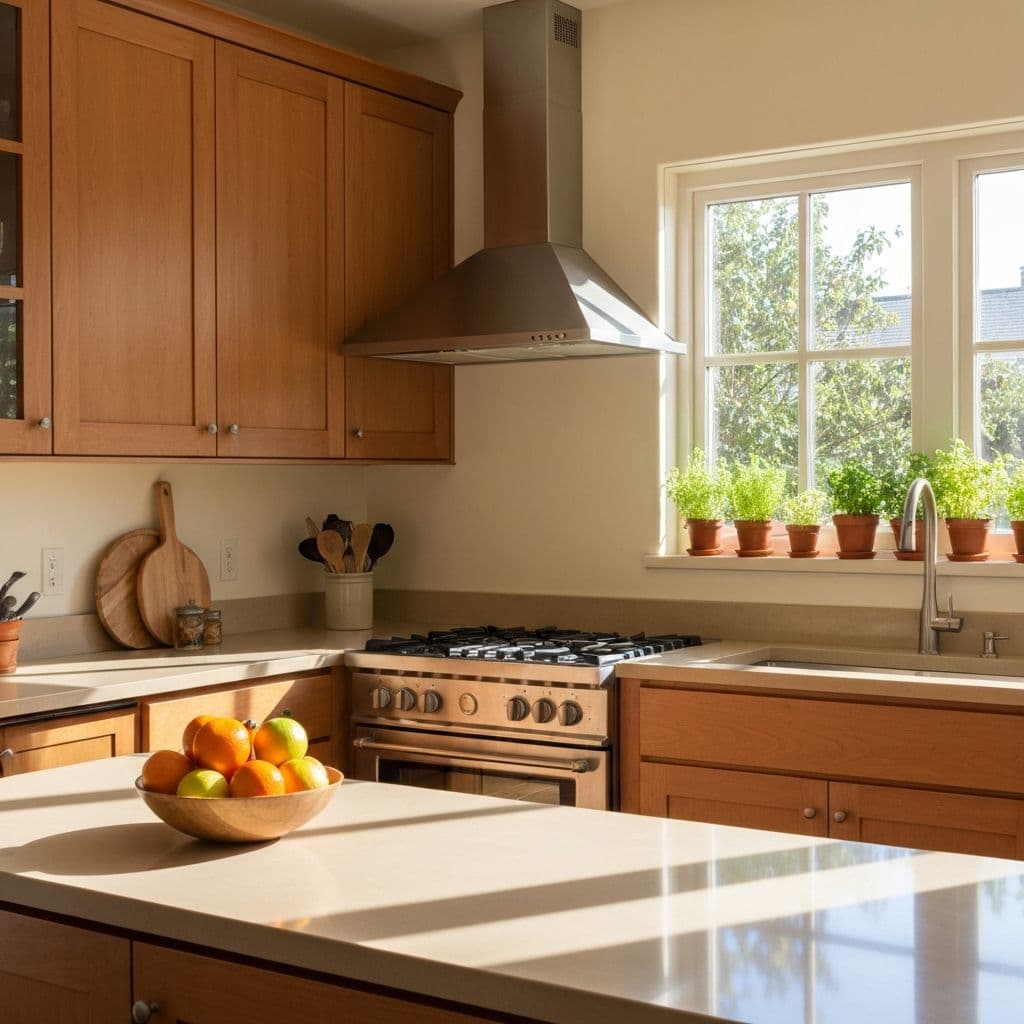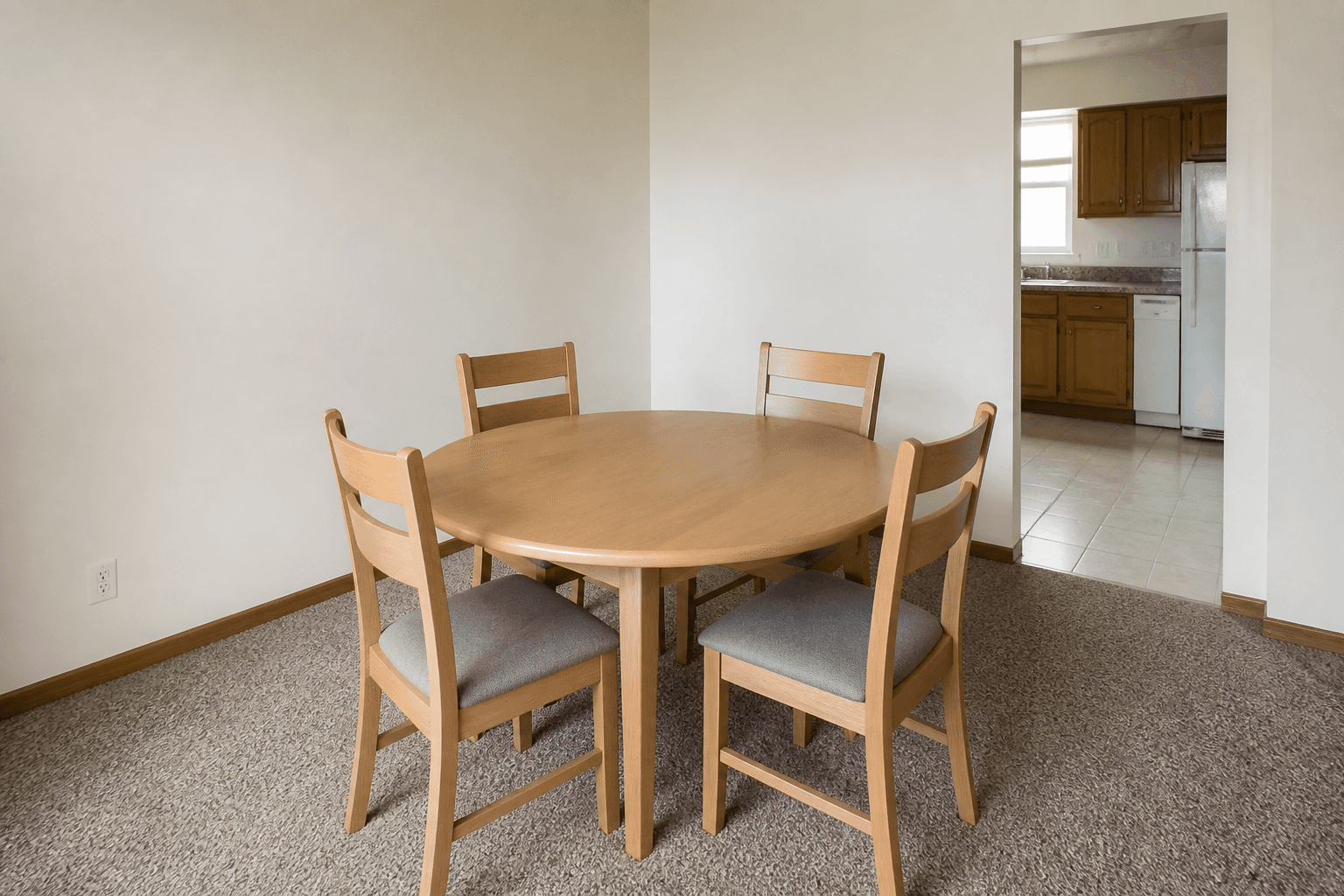
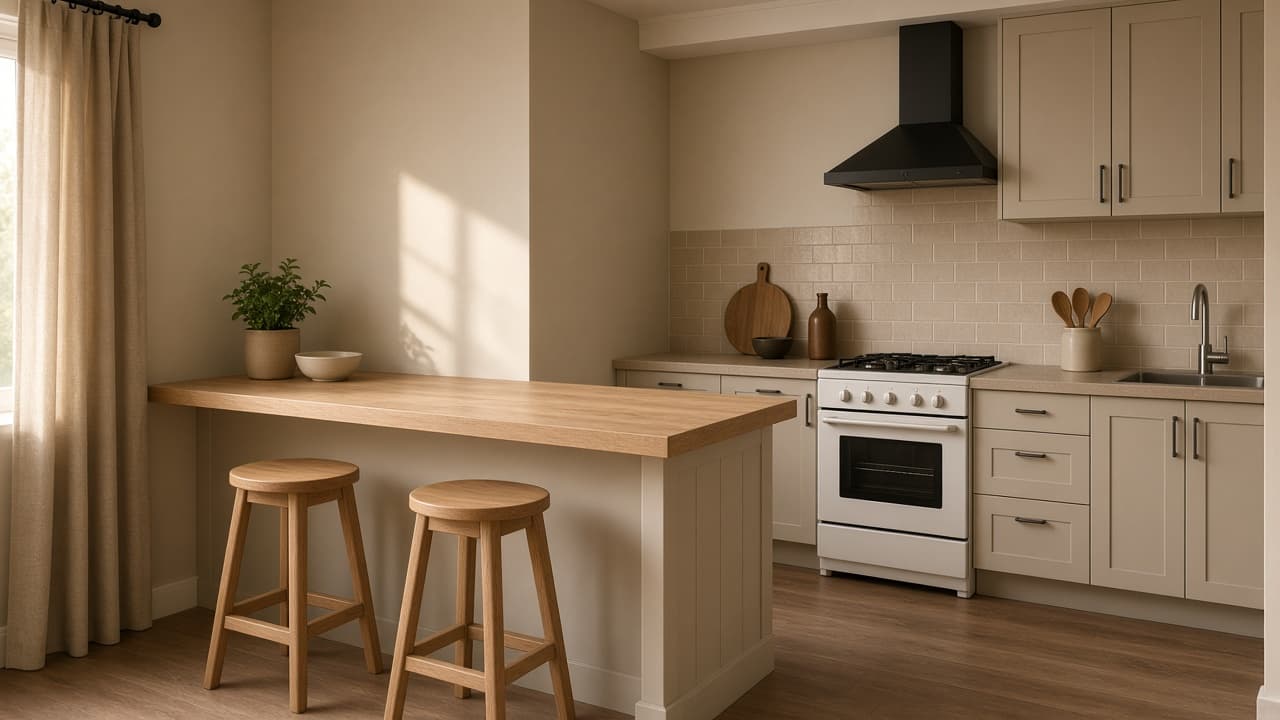
A Feng Shui breakfast bar is a counter with stools on one side and a cook path on the other. You keep the seats tucked so hips stay out of the flame aisle. The bar is furniture, not a luck shelf.
When we photograph kitchens, the listing still shows two tucked stools and a wide aisle. The room we get has four seats half out and a cook who turns sideways to reach the fridge. People ask which bagua cell the bar "activates." We pull every stool out as if breakfast were happening, then walk a grocery bag from the fridge to the board. If the bag stops at someone's knees, the bar is seating, not a kitchen. This page is that stool-and-cook test. The kitchen island page is extra prep in the middle. The kitchen layout page is the whole triangle. The dining table shape page is a table, not a counter you perch at.
How we check a breakfast bar in a real kitchen
We stand in the kitchen door first. If the bar is covered in mail, the mouth of the kitchen is a desk. Clear the top to a board you use, and a lamp if the corner is dark.
Then we stand at the cook. Door sightline, a landing that is not a guest's elbow, and whether a stool is already in the hip path. Then we sit the way a guest would. If knees will not go under the top, the overhang is a shelf, not a seat. Write which of those failed. The rest of this page only fixes those.
Is a breakfast bar good Feng Shui?
It is good when it is a second eating rail that still leaves a cook. Form School cares whether bodies can move and whether a hip hits a corner. Five-element talk will call the stove fire. Folklore blogs park a wealth bowl on the overhang and call the bar a money magnet. Treat the poetry as poetry. The job is a tucked seat and a pass you can wipe.
If you never sit there because the stools wobble, or because the cook cannot pass, the object is clutter at hip height. Two stools you use beat four you trip on.
Command still belongs to the cook. Stove facing the door is the range sightline. The bar should not steal that glance by stacking people in the only opening. Sitters can talk to the cook. They should not become a wall.
This is not a second dining room with a lucky number of chairs. If you already eat at a table, the bar is snacks and homework, and it still has to tuck. Kids on high stools next to a flame is a supervision problem. Put the child seat on the far side of a peninsula, or use the table. Do not add a "protective" crystal between the child and the burner.
Should stools face the stove or the room?
Sitters often want to face the cook. That is conversation. It is also steam in the face and a back to the living-room door. Pick the worse startle and fix that one.
If the peninsula faces the sofa, keep stools on that living-room face. The cook keeps the kitchen-side aisle. Guests look toward the cook without sitting in the knife radius. That is the usual pass in the kitchens we photograph.
If stools only fit on the kitchen side, you have a restaurant pass with no cook lane. Pull that row. Eat at the table.
A sitter with their back fully to the kitchen door will jump when someone enters. Angle the stool a few degrees so a glance catches the opening. You do not need a compass heading for that.
Do not aim a bagua mirror at the stools. A small ordinary mirror that shows the kitchen door to the cook is the rental substitute on the range wall, not a charm over the granola.
Homework at the bar is allowed if the laptop closes before cooking and the chair still tucks. A permanent office on the only landing is a desk in the work triangle.
How much space do stools need so the cook can still pass?
Stools need enough room that a cook can still walk from fridge to board with the seats pulled out. Kitchen planning often wants about 42 inches for one cook's work aisle. If your rental is tighter, tuck the seats while you cook, or lose a stool.
The NKBA kitchen and bath planning guidelines list a work aisle of at least 42 inches for one cook and 48 inches for more than one, measured between counter fronts. For seating they want about 32 inches from the counter edge to a wall when nobody walks behind the sitter. If traffic passes behind a seated diner, they want more: about 36 inches to edge past and about 44 inches to walk past. Those numbers are planning advice, not chi. Many rentals are tighter.
Harvey Jones on breakfast-bar planning puts a typical bar around 900 to 950 mm high, with about 600 mm of width per person, and talks about a metre behind stools when people walk there. Cite that as a stool-and-overhang check, not as a wealth measurement. If your lease bar is lower, pair it with a shorter stool so knees fit. If the seat is too tall, people perch on the edge and the stool never tucks.
NKBA seating notes also split knee space by counter height: about 15 inches deep at a 36 inch counter, about 12 inches deep at a 42 inch bar, and about 24 inches of width per diner. If the overhang is a thumbnail, the stool will live in the aisle. That is a carpentry miss, not a curse.
Do this before you buy another pendant.
- Pull every stool out as if guests sat down.
- Carry a bag from the fridge to the main board.
- If you shuffle sideways, mark stools as the fail.
- Push every stool fully under. Repeat the bag walk.
- If the walk only works with seats tucked, that is the nightly rule.
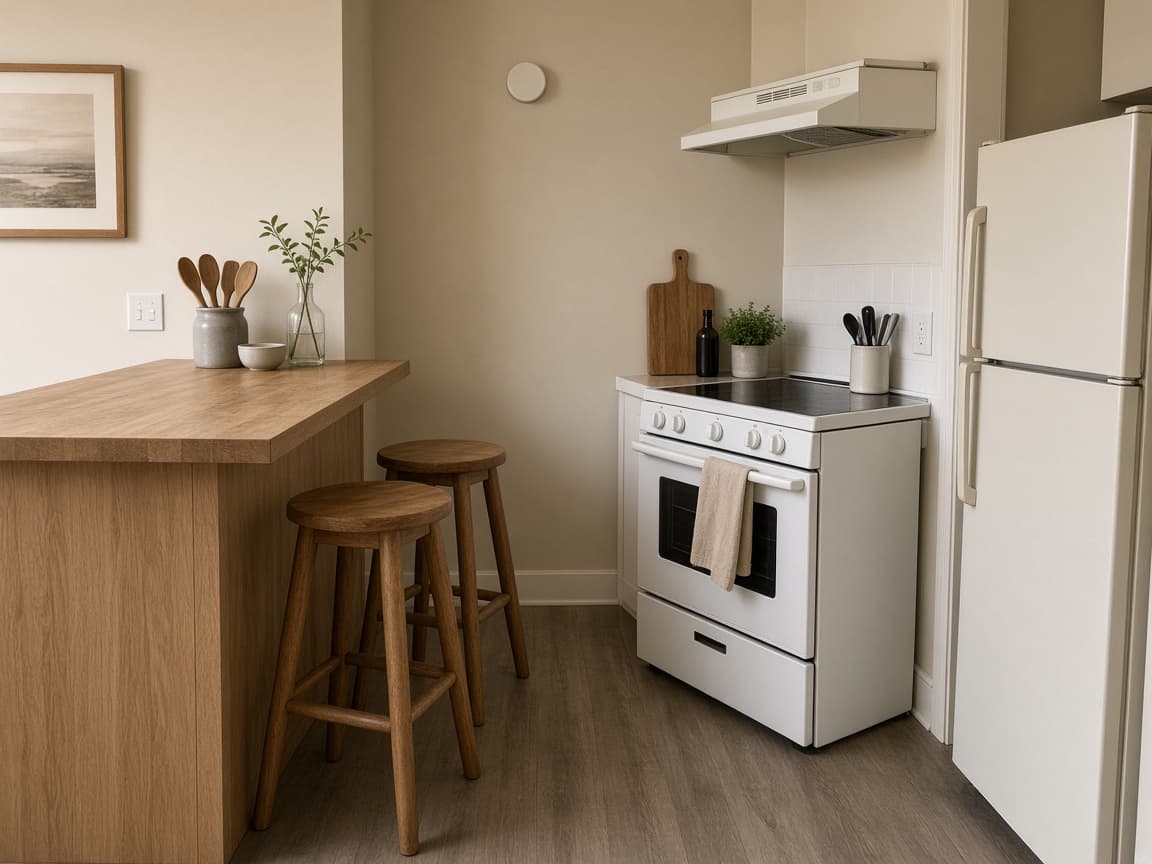
That is the bruise photo. The seats belong on the other face of the bar, or they belong pushed in. They will not raise a paycheck. They will stop a hip-check on a hot pan.
Pendants over the bar should clear a tall person's head. A fixture you hit with a platter is a bump. Raise it if the lease allows, or leave it off. Stools that do not slide fully under are the wrong stools. A back is nicer for a long breakfast. It is a problem if the back never leaves the aisle.
Cook aisle versus stool aisle
| What you measured | Pass | Renter move |
|---|---|---|
| Cook path with stools out | Grocery bag walks without a sideways shuffle | Pull one row, or lose a stool |
| Cook path with stools in | Same bag walk, hips clear of the flame | Make tuck the closing step after every meal |
| Overhang | Knees fit under the top | Shorter stool, or stop calling a shelf a bar |
| Sitter's back | Glance at the kitchen door without a full twist | Angle the seat a few degrees |
| Top clutter | Board or bowl you use, not mail | Mail leaves. Charms leave. |
You cannot relocate a wired peninsula tonight. You can stop decorating it like a shrine.
What if the bar is a peninsula, a wall rail, or an island overhang?
A peninsula is a counter with one end attached to a run of cabinets. Stools belong on the living-room or hall face. The kitchen face stays a cook lane. If both faces have stools, you copied a restaurant and forgot the pass.
A wall-mounted rail is a shelf with brackets on a plaster wall. It is the renter tool when there is no island. Keep a shoulder walk in the hall. Do not hang it so a door leaf hits a stool. If the rail faces a blank wall at sitting distance, add a lamp. A rail that blocks the only path from the front door to the kitchen is an entry problem. Park it on a side wall.
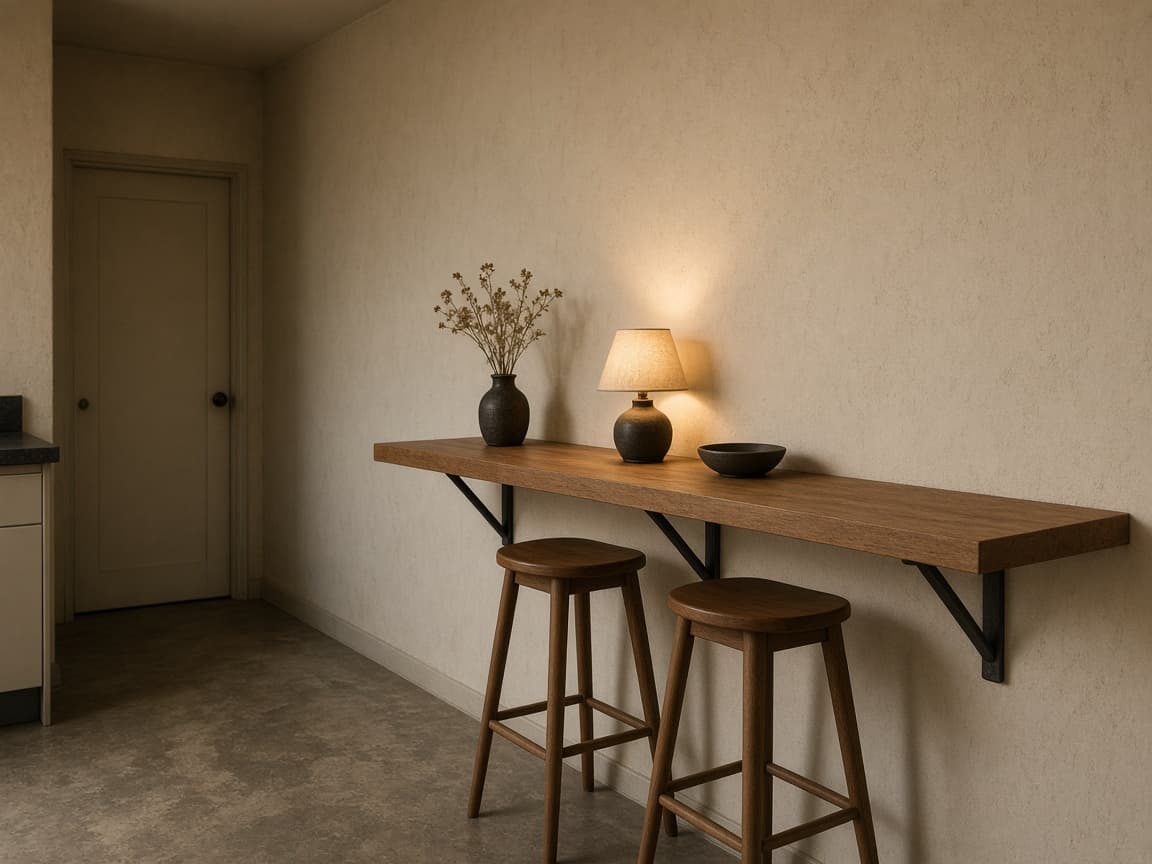
That wall rail works when the stools tuck and the door still opens. If the hall is already a shoulder squeeze, this is the wrong room for a bar. Use the table.
An island overhang is seating on a middle block. Stove-sink clash and prep still live on the kitchen island page. Here you only ask whether the living-room side is the only row of stools. If both long sides are seats, pull the kitchen-side row tonight.
A cafe-style window bar in a home is not a leased cafe window line. Glare still empties the seat. Use a sheer you can take down. Do not claim the window gua books brunch. A folding wall bar that drops down is honest rental furniture. Latch it up when you cook if the leaf eats the aisle.
Do not bolt a new peninsula into landlord cabinets. A used table against a wall with two stools is often the same job with less damage. If the table blocks the cook, it fails the same test as a bar.
Can a renter fix a breakfast bar that blocks the cook?
Yes, within the lease. Tuck is free. Do it after every meal. If guests will not push seats in, keep fewer seats. Store extras in a closet. Two used seats beat four ignored ones.
Swap the stools if the current ones have arms that never go under. Measure the overhang before you buy. Return what does not tuck. A rolling cart as a temporary bar is allowed if it still leaves one clear pass and if it is not a mail dump. Park it on the living-room face. Do not roll it into the triangle.
Static-cling film or a sheer on a tension rod cuts glare on a window rail. Skip crystals on the sill. A small side mirror for the cook is the same rental substitute as the stove-door article. Grease on glass is a wipe.
You cannot move the plumber's peninsula. You cannot raise a too-low bar without tools the lease may forbid. You can stop sitting on the cook's side. If the only way the room works is zero stools, the bar is a counter. Own that. Chop on it. Eat at the table. A counter with no seats is not a failure. A counter with seats in the flame aisle is.
Photograph from the kitchen door in FengShui Hero after you tuck. Compare the flagged walk with the pass you made.
What this is not
A breakfast bar will not feed a family by chi and it will not pay rent. A green runner under the stools will not fix a bad marriage. Unused burners are not unused money.
Skip flying-star years on the snack rail, and skip a crystal grid on the overhang. Do not claim income because the bar sits in a wealth cell. Do not add a fountain on the bar. Water plus food is a spill. Do not aim an outdoor bagua mirror at the fridge from a stool.
This page is not permission to demolish a wall for a 48 inch aisle, and it is not a second island article.
A simple evening checklist
Do this in order. Stop when a grocery bag can pass and the cook can see the latch or a mirror.
- Stand in the kitchen door. If the first object is mail on the bar, clear the top.
- Pull every stool out. Walk a bag from the fridge to the board. Write whether you turned sideways.
- Push every stool fully under. Repeat the walk.
- If the walk only works tucked, remove one stool so tucked is easier to keep.
- Sit on a remaining stool. Angle it if you cannot glance at the kitchen door.
- If stools sit on the cook's side, move them to the living-room face, or take them away.
- Photograph from the kitchen door in FengShui Hero and compare the flagged walk with the pass you made.
If you only do one thing tonight, push the stools in and take the mail off the bar. The cook needs a board, not a second desk.